benlong
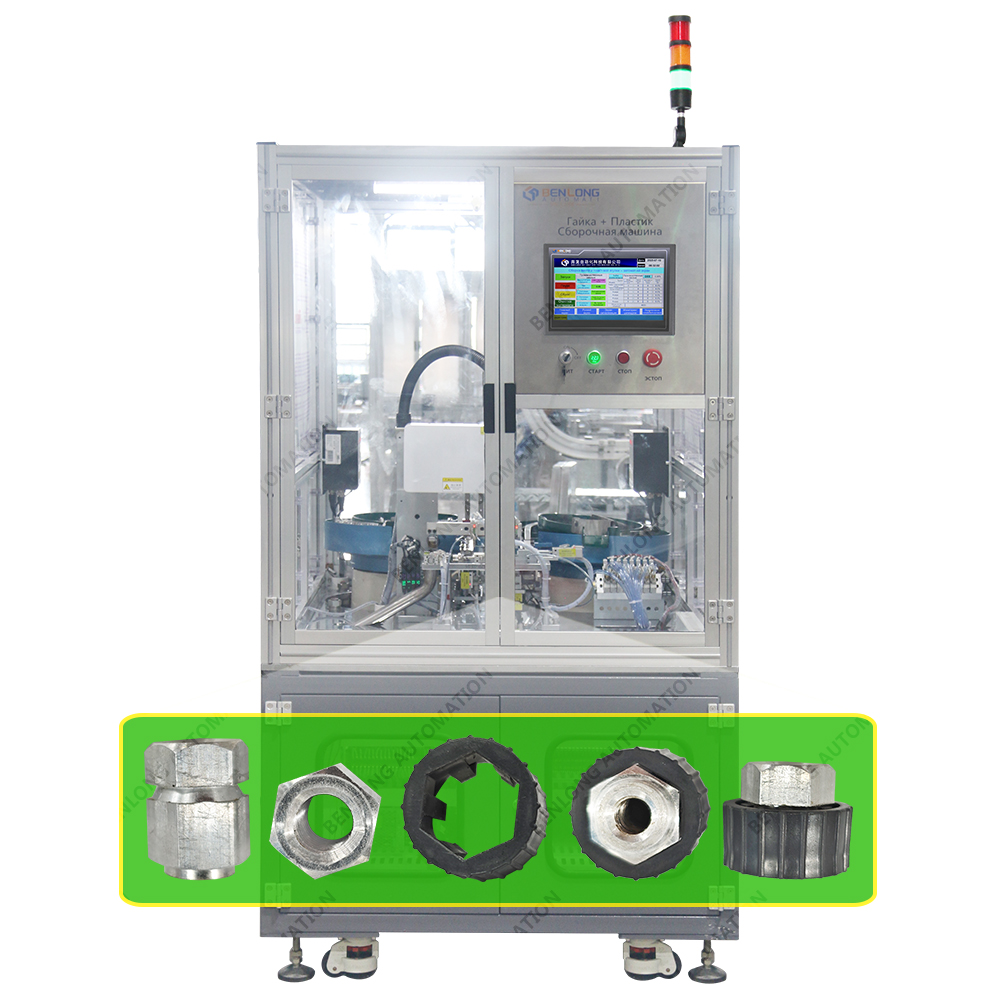
Nut + Sealing Washer automatic assembly machine
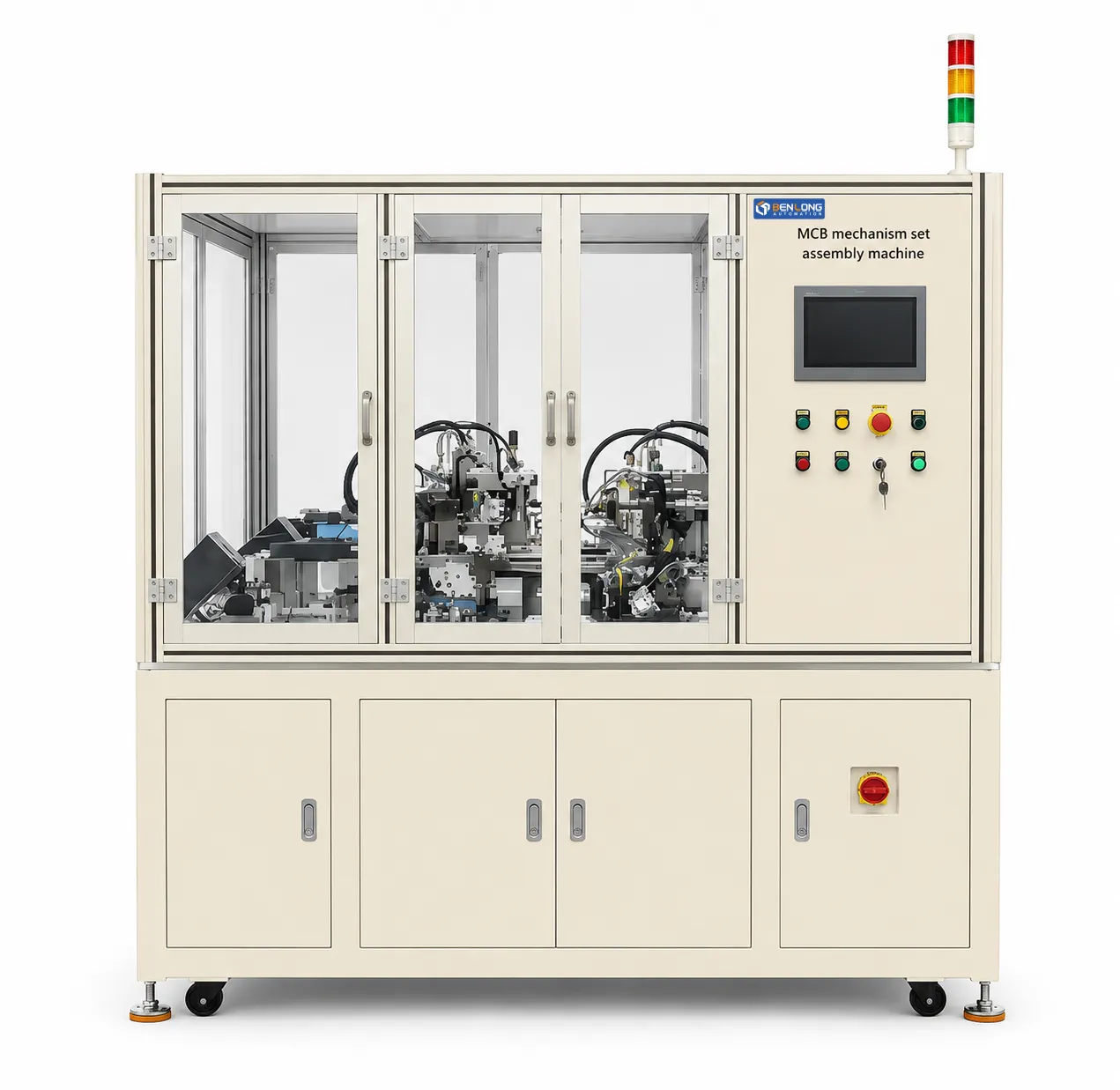
Benlong nut & sealing washer automatic assembly machine for IPC accessories. Dual vibratory feeders, servo pressing, torque control (0.5‑10 N·m, ±3%), optional vision inspection. 1,200‑1,800 pcs/hour. Ideal for terminal blocks and electrical connectors.
Precision Nut & Sealing Washer Automatic Assembly Workstation
An automatic assembly machine has been developed which incorporates a high degree of automation to feed, orientate and fasten nuts from their respective bulk supply sources with both nuts and sealing washers in a single, high-speed operation. This machine will be used on IPC (Insulation Piercing Connector) production and will accurately deliver, orientate and securely fasten the components together to consistently achieve the desired assembly torque level and integrity. The automatic assembly machine will be vital in supporting the production of high-volume quantities of electrical connection hardware because the fastening force directly impacts the reliability of the product used in the field.
The machine uses two separate vibratory feeders that work together to feed the two parts (nut and washer) at the correct orientation to the press. After the nut and washer have been fed to the press, a servo-press uses programmable forces to press the two parts together, and a torque control is integrated into the line to verify that the nuts and washers have been properly fastened to meet electrical requirements. Optional vision inspection modules can verify that the parts are correctly mated and can also identify missing or incorrect pieces. Typical cycle time is between 1,200 and 1,800 assembled parts per hour, with complete data collection for quality control. The equipment can also be used to assemble other types of electrical fastening products, including IPC accessories and terminal blocks.
Standard delivery: 30-45 days | Torque accuracy ±3% | Vision inspection ready

What is a Nut & Sealing Washer Automatic Assembly Machine?
The assembly machine is designed for the automatic assembly of a nut and a sealing washer, usually metal and polymer respectively, together as a subassembly which is used in electrical connectors (e.g. Insulation Piercing (Insulation Piercing Connectors), terminal blocks, or cable lugs). The assembly machine utilizes two vibratory bowls or tape feeders to separate and orient each part separately; thereafter, the nut and the sealing washer are joined using either a servo press or a pick & place machine with controlled force. The tightening of the nut is verified and is designed to be tightened to a specified torque (for example between 2 N·m to 5 N·m); in addition, a vision system is used to verify the proper seating of the sealing washer. The assembly machines are designed and built for 24 hours per day and 7 days per week continuous operation with minimal manual handling errors, and all assemblies are guaranteed to conform to the required mechanical and electrical standards (e.g. IEC 60947-1) in high volume production methods.
Separate feeding and orientation for metal nuts and polymer washers.
Programmable force and depth for consistent mating of components.
Real‑time torque check; rejects assemblies outside tolerance.
Verifies correct washer position and nut thread engagement.


Machine Features & Assembly Process

Technical Specifications
| Supported nut types | Hex or square nuts, M4 – M12, steel or brass (zinc‑plated) |
|---|---|
| Washer types | Flat rubber, silicone, or nylon sealing washers (inner diameter 4–12mm) |
| Assembly cycle time | 2.0 – 3.0 seconds per assembly (approx. 1,200-1,800 pcs/hour) |
| Torque range | 0.5 – 10 N·m (programmable, accuracy ±3%) |
| Pressing force range | 50 – 500 N (servo‑controlled, accuracy ±5%) |
| Feeding system | Two independent vibratory bowls (nut feeder + washer feeder) with orientation tooling |
| Vision inspection (optional) | CCD camera checks washer presence, centering, and nut thread exposure |
| Control system | PLC (Siemens/Mitsubishi) with HMI, recipe storage for 20+ product models |
| Data output | CSV / MES via OPC UA or Modbus TCP; torque and force curves per cycle |
| Power supply | 380V ±10% 50Hz | Compressed air 0.5-0.7MPa |
Core Technical Advantages
Dual material handling
The machine separately feeds two different part types (nut and washer) using dedicated vibratory bowls with custom tooling to ensure correct orientation for each.
Torque verification per assembly
An inline torque sensor measures the fastening force after assembly. Units exceeding the programmable torque window are automatically rejected, preventing loose connections in the field.
Servo‑controlled pressing force
Unlike pneumatic presses, servo control provides programmable force profiles, soft landing, and real‑time force monitoring – essential for delicate polymer washers.
Quick changeover tooling
Pre‑centered feeder bowls and quick‑release press tooling allow changeover between different nut/washer sizes in under 15 minutes.
















Customer Success Story
This manufacturer of insulation piercing connectors (IPC) in Europe was assembling M8 nuts and rubber sealing washers by hand and experiencing 2% failure rates in the field because of loose connections. By using our M8 nut and sealing washer automatic assembly machine, they now have:
The cost of the machine was recouped after eight months of operation, and the equipment gave complete torque traceability for ISO 9001 audits.
Applications and Production Integration
Standard Delivery and Commissioning
Request a Custom Nut & Washer Assembly Quote
Please send us samples of your nuts and washers along with their torque specs and target outcomes. We’ll work with our engineering team to develop a custom solution which will include options for torque monitoring and login of visual inspection.
WhatsApp: +86 150 5837 0007 | Email: xsb@benlongkj.cn | English & Chinese support
Why Choose Benlong for Nut & Washer Automation?
- 15+ years designing electrical component assembly machines for connectors and terminals
- Proven dual‑feeder technology for mixed material types
- Integrated torque control ±3% accuracy with data logging
- Vision inspection option for 100% quality verification
- Global installations in IPC and terminal block factories
Standard Machine Includes
The following is a description of various types of feeders:
– Two vibratory feeder systems (e.g., nut and washer)
– A servo press system with force control.
– A torque monitoring station.
– A PLC/HMI (Siemens/Mitsubishi).
– A reject bin.
– A safety enclosure.
– One set of change tooling.
– An operator manual.
– One year warranty.
Frequently Asked Questions
Standard equipment will accommodate M4 through M12 nuts and accompanying sealing washers by sizing inner diameter. Custom tooling sizes are available on request for M16 and larger sizes.
The servo press employs a configurable soft landing shape and design, consisting of fast approach, slow contact and limited contact force as a result of which the polymer washer is not crushed and is seated properly.
Yes. Each assembly is inspected at all times after pressing by means of an optional CCD vision system, which verifies washer presence, centering, and nut thread exposure. Any parts that are rejected will be automatically sorted out.
A Changeover of feeder bowls consists of replacing tooling at the exit of the feeder bowls; replacing the press anvil; and changing the torque settings for the HMI. The entire process usually takes approximately 10 minutes.
The standard machine has a rating of IP54. We offer sealed enclosures and HEPA air filters for those that will be used in cleanrooms (i.e., medical device assembly).
Related Products
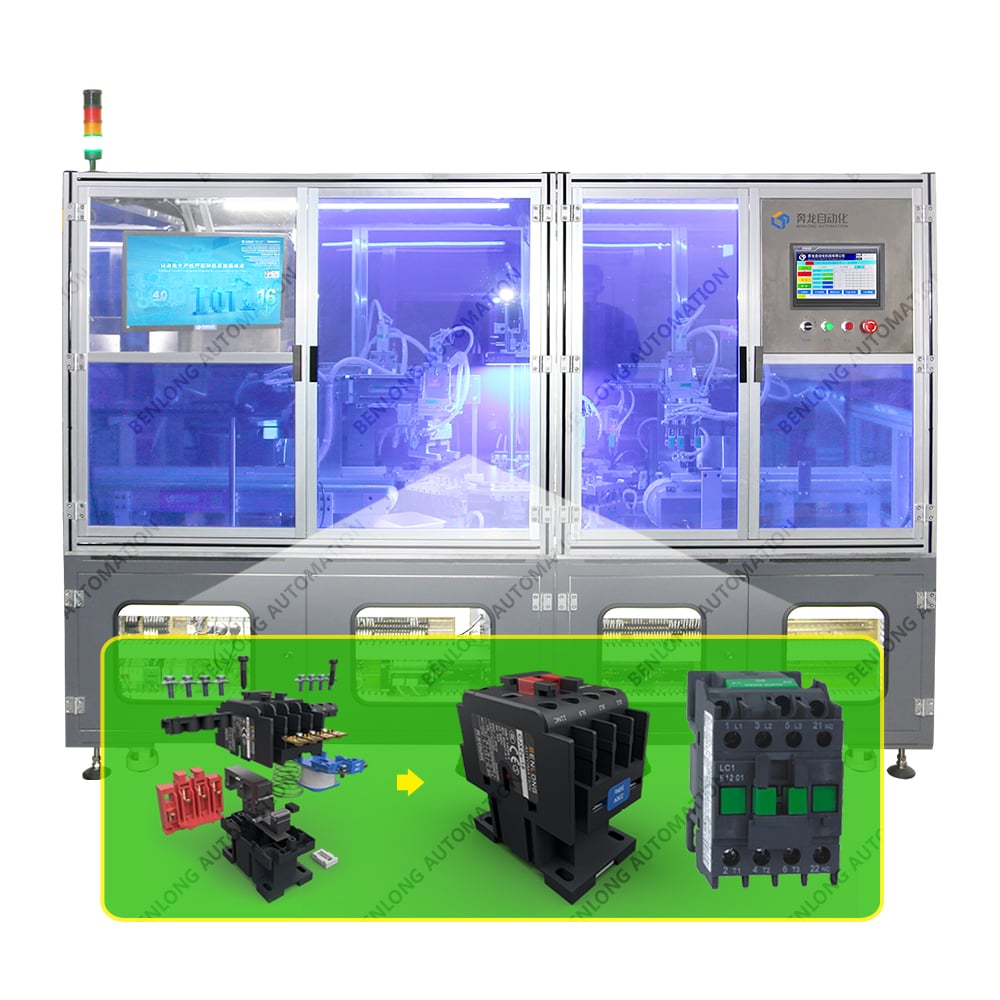
AC contactor automatic contact insertion machine
View Details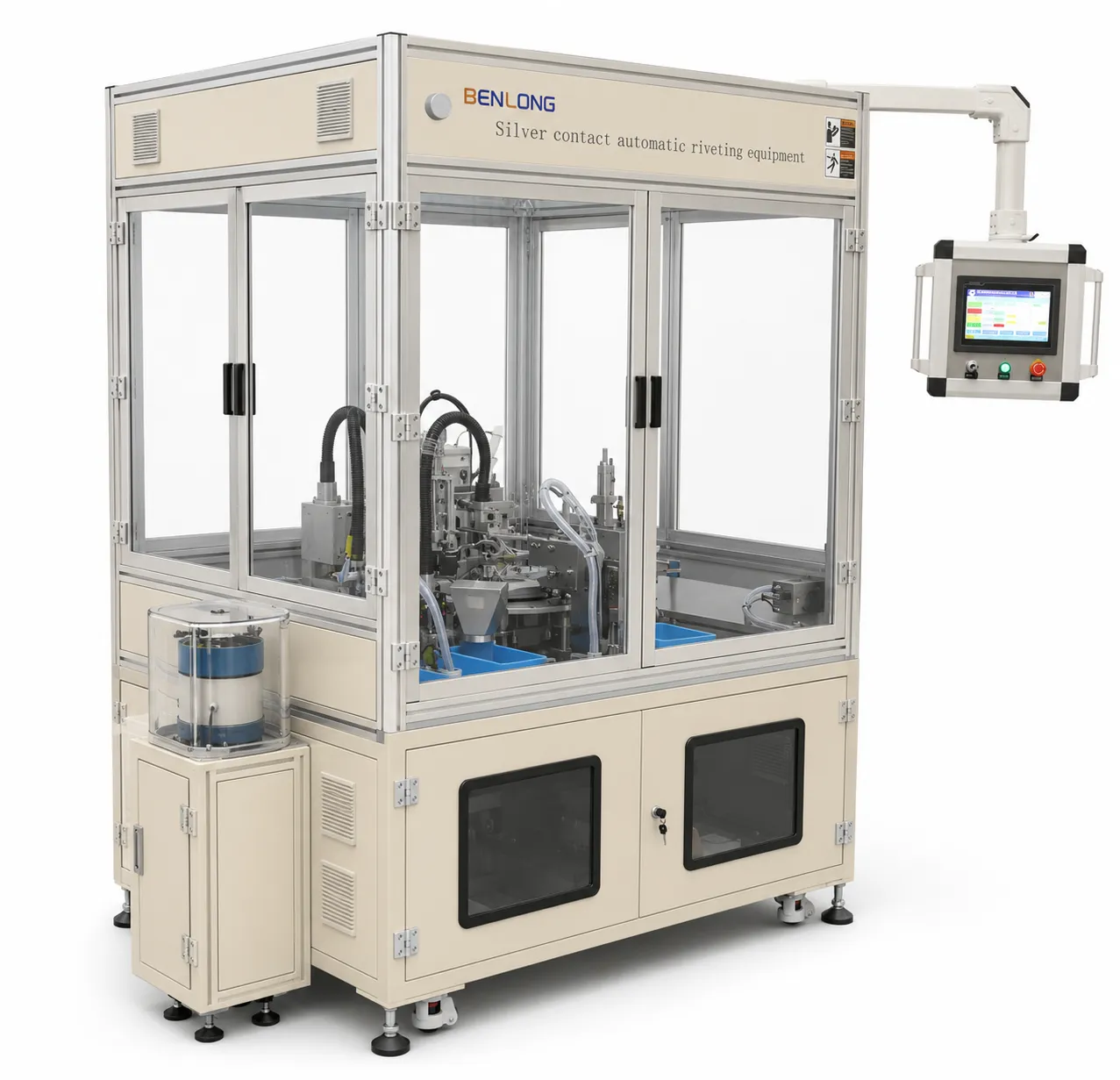
Wall switch sliver contact automatic riveting machine
View Details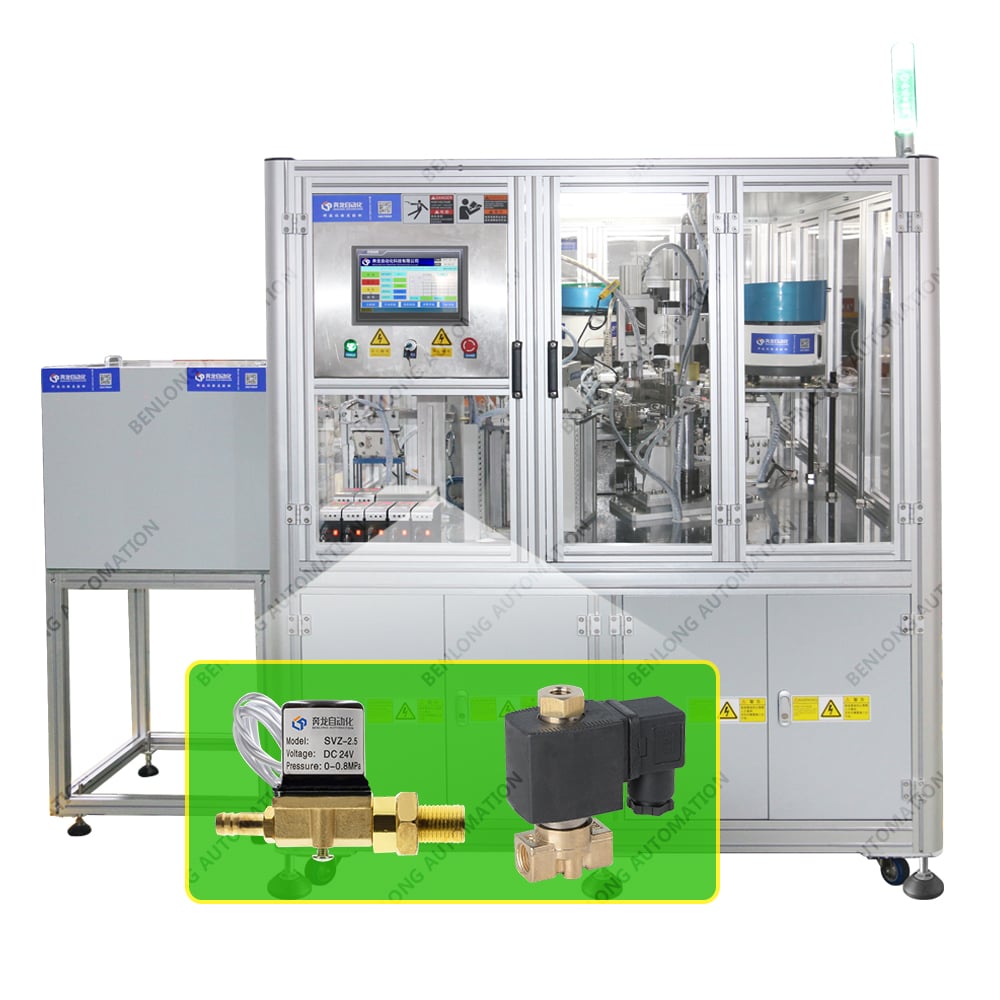
Solenoid valve core Automatic Assembly machine
View Details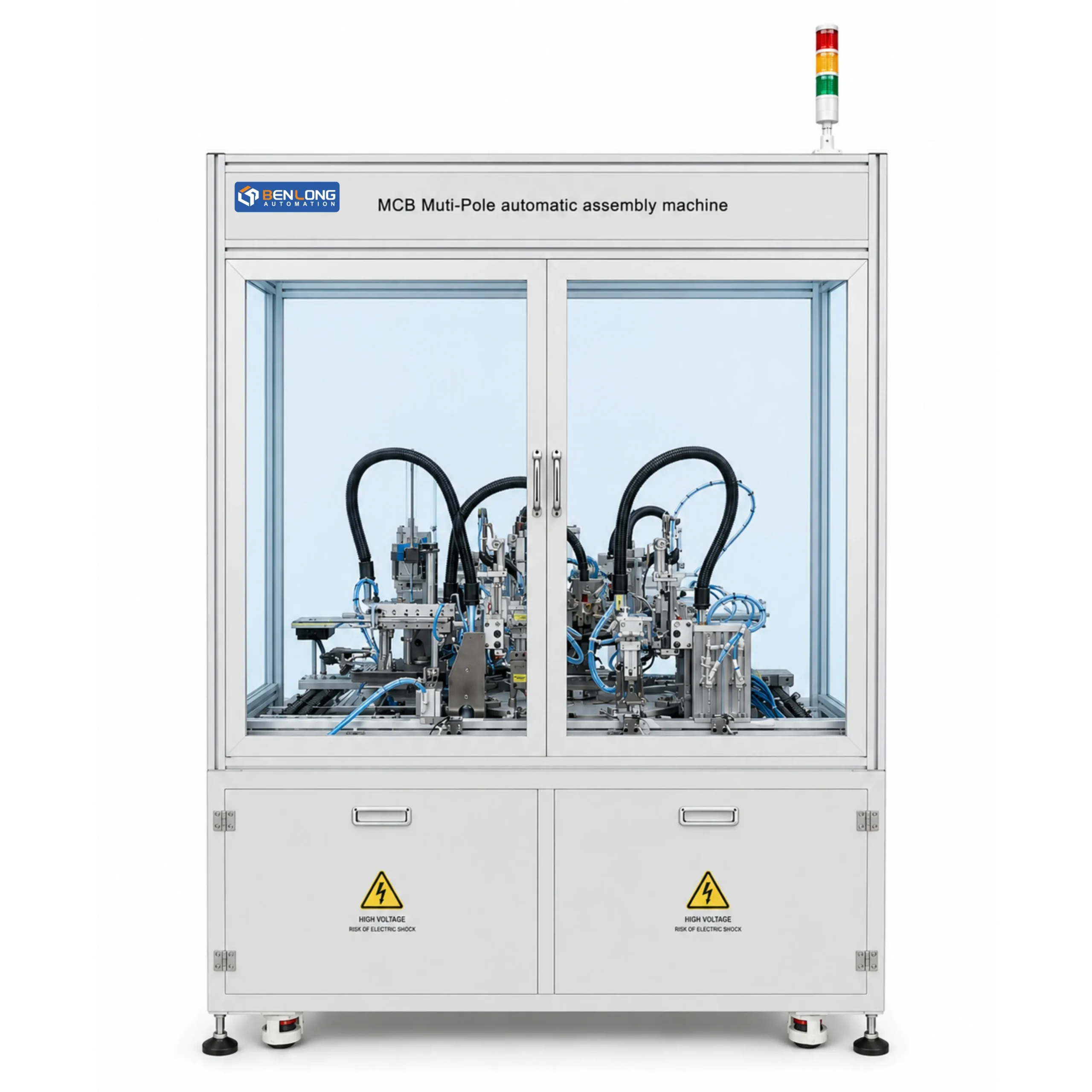
MCB Multi-Pole automatic assembly machine
View Details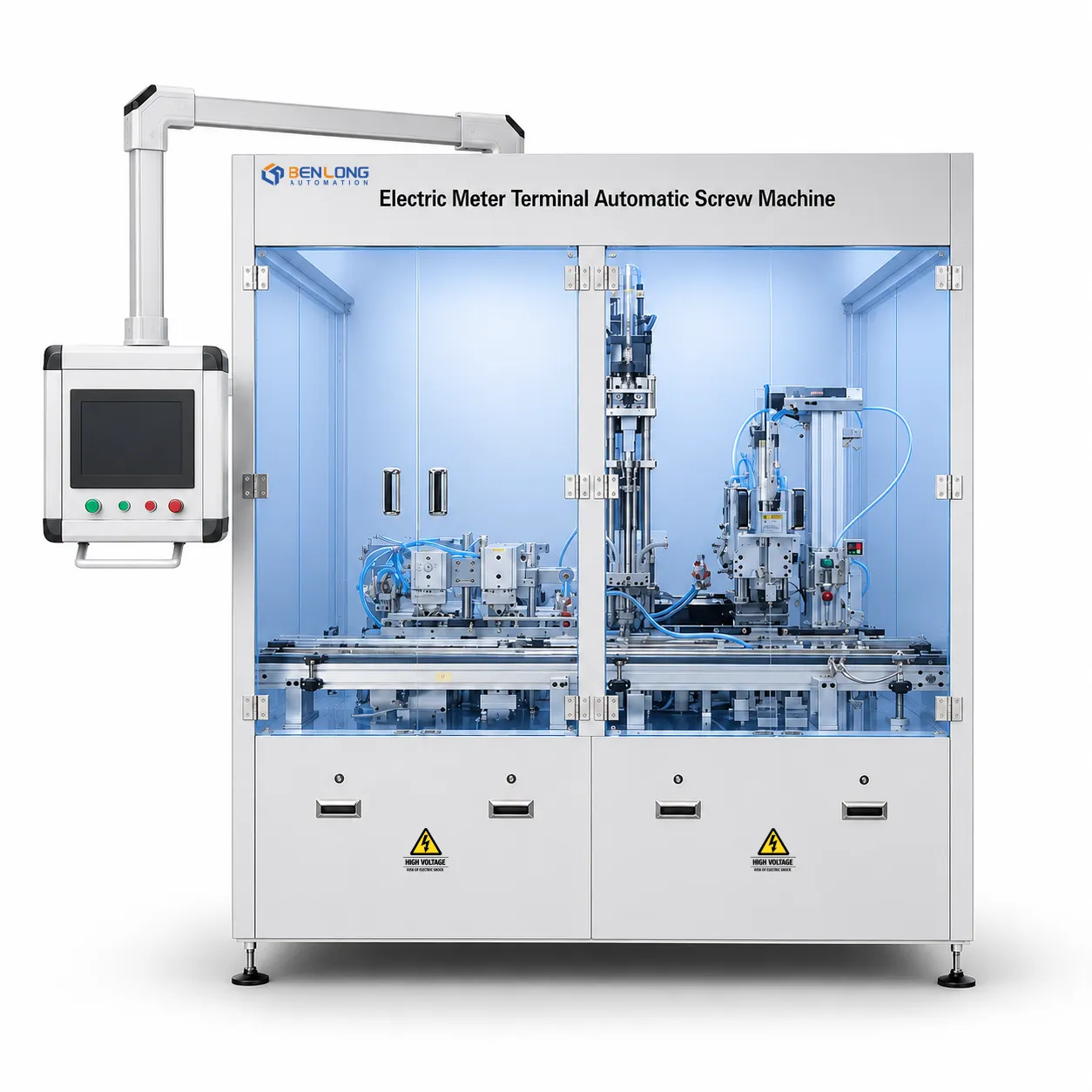
Electric Meter Terminal Automatic Screw Machine
View Details