benlong
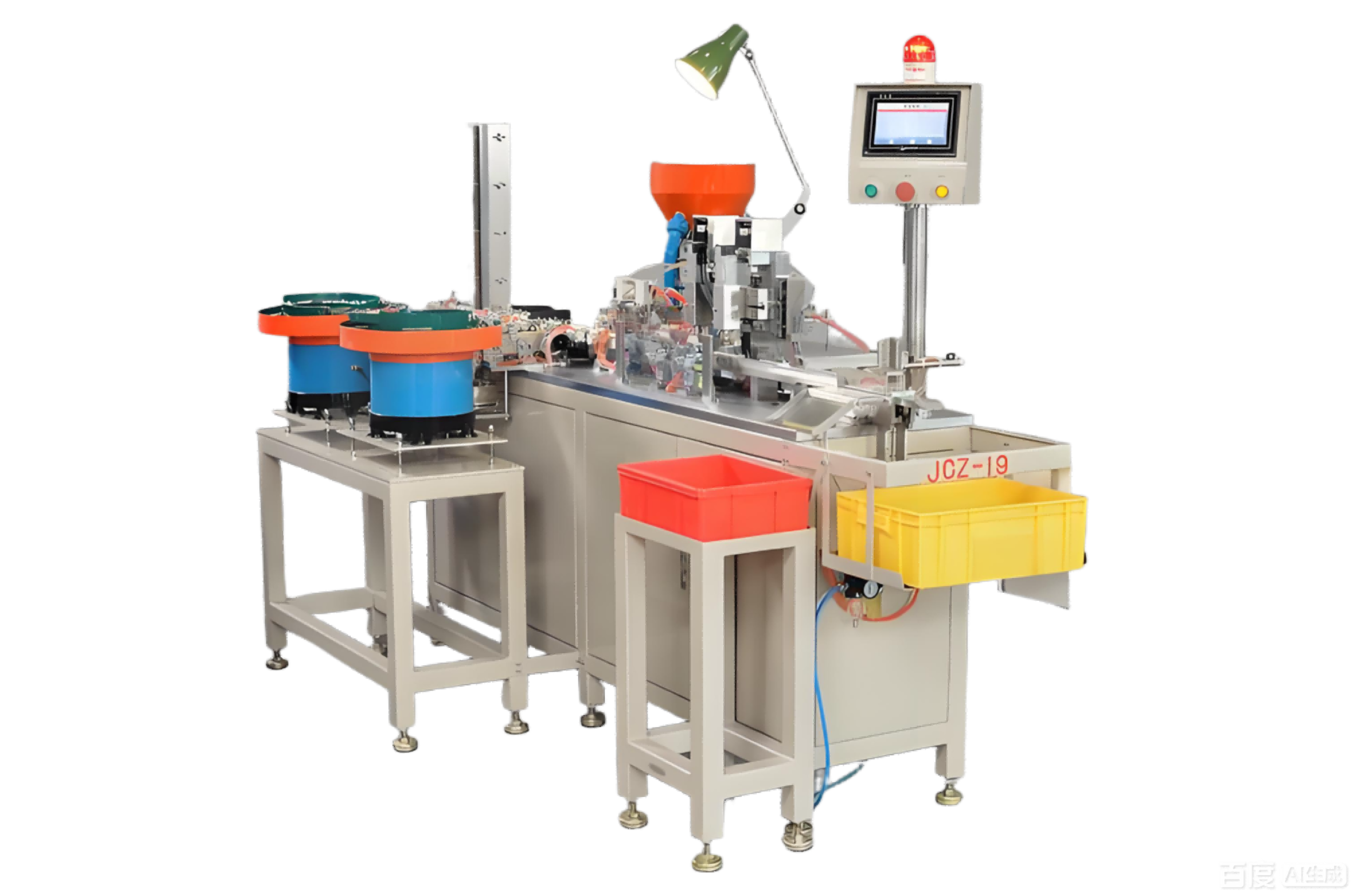
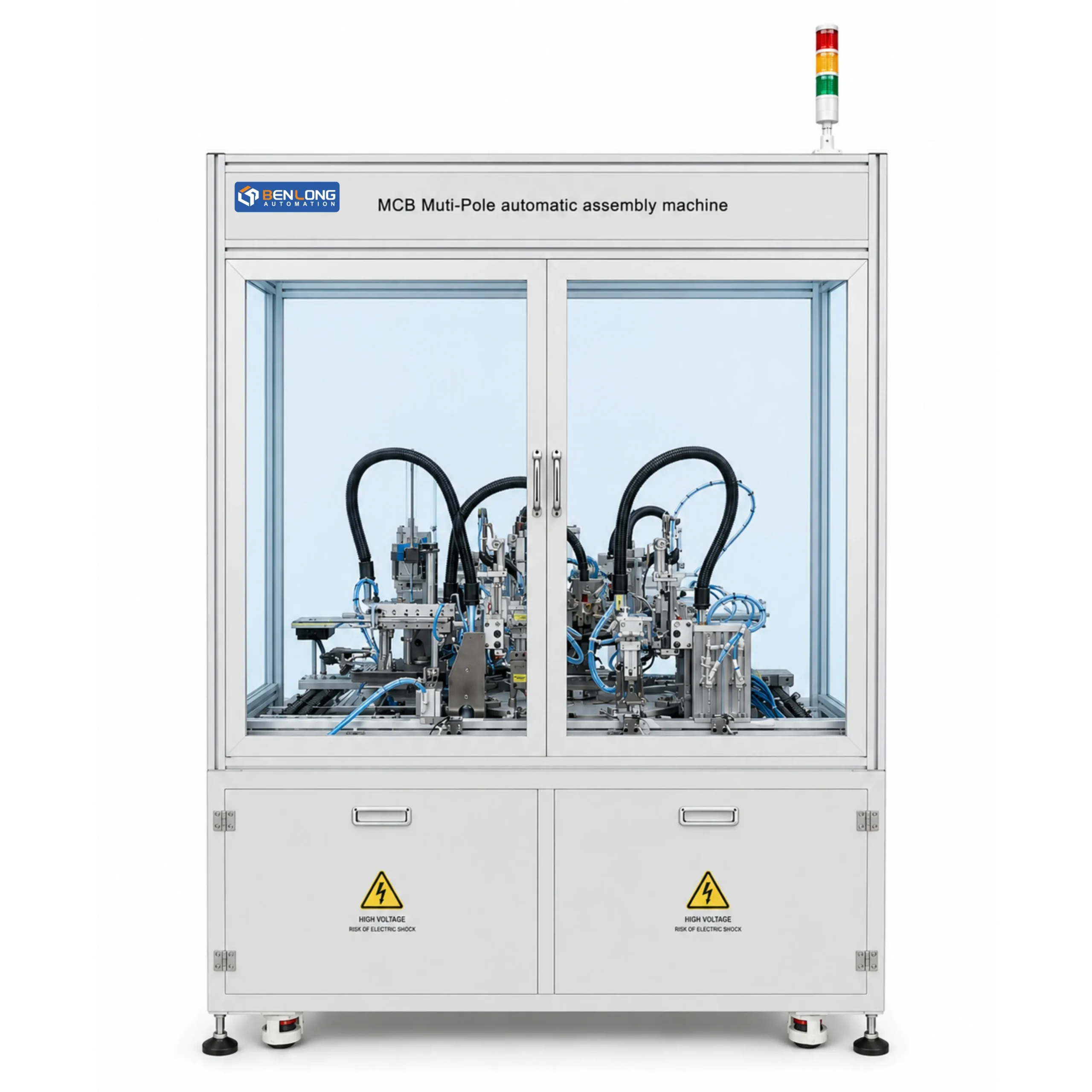
Terminal Block Clamp Automatic Assembly Machine
Custom terminal block clamp automatic assembly machine for spring‑cage or screw terminals. Multi‑bowl feeding, servo pressing with force‑displacement monitoring. Non‑standard pole counts and pitches. 1,500‑2,400 pcs/hour. Tailored for your exact terminal geometry.
Custom Terminal Block Clamp Automatic Assembly System
The machine that automatically assembles a terminal block clamp is a high speed, fully automated modular system designed for inserting the plastic housing into a modular spring cage or screw type terminal block. Assemblies consist of the plastic housing, metal current bar, contact springs and clamping elements. Multi vibratory feeders and precise mechanical movements are used to produce a complete assembly at high speed, positioned accurately, and securely assembled for each model of terminal block; this makes it invaluable to manufacturers of electrical and industrial control products.
The terminal design system can be tailored to create unique terminals. It includes special tools that help to insert the component, press it into place, and fasten it inside of the plastic terminal housing. Below are some key features of the terminal design system: Separate feeding devices for terminal housing, current bus and spring or clamp; servos for pressing and force measurement and integrated sensors for part presence and part alignment. Typical production rates vary from 1,500 to 2,500 completed terminal assemblies per hour, all data is logged for SPC purposes, and changeover to a new terminal model family (for example, changing from a 2 pole to a 12 pole and/or different spacing distance) can generally be accomplished in less than 30 minutes by using recipe and/or tooling change specifications.
Standard delivery: 45-60 days | Non‑standard custom: 90-120 days | 100% in‑process verification

What is a Terminal Block Clamp Automatic Assembly Machine?
An assembly machine designed specifically for the automatic assembly of modular terminal blocks—devices employed in terminal-to-terminal electrical connections, typically found in control panels, junction boxes, and industrial equipment—is referred to as a terminal block clamp automatic assembly machine.
The assembly machine has an automatic supply and assembly mechanism for multiple components consisting of: (1) a plastic housing; (2) a metal current conducting bar (busbar); (3) a contact spring (or screw clamp); and (4) optional marking inserts.
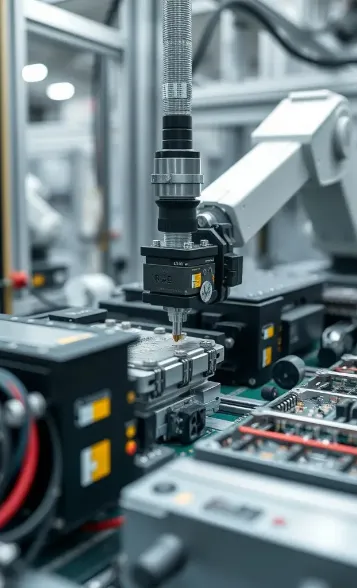
The production system utilizes multiple vibratory feed systems, allowing for the orientation of each component prior to carrying out the insertion, pressing, and securing processes using dedicated tooling. Sensors and a PLC are integrated into the assembly machine to verify (1) the presence of a component in the assembly, (2) the force used during assembly, and (3) the final height of the component/assemblies.
The result is a manufacturing system that is capable of producing a consistent quality terminal (spring-cage [push-in] or screw-type) in the high volume at which they are being produced; the system also provides complete traceability.
Due to the fact that the assembly machine is not standard but rather a custom system, there is considerable flexibility in adapting the assembly machine to the unique geometries, number of poles, and variations in materials in each terminal being manufactured.
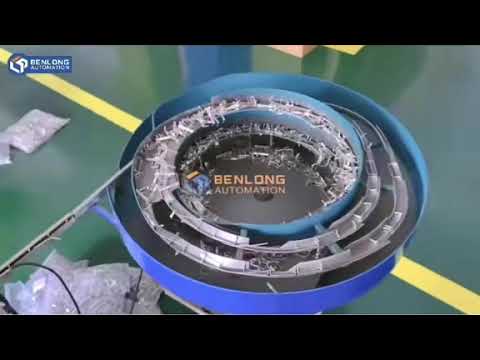
Separate vibratory bowls for housing, current bar, spring, and screw (if applicable).
Servo‑controlled stations for pressing springs into housings and seating current bars.
Sensors check part presence, alignment, and final clamp height; rejects detected automatically.
We tailor the machine to your terminal block geometry, pole count (2‑12 poles), and special features (e.g., test points, marking options).


Machine Features & Assembly Process

Technical Specifications
| Terminal block types | Spring‑cage (push‑in) or screw‑type, modular terminals, 2‑12 poles, various pitches (5.0‑15mm) |
|---|---|
| Components assembled | Plastic housing, current bar (stamped copper/brass), contact spring, screw (optional), marking inserts (optional) |
| Assembly cycle time | 1.5 – 2.5 seconds per terminal block (approx. 1,500-2,400 pcs/hour) |
| Feeding system | 2‑6 independent vibratory bowls (depending on component count) with orientation tooling |
| Pressing force control | Servo‑controlled, force range 50‑500N, accuracy ±5%, force‑displacement monitoring |
| Assembly verification | Part presence sensors (capacitive/inductive), optical height check, force‑displacement curve for spring insertion |
| Changeover time | <30 minutes (recipe + quick‑change tooling kit) |

| Control system | PLC (Siemens/Mitsubishi) with HMI, recipe storage for 50+ terminal models |
| Data output | CSV / MES via OPC UA; assembly force and cycle counts per unit |
| Power supply | 380V ±10% 50Hz | Compressed air 0.5-0.7MPa |
Core Technical Advantages (Designed for Non‑Standard Customization)
Tailored to your terminal geometry
Unlike standard machines, we customize the feeding bowls, insertion tooling, and pressing fixtures to your exact terminal block dimensions, pole count, and special features (e.g., test points, color coding).
Spring‑cage & screw‑type flexibility
The same base platform can be configured for push‑in spring terminals or traditional screw‑clamp terminals. Changeover between technologies is possible with dedicated modules.
Force‑displacement monitoring for spring insertion
Spring insertion is critical for contact pressure. Our servo press records force‑displacement curves, rejecting springs that are over‑compressed or misaligned – ensuring consistent clamping force.
Expandable to marking & testing
Optional stations can be added: laser marking for terminal numbers, continuity testing for current bar connection, or pull‑out force test for spring retention.
















Customer Success Story (Custom Non‑Standard Solution)
An International Manufacturer of Terminal Blocks Required the Assembly of a Unique Non-Standard 10-Pole Spring Cage Terminal with Integrated Test Point (1.5 mm2 Wire Capacity). Off-The-Shelf Equipment Would Not Work Due To Its Unique Size And Shape. Benlong Created a Custom Made 6-Bowl Assembly System That Had:
The customer was able to recoup their investment in the machine within 10 months and as a result, obtain a significant contract for EV charger terminal blocks.
Applications and Production Integration
Standard Delivery and Commissioning (Custom Engineering)
Request a Custom Terminal Block Assembly Quote
Please provide your terminal block drawings, component samples, and desired output to us. Our engineering team specializes in developing custom assemblies for both spring and screw type terminals that are not standard to the industry.
WhatsApp: +86 150 5837 0007 | Email: xsb@benlongkj.cn | English & Chinese support
Why Choose Benlong for Non‑Standard Terminal Block Automation?
- Over the last 15+ years, I have designed custom machinery for electrical assembly applications, terminals, connectors and switches.
- In‑house feeder design and tooling fabrication – no third‑party delays
- Servo pressing with force‑displacement monitoring for spring insertion quality
- Modular platform – expandable for marking, testing, or boxing stations
- Global service and spare parts support
Typical Custom Machine Includes
– A quantity of 2-6 vibratory bowls (housing, Current Bar, spring and optional screw) – A servo insertion / press machine – In-process sensors (part presence and height) – PLC (with HMI) – Siemens brand – Reject station – Custom tool kit – Operation Manual – 1 year warranty.
Frequently Asked Questions
We are specially trained to help you create a customized non-standard solution. Our tooling and feeding systems will be designed specifically for your item. You will benefit by having tool kits that allow for fast changeover from one family of products to another.
The force-displacement plot produced when using the servo press to insert springs is compared to an acceptable force-displacement (curve) plot before the parts are accepted or rejected. Unexpected results, such as no spring being inserted or over-compressing the spring, will cause rejection. An additional option for a vision system is to inspect springs to make sure they are present and oriented correctly.
The typical production time for a completely new terminal block design with no previous tooling is usually between 90 and 120 days. This includes the design, tooling fabrication and assembly processes. When creating small changes to an existing terminal block design, production time will generally take between 60 and 75 days.
Absolutely! We could incorporate a laser marker at the final assembly line end station to print the terminal number, current rating, or logo directly on the housing.
Definitely. Feasibility testing is done with prototype assembly jig by using the customer’s component (housing, current bars, and spring) to complete assembly plus do a video tape of the test and provide a report before going into production of a machine.
Related Products
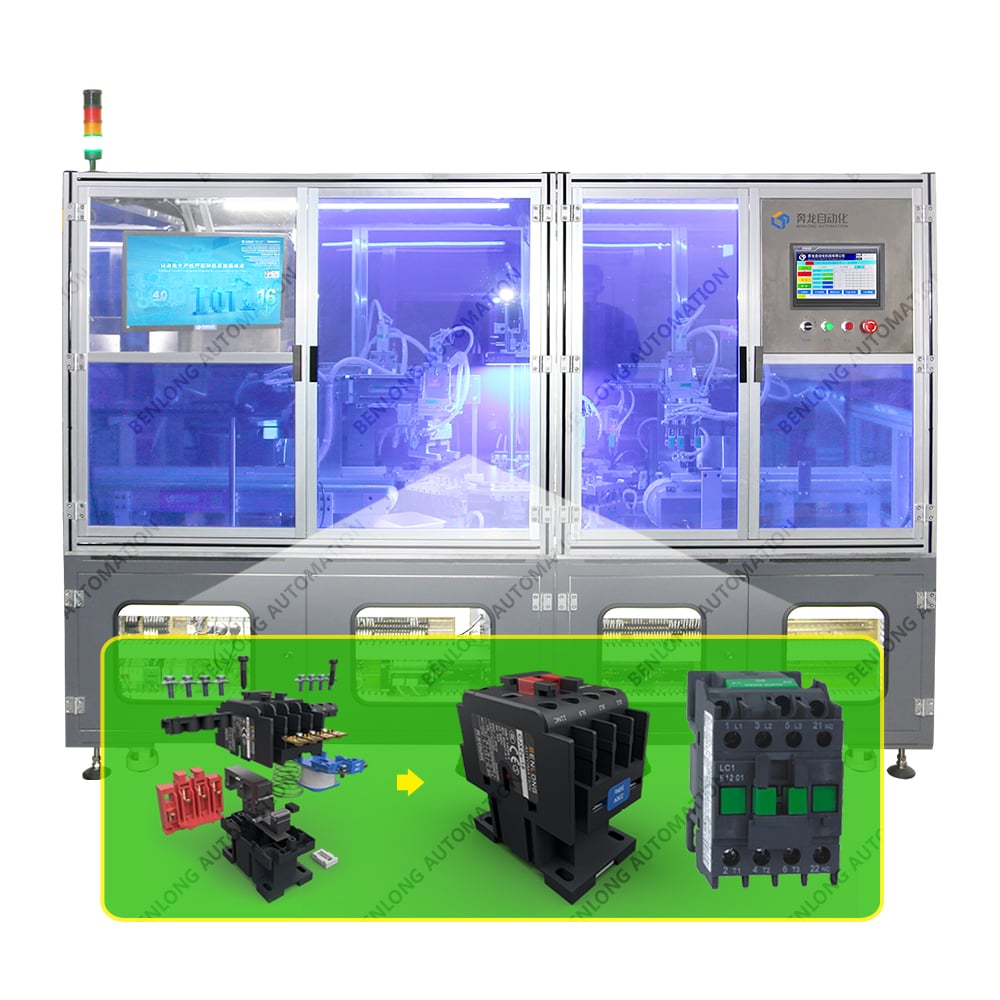
AC contactor automatic contact insertion machine
View Details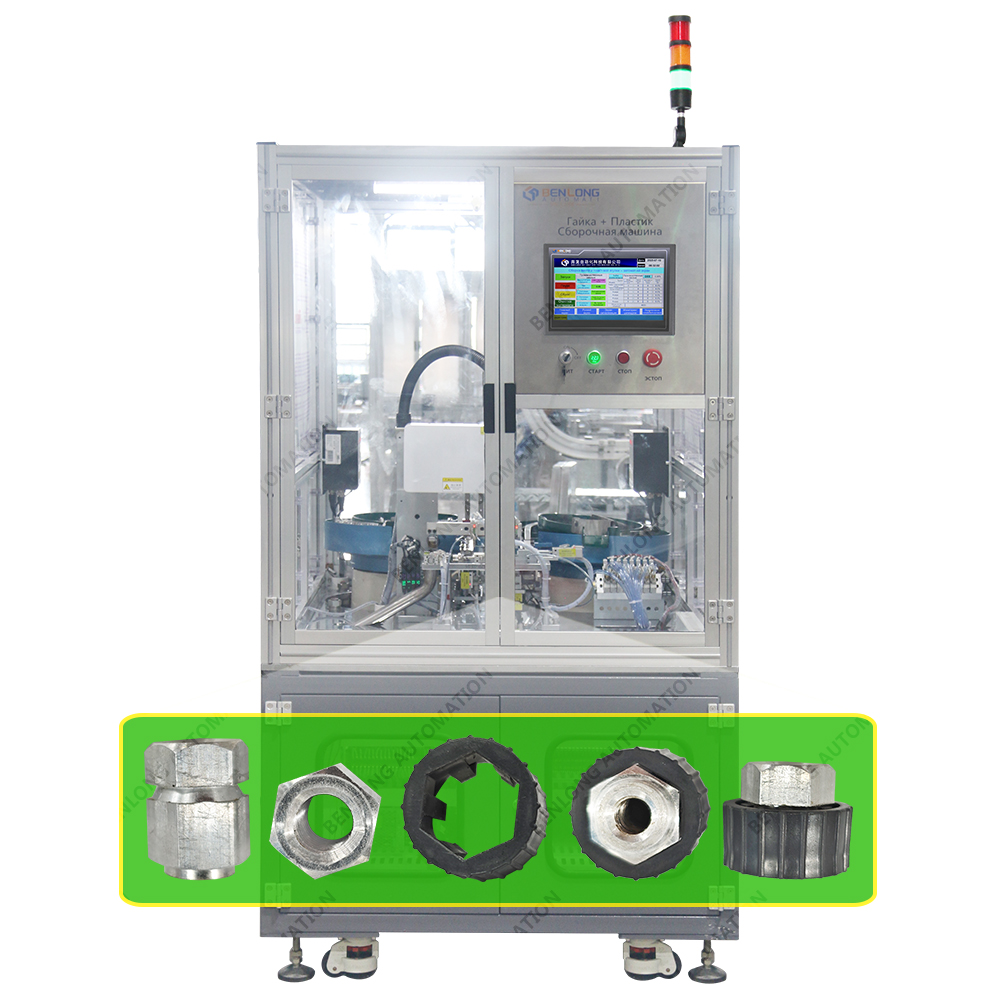
Nut + Sealing Washer automatic assembly machine
View Details
Automatic Capping Machine
View Details
Electric Meter Terminal Automatic Screw Machine
View Details
MCB Cage Terminal automatic assembly machine
View Details