benlong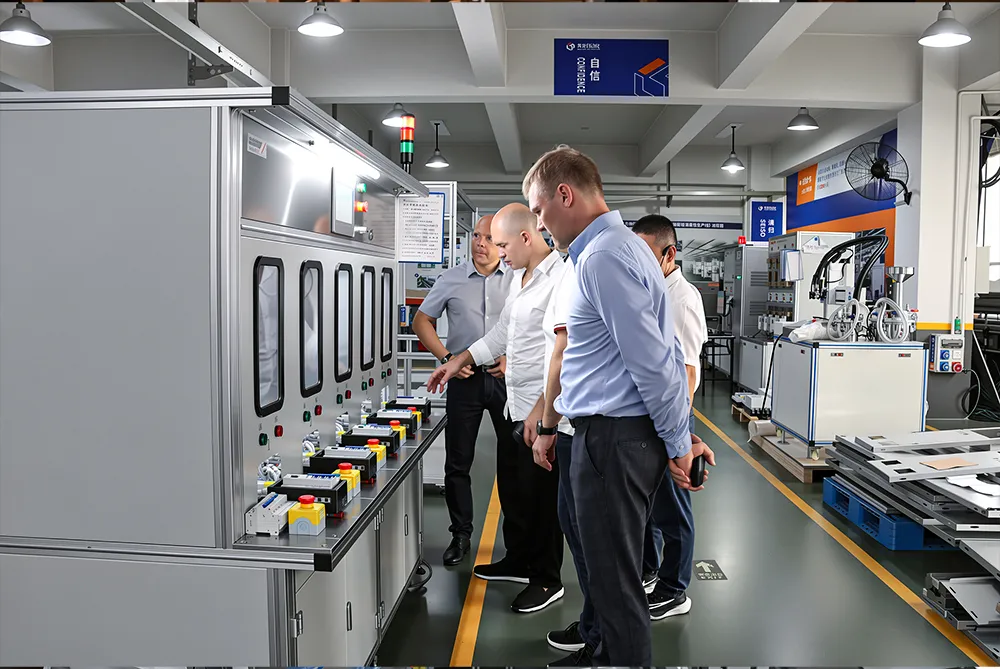



Máquina de prueba del mecanismo de disparo del MCCB
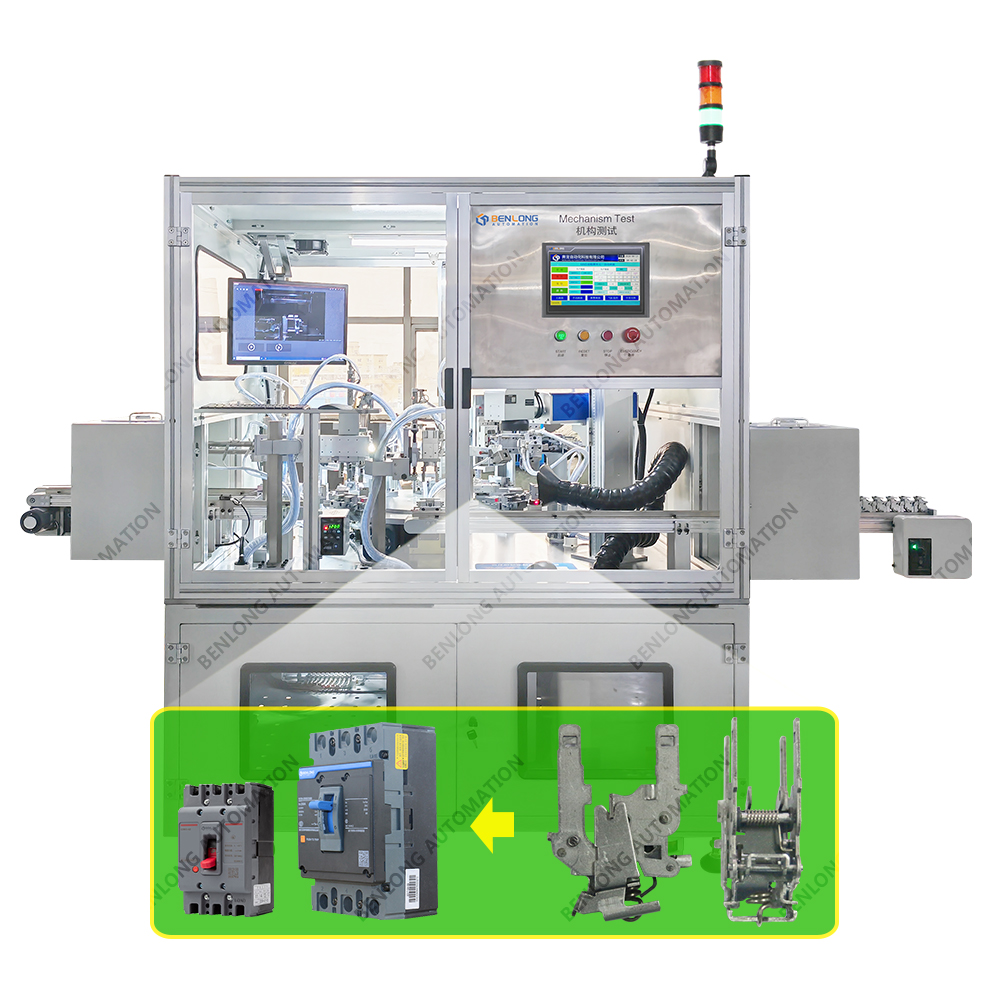
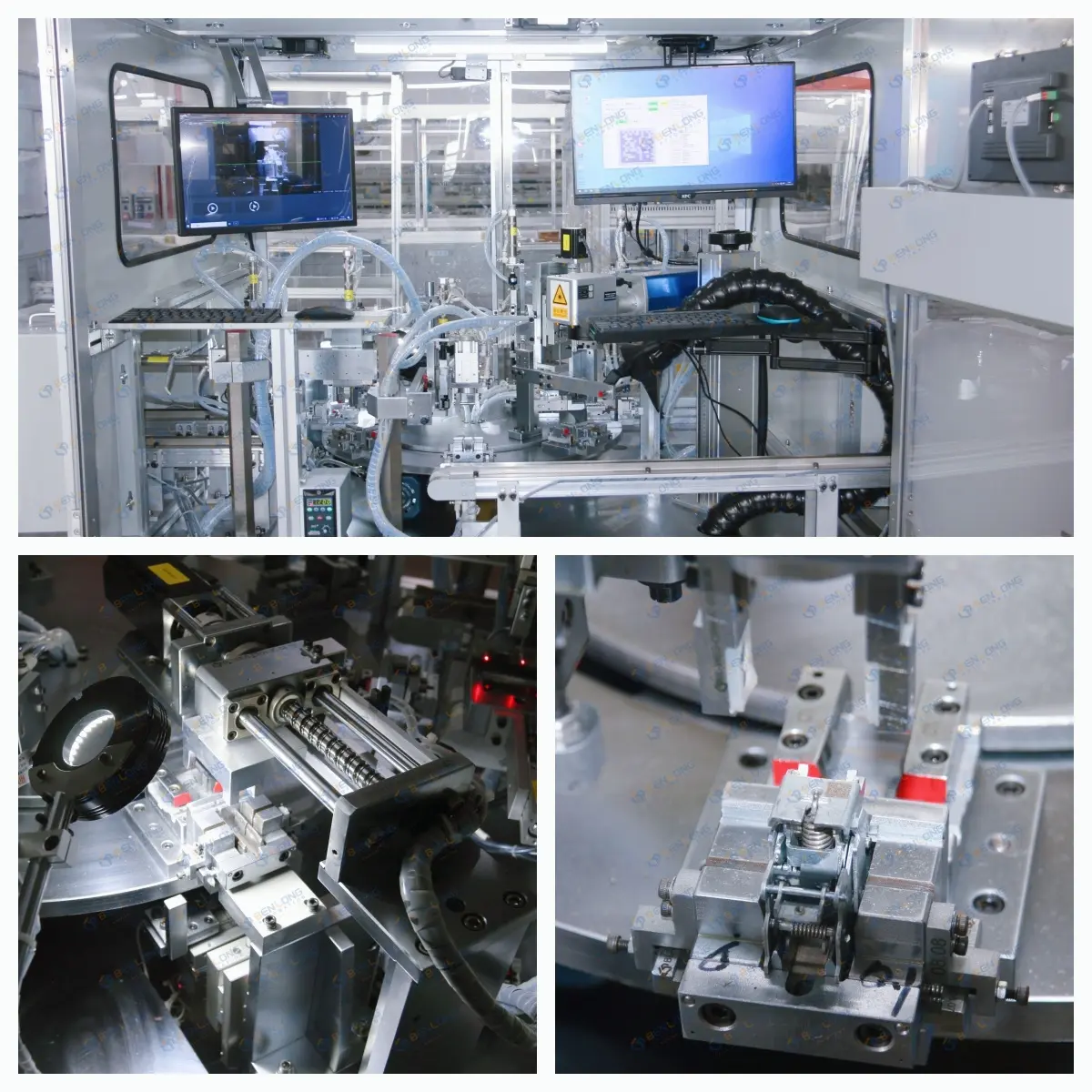
Máquina de ensayo del mecanismo de disparo automático de los interruptores MCCB con mesa giratoria de indexación. Medición del ángulo de apertura y cierre basada en visión artificial (±0,1°), ensayo de la fuerza de contacto y de disparo, análisis de la fuerza máxima, verificación del desbloqueo y marcado láser QR para una trazabilidad completa. 3-5 segundos por pieza. Ideal para la producción de grandes volúmenes de interruptores MCCB.
Máquina de prueba automática para el mecanismo de disparo de interruptores automáticos de caja moldeada de alto rendimiento
Esta máquina consta de un mecanismo de prueba automático de indexación rotativa diseñado específicamente para verificar la función y el rendimiento mecánico de diversas partes del mecanismo de disparo de un interruptor automático de caja moldeada (MCCB). La máquina de prueba de indexación rotativa utiliza un diseño de indexación de plataforma giratoria de alta velocidad y precisión que le permite realizar pruebas continuas y estables a altas tasas de producción. Combina varios módulos de inspección, que incluyen la medición del ángulo de apertura/cierre mediante visión artificial, mediciones de la fuerza de contacto y de disparo, análisis de la fuerza máxima, verificación de la liberación e impresión láser de un código QR en cada producto para una trazabilidad completa.
En las instalaciones de prueba se encuentra un sistema de visión industrial (cámaras Hikvision) que mide ángulos sin contacto, detectando así con precisión la orientación y la consistencia del movimiento. Además, se registran las características de fuerza-desplazamiento mediante sensores de fuerza específicos durante el disparo para evaluar la fuerza máxima registrada en el proceso, así como el comportamiento de liberación.
Un PLC centralizado y un PC industrial sincronizan todas las pruebas al inicio, de modo que cada estación de prueba cuenta con las mismas condiciones. Cada componente recibe un código QR único, marcado con láser una vez que ha sido calificado, que contiene el registro completo de todas las pruebas realizadas hasta ese momento.
La solución descrita anteriormente aumenta la eficiencia, la precisión y el control de calidad para los fabricantes de interruptores automáticos de caja moldeada (MCCB), ya que automatiza, estandariza y proporciona trazabilidad de su proceso de prueba.
Entrega estándar: 45-60 días | Medición del ángulo de visión | Análisis de fuerza y pico | Trazabilidad mediante código QR
¿Qué es una máquina de prueba del mecanismo de disparo de un interruptor automático de caja moldeada (MCCB)?
La máquina de prueba MCCB es un sistema automatizado diseñado específicamente para probar las propiedades mecánicas y funcionales de los mecanismos de disparo de todos los interruptores automáticos de caja moldeada. Estos mecanismos de disparo constan de soportes, pestillos, resortes y varillajes que se utilizan para accionar los contactos en caso de sobrecarga o cortocircuito. La máquina de prueba MCCB utiliza una mesa giratoria indexada con múltiples estaciones de prueba para verificar las siguientes áreas: medición de ángulos (apertura/cierre) mediante visión artificial, medición de la fuerza necesaria para accionar un contacto, medición de la fuerza necesaria para disparar el circuito, medición de la fuerza máxima de disparo, verificación de la capacidad de liberación y marcado de un código QR. Todos los datos de prueba se guardan y se vinculan a un código QR específico, lo que garantiza la trazabilidad completa de los resultados. El sistema está diseñado para entornos de fabricación de alto volumen donde la repetibilidad, la velocidad y la integridad de los datos son fundamentales para la producción de productos de calidad. Como solución personalizada no estándar, los accesorios, los algoritmos de visión artificial y el rango de fuerza están diseñados específicamente para el mecanismo de disparo de su interruptor automático de caja moldeada.
Pruebas continuas de alto rendimiento con múltiples estaciones independientes.
Cámaras Hikvision para la detección sin contacto del ángulo de apertura/cierre.
Sensores de fuerza para el análisis de la fuerza máxima y la verificación de la liberación.
Código único vinculado a los datos de prueba para el seguimiento completo del ciclo de vida.
Proceso de prueba y estaciones clave




Especificaciones técnicas
| Arquitectura de la estación de pruebas | Plataforma giratoria indexada con 4-8 estaciones independientes (personalizable). |
|---|---|
| Medición de la visión | Cámara industrial Hikvision, resolución angular ±0,1°, sin contacto. |
| Rango de medición de fuerza | 10 – 200 N (fuerza de contacto y fuerza de disparo), precisión ±1% FS |
| Análisis de fuerza máxima | Registro automático de la fuerza máxima de disparo durante la liberación. |
| Verificación de liberación | Los sensores confirman la desconexión correcta y el reinicio después de la activación. |
| Marcado con código QR | Láser de fibra (20 W), código DataMatrix/QR, automático después de pasar |
| Duración del ciclo de prueba | De 3 a 5 segundos por componente (depende del número de estaciones). |
| trazabilidad de datos | Resultados de la prueba (ángulos, fuerzas, aprobado/suspenso) vinculados al código QR; carga MES |
| Sistema de control | PLC (Siemens/Mitsubishi) + PC industrial, HMI para gestión de recetas |
| Fuente de alimentación | 380V ±10% 50Hz | Aire comprimido 0,6MPa |
Ventajas técnicas principales
Diseño de indexación rotativa de alto rendimiento
El diseño de la plataforma giratoria permite que varias estaciones de trabajo realicen pruebas simultáneamente (prueba de carga, prueba de visión, prueba de fuerza, prueba de marcado, prueba de descarga). Esto reduce el tiempo de inactividad y genera tiempos de ciclo de tan solo 3 a 5 segundos por unidad, lo que lo hace ideal para líneas de producción.
Medición del ángulo de visión sin contacto
Las cámaras Hikvision para aplicaciones industriales permiten medir sin contacto el ángulo de cierre y el ángulo de apertura de un mecanismo, evitando el desgaste y posibilitando mediciones repetidas en múltiples ciclos. El sistema detecta automáticamente cualquier desviación del ángulo de diseño nominal, identificando así los mecanismos que se hayan ensamblado incorrectamente o que no cumplan con las especificaciones.
Análisis exhaustivo de fuerza y liberación
Mediante celdas de carga de alta precisión, el dispositivo mide tanto la fuerza de contacto (precarga del resorte) como la fuerza de disparo (fuerza necesaria para desbloquear). Además, se registra la fuerza máxima durante el disparo y se utilizan sensores para confirmar que todos los mecanismos hayan vuelto a su configuración normal (reinicio completo) después del disparo; esto es fundamental para la fiabilidad del interruptor automático de caja moldeada (MCCB).
Trazabilidad completa con marcado láser QR.
Cada dispositivo que supera la prueba se marca permanentemente con un código QR (grabado con láser). Este código QR enlaza con una base de datos que contiene los detalles de todos los resultados de la prueba (ángulos, fuerzas, valor máximo y resultado de la prueba). El código QR proporciona una trazabilidad completa desde el ensamblaje del dispositivo hasta la finalización de la prueba del interruptor automático de caja moldeada (MCCB). Esto cumple con los requisitos de las normas ISO 9001 e IATF 16949.
















Historia de éxito de un cliente: fabricante de interruptores automáticos de corte rápido (MCCB)
Un fabricante líder en la industria de interruptores automáticos de caja moldeada (MCCB) calibraba manualmente los valores o las piezas del mecanismo de disparo de la máquina con medidores o dinamómetros, pero aun así, 3% de sus productos fallaban en el campo debido a una fuerza de liberación inconsistente. Benlong suministró una máquina de prueba rotativa indexada de 8 estaciones capaz de verificar el ángulo de visión (del mecanismo de disparo), probar la fuerza necesaria para liberarlo y marcarlo con un código QR. Después de estar operativa solo 4 meses:
La máquina se amortizó en 10 meses y proporcionó la documentación de prueba completa para una auditoría IEC.
Aplicaciones e integración
Ingeniería y entrega a medida
Solicite un presupuesto para una máquina de prueba de mecanismo de disparo MCCB personalizada.
Para realizar un análisis completo del retorno de la inversión (ROI), envíenos sus muestras del mecanismo de disparo y los requisitos de prueba. Desarrollaremos un sistema completo de prueba de indexación rotativa que incluye medición del ángulo de visión, pruebas de fuerza y trazabilidad QR.
WhatsApp: +86 150 5837 0007 | Correo electrónico: xsb@benlongkj.cn | Soporte en inglés y chino
¿Por qué elegir Benlong para las pruebas de mecanismos de interruptores automáticos de caja moldeada (MCCB)?
- Más de 15 años diseñando Sistemas de prueba de indexación rotativa para componentes MCCB
- Medición de ángulos basada en visión (cámaras Hikvision) y detección de fuerza de eficacia probada.
- Marcado láser QR integrado para una trazabilidad completa.
- Alto rendimiento (3-5 segundos/pieza) con funcionamiento continuo.
- Soporte técnico y de repuestos a nivel mundial
Un sistema personalizado típico incluye
– Plataforma giratoria indexada rotativa con hasta 8 estaciones
– Sistema de visión con detección de ángulo de apertura/cierre
– Sensores de fuerza (tanto para fuerza de contacto como de activación)
– Software para analizar fuerzas máximas
– Sensores para verificar la liberación de los artículos después de la operación
– Máquina de marcado láser de fibra de 20 W
– PLC de Siemens con HMI
– Registro de datos; interfaz MES
– Protección, instalación y capacitación en seguridad
– Periodo total de garantía: 1 año
Banco de calibración térmica de larga duración para MCCB
Banco de pruebas de disparo magnético manual para interruptores automáticos de caja moldeada (MCCB)
Línea de producción automática MCCB
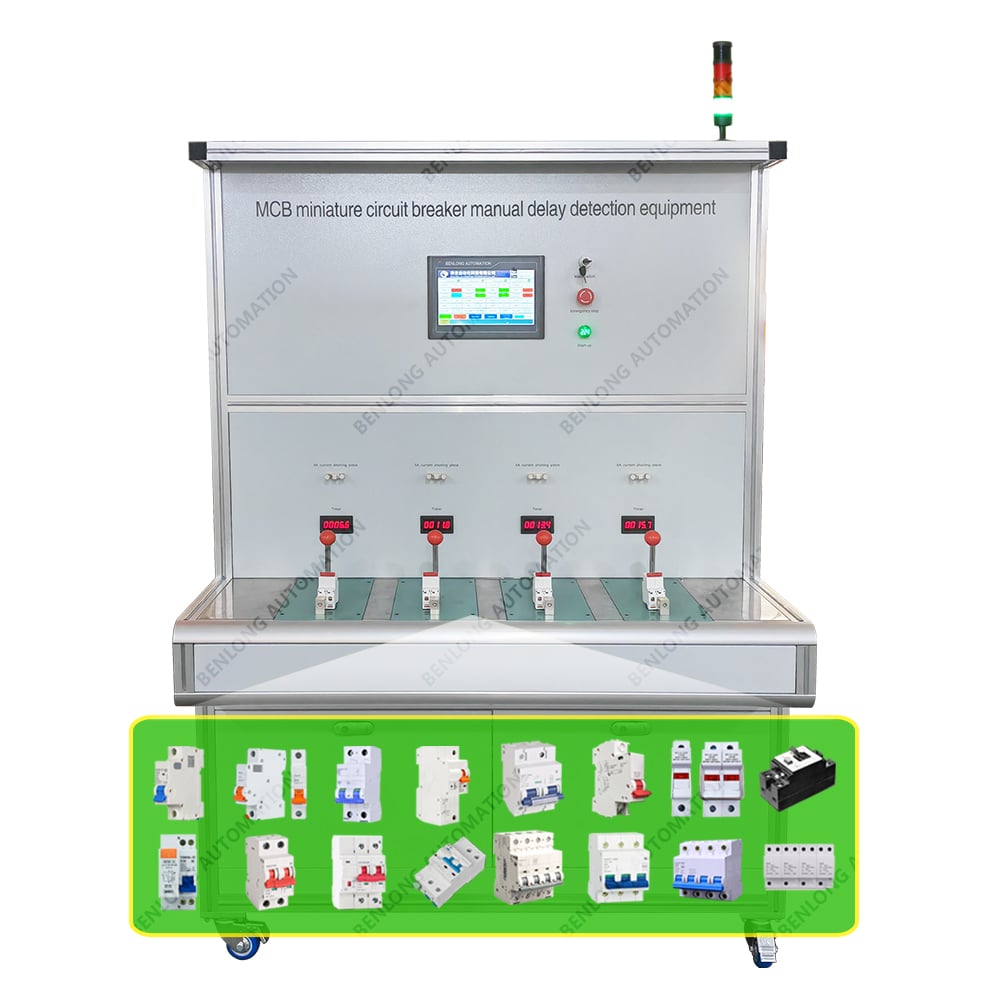
Probador del mecanismo de disparo del MCB
Máquina de ensamblaje de indexación rotativa
Preguntas frecuentes
El sistema de visión verifica los ángulos del mecanismo de apertura y cierre, registrando así el ángulo del pestillo y la base al final del recorrido de cierre y en el punto de activación. El sistema ofrece una repetibilidad de ±0,1°, lo que permite identificar posibles problemas con las tolerancias de montaje.
Un servomotor está conectado a una celda de carga (un dispositivo de medición) para aumentar la fuerza aplicada a los pestillos hasta que se liberan. El sistema registra la fuerza máxima aplicada para activar el mecanismo y genera un perfil de fuerza. Un sensor de verificación de liberación determina si el mecanismo ha regresado completamente a su posición inicial tras la activación.
Tiene razón; los dispositivos de fijación y las estaciones de prueba permiten cambios rápidos. Los mecanismos de diferentes tamaños requieren el uso de herramientas específicas (soportes/pinzas) para cada uno, mientras que los sensores de visión y fuerza son ajustables. Normalmente, el cambio de una herramienta/dispositivo de fijación a otro lleva aproximadamente entre 15 y 20 minutos.
La base de datos contiene la siguiente información: ángulo de cierre, ángulo de apertura, fuerza de contacto, fuerza de activación, fuerza máxima, estado de verificación de liberación, fecha y hora de la prueba y el código QR. Además, todos estos datos se pueden exportar a MES o CSV para la trazabilidad de lotes.
Una plataforma giratoria de 6 estaciones consta de seis estaciones (carga, visión, fuerza, liberación, marcado y descarga) y tarda entre 3 y 5 segundos en completar un ciclo en cada componente. Esto se mide y se marca simultáneamente.
Productos relacionados
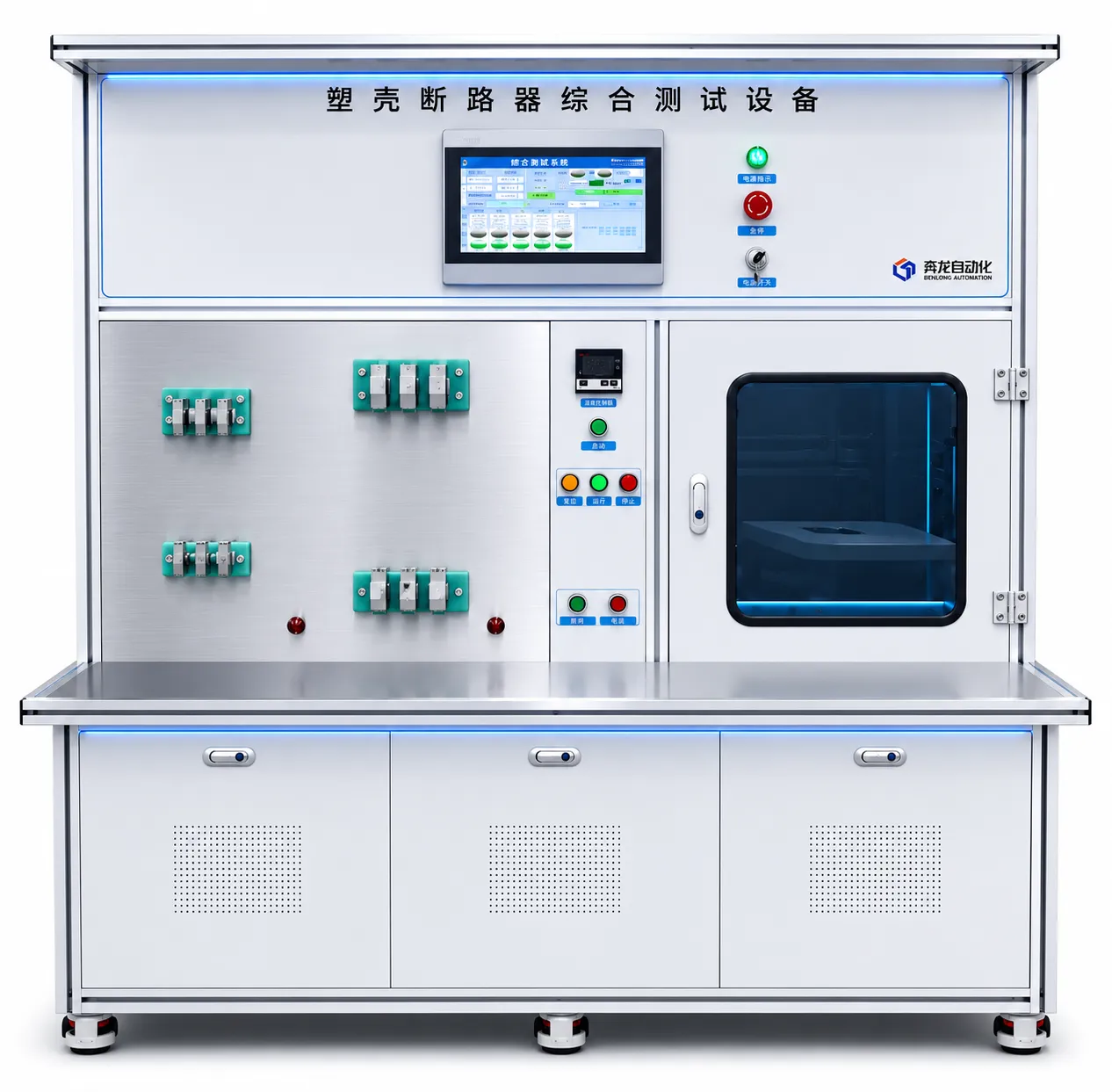
MCCB Laboratory Integrated Testing bench
Ver detalles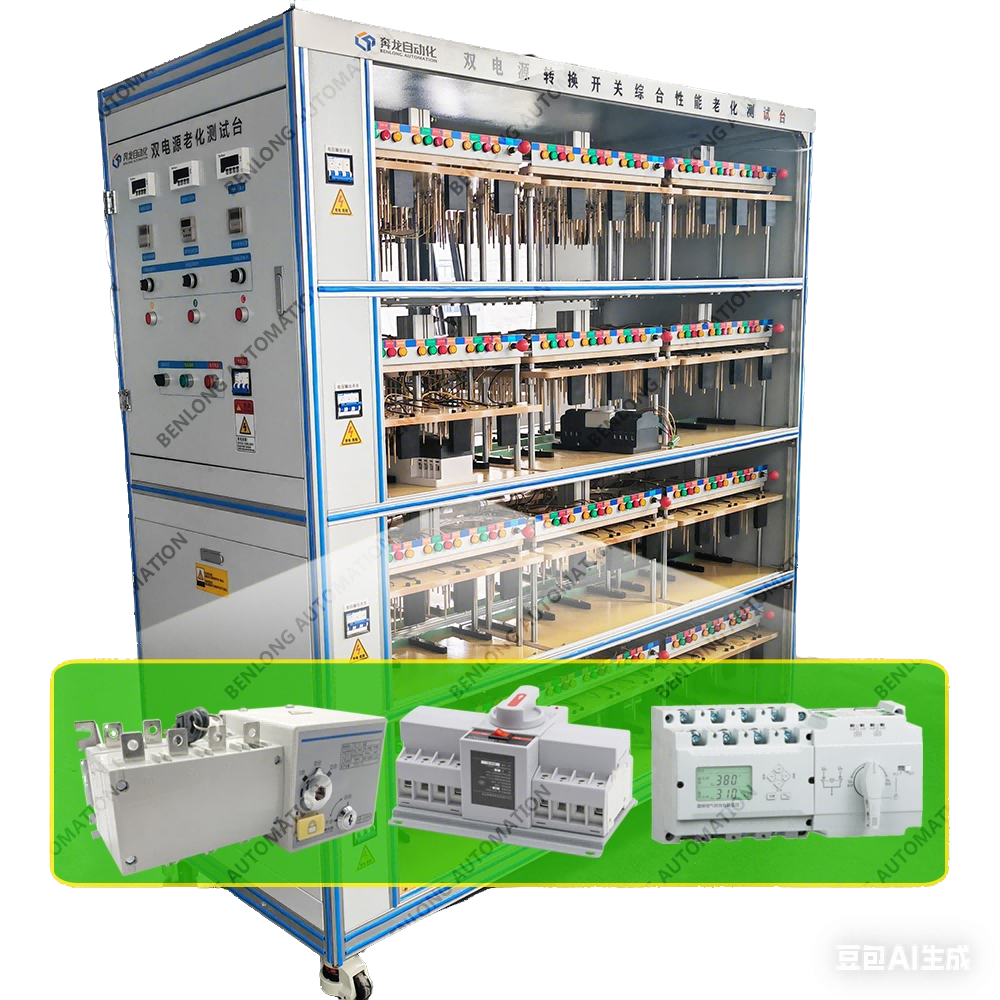
Banco de pruebas de envejecimiento ATS
Ver detalles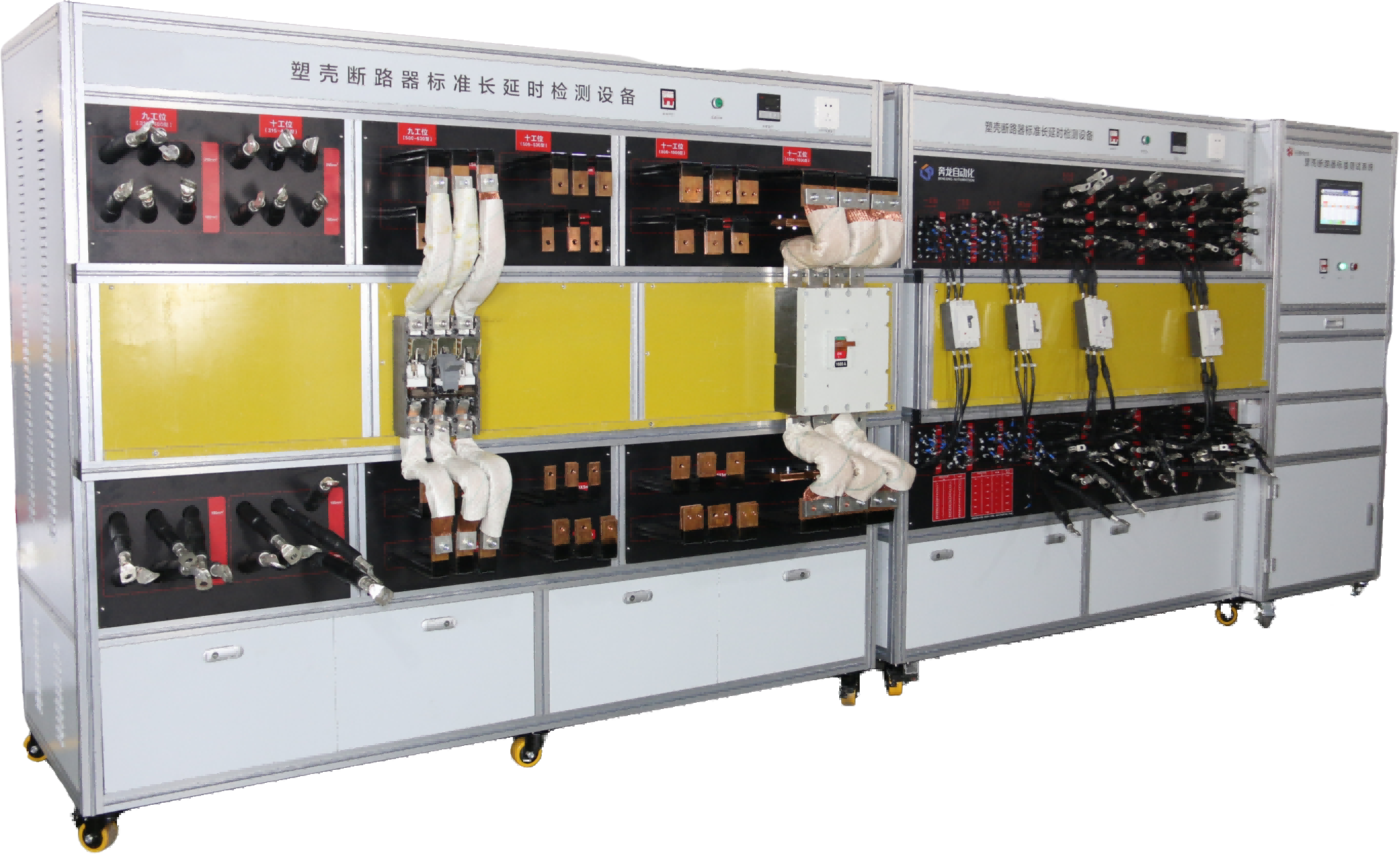
Banco de calibración térmica de larga duración para MCCB
Ver detalles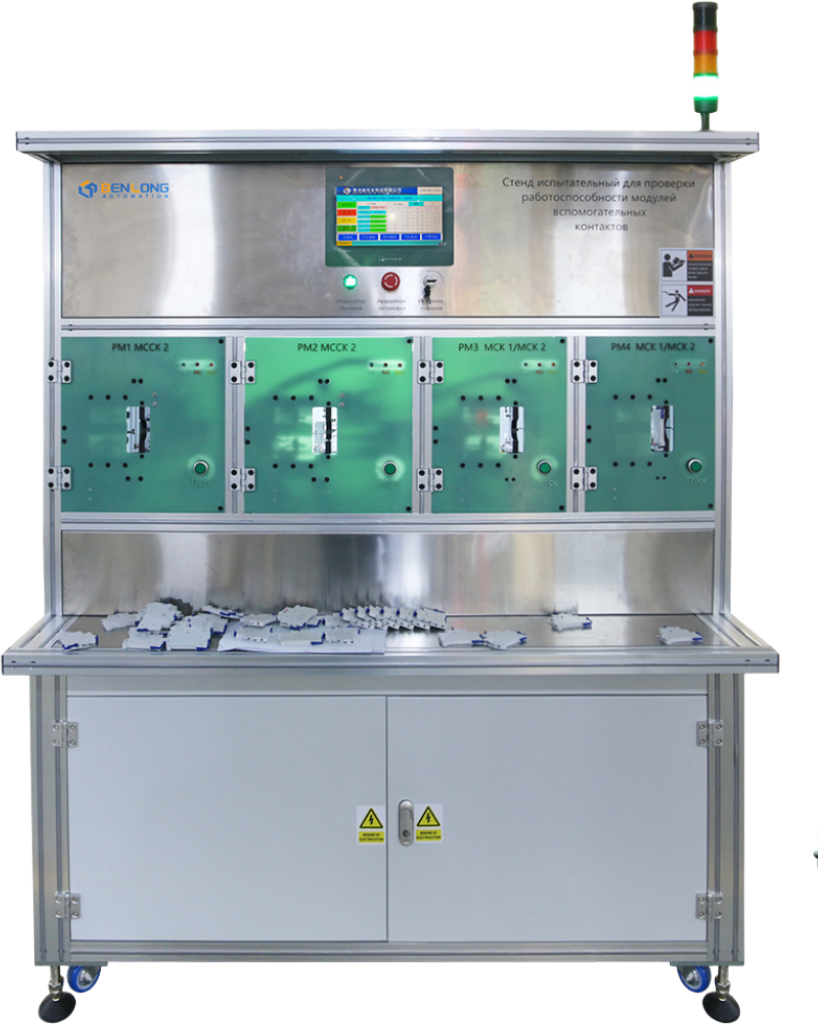
Banco de pruebas de contacto auxiliar y de señal
Ver detalles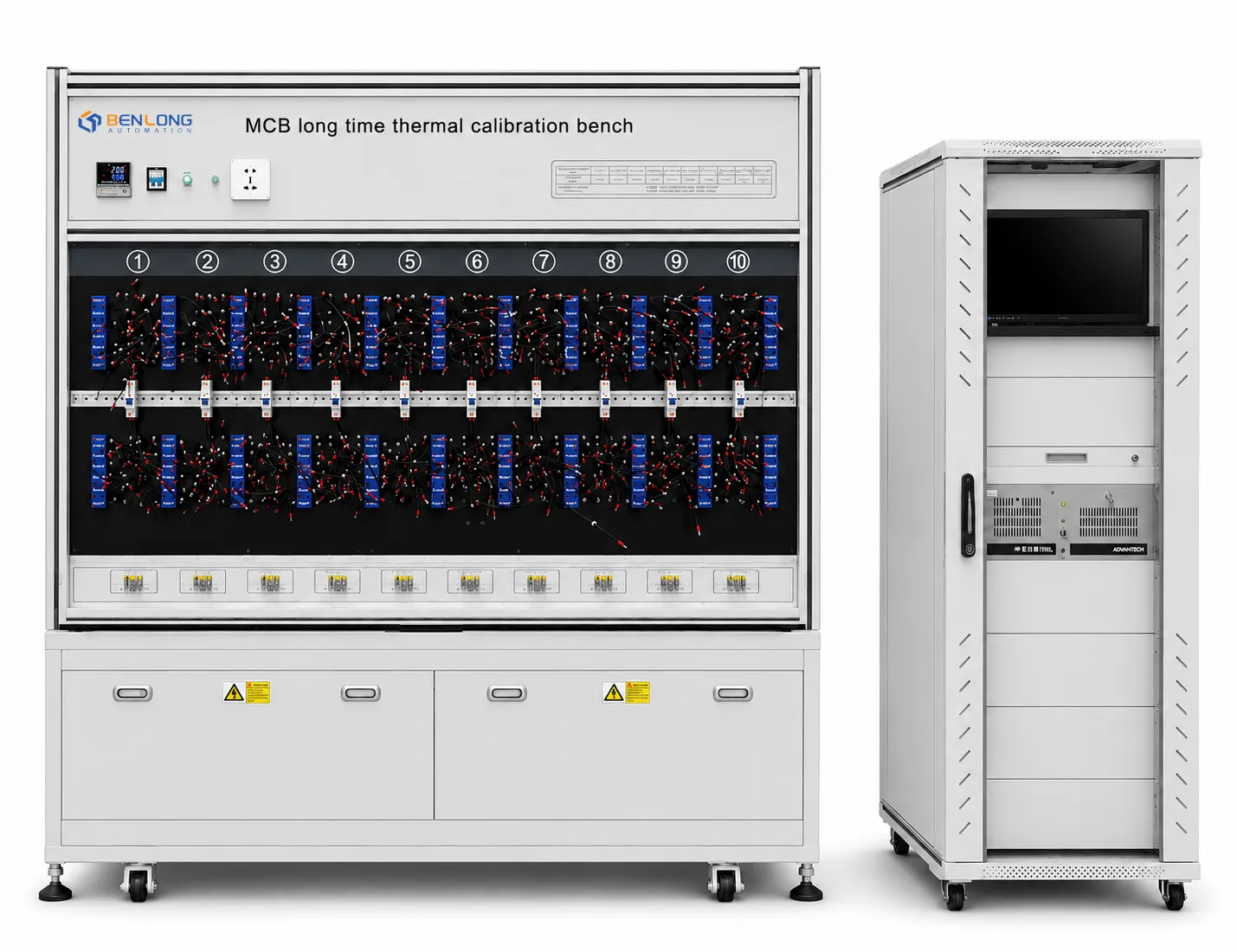
Banco de calibración térmica de larga duración para MCB
Ver detalles