benlong


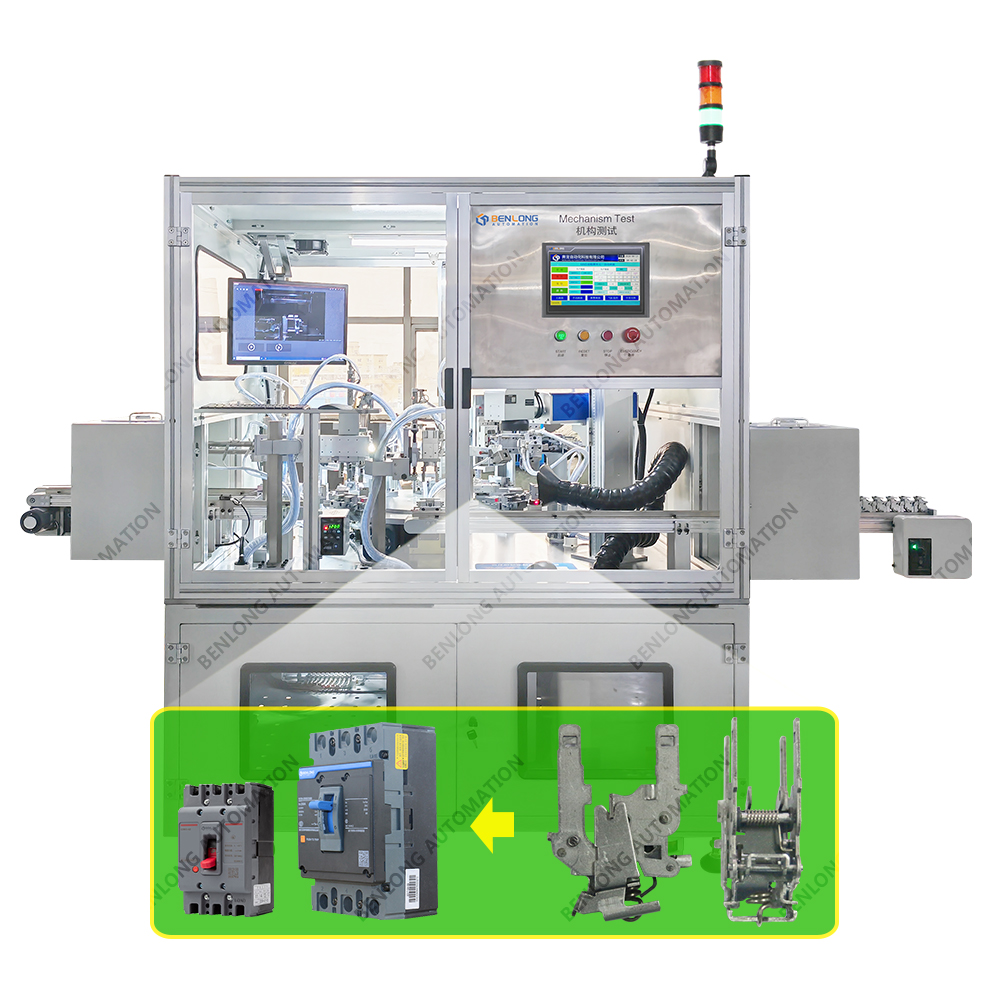

Machine d'essai du mécanisme de déclenchement MCCB
Machine d'essai automatique du mécanisme de déclenchement des disjoncteurs MCCB, équipée d'un plateau tournant à indexation. Mesure de l'angle d'ouverture/de fermeture par vision industrielle (±0,1°), essais de force de contact et de déclenchement, analyse de la force maximale, vérification du déclenchement et marquage laser QR pour une traçabilité totale. 3 à 5 secondes par pièce. Idéale pour la production en grande série de disjoncteurs MCCB.
Machine de test automatique à haut débit pour mécanisme de déclenchement de disjoncteur MCCB
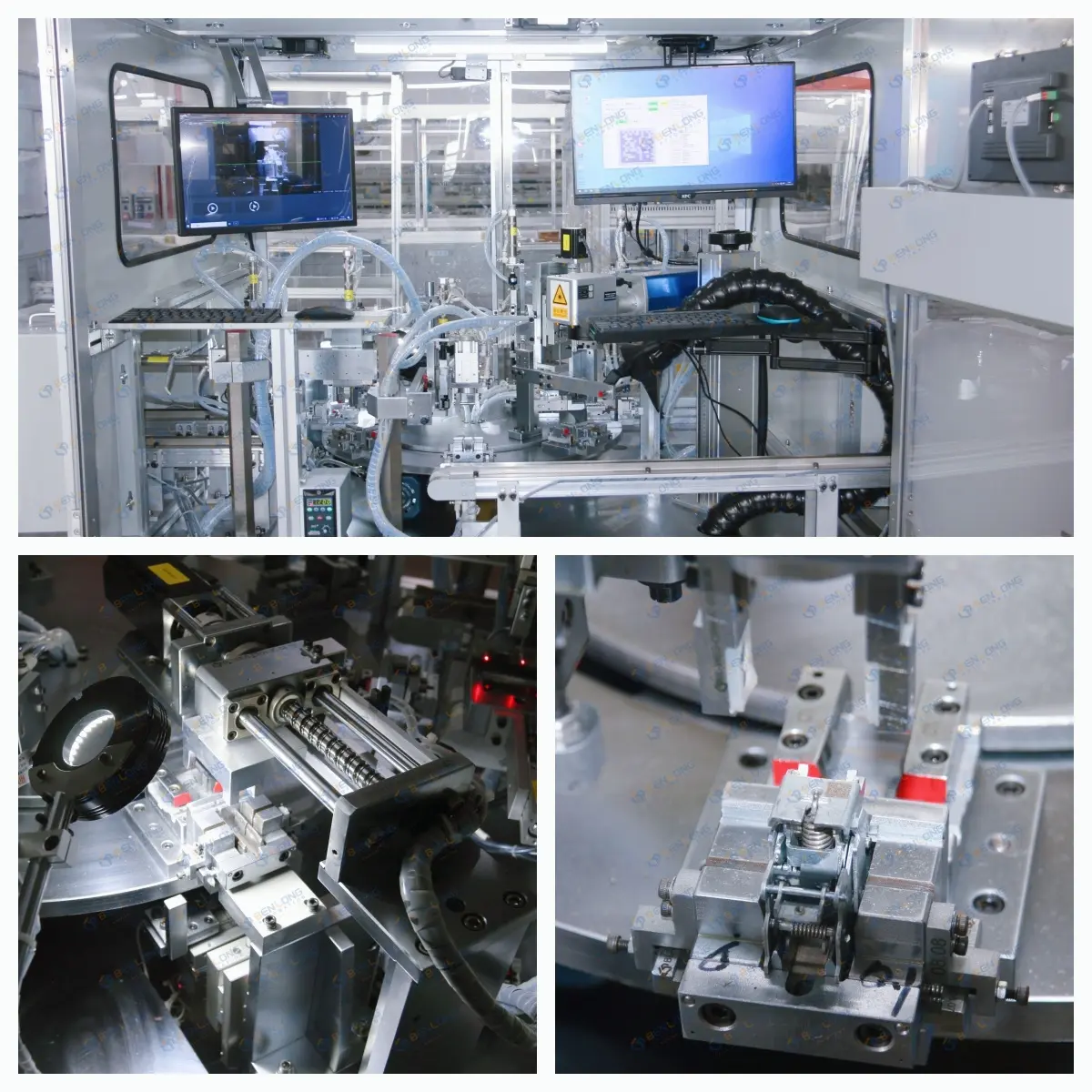
Cette machine est composée d'un mécanisme de test automatique à indexation rotative, conçu spécifiquement pour vérifier le fonctionnement et les performances mécaniques des différentes pièces d'un mécanisme de déclenchement de disjoncteur. Grâce à sa conception à plateau tournant haute vitesse et de haute précision, elle permet des tests continus et stables à des cadences de production élevées. Elle intègre plusieurs modules d'inspection, notamment la mesure par vision de l'angle d'ouverture/fermeture, la mesure des forces de contact et de déclenchement, l'analyse de la force maximale, la vérification du déclenchement et l'impression laser d'un code QR sur chaque produit pour une traçabilité complète.
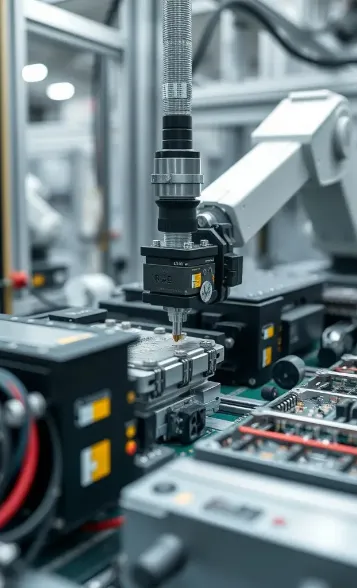
Un système de vision industrielle (caméras Hikvision) est installé sur le site d'essais pour mesurer les angles sans contact, permettant ainsi de détecter avec précision l'orientation et la régularité du mouvement. De plus, les caractéristiques force-déplacement sont enregistrées à l'aide de capteurs de force dédiés lors du déclenchement afin d'évaluer la force maximale enregistrée pendant le processus, ainsi que le comportement au relâchement.
Un automate programmable centralisé et un PC industriel synchronisent tous les tests dès leur lancement, garantissant ainsi des conditions identiques sur chaque poste de test. Chaque composant reçoit un code QR unique, gravé au laser sur la pièce une fois qualifiée, contenant l'historique complet des tests effectués jusqu'à cette qualification.
La solution décrite ci-dessus améliore l'efficacité, la précision et le contrôle qualité des fabricants de disjoncteurs MCCB en automatisant, en standardisant et en assurant la traçabilité de leur processus de test.
Délai de livraison standard : 45 à 60 jours | Mesure de l’angle de vision | Analyse de la force et des pics | Traçabilité par QR code
Qu'est-ce qu'une machine de test de mécanisme de déclenchement MCCB ?
La machine de test MCCB est un système automatisé conçu spécifiquement pour tester les propriétés mécaniques et fonctionnelles des mécanismes de déclenchement de tous les disjoncteurs boîtier moulé. Ces mécanismes sont composés de supports, de verrous, de ressorts et d'une tringlerie permettant d'actionner les contacts en cas de surcharge ou de court-circuit. La machine de test MCCB utilise une table rotative indexée à plusieurs stations de test pour vérifier les points suivants : mesure par vision des angles (ouverture/fermeture), mesure de la force nécessaire à l'actionnement d'un contact, mesure de la force nécessaire au déclenchement du circuit, mesure de la force de déclenchement maximale, vérification de la capacité de relâchement et marquage d'un code QR. Toutes les données de test sont enregistrées et associées à un code QR spécifique, garantissant une traçabilité complète des résultats. Ce système est conçu pour les environnements de production à grand volume où la répétabilité, la rapidité et l'intégrité des données sont essentielles à la production de produits de qualité. Solution personnalisée et non standard, les dispositifs de fixation, les algorithmes de vision et la plage de force sont conçus spécifiquement pour votre mécanisme de déclenchement MCCB.
Tests continus à haut débit avec plusieurs stations indépendantes.
Caméras Hikvision pour la détection sans contact des angles d'ouverture/fermeture.
Capteurs de force pour l'analyse de la force maximale et la vérification du relâchement.
Code unique lié aux données de test pour un suivi complet du cycle de vie.

Processus de test et stations clés



Spécifications techniques
| Architecture de la station d'essai | Plateau tournant à indexation rotative avec 4 à 8 stations indépendantes (personnalisable) |
|---|---|
| Mesure de la vision | Caméra industrielle Hikvision, résolution angulaire ±0,1°, sans contact |
| Plage de mesure de la force | 10 – 200 N (force de contact et force de déclenchement), précision ±1% FS |
| Analyse de la force maximale | Enregistrement automatique de la force de déclenchement maximale lors du déclenchement |
| Vérification de la version | Les capteurs confirment le bon désengagement et la réinitialisation après le déclenchement. |
| Marquage du code QR | Laser à fibre (20 W), code DataMatrix/QR, automatique après passage |
| Durée du cycle de test | 3 à 5 secondes par composant (selon le nombre de stations) |
| traçabilité des données | Résultats des tests (angles, forces, réussite/échec) liés à un code QR ; téléchargement MES |
| Système de contrôle | Automate programmable (Siemens/Mitsubishi) + PC industriel, IHM pour la gestion des recettes |
| Alimentation électrique | 380 V ±101 V 3 T 50 Hz | Air comprimé 0,6 MPa |
Principaux avantages techniques
Conception d'indexage rotatif à haut débit
L'utilisation d'un plateau tournant permet à plusieurs postes de travail d'effectuer des tests simultanément (test de chargement, test visuel, test de force, test de marquage, test de déchargement). Ceci réduit les pertes de temps dues aux arrêts et permet d'obtenir des temps de cycle aussi courts que 3 à 5 secondes par unité, ce qui le rend idéal pour les lignes de production.
Mesure de l'angle de vision sans contact
Les caméras Hikvision destinées aux applications industrielles permettent la mesure sans contact des angles d'ouverture et de fermeture d'un mécanisme, prévenant ainsi l'usure et offrant la possibilité de répéter les mesures sur plusieurs cycles. Le système détecte automatiquement tout écart par rapport à l'angle nominal, identifiant ainsi les mécanismes mal assemblés ou non conformes aux spécifications.
Analyse complète de la force et du relâchement
Grâce à des capteurs de force de haute précision, l'appareil mesure la force de contact (précharge du ressort) ainsi que la force de déclenchement (force nécessaire au déverrouillage). De plus, la force maximale lors du déclenchement est enregistrée et des capteurs vérifient que tous les mécanismes sont revenus à leur configuration normale (réinitialisation complète) après le déclenchement ; ceci est essentiel pour la fiabilité du disjoncteur.
Traçabilité complète avec marquage laser QR
Chaque appareil testé est marqué de façon permanente d'un code QR (gravure laser). Ce code QR renvoie à une base de données contenant le détail de tous les résultats des tests (angles, forces, valeur maximale et résultat : réussite/échec). Le code QR assure une traçabilité complète, de l'assemblage de l'appareil jusqu'à la fin du test du disjoncteur. Cette procédure est conforme aux exigences des normes ISO 9001 et IATF 16949.
















Témoignage client – Fabricant de disjoncteurs MCCB
Un fabricant leader de disjoncteurs à boîte de vitesses (MCCB) procédait à un étalonnage manuel des valeurs ou des pièces du mécanisme de déclenchement de la machine à l'aide de jauges ou de dynamomètres. Malgré cela, 31 TP3T de ses produits présentaient encore des défaillances sur le terrain en raison d'une force de déclenchement irrégulière. Benlong a fourni une machine de test à indexation rotative à 8 stations, capable de vérifier l'angle de vision (du mécanisme de déclenchement), de tester la force nécessaire au déclenchement et de l'enregistrer par un code QR. Après seulement 4 mois de fonctionnement :
La machine s'est amortie en 10 mois et a fourni une documentation de test complète pour un audit CEI.
Applications et intégration
Ingénierie et livraison sur mesure
Demander un devis personnalisé pour une machine d'essai de mécanisme de déclenchement de disjoncteur MCCB
Pour réaliser une analyse complète du retour sur investissement, veuillez nous envoyer vos échantillons de mécanisme de déclenchement ainsi que vos exigences de test. Nous mettrons en place un système de test d'indexation rotative complet incluant la mesure de l'angle de vision, les tests de force et la traçabilité QR.
Renseignez-vous dès maintenant
WhatsApp : +86 150 5837 0007 | Courriel : xsb@benlongkj.cn | Assistance en anglais et en chinois
Pourquoi choisir Benlong pour les essais de mécanismes de disjoncteurs MCCB ?
- Plus de 15 ans d'expérience en conception systèmes de test d'indexage rotatif pour les composants MCCB
- Mesure d'angle éprouvée par vision (caméras Hikvision) et détection de force
- Marquage laser QR intégré pour une traçabilité complète
- Débit élevé (3 à 5 s/pièce) en fonctionnement continu
- Assistance mondiale en matière de service et de pièces détachées
Un système sur mesure type comprend
– Plateau tournant à indexation rotative avec jusqu'à 8 stations
– Système de vision avec détection d'angle d'ouverture/fermeture
– Capteurs de force (pour la force de contact et la force de déclenchement)
– Logiciel d'analyse des forces maximales
– Capteurs permettant de vérifier la libération des articles après l'opération
– Machine de marquage laser à fibre de 20 W
– Automate programmable Siemens avec interface homme-machine
– Enregistrement des données ; interface MES
– Dispositifs de sécurité, installation et formation
– Durée totale de la garantie : 1 an
Banc d'étalonnage thermique longue durée pour disjoncteur MCCB
Banc d'essai de déclenchement magnétique manuel MCCB
Ligne de production automatique MCCB
Testeur de mécanisme de déclenchement de disjoncteur miniature
Machine d'assemblage à indexation rotative
Foire aux questions
Le système de vision contrôle les angles du mécanisme de déclenchement lors de la fermeture et de l'ouverture, afin d'enregistrer l'angle du loquet et du support en fin de course de fermeture et au point de déclenchement. Sa répétabilité de ±0,1° permet de détecter d'éventuels problèmes liés aux tolérances d'assemblage.
Un servomoteur est relié à un capteur de force (un appareil de mesure) afin d'augmenter la force appliquée sur les verrous jusqu'à leur déverrouillage. Le système enregistre la force maximale appliquée pour déclencher le mécanisme et génère également un profil de force. Un capteur de vérification de déverrouillage détermine si le mécanisme est bien revenu à sa position initiale après le déclenchement.
Vous avez raison ; les dispositifs de montage et les stations de test permettent des changements d'outillage rapides. Les mécanismes de différentes tailles nécessitent l'utilisation d'outillages spécifiques (supports/pinces) pour chaque mécanisme, tandis que les capteurs de vision et de force sont réglables. En général, le passage d'un outil/dispositif de montage à un autre prend environ 15 à 20 minutes.
La base de données contient les informations suivantes : angle de fermeture, angle d’ouverture, force de contact, force de déclenchement, force maximale, statut de vérification du déclenchement, date et heure du test, et code QR. De plus, toutes ces données peuvent être exportées vers un système MES ou au format CSV pour la traçabilité des lots.
Une table tournante à 6 stations comprend six stations (chargement, vision, force, libération, marquage et déchargement) et met 3 à 5 secondes pour effectuer un cycle complet sur chaque composant. La mesure et le marquage sont effectués simultanément.
Produits associés
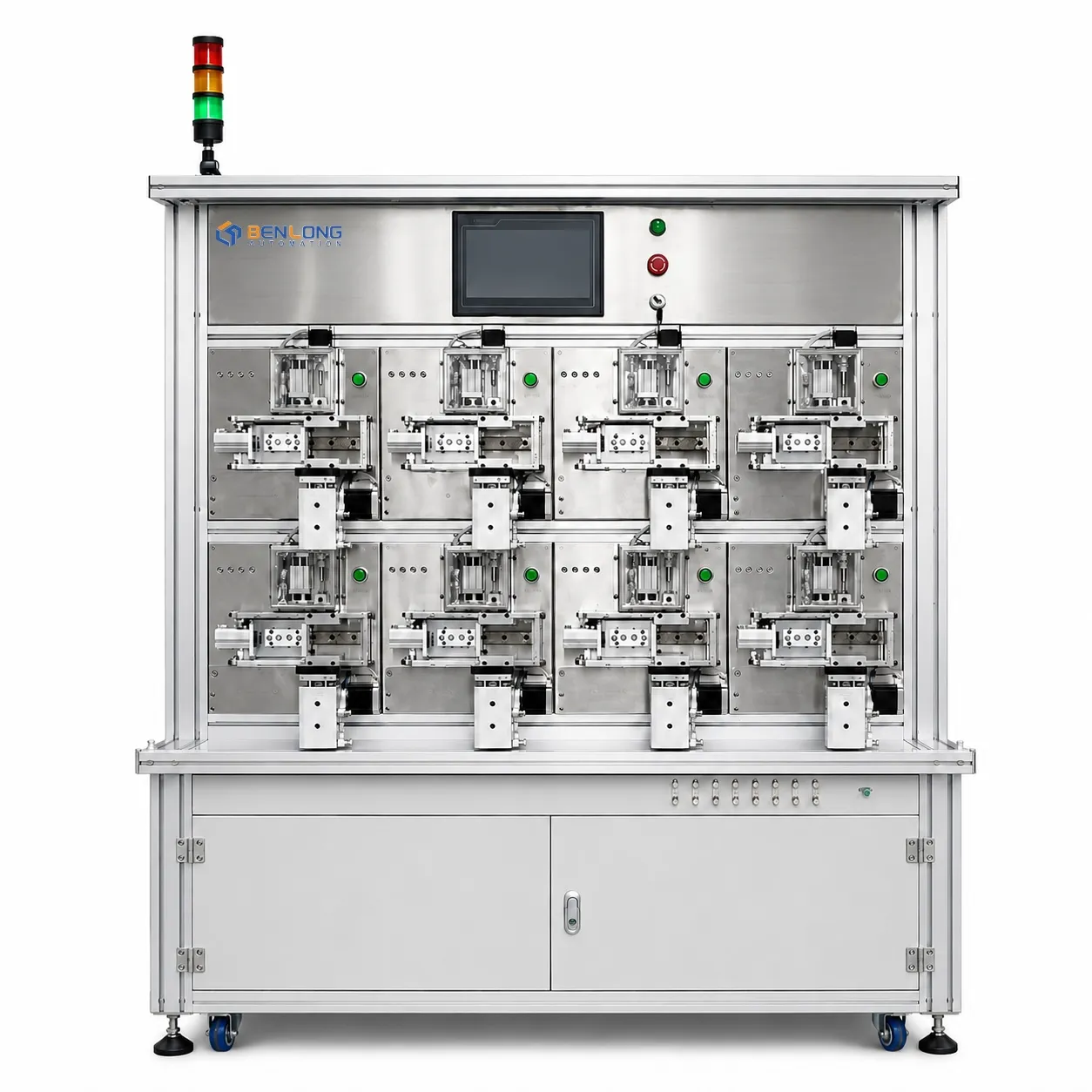
Banc d'étalonnage semi-automatique de déclenchement thermique MCB de type A
Voir les détails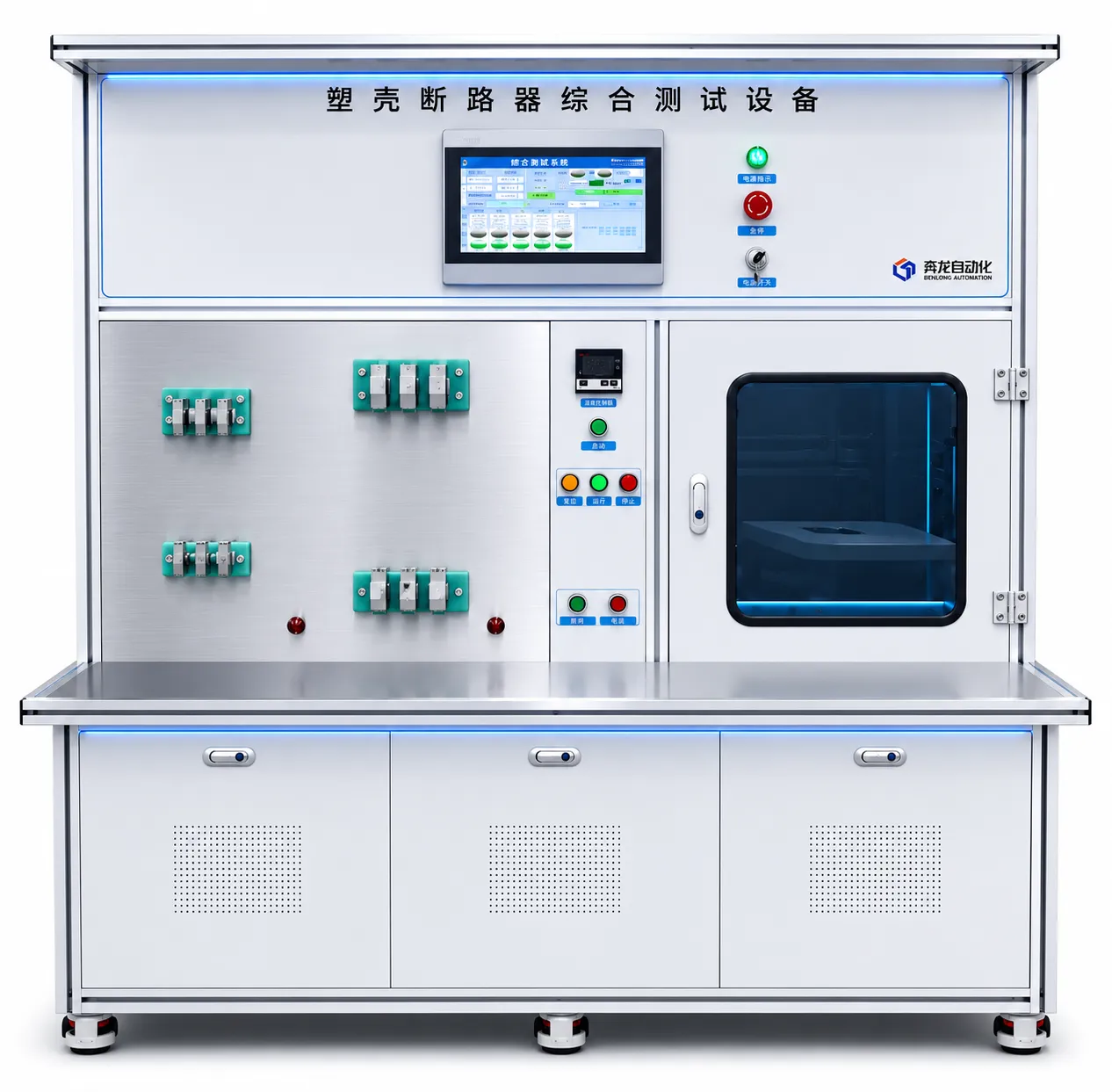
MCCB Laboratory Integrated Testing bench
Voir les détails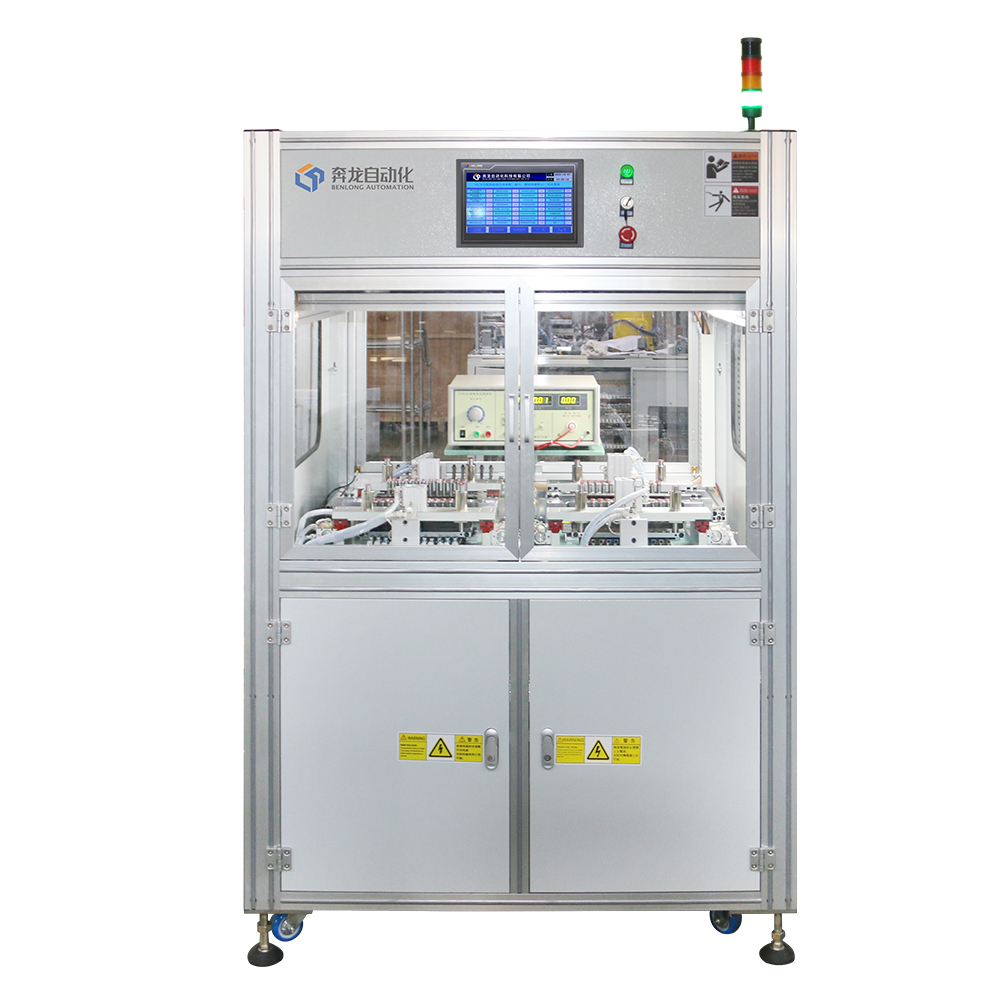
Machine de test automatique de déclenchement magnétique pour disjoncteurs miniatures (MCB) + test de fonctionnement et de haute tension
Voir les détails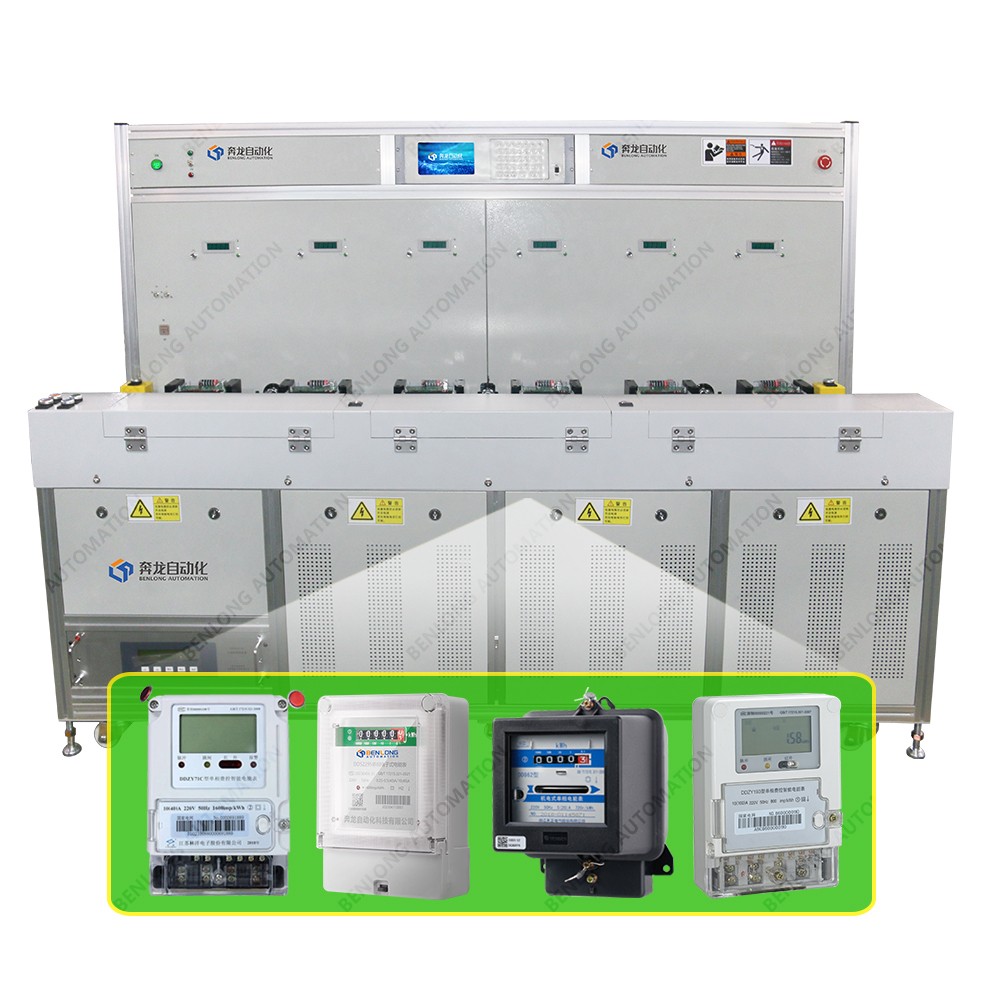
Banc d'étalonnage manuel pour compteur électrique
Voir les détails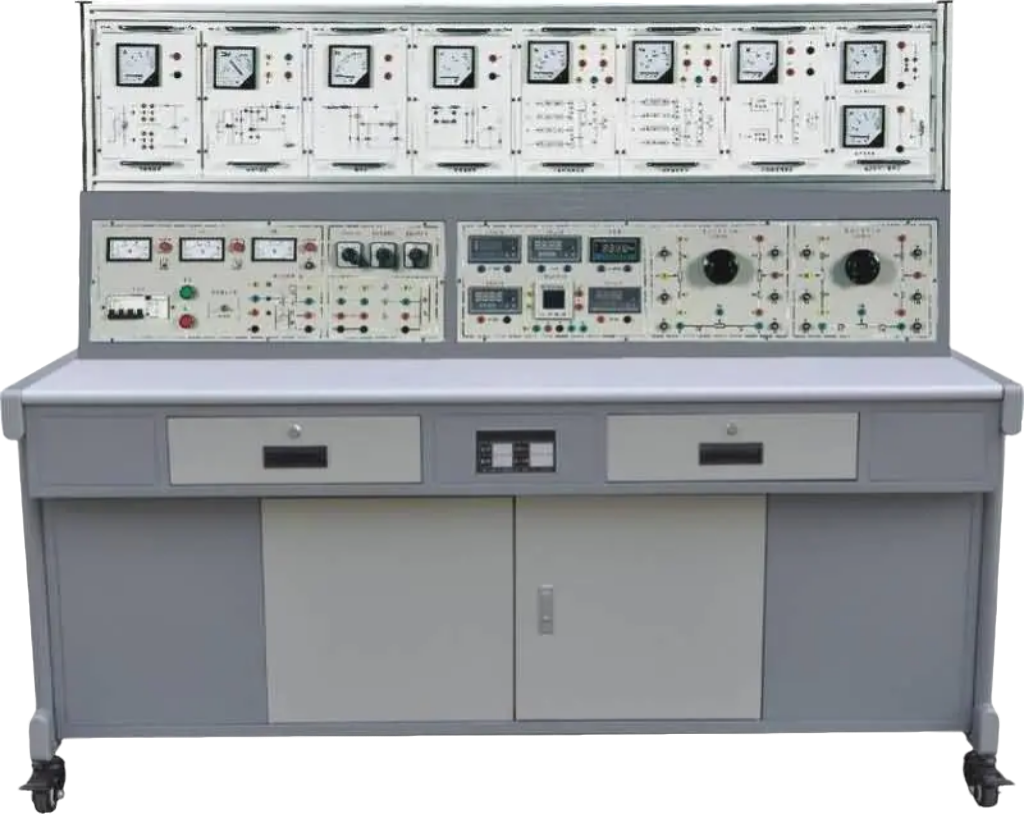
Banc d'essai de vieillissement des compteurs électriques
Voir les détails