benlong

Mitsubishi Electric Automation: PLC, Servo, HMI & Real Manufacturing Applications
Chances are that if you have ever opened an electrical cabinet of a Japanese or Asian machine, you have seen its contents inside which features a Mitsubishi PLC. The company is the one many consumers turn to when they need information about the controller, its gearboxes, touch panels, and the way they all come together.
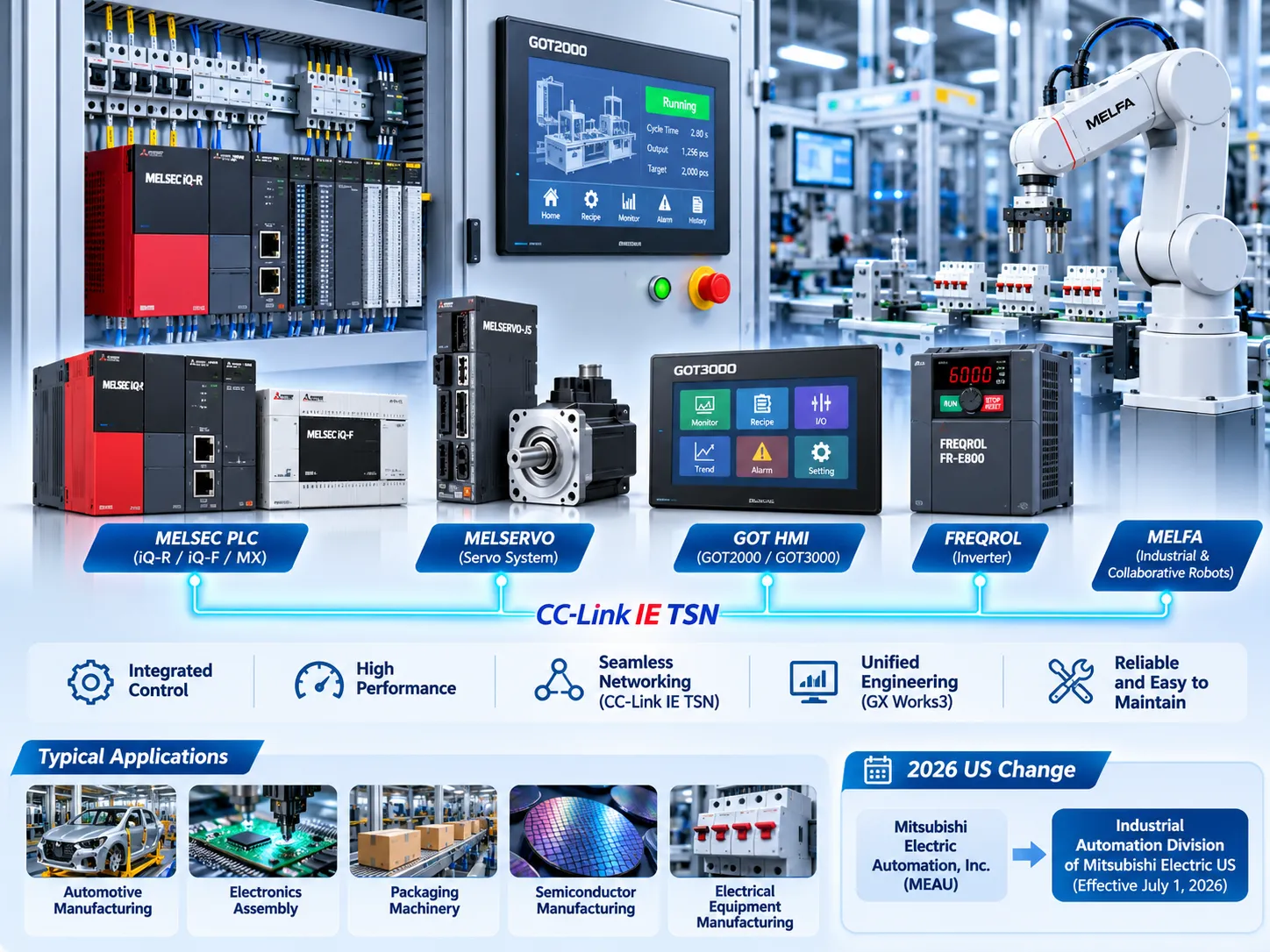
Strictly speaking, Mitsubishi Electric Automation, Inc. was a US-domiciled company responsible for selling and servicing Mitsubishi Electric’s factory automation solutions in the US. In July 2026 it became the Industrial Automation Division at Mitsubishi Electric US in the USA. At the same time, the products are the same worldwide sold under Mitsubishi Electric Factory Automation division: MELSEC PLCs, MELSERVO systems, GOT HMI devices, FREQROL inverters, MELFA robots and the software and networking parts suitable for their operation. The solutions can be applied in automotive, electronics, packaging, semiconductor and electrical equipment manufacture.
This tutorial covers the company, its products and their working together in practice.
Quick answer: Mitsubishi Electric Automation refers to the factory automation business of Japan’s Mitsubishi Electric, and specifically to its former US subsidiary, now the Industrial Automation Division of Mitsubishi Electric US. Its core products are MELSEC programmable controllers (iQ-R, iQ-F and the new MX Controller), MELSERVO servo systems, GOT human-machine interfaces, FREQROL inverters and MELFA robots, programmed mainly with GX Works3 and connected over CC-Link IE TSN.
What Is Mitsubishi Electric Automation?
The name covers two things that are easy to mix up: a global product business and a US company that sold it. Both matter if you are buying equipment or looking for support.
Mitsubishi Electric’s Factory Automation Business
Mitsubishi Electric Corporation was established in Tokyo in 1921 and is among the largest electrical and electronic corporation in the world. Its business stretches from power systems to elevators, air conditioning, space systems, and semiconductor manufacturing. In factory automation, Mitsubishi Electric operates within industrial automation systems and produces programmable controllers, AC servos, inverters, industrial and collaborative robots, CNC systems, and process machines. The company also produces low-voltage circuit breakers and switchgear, allowing it to operate in electrical equipment industry as a manufacturer of components and a supplier of systems used to create these components.
Head office: Tokyo Building, 2-7-3 Marunouchi, Chiyoda-ku, Tokyo 100-8310, Japan. Tel. +81-3-3218-2111.
Mitsubishi Electric Automation in the United States
For over a long period, Mitsubishi Electric Automation, Inc., referred to as MEAU, was the company responsible for sales, engineering and support services for Mitsubishi Electric factory automation products and CNC equipment in the US. Manufacturing, repairing and warehousing took place at Vernon Hills, Illinois. The brand is significant since a lot of English-language manuals, training materials and information about products will be found under it.
The 2026 North American Reorganization
In February 2026, Mitsubishi Electric revealed a restructuring of the North American activities that would take effect on 1 July 2026. The factory automation and the CNC sales and services were moved to Mitsubishi Electric US, Inc., based in Cypress, California, while Mitsubishi Electric Automation became a part of Mitsubishi Electric US as its Industrial Automation Division (IAD). The support operations have been consolidated while the manufacturing, repair, and warehouse premises in Vernon Hills are relocated to one of the Mitsubishi Electric US facilities in Mason, Ohio.
Mitsubishi Electric states that the aim is to boost the use of data and cross-industry solutions in North America as well as improve the efficiencies of the operations. For customers, the products, product codes, and software remain unchanged while it is the name of the company on the invoice and its support organization that change.
Mitsubishi Electric Factory Automation in India
Mitsubishi Electric India’s Factory Automation and Industrial Division, headquartered in Pune, is the local division for customers in India. It has about 425 workers, 18 sales offices, 10 repair shops and 100 partners in the country. In December 2023, Mitsubishi Electric announced the opening of a plant located near Pune in Talegaon to produce inverters and other manufacturing-related products close by. Local availability of stocks, training and repair services is one of the reasons why many manufacturing companies in India prefer Mitsubishi controls.
Mitsubishi Electric Automation Products and Solutions
The Mitsubishi Electric automation products range is large, but the main families fall into a handful of groups. The table shows the ones you are most likely to meet on a production machine.
| Category | Main series | What it does on a machine |
|---|---|---|
| Programmable controllers | MELSEC iQ-R, MELSEC iQ-F, MELSEC MX Controller | Runs the machine’s logic: sequences, interlocks, counting, timing and, increasingly, motion |
| Servo systems | MELSERVO-J5 | Precise position, speed and force control for pressing, indexing, pick-and-place and feeding |
| HMIs | GOT2000, GOT3000 | Operator screens for recipes, alarms, production counts and diagnostics |
| Inverters | FREQROL (for example FR-E800 and FR-A800) | Speed control of AC motors on conveyors, fans, pumps and spindles |
| Robots | MELFA industrial robots, MELFA ASSISTA collaborative robots | Loading, assembly and handling, controlled from or alongside the PLC |
| Engineering software | GX Works3, MELSOFT iQ Works, GT Designer | Programming PLCs, configuring servos, designing HMI screens |
| Industrial networks | CC-Link IE TSN, CC-Link IE Field | Connects controllers, drives, I/O and HMIs with synchronized, high-speed communication |
What makes the range attractive is not any single product but how the pieces are designed to work together. A MELSEC controller, MELSERVO drives and a GOT panel share one network, one engineering environment and one set of diagnostics. An engineer who knows one part of the system can usually find their way around the rest. Siemens takes a similar approach with its Totally Integrated Automation concept, and the comparison is worth reading if your plant runs both brands.
Mitsubishi MELSEC PLCs: How They Control Industrial Machines
For most machine builders and buyers, a Mitsubishi Electric PLC is the heart of the system. The MELSEC family covers everything from small stand-alone machines to large production lines.
MELSEC iQ-F vs iQ-R
| MELSEC iQ-F (FX5) | MELSEC iQ-R | |
|---|---|---|
| Form factor | Compact brick-style CPU with expansion modules | Modular rack system with a base unit and plug-in modules |
| Typical use | Single machines, stations and small automated cells | Large machines, production lines and process systems |
| Scale | Hundreds of I/O points | Thousands of I/O points, multiple CPUs on one base |
| Motion | Built-in positioning and simple motion modules | Dedicated motion CPUs and modules for many synchronized axes |
| Software | GX Works3 | GX Works3 |
| Background | Successor to the long-running FX series | Successor to the Q series |
In practice, iQ-F is the common choice for a stand-alone assembly or test machine, while iQ-R is chosen when one controller has to coordinate a whole line or when redundancy and many motion axes are needed. The new MX Controller, covered below, sits alongside both for machines where sequence and motion control need to run on one platform.
Mitsubishi PLC Programming with GX Works3
Mitsubishi PLC programming for the current iQ-R, iQ-F and MX Controller CPUs is performed in GX Works3 environment, which is applicable to ladder diagram, structured text, function block diagram, and sequential function chart as well as involves hardware configuration, networking and servo settings in one project. However, older Q and L series controllers are programmed in GX Works2 software. It is also necessary to check whether any plants are still in operation with machines that have been programmed in much older GX Developer.
From a practical point of view, it means that if the maintenance staff has already had GX Works3 licenses and has knowledge of ladder logic of MELSEC type, the Mitsubishi PLC can support a new machine.
Connecting PLCs, Servo Drives and HMIs
CC-Link IE TSN is responsible for connecting the entire system together. It transmits data in 1 Gbps speed, and by applying Time-Sensitive networking, it reconciles the transmission of motion data and regular I/O data. MELSERVO-J5 servo amplifiers on CC-Link IE TSN can achieve frequency response of 3.5 kHz and cycle time of 31.25 µs; Mitsubishi Electric claims that it is possible to manage up to 256 axes with the help of one system.
GOT HMI is a part of the same network and can collect information from PLC equipment directly. Operators can choose recipes, read alarms, and check counts without any issues, while technicians are able to track PLC errors and monitor the servos from the control panel.
Industrial Communication and Machine Data
Modern machines are expected to report to MES and quality systems, not just run. The new GOT3000 HMI includes a built-in OPC UA server and client, encrypted communication and a built-in VPN for secure remote access, which makes it a straightforward bridge between the machine and plant IT. On assembly machines, the same data path carries camera results; our article on automated visual inspection checkpoints shows where vision typically sits on a breaker or meter line.
Example: Controlling a Terminal Block Assembly Station
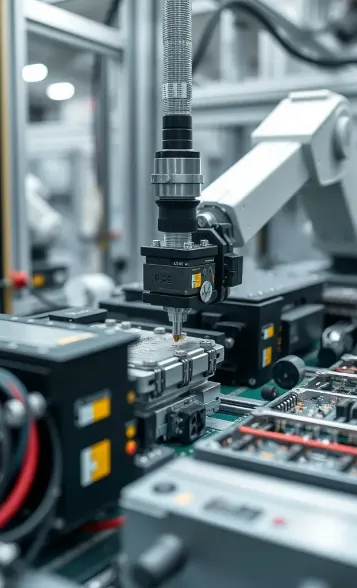
Let’s look at an example of a station assembling a screw-clamp terminal block. The process involves the usage of vibratory bowl feeders for the provision of clamps, parts and screws. The screw drives the portion into the housing while sensors and the camera take care of verifying the placement of the items.
1.The PLC oversees the process, confirming that the needed component of each feeder is in position.
2.The servo drive receives the PLC input and sends back the received readings
3.The HMI consists of a recipe for terminal size.
4.Inspection results and alarms are communicated via HMI or PLC.
Though less common, our solution allows the users cut costs on the repairs since everything is provided by a single provider.
Why Manufacturers Choose Mitsubishi Electric Automation
Mitsubishi Electric is one of the few international PLC names in the world together with Siemens, Rockwell Automation, Omron, and Schneider Electric. When manufacturing plants go for this name, the reasons tend to be the following:
Integrated solutions. PLC, servos, HMIs, inverters, and robots are supplied by one vendor with common engineering environment and network.
Motion control. Mitsubishi drive systems are popular in fields where speed and synchronization are key – electronics production, packaging, and stamping.
Education and experience. In Japan, China, Southeast Asia, and India, many engineers and maintainers have learned how to operate MELSEC PLCs during their education.
Presence of spare parts and service. Local offices, repair centers, and distributors facilitate keeping operating equipment.
Long life cycle of a product and options for upgrades. Mitsubishi provides its clients with upgrade options for outdated models; it is crucial for companies that keep their machines in operation for years.
Why Customers Specify a PLC Brand in Machine Contracts
People who have ever purchased custom-made equipment have noticed this in the technical agreement: “PLC: Mitsubishi Electric” or “PLC: Siemens S7-1500”. The point of such statements is not just its brand loyalty. The plant where this equipment is being operated owns hundreds of machines from one vendor, which means good programming software and spare CPUs and I/O modules are available on site. Maintenance specialists have the same trainings and skills based on one programming style for all machines.
If a new machine with an unknown PLC brand is acquired, everything goes wrong. Staff will have to learn new software, buy new spare parts, undergo additional training, etc.
Mitsubishi Electric Automation Applications in Manufacturing
Applications for Mitsubishi PLC automation are used in many discrete manufacturing processes, such as:
Automotive production, which includes assembly in body and assembly lines, testing of parts and production where the iQ-R controllers and MELFA robot-based systems are used.
Electronics assembly, where fast placement, dispensing and moving of the product has significance.
Packaging machinery, where product filling, labelling, box packing or palletizing operations are performed with the help of servo-driven systems and inverters.
Electrical appliance manufacturing, where a variety of tasks are completed by a multi-station systems that combine feeders, presses, cameras and electric tests.
Precision assemblies, including small-size parts that require pressing, screwing and inspection – in this case, automatic machines are frequently adapted by using different recipes for varying product sizes.
The electrical apparatus is just one example of the importance of integration in control systems. One assembly unit can work with several feeders, a servo press, a screwdriver, a camera and perform the ET test in less than a minute. As more of these machines feed data to quality systems, the controller increasingly connects to AI vision inspection, electrical test results and plant-level software.
What’s New in Mitsubishi Electric Automation?
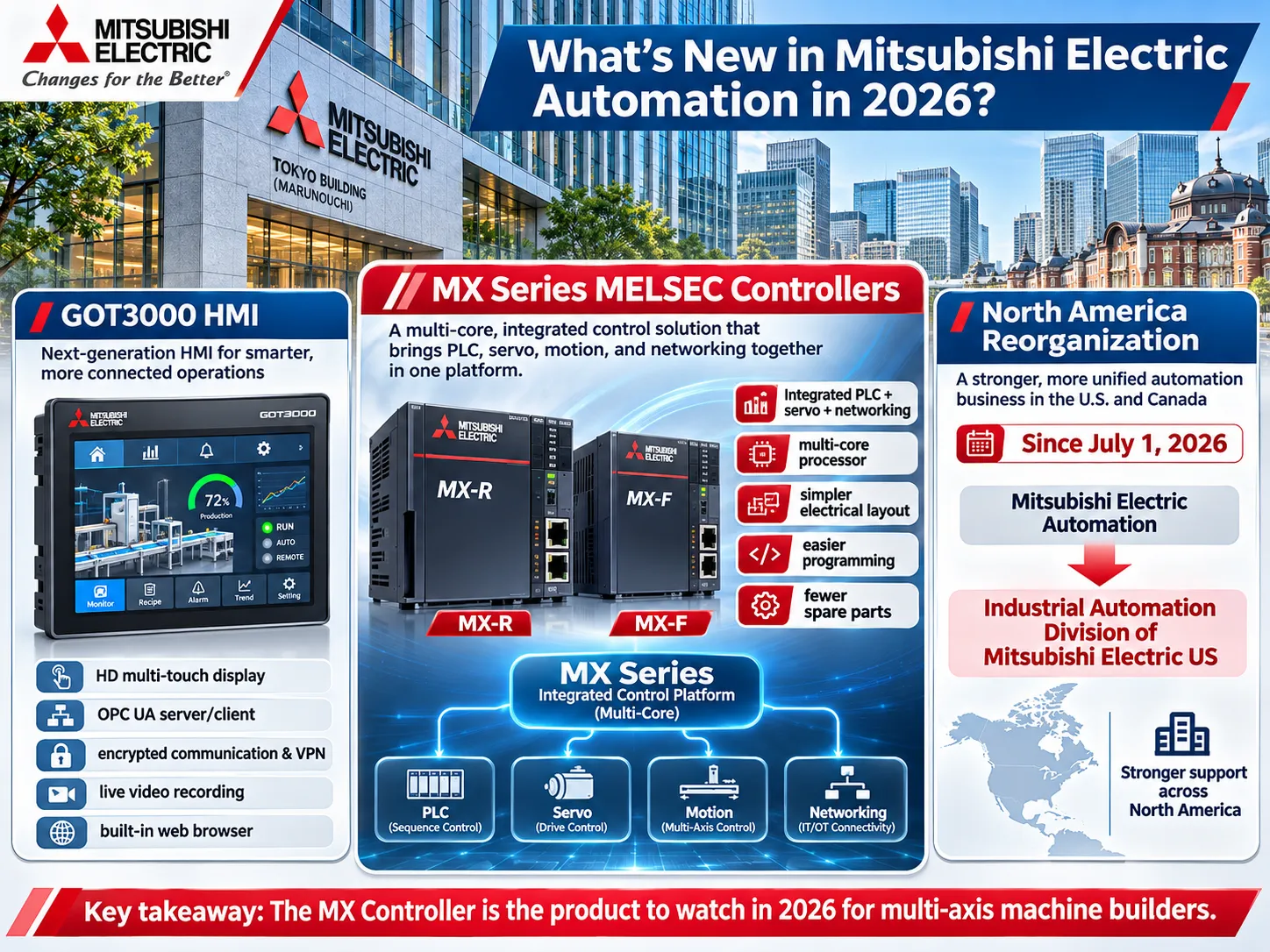
In 2026, Mitsubishi Electric Automation introduced three major innovations:
i. GOT3000 HMI – a brand new generation of HMIs, launched globally in May 2026, featuring high-definition multi-touch display, OPC UA server and client, as well as the VPN and encrypted communication capabilities.
ii. The MX Series of MELSEC Controllers – an all-in-one integrated control solution providing PLC, servo, and networking control in a compact multi-core processor with MX-R and MX-F versions.
iii. Reorganization of Mitsubishi Electric Automation in North America, where the company has been operating under the umbrella of Mitsubishi Electric’s Industrial Automation Division since July 1, 2026.
The MX Controller is worth paying attention to for machine builders and operators alike as it facilitates minimizing the number of control units in multi-axial systems, which means a simpler electrical layout, programming, and spare parts acquisition.
Application Case: Mitsubishi PLCs Used in Custom Electrical Assembly Machines
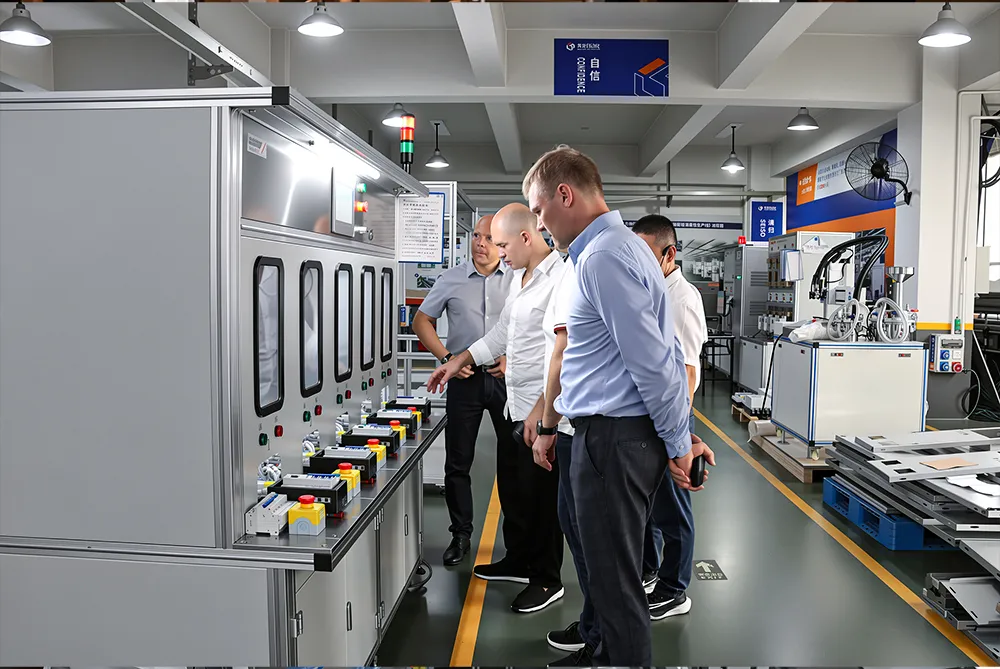
At Benlong Automation, we manufacture customized assembly and testing machines for low-voltage electrical components, including circuit breakers, contactors, and terminal blocks. When it comes to PLCs, it is always one of the first questions in any international project, with Mitsubishi Electric being one of the most frequently requested brands.
As for particular cases, at the request of an Indian manufacturer of terminal blocks and interfacing products, Benlong was hired to deliver three terminal block assembly machines, with all of them equipped with Mitsubishi Electric PLCs. The first machine was already delivered, while the other two are still in design.
The customer’s demand influenced the project from the start:
1) Scope of operations – feeding, positioning, pressing, and quality of terminal block components making sure each machine is suitable for customer-specified parts and tools.
2) Control standard – Mitsubishi PLCs installed on each machine, providing customer’s maintenance service team with one platform across all three machines and existing equipment.
3) Engineering solutions – non-standard mechanics, programming PLC processes, coordination of feeders, presses, and control testing processes, technical advisability, and compliance with the customer’s technical specifications.
The above-mentioned case illustrates the point I made before. For a manufacturer having a Mitsubishi-based maintenance unit, a PLC brand that was chosen for a new machine is an important part of its value.
Benlong Machines Available with Mitsubishi PLC Control
The terminal block clamp automatic assembly machine automates feeding, servo pressing and inspection of terminal block clamps, and can be built with a Mitsubishi PLC to match the customer’s standard. The MCB semi-automatic assembly machine is a PLC-controlled assembly station for miniature circuit breakers, suited to plants moving from manual to automated assembly; its PLC can also be specified to match the customer’s platform.
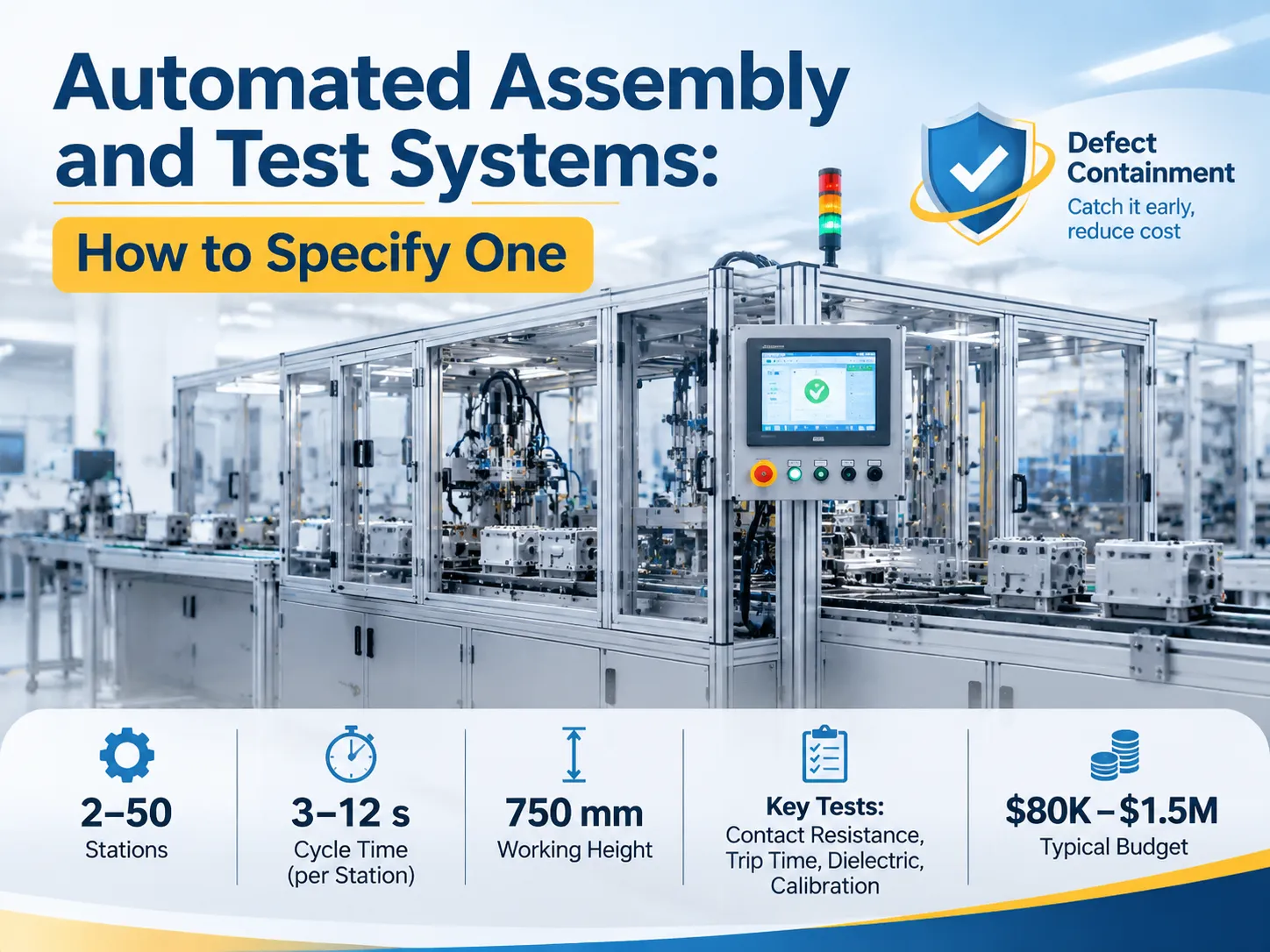
If you need a Mitsubishi PLC assembly machine, it is worth confirming at the quotation stage which PLC series, HMI, servo and network the builder will use, how program source code and documentation will be handed over, and which spare parts will ship with the machine. Our guide on how to specify automated assembly and test systems covers the rest of the technical agreement, from cycle time to acceptance tests.
Benlong Automation is an independent machine builder and is not affiliated with Mitsubishi Electric. MELSEC, MELSERVO, GOT, FREQROL, MELFA and CC-Link IE TSN are trademarks of their respective owners.
Frequently Asked Questions
What is Mitsubishi Electric Automation?
The factory automation division of Mitsubishi Electric is called Mitsubishi Electric Automation. The company has numerous well-known products under its name including the MELSEC Programmable Logic Controllers (PLCs), MELSERVO servo drives, GOT Human Machine Interfaces (HMIs), FREQROL frequency inverters and MELFA industrial robots. It should be noted that Mitsubishi Electric Automation prior to July 1, 2026 has also referred to Mitsubishi Electric Automation, Inc., which is a company that sold and supported the mentioned products in the USA.
Is Mitsubishi Electric Automation part of Mitsubishi Motors?
No. Mitsubishi Electric and Mitsubishi Motors are separate companies that share the Mitsubishi name and heritage. Factory automation products such as MELSEC PLCs come from Mitsubishi Electric Corporation, headquartered in Tokyo.
What is the difference between MELSEC iQ-F and iQ-R?
The MELSEC iQ-F is a compact PLC that can be used for manufacturing and formation of machine parts with the use of expansion modules and CPU-based devices. The MELSEC iQ-R is a type of a modular rack system that can be applied in various sorts of big machines and production lines due to its ability to perform more I/O.
What software is used to program Mitsubishi PLCs?
GX Works3 is used to program the new PLC families MELSEC iQ-R, iQ-F and MX Controllers, allowing programming in ladder logic, structured text, function block diagrams and SFC. Older PLCs of the Q and L family use GX Works2 for programming. The operator interface screens of the GOT are designed using GT Designer, whereas MELSOFT iQ Works is the suite that combines the various programming applications for use in the MELSEC product line.
Can I specify a Mitsubishi PLC on a custom assembly machine?
Yes. It is possible to work with various PLC manufacturers, by taking into account the series of the PLC to be used, as well as the HMI, servo systems and network specifications within the scope of this technical cooperation. Ensure that warranties regarding documentation, system codes and spare parts supply for your machine are established in the agreement so that your machine is suitable for your maintenance system.
References
- Mitsubishi Electric – Mitsubishi Electric to Restructure North American Operations (February 2026)
- Mitsubishi Electric US – Structural Reorganization of United States Business (February 2026)
- Mitsubishi Electric US – Mitsubishi Electric launches next-generation GOT3000 HMI (May 2026)
- Automation.com – Unify, Simplify, Accelerate: MX Controller (June 2026)
- A3 – Mitsubishi Electric Automation releases MELSERVO-J5 series
- Mitsubishi Electric India – Factory Automation and Industrial Division
- Mitsubishi Electric – New factory in India for FA products (December 2023)
- Mitsubishi Electric Corporation – Contact and head office
- Mitsubishi Electric US – Industrial Automation website
Need Custom Assembly Equipment with Mitsubishi PLC Control?
Benlong Automation designs custom assembly and testing machines for low-voltage electrical components, including terminal blocks, circuit breakers and contactors. Mitsubishi PLC configurations, or another PLC brand of your choice, can be specified to match your plant standard. Send us your product samples, target output and control requirements, and our engineers will propose a machine concept.