benlong
Automated Assembly and Test Systems: How to Specify One
Many of the companies to be found in the automated sphere make one obvious error in the process of implementing the system. The automation of the assembly section is done first, because it is easy to see, and creates yet another bottleneck during the testing process, where a small bench with two operators and a clock is put at the end of the production line. The speed of production increases considerably and starts running a muck, as the bench for testing becomes a bottleneck, thus enabling the delayed discovery of the defects that should have been eliminated at station four prior to the products being sent to be packed. The success of the deployed systems can be traced back to the fact that all processes within this systems have been designed exactly vice versa: the testing stage needs to be performed where the defect is created in the first place.
The author of this paper happens to be a building company that operates in the field mentioned, so it becomes evident from the content of this paper that the info that is to follow pertains namely to the area of proficiency in the automated systems design mentioned above.
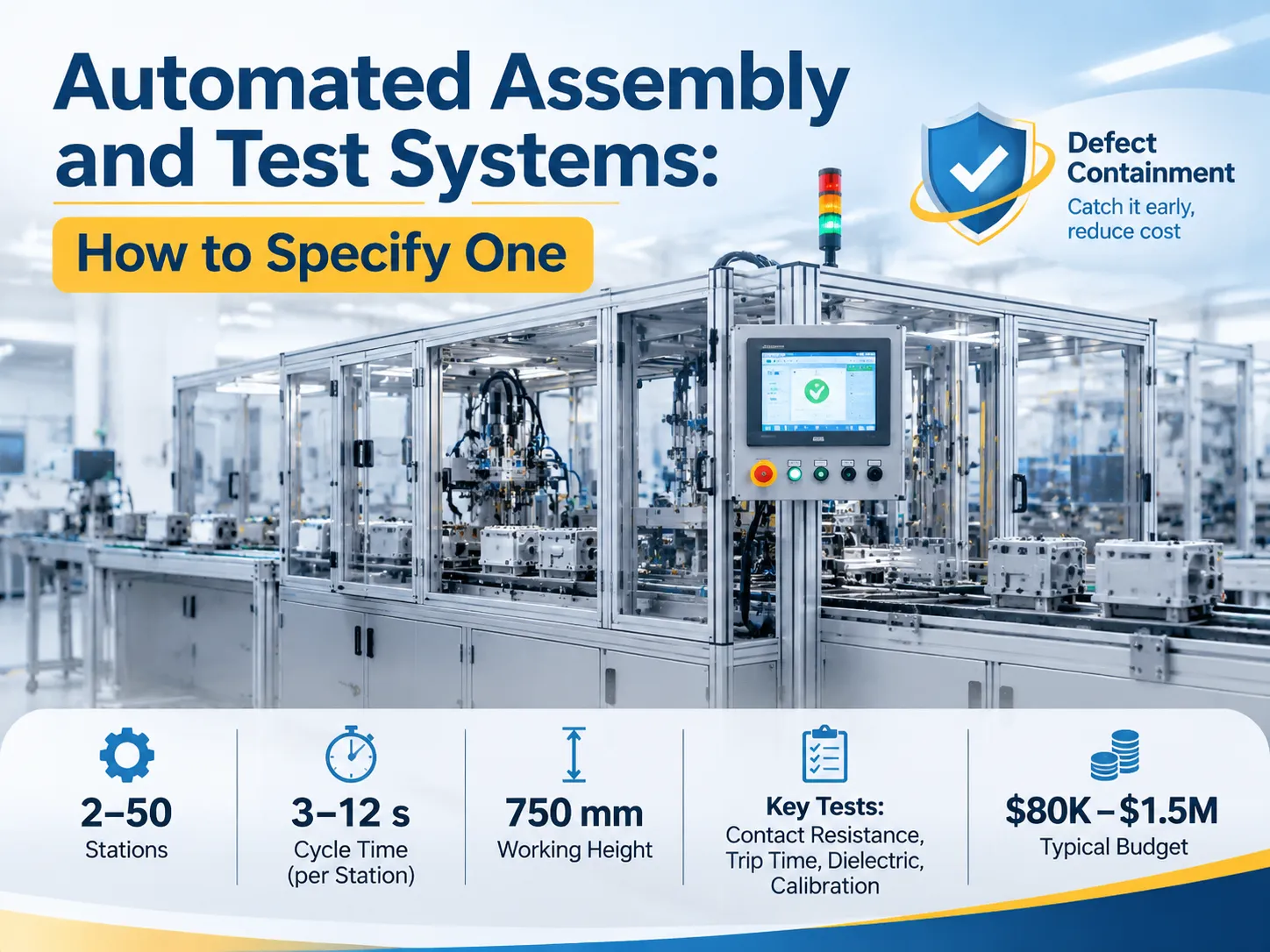
A system for testing and assembly by means of automation integrates a testing station for assembly that is connected to the succeeding testing process throughout a system designed for transfer and utilized as a system of its own. The system’s goal is not to save labor but to eliminate defects. Unfortunately, it calls for the automation of defects at the point of assembly. For low-power devices system operates 2-50 assembly stations ranging from 750 mm in height with a synchronous or asynchronous cycling period that lasts from 3 to 12 seconds. Any assembly operation involves checking contact resistance, operation time, dielectricity, and calibrating. The price of such system varies from $80000 to $1500000 depending on the level of automation.
What an Automated Assembly and Test System Actually Is
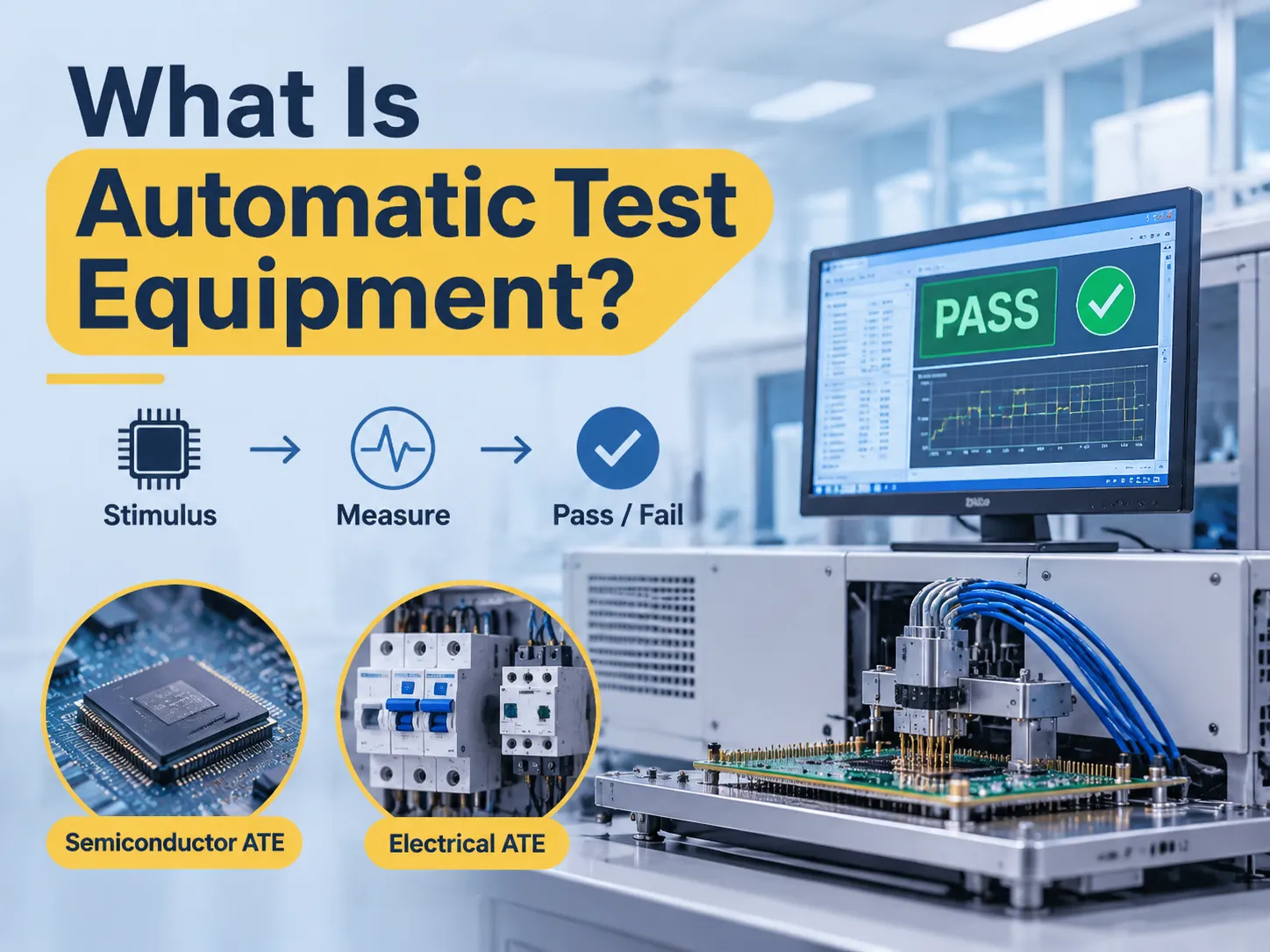
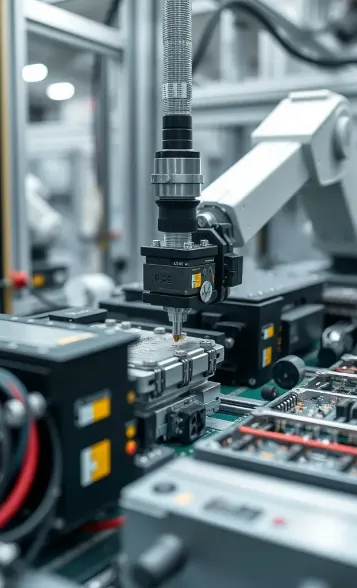
The term refers to a device that combines multiple functions. Execution of the assembly process involves assembly stations that meticulously assemble various components and parts together by means of feeding, orienting, pressing, screwing, riveting, welding, and marking. Execution of the testing process necessitates the completed assemblies to pass various types of validation testing, e.g. continuity, ohmic resistance, dielectric strength and functionality tests. Movement of the assembly from one station to another is done by the transfer system and managed by a controller whose function is to exclude defective products from the process.
The main difference of this complex system from the assembly line is the feedback loop. An ordinary assembly line produces the product and checks its quality at the end of the assembly cycle while this system checks whether proceeding is justified at every stage of the assembly and records the details of the process. This record represents the output of the system as well as the manufactured hardware, the latter being exactly what the auditor and the customer’s quality engineer are looking for.
The general configuration for a modular line, including conveyor options and station arrangements, is set out in this overview of the modular assembly line platform. Read it for the mechanics. The interesting decisions are elsewhere, in where the test sits and what it is allowed to reject.
Why Test Belongs In-Line, Not at the End
As one defect goes down the line, the cost of the defect increases. The defect caught at the source can be fixed within a few seconds, while one located at the final inspection would have to undergo a long process of unpacking, analyzing, taking apart and fixing the product, apart from producing another two hundred similar products. Meanwhile, if the defect is found by the customer, it will require a return or a freight claim estimate, as well as an investigation into the reasons for the problem.
Generally, the multipliers for this type of situation are well-known: the cost is equal to 1 at the station, 10 at the final test and 100 during regular operation. The multipliers can vary depending on the product, but the tendency remains the same. The reasons for the line-testing being cheaper than assembling stations.
There is another strong argument in favor of inline testing that is often overlooked. With inline testing we have data available at the time of its generation which allows us to identify any failures due to the changing of the press cutting force or any other reason well before the product is rejected.
The Architecture: Indexing, Stations, Test and Reject
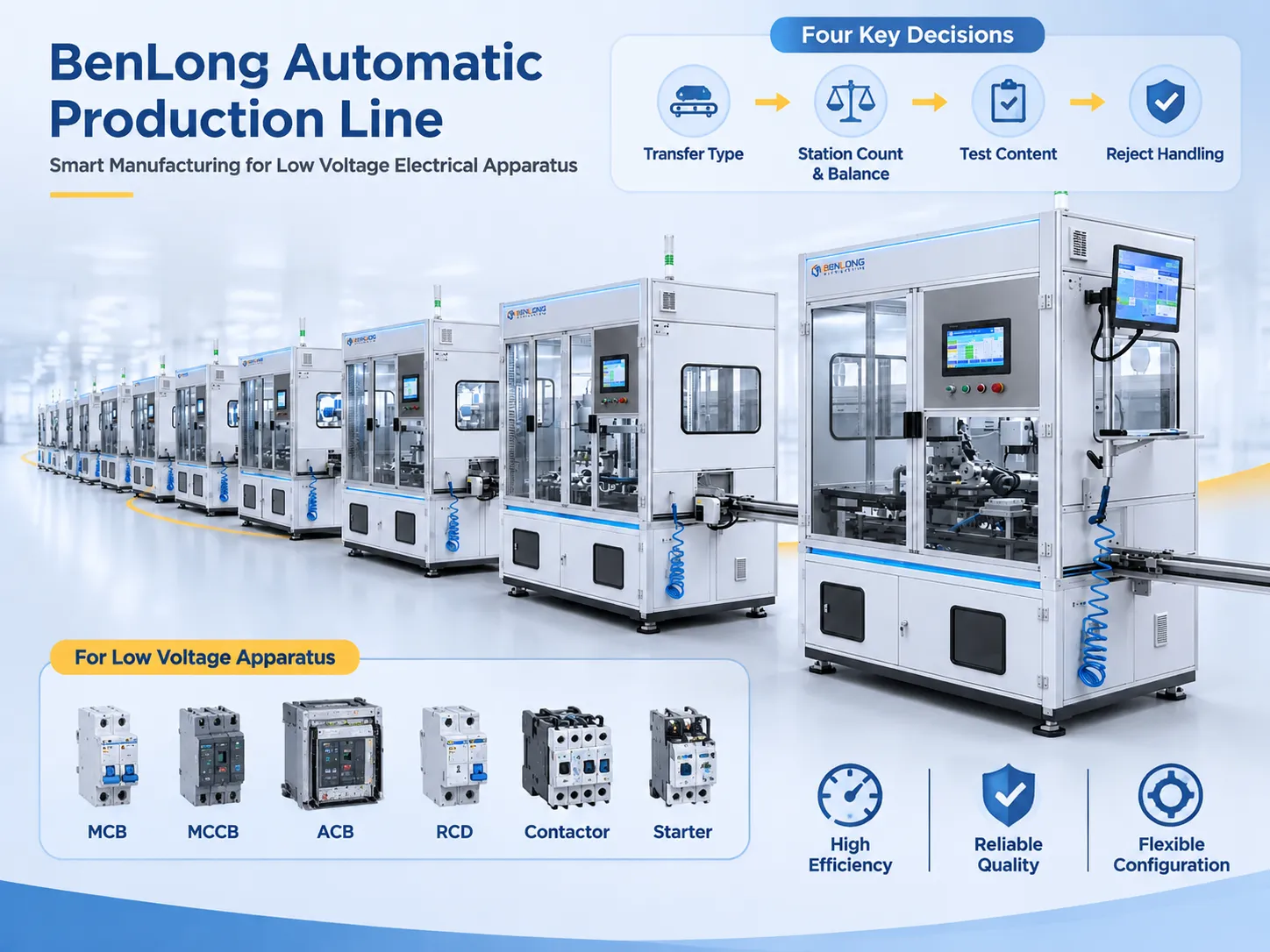
The machine can be defined by four decisions made in the following order.
- The first decision deals with the mode of transfer. Choosing synchronous indexing means that all items being processed will be moved simultaneously, which is fast and straightforward, but when it comes to cycle timing, the slowest station is the one that sets the cycle time. The asynchronous option of pallet transfer allows products to be queued at every station and hence not affected by the slowest test, but the costs for this operation are higher. Conveyors, including the belt conveyor, roller conveyor, slat chain conveyor, modular plastic, and speed chain conveyor, work differently depending on the weight and the orientation of a product.
- The second decision is the quantity and distribution of stations. The number of stations can vary from 2 to 50 based on engineering calculations which make it possible to balance cycle time to make sure one station is not idle while other is constrained.
- The third decision involves the content of the test. This refers to what should be checked, levels of tolerance, and instruments used. This decision is the most expensive and problematic.
- The final decision is about how to deal with rejected items, so a rejected item must find a place outside of the good-product product basket, as the minimal solution requires the construction of the divert opening leading to a locked quarantine box with a record of the failure showing on the device. In manual benching, it is the least followed procedure when operators are in a hurry, which proves the necessity of moving it to mechanical operation.
The ACB automatic production line is a useful reference for how those four decisions interact at the larger end: the station count is driven by the number of sub-assemblies, the transfer is asynchronous because the arc chute and contact assemblies have very different cycle times, and the test stations are distributed rather than concentrated at the end for exactly the reason given above.
Where Benlong Builds: The Low Voltage Apparatus Line
Our expertise lies in the domain of low voltage electrical devices like miniature circuit breakers, molded case breakers, air circuit breakers, residual current devices, contactors, and starters. It is a small segment of manufacturing but still a challenging one because the quality of an item is expressed in terms of its electrical parameters and each single unit is checked separately.
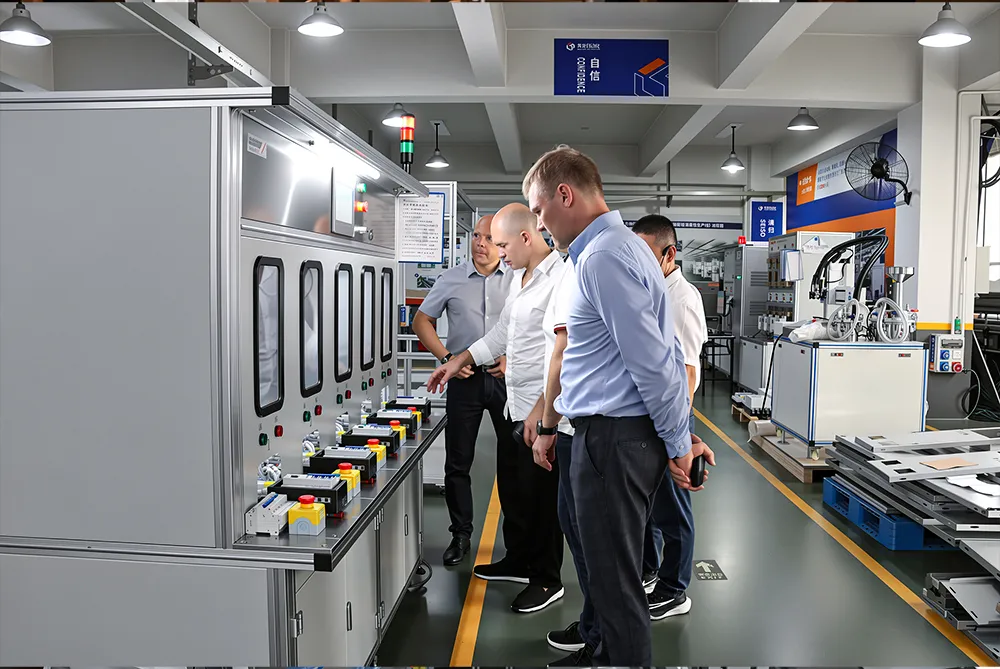
The line for production consists of such stations as contact insertion, arc chute assembly, mechanism assembly, calibration, marking, and electrical testing with a possibility to establish traceability by serial number. The height of the line is equal to 750 mm with an adjustment of 20 mm, and the voltage is equal to 380 V, 50 Hz and the line may include from 2 to 50 production stations starting from semi-auto cells to complete production lines. The delivery time is usually 30-60 days for a standard line configuration.
The benefit of working in the same product family is that you can use the same tooling library. For instance, designing the contact insertion for 63 A circuit breaker means making one more station that has been produced before and this is the only engineering money spent on the first project. The case erector station is also a good example of this – it looks like a very simple station but in fact, making the case square, oriented and paused is a very complicated task with the cycle time equal to the time of other downstream operations.
The Test Station Is the Difficult Half
Creating your own press is easy. The testing station serves as a place where the product can either pass or fail the tests that determine how the specifications are established.
- Contact Resistance. Measured in micro-ohms using a 4-wire technique at a set current. Here, the important thing is not the absolute value but the statistics: a value higher than the reference only indicates poor crimping quality or a contact being dirty.
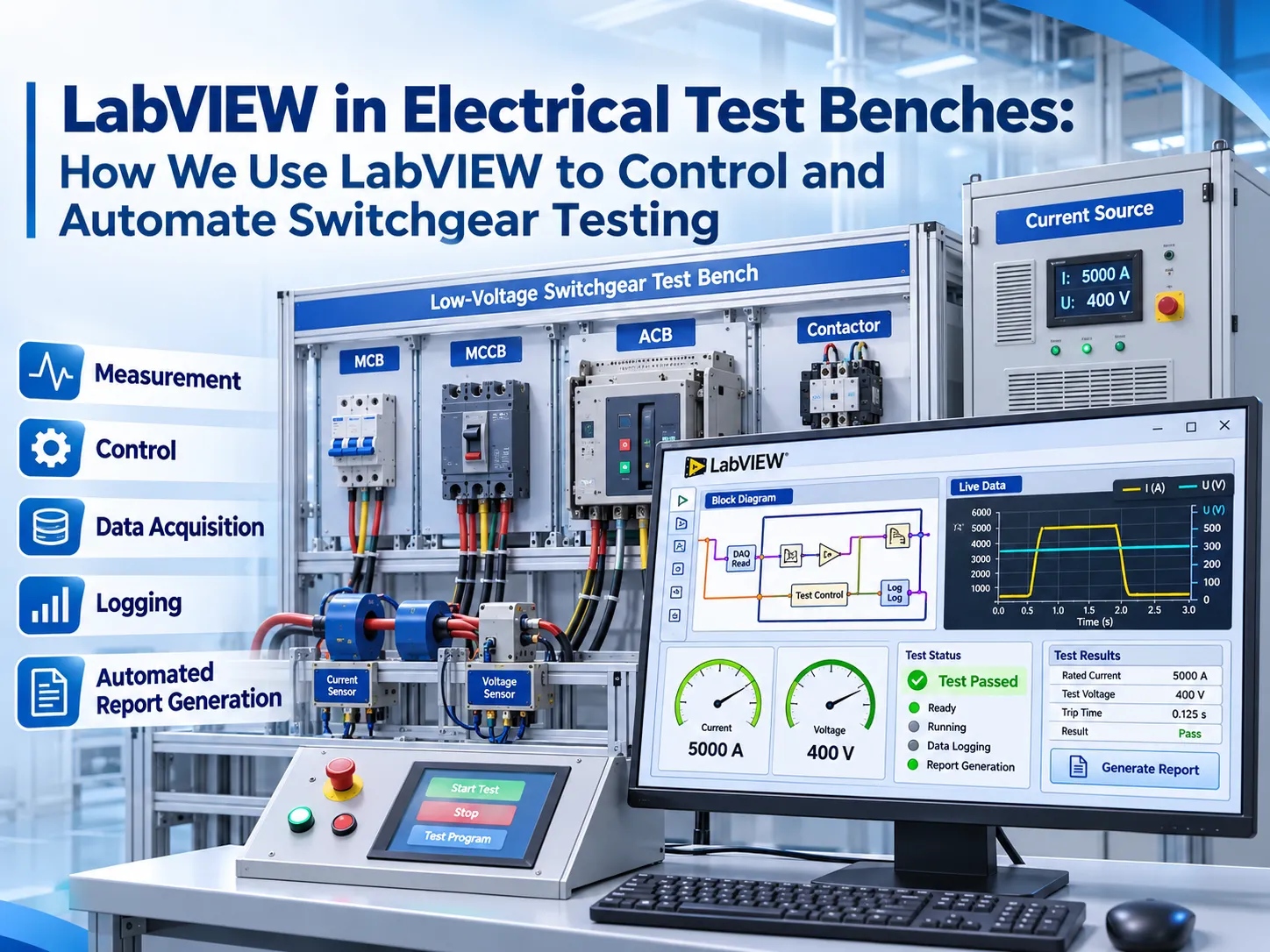
- Trip Time and Current. If it refers to a breaker or RCD (Residual Current Device), the device needs to pass several tests: it must not trip at 1.05 times the rated current, trip within a needed time when exposed to current 1.2 times higher than rated, etc. So, it is a series of tests, not a single measure, which should be taken in the testing station using an actual current supply.
- Dielectric Withstand. Used with specified voltage for a fixed amount of time with monitoring of the leakage current. The trick here is in the design of fixtures: it is better to have no test than to get a pass due to the arcing in the testing fixture, which makes the test misleading.
- Calibration. The adjustable component adjusted to a predetermined value and then checked. This is the process that determines how well a product works and it is also the process that is most likely to be done manually for a semi-automatic line.
A purpose-built bench for this work is a different machine from a flexible test platform, and the ACB test bench shows the difference: the fixture is designed around one frame size, the current source is sized for that frame, and the cycle time reflects the fact that the device is a mechanical product that has to be operated, not just measured.
Industries That Fit This Model, and One That Does Not
The approach is effectively suitable for such applications as the automotive element assembly, where connectors, sensors, and small actuators come under testing. The same is true for medical equipment, in which a testing report is a necessary requirement, and the consumer electronics factory, where the process is fast and relies on functional testing. Other successful applications of that principle include battery modules which require voltage, resistance, and thermal testing, so that any malfunction is seen as a safety issue.
The method is not recommended for low-volume production. This means that a system with twenty stations and pre-fixed tooling will not work when changes are regular, and it has to go through a labor-intensive process every time. Instead, such cases should prefer good cells and hand-operated testing benches with well-adapted tooling ahead of any automated conveyor solutions, or else they will waste money on procurement and void machinery.
In general, the cutoff point stems from the five-thousand-unit mark for daily production, which makes a semi-automatic system more efficient in many cases.
What the Factory Actually Gains
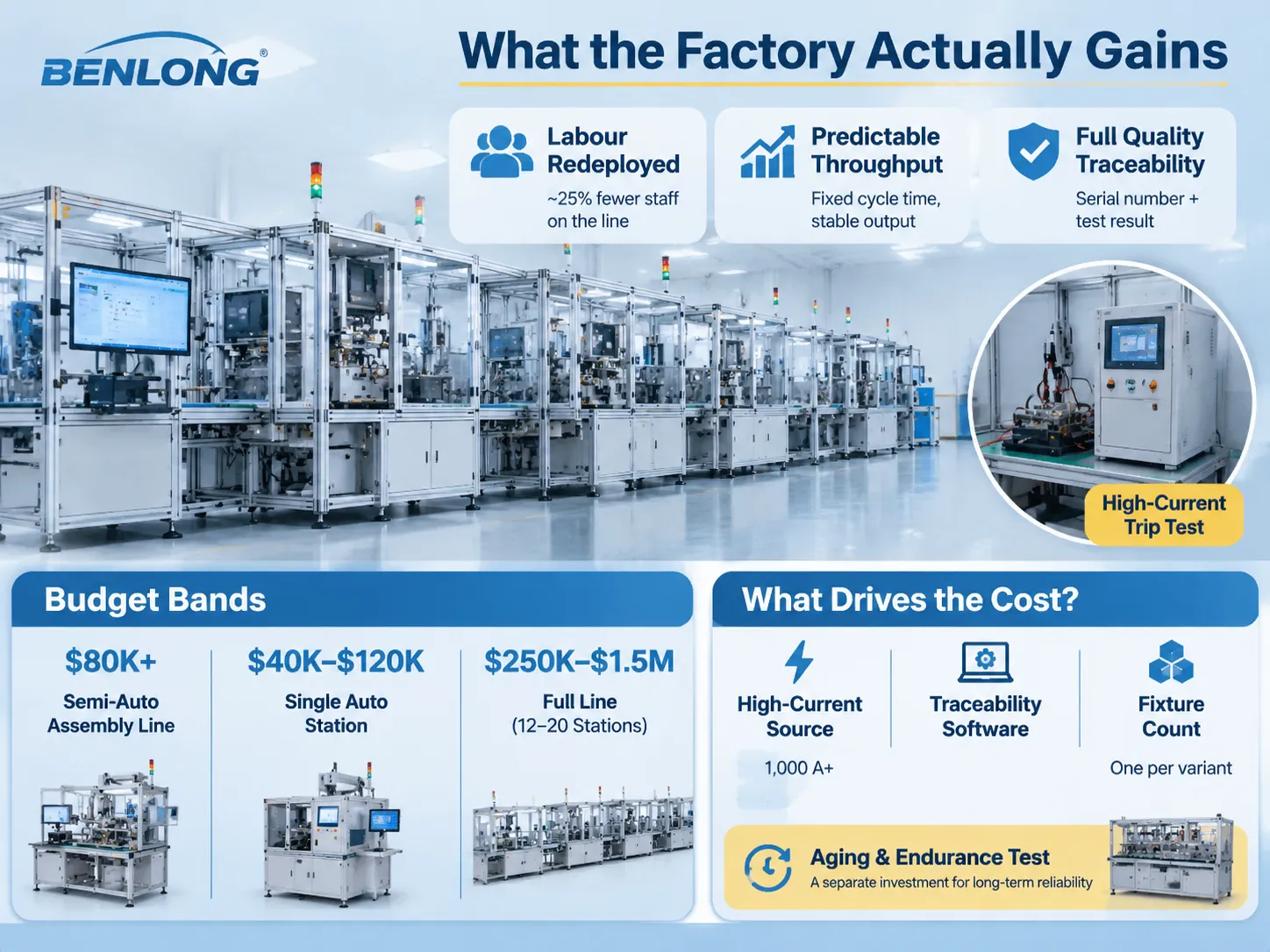
The redeployment of human resources is preferred over their complete removal. For instance, a production line with its 15 stations normally experiences a decrease of 25 percent in the required number of employees. With fewer personnel, operators are able to supervise machinery operations, thus achieving good savings. However, actually, the cutting of costs comes from lower volumes of rework.
Predictability of throughput. The output from the assembly line largely depends on the people employed. Contrarily, the amount produced by a line with a fixed cycle time is the same, thus making the whole process of scheduling other production stages much easier.
Quality record. Each unit being produced has its own serial number and test results. This enables one to respond to customer’s complaint in few minutes instead of waiting for hours and provides auditors with necessary evidence right away.
Changeover as the hidden cost. If it takes a production line 40 minutes to complete a changeover to another type of production, then that line will produce only one type and will never be used for other brands of that specific product. The specification must include both changeover time and number of variants that will be processed with the help of this machine before getting estimates regarding the effectiveness of the assembly line.
Budget Bands and What Drives Them
A semi-automatic assembly system lacking in-line testing begins at approximately $80,000. Depending on the complexity of the equipment, a single moveable working area with a special fixture and basic test costs between $40,000 and $120,000. A complete plant and assembly system consisting of 12 to 20 work stations that include in-line electrical testing, automated rejection, and product traceability ranges from $250,000 to $1.5 million depending mostly on the test features.
Three things influence this number more than everything else. The type of equipment used for current source in the trip test since the process of generating currents of more than 1,000 A for a period of time is very expensive. The software for traceability as hardware is relatively inexpensive, while validation is not. And the overall number of fixtures is important as every type of fixture is to have its unique fixture, which has to be multiplied by the total number of products in the range of 6 types of products in order to get the total number of fixtures in the plant.
Aging and endurance test is a separate purchase with a separate logic. A bench that cycles a transfer switch ten thousand times unattended is a reliability tool, not an inspection tool, and the ATS aging test bench exists because those two jobs are usually specified together and should be bought apart, with different acceptance criteria and a different payback calculation.
Brands Worth Knowing for the Parts We Do Not Build
We manufacture both lines and benches for electric devices. For other sectors or for a purpose requiring something we may not manufacture, these are the companies worth mentioning.
ATS Corporation is the biggest customized automation producer in terms of profit, creating approximately C$2.7 billion and employing about 7,500 workers in 65 factories during the financial year ending in 2025. Its specialty is the highly complex assembly and testing in healthcare and transportation spheres. JR Automation is almost on the same level, having strong presence in North America and certain expertise in various industries.
Speaking about the components, if we take into account motion control and data recording, Beckhoff is the standard choice for PC-based control and EtherCAT I/O, while Keyence should be checked against other suppliers for vision and measurement sensors. As for robotics, we usually apply well-known industrial robotic arms instead of cobots.
The main advantage of big integrators compared to a specialist is their range of services and ability to manage projects of new plants. The experience of the specialist company is in performing similar tasks in a standard way, which means less time spent on engineering.
How to Choose: A Selection Table
| If this describes you | What fits | Budget signal |
|---|---|---|
| MCB, MCCB or RCD production, stable design, above 5,000 units a day | Full line with in-line electrical test, calibration and serial traceability | $250,000 to $1.5 million |
| Same product family, 1,000 to 5,000 units a day | Semi-automatic line, manual load and unload, automated assembly with manual test benches | $80,000 to $350,000 |
| Contactor or starter assembly, high mix | Modular line with quick-change fixtures, test at two points only | $150,000 to $500,000 |
| Transfer switch or breaker endurance qualification | Aging bench, unattended cycling, drift logging | $40,000 to $200,000 |
| Medical device or automotive component with a regulatory file | Full traceability and validated test sequence, usually a large integrator | $400,000 and up |
| Fewer than 500 units a day, product changes quarterly | Cells and fixtures, not a line | $15,000 to $80,000 |
The comparison of automated production line options for buyers goes through the same decision from the purchasing side, including the acceptance criteria worth writing into the contract. It is important to go through this document before the specifications are finalized because it is noted that the main two missing aspects in an order are mainly the changeover time and the factory acceptance test plan, which are fairly inexpensive at that stage and costly if they need to be added later on.
FAQ
What is the difference between an assembly line and an assembly and test system?
A traditional assembly line manufactures a product with subsequent quality control. An assembly and testing system evaluates at each stage of the manufacturing process whether or not to continue making the product. Testing occurs where defects come into being and faulty products are sent to the side with the reason noted. The hardware may appear the same, however, it is the feedback loop and data that make a difference. The second variant of the process usually costs 15-30% more, and this additional cost is compensated for by a decrease in rework and a continuous quality certificate.
How much does an automated assembly and test system cost?
The price range for budget bands begins with a price of $80,000 for a semi-automatic line without inline testing. For a complete manufacturing line with between 12 and 20 workstations, the price may rise from $250,000 to $1.5 million while the regulated industries require the validated software and considerable traceback could incur costs of more than $400,000. The amount to pay depends on three aspects: the source of current used for trip testing, the traceback software and its validation process, and the number of fixtures used in production lines.
How many stations does a line need?
The count is between 2 and 50 in accordance with the usual principles, whereas the count stands for the number of differing assembly operations rather than a certain objective. What is more important than the count is the manner of work. The slowest workstation determines the cycle time; therefore, it means that the entire assembly line with 20 workstations takes 12 seconds for one of the workstations to complete its work irrespective of the performance of the other 19 workstations. Balancing usually means either dividing an operation or adding the second testing station running in parallel.
Can an existing manual line be automated in stages?
Certainly, the staged conversion approach tends to be more profitable. The approach is to first automate the constraint station, then to add the inline testing, and finally automate the transfer between the two. Each step has its own risk and payback, as the factory will discover how the automation process works before putting in a complete line. If someone has a transfer planned first, the layout has already been decided without knowing what the constraint is.
What acceptance tests should be written into the contract?
With regard to five things in particular. Continuous cycle time measured over a period of at least 500 cycles at rated speed, and not a stopwatch check on three parts. Yield and OEE measurement conducted over a 72-hour period, and having defect categories defined. Repeatable test at tool with a specified method and instrument. Safety validation according to ISO 13849 and the relevant performance level. Documentation package consisting of as-built drawings and PLC source code allowing modifications, and a spare parts list indicating lead times, as well as a training course deliveries.
What happens when the product design changes?
It all depends on how the line is designed. A line that is equipped with quick-change fixtures and a sequenced test program can deal with a variant in a few hours. A line built with fixed tooling and hard-coded limits requires new fixtures and the software to be modified. The specifications should indicate how many different variants the line should deal with in 5 years and what should be its changeover time. Those numbers will determine fixture strategy, but they are rarely found in writing unless explicitly noted by the buyer.
References
- ATS Corporation — Custom Automated Manufacturing and Test Systems
- JR Automation — Automated Assembly and Test Integration
- Beckhoff Automation — PC-Based Control for Production Lines
- A3 — Advancing Automation, Industry Resources
- International Federation of Robotics — World Robotics Data
Conclusion
Buy the testing equipment first before purchasing the production machinery. A production line that can be easily assembled yet poorly tested is an assembly line that causes reworks and wastage of money. The money that was spent on the new assembly line could have been spent on a source of supply and other important machinery parts.
After this, write down the three factors affecting the use of the machinery–changeover time, number of variants, and cycle time at maximum speed. The three factors are rarely mentioned in the purchase order, although they are responsible for most failures during production. Notify us of the product, daily output, and required tests to find out about the possibility of building automated or manually operated machinery and finally understand the cost of the whole assembly line.