benlong


Electrical Testing in Campbelltown: Who Actually Provides It
While looking for electrical testing companies in Campbelltown, it will be found two companies. The first company sends a technician with a mobile device tester and uses stickers for kettles and extension cords, while the second one does electrical testing of the equipment on the conveyor making it impossible for the compliance rules. Despite the same terminology used, the level of work of the companies is quite different. In case of choosing the wrong option, one may face losses caused either by non-compliance or financial issues.
This web page provides the main differences and describes the services provided by both companies and gives information about the frequency of electrical testing.
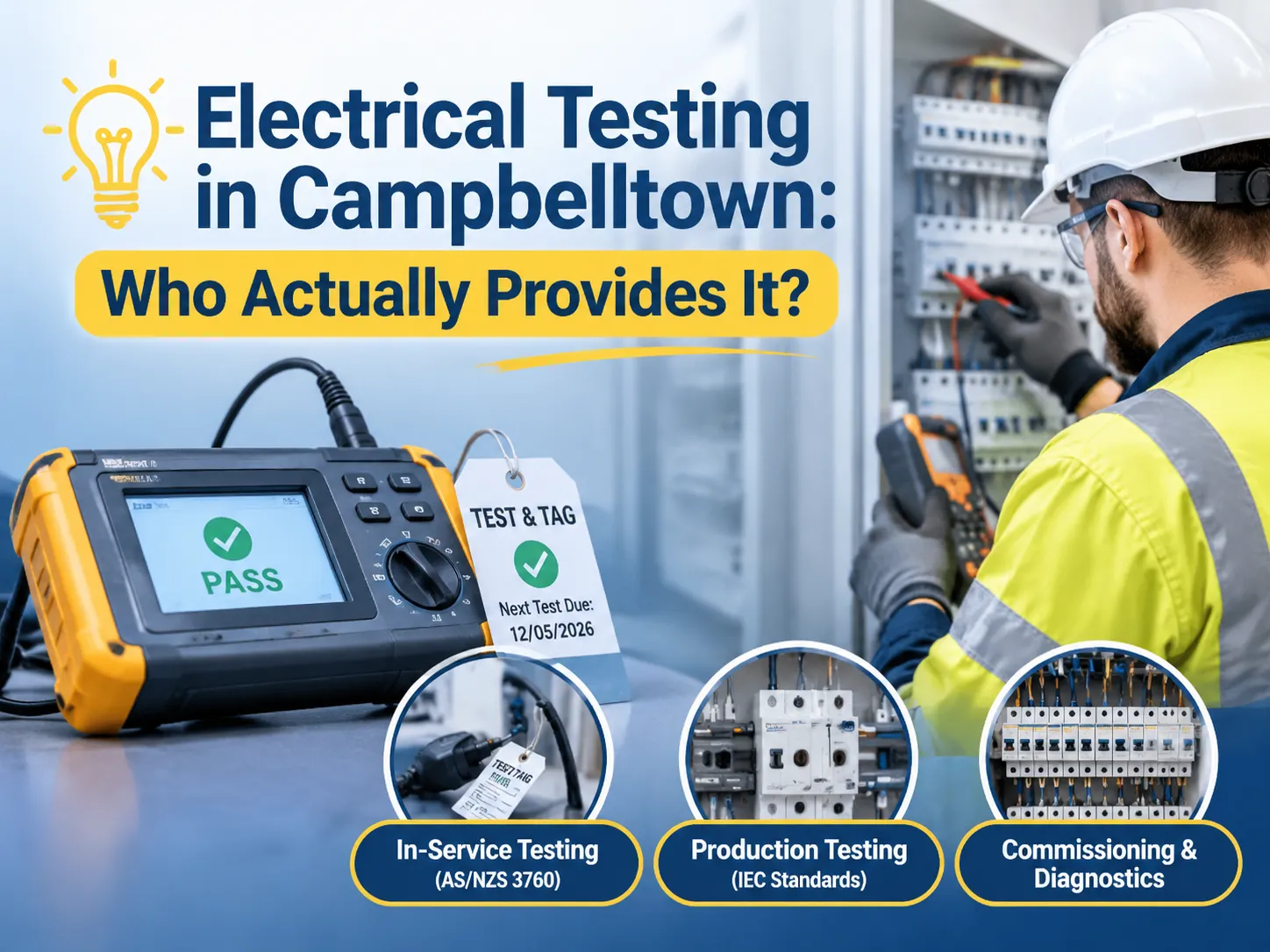
The definition of “Electrical testing” is testing of electrical appliances and equipment as defined by the AS/NZS 3760 guidelines. In the area, various electrical testing firms such as CIC Test and Tag, Liberty Test and Tag, and Amp It Up provide services to the regions including Ingelburn and Minto. Testing done by certain devices like switches and circuit-breakers is regarded to be coming from another sector of industry which utilizes special devices as well as sometimes even factories for tests performed by IEC standards, what is done by Benlong.
Two Different Services Sell Under the Same Three Words
This confusion arises due to their names and the fact that they both deal with instruments and a pass/fail result. The difference lies in what is being tested and who the client is.
With in-service testing, the question is whether the equipment which is being used is safe to use. The item is plugged in, tested, tagged with the date, and put back into service. The client is a corporation that has a work health and safety obligation. The applicable standard is AS/NZS 3760 with the additional requirements from AS/NZS 3012 stipulated for construction sites. The output is a tag and a register.
On the other hand, production testing implies whether the equipment that is manufactured satisfies its design specification or not. The equipment, whether it be a circuit breaker, contactor, RCD, or full assembly, is going through testing before it can be sold. The client is the manufacturer. The respective norms include the product regulation standards, IEC 60898 for miniature circuit breakers and IEC 60947-2 for moulded-case, and so forth.
Additionally, there exists one more category in between—they are the commissioning and diagnostic tests of installed switchboards performed by electricians who have insulation testers, micro-ohmmeters, and thermal cameras. Such jobs are commissioned to a certified electricity contractor.
What a Campbelltown Test and Tag Provider Actually Tests
The subject matter is much wider than most people think and is therefore really worth a read: the quotation talking about appliances usually misses out on a lot of legal requirements.
Portable appliances and power tools come first, which includes leads, cords, tools, equipment for cooking and battery chargers. Then come portable residual current devices, which require a push button and timed trip test.
Then come three-phase devices, with a technician who knows how to work with 415 V and understand that a plug test will not help for hardwired devices. After that come emergency and exit lighting tested by the AS/NZS 2293 standard, which means there is a different testing standard that has its own 6 monthly and annual test cycles.
Then comes microwave leakage to AS/NZS 60335.2.25 compliance, which is a common office and childcare compliance gap. Some companies provide fire equipment testing according to AS 1851 standard and ladders inspection according to AS/NZS 1892 standard in a single visit.
The reason to unite everything into a single visit is the logistics. Each contractor means another site visit, another induction and yet another date on the list. An all-in-one mobile team that provides electrical, fire and first-aid services in one visit is worth paying a little bit more than usual, and that’s why several providers from the Macarthur region provide this kind of service.
However, none of them tell you about what you should do with broken equipment. It will be tagged “out of service”, and the choice of the further actions is up to you. A small business will have to buy a new device; a workshop with $2,000 equipment can afford to repair it. Equipment that is new and untested raises a separate question, covered in this look at whether new equipment needs a PAT test, because the answer depends on whether it arrives with a supplier declaration or not.
The Testing Intervals AS/NZS 3760 Sets, by Environment
Intervals are the part auditors check first, and the part most businesses get wrong by applying one rule everywhere.
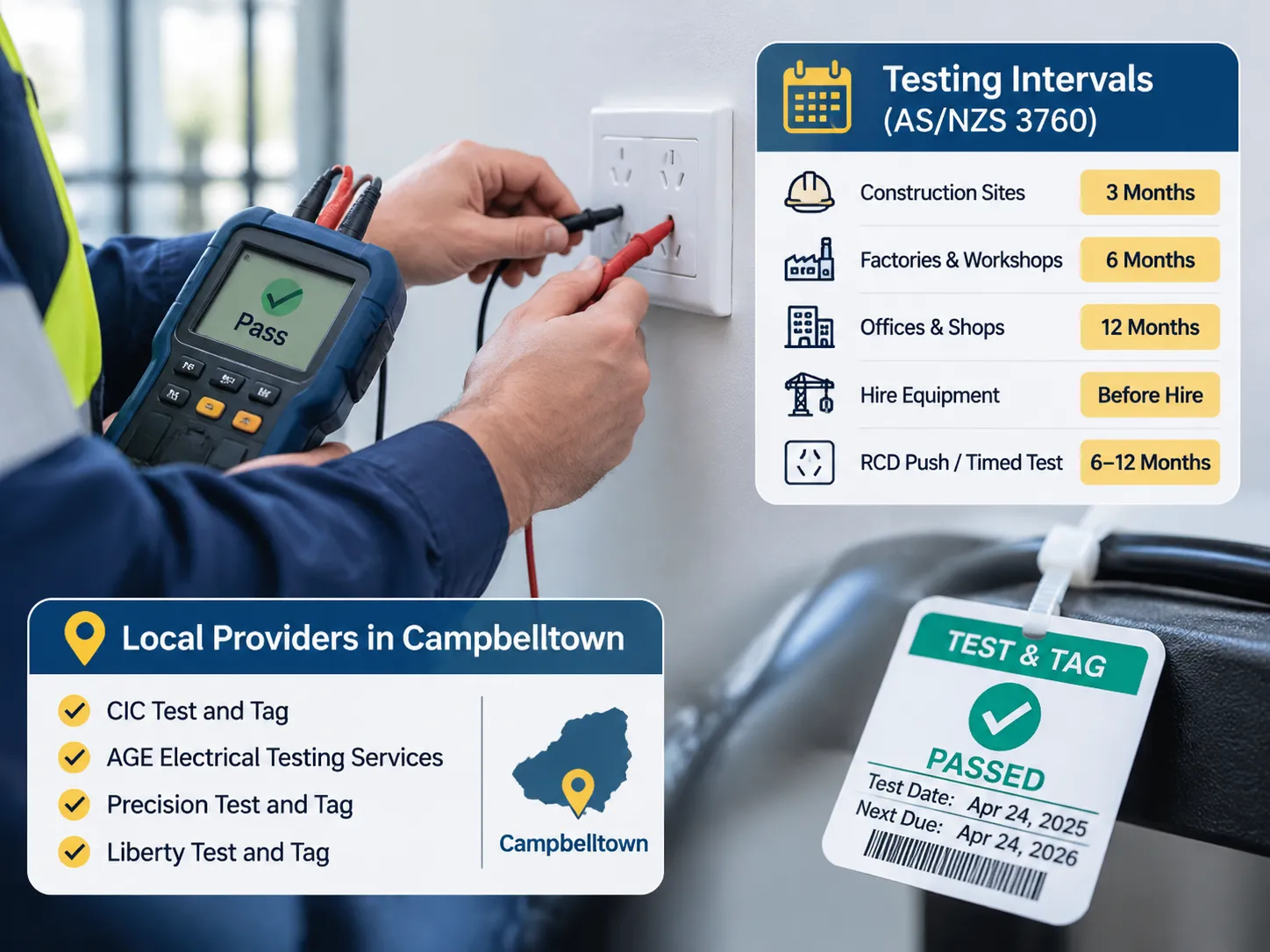
| Environment | Typical interval | Why |
|---|---|---|
| Construction and demolition sites | 3 months | AS/NZS 3012 applies, and equipment is abused and moved constantly |
| Factories, workshops, manufacturing | 6 months | Vibration, dust, coolant and moving cables |
| Offices, shops, hotels | 12 months | Equipment is static and lightly treated |
| Hire equipment | Before each hire | The duty holder changes each time |
| Equipment used for repair or maintenance | 6 months | Same abuse profile as a workshop |
| RCD push-button check | 6 months | Mechanism can seize without use |
| RCD timed trip test | 12 months | Confirms trip time, not just operation |
There are two important details regarding the data presented in the table. First, the interval refers to the environment in which an item is used and not the one in which it is stored, therefore, the equipment that is kept in the office but regularly taken to the site is placed in the three-month interval. Secondly, if an item fails then it does not reset its clock; it will remain out of service until it has been repaired and passed a test, which detail turns a simple tagging into stringent control process.
The Local Providers, and What Each One Is Built For
Campbelltown is located in the growth corridor in the south-western area of Sydney. There are industrial areas located in Minto and surrounding suburbs that focus on warehousing, and logistics, as well as light manufacturing.
In terms of service delivery, there are three main types of service providers:
- National or large players in the field of test and tag services. CIC Test and Tag is the service provider that performs test and tag operations in Campbelltown. They combine their electrical test and tag services with safety Fire inspections and first-aid inspections, both of which are performed in accordance with AS/NZS 3760 and AS/NZS 3012 standards. AGE Electrical Testing Services operates in Greater Sydney, including Campbelltown, activities offered by this company are expanded to thermal imaging, as well as biomedical equipment verification. Precision Test and Tag is also providing their services in Sydney since 2013 and performs on-site and off-site testing.
- Local service providers. Liberty Test and Tag is located in Campbelltown, which is why responses in the Macarthur region are fast. The company implements AS/NZS 3760, RCD testing, emergency lighting, various items that fall under AS/NZS 2293 standard are also measures implemented by the company.
- Provide services in Macarthur Area and beyond on pre-agreed basis. Amp It Up Test and Tag provides services to Campbelltown and Wollongong through an attempt to schedule services in advance, which is very useful for companies with several locations that need comprehensive service coverage.
The choice between these companies is mostly about scheduling and willingness to provide reports as all of these companies conduct their work in accordance with the same standards. You can also ask them to show you when the last service was provided. A simple register with main information about the provided services is fine; and a PDF of photographs.
When it comes down to test and tag versus actually finding faults, it’s good to know the boundaries – a technician will not investigate a nuisance tripping. If he is offering this service he is going beyond the scope of his work. For anything that involves opening a board, the relevant knowledge is in this explanation of how a circuit breaker is tested through its three levels, from visual inspection to primary injection.
What a Licensed Electrician Adds That a Tester Cannot
Three things, and those are the three that truly safeguard against fires.
- Insulation resistance testing of stationary wiring. An appliance tester is used to test the equipment. It does not give any message regarding the circuit feeding it, the circuit where any humidification, deterioration of insulation, and animal’s destruction can occur. While undergoing insulation resistance testing, an electrical engineer can easily detect problems since the acceptable range of values is very clear: a healthy circuit can show several hundreds megapohm, while anything less than 1 MΩ is a fault. The method is set out in this guide to insulation resistance testing and what the readings mean.
- Use of thermal imaging on live switchboards. A cable that has a bad connection will warm up long before it is ready to fail. Through a thermal inspection of the board, it can be seen that a connection is being heated up approximately 30 degrees above its neighbours and it is scheduled as a repair and not an outage. There are a number of Campbelltown suppliers that have this as an add-on item and it is generally the most expensive item in the quoted price for any installation with an operational board.
- Replacement and certification. The replacement of wires that are broken comes under tagging and testing. Replacement of a circuit, putting in an RCD, or fixing an installation that fails to meet compliance laws means that an electrician is required and no amount of tagging can replace that. Unfortunately, in New South Wales that job now requires a compliance certificate for the electrical job done which is what the insurance company demands.
So there it is, the divide is that one keeps you legal while the other keeps you safe and they are not the same job.
Where Production-Line Test Benches Fit, and Where They Do Not
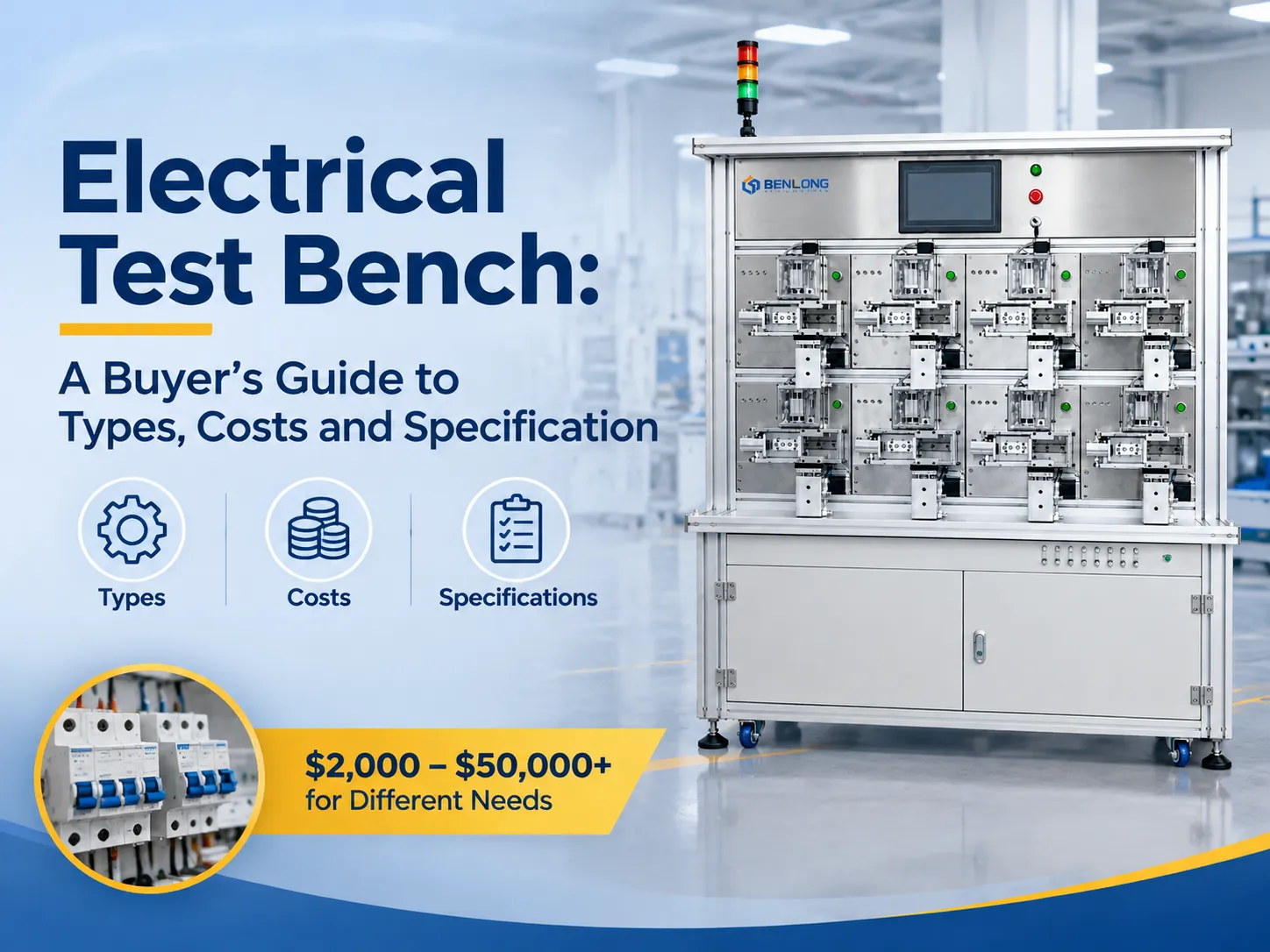
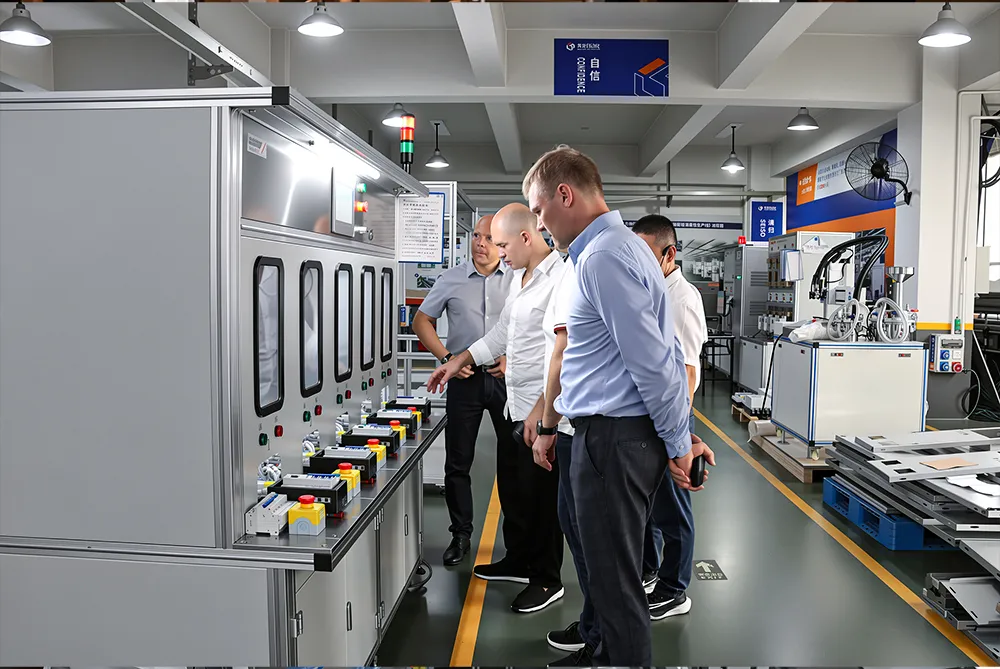
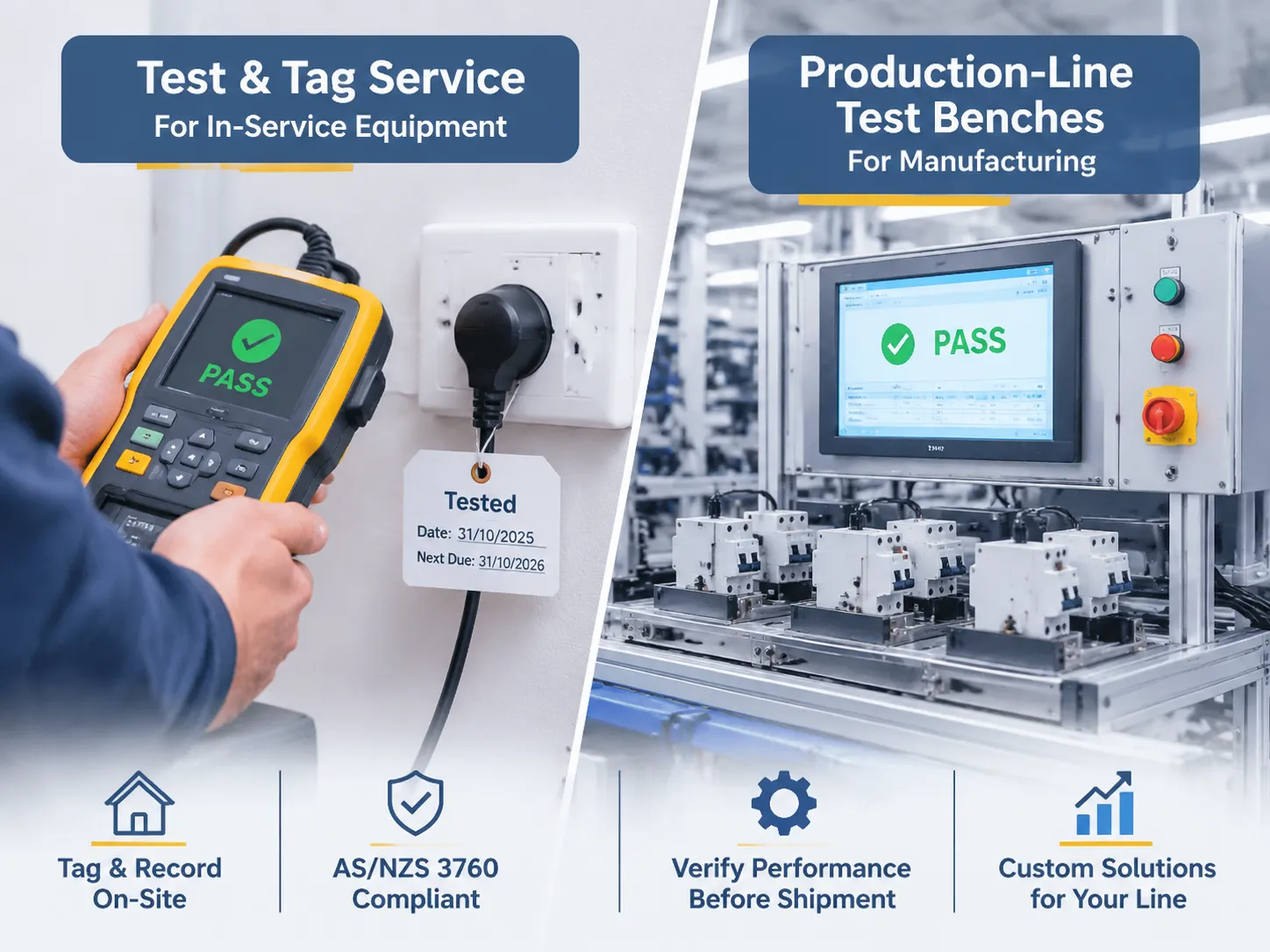
Benlong produces test devices for factories, and it should be made clear that this is a different field of activity from the one outlined above. We do not go to sites in Campbelltown to label electronic appliances; we do not have an electrical contractor license to work in New South Wales, and we are not an alternative to a local company.
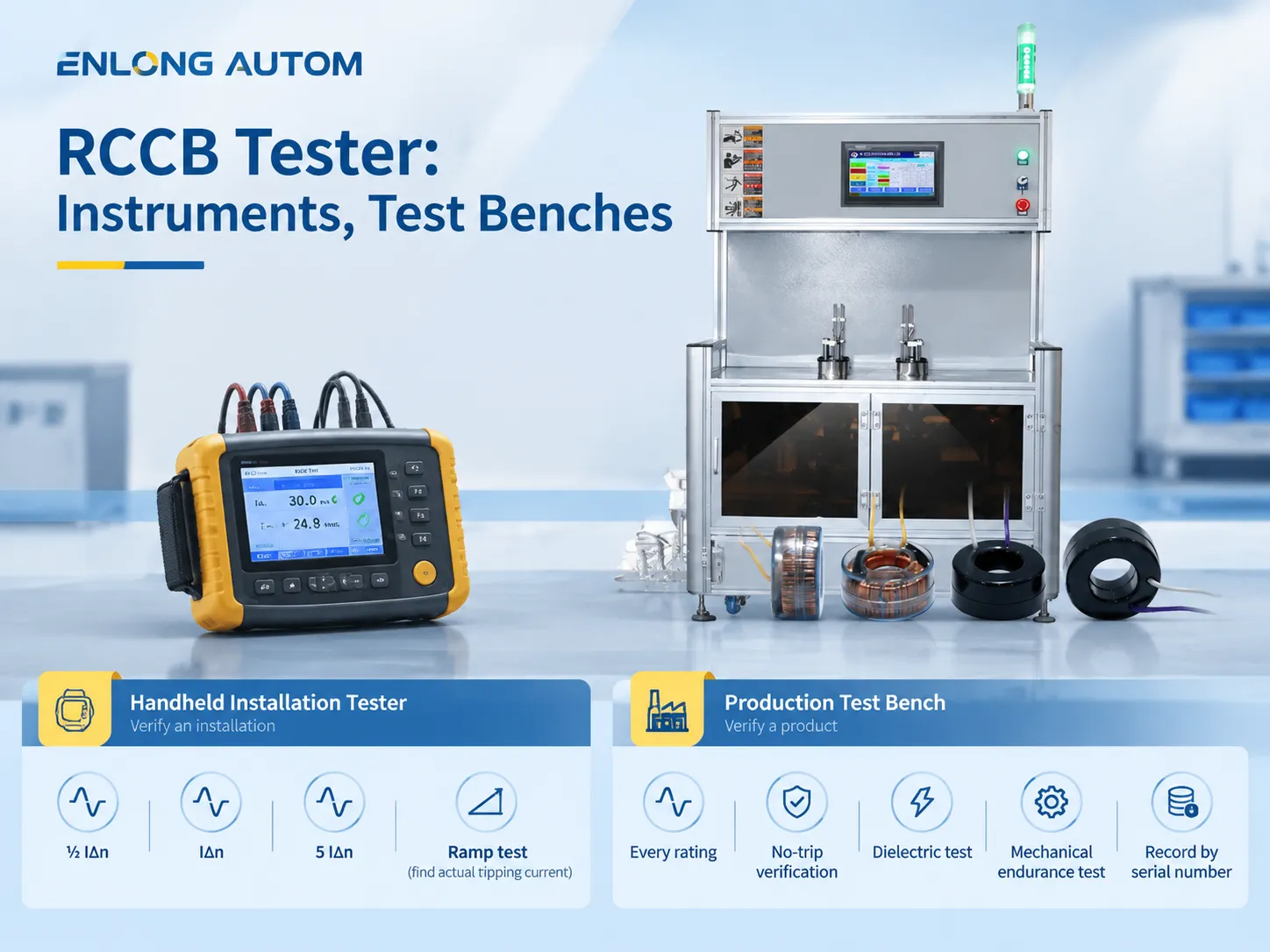
What we produce is what the manufacturer uses before the item gets out of the facility. There is a breaker line that requires testing all devices at 1.13 times the rated pulse for no- trip test, at 1.45 for trip test within an hour, and at 2.55 for magnetic circuit test, and all results are recorded according to serial number. An RCD line requires half of the rated value no-trip test, time of trip test, and five times fast trip test. One needs to perform high voltage withstand test for all assemblies on the assembly line, and all these tests cannot be performed with portable appliance tester equipment, and are not the aim of Campbelltown test and tag company.
The price of equipment for that purpose varies from single-use bench device costing low thousands to a long line taking well over 50,000 dollars, and the reason why it is so is that what matters is not accuracy in that case. What matters is the time for changeovers, when the bench is being reset in forty minutes for another test and is about to be used just for the first test and not for any others after that one.The engineering detail is covered in this overview of what an ACB test bench verifies, which is the largest format we build.
One overlap is significant enough to note. A company located in Macarthur needs to operate its own workshop in accordance with industry compliance; however, this is not sufficient for ensuring that its hand tools and leads are tested and tagged. Both contracts are necessary and do not substitute for each other.
How to Buy Each Service Without Overpaying
Questions should differ because both purchases experience different modes of failure.
For in-service testing, obtain information regarding the item count and the timeframe in which to perform the testing, not just the price per day. These two numbers, “$4 per item” and “$900 per visit” can differ hugely depending on the number of items on site that were actually tagged up. Ask about what will happen to the failures, the format in which reporting is done, if reminders for retesting are sent, and if fire and emergency light testing can be bundled up with the same visit. Afterwards, the qualifications of the technician need to be checked as AS/NZ 3760 requires a certain level of expertise in order to get certified in this area.
For production testing, learn which standard clause is applied in the tested procedure, starting with the maximum current during the testing cycle; find out how long the changeover takes, and how the calibration certificate was obtained. A bench should be treated as a measuring device; in case the device was not calibrated, the results could be misleading.The difference between a manual station and an automated line is largely handling, and whether that pays back is a volume question, worked through in this comparison of manual and automated testing economics.
The question is present on both lists: Who dglares the record? A tag without a name and a trial result without an operator are both impossible to disprove, which is what an auditor hates.
FAQ
What is electrical testing in Campbelltown?
For most businesses this means in-service testing and tagging to AS/NZS 3760 done on site by a mobile vendor throughout the Macarthur region. This means covering portable appliances, cords, RCDs, three-phase equipment and often emergency lighting, with a tag and a register resulting from it.
How often does equipment need testing?
Three months spent working at construction sites, six months in factories or workshops, and twelve months in offices or shops, and before each hire of equipment. The 6-month push-button checks for the RCD must be performed annually. The interval is determined by where the stored item is used, rather than where it is stored.
Is test and tag a legal requirement in NSW?
It is the legal obligation to ensure that electric devices are safe as per work health and safety legislation. It is expected that testing in accordance with AS/NZS 3760 be used as evidence of the fulfillment of that obligation. This requirement is expected by insurance companies and auditors. Construction work includes AS/NZS 3012 in its list.
Can a test and tag technician repair a fault?
No. They may label an item unsafe to use and, in some instances, make a substitution of defective lead or plug, but repair or modification of fixed wiring qualifies as electrical work and requires a compliance certificate. A different contractor performs this work.
Does Benlong provide electrical testing in Campbelltown?
No. Benlong is engaged in the manufacturing of testing benches and automation testing lines for producers of switches, circuit breakers, and assemblies. For all tagging of equipment in Campbelltown, you can turn to a local AS/NZS 3760 accredited provider. If you are producing circuit breakers and want to know how to test them before delivery, that is precisely what we are here for.
References
- Standards Australia — AS/NZS 3760 In-Service Safety Inspection and Testing
- SafeWork NSW — Electrical Safety in the Workplace
- NSW Government — Climate Change, Energy and the Environment
- Fluke — Portable Appliance and Insulation Test Instruments
- NETA — InterNational Electrical Testing Association
Conclusion
Before inquiring about the price of a service, it is important to determine what type of service is required. Companies offering tests and tags in Campbelltown perform compliance-oriented services while electrical contractors are engaged in fixed wiring maintenance. At the same time, testing bench assesses the output of the plant. Therefore, there are three standards and agreements corresponding to these services.
In this case, the local companies listed above are definitely the best option for us as we only have to consider the number of indicators, the frequency of services, and the quality of documents once the job is completed.