benlong

Top 5 Laboratory Equipment Suppliers in the World
A lab is not a single target market; it is an extensive universe of four different supplies, each with a primary difference in controls or ranges of measurements. That is why a search for laboratory equipment suppliers returns nothing but a list in which the largest players have no connection to what the buyer actually requires.
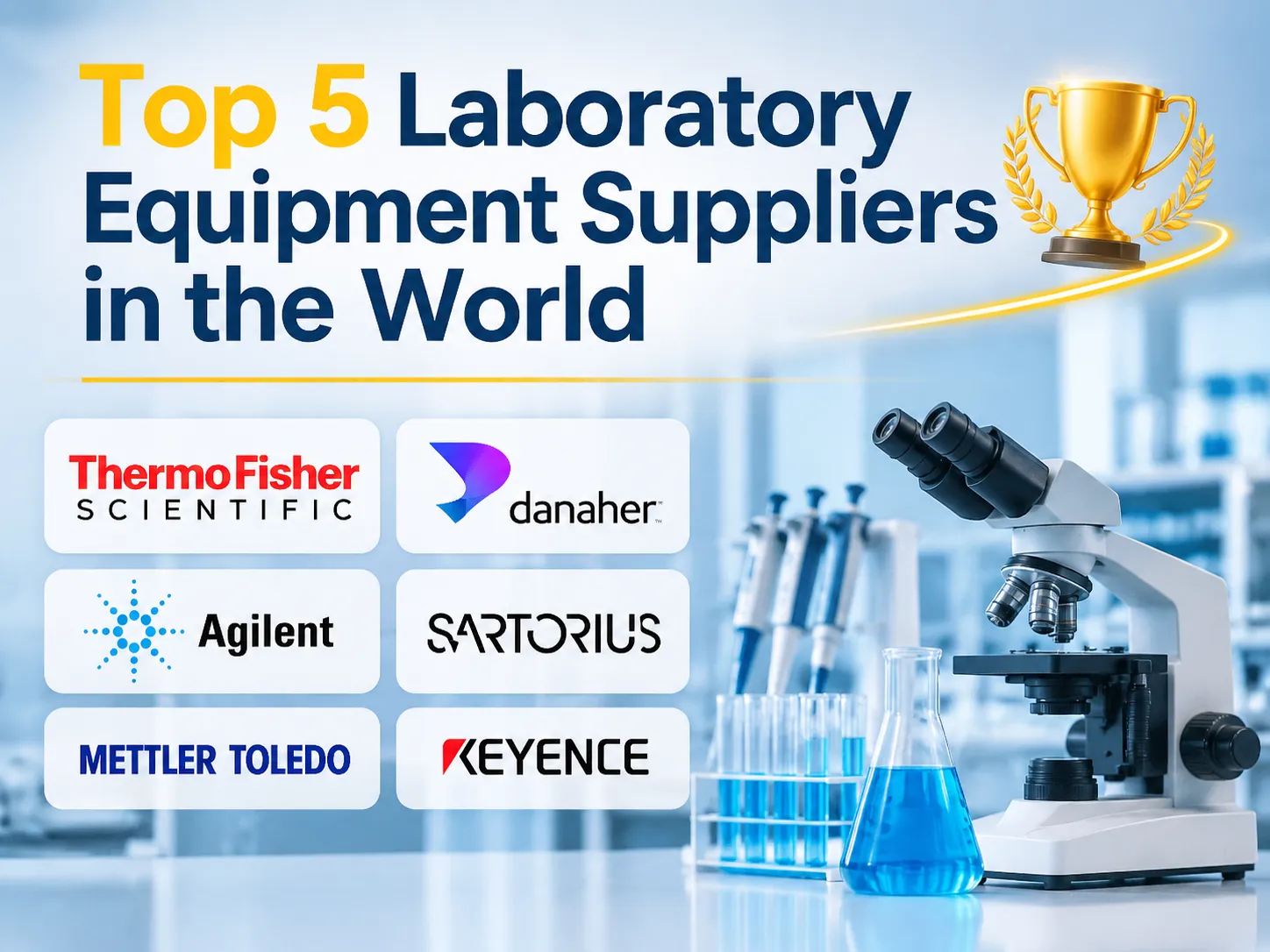
In brief: Thermo Fisher Scientific, Danaher and Agilent are the biggest laboratory equipment suppliers, by revenue, followed by niche performers like Sartorius, Mettler-Toledo and Keyence. None supplies a whole lab or deliver a complete line; all are, narrowly, rather focused on an equipment category. When it comes to electrical apparatus testing however, the supplier landscape changes again: Benlong builds assembly and test systems for circuit breakers, contactors and switchgear, with benches starting from about $40,000 to $250,000. It is the buying process on which a buyer should focus. Then check for certification and service coverage, then decide on the actual supplier type.
This section discusses how considerable laboratory equipment really covers a sector, how the supply chain was shaped, five suppliers worth putting on a shortlist with their strengths and price positions, and the key criteria determining a purchase. The last will be a selection table mapping a lab type to the supplier category that fits it.
Laboratory Equipment by Sector
There are six segments responsible for laboratory equipment expenditure, each with a meaning attached to its use.
- Life sciences & pharmaceuticals. Analytical devices, chromatography, mass spectrometry, cell culture, refrigeration, biosafety cabinets. The segment has the highest unit price as well as a heavy validation obligation: due to GMP requirements, each device may require a complex qualification.
- Chemistry & materials. Weighing scales, ovens, furnaces, spectrometers, fume hoods, glove boxes. The instruments are robust and more or less standardised, while there is a long buying cycle of the equipment because a furnace or a hood can be useful for twenty years.
- Electrical & electronics. Oscilloscopes, power supplies, environment chambers, EMC testing devices, and on the heavier side test benches practicing such devices as circuit breakers and contactors. This is the segment where the item is often made to order instead of being found in the catalogue.
- Clinical & medical. Hematology analyzers, chemical analyzers, centrifuges, microplate readers. The segment has stringent regulations and requires specialists to distribute its instruments. By purchasing analytical equipment, clients usually sign an agreement for receiving reagents instead of buying equipment as a stand-alone capital expense.
- Food & agriculture. Moisture meters, texturometers, microbiology equipment, and PCR. The sector is in demand due to the growing need for traceability and is sensitive to prices as customers are often represented by small labs.
- Education. Teaching benches, simple instruments, demo kits. This segment has the lowest unit cost but the highest sales volume through bidding processes according to a set specification.
If a vendor works with three out of six sectors in the market, it means
A supplier that has a specialization in one of these sectors will be preferred against the others, and this is contrary to the common practice of procurement teams. A contactor test machine is an example of the appliances that provide reliability testing for a contactor factory. An ordinary measurement instrument does not have the features required for this testing.
There are three types of business organizations that sell laboratory equipment, and being aware of which type you are dealing with can help you understand why prices widely vary.
The first group consists of manufacturing companies, which design and manufacture laboratory equipment. Those companies use either their own sales representatives or registered dealers to sell their equipment. This group of businesses is in charge of designing products, training technicians, and providing spare parts. Manufacturers represent most of the companies listed in the following section.
Distributors are another type of businesses whose operations involve selling multiple brands in one geographical area. This group is attractive for its offer availability and credit terms. However, distributors are not always able to provide technical support for the clients. If a distributor deals both in products supply and technical support, their services should be valued higher.
The last group of companies is system integrators. These companies provide a range of services focusing on making the devices and their software work together. For example, a test bench for testing circuit breakers represents the offering of this group of businesses. A manufacturer provides a measuring device, while an integrator supplies an apparatus that abides by a specified standard, which involves a fixture, a process as well as a record. Hence, the two devices have distinct prices.
Five Different Laboratory Equipment Vendors that Should be Considered
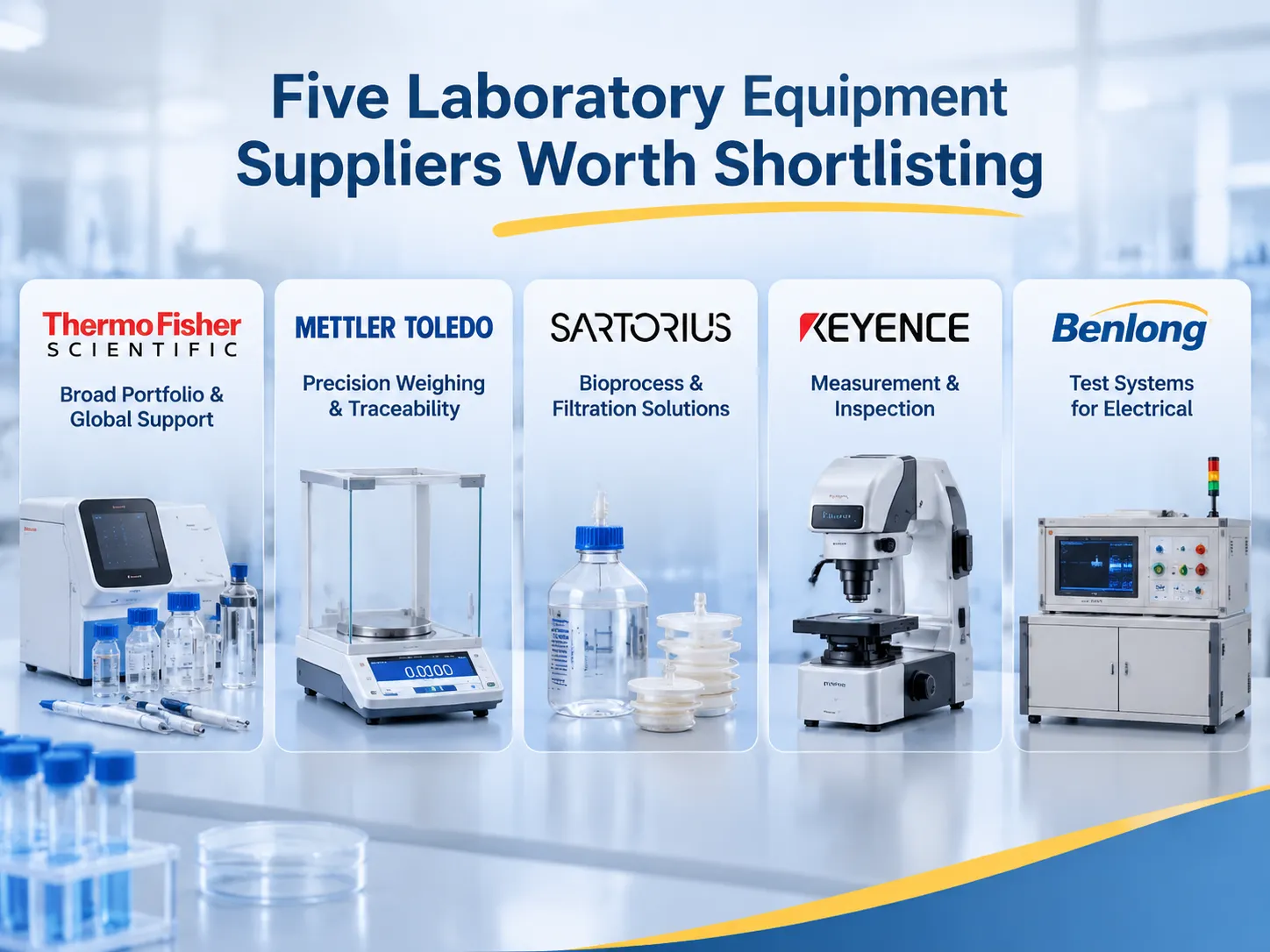
| Company | Base | Key Strength | Price Range |
|---|---|---|---|
| Thermo Fisher Scientific | Waltham, Massachusetts, USA | Lab instruments, lab consumables, cold chain | $5,000 – $500,000+ |
| Mettler-Toledo | Greifensee, Switzerland | Balance systems, moisture measurement, process analysis | $1,500 – $80,000 |
| Sartorius | Göttingen, Germany | Weighing, filtration, bioprocessing | $2,000 – $200,000 |
| Keyence | Osaka, Japan | Sensors, microscopy, measuring devices | $2,000 – $150,000 |
| Benlong | Wenzhou, China | Electrical equipment testing and assembly line | $40,000 – $250,000 |
Thermo Fisher Scientific. A major laboratory equipment provider in the world based on the revenue, offering everything from pipettes to electron micrographic apparatus and providing consumables that make it possible to operate the laboratory. The strengths of the company are that it operates globally and has broad coverage; at the same time the weakness of the provider is that a small laboratory may have to communicate with four branches for one workflow. The company should be used primarily in case of operations in the biological and pharmaceutical areas.
Mettler-Toledo. The biggest name in the field of weighing, which is able to offer weighing devices starting with the cheapest analytical balance worth $1,500 and ending with balancing devices making part of the producing cycle. The strengths of the company are metrology, such as calibration techniques, traceability documentation and software for measuring. This provider is best oriented towards analytical chemistry and pharmaceutical production.
Sartorius. German has a strong position in bioprocess and filtration along with the weighing business. Its advantage lies in selling consumables and equipment for the same workflow and is important for cell culture and single-use bioprocessing. In terms of pricing, it is positioned above the Asian suppliers but lower than the top of Thermo Fisher’s range.
Keyence is a Japanese company that is not common in the market because it sells mainly directly and not through distributors. The company is strong in measurements and inspection: laser displacement sensors, digital microscopes, machine vision. For the lab doing dimensional or surface inspections, this is often the quickest route to the answer since the demonstration is happening in a lab rather than a trade show.
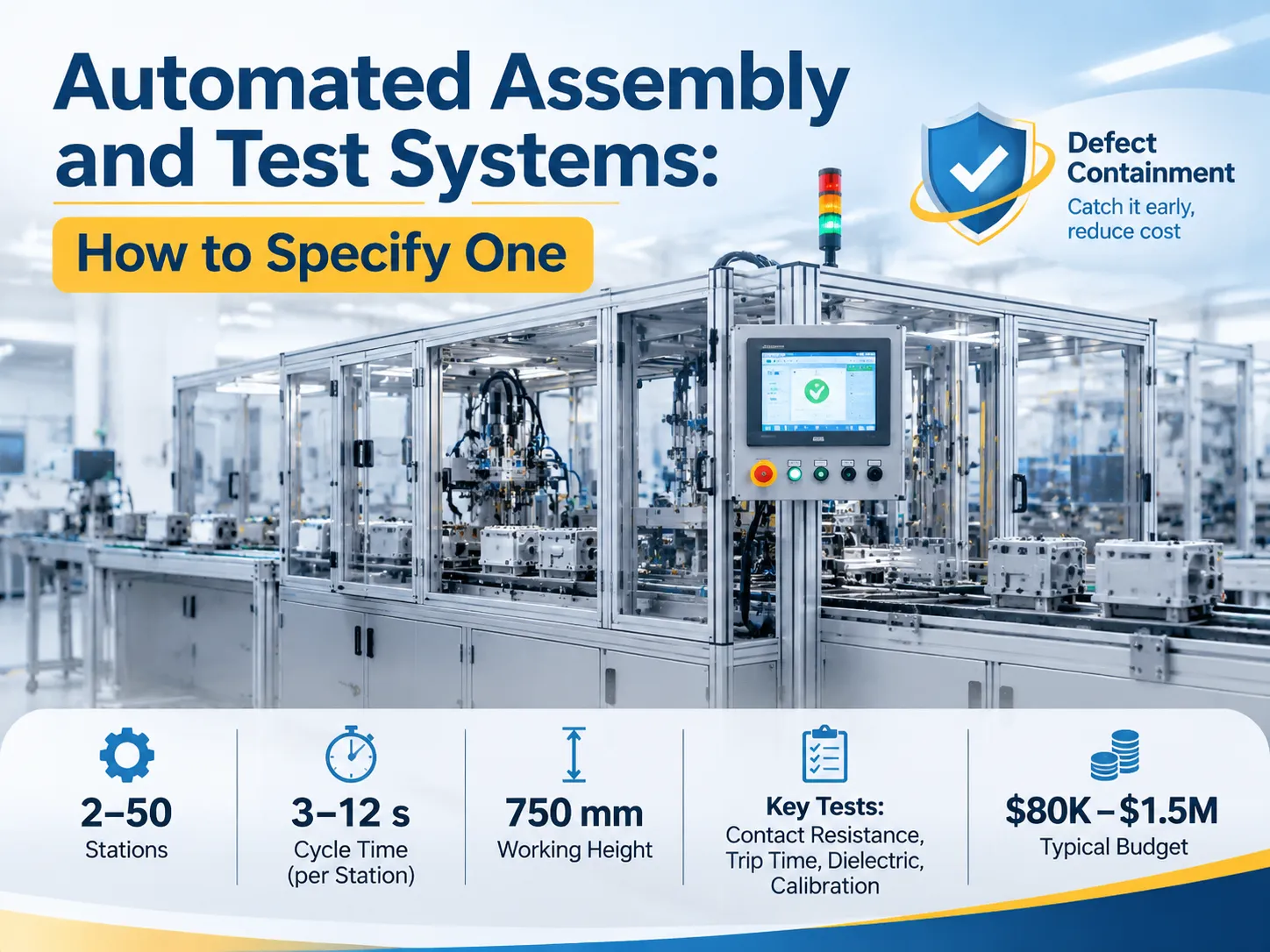
Benlong is a Chinese company that is the only one on this list that is providing testing systems and not instruments. It offers a wide range of assembly and testing equipment for the low-voltage electrical apparatus, such as miniature circuit breakers, molded case circuit breakers, air circuit breakers, residual current devices, contactors, and starters. A bench measuring contact resistance, trip time, and dielectric withstand of the batch of circuit breakers is considered a laboratory instrument in a functional sense and is the category that most purchasers miss when looking for the laboratory equipment.
The argument for the acceptance of a Chinese-manufacturer of testing equipment in the same category as other large manufacturers of measurement and testing devices is that test system manufacture is not different from testing equipment manufacture, test systems being simply a segment of the business in the testing domain, and the customers are laboratories in almost every aspect: a reliability laboratory of an OEM, an apparatus testing laboratory of the utility, an external-certification test laboratory, or a power engineering laboratory of a university.
There are four product families that cater to most of this testing at the moment:
- the ACB test bench that allows one to perform contact-resistance, trip and dielectric withstand tests on air circuit breakers
- the contactor-testing machine that does pulling in, dropping out, contact-resistance and coil performance tests
- the ATS aging test bench that operates transferring switches through several thousand of cycles without supervisor intervention and records devices’ performance
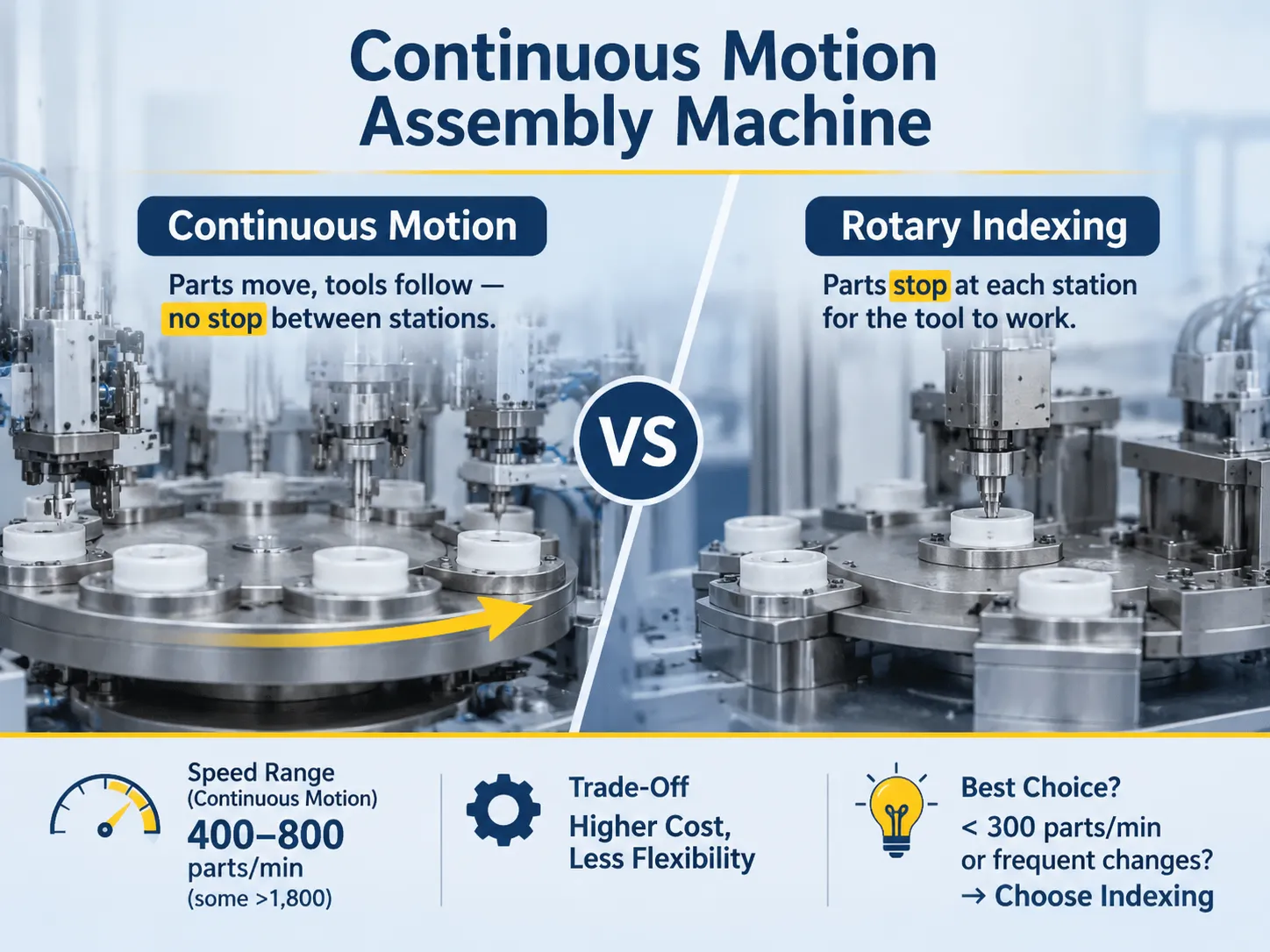
- the modular assembly lines that are intended for the manufacturing stage when each don is tested during construction.
There are three features allowing this equipment to be utilized in a laboratory environment and not in production only:
- the equipment is constructed in compliance with very strict regulations instead of some single standard, thus being built to meet the requirements imposed by IEC 60947 or IEC 60898
- the fixture has been designed in accordance with some specific size of the frame that allows for performance repeatability
- the record of measurement is generated in an automatic way, making the difference between measurement and proof.
Price is hardly a factor to distinguish instrument manufacturers from integrators. A piece of equipment designed for one purpose costs about $40,000-$120,000 depending on the current source and fixture avaiability; while a multi-station system comes in the range of $150,000-$250,000, and an entire assembly line with built-in testing is more costly.
This amount is only a fraction of what a European supplier would charge for the same work. It all boils down to the paperwork and transportation, not the know-how of such operations.
Price Ranges per Category of Equipment
| Category | Typical Price | Pricing Factors |
|---|---|---|
| Analytical Balances (0.1 mg) | $1500-4000 | Readability, availability of calibration certificate, presence of software |
| Fumehood (1.2 m long bench type) | $4000-15000 | Airflow control, design of sash, etc. |
| Environmental Chambers | $8000-60000 | Volume, temperature ranges, humidity control, etc. |
| Digital Microscope (inspection type) | $5000-40000 | Magnification, presence of measuring software, etc. |
| Circuit Breaker Test Bench | $40000-120000 | The current source, the number of fixtures required, the test cycle description |
| Multi-Station Test Setup | $150000-250000 | Number of stations, traceability, automation level, etc. |
| Modular Line with In-Process Testing | $250000-1.5 million | Number of stations, test content, type of transfer, etc. |
The matter lies in the fact that price is determined by the source of current, fixture per assembly, not the design. A test bench producing 1000 A for a defined period will cost several times the one performing us measurements at lower currents because it’s the source of power that counts, and not the cabinet. Hence it’s easy for two similar quotations for “circuit breaker test benches” to differ by a factor of 4 in price. Reliability testing does the same math but vice versa; an aging ATS test bench is priced per number of operations per day and logging depth, not cabinet size.
Documents That Determine Laboratory Purchase
Three papers determine whether a particular piece of equipment can be used in a regulated laboratory, and it is good to get them before any price negotiations start.
- Calibration certificate with traceability. The document should state the standard against which calibration was done and uncertainty of the measurement. A document that states that a piece of equipment is “calibrated” without a traceability clause is proof of purchase only.
- Certification marking the equipment as safe for the appropriate market. CE for Europe, UL or ETL for North America, CCC for China. The device usually requires an evaluation according to the local electrical safety regulations, and the evaluation is more complicated for a testing machine than for benchtop equipment.
- Software validation documentation. If the piece of equipment gives results that are included in a report, software may need to be validated according to the laboratory’s quality system, which means controlling the versions of the documents, tracking them, and the supplier that cannot provide this will be a project risk.
- Service and spares commitment. Response time, spare parts availability, and the nearest service specialist location.
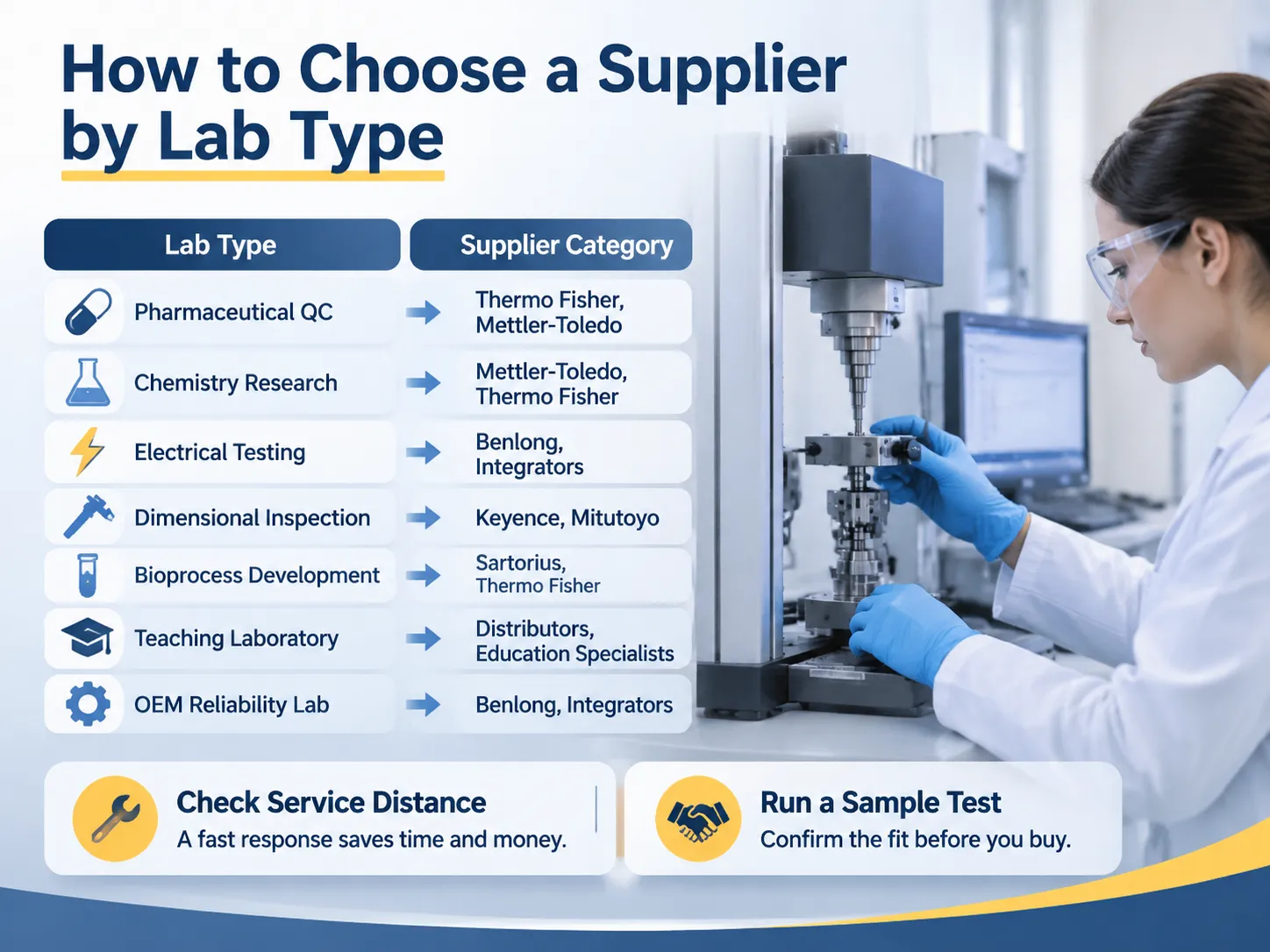
How to Select Supplier by Lab Type
| Lab type | Meaning | Category of supplier |
|---|---|---|
| Pharmaceutical quality control | The need for certified device, audit trail and calibration service | Thermo Fisher, Mettler-Toledo, Sartorius |
| Chemical analysis | Devices, spectroscopes, fume extraction, and durability | Mettler-Toledo, Thermo Fisher, local distributor |
| Testing of electrical devices | Standard based testers and equipment and recorded data | Benlong, European integrators |
| Measurement of dimensions and surfaces | Measuring systems with software and quick demonstration | Keyence, Mitutoyo |
| Biomanufacturing | Single use technology, filtration systems, weighing | Sartorius, Thermo Fisher |
| School lab | Strong basic equipment, competitive pricing | Local distributor, education experts |
| Reliability lab | Testing equipment indicative of production process, capacity | Benlong, custom integrators |
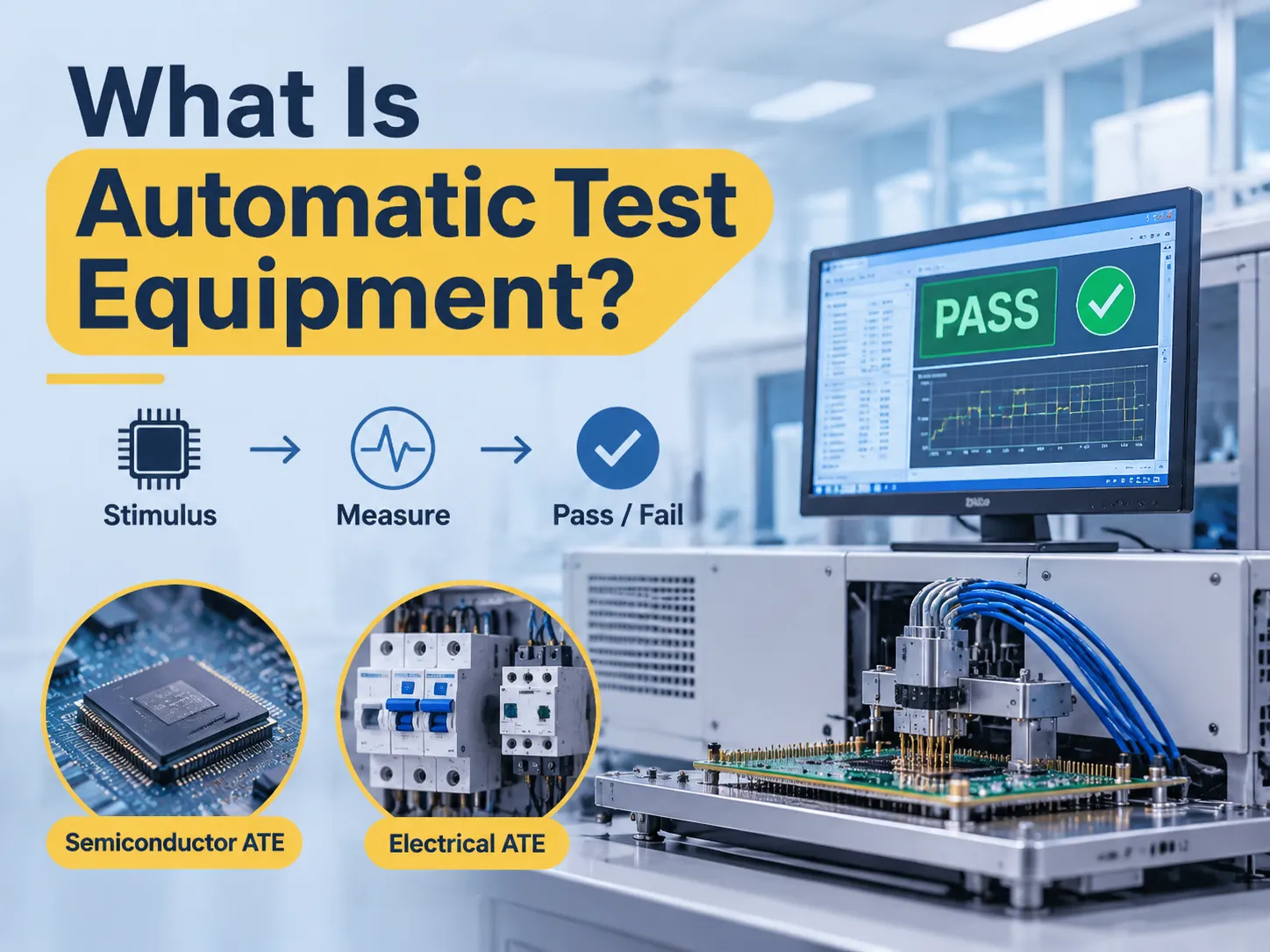
To interpret the data, you should identify what kind of test is being performed, subsequently find out which category of supplier has relevant tests. The most costly error is purchasing a general purpose measuring instrument when specific one is required, for example, the lab needs to check whether the breaker trips within certain period; it needs a bench with controlled current source and timing record instead of multimeter.
In addition, there are two additional criteria that are useful for all rows. The first one is proximity of service since $150,000 test bench which takes three weeks to repair needs to be compensated in terms of idle staff. The second criterion is the ability of vendor to test the order on your own parts before the actual purchase which provides a guarantee that the testing device works with the actual products.
Purchasing online is applicable to buy consumables, minor tools, and anything worth a couple of thousand dollars where the specification is known. If the instrument requires an installation or calibration, or software integration, it is where the cost of making the wrong choice comes in.
A distributor justifies its margin if it keeps the product in stock locally, provides first-rate support, and can lend a demonstration device. A distributor does not justify its margin if it is just a website with a warehouse. It can be found out by making two questions: who supports the device and how many days for having a replacement device.
When it comes to custom-built equipment, the purchase is a project rather than just a transaction. This implies a specification, a factory acceptance test (FAT), a site acceptance test (SAT), and a training handover. A supplier not being able to define in writing these four steps has not done many of them.
Benlong’s Role
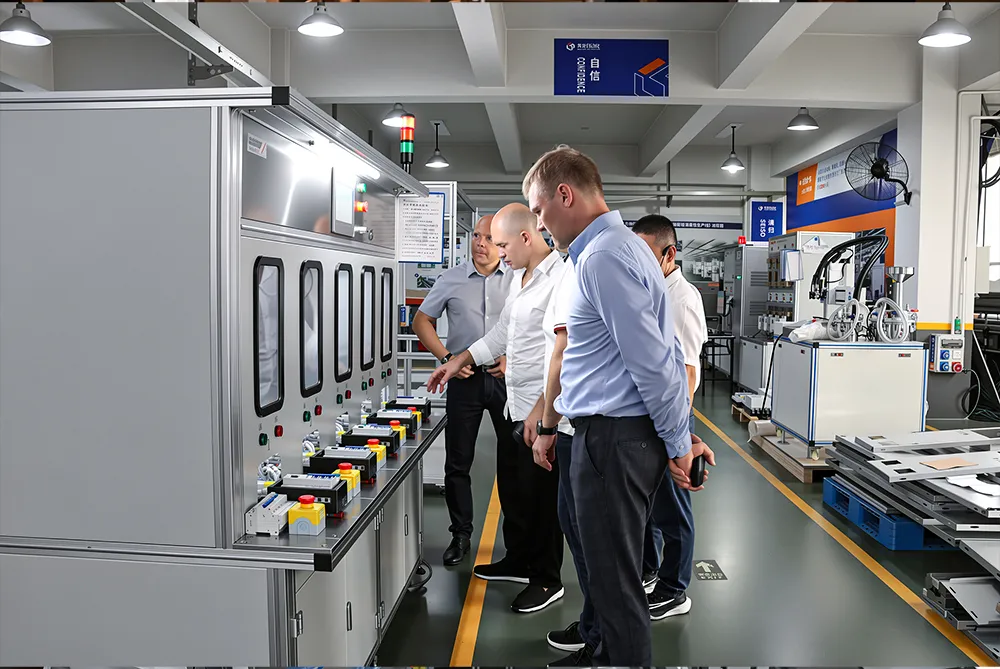
We manufacture test benches and assembly equipment for low-voltage electrical equipment; our clients are laboratories and production companies that must prove something about a piece of equipment instead of just measuring it. The modular assembly line solves a manufacturing problem; the test benches solve the problem of product certification, meaning that a customer can specify both from one supplier and receive one acceptance certification.
Our expertise lies in being able to repeat the same results from a specific product. Any results obtained using a case breaker that has been made using the same fixture is going to be equal in terms of outcomes, even though it is the first or tenth piece of equipment being tested. This is not the equipment that is intended for general use.
However, we do not offer analytical equipment nor balances or hoods either. To equip chemistry laboratory, customers must go to Mettler-Toledo or Thermo Fisher instead, and we will recommend doing that because suppliers claiming to provide everything are not using their devices properly.
FAQ
Where to get laboratory supplies from?
If it comes to consumables or small equipment, one should buy from a national supplier having its warehouse locally, or provide the purchase order via the manufacturer’s website in case of the products sold online. Involved lab equipment should be ordered from the manufacturer directly with the piece shown working. The key question is whether this equipment is going to be installed and calibrated.
Who is the best manufacturer of lab equipment?
There is no simple answer to this question, as the answer depends on the field of interest. In reality, the biggest and more comprehensive supplier of the equipment is Thermo Fisher Scientific.Mettler-Toledo is strong in weighing, Sartorius is leader in bioprocess and filtration supplies, Keyence is winning in measurement and inspection segment, while Benlong is producing test benches for electric testing. So go for testing and not size.
Where do I get my lab supplies online?
Go to distributors’ web pages with local logistics, unlike manufacturers’ sites for consumables and small equipment. Checking the calibration certificate and warranty before buying anything from online platforms is a good idea, since some items might not have that information publicly disclosed. If the stature of the order exceeds several thousands, getting the quote is far better than making an online purchase.
Where do I purchase lab equipment?
Manufacturers should be consulted to get the proper lab instruments and equipment built considering individual requirements. If looking for the official distributor who’d guarantee accessibility and service, one should pay attention to bidding, especially in public organizations. Custom-developed equipment should only be purchased after acceptance testing at a factory is performed.
References
- Thermo Fisher Scientific – laboratory instruments and consumables
- Mettler-Toledo – weighing and analytical instruments
- Sartorius – laboratory and bioprocess equipment
- Keyence – measuring, inspection and microscopy
- UL Solutions – laboratory equipment safety and certification
Conclusion
In conclusion, suppliers of lab equipment should be split up according to their specialization. Thermo Fisher is the most versatile supplier, Mettler-Toledo – weighers, Sartorius – bioprocess manufacturer, while Keyence – instrumentation producer.