benlong
Continuous Motion Assembly Machine: Types, Applications, Prices
When looking for the continuous motion assembly machine, the clients want to have the machine. They own the product, the volume needed, and the budget. An acquaintance has told them that continuous motion means big-time production lines. Now they are just wondering if the recommendations provided can be applicable to them, and what the machine can do, what applications the machine is meant for, and how much is the machine in 2026. The guide will be constructed in the following manner, the last thing in the guide presents the types of manufacturers divided according to their branch of industry.
Before we proceed with the details about this type of technology, let us first mention that continuous motion is not the most popular type of technology. Approximately three-quarters of rotary machines are indexing dials, while continuous motion machines make up only 3% of all machines. In other words, many engineers who attempt to sell continuous motion technology do not even comprehend how such devices can work. Adding on to this, buying a continuous motion machine does not require the buyer to pay much attention to price parameters.
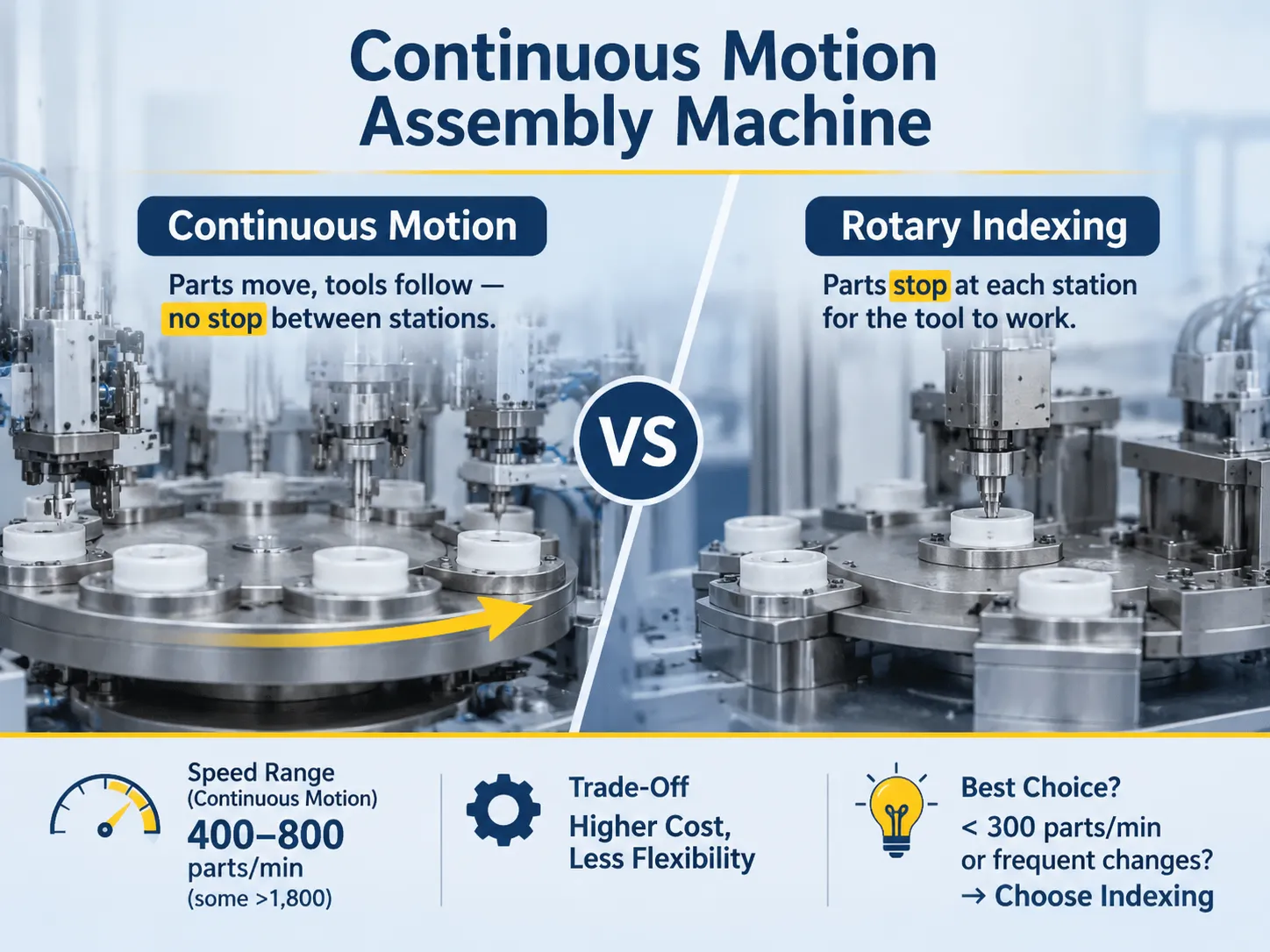
A continuous motion assembly machine is one of the machines that do not stop moving during operation. This machine is more efficient in terms of performance when dealing with mass production of small and symmetrical products because it is characterized by a short working cycle. The machine is perfect for resolving issues related to the processing of caps, spray valves, syringes, lipstick cases, pens, and joiners. The average rate of operation of the machine constitutes 400 parts per minute to up to 800 parts per minute which is easier to reach compared to the maximum 1,800 parts per minute achieved through special machines, while the indicator dials are slower and can move only a few dozen parts in a minute. The price range of continuous motion assembly machines differs widely from $ 100,000 to $ 1.5 million. There are several companies that work on assembly machines making huge improvements within the field.
What a Continuous Motion Assembly Machine Is, in Plain Terms
The primary characteristic is that the workpiece never becomes stationary. Parts arrive on an infeed line one after another, separated by a turret in a clean pitch, while parts fall into a turret at a constant speed. Once the part is on its way through the machine, it gets only ejected at its end.
This is the reason the entire machine is constructed in such a fashion. To accomplish this, a tool that is in constant contact with a moving element needs to have its movements defined by geometry, rather than programming. Cams have shown success in their operation. The turret, star wheel and tool movement must be interconnected through a shaft, which allows for perfect synchronization of the entire mechanism.
In addition, considering the effect of the entire design of the machine, one can say that the benefit comes with the pricing. So, it makes no sense to make a machine control system, it makes sense to design the cam itself. If a machine builder has a good cam designer, but a weak PLC developer, he will succeed much more than when the position is booked in a reversed way.
From another perspective, one can separate two types of decisions made by consumers: the type of transfer architecture chosen (a dial machine, linear machine etc.) and the motion type (intermittent or continuous).The general layout of a modular line, including conveyor options and how stations sit along a frame, is set out in this overview of the modular assembly line platform, and it is useful for the vocabulary alone: stations, nests, transfer, cycle time, pitch.
The Machine Types You Will Be Offered, and What Each One Is For
In total, five types of architecture cover almost all assembly machines, and the name of one of these types always comes up in a quotation, with no explanation.
- Rotary continuous. This is the kind of rotary system we just discussed, where parts move in a circle and the working mechanisms come down from the revolving force wheels. This type is used for the work of speed between 400 and 800 parts per minute. Best for simple operations in making small circular or symmetrical parts. Also, the method of assembly is suitable for the same type of construction and will not change for years.
- Rotary indexing. In this case, parts come to rest at each position in the process. The machine moves to the next position when the work is finished at the previous stop. The average speed of the system between 15 and 250 parts per minute. The tooling is not as costly and the time to change the equipment is reduced. It is the most common manufacturing equipment as 70% of installed rotary equipment.
- Pallet transfer machines. The parts are not moved on the system itself like in the previous methods, but on pallets. The movement can be either synchronous or asynchronous. Synchronous transfer means simultaneous movement of all pallets while the slowest station defines the cycle. This does not allow you to create a productive queue of product pallets in the process.
- Linear synchronous machinery. The stations are placed on the common bed in a straight line. This is easy to extend and gives a good overview of the processes. It is the best method if you make a long product, which requires the sequences of operations to be performed.
- Manual or hybrid cell. Fixture, press, and operator. This still holds true below a few hundred units per day, and pretending otherwise is why factories end up with an expensive machine wasting its potentials by working on one and only one product.
There are two decisions to choose from instead of one. Dial versus line stands for cycle times balancing, as subassemblies differing greatly in times can’t be processed by a single dial, which is why breaker and contactor lines are being built using the transfer principle.The modular production line used for air circuit breaker assembly is a working example, where the arc chute, contact and mechanism assemblies have cycle times far enough apart that a single dial would run at the speed of the slowest one. Continuous or intermittent is the second decision, and it is about speed, not balance.
Where These Machines Earn Their Place
Continuous movements are seen wherever the objects are small, used in high volume, and otherwise suitable for feeding and nesting. The four areas of application listed below comprise most installations.
- Packaging and closures. Bottle caps, spray nozzles, aerosols, and pumps. This is where continuous motion architecture can be found most comfortably, since the operation lasts for a fraction of a second and operates at millions of operations. A capping machine performing at one thousand two hundred caps per minute is a standard application of the technology.
- Medical devices. Syringes, pen needles, blood collection tubes, and components of inhalers. Volumes are high, geometrical figures are round and symmetric, and cleaning room requirements foster design without many exposed components. The process validation is much more demanding than in the field of packaging, meaning that the machine is to be designed for cleaning, unlike in packaging.
- Cosmetics and writing instruments. Lipstick tubes, mascara brushes, ball pens, and razors. Small size, cylindrical shape, assembly via pressing and snapping, and decoration with no visible damage of the surface. Continuous rotary machines perform all operations, with process knowledge acquired instead of investing it into machine design.
- Electrical and electronic components. Connectors, terminals, small relays, and fuses. In this case, the architecture changes because there is a need for testing, thus the machine used here is a pallet conveyor with testing stations. Note that this is important for people coming from packaging and expecting machines to be similar.
They all share the same pattern in that there is an advantage of being in motion over stopping the operation unless stopping is cheaper than removing the stoppage. A capping machine may take a fraction of a second to perform the capping operation, but if the machine has stopped, the machine is at a standstill. Remove the stoppage and now the entire process is undertaken at the machine speed rather than at the operation speed.
Output, Dwell and the Numbers Behind the Speed
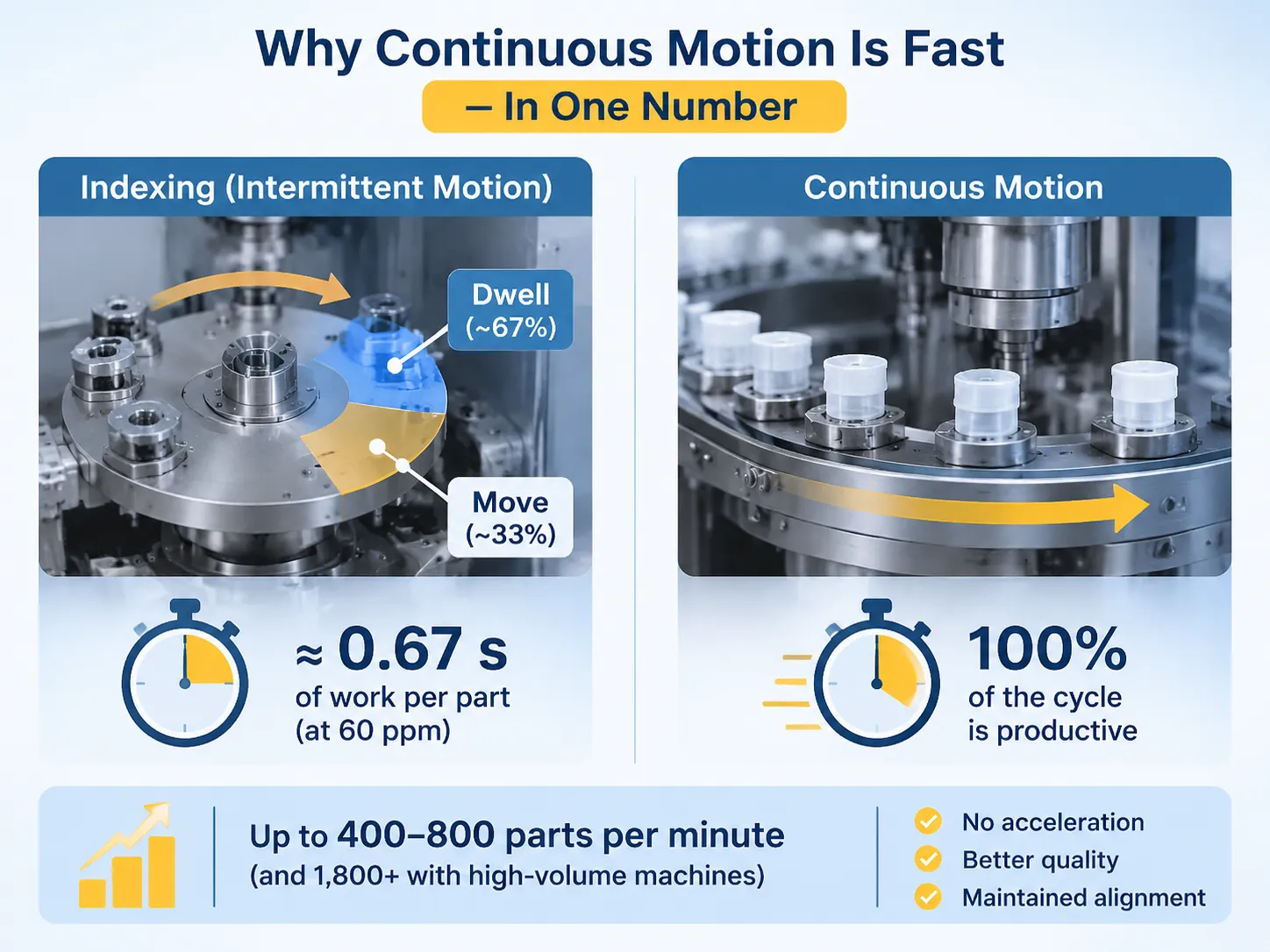
An indexing machine is classified into working time and transfer time within one cycle. Transfer time is time when nothing gets done, whereas the working part, called dwell time, is about two thirds of a cycle. Thus, a machine producing 60 parts per minute allows about 0.67 seconds of working time for each part.
Continuous motion prevents such losses by keeping the part fixed with respect to the tool at any instant of time. Therefore, the ratio of useful to total time approaches the value of 1, and limits move from machines to operations. That is why the indicated performance differs so greatly: intermittent machines have throughput of 15-250 parts per minute, while continuous machines have approximately 400-800 parts per minute with high capacity closures at over 1,800.
Three values determine the category of any particular machine. The total number of tool positions determines how many operations can be performed in one cycle. The pitch of the station determines the physical room needed for each operation. The longest operation will determine the value of the cycle because the machine will work the speed of the slowest operation. Thus, a 36-position turret with the longest operation that lasts 80 milliseconds will have a throughput of 750 irrespective of the speed of other 35 operations.
Another aspect is more important than speed for fragile items. Since the part will remain motionless whole its acceleration will take place, the components remain intact thus making the part delivered to the next station without loss.
Tooling, Changeover and What a New Product Really Costs
A cam machine is created in accordance with the part distribution guideline which, according to the statement should be considered twice by the prospective buyers since the nests are cut around the small part, the pins – machined to fit the part, the cam segments profiled according to the stroke and the star wheel designed for the spacing of the parts. Change the part and everything changes too.
In a commercial sense, it takes 20-40% of the cost of the original machine to make tooling for the new product and, therefore, it takes more than several months instead of weeks as the product undergoes the identical design, machining and test process as the first product. Users aware of two future generations of a product ought to provide two figures before they approve the first one since the designs allow for that and the engineer can remember all the details of the nest creation for presently.
As for easiness of changeover, everything depends on how different the product differ has become. If the second version has the same dimensions and differs in only one feature, the changeover is relatively simple since it involves changing only the pins and installing an insert into the nest. In contrast, if the second version requires a new star wheel and a new cam segment, a project has to be done. The automatic case erector illustrates the point from the other direction: the erecting station is fast and reliable, but it feeds an indexing line because the operations downstream need time, and a cam machine at that point in the process would be the wrong tool.
The operating costs have a form of its own. Cam machines require proper lubrication, regular inspection of cams for wear, and timely replacement of pins instead of wait until they are broken. Jam at 600 per minute is not just a problem, it is a bin of scrap and possibly bent down pin. For the 36-pin turret, ten minutes is equal to losing about 7,000 parts, so the recovery time of the jams should be included in the specifications together with the cycle time.
What a Continuous Motion Machine Costs in 2026
The prices listed below are for equipment only and are based on the station count, test content, and country of manufacturer. A European or North American supplier usually charges from 30 to 60 percent more for the same station count compared to a Chinese or Taiwanese supplier, due to a higher amount of engineering man-hours and paperwork generation involved in their quotations rather than for the material used.
| Configuration | Typical price | What drives it |
|---|---|---|
| 6 to 12 pin rotary cam machine, manual load | Low $100,000s | Cam design, first tooling set, simple control |
| 16 to 24 pin machine with auto feed and eject | $250,000 to $500,000 | Feeding, star wheel phasing, guarding |
| 24 to 36 pin, multi-turret, vision, inline test | $500,000 to $1.2 million | Test content, vision, reject handling, traceability |
| Closure machine above 1,200 ppm | $800,000 to $1.5 million and up | Speed, dynamic balance, noise enclosure, tooling sets |
| Second product tooling set, same frame | 20 to 40 percent of machine price | New nests, pins, cam segments, star wheel, tryout |
In terms of comparison, PCB assembly equipment is an entirely different category, and the data does not apply because people regard the former numbers as a good baseline for budgeting purposes. The basic pick-and-place Setup costs are from $30,000 to $80,000; the middle range is $80,000 to $250,000, and the complete SMT line, which contains a printer, a placer, reflow oven, and AOI, costs from $250,000 to $1 million or higher. A mechanical cam machine is more expensive out than a placer machine of the same production capacity because it is custom made while a placer is off-the-shelf.
It should be noted that two costs have never appeared in quotations but are quite real. The first one is tooling for the next product described earlier. The second one is the learning curve on the floor since the cam machine cannot be reprogrammed out of a trouble. When a part runs bad when it is already running at speed the solution is a mechanical fix where the maintenance crew should read a cam profile. For plants without such expertise in place high-speed machines often run only at 60 percent of the capacity throughout their operational life, which is a costly way to operate an indexing machine.
Who Builds These Machines, and What Each One Is Known For
The supplier side is divided into 4 categories, and it helps to understand which category is being referred to in order to avoid unnecessary cycles in getting quotes.
- Large reputable builders. Among large builders, the largest one in terms of revenue is ATS Corporation having about C$2.7 billion in revenue in Fiscal 2025, about 7,500 employees and 65 manufacturing plants. They show great results in the field of assembly and testing of medical devices and machines used in the transport field. JR automation covers the same fields and has a solid presence in North America. Both enterprises can handle a whole project along with building and validating it.
- Specialized builders. For example, IMA Group is known for producing packaging machines and Mikron for medical devices. The benefit of working with specialized builders is that their designs and tools are tried and proved. However, they may be limited by their knowledge of the machine because they will only suggest designs that they have experience with building.
- Motion and control suppliers. Examples are Bosch and Beckhoff. They do not make machines themselves, they create parts for machines. When choosing the supplier, it is possible to learn a lot about their design approach.
- Chinese and Taiwanese builders. Although they have low prices and short lead times, and in some cases engineering experience could be poor, those worth trying have at least one installation in the specific field of work and a spare parts policy documented so that it can be safely relied on. Those to be avoided simply give the price before asking even for what is needed.
How to Choose by Industry: A Solution Table
The table given below provides a link between typical cases and the type of machine, an achievable range of outputs and a suitable supplier fit. It should be treated merely as a reference and the outputs being stated in this table are assumed to be based on stable product design.
| Industry and product | Machine type that fits | Realistic output | Supplier profile |
|---|---|---|---|
| Beverage and closures: caps, spray valves, pump dispensers | Rotary continuous cam machine with capping turret | 600 to 1,800 ppm | IMA, ATS, specialist capping builders |
| Medical: syringes, pen needles, blood tubes | Rotary continuous or high-speed pallet line in a cleanroom | 300 to 800 ppm | Mikron, ATS Corporation, validated-system builders |
| Cosmetics and writing: lipstick tubes, pens, razors | Rotary continuous with decorative and press stations | 400 to 900 ppm | IMA, regional cam specialists |
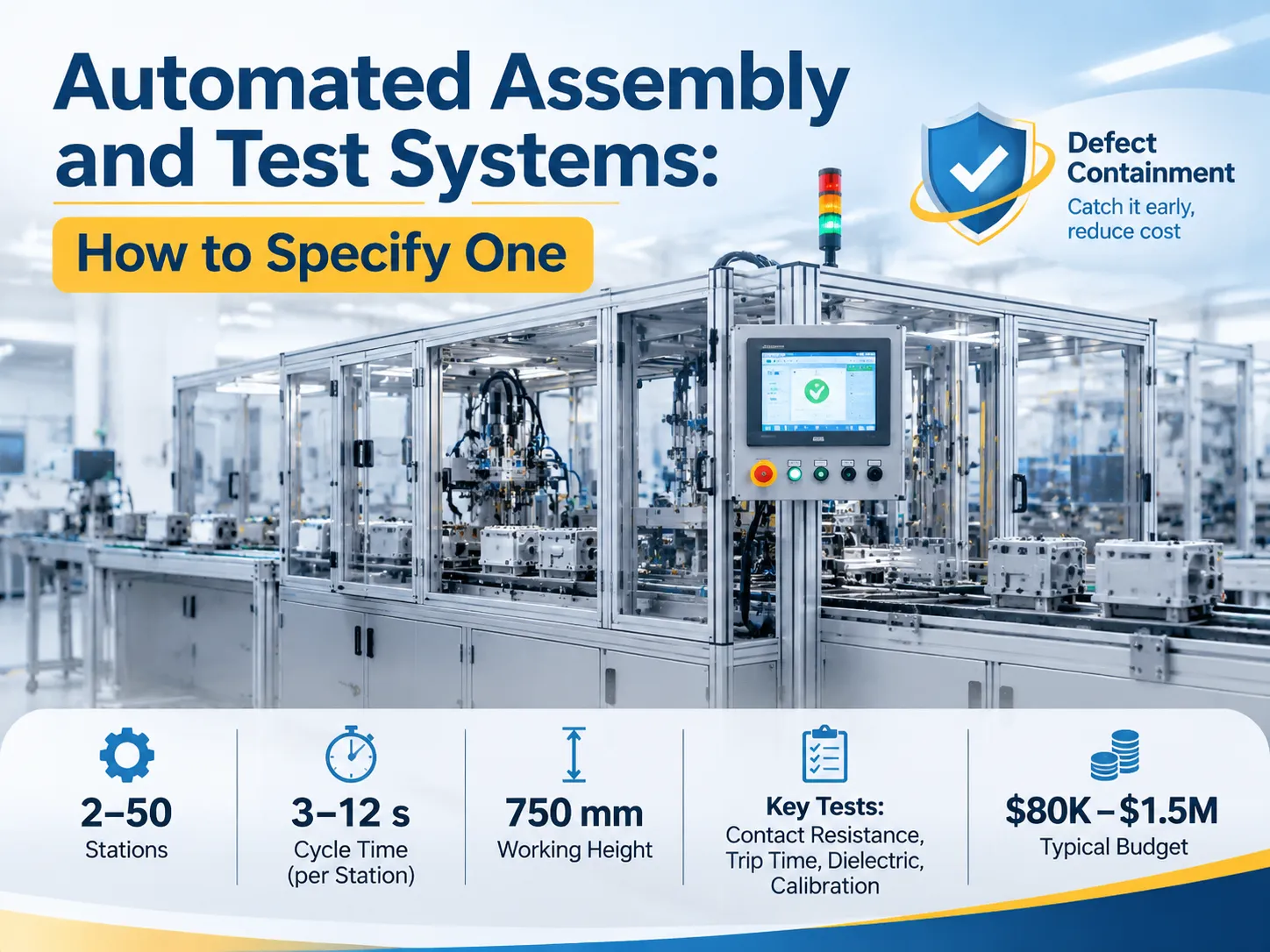
| Low voltage electrical: MCB, MCCB, RCD, contactor | Intermittent pallet line, 2 to 50 stations, test benches alongside | 3,000 to 20,000 units per shift | Benlong, plus domestic test-bench builders |
| Automotive components: connectors, sensors, actuators | Synchronous or asynchronous pallet line with inline test | Cycle 3 to 12 seconds per station | ATS Corporation, JR Automation, tier-one integrators |
| Consumer electronics: small connectors, hardware | High-speed cam machine or linear synchronous line | 200 to 600 ppm | Taiwanese and Chinese builders, Keyence for inspection |
| Appliance and switchgear sub-assemblies | Rotary indexing dial with manual load | 30 to 120 ppm | Regional builders, Benlong for electrical apparatus |
Search for your product in the table, and then check your volumetric rating. If your volume is below the benchmark, then a machine below yours is usually your best bet, as using a machine at a third of its rated capacity can be an expensive method of producing something. The comparison of automated production line options goes through the same decision from the purchasing side, including the acceptance criteria worth writing into the contract before the deposit is paid.
What to Put in the Purchase Order
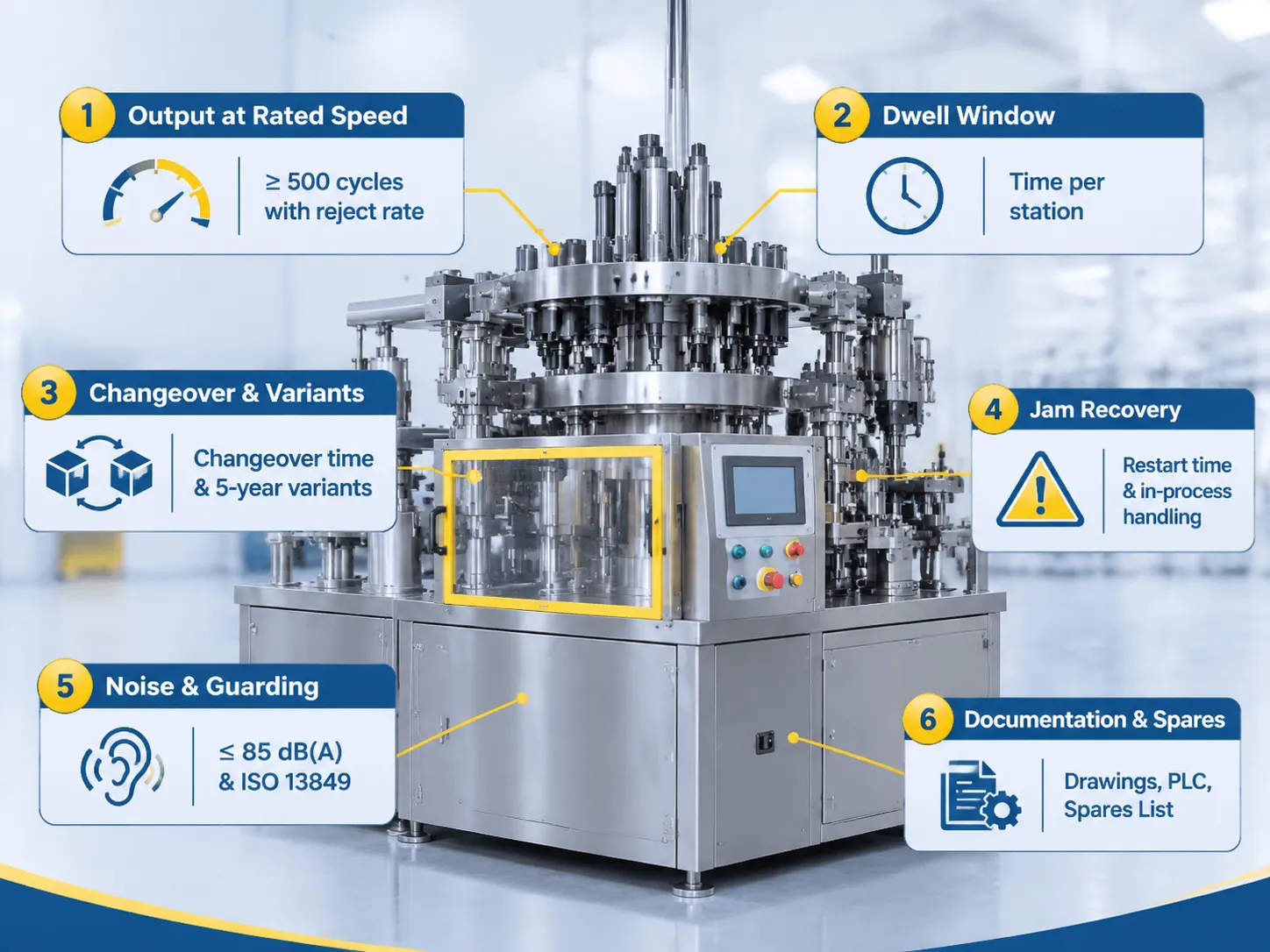
- Performance should be calculated by real productivity, not by cycle timing obtained from a cam drawing or by an average of records from completed twenty parts series. Tell us about results of running the equipment during the period when at least five hundred cycles took place and the necessary together with rejection rates were found out.
- Dwell time for each station must be described at least in milliseconds. If the manufacturer cannot establish this time, it means the design of the cam is still being developed and the equipment will be late for the period required to solve the design issue.
- Changeover time and number of modifications should also be reported. It means how long it is necessary to change the product and how many products the machine will be required to produce during the following five years. These data are very important for the development of the tooling strategy, nevertheless, they are mentioned in less than 20% purchase orders.
- Jam recovery period should be specified. It is crucial to know how long the machine requires to resume the operation and what happens to parts that were being processed during this period. According to the example of 36 pockets turret operating with the speed of 700 parts per minute, about ten minutes of downtime will cause the loss of over 7000 parts.
- Noise and safety criteria should be stated. It is a known fact that cam machinery is very cumbersome, and its noise level is often described in terms of 85 dB(A) which is the level at which it is necessary to build soundproof enclosure. Safety procedures should be stated according to standard ISO 13849.
- List of technical documents and spare parts should be provided. The builder must prepare a set of equipment schematics, electronic schematics, PLC source file allowing modifications, spare part list, and pricing for spare parts before the equipment is delivered.
Where Benlong Fits in This Market
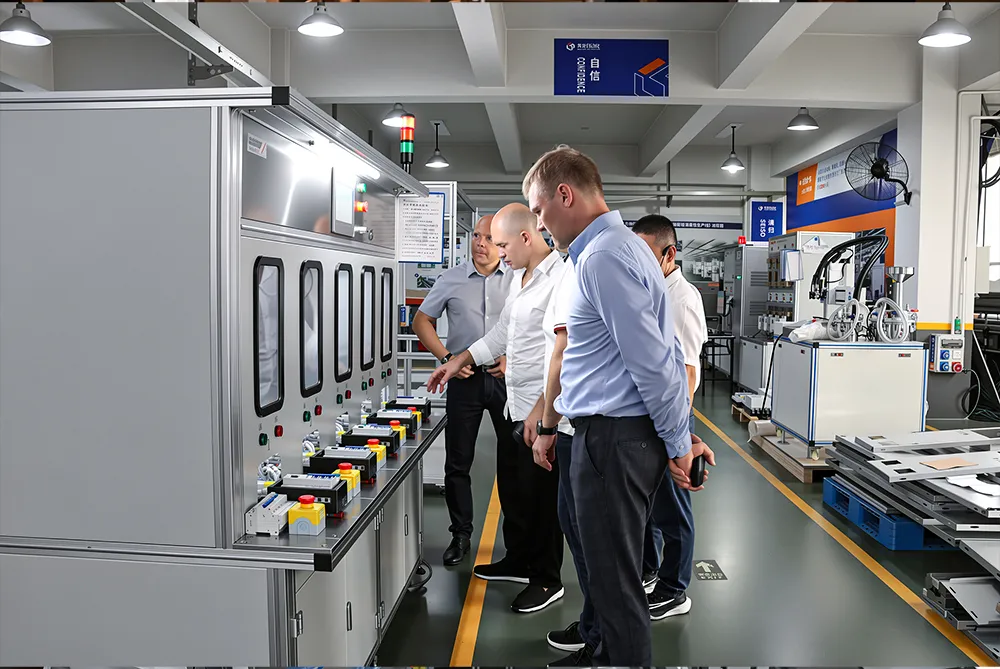
Our company creates systems for assembling and testing devices that use low voltage in electricity supply for electrical apparatuses that range from miniature circuit breakers to air circuit breakers, residual current devices, and so forth. This is a field that we must also provide support not only at 370V, but also at varying frequency of 50hz, with construction taking anywhere from 30 to 60 days.
One would think that our reluctance to sell rotary machines is due to modesty but it is not. Our reasoning is simply that the defect of a breaker consists in action plan, calibration and dielectric tests that are done after conducting thousands of tests on various models.
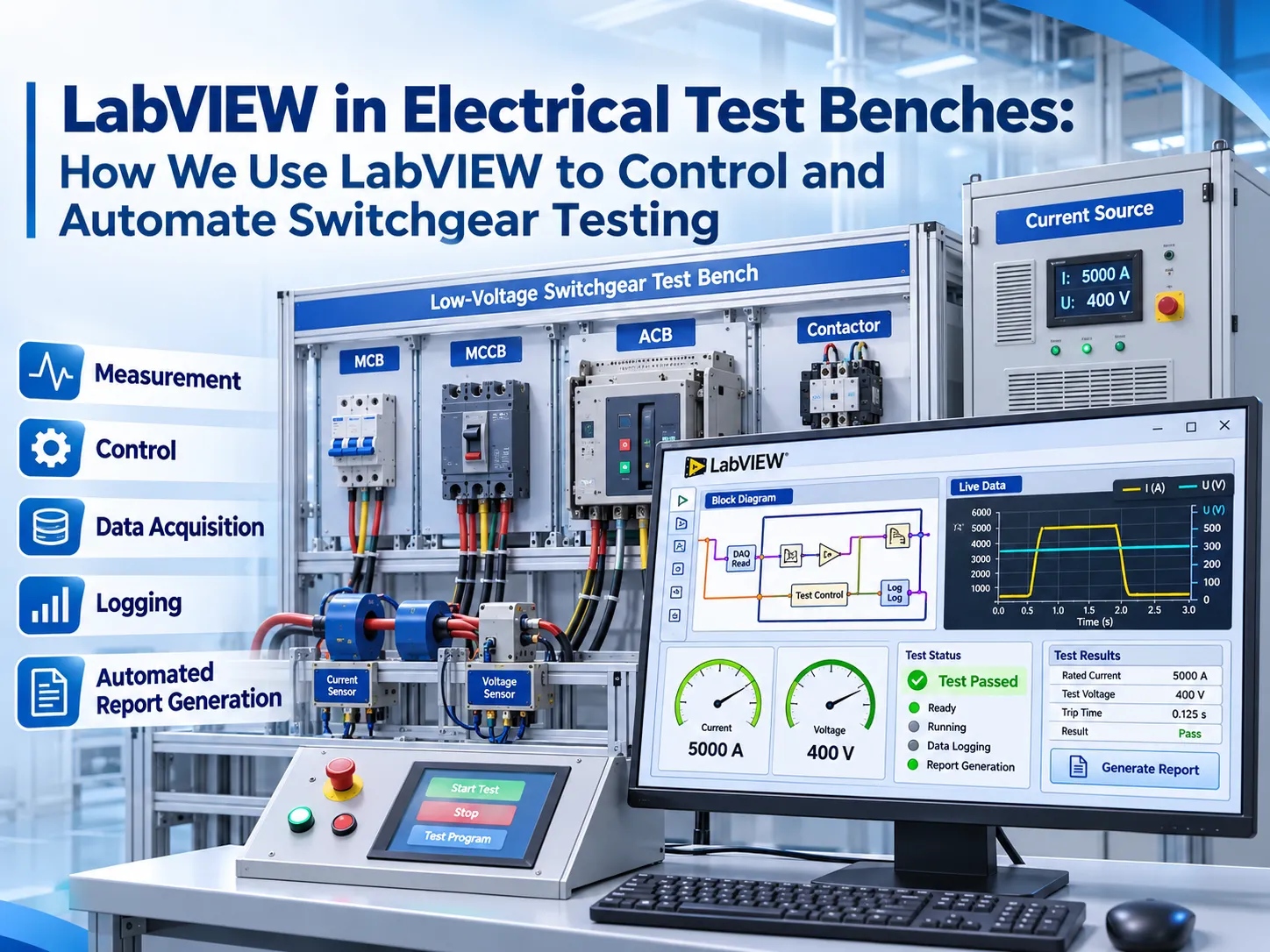
Our main asset is a library of tools that we already have and that we use when creating assembling and testing systems that rely on some already existing version. The method of contact insertion in circuit breakers is just another variation of what we created before. The contactor test machine is a fair example: contact resistance, pull-in and drop-out are measured with the device at rest, under defined conditions and with a controlled current, which is exactly the constraint a continuous machine cannot meet.
In the case that your item really satisfies the definition of a symmetrical product being made at the rate of 600 pieces per minute and the parts are being snapped in vertically, you would require the services of a cam supplier and we will let you know that in our first response. If it happens to be an electric device that has to be produced in the range of 5,000 to 20,000 units per shift and therefore undergoes some demands of calibrating and testing on every unit produced at the same time as possible, we have a high capability of fulfilling the expected speed and performance of the production line.
FAQ
How much does a PCB assembly machine cost?
A basic pick-and-place machine used for SMT tasks can cost approximately between $30,000 and $80,000. However, a mid-range pick and place machine equipped with multiple heads and vision may cost between $80,000 to $250,000. At the same time, a complete SMT setup, consisting of printer, placer, reflow oven, and AOI, generally, costs above $250,000 and can go as high as $1 million. Machines employed in the electrical assembly industry fall under a different category, and thus their prices cannot be directly compared, yet the figures presented can be helpful for reference since the product is catalog-based while the same assembly system at a similar price is custom-made with custom tools.
Do assembly lines still exist?
That’s right, and still they are used in most of the processes. The low volume of manufacture, low variety of finished goods, and big sizes or fragility of the goods make manual lines a necessity to work with. Automated lines are seen in industries with higher volume of production and usually consist of 70 percent intermittent rotary, 20 percent linear transfer, and 3 percent continuous rotary. What has changed is not the existence of lines, but the new technologies that allow to monitor the quality of the goods manufactured.
What is an assembly machine?
A device that assembles various parts to obtain either final or only partially finished goods by means of a chain of stations, each of which performs one particular function: feeding, orienting, pressing, screwing, riveting, welding, dispensing, marking or testing. Stations connected by means of a transfer system, which can be either intermittent (parts being stationary) or continuous (parts are continuously moving, while tools move together with the parts). This category of machines ranges from a simple semi-automatic press, equipped with a fixture, to a 36-station rotary machine allowing for 800 assemblies a minute.
What are automated assembly systems?
Control system manages all feeding, transferring, assembly bit, testing and rejecting. Instead of just being a number of separate machines, a system must be very well integrated by means of the proper sequence, lock system and quality recording. In case of failure, the production unit must be directed to another location and assigned a reason for rejection. Two factories may buy identical devices, but they will not get the same output as their rejecting systems would work differently.
References
- A3 — Advancing Automation, Assembly Systems Resources
- ATS Corporation — Custom Automated Assembly and Test
- Bosch Rexroth — Assembly and Handling Technology
- Keyence — Vision and Measurement for Inline Inspection
- Beckhoff Automation — Motion Control for High-Speed Assembly
Conclusion
Moving components continuously solves one problem – the stop that costs more than the mechanism that does away with the stop. If you are at 300 parts a minute or lower or your product is going to be redesigned in the nearest two years, the problem has not yet appeared and the indexing machinery guarantees you automatic repayment.
In case the problem already exists, buy the cam and tooling plans rather than the machine itself. You have to get the dwell time at every station, changeover time, jam recovery time, and tool price for the corresponding product from the suppliers but you should include them in the contract. Afterwards, you can verify the supplier’s data with the data presented in the table given above because the company that has already worked on a similar product will offer much lower price for the engineering process than the company that has never worked in this area.