benlong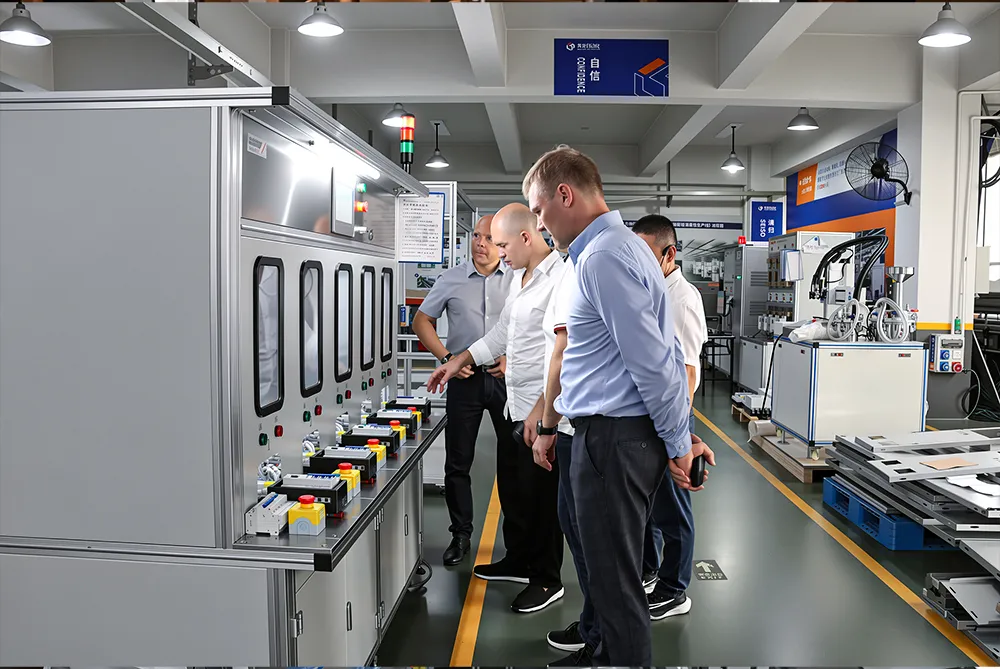
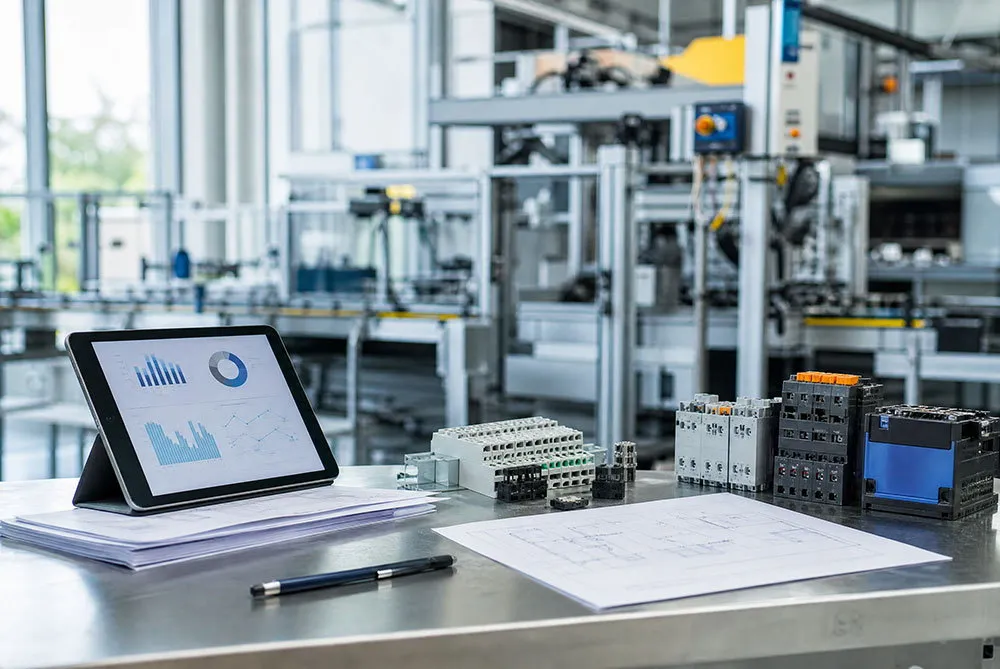

How to Upgrade Existing Systems with Industrial Automation
Enter a significant switchgear manufacturing factory in India and you will see the old and the new equipped with advanced technologies; in a hall modern automation is in practice while in another hall all conventional techniques are still at work in so far as assembly and testing are concerned. Replacing the old establishment completely is just not affordable; it takes considerable investment to have the building and other facilities in place. The smarter path is to keep what works and layer industrial automation onto it, station by station.
In this guide we will explain how you can upgrade your existing production line. You will learn what an upgrade will imply, what to look for to recognize that your line is due for an upgrade, and how to go about upgrading your line. Benlong Automation has years of experience in working with Indian electrical manufacturers like HPL, Havells and many others.
Put succinctly, upgrading in ride manufacturing means retrofitting industrial automation equipment for the work flow you have at present and it is proved to be extremely effective in circuit breaker manufacturing.
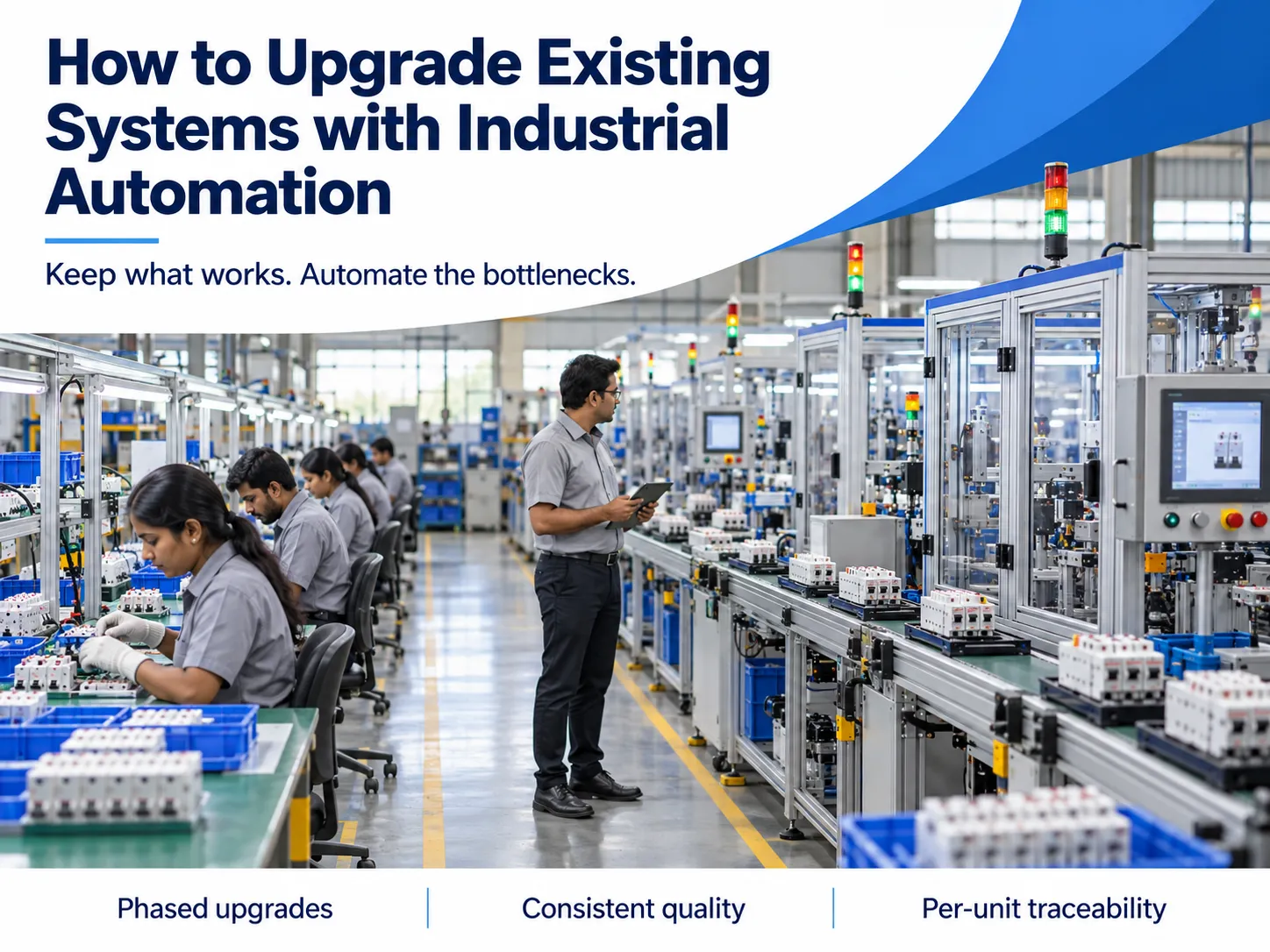
What Does It Mean to Upgrade Existing Systems with Industrial Automation?
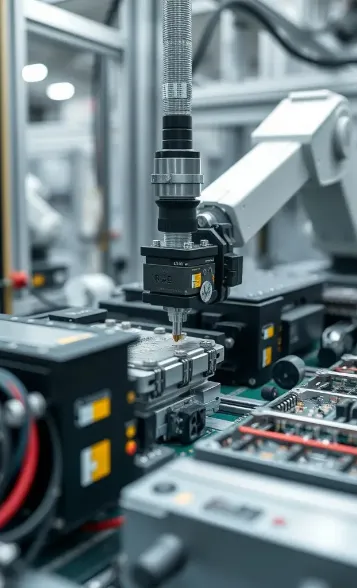
To upgrade existing systems with industrial automation is to modernise the production process that is still functional by implementing machines, controls, and software systems instead of replacing the process totally. This modernisation is a retrofit, not a rebuild, meaning that molded housings, suppliers of components, designs of products, this process is called the retrofitting of operations since there is no need to replace them totally to obtain modern technology.
To illustrate the principles of retrofitting, one can compare it with making repairs in a house. The house remains on its old foundation, but its electric wiring is changed; modern home appliances are installed in the house, and smart controls are added.
In a breaker manufacturing plant, the foundation of the process is the product itself, while then the upgrading consists of several things.
To sum up, in practice, the implementation of the upgrade of production line in the manufacturing process of low-voltage electrical circuit includes four important aspects which are as follows:
Mechanical automation (the system of automatic feed and pick-and-place and other operations replacing manual ones);
Process automation (includes closed-loop welding, automatic thermal and magnetic calibration, hi-pot testing with pass/fail sorting);
Control automation (the systems of PLCs and HMIs that store the recipes allowing to change the parameters of the circuit line within a short time);
Data automation (this includes logging of data regarding test results, mechanical torque, and welding energy used for each unit and the export of data for MES and ERP).
Plants rarely need all four at once. For a broader look at control-system migration (legacy PLCs, SCADA and HMI), see our guide to automation system upgrade services; this article focuses on the production equipment itself.
Why India’s Electrical Manufacturers Are Upgrading Now
Industrial automation in India has moved from a nice-to-have to a competitive requirement in the switchgear sector, and three pressures explain why.
Mandatory certification. Under the Electrical Equipment Quality Control Order, circuit breakers built to IS/IEC 60947-2 — the Indian adoption of IEC 60947-2 — must carry a licence from the Bureau of Indian Standards. Certification rewards consistency: a manufacturer has to show that every unit trips inside its specified curve, not just the samples sent to the lab. Manual calibration benches make that difficult to guarantee at volume.
Firstly, mandatory certification. According to The Electrical Equipment Quality Control Order, any switchgear switch developed according to IS/IEC60947-2 is required by Indian standards to be issued with a license by the Bureau of Indian Standards. Certification recognizes compliance, which requires that manufacturers can prove that each unit of the switch being produced will function better than the specified values. This is not easy to achieve on manual testing stations.
Secondly, profitable growth. Shared facilities created by housing construction and commercial enterprises always end up at the distribution station. The leading switchgear brands are expanding capabilities quickly but using more manual stations leads to the need for additional personnel, more required floor area, and more variability.
Finally, expectations toward export. For a number of reasons, a large part of Indian-made switchgear goes to markets of the Middle East, Africa, and neighboring South Asia. They require verification that switches meet necessary standards.
Our overview of the leading circuit breaker manufacturers in India covers the competitive landscape in more depth.
Signs Your Existing Production Line Needs an Upgrade
Most plants do not require a consultant to indicate where the problem lies. Typical indicatives include:
1) Output is limited by number of operators instead of machine speed.
2) Time differences of a given operation become larger between operators, or over time, or during seasons. In summer rework increases.
3) Only some samples of each batch are examined regularly, and thus rejections occur in customers’ hands.
4) Some parts of the equipment including the arc chute plates, springs, and bimetals are missing, and nobody knows this till the analysis of returned goods is conducted.
5) Fastening one pole count or current rating takes a lot of time because of manual set up.
6) There is no record of calibration and hi-pot results for evaluating the overall performance of production.
If three or more of these statements are applicable, it means that the case for automation is substantiated; however, it is still required to determine where to start and what aspect of the technology to improve.
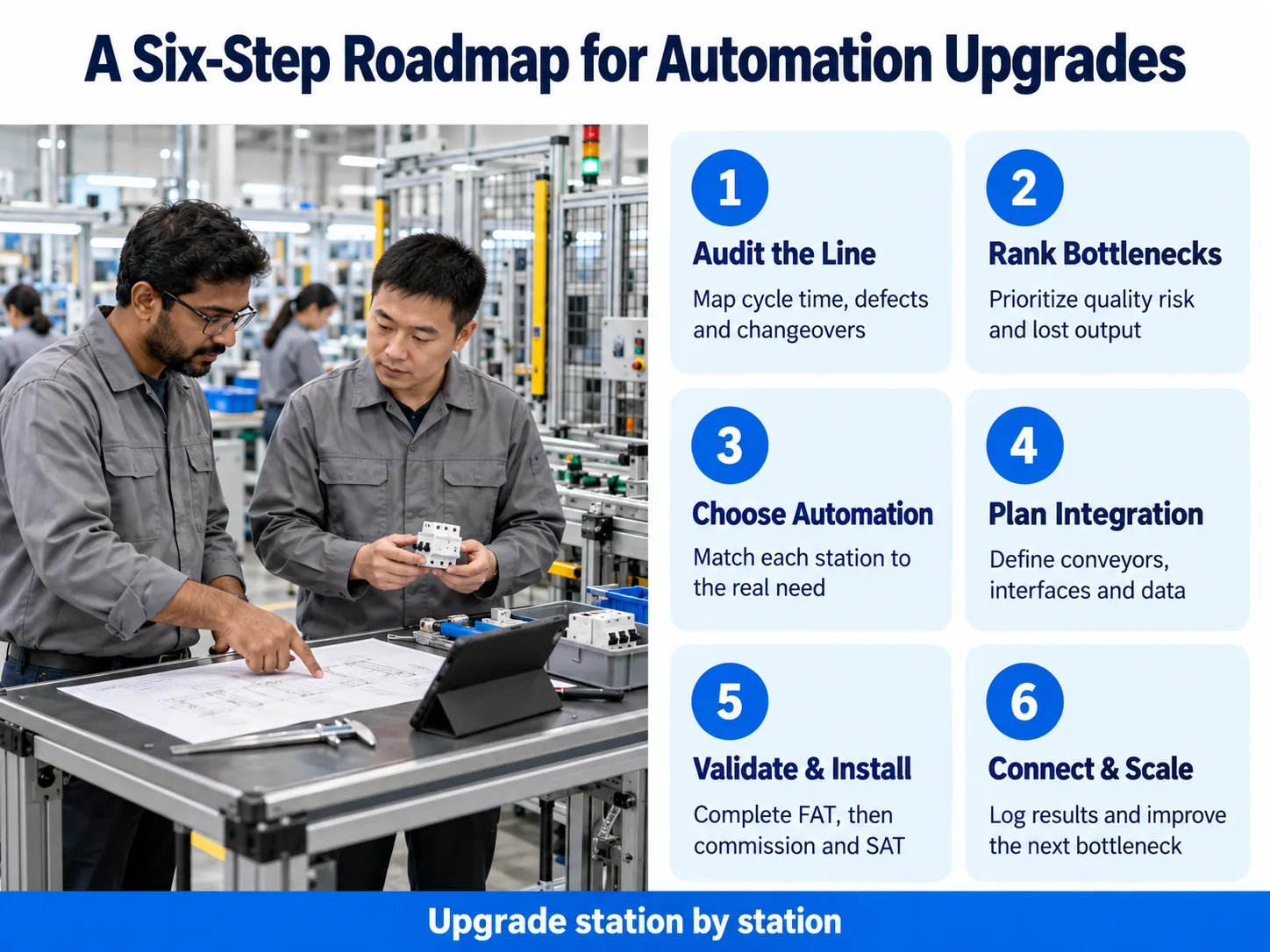
How to Upgrade Existing Systems: A Six-Step Roadmap
A successful automation upgrade follows a disciplined sequence. This is the same approach Benlong’s engineering team uses when it takes on a project for an Indian customer.
Step 1: Audit the current line
Catalog each station including its cycle time, the number of workers, defect count, and the duration needed to switch stations. Gather products, sketches, and the relevant IS/IEC testing requirements. This audit will show exactly where the bottleneck is — it is usually different from what management thinks.
Step 2: Rank bottlenecks by quality risk and throughput loss
The procedures requiring certification (calibration, trip testing, hi-pot) and causing most of work mistakes (assembly of small parts, stacking of plates, bimetal welding) are normally conducted first. The processes of packing and marking can wait.
Step 3: Choose the right level of automation for each step
Not all stations need a robot. A semi-automatic plant with manual loading can provide the same quality for much less money than a completely automatic line that eventually pays for itself only if there is a significant volume of products manufactured and the family of products remains unchanged. Our comparison of fully automated vs semi-automated production sets out how to decide.
Step 4: Design for integration with what you already run
New stations must accept parts from existing conveyors, fit the available floor space, and talk to the plant’s systems. Specify data interfaces (OPC UA or Modbus TCP) and barcode or laser-marked serial numbers at the design stage — retrofitting them later costs far more.
Step 5: Test before shipment, commission in a planned window
Insist on a factory acceptance test (FAT) at the supplier’s plant with your own samples, then a site acceptance test (SAT) after installation. Scheduling installation in a planned shutdown keeps the existing line producing until the new station is proven.
Step 6: Connect the data, then scale
Once stations are logging results, add SPC dashboards and OEE tracking, then extend automation to the next bottleneck. Our article on MES for high-speed MCB production lines explains how that data layer works.
How Benlong Automation Helps India’s Leading Electrical Brands Upgrade
Benlong Automation is located in Yueqing, Wenzhou, which happens to be the hub for low-voltage electrical manufacturing in China. The company manufactures customized equipment for assembly, welding, and testing of a wide range of products, including MCBs, MCCBs, RCCBs, ACBs, contactors, SPDs, and energy meters. India has emerged as one of its key markets for exports, and among its clients are some of themost famous names in the Indian switching industry.
What Indian manufacturers value in this industrial automation retrofit model is that Benlong does not ask them to throw away their process. Each of its machines is custom-made according to the technical drawings, samples, and desired products’ specifications of the customer, enabling the machine to replace or augment the existing production line easily. The wider supplier landscape is covered in our guide to automatic assembly machine manufacturers in India.
HPL Electric & Power
HPL manufactures MCBs, MCCBs, switchgear and electricity meters, which means its factories produce multiple product families with different frame sizes and test processes. For a producer this varied, recipe-based machines are critical; machines that can switch between 1-phase and 4-phase, or between current ratings, by inputting a new program instead of resetting the fixtures manually. HPL is among the Indian brands that have worked with Benlong, and this kind of multi-product flexibility sits at the heart of Benlong’s MCB automatic assembly line, which handles 1P to 4P with changeover in under 30 minutes.
C&S Electric
C&S Electric is known for a broad domestic range from MCBs up to MCCBs and ACBs for industrial and infrastructure projects. Larger frames bring larger mechanical and electrical challenges: arc chute alignment, contact pressure, torque on mechanism screws and long-time overload calibration. C&S Electric appears on Benlong’s customer list, and for this class of product Benlong supplies the MCCB automatic production line for 100A–1600A frames — with servo riveting, torque-controlled fastening, electronic trip unit calibration and MES traceability — as well as stand-alone MCCB long-time thermal calibration benches with 4 to 16 independent stations.
Havells
Havells is one of India’s largest consumer and building electrical brands, with MCBs, RCCBs, MCCBs and distribution boards sold through a very wide network. At that volume, consistency is everything: a breaker that trips a fraction late in one shift is a warranty claim months later. Havells is also among Benlong’s customers. For high-volume MCB programmes, the upgrade that pays back fastest is usually 100% inline testing: Benlong’s MCB automatic testing line runs 1,800–2,400 units per hour through instantaneous trip, thermal calibration, contact resistance and vision checks, logging every result against a serial number.
Polycab
Polycab, best known for wires and cables, has been building out its switchgear and electrical products business. Manufacturers scaling a newer product line face a particular choice: invest in a fully automatic line from day one, or automate the quality-critical steps first and grow into full automation. For that second path, semi-automatic stations such as Benlong’s MCB arc chute semi-automatic assembly machine cut assembly time by 50–70% compared with manual stacking while keeping capital outlay low, and MCB thermal trip set automatic welding lines bring vision-aligned (±0.05 mm), closed-loop welding to the bimetal joint that decides whether a breaker trips correctly.
Across all four brands the logic is the same: keep the product and the plant, automate the steps where human variation costs quality or capacity, and capture the data that proves compliance.
Matching the Bottleneck to the Right Upgrade
The table below summarises where Benlong equipment typically slots into an existing breaker line. Figures are taken from Benlong’s published product specifications.
| Bottleneck in the existing line | Benlong upgrade | Published performance |
|---|---|---|
| Manual MCB component assembly (15–20 s per unit) | MCB automatic assembly line | 2–3.5 s per piece, vision inspection at every station, 1P–4P changeover under 30 min |
| Hand-stacked arc chute plates | Arc chute semi-automatic assembly machine | 10–20 s per assembly vs 30–60 s manual; plate-count and alignment sensors |
| Manual bimetal welding | Thermal trip set automatic welding line | ±0.05 mm vision alignment, 100% weld-energy monitoring, 10,000+ units per shift |
| Sample-based manual trip testing (60–80 units/h) | MCB automatic testing line | 1,800–2,400 units/h, ±0.5% current accuracy, full data logging |
| MCCB assembly and ETU calibration by hand | MCCB automatic production line | About 30 s per piece, 100A–1600A frames, IEC 60947-2 compliant |
| Unstable long-time overload testing | MCCB long-time thermal calibration bench | Current drift under 2% over 8 hours, 4–16 parallel stations |
Benefits of Upgrading Instead of Replacing
- More efficient operations without an increase in labor force. Automated assembly is 5 to 10 times faster than traditional assembly while automated testing enables throughput from tens to thousands of pieces per hour.
Statistical quality. Vision inspection, sensor-verified assembly, and closed-loop calibration reduce operator operator-to-operator variation –e.g. the main culprit of field failures of manually produced breakers.
Complete testing instead of sampling. Each breaker is tested and sorted so the defects are found before the customer sees it and does not go into the packaging.
Audit-compatible traceability. Time of each trip, torque and welding profile for every breaker is linked with the serial number for BIS inspections, key accounts audits and paperwork for export.
Secured investments. Existing molds and product designs continue to be utilized; cash is spent only on places where enlargement ends the bottleneck.
Gradual expenses. Upgrading can be organized stage by stage so that the expenses are divided over the budget.
For more data on productivity and quality gains, see our article on industrial automation efficiency benefits.
Common Challenges and How to Avoid Them
| Challenge | How to avoid it |
|---|---|
| Vague specifications lead to a machine that does not match the product | Send physical samples, drawings, target cycle time and acceptance criteria before the quote, and write them into the contract |
| New station cannot connect to existing conveyors or systems | Define mechanical interfaces, I/O and data protocols (OPC UA / Modbus TCP) during design |
| Production stops during installation | Complete FAT at the supplier’s plant first; install in a planned shutdown window |
| Operators resist or misuse new equipment | Include on-site training and clear HMI recipes; involve line supervisors from the audit stage |
| Total landed cost is higher than the machine price | Budget for freight, customs duty, GST, installation and spare parts — not just ex-works price |
Cost, Lead Time and Return on Investment
Every Benlong machine is custom-engineered, so price depends on product range, degree of automation and output target. Lead times from Benlong’s published specifications give a realistic planning guide:
| Upgrade type | Typical manufacturing lead time | Published payback indication |
|---|---|---|
| Semi-automatic assembly station | 30–45 days | Around 6–9 months |
| Long-time thermal calibration bench | 45–60 days | Example customer: 8 months |
| MCB automatic assembly or testing line | 60–90 days | Around 9–18 months |
| Thermal trip welding line | 60–90 days (90–120 for new designs) | Depends on volume and defect cost |
| MCCB automatic production line | 90–120 days | Example customer: 14 months |
Payback depends on labour cost, volume, defect rate and warranty exposure in your own plant; ask for an ROI calculation based on your figures before committing.
Conclusion
Upgrading does not mean starting again. For India’s electrical manufacturers, the fastest route to better quality and higher output is to keep the plant and product they have, then automate the steps where human variation costs the most — calibration, testing, precision assembly and welding — and capture the data that proves every unit is compliant.
Benlong Automation has spent years doing exactly this for the Indian market, working with brands including HPL, C&S Electric and Havells, and with manufacturers at every stage from their first semi-automatic station to complete lines. If you are planning an upgrade, contact the Benlong engineering team with your product samples, current output and target capacity for a tailored proposal and ROI analysis.
Huang Xiaolei | Benlong Automation