benlong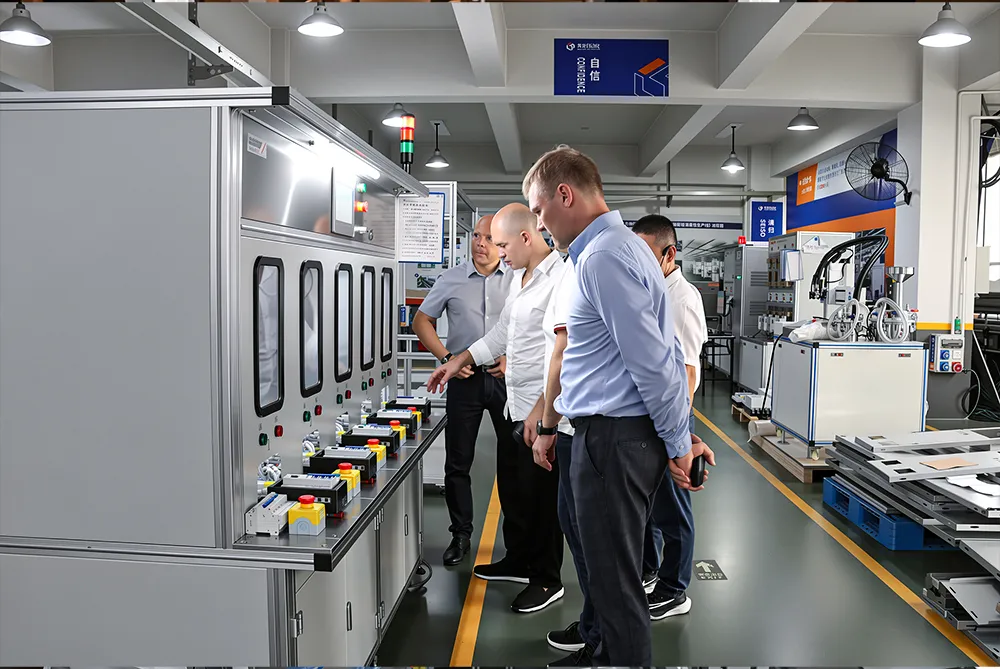

Who Are the Leading Circuit Breaker Manufacturers in India and What Sets Them Apart
India runs on an expanding grid. New housing, industrial parks, metro systems, solar farms and rural electrification all end in the same place: a distribution board where a small protective device stands between a live circuit and a fire. Those devices are supplied by a crowded, fast-growing field of circuit breaker manufacturers in India, from global multinationals with local plants to homegrown national brands and hundreds of smaller switchgear workshops competing on price.
Being knowledgeable about the names becomes one of the many concerns of a manager who is engaged in brand comparison, any distributor who is faced with the dilemma about stock items, or any entrepreneur who is looking into entering the electrical protection industry. However, what is more important is getting an idea of the difference between a truly trustworthy production and a risky one and the production capacity of the circuit breaker that is supposed to trip when necessary and hold after it does it. The guide provides the necessary knowledge about the field, major product categories, quality checks used across the country, and production lines responsible for proving the compliance of a device with the requirements.
Why India Has Become a Major Base for Circuit Breaker Manufacturing
There are three key factors that have transformed India into one of the most vibrant markets in the world when it comes to low voltage electrical protection. First of all, demand has risen because of the increased population, fast urban development, growth in the amounts of commercial real estate, and the drive towards renewable energy in the country which increase the number of circuits that require protection. The second factor, which is related to the establishment of local-manufacturing incentives, import substitution rules and the introduction of mandatory domestic certification, has encouraged both local and foreign manufacturers to set up and develop production facilities in India rather than simply importing finished products. Finally, the third reason that has helped the industry establish itself consists of a matured ecosystem of components from molded housings and bimetal strips to arc chutes and contacts which allows manufacturers to source most of the components from local suppliers.
Another aspect of the market developing in favor of capable manufacturers in India has been the existence of standards. Since India operates Quality Control Orders, which mandate that certification from the Bureau of Indian Standards for various low-voltage devices, the market has become more favorable for producers with high standards since compliance with the rules creates obstacles for those who are not willing to meet the Indian quality perception. At the same time, a bigger proportion of the Indian production is targeted towards international demand and countries in the Middle East, Africa, and neighboring South Asia expect that the Indian products meet the requirements of international standards. This means that if a manufacturer is able to prove that its products comply with Indian regulations, it will be able to win the competition on the international market as well.
The result is that circuit breaker manufacturing in India now spans an unusually wide range of scale and sophistication. Multinational companies are operating highly automated factories with international quality standards at one end of the spectrum. Large Indian firms with their own plants and national distribution are in the middle. On the other end are thousands of small and medium-sized workshops that assemble electrical switches from local and imported parts. This range can provide buyers with opportunities and risks because what is labeled on the electrical switch does not tell anything about how it was created.
The Established Circuit Breaker Manufacturers in India
The prominent participants can be classified into two categories: global businesses with operations in India and large local brands. The table below illustrates the names of several well-known companies along with their positioning in the market. The table is intended to act as a reference guide and not a recommendation and buyers should do their own checking for certification and test results relating to the particular product they wish to buy.
| Manufacturer | Origin | Typical Product Focus | Market Positioning |
|---|---|---|---|
| Havells | India | MCB, RCCB, MCCB, distribution boards | Mass-market leader, very wide distribution |
| Larsen & Toubro (L&T) | India | MCB, MCCB, ACB, industrial switchgear | Industrial and infrastructure focus |
| Schneider Electric India | France (MNC) | Full LV protection range | Premium residential to industrial |
| ABB India | Switzerland/Sweden (MNC) | MCB, MCCB, ACB | Industrial and utility grade |
| Siemens India | Germany (MNC) | Full low-voltage range | Industrial and commercial |
| Legrand India | France (MNC) | MCB, MCCB, RCCB | Residential and commercial |
| Eaton India | United States (MNC) | MCB, MCCB | Commercial and industrial |
| Hager India | Germany (MNC) | MCB, MCCB, RCD, boards | Residential and commercial |
| Crompton Greaves / C&S Electric | India | MCB, MCCB, ACB, switchgear | Broad domestic range |
| Orient Electric | India | MCB and consumer electrical | Residential mass-market |
| HPL Electric & Power | India | MCB, MCCB, switchgear, meters | Domestic industrial and residential |
| Polycab / Finolex / BCH | India | MCB and allied electrical products | Residential and commercial |
These branded producers are only the visible tip. Beneath them, India hosts a large population of regional MCB manufacturers in India and smaller MCCB manufacturers in India that supply local contractors, private-label buyers and export markets. Many of these firms are capable and certified; others assemble unverified components and stamp optimistic ratings on the case. The distance between those two groups is decided almost entirely inside the factory, not in the catalogue.
MCB, MCCB, RCCB and ACB, What Indian Manufacturers Actually Build
The term Circuit Breaker encompasses a wide range of meanings whereas most manufacturers focus on only one or two types of devices and not an entire range. For sourcing and production planning purposes it is essential to understand what each type of device is and how it works. Miniature Circuit Breaker (MCB) is a commonly utilized single- to four-pole device mainly used in homes, retail outlets and other small-scale business units. This is the most commonly sold product; hence it is the most preferred starting point for many manufacturers. Molded Case Circuit Breaker (MCCB) is used for high-level currents and short-circuit applications in industrial panels and main distribution for buildings. Residual Current Device, either RCCB or RCBO, has the objective of making sure that no one gets an electric shock and hence has gained popularity in home wiring. Air Circuit Breaker (ACB) is the other category that is a high current application in large establishments. The other devices include the surge protection devices (SPDs) designed to protect the equipment from the interference from the surges in voltage.
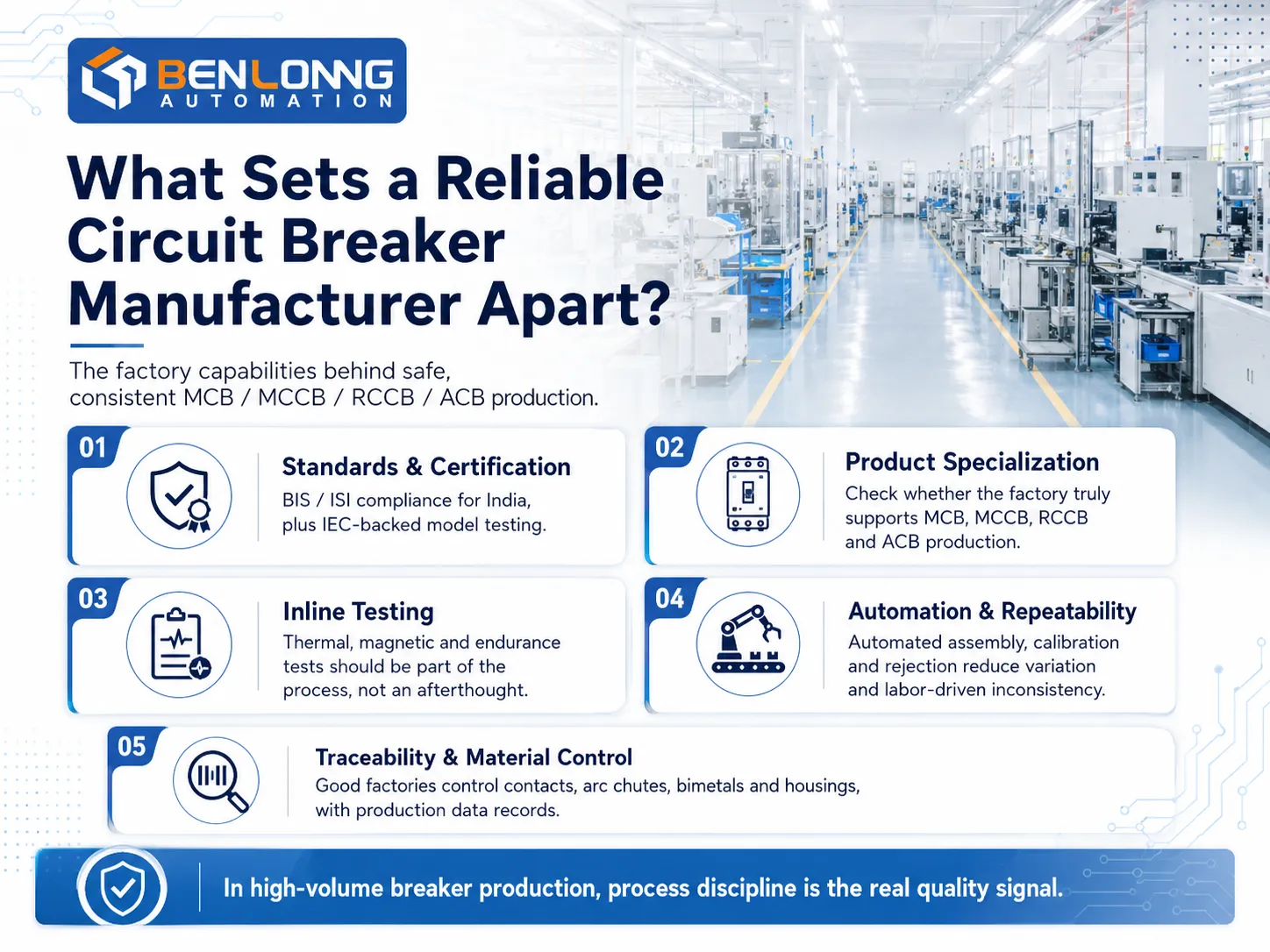
What Separates a Competitive Circuit Breaker Manufacturer From the Rest
When you see beyond the brand, there are a few aspects that help to tell a genuine manufacturer apart from another that is just packaging its products.
The first of them is certification according to the proper standards. For instance, in India, the design of MCBs should be in compliance with IS/IEC 60898-1 and that of MCCBs – with IEC 60947-2. It is mandatory to have the BIS certification with the use of the ISI mark for most low-voltage breakers sold in the country. If the marking on the casing of the product mentions breaking capacity or trip rating, unless valid existing test reports exist along with appropriate BIS certification for this particular model, the information is meaningless. Thus, it is extremely important for a customer to ask for these documents and verify them.
The second one is consistency. A breaker is an important safety device which may not operate for a long time but is expected to work properly when necessary. In order to achieve that, it is crucial to perform precise calibration of thermal and magnetic trips and mechanical endurance tests for every unit or statistically representative sample of products produced. Our overview of what an MCB testing laboratory involves explains why this matters and what such a facility contains.
The third point is about production on a wider scale and the need for consistency. While manufacturing a few hundred breakers by hand is quite straightforward, mass production of hundreds of thousands of the same item can pose serious challenges from the manufacturing perspective. This is where the real divide between manufacturers occurs, and this is the aspect of the industry that an average client would rarely be aware of.
Furthermore, in addition to the calibration and tests, components and raw materials quality play an even more important role in the process. The way a breaker deals with faults is determined by the amount of silver present in the contacts of the device, the quality of its bimetallic strip, the construction of the arc chute, and the features of the molded body. In cheaper devices, manufacturers tend to minimize the costs on the above-listed aspects, and the problem may not be revealed until the device fails to operate properly in real-life conditions. That is why responsible manufacturing companies pay very close attention to the materials they use in production.
The Production Lines Behind Reliable Circuit Breakers
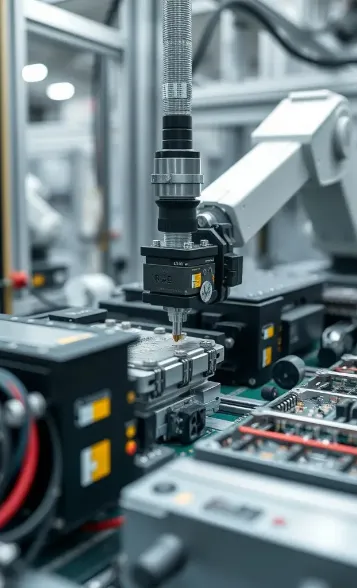
To be successful, every certified breaker goes through a careful assembly and testing sequence. The quality of the process dictates the quality of the finished product. You can assemble a decent breaker manually, but it will be difficult to keep the tolerances as required by the design, and the production volume will be limited. Leading manufacturers automate their assembly with inline testing to ensure consistent quality at a low cost of their products.
A modern circuit breaker production line integrates component feeding, riveting and mechanism assembly, automatic calibration, electrical testing, laser or pad marking, and packaging into a single continuous flow, with a manufacturing execution system recording data for traceability. For manufacturers who want to move from manual benches to this kind of capability, the equipment partner matters as much as the brand on the finished breaker. Benlong Automation, based in Wenzhou, China, at the heart of the world’s low-voltage electrical manufacturing cluster, designs and builds custom assembly and testing lines for MCBs, MCCBs, RCCBs, ACBs and contactors. Its range includes the MCB automatic assembly line, and a broader overview is available in our guide to the automation products used across MCB production. Buyers evaluating how such lines are specified and selected can also read our guide on choosing a custom automated assembly machine manufacturer, while the role of software in high-volume plants is covered in our article on the MES system for high-speed MCB production.
Speed is not only what makes such a production line valuable. However, since calibration and testing take place as part of the production process, defective items are captured and rejected prior to packaging. Moreover, the traceability information provides proof of compliance with specifications for every unit. This is an important commercial feature of any safety product because it serves as an element of warranty, certification, and export processes. Well-designed equipment also brings its cost back quickly due to labor savings and reduced waste, as well as through acquiring larger contracts for safe products that cannot be serviced with manual production.
The Cost-and-Quality Balance That Defines the Market
The breaker market in India is highly sensitive to prices, which influences the behavior of manufacturers. If distributors and contractors concentrate more on the lowest cost, manufacturers will be compelled to compromise the quality of materials and methods. The companies which prosper and grow, however, are those that deal with the task of reducing costs not via downsizing quality but by improving efficiency. That is the essence of automation. A production line that indexes the item every few seconds can do testing and calibration automatically, meaning that labor is eliminated from the process, allowing the company to set a competitive price for a compliant product. If production relies on manual labor, then the company will be in constant search for a solution that allows balancing the margins.
This is the reason why the different methods of production rather than marketing are the strongest indicators of the company’s position in the market.
How to Evaluate, or Become, a Circuit Breaker Manufacturer in India
The same underlying question, is this a real manufacturer, faces both the buyer and the aspiring producer, just from opposite sides.
If you are sourcing, treat the purchase as a small audit. Ask for the BIS licence number and the test report for the specific model and rating, not a generic brochure. Where the volume justifies it, arrange a factory visit and look for automated assembly and inline testing rather than rows of manual benches. Confirm the declared breaking capacity is tested, not assumed, and check after-sales terms and spare-parts support. Comparing the top circuit breaker manufacturers in India on these criteria, rather than on price alone, is what protects you from a device that fails at the worst possible moment.
If you are planning to enter or expand in this market, the path is clearer than it looks. Secure BIS certification for your target products, lock down a reliable supply of quality components, and invest in a production and testing line that can hold specification at volume. Even the housing is a manufacturing discipline of its own, which is why many entrants also study the injection moulding machine suppliers in India for breaker casings, and the wider industrial automation ecosystem in hubs such as Coimbatore. The producers that become the best circuit breaker manufacturers in India are, almost without exception, the ones that treated their production line as a core asset rather than an afterthought.
Simply put, what makes it difficult to enter the market is not the certificate or the physical components since any of these can be bought or manufactured if one has enough commitment. Rather, it is the ability to transform good materials into consistent and certified outputs at an affordable price. Companies that possess this capability initially achieve greater size in the market and end up being trusted by buyers.
Conclusion
The field of circuit breaker manufacturers in India stretches from global multinationals and established national brands down to thousands of small workshops, and the brand alone tells a buyer surprisingly little. Reliability comes from three things that live behind the label: certification against the correct standards, disciplined testing of every unit, and a production line capable of holding that quality at scale and at a competitive cost. Whether you are sourcing breakers or building a factory to make them, the manufacturing capability is the real differentiator, and it is where a specialised equipment partner like Benlong Automation turns decades of domain knowledge into lines that produce tested, certified devices at the pace the market now demands.