benlong
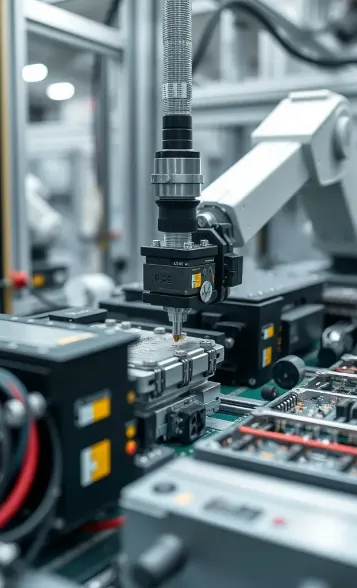
What Is Physical AI in Manufacturing? Lessons from FANUC, Nvidia, BMW and Hyundai
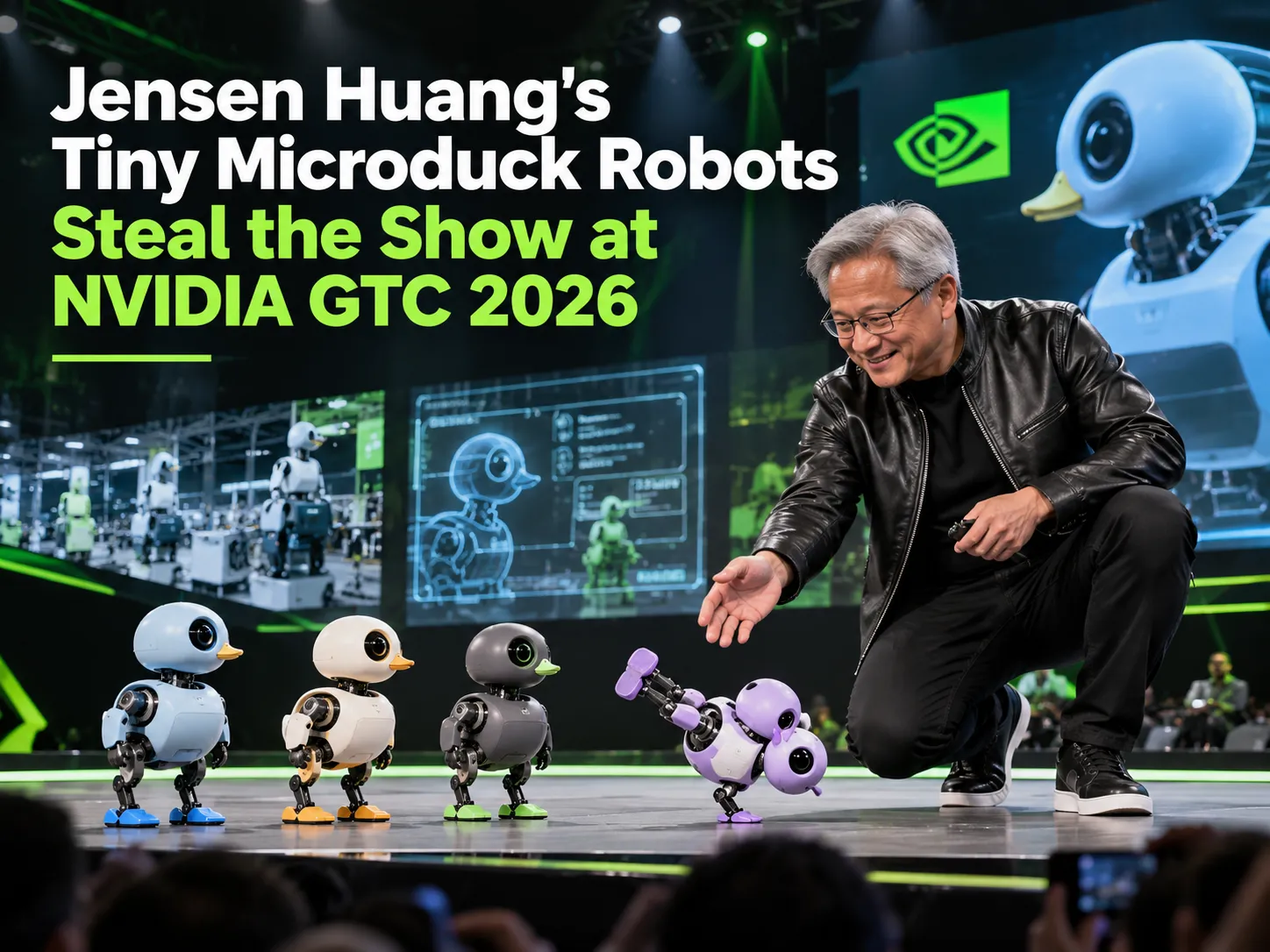
On the stage of Nvidia’s GTC conference in March 2026, Jensen Huang made a statement that would have been odd five years ago: “Physical AI is here – sooner or later, every industrial company will turn into a robotics company.” Shortly after that, FANUC announced its plans to integrate Nvidia’s simulation and edge-AI technologies into its robots. BMW was already announcing the results of work performed by a humanoid robot at its Spartanburg plant after ten months of its use. Hyundai already promised to make use of Boston Dynamics’ Atlas robot at its plant in Georgia starting in 2028.
The videos demonstrating the abilities of humanoids are really impressive. A humanoid approaches a rack, takes the piece of sheet metal and puts it on the fixture. One may think that factories of the future will be packed with humanoid robots.
But if you enter a factory producing miniature circuit breakers, the picture changes. The silver contact less than a centimeter in size is welded in less than two seconds, riveting is performed under hundreds of newtons of pressure with the accuracy of a few hundredths of millimeter, and every breaker is switched with 5 to 10 times more currents than allowed and within milliseconds. No humanoid would perform this action faster than the specialized equipment.
The article is devoted to this gap. Physical AI in manufacturing is already used and being developed very fast, but at most factories, its potential will not be in humanoids but in machines able to see, feel and control their operations in the closed loop. In the article, we will explain what physical AI is, what FANUC, Nvidia, BMW, and Hyundai are doing in this area, and how it becomes useful in production. This will be illustrated by three cases from the production of breakers: riveting, contact welding, and magnetic trip testing.
This article continues our line of articles discussing the topic of agentic AI in manufacturing, while agentic AI deals with software agents that make plans and perform operations, physical AI describes robots and devices doing the tasks in real life. In practice, both are closely integrated with each other.
Quick answer: Physical AI in manufacturing world refers to AI systems that take in sensory data from the world around them through cameras, sensors and other signals, analyze what they have processed and use robots or machines to carry out actions accordingly. NVIDIA supplies the primary operating system for these systems; FANUC, ABB, KUKA, and Yaskawa are incorporating these systems into robots; BMW and Hyundai are testing out humanoid robots for logistics and parts handling. For jobs requiring precision such as riveting, welding and electrical testing, an example of how to implement physical AI is through vision-force in a close loop on special devices rather than a humanoid robot.
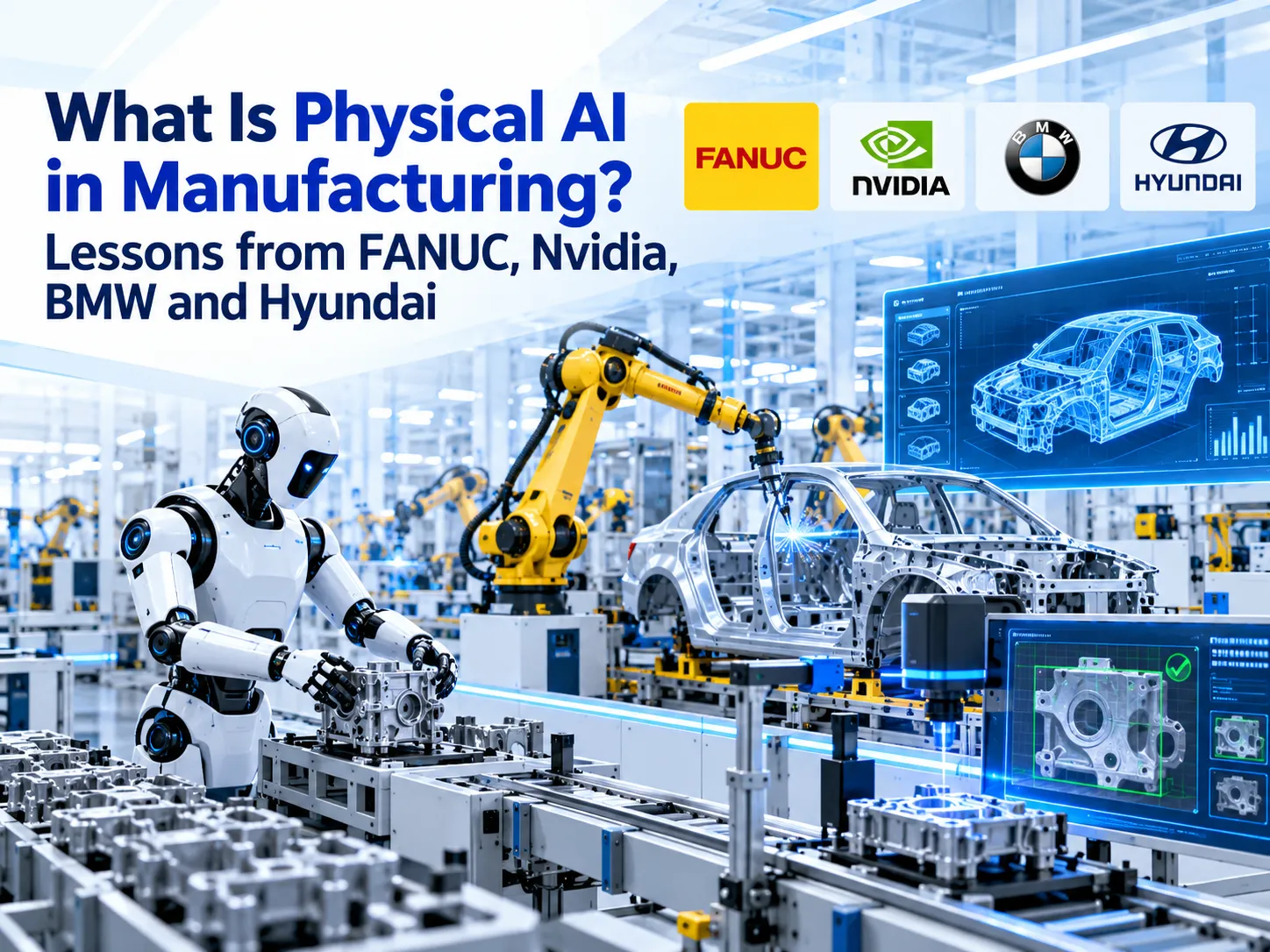
What Is Physical AI in Manufacturing?
Physical AI refers to the artificial intelligence that functions in the physical world instead of just on screens. According to FANUC America, it combines AI with robotics to give machines the ability to perceive, reason, and act within a changing environment. A language model produces text, while a physical AI system figures out how much pressure to apply to hold an item, where to place the welding tool, or if the force profile it has just measured indicates the rivet is good.
Robotics have existed in factories for decades, making it important to understand what this particular robot can do that has not previously been possible. A standard industrial robot operates by following a trajectory that a human engineer has provided. If a part comes in slightly misplaced, either the robot fails or it is detected by a sensor that has to be repaired by someone. A physical AI system is supposed to be able to do all this directly and autonomously: figure out where the part is, change its behavior, review the outcome and learn from it.
Traditional Automation vs Agentic AI vs Physical AI
| Traditional automation | Agentic AI | Physical AI | |
|---|---|---|---|
| Where it works | Machines and PLCs | Software systems such as MES, ERP and maintenance tools | Robots and machines in the real world |
| How it decides | Fixed rules and taught paths | Plans steps toward a goal using data and software tools | Learned models that link what it senses to how it moves |
| Main inputs | Sensor thresholds, limit switches | Orders, test records, alarms, emails | Camera images, force and torque, position, current, sound |
| Typical output | Accept or reject a part, run a fixed cycle | A work order, a new schedule, a recommendation | An adjusted motion, a corrected force, a pick or placement |
| Example | A press rejects a part above a force limit | An agent reschedules jobs after a supplier delay | A robot finds a part’s real position by vision and adjusts its grip |
The Building Blocks of Physical AI
When stripped of embellishment, most AI systems comprise the same four components:
1. Sensing. Involving the use of cameras, 3D vision, force sensors, and electrical signals such as current and time, rich sensing processes allow AI systems to learn.
2. World models and simulations. It is safer and faster for robots to learn through simulations rather than working in real time. Nvidia’s Isaac Sim and Omniverse world models and Newton physics engine were created for this specific need—the generation of realistic training data and testing of the robot’s activity.
3. Edge computing. A motion decision must be made within milliseconds next to the machine. This is done through the use of edge computing modules such as Nvidia’s Jetson series, which is increasingly being integrated into robots by FANUC and ABB.
4. Robot or machine technology. The AI technology could be in the shape of a six-axis robot arm, a mobile robot, or a welding head.
Nvidia talks about needing three computers for AI technology: one computer should be in the data centre, the other in the world in the virtual simulation, and the last in the robot. The perspective is a good reminder that AI is a system rather than a product.
How Physical AI, Agentic AI and Digital Twins Fit Together
BMW clarified how these ideas fit together when presenting humanoid robots at its Leipzig plant in September 2026. More precisely, AI agents decide and control the robots while robots ensure that this intelligence is implemented in a physical movement. In practice, these three elements divide their roles as follows:
- A digital twin of the production line simulates a plant to test modifications on a virtual level before any tangible equipment is touched.
- Agent AI makes decisions regarding the next steps, e.g.: what task should be performed, which component needs inspection, what problem should be solved, etc.
Physical AI executes what needs to be done and behaves appropriately during the process.FANUC, Nvidia, and Hyundai describe their projects in an analogous way. The training phase and validation take place on a simulation level while the implementation of the task is performed by a robot.
The Physical AI Ecosystem: What FANUC, Nvidia, BMW and Hyundai Are Doing
Physical AI seems to be gathering momentum and excitement as a result of activities taken by a few firms in the domain of physical AI, one of which is responsible for creation of the underlying platform, some build robotic technologies, and a few automobile manufacturers are testing humanoids in actual conditions of production process. Each of them has reports what they do in relation to the issue.
Nvidia: The Layer for the Platform
Nvidia is not directly involved into creation of industrial robots, but it provides most of the relevant software and hardware for physical AI operations. Thus at GTC in March 2026 Nvidia spoke about the following:
The first item on the list is Cosmos 3 – a general-purpose model of the world that is utilized to acquire synthetic training data, and to predict future changes in scenes.
The second one is Isaac Sim and Isaac Lab 3.0 related to robotics simulation and the process of reinforcement learning.
The third topic is that the company developed Isaac GR00T open models for humanoid robots. The major advance here is that GR00T N2 is more than twice as effective in accomplishing what it is intended to do and applying new technologies than the most modern models based on the use of visual and textual data as of today.
Fourthly, Nvidia presented libraries Omniverse for creation of digital twins.
Last but not least is Jetson Thor which is the driving CPU of a robot equipped with AI.Furthermore, Nvidia has announced Foxconn’s involvement, which cooperates with Skild AI on precision assembly of Blackwell production facilities; in addition, Samsung is training robots to carry out cabling operations through simulation.
Address: Santa Clara, California, USA.
FANUC: Brings Physic AI to Industrial Robots
FANUC is the brand to follow, since it has the robots already at your disposal. The Japanese company is creating industrial robots, CNC systems and servo motors, and has one of the world’s leading lights-out factory examples.
In March of 2026, it was declared by FANUC America that the company is applying Nvidia technologies in its production:
Digital twins. FANUC ROBOGUIDE simulation tool can be implemented with Isaac Sim and Omniverse software, enabling the manufacturers to create photorealistic models of the cell or whole production line and test the model before installing the equipment. Many FANUC robots can be found as templates for simulation.
Edge AI. With Jetsons robots are able to react in real time to variations of parts and other operations.
Open installation. FANUC released ROS 2 driver as an official and gives support for Python across robots weighing from 3 kg to 2.3 tons.
Natural language programming. FANUC is using Nvidia AI for robots to understand natural speech from the employees and create Python code automatically to enable us to use non-specialist personnel to programs.
“Physical AI is the next step in industrial automation”, Mike Cicco, President of FANUC said.In July 2026, Fujitsu announced its plan to engage in the development of physical artificial intelligence jointly with FANUC, Yaskawa Electric, and Kawasaki Heavy Industries through the creation of a cooperative control interface utilizing Nvidia’s technologies, including Cosmos, Omniverse, Isaac, and Newton. A special feature of the announced platform is its guaranteed sovereignty of data, which, in the opinion of Fujitsu, contributes to better data security, downtime risks, and risks of data leaks. The factory owners that are worried about connecting their production lines to external artificial intelligence applications will know why.
Headquarters: 3580 Shibokusa, Oshino-mura, Minamitsuru-gun, Yamanashi 401-0597, Japan. Phone number: +81-555-84-5555. FANUC America is situated in Rochester Hills, Michigan, USA.
Send feedback
BMW: Humanoids at Work in Real Production
BMW has disclosed more figures considering humanoid robots than any other car maker in the world, which makes its experience very interesting for study.
At Plant Spartanburg, South Carolina, the Figure 02 humanoid, produced by Figure AI, worked for ten months in the body shop with a five-day working week along with a ten-hour duration of a shift. BMW claims that this robot handled more than 90,000 parts during 1,250 hours of working time, arranged parts for welding with millimetric accuracy, and participated in the manufacturing of more than 30,000 units of the BMW X3 car. The pilot project allowed BMW to learn more unexpected things about safety, including the introduction of extra barriers and partitions into the workplace and an improvement of the 5G network coverage in the shop.It extracts various parts from enormous containers and transports them into order-processing trolleys, which are ultimately sent to the production line in the appropriate order.
BMW made its debut of AEON, the humanoid robot built by Hexagon Robotics. Now, AEON is 1.65 meters in height and weighs 60 kilograms and has the ability to change grips. It is kicking off the production of high-voltage batteries and components by taking on repetitive tasks that require many movements. In addition, BMW inaugurated its Centre for Competence in Physical AI in Production for evaluating partner companies and transferring projects from the laboratory to factories.
What is important is that the humanoids created by BMW are in charge of component transporting, applying, and handling. They are only replacing the logistics operations that are human-oriented and decreasing the importance of more complex processes within technical and manufacturing. This behavior should be taken into account by every business.
Location: Petuelring 130, Munich, Germany. There is also a factory of Spartanburg located in Greer, South Carolina, the USA.
Send feedback
Hyundai and Boston Dynamics: Humanoids at Industrial Scale
Hyundai Motor Group has purchased Boston Dynamics and made unprecedented investments in humanoid robots in the industrial sphere.
At CES in January 2026, the company introduced the rapid production of Atlas. The humanoid is completely electric, has 56 axes and can grab up to 50 kilograms. Moreover, the machine does not require any external energy sources. Hyundai Motor Group plans to use Atlas at the company’s joint plant in the USA and will, probably, launch the production of humanoids in the United States of America.
Through the partnership with Nvidia, Hyundai is working on the software that will allow the company to establish the factory’s operation. Also, they plan to invest about $3 billion into the development of Korea’s Physical AI technology.
Locations of Hyundai Motor Group’s plant are set in Ellabell, Bryan County, Georgia, USA. Boston Dynamics is located in Waltham, Massachusetts.
ABB, KUKA, Yaskawa and Other Companies
In addition, other manufacturers of robots are showing interest in the humanoid sphere. ABB Company is developing its Omniverse and Isaac simulations programs to improve the efficiency of robots and control their operations. Such companies as KUKA and Yaskawa are also applying these simulations. Universal Robots has entered into a partnership with Skild AI to make its cobots capable of handling basic tasks.
Physical AI Companies at a Glance
| Company | Headquarters | Role in physical AI | Flagship work |
|---|---|---|---|
| Nvidia | Santa Clara, USA | Platform: simulation, world models, robot computers | Isaac Sim, Omniverse, Cosmos 3, GR00T, Jetson Thor |
| FANUC | Oshino, Yamanashi, Japan | Industrial robots and CNC | ROBOGUIDE with Isaac Sim, ROS 2 driver, natural-language programming |
| ABB Robotics | Zurich, Switzerland | Industrial robots | Virtual commissioning with Omniverse, Jetson in controllers |
| KUKA | Augsburg, Germany | Industrial robots | Omniverse and Isaac in virtual commissioning |
| Yaskawa | Kitakyushu, Japan | Industrial robots and drives | Simulation integration; Fujitsu physical AI platform |
| BMW Group | Munich, Germany | Manufacturer and pilot user | Figure 02 and 03 at Spartanburg, Hexagon AEON at Leipzig |
| Hyundai / Boston Dynamics | Seoul, Korea / Waltham, USA | Manufacturer and humanoid maker | Atlas at Metaplant America from 2028; Nvidia AI factory |
| Figure AI | California, USA | Humanoid maker | Figure 02 and 03 at BMW |
| Hexagon Robotics | Stockholm, Sweden (Hexagon) | Humanoid maker | AEON at BMW Leipzig |
Physical AI Examples on Today’s Factory Floor
Apart from the concept videos, the preceding paragraphs present a comprehensive overview of the applications of physical AI that are already operational or undergoing tests:
Loading of parts for welding. As shown in Figure 2, the parts being welded for BMW’s car-making operations have been in use for more than ten months.
Sequencing of parts. Illustrated in Figure 3, within the premises of Spartanburg and starting from 2028, Atlas will be utilized at Hyundai site illustrating the sequencing and sorting of components for manufacturing.
Production of batteries and components. High-voltage batteries made by BMW Leipzig use Hexagon’s AEON program.
Virtual startup commissioning. Omniverse and Isaac Sim will allow for simulation of ABB, FANUC, KUKA and Yaskawa robots and their programming before being implemented for actual use.
Natural language based programming. The programming of FANUC’s robots translates spoken commands to Python program language.
High precision electronics assembly. The high-volume facility run by Foxconn, which uses technology developed by Skild AI, has shown the viability of using Nvidia’s Blackwell facility as well as the principles behind its production.
Handling of wires and cables. Samsung continues training robots to manipulate wires at its facilities that simulate the difficult task of working with flexible wire using traditional robotic technology.
Overall, the trend is towards variation. Humanoid robots are used where parts arrive without sorting and where the working environment is aimed at the human worker. AI-equipped robotic arms will be applied in cases where the parts are represented by flexible elements that are always in motion. In terms of stable processes, AI provides assistance in working with large volumes of data rather than replacing traditional methods.
Reality Check: Why Humanoids Will Not Assemble Your Circuit Breakers
To be straightforward, several factory managers are being shown humanoid videos and asked whether they have a robo-strategy or not.
Humanoid robots in manufacturing make sense where the job is human-shaped: moving one’s own body around the building, reaching into shelves and delivering parts of various sizes in human-like space. In contrast, they are useless for small and quick tasks. The example of breaker assembly illustrates this very well.
| Requirement | Typical MCB production need | General-purpose humanoid | Dedicated machine with vision and force control |
|---|---|---|---|
| Cycle time | About 1.5–3.5 s per operation | Built for flexibility rather than seconds-level cycle times | Designed around the target takt time |
| Positioning | Hundredths of a millimetre | BMW reports millimetre accuracy when positioning parts | Vision alignment to ±0.02–0.05 mm on Benlong machines |
| Process force | Hundreds of newtons to several kN, controlled to a few percent | Not designed as a press or welding head | Servo force control, for example 100–1,000 N at ±3% |
| Per-unit data | Force curve, weld energy or trip time for every serial number | Depends on integration | Logged per unit and sent to the MES |
| Best use | — | Logistics, sequencing, machine tending, material handling | Riveting, welding, testing, assembly |
This doesn’t imply that humanoids have no role in electrical equipment production. BMW and Hyundai are testing robots to perform tasks like moving reels, loading magazines, or transporting complete cartons. However, the real value-adding actions associated with the manufacture of breakers can only be performed by special-purpose machines equipped with sensing and control systems that operate under closed-loop conditions.
Where Physical AI Works: Sensing and Acting in Closed Loop
When talking about precision manufacturing, much of it is basically an operation that goes in the loop throughout all the cycles. This consists of four steps:
1. Sense – a camera identifies the part, then using either the force sensor or the servo motor, the force against movement is measured, while the inverter displays the energy used for welding, and the test signal identifies the time of trip.
2. Decide – the controller compares the received signal with the known “golden” pattern while comparing it with certain limits determined by engineers. Also, AI algorithm can do something that the rule-based system will not: detect starts of faulty curves rather than merely see that one of the values is above the limit.
3. Act – the machine could either correct the positioning of the part before joining, stop on abnormal signal or reject the part, or at least draw attention to the certain trend.
4. Learn – each of the signals will be saved under specific serial number used for model/algorithm training.
Three processes that are explained below for the miniature circuit breaker production illustrate this process. The hardware used for data sensing and data logging has been proven to exist in the current machines today.
1. Riveting: Reading the Force–Displacement Curve
Riveting is a method of joining breaker poles into units that contain multiple poles and making connections with the help of silver contacts. A rivet can look fine from the outside, while still being loose, cracked, or too short.
On a MCB multi-pole automatic assembly machine, a part’s side wall is first aligned and leveled with the camera to a precision of ±0.05 mm. Any part that does not line up is eliminated from further machining. The riveting system is then applied, with a force ranging from 500 N to 5 kN, and the operation’s parameters are constantly monitored, with interventions in the case of an anomaly. The machine also measures other parameters, including those related to rivet count and depth.
Contact riveting offers greater effectiveness. A silver contact automatic riveting machine which utilizes a camera and a force range of 100-1,000 N, it is possible to achieve a force-displacement characteristic curve that depends on the specific type of rivet used.
This is how physical AI comes into play. A limit may indicate that the maximum needed value has been exceeded. However, it is highly unlikely that it will explain that the process failure could be caused by a missing contact, a broken head of a rivet, a worn-out punch, or that the composition of the material used during the machining process was different from the one used in the previous batches.
2. Contact Welding: Learning from Weld Energy and Displacement
Connectors are made using welding methods, silver spots on copper connectors, bi-metal strips for motions and copper braid, magnetic trip assembly. Cold welding might pass the visual inspection and fail on the site.
On a silver dot and contact automatic welding machine, resistance welding is powered by a medium-frequency DC inverter at 1–4 kHz, with servo-controlled electrode force of 50–500 N at ±5%. Amount of welding energy can be compared with the profile for every welding, displacement and force sensors detect the parts that were not adjusted right and record the energy of welding and number of cycles and send it to MES.
The same principle applies to the bimetal, moving contact and copper braid welding machine, which runs at 1,200–1,320 pieces per hour and rejects any joint whose energy and displacement fall outside their curves. The magnetic trip set automatic welding machine adds vision-guided alignment and an inline resistance test after every weld, rejecting joints above a preset limit, typically 0.1 mΩ.
Physical AI will make this signal into something useful. Electrode wear shows itself gradually through changes in energy and displacement graphs. Currently, these machines count the amount of welding per each electrode and warn when it needs replacing; model based on these data will allow making prognoses of welding quality drop before any defects appear.
3. Magnetic Trip Testing: Catching Drift Across Stations
As per IEC 60898-1, voltage circuit breakers operate according to their characteristic curves. The instantaneous trip of these circuit breakers is within the limits specified by these curves: approximately 3-5 times rated current for B curves, 5-10 times for C ones and 10-20 times for D ones. Though the breakers must not trip in less than 0.1s, they cannot exceed the mentioned limits.
An MCB automatic magnetic trip and high-voltage test machine applies programmable test currents of 5x, 7.5x and 10x rated current for B, C and D curves respectively. The apparatus tests the trip time to ±1ms, measures contact resistance below 0.5mΩ, and tests the high-voltage resistance at 4000V level. The measurements such as trip time, events (on/off), leaking current, pass/fail, and time stamp are stored in the MES system using the OPC UA protocol.
This is where the distinctions between physical and agency AI begin to blur. Indeed, a slowly determining trip result is often grounded at some process in the past, i.e., coil welding, a yoke from a new supplier, or riveting change. Being plugged into the data system, a model can trace back the quality result to the welding and riveting signals for the MCB under investigation. Our agentic AI guide walks through how a quality agent could investigate exactly this kind of drift on an MCB automatic testing line and propose action for an engineer to approve.
Whatever the AI is, it must never widen the limits of trip settings or change the specified testing objectives on its own. Pass/Fail decisions for complying with the IEC standards belong to the approved model of the testing system.
The Closed Loop at a Glance
| Station | Sense | Decide | Act | Data kept per unit |
|---|---|---|---|---|
| Multi-pole riveting | CCD vision, servo force and depth | Alignment check; force and depth against limits | Reject before riveting; stop on abnormal force | Riveting force, vision result, timestamp, linked serial numbers |
| Contact riveting | Vision ±0.02 mm, force–displacement curve | Curve against golden profile | Reject bad rivets | Force–displacement curve |
| Contact welding | Weld energy, electrode force, displacement | Energy and displacement against stored curves | Reject out-of-profile joints; electrode wear alert | Weld energy, force, cycle count |
| Magnetic trip set welding | Vision alignment, inline resistance | Resistance against limit (e.g. 0.1 mΩ) | Automatic reject | Weld result, electrode count |
| Magnetic trip testing | Test current, trip time ±1 ms, leakage | Against IEC curve band | Pass/fail sort | Trip time, contact resistance, leakage, serial number |
How to Start with Physical AI in a Mid-Sized Plant
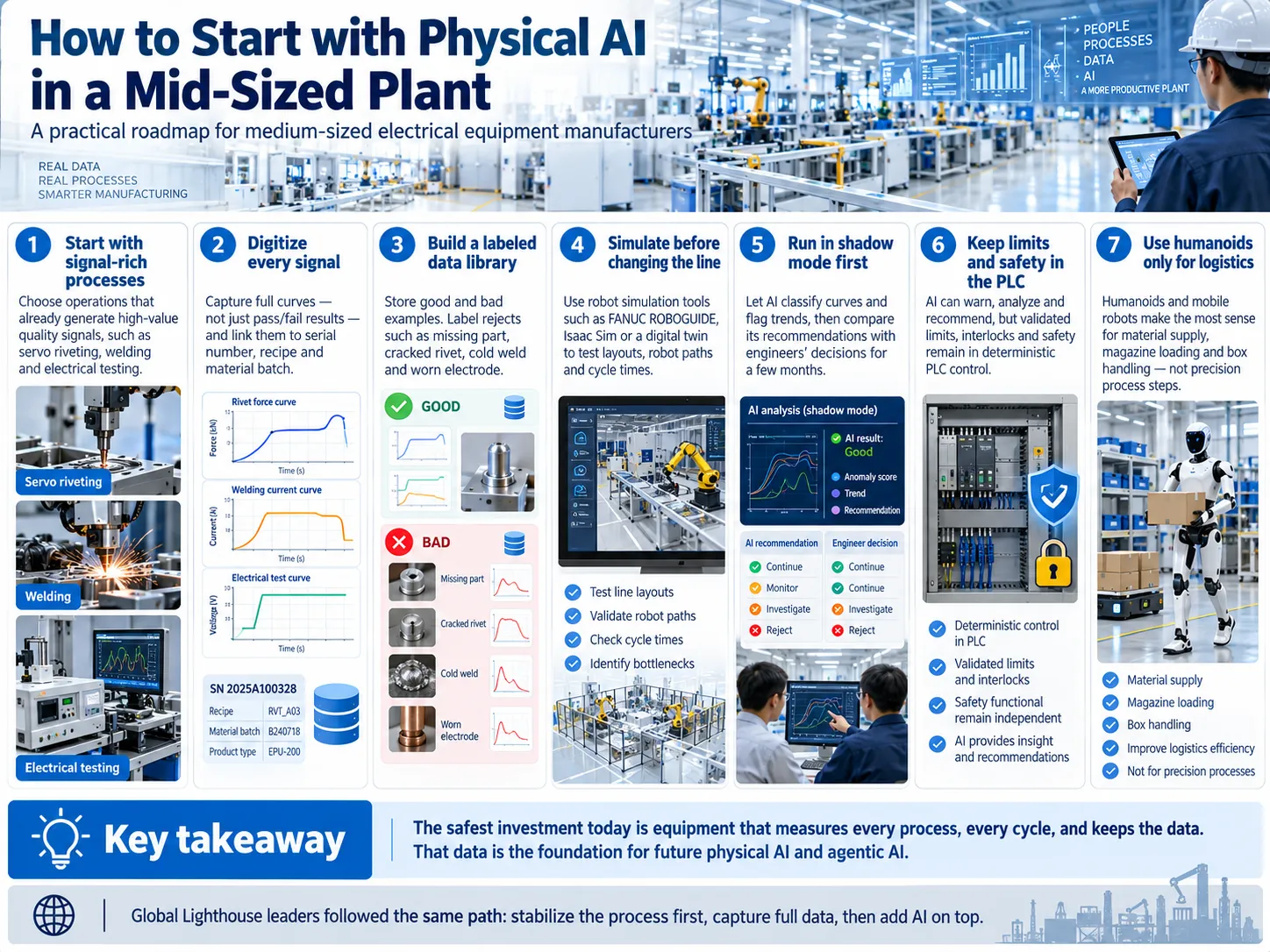
A vast majority of manufacturers do not require either a humanoid pilot or Nvidia’s entire system to become beneficial. A concrete step for companies of medium size from electrical machinery production looks as follows:
1. Choose the type of activity that provides good quality signals to start with. Servo-riveting, welding and electrical testing of machinery are perfect as they have the attributes physical AI needs to learn from, such as force curves, welding energy and trip time.
2. Digitize each signal and unit. It is crucial to produce a full curve, not only the pass/fail reports and relate them to the serial number, recipe, and material batch.
3. Create a database of good and bad examples. Always label rejections in the database, such as missing details, crack in the rivet, cold weld, and ball electrode with the help of labeling system. It is important to have good labels in order to get a good model.
- Simulate processes prior to any changes on the production line. Use simulation software provided by your robot supplier, such as FANUC ROBOGUIDE or Isaac Sim, or a digital twin of the line, to test new layouts, robot paths or cycle times.5. Start with shadow mode. Allow AI to classify curves and flag trends and compare its detection with that of engineers over a couple of months.
6. Keep limits and safety in the PLC system. AI can inform you about the upcoming problem.
Consider using humanoids and mobile robots only for logistical purposes. Providing raw materials, loading magazines and handling boxes should be the only place where robots are designed.
The best companies in the Global Lighthouse Network of the World Economic Forum used a similar approach as described above: stable processes and full data first, then AI on top. We covered how Siemens, Schneider Electric and Eaton got there in our guide to factory lighthouse examples.
Physical AI robotics is still young, and some of what is being announced today will not survive contact with a real production line. The safest investment for a factory right now is equipment that measures every process, every cycle, and keeps the data. That data is what any future AI, physical or agentic, will need.
Frequently Asked Questions
What is physical AI in manufacturing?
Physical AI refers to artificial intelligence systems that undertake observations of the physical world using cameras, pressure gauges and other devices, provide an interpretation of this information and control mechanisms that perform certain actions. Unlike conventional robots, which are trained to operate along determined trajectories, physical AI systems can react to changes occurring in objects and other conditions. Before being put into use, such systems are usually trained technology in a simulation.
What companies are making physical AI?
Nvidia provides much of the platform, from Isaac Sim to GR00T humanoid models, as well as Jetson robot computers and Omniverse Cosmos world models. Robot manufacturers FANUC, ABB, KUKA, and Yaskawa are implementing these tools into their simulation software and robots. Humanoid robotics companies include Boston Dynamics, Figure AI, Hexagon Robotics, Agility Robotics, 1X, and NEURA Robotics. BMW and Hyundai manufacture physical AIs that are currently being deployed in production facilities.
What are examples of physical AI?
Some examples are Figure humanoids made by BMW that assemble parts and sort parts at Spartanburg, AEON by Hexagon supporting battery assembly in BMW Leipzig, and Atlas by Boston Dynamics, which will be deployed by Hyundai for parts sorting in Georgia in 2028. In the industrial field, FANUC robots can now be programmed through spoken language and tested through Nvidia simulation. In precision production, you also see physical AI in action with vision-guided servo riveting and welding machines.
Which 5 jobs will survive AI?
It’s impossible to come up with five job titles that will be guaranteed to stay safe, but the Future of Jobs Report 2025 gives an insight into jobs that will witness the most rapid growth by 2030. According to the report, it is the professions of farmworkers, delivery drivers, software developers, construction workers, and salespersons that will experience the greatest growth, whereas nursing and other care jobs will grow at a substantial pace too. In factories, artificial intelligence changes many jobs instead of entirely getting rid of them, meaning that maintenance specialists, robot programmers, quality engineers, and process specialists will have a more significant role to play.
How is AI being used in the manufacturing industry?
Artificial intelligence plays a role in image-based inspection, predictive maintenance, scheduling manufacturing processes, robotic programming, digital twin simulation, energy management, and supply chain planning. In practical usage, physical AI involves the use of robots and machines that can adapt to changes, while agentic AI performs the function of coordinating actions of MES and ERP systems. The most advanced applications as of 2026 still only involve data-based quality assurance and maintenance services, along with the experiments concerning humanoid robots’ utilization for logistics and parts management.
Conclusion: Physical AI Is About Closing the Loop, Not Copying the Human Body
Companies like FANUC, BMW, Nvidia and Hyundai are not just conducting studies on physical AI but are promoting it in factories. Nvidia is developing simulation models and robotic computers while FANUC and other manufacturers are implementing them in working robots which have already worked for millions of hours. Finally, BMW and Hyundai are examining humanoid robots on operational lines.
However, when we examine what those humanoids actually do on factory sites we can see that they are involved in such processes as loading, transporting, sorting and sequencing. So, the most complicated leakages do not appear due to them. In most cases, physical AI applied in manufacturing is represented in machines which simply see whether a part is near, feel how a structure is forming, understand how something behaves and act accordingly.
This is the approach which will be followed by manufacturers who want to invest in this technology in the future.
References
- Nvidia – NVIDIA and Global Robotics Leaders Take Physical AI to the Real World (March 2026) – Cosmos 3, Isaac, GR00T, Jetson Thor, and the FANUC, ABB, KUKA and Yaskawa integrations.
- FANUC America – FANUC Accelerates Physical AI in Industrial Robotics, Leveraging NVIDIA Technologies (March 2026) – ROBOGUIDE, Isaac Sim, ROS 2 and natural-language programming.
- Fujitsu – Physical AI development with FANUC, Yaskawa Electric and Kawasaki Heavy Industries (July 2026) – sovereign physical AI control platform.
- BMW Group – First humanoid robot introduced in Plant Leipzig (September 2026) – Hexagon AEON, Figure 02 results at Spartanburg and BMW’s physical AI strategy.
- Boston Dynamics – Boston Dynamics unveils new Atlas robot (January 2026) – Atlas specifications, Hyundai deployment plans and robot production capacity.
- Hyundai Motor Group – NVIDIA Blackwell AI Factory (October 2025) – 50,000 GPUs, factory digital twins and robot validation in Isaac Sim.
- World Economic Forum – Future of Jobs Report 2025: jobs of the future – fastest-growing and declining jobs to 2030.
Want Vision and Force Control on Your Breaker Line?
Physical AI starts with machines that measure every rivet, every weld and every trip test. If you produce MCBs, MCCBs, RCCBs, contactors or switches and want vision-guided riveting, energy-monitored contact welding and fully traceable magnetic trip testing, send us your product samples, target output and a short description of your current process. Our engineers will recommend where closed-loop control will cut your defect rate first, and how to connect every station’s data to your MES.