benlong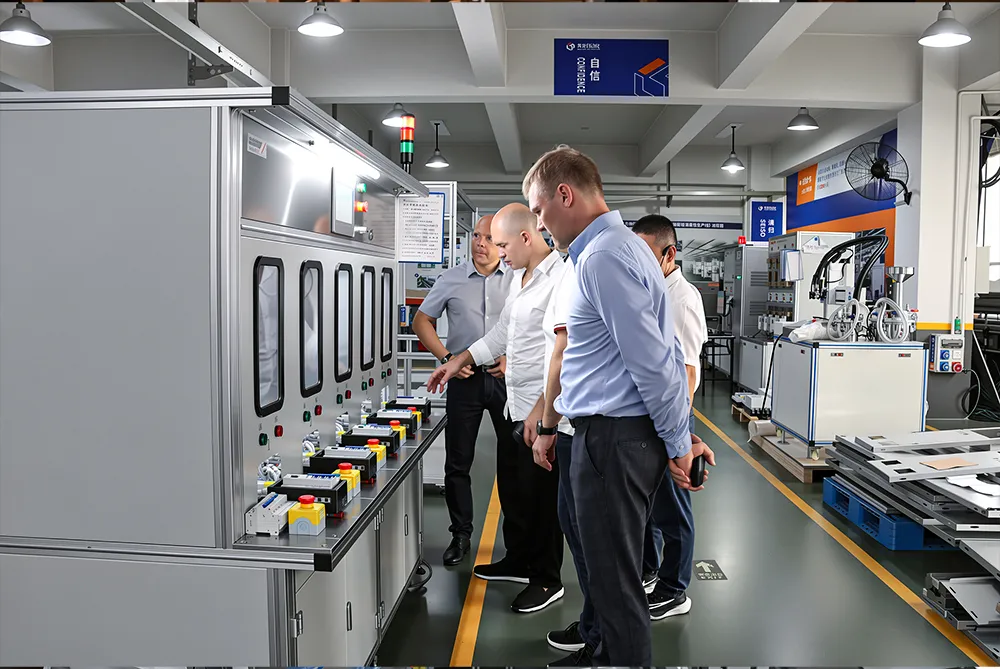

Why Vision 2030 is Driving a New Wave of Circuit Breaker Manufacturing in Saudi Arabia
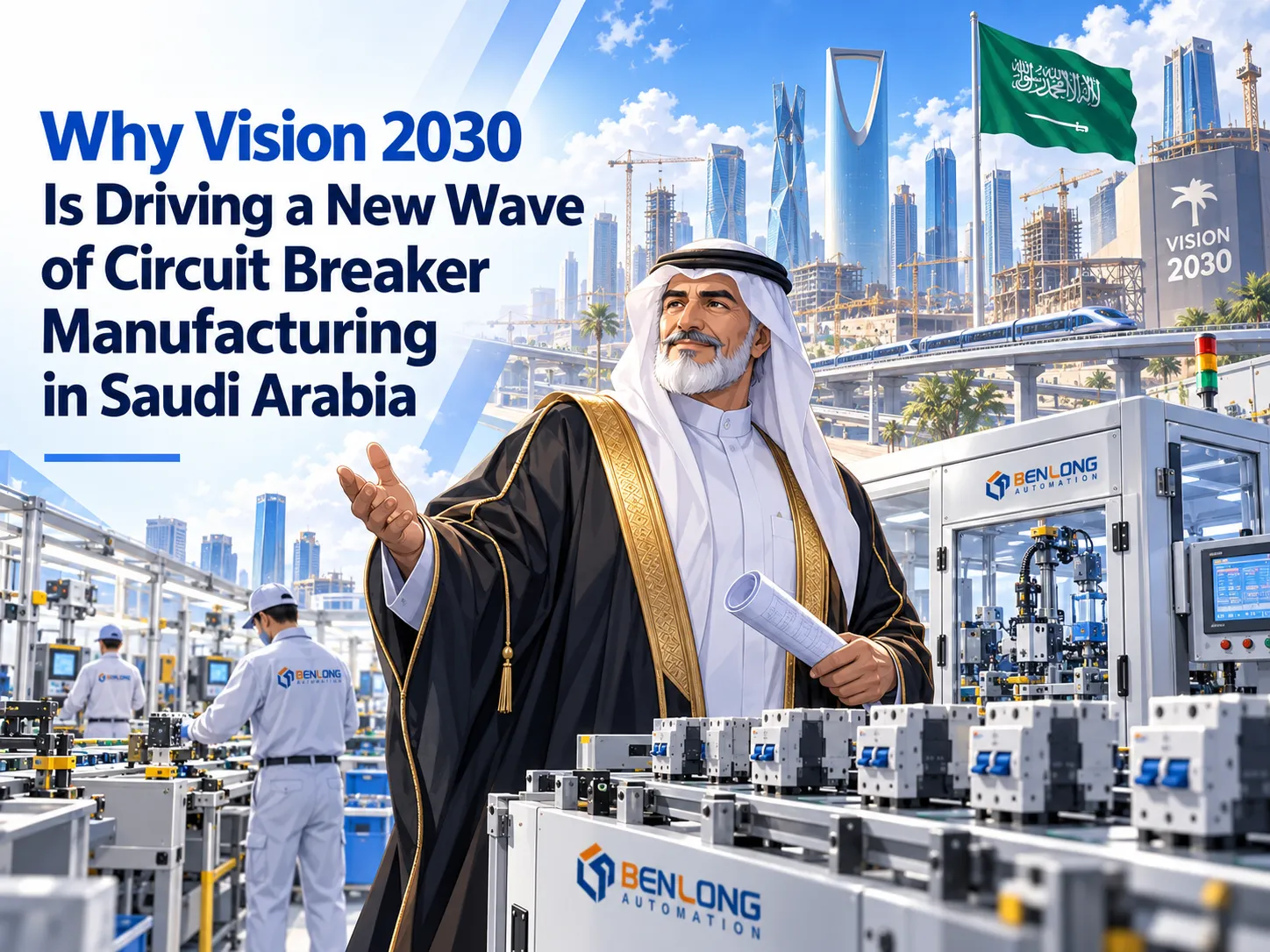
Saudi Arabia finds itself in the midst of the most ambitious infrastructure program any single country has attempted in a generation. Under the Vision 2030 strategy, the Kingdom is putting together new cities, tourism attractions, housing complexes, and construction facilities, which is changing the approach to the electrical supply. Behind every panel in these new constructions, there is a component that normally does not attract attention, but is essential to the operation of the electricity system — a circuit breaker. As the construction process gains speed and the country’s government calls for more production inside the borders of the country, the number of firms willing to engage in circuit breaker production in the Saudi market is growing. At Benlong, we have experienced the mentioned shift through increased number of inquiries and orders from manufacturers.
The building boom implies the need for millions of circuit breakers
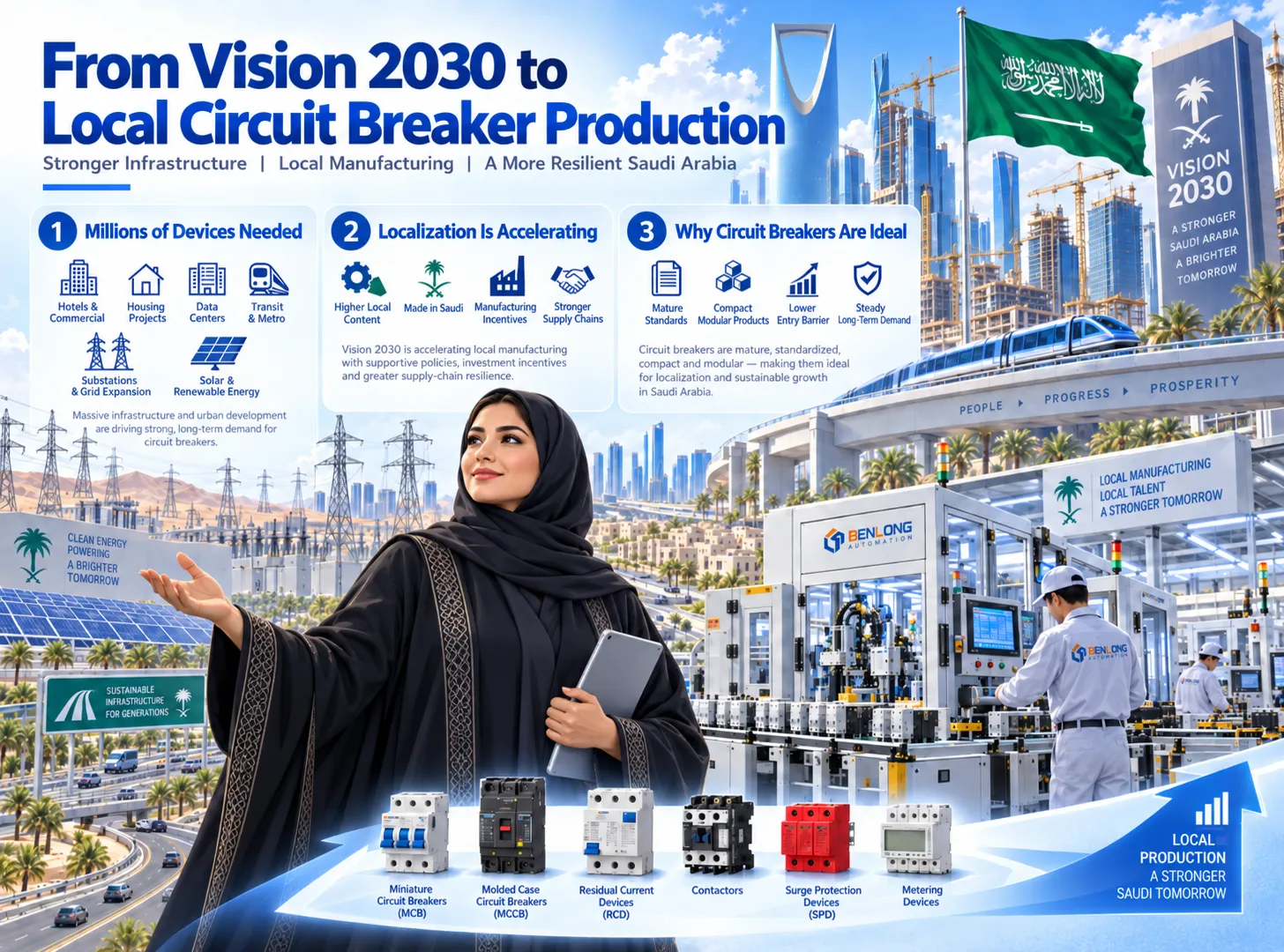
Launched to diversify the economy of Saudi Arabia away from oil, the Vision 2030 strategy has already resulted in a long list of mega-projects, most notable of which are: NEOM, Red Sea projects, Qiddiya, Diriyah, ROSHN, King Salman International Airport, among others. Even if some of the famous projects have been discontinued, the overall process is still very intensive and cost-effective. Saudi non-oil economy has already reached more than 50% of GDP. The government has changed the pace of the program from speed-focused to efficient execution.According to the electrical sector, this pipeline refers to demand at the most granular level. Each and every hotel, residential building, data center, transit line, hospital, desalination plant, and electrical substation is related to low-voltage distribution, which means there will be millions of miniature circuit breakers, molded case breakers, residual current devices, and many others mounted in the panels across the country, including contactors, surge protective devices, and metering devices. The demand cuts across buildings. Vision 2030 aims high concerning power, renewables, and grid upgrading, with the Kingdom expanding generation and distribution capacity not just to accommodate new cities but to keep up a booming solar pipeline as well. Smart grids, substations, and renewable energy hubs will still need some low-voltage protection devices suited for the conditions where the respective equipment operates, thus enlarging the low-voltage protection market. Until now, the majority of devices imported from abroad. When the volumes get as high as they are implied in the Vision 2030, importing every unit of the low-voltage equipment starts looking like a cost and a strategic issue at the same time, making room for local manufacturers.
From imports to production: the localization process
The second reason for this transition is a policy. KSA has developed a serious environment for manufacturing within the country borders. The Local Content and Government Procurement Authority establishes and controls local content requirements.National Industrial Development and Logistics Program is intended to turn Saudi Arabia into a manufacturing hub, whereas the Made in Saudi project gives domestic products their brand identity. Also, Saudization initiatives encourage businesses to employ and train locals. From the finance point of view, organizations like Monsha’at and Saudi Industrial Development Fund are created to assist the establishment and development of smaller companies.
Taking everything into account, these programs change the meaning of the expression to make it here. The locally produced breaker is eligible for the government procurement channels that do not apply to the breaker produced outside Saudi Arabia, while the producer adapting its production to local standards obtains benefits from the largest infrastructure contractors in the market. This fundamentally changes the benefits and costs following the decision of an SME on the scope of investment as it is connected with the ability to obtain a well-protected position along the supply chain.
Why circuit breakers are a good product to start with
Of all the electrical devices that can be manufactured by a new producer in Saudi Arabia, low-voltage circuit breakers would be probably the best choice. The product is mature and well-defined by public international standards, which means that there is no need to design anything from scratch.Demand is widespread and sustainable: newly built facilities grow the demand for first-time users whereas the renovation and servicing of buildings that already exist in the country provide constant demand which does not cease once the giga project is completed. The appliances are more or less compact and modular, and the entry cost is significantly less than in industries such as automobile or metallurgy.
Import substitution strengthens the above case even more. When the country uses circuit breakers at the scale of Vision 2030, it actually means that the country exports a large share of value to other countries each year. Therefore, having an opportunity to provide this service domestically becomes a desirable goal for businesspeople as well as for policy makers. Due to the existence of detailed specifications, high demand, and a favorable policy environment, mid-sized Saudi companies have, for the first time, started to contemplate the possibility of producing circuit breakers.
The barriers lie not in the product but in the need for certification
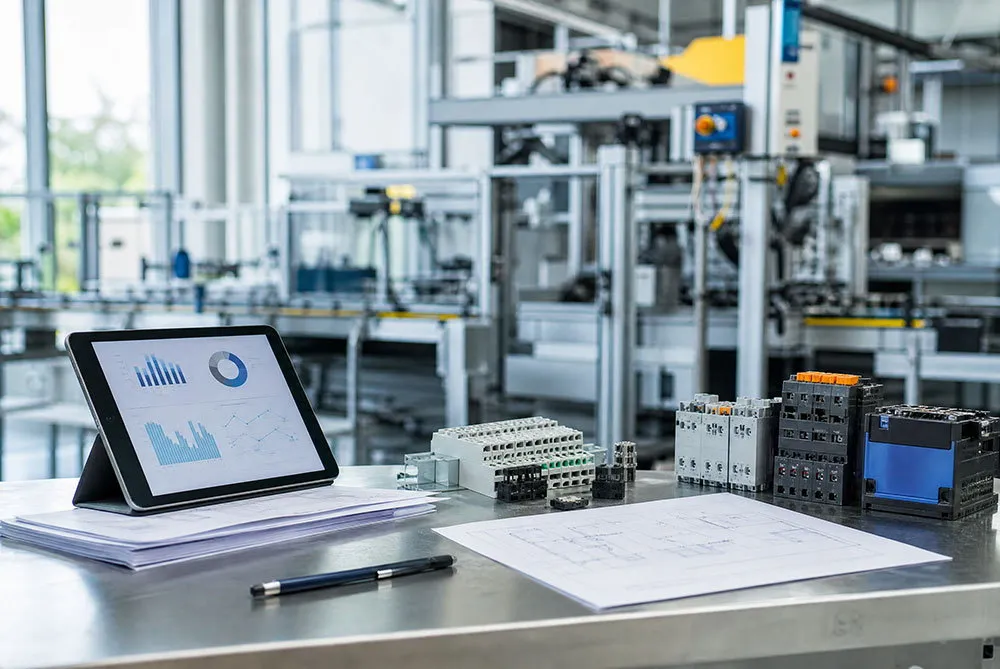
This is the reason why many newcomers underestimate the problem. Designing circuit breakers is not a problem; however, the problem is producing thousands of identical products which would pass certification every time. In Saudi Arabia, low-voltage devices should follow SASO technical regulations, which accept the IEC system, i.e. IEC 60898-1 for domestic circuit-breakers, IEC 60947-2 for industrial molded breakers, as well as IEC 61008 and 61009 that are suitable for residual-current devices.It is generally necessary for products to have a SASO Certificate of Conformity before they can be imported into the country, marketed or installed.
In some parts of the territory, the operating conditions are much tougher. The surrounding temperatures often rise above 50 degrees Celsius, which means validating thermal trip performance, material selection, and derating for desert environment rather than assuming nothing but moderate conditions as many common products do. It is not just a warranty problem but also a problem of safety and liability if a circuit breaker trips too early, bonds its contacts together or goes out of adjustment. The latter situation can be easily eliminated owing to certification testing. Thus, the key question for a new manufacturer is not whether it can produce the circuit breaker but how it proves that all of the circuit breakers manufactured comply with the specifications.
How automation changes the situation
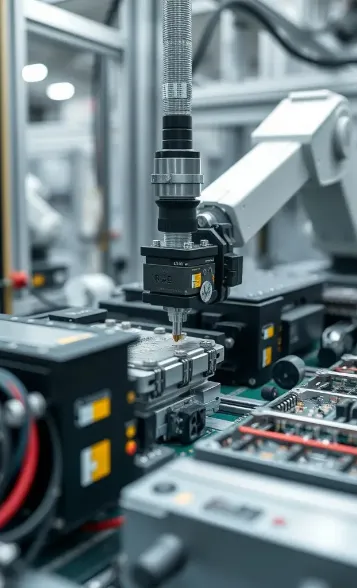
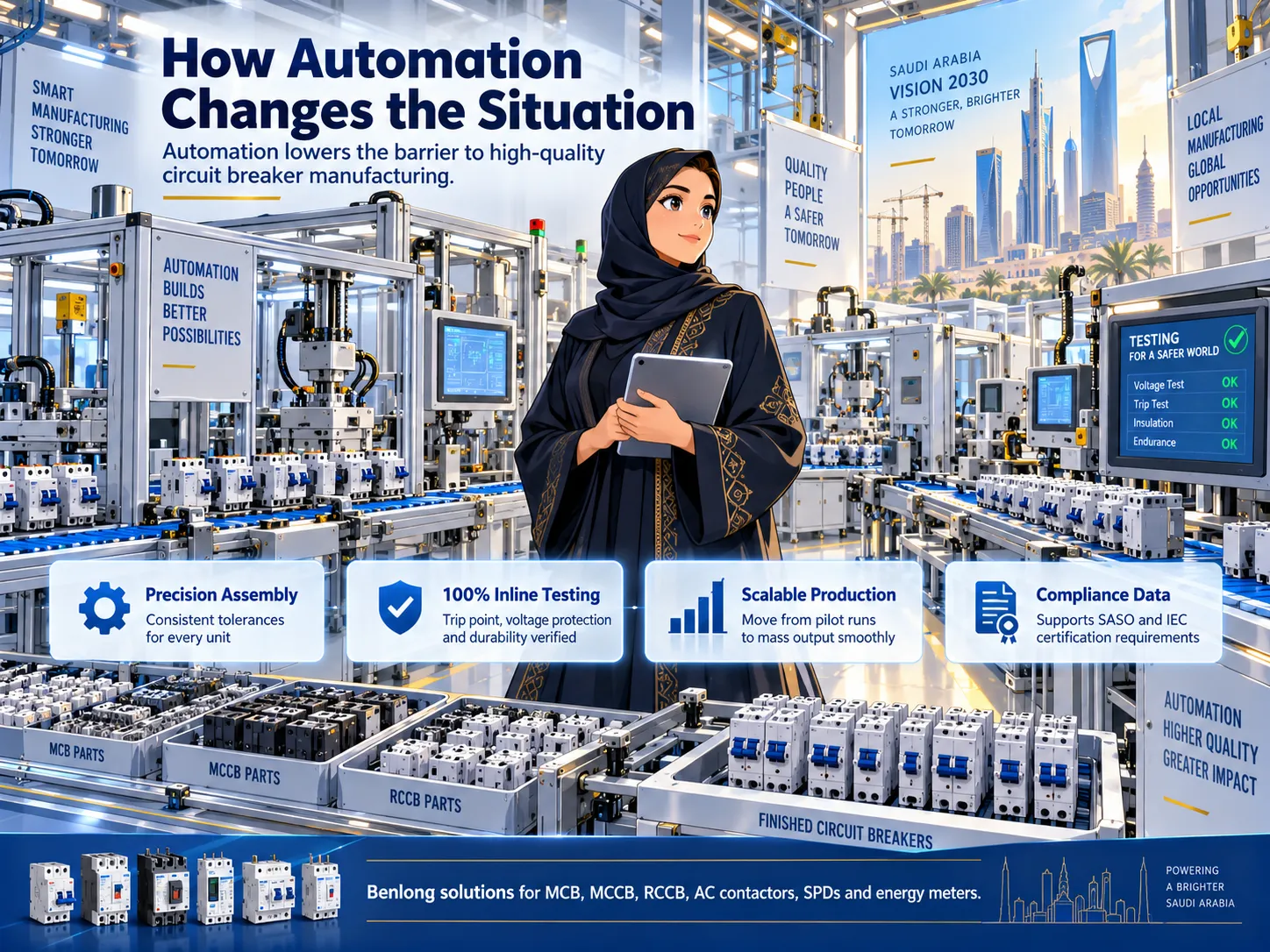
This is where the process of automation helps to significantly reduce the costs of entering the market. One circuit breaker consists of a large number of small components including a spring, a bi-metallic strip, an arc chamber, contacts, and the case that seats them in place. The tolerances are far too high for a human to maintain under mass production conditions.Automated production lines assemble, attach and standardize the required components with precise tolerances, while inline test stations allow for checking the trip point, voltage protection, and mechanical durability of all units, not some samples. This way the characteristics required are guaranteed to be met to the full. The first is the quality of production, because all the hundreds of thousands switches should be of the same type. The second is test data which is available to certification organizations and large-scale project operators since they require proof of quality in the process, not only in the results of inspection. What’s more, automation helps a factory have a smooth transition from pilot production to mass production without the need for hiring and training a labor force.
This is part of the process where Benlong operates. We produce machines for automated assembly of low-voltage devices that include miniature circuit breakers, molded case circuit breakers, residual current devices, AC contactors, surge protectors, and energy meters. Our company is becoming more and more helpful not only to established manufactories, but to startups that are setting up their compliant production lines meeting the requirements of both SASO and IEC testing.
So, what do we see from the area? The inquiries arriving from Saudi Arabia and the Gulf follow the same pattern and are frequently from companies that import or sell circuit breakers and intend to assemble them in order to get some preferences when bidding.There are those who come from industrial companies that are diversifying due to Saudi Arabia’s Vision 2030 initiative, and then there are also entrepreneurs that are responding to the call for local localization. The questions they ask are practical and consistent: what will be the product to start with, the throughput of a line of production, and how does the testing station meet the requirements of SASO and IEC.
We, on the other hand, want to provide those answers that are based on the capabilities of the equipment and not on the headlines. If a serious investment in the manufacturing sector is made, it should be backed up by plain numbers and timelines along with the outline of the process of getting the product certified. Along with the encouraging increase in orders, the rise in the quality of questions matters even more; buyers of the equipment think not only of compliance and consistency but also about every other aspect from the beginning of the process.
Practical considerations for manufacturers evaluating automation
Every manufacturer that considers such a move should make just a few crucial decisions concerning its first product: the first product to be produced should be a miniature circuit breaker often followed by molded case circuit breakers and RCCBs after that. The design should take into consideration SASO and IEC parameters from the very beginning.Integrating the necessary trip, dielectric, and endurance tests into the production line is more feasible economically than making adjustments after failing certification.
Consider what components to use and how to validate them for the climate in the chosen location. The thermal behavior must be validated for hot ambient conditions instead of being estimated based on the moderate parameters.
Plan the capacity of the manufacturing line step by step. It would be appropriate to start from an appropriate size of the line for the first year of the market and provide the possibility of scaling it up.
Consider both the labor force and Saudization rates. While all processes can be automated, it is necessary to provide trained specialists who will be responsible for using and maintaining the equipment.
Plan the expenses for the postproduction stage of the equipment. The efficiency of the line’s production will be determined by the time it functions properly so having good support from the supplier is as vital as paying for the line itself.
Estimate ROI for a reasonable period of time. The combination of demand for durable construction and procurement encouragement makes the need for long ROI estimates obvious.
The outlook
Vision2030 is no longer a declaration; now, the government emphasizes its significance for value creation and local content rather than swiftness. Investors need to know that the process of implementation of localization is sustainable and reliable. The construction sector will work hard and demand low-voltage protective devices for several years ahead, with every breaker potentially produced in the Kingdom rather than delivered by ship.
The situation is very favorable for SMEs in Saudi Arabia. Demand exists, government support has been provided, and the only challenge is how to establish certified production.
Benlong thinks that the inflow of orders from the region shows that the Kingdom is becoming a significant manufacturing hub, therefore, it is a pleasure to support local manufacturers in their desire of establishing successful production.