benlong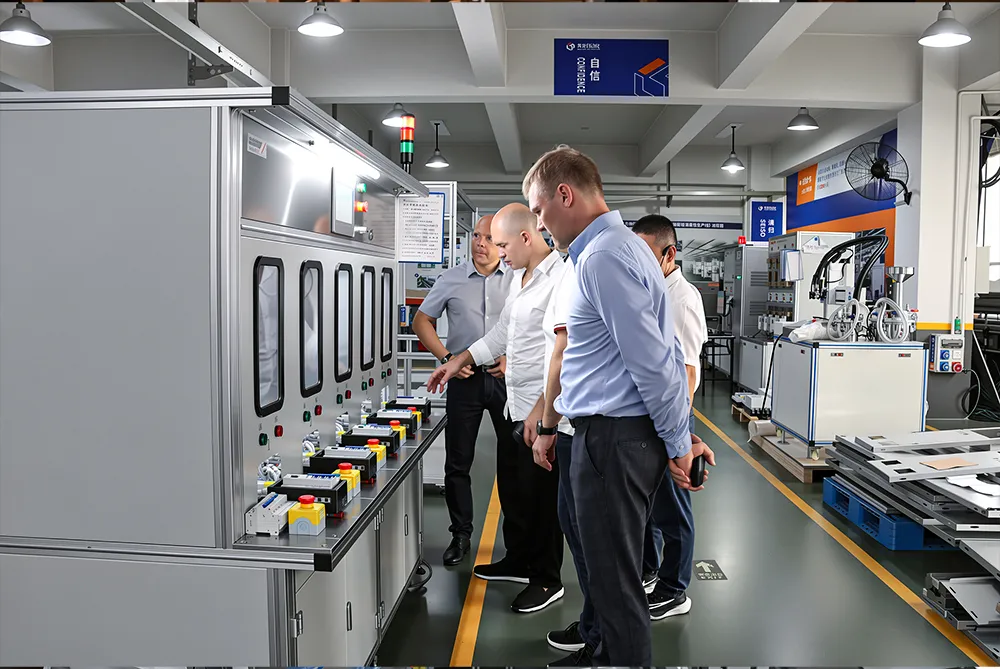

Advantages and Disadvantages of Small‑Scale vs Large‑Scale Automated Factories
In the year 2023, when a mid-sized electric manufacturing company located in Gujarat decided to spend on a fully automated MCB assembly line, the management was convinced that they had no other choice but to go for it: either become as automated as their worldwide competitors in order to survive as a company capable to export its products or give up on the export contracts that helped keep the factory alive. In less than six months the assembly line was installed, started working, and the manufacturing volume increased by three times, while the defect rate fell to less than 0.1%. The investment into the line measured in millions of dollars was supposed to return back in three years, provided there were quite enough orders to fulfill. Six months after launching the assembly line, the key customer of the company reduced its order volume by forty percent. The automated line designed for a certain manufacturing level was now operating at slightly more than half of its potential. The labour savings were significant and meaningful, but the fixed cost of the machinery, which included depreciation, maintenance, and procurement of spare parts, did not fall together with the production volume. The producer had learned the truth that distinguishes small-scale automation from large-scale automation: significant factories can spread a huge fixed cost among vast production volume; small factories cannot do the same. Making the decision regarding automation is not about making the best technological choice. It is rather about matching the size of investment with the amount of demand, flexibility of equipment, and costs of automation.
Summary: The main trade-off between the small automated plant and the large automated plant is flexibility versus cost per unit. A large-scale plant makes a significant fixed investment in high-speed, single-purpose automation to produce one product or a narrow range of products with minimum costs per unit — as long as a volume is sufficiently large and the design of the product is stable enough to recover the investment. The advantages of this approach are exceptional throughput and cost per unit. The negative side is low flexibility: the product cannot be easily switched to another product, volume decreased, etc.
A small automated plant, on the other hand, will most probably invest in flexible, programmable or semi-automated cells so it could produce various products, different volumes, and respond to demand changes while incurring higher cost per unit and requiring more labour than fully automated high-volume plants.
Defining Small‑Scale and Large‑Scale Automation: What the Terms Actually Mean
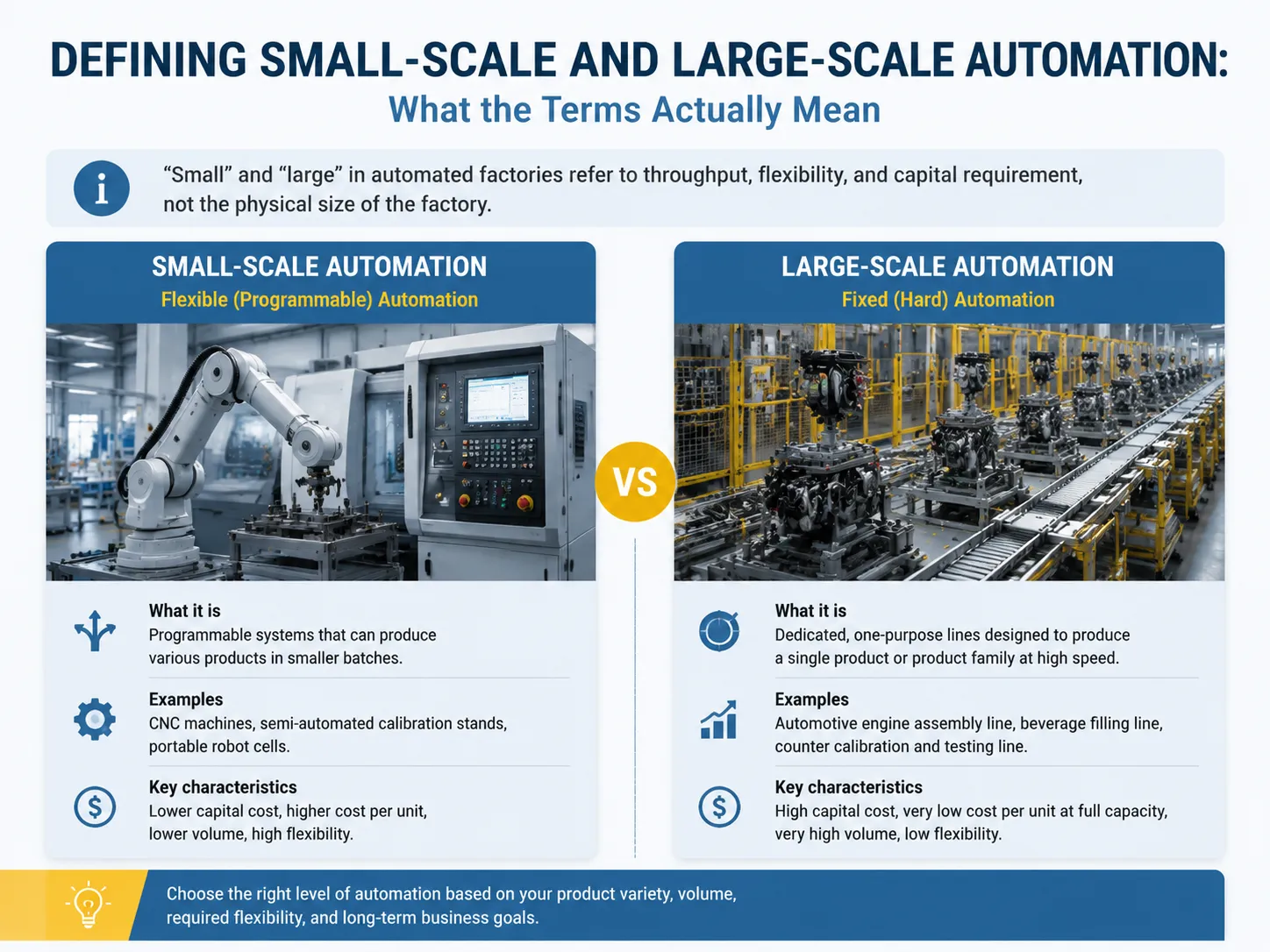
Before you compare the pros and cons, you need to explain the terminology: the terms “small” and “large” in the context of automated factories don’t refer to size in terms of square meters. They refer to the automation throughput, flexibility, and capital requirement. A large automated factory is one that uses fixed (hard) automation — that is, it uses dedicated, one-purpose production lines that produce a single item or family of items at a major speed and in large quantities. Examples of large-scale automation include the automotive engine assembly line, the beverage filling line, and the counter calibration and testing line. The key factor is that the line is designed to accomplish just one operation, and it does it very efficiently, but you cannot change it once it is built. Capital cost is high but production cost (of the unit), when the line is running at full capacity, is very low.
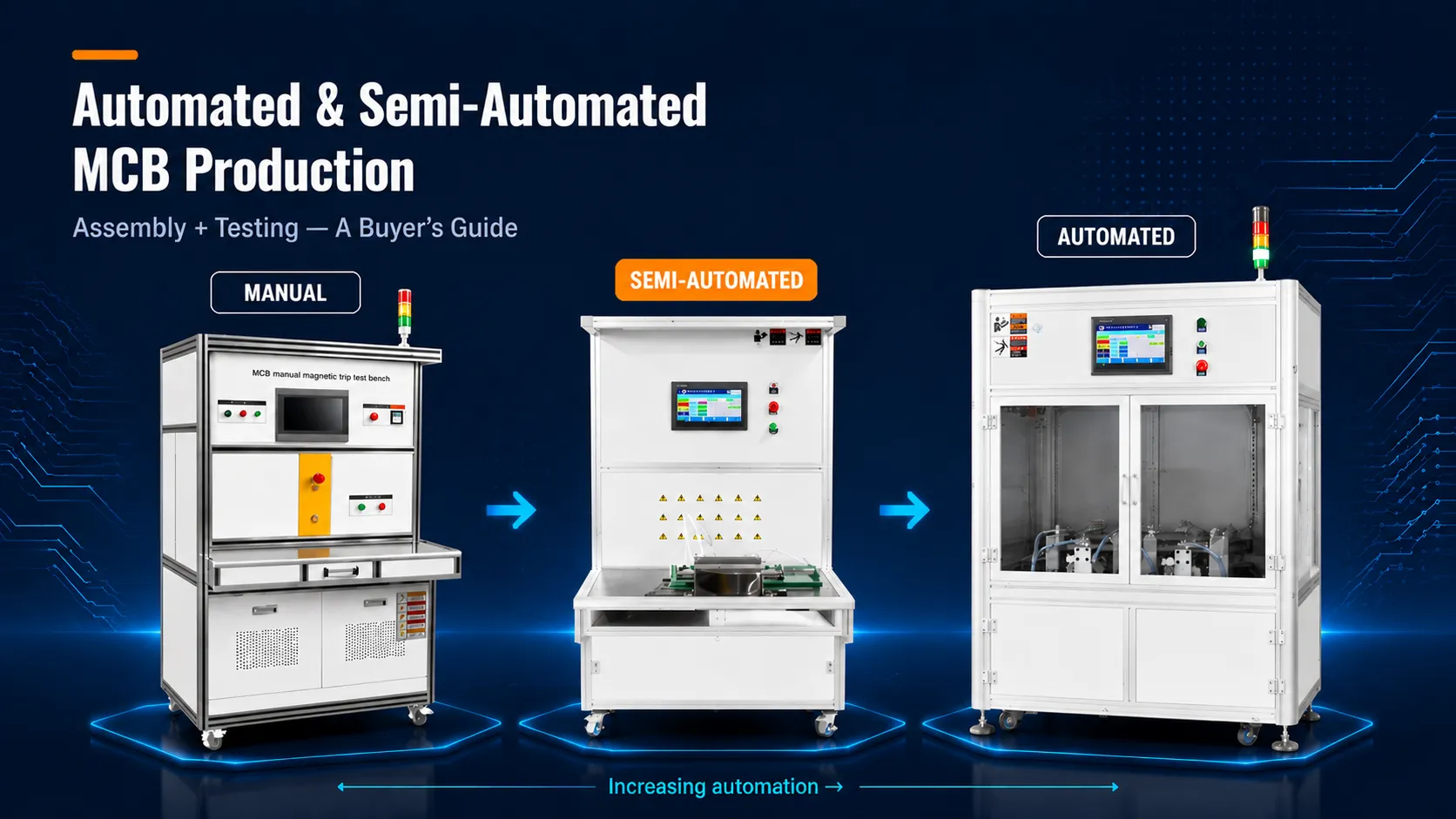
On the opposite end of the spectrum lies a smaller automated factory. In this circumstance, programmable or flexible automation is utilized whereby systems and stations are programmed to produce various products with smaller batch sizes. A CNC machine that changes part numbers according to the controlling program, a semi-automated calibration stand where the operator puts different types of circuit breakers for calibration and a robot production unit that can be moved between different stations are some of the examples of small automation. Compared to mass production facilities, a smaller automated factory requires less capital and its cost per product is higher than the one associated with mass production while lowering volume of output of the facility but, at the same time, providing chances for an organization to adapt to demand coming from the change of products produced and negative impacts coming from the introduction of new products. For a foundational understanding of the different automation architectures and how they fit different production environments, our guide on what automation is provides the broader context.
The Advantages of a Large‑Scale Automated Factory
A few measurable benefits substantiate the business case for large-scale automation: one of the key benefits being throughput. An automated line operates in accordance with its specifications around the clock, as it has no fatigue, variation, or need for training staff. Special new kinds of MCB calibration and inspection line that Benlong Automation produces are capable of producing calibrated, tested and certified breakers every two–four seconds. Such throughput cannot be achieved with any human operated or semi-automated process. Moreover, predictability of throughput enables the manufacturer to plan production and delivery.
The following key advantage is associated with the low variable cost. This includes issues like the depreciation costs, maintenance costs, and engineering costs of the machine, which are divided among numerous products. The variable costs include direct labor, consumables, and energy expenses, which, especially when comparing to manual production, are really low. According to the research of McKinsey & Company, large-scale automation results in a decrease in price per unit by 30-60% as compared to manual production, given that the line is utilized at its full capacity. The next advantage of automation is the consistency and quality. An automated machine produces the same – high-quality result every time. In the case of a fully automated line, all technical parameters are being recorded, from the settings of each breaker to the product testing results, as well as the certification documents that have been created automatically.
The Disadvantages of a Large‑Scale Automated Factory
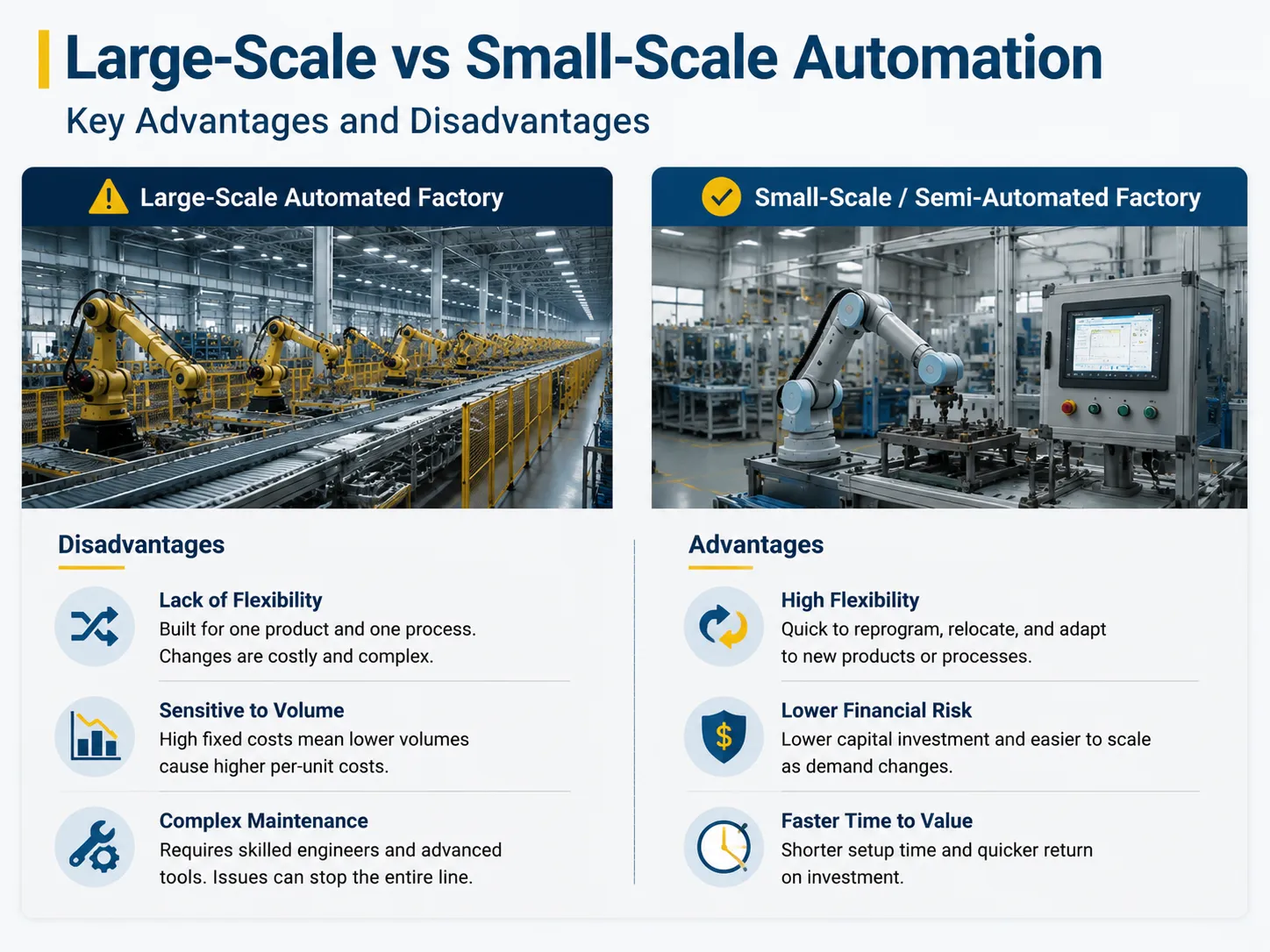
The downsides of large-scale automation can be seen as the reverse of its benefits, and those downsides can be significant, especially when the circumstances that justify its use change. One of the primary disadvantages is lack of flexibility. An automated line is designed for one purpose only — for one specific product, for one certain throughput rate, and for certain operations. In case of any modifications to the product — a new pin configuration, a new reference standard, or a new marking requirement — the line has to be re-designed. The tools, fixtures, vision system programming and control logic have to be changed, and the costs involved in that may be extremely high. In case of discontinuation of the product, the line has practically no salvage value — it was built for this sole purpose and nothing more.
The other drawback is the sensitivity to volume. A large automated production line involves high fixed costs. Fixed costs include depreciation, maintenance operations, space requirements, and engineering support. These costs do not alter between a million units produced and a hundred thousand units produced. As the volume rate becomes lower due to the decline in the situation in the market, a lost contract, or a disruption in the supply chain, the fixed cost stays unaffected, which leads to an increase in the per-unit cost. It means that a line with a 90% utilization rate, which was dowing good, may fail at a rate of 50%. This is what happened with the electrical producer in Gujarat and serves as evidence that such automation works best with the products which have stable long-seed demand. The third disadvantage is the complexity of maintenance. Large automated lines necessitate a group of engineers and technicians who have sufficient knowledge of such complicated devices as PLCs, servo drive systems, vision systems, and data architecture systems. Once the sensors fail, or calibration of the robotic equipment is violated, or there are some problems with the software, the production line will be idle until the problem is solved.
The Advantages of a Small‑Scale or Semi‑Automated Factory
Small‑scale automation Programmable cells, semi-automated equipment, and flexible robotic systems do not mean compromising on the road to scale — it is a thoughtful approach that emphasizes flexibility, minimized financial risks, and faster time to value. What is more, flexibility is the key benefit. For example, a semi-automated calibration bench can be reprogrammed for new breakers within a few minutes using a selection from the recipe menu on the human-machine interface (HMI). In addition, a collaborative robot cell can be relocated from the assembly shop to the packaging area in several hours. The equipment is not assigned to a particular production process and may be used in different production operations as the production changes. Such flexibility is extremely useful for manufacturers dealing with different series of production in small lots, such as electrical equipment makers who produce ten types of MCCB frames or AC and DC breakers on the same site.
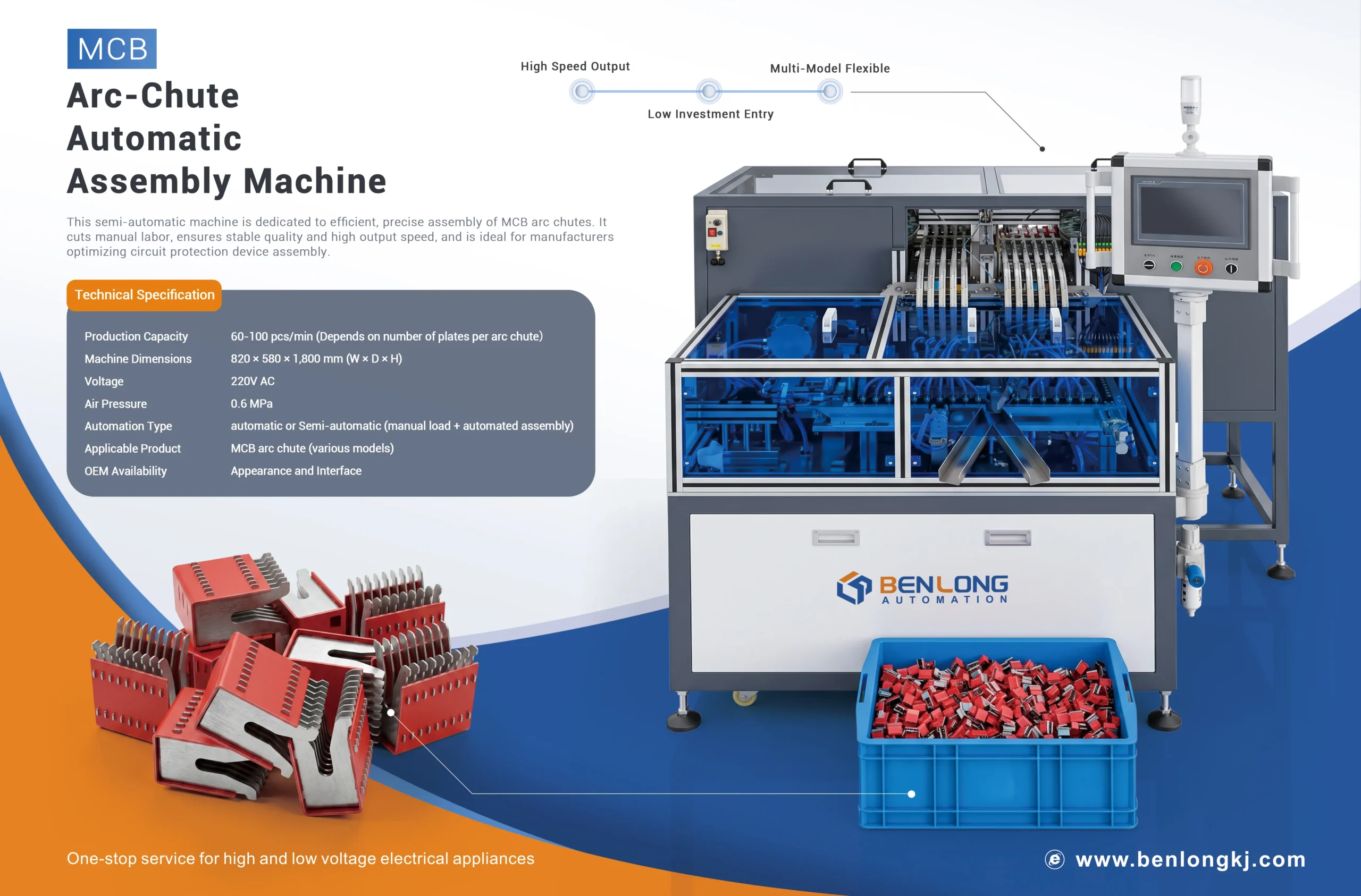
The second advantage is lower capital investment and lower risk. A semi‑automated station — such as Benlong’s semi‑automatic thermal calibration bench — costs a fraction of what a fully integrated line costs. It pays back faster, and if the product changes or the volume drops, the investment is not stranded. The manufacturer can start with a single semi‑automated station at the quality‑critical process step, prove the return, and add additional stations as the volume and the confidence grow. This phased approach reduces the financial risk and allows the organisation to build its automation competence incrementally, rather than betting the business on a single large project. The third advantage is ease of implementation and maintenance. A semi‑automated station is simpler than a fully integrated line, and it can be maintained by the factory’s existing maintenance team with minimal additional training. The operator who loads and unloads the station can also perform the daily inspections and the basic troubleshooting, because the machine is designed for that level of user interaction. Benlong Automation designs its semi‑automated equipment with this principle in mind: the HMI is built for the operator who runs the station every day, not for the engineer who commissioned it.
The Disadvantages of a Small‑Scale Automated Factory
Small‑scale automation has its own limitations and understanding those limitations is vital for making an informed investment. The major downside is that it has a higher cost per piece than a fully automated system that is running at its peak. A semi-automated calibration bench still needs an operator to load and unload the circuit breaker and the cost of the time spent on the operator adds to each single unit produced. The throughput is limited not only by the cycle time of the machine but also by the productivity and endurance of the operator. A fully automated line producing breaker every three seconds at a low labour cost when two operators have been hired to carry out the entire task is too competitive for a semi-automated cell as long as the capacity of production justifies the expense.
The second disadvantage is that the quality and the data is only partially automated. A semi-automated calibration bench is being used to perform the calibration and testing of the breaker, and to record the calibration data. But even though the operation is semi-automated, the operator who loads the breaker has to determine the correct breaker rating, has to make sure that the correct recipe was used, and takes care of the handling of the breaker from calibration to the next step after it has been calibrated. Each step thus introduces a possibility of errors which can be avoided with a fully automated handling technology.
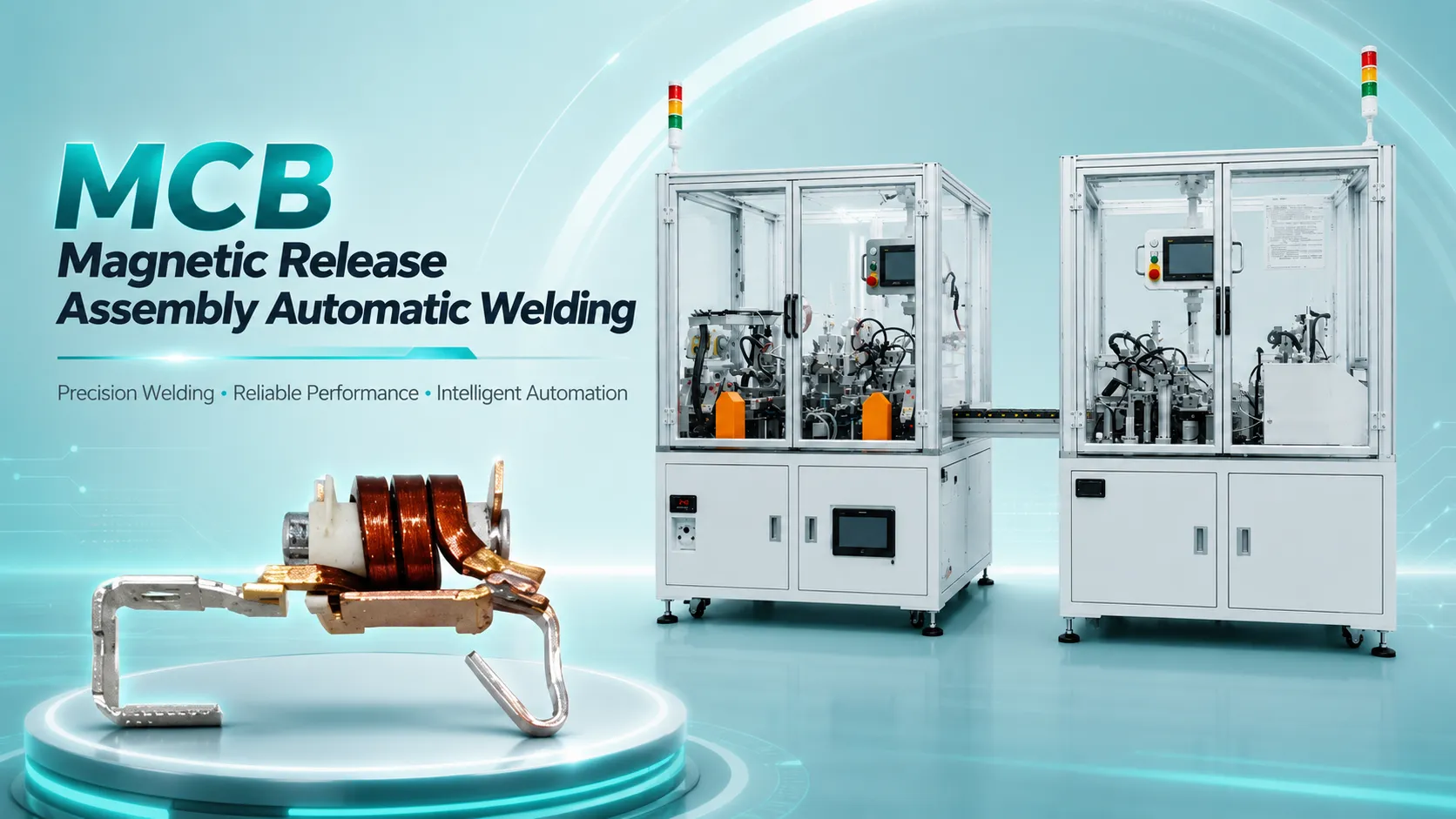
The calibration data is generated but the tracing of the breaker from the factory starts to be limited because it depends on the quality of the data system linking the partially automated stations. If there is no network connection between the stations or if there is no integration with a centralized MES, then the tracing will be fragmented. The third disadvantage is that a series of semi-automated stations creates neither a series of compatible ones nor an automated production line. The conveyor system linking the stations is manual and it is the weak point of the system. Even if the production process is automated on every level the success of this endeavor depends on the conveyor system. This is the natural point at which a manufacturer who started with semi‑automated stations begins to consider integrating them into a fully automated line — and Benlong Automation’s product range is designed to support exactly this transition, with stations that can be integrated into a complete MCB automatic assembly line when the volume and the business case justify the investment.
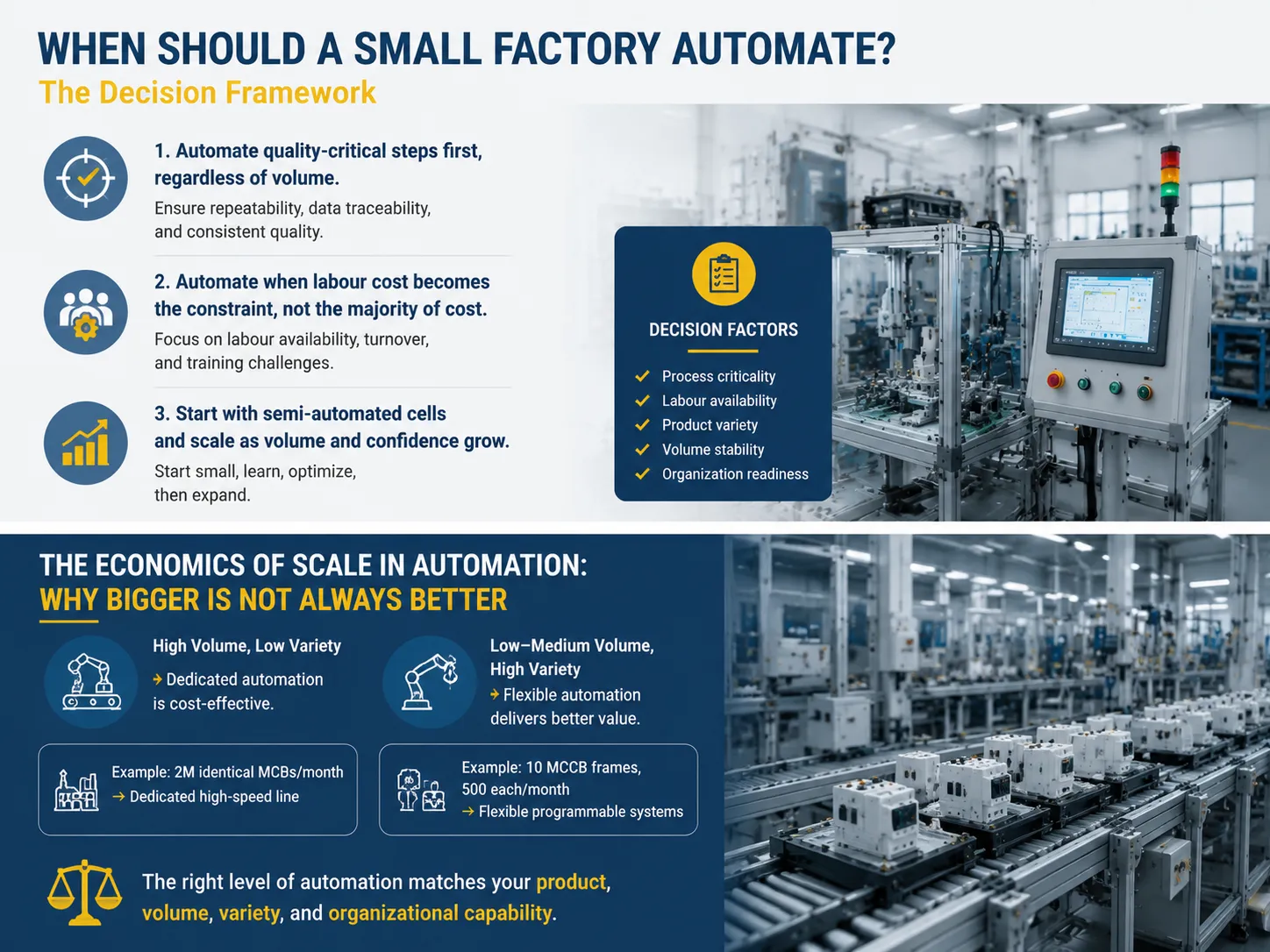
When Should a Small Factory Automate? The Decision Framework
The issue of when a small-scale manufacturing facility should adopt automation practices cannot be reduced to a single volume limit. This problem is resolved by assessing the product and process thoroughly as well as reviewing the market conditions and readiness of the organization. The framework provided below is a practical model for decision-making.
- Automate the quality‑critical steps first, regardless of volume. Whenever a process step like calibration, testing, contact-welding, or writing involves risk that either affects safety, certification, or customer acceptance, automation will yield a return far beyond a financial investment. By automating, one ensures not only repeatability, but also creation of a data trail suitable for certification purposes, and removal of the single biggest source of variation in the process. If a manufacturer is producing 20,000 MCB monthly, it can easily justify the purchase of a semi-automated calibration bench only based on quality reasons, since a single production run of MCBs failing certification audits will cost the company much more than the calibration bench.
- Automate when the labour cost becomes the constraint, not when it becomes the majority of the cost. In many small businesses, the actual labor cost for every product is fairly low, and there is the tendency to put off automation until labor becomes high-priced. However, a more reliable measure is labor supply. If the plant is unable to recruit enough trained assemblers, or its turnover and training difficulties are reducing the output, it must automate, regardless of the actual labor cost. The International Federation of Robotics says that, according to the research made, lack of labor supply is what drives small and medium enterprises to implement automation measures.
- Start with semi‑automated cells and scale as volume and confidence grow. A producer who has yet to implement any form of automation ought to avoid starting with a completely automated line. The amount of knowledge necessary is overwhelming, the financial stakes are incredibly high and the difficulties of operation are numerous. An instance of semi‑automation such as a calibration bench, testing station or screw driving facility presents a lesser challenge. The company learns to define the equipment, incorporate it into production, make it work efficiently and estimate its profitability.
The Economics of Scale in Automation: Why Bigger Is Not Always Better
The most well-known myth within the factory automation sector is that of bigger being better. The common belief here is that achieving total factory automation is a goal, and all investments that don’t culminate in factory automation or having a factory that works efficiently without the assistance of a human being is a compromise. However, the truth behind this legend lies within the documented history of the manufacturing industry and studies by McKinsey indicating that the ideal degree of automation is that of matching the product being produced, product throughput or volume, and variety as well as the possibilities of the organization when it comes to handling automation systems. For instance, a small enterprise producing 10 types of MCCB frames in batches of 500 every month does not need a separate high-speed line to do that, such a plant will need flexible programmable automation allowing switching recipes from one frame type to another. Meanwhile, a massive enterprise producing 2 million identical MCBs monthly for a singular customer will need a dedicated line for that big production as the level of demand and stability for the product makes it feasible economically. Both of the enterprises are automating their business operations properly. Businesses fail in automation whenever they invest in the automation systems based on the wrong level of automation.
Frequently Asked Questions
What are the disadvantages of automated factories?
Automated factories suffer from disadvantages like high capital investment, inflexibility when it comes to product design changes or volume fluctuations, a need for special maintenance and engineering skills, and the chance of the automation equipment becoming obsolete if the product for which it was made is no longer manufactured. The high cost of setting up automated factories means that large-scale fixed automation is particularly vulnerable to volume drops since these costs will still need to be covered whether 10,000 units or none are produced.
What are the 4 D’s of automation?
The 4 D’s of automation are a straightforward tool for recognizing processes that can be automated. Dull processes are those involving repetitive tasks that are boring for people and may lead to mistakes. Dirty refers to processes performed in unsafe or unpleasant conditions. Difficult pertains to those operations which require a high level of precision, strength, and resistance to exhaustion, or otherwise go beyond human capacity. Dangerous processes make it possible to risk injuries or even death.
What are the advantages and disadvantages of using automated systems for analysis?
Automated analysis systems Automated machines, including the automated calibration and testing stations, guarantee that precise measurements are taken multiple times, and there is no difference in the requirements of different operators. It is true that every measurement is recorded for reference and that the automated machines are much faster than any manual analysis. However, these machines do have some disadvantages, such as the need to invest in them, to maintain them, and to calibrate them regularly. They also can only identify phenomena foreseen by their programmers – anything else will be ignored by the machines.
What are 10 disadvantages of automation?
Ten frequently mentioned drawbacks of automation are the high startup costs involved, the inflexible nature of the system when it comes to changes in production processes, the fact that fixed costs must be paid regardless of how much is produced, the requirement of complicated operational skills to use and operate automated equipment, the possibility of job losses for some employees, the possibility of failures of equipment that prevents machines from working, the difficulties related to unification of different systems from different manufacturers, the cost involved in maintenances and updates of spare parts and software, the possibility of losing the meaningfulness of the system if something changes, and the possible inability to maintain data integrity when the entire system becomes automated and networked. All of these disadvantages can be compensated via precise planning and constant employee training.
References
- McKinsey & Company — The Future of Manufacturing and Automation. Research on the productivity and ROI of automation at different scales, and the factors that predict successful automation investments in small, medium, and large enterprises.
- Deloitte — Digital Manufacturing and the Skills Gap. Analysis of the workforce and skills challenges that accompany automation investment, and the strategies that manufacturers use to build the internal capability to maintain and improve automated systems.
- International Federation of Robotics (IFR) — World Robotics Report. Annual data on robot installations and automation density by country and by company size, including the adoption rates of collaborative and flexible automation among small and medium enterprises.
- Automation World — Flexible vs. Fixed Automation: Choosing the Right Strategy. Industry publication covering the trade‑offs between dedicated high‑speed lines and flexible, reconfigurable automation, with case studies from multiple manufacturing sectors.
The advantages and disadvantages of small‑scale versus large‑scale automated factories are not a scoreboard in which one side wins. They are a set of trade‑offs that every manufacturer must navigate based on their specific products, volumes, and market conditions. A large‑scale automated line delivers the lowest unit cost and the highest throughput — provided the product is stable, the volume is high, and the organisation has the technical capability to maintain it. A small‑scale automated cell delivers the flexibility and the lower capital risk that a high‑mix, lower‑volume manufacturer needs — at a higher cost per unit, but with the ability to adapt to a changing market. The manufacturer who understands these trade‑offs, and who builds an automation strategy that deliberately places each process step at the correct point on the scale, is the manufacturer who gets the benefits of automation without paying the price of a mismatch. Benlong Automation builds both semi‑automated and fully automated production equipment for the electrical manufacturing sector, because the right scale of automation is not a single answer — it is the answer that matches the factory it serves.