benlong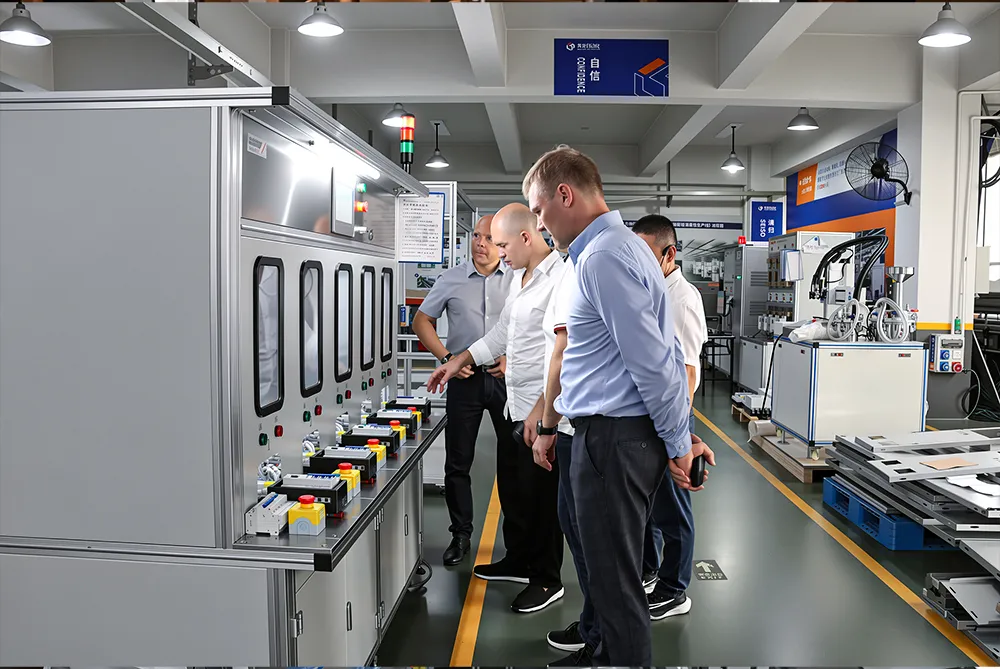
Qualified Suppliers of Industrial Equipment in B2B
Every industrial buyer winds up asking the same question but in slightly different words: who can actually sell this, and how do I differentiate the supplier who will support the equipment for years from the one who can only quote and deliver? There is no single B2B industrial supply market; rather, it constitutes all-tier distributors with millions of SKUs, technical niche specialists, e-commerce platforms acting as distributors, and original equipment manufacturers selling directly because no one else knows how to configure their products. They each provide different answers to the question mentioned above. Choosing the wrong supplier type is the biggest blunder and costliest mistake in procurement. This guide maps out the most widely used types of suppliers together with their practical examples, outlines their advantages and pricing strategies, explains how to get a new supplier qualified, and highlights a position of a manufacturing company such as benlongkj when the need is for a custom production line rather than a standard component.
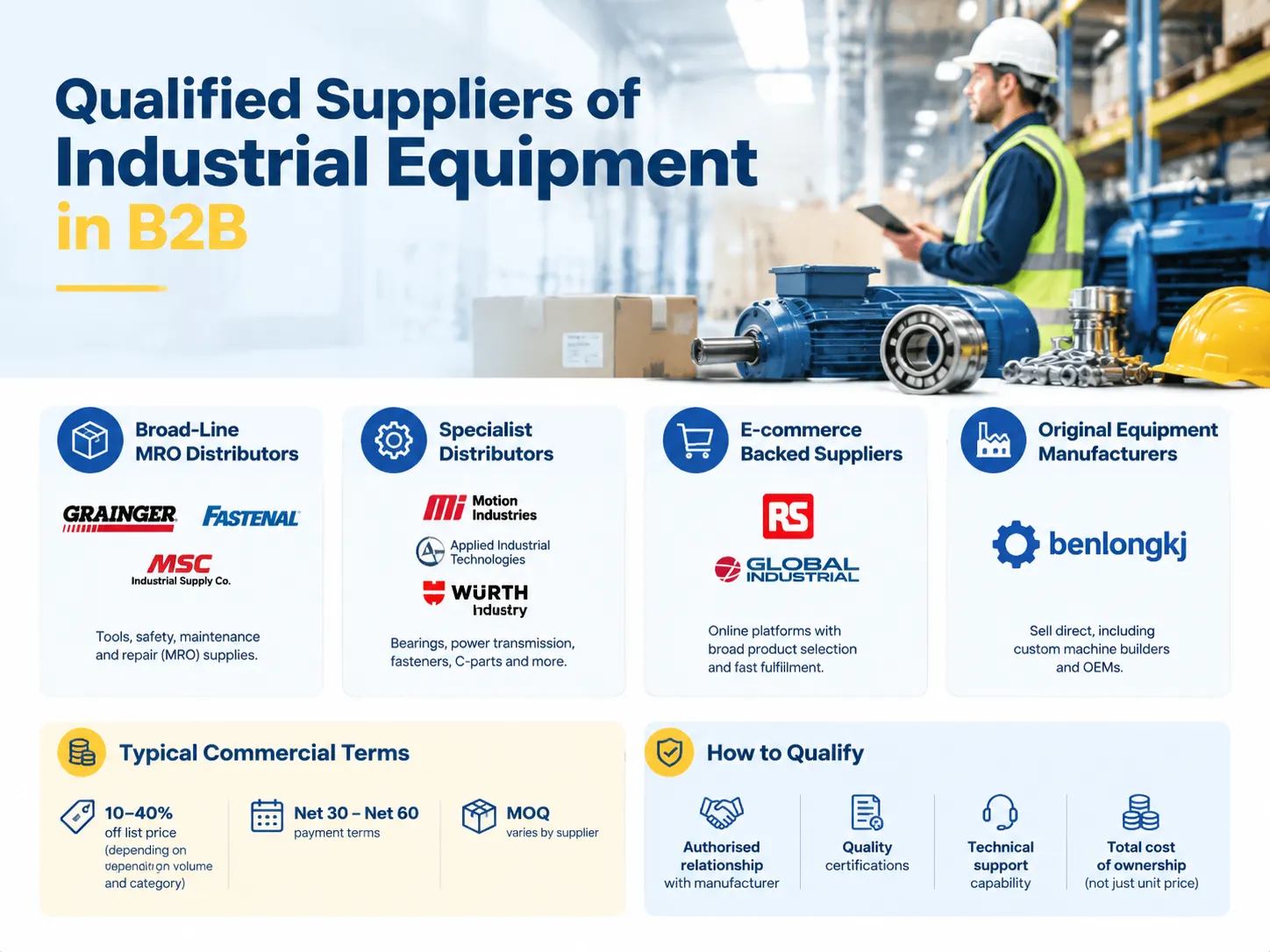
In short, the qualified suppliers of industrial equipment can be divided into four major groups: general MRO distributors including Grainger, Fastenal and MSC Industrial Supply; specialist distributors including Motion Industries (bearings, and power transmission), Applied Industrial Technologies, and Würth Industry (fasteners and C-parts); e-commerce suppliers including RS Group and Global Industrial; and OEMs who sell directly including custom machine manufacturers like benlongkj.
The Four Supplier Models
What really matters in distinguishing suppliers is not what they really have, but rather what they’ll be able to do for you structurally. A general distributor will compete with its ability to provide enough stock and efficacy in transactions. A specialized distributor will win through deep know-how in applications. A supplier using the Internet will compete thanks to price visibility and speed of ordering. A manufacturer selling directly will compete because they will be able to make something that does not exist yet. Those who consider them interchangeable will get a cheap price on an incorrect product.
| Model | What it is best at | Where it is weak | Typical buyer |
|---|---|---|---|
| Broad-line MRO distributor | One-stop ordering, huge catalogue, fast local delivery | Application depth is thin; an expert on everything is an expert on little | Plant maintenance, facilities, multi-site procurement |
| Specialist distributor | Technical selection, engineering support, problem diagnosis | Narrow catalogue; you still need a second supplier for everything else | OEMs, reliability engineers, project teams |
| E-commerce supplier | Price comparison, self-service ordering, long-tail availability | Limited technical support; fit-and-function errors are the buyer’s problem | SMEs, job shops, one-off purchases |
| Manufacturer direct | Custom engineering, integration, warranty ownership, lifecycle support | Longer lead times, higher commitment, less price comparability | Projects with a bespoke requirement |
The important point is that most industrial customers require two or more of these relationships at any given moment. A manufacturing plant may purchase consumables from a generalist wholesaler, bearings from a specialty supplier, spare sensors from an online distributor, and its next production machinery from a manufacturer. Trying to combine all four functions in one supplier generally means that you will pay more for some of the functions and forgo others.
Broad-Line Distributors
These companies are the ones people usually think of when they hear “manufacturer’s representative”; their offering is no so much based on depth as on breadth and availability.
Grainger is the prime example — the company was established in 1927 and is based in Lake Forest, Illinois. It has millions of products offered from thousands of suppliers and numerous branches in North America, and its strength is that it can handle mixed orders. The company does not work with end-users and instead works for corporations that have contracts with Grainger. For example, if a maintenance department needs forty different parts delivered by Thursday, nothing compares in terms of convenience.
Fastenal is the company that made a fortune in fasteners and has been going broader into MRO supplies since 1967 and is headquartered in Winona, Minnesota. One major contribution of Fastenal is the winning system of automated vending for industrial consumables. In the most simple terms, the supplier provides inventory in the customer’s plant and replenishes it as things are used up. For high-volume, low-cost consumables, it often saves more money than price negotiations.
MSC Industrial Supply was established in 1941 and is located in Melville, New York. The company is best known for its relation to metalworking, cutting tools, abrasives, tooling, and how machine shops use these items in their daily work.
What we can see from these three companies is that they are not manufacturers; they resell. At the same time, their technical support is limited to the info given in the manufacturer’s datasheet. Such companies cannot give answers to questions like “what should I have?” or “what should this system be like?”.
Specialist Distributors
Specialists gain expertise at the expense of breadth so that they dominate in optimizing categories of failure – the case of unanticipated breakdowns that halt manufacturing.
One prime example is Motion Industries that was established in 1946 and is located in Birmingham, Alabama, as part of the Genuine Parts Company. Its business includes such elements as bearings, torque transmission, hydraulics, fluff dynamics, and automation parts supplied from many locations. The reason a company buys bearings from a specialized one instead of the general supplier is that choosing, mounting, and maintaining bearings is a rather technical task and making mistakes may lead to losses exceeding the price difference between the suppliers.
Applied Industrial Technologies set up in 1923 and based in Cleveland, Ohio, applies a similar model – it operates in the bearings, torque transmission, hydraulics, and flow control sectors and has a separate branch for maintenance works and reliability programs. Its competitive edge is determined by the engineering discussions rather than by the product line it sells.
Wȕrth Industry North America is the branch of the German company W ̈urth Group. Its specialization is in fastening and C-parts management; that is, bolts, screws, chips, and so on – goods that are many in number but little in cost for the manufacturers. The company applies the vendor-managed inventory and document quality control schemes, which are of paramount importance in the automotive and appliance industries.
In all three cases, it evident that the specialists receive profit due to the reduced risks of their buyers rather than the stock they hold.
E-Commerce Suppliers and Marketplaces
RS Group, which is headquartered in the UK and is the distributor of RS Components and Allied Electronics, shows how a distributor catalogue can be turned into a self-service e-commerce site that consists of electronics, automation, and industrial consumables with set prices and prompt delivery. Global Industrial operates in the same field but in North America, focusing on areas with importance on materials handling and facilities.
Another level is added by marketplaces. General B2B platforms and industrial marketplaces help thousands of sellers and provide consumers with more pricing transparency for cheap goods and products that can be bought only locally. Marketplaces pose the qualification problem because an identity of a seller in a marketplace where goods are sold is usually not obvious as compared to a distributor, which means that there can be problems with counterfeit products in certain categories.
It is reasonable to advise using both e-commerce and marketplaces when it comes to commodities, spare parts, and price search alone. Anything that is critical for safety, warranty, or configuration should be ordered through the authorized distributor.
Manufacturers Selling Direct
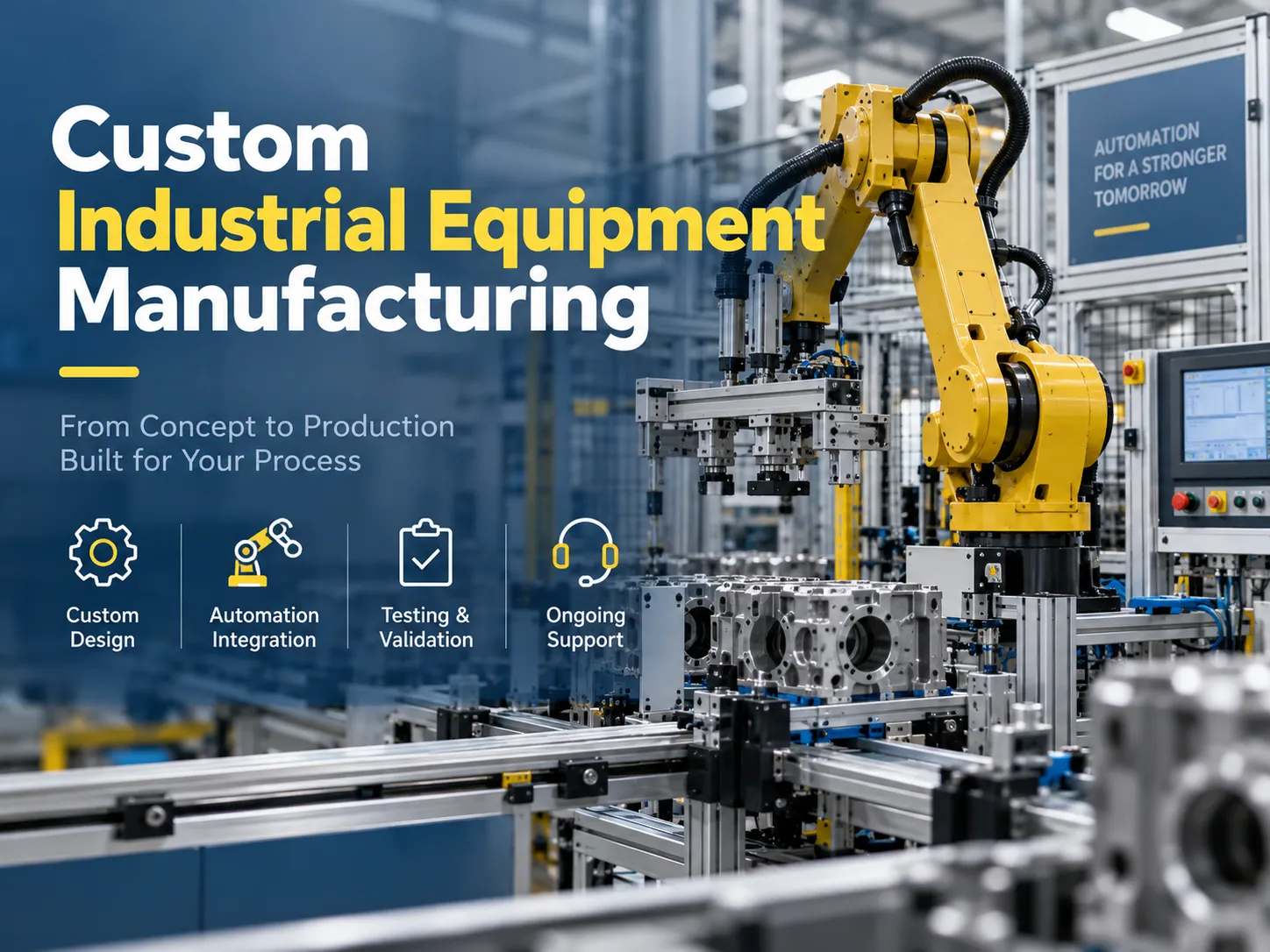
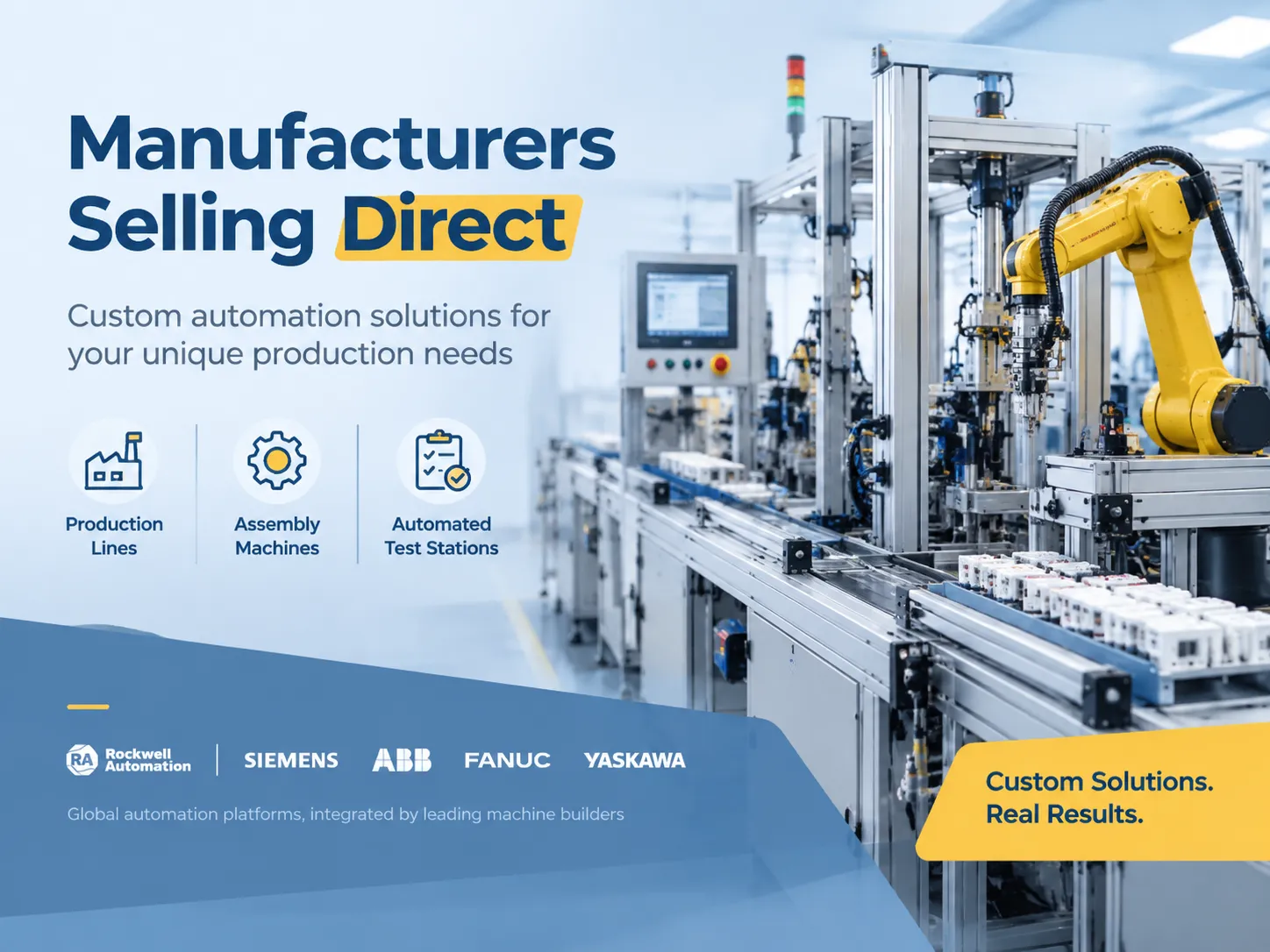
The existence of the fourth model is based on the fact that some requirements cannot be sourced from a catalogue. For example, when a factory has a need for a production line, for a specific assembly machine, or an automated testing station, no dealer can provide it because the factory is communicating with the engineering team of the producer from the first meeting.
International companies involved in manufacturing include ATS Corporation, JR Automation, Invio Automation, and Advent Design, as well as automation suppliers such as Rockwell, Siemens, ABB, FANUC, and Yaskawa. These companies manufacture or enhance their production with the bests’ automation solutions. Unlike dealers, they sell solutions and technology and provide estimates for the whole project based on their technology solutions with no references to manufacturing components.
The fourth model is considered by benlongkj as well but specifically in respect of automated assembly lines, injection-moulding processes, and equipment to produce electrical components. The main advantage of the previous model is its high level of manufacturing while remaining 30-50% lower than the equivalent Western production line. A drawback, however, is the distance meaning that quality control may be tough but still necessary.For buyers preparing a request for quotation, the discipline that makes an offshore line work is set out in our guide for buyers evaluating automated production line solutions.
The commercial case for the investment itself rests on measurable returns — throughput, quality consistency, and labour cost per unit — and the mechanics of that case are worked through in our analysis of how industrial automation solutions deliver efficiency benefits. What no payback model captures is the qualification question that always follows: who is actually able to build the line.
Is it the price that makes one builder a qualified one and another an unqualified one? Not at all. What matters here is whether the factory is able to show the relevant lines in operation, produce the results of industrial tests related to these lines, provide justification of criteria for acceptance of the line, and support the equipment after commissioning.When the requirement is bespoke rather than catalogue, that evidence is the qualification, and our own approach to building custom automated assembly machines describes the sequence a buyer should expect.
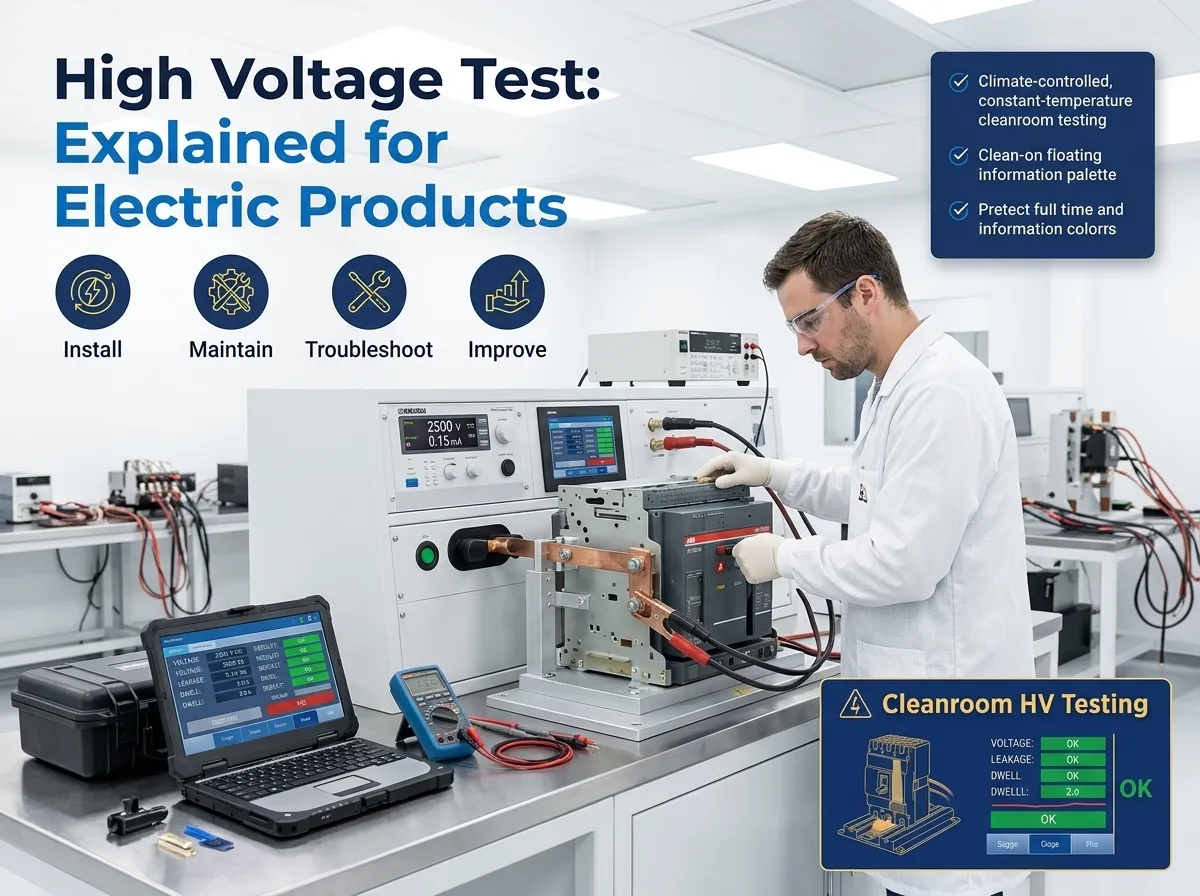
The most direct way to judge a builder’s capability is to examine what it has already delivered. A working example from our own range, the MCB automatic production line, shows what a commissioned line looks like in this category — the stations, the in-line testing, and the output documentation a buyer receives.
What Things Actually Cost
Industrial pricing practices are predominantly based around negotiations, making prices difficult to compare. This leads to very few effective benchmarks being available.
- The listed price may not be entirely reliable for repeat customers. Contracting with broad-line distributors usually allows customers to obtain between 10-40% off the list price, with larger discounts typically received in areas where suppliers have to compete for business, while proprietary lines will see lesser discounts being offered.
- Payment terms are also an integral part of the price. The common practice is to offer net 30 payment terms, but larger accounts may get net 60 or even net 90 payment terms. As a result, if the supplier offers worse payment terms, its unit price may not be the lowest in the overall market once working capital is accounted for.
- Minimum order quantities and freight rules can also influence costs. Companies that offer attractive unit prices may charge high fees for attempting to place small orders; hence, they may be comparatively more expensive for customers who place numerous small orders.
- Custom-made equipment is specified as a project. Equipment builders estimate costs based on the design specifications, cycle times, number of working stations, accessibility of testing facilities, and commissioning requirements. A fully automated manufacturing line can cost anywhere from several tens of thousands to several million dollars, and commissioning and training costs usually account for the additional 10-15% of the equipment price.
- The total cost of ownership is more important than the unit price. Factors such as downtime, the availability of spare parts, warranty service, and engineering costs incurred by using poorly supported equipment outweigh the benefits of discounts received before purchase.
How to Qualify a Supplier
Qualification is a procedure, not a decision, and it is performed identically regardless of whether the supplier happens to be a distributor or a manufacturer. The procedure consists of six checks which deal with most of the risks involved.
- Confirm authorization. In the case of a branded product, the question of whether the supplier is an authorized distributor has to be clarified. Authorization from the manufacturer is essential because it determines the validity of the warranty, technical assistance, and protection against counterfeit product. This confirmation must be received from the manufacturer rather than the supplier’s marketing.
- Request all necessary certifications relevant for the industry at issue. For ISO 9001 which is a must-have certification. For medical industry, ISO 13485 is required. IATF 16949 is mandatory for automotive products. AS9100 for aerospace sector. It is also necessary to obtain all other certifications such as UL, CE, IEC, ATEX etc that are applicable to the equipment. Any supplier who fails to provide such certificates is giving you a warning.
- Test the customer service before you need it. Ask some questions about the application while receiving the quotation. If you receive a link to some technical sheet, your supplier will not be able to help you in case of trouble.
- Verify references in your own industry. The problem is that the reference from the different industry is worthless. Therefore you should demand a reference in the industry that provides services or produces similar products, if possible.
- Determine your own acceptance criteria in written form. The overall accepted procedure in the case of capital equipment involves performing a factory acceptance test prior to shipment and a site acceptance test after equipment installation.
- Calculate the price for the entire cooperation, not only the equipment. Everyone knows that the number of factors affecting the total price is huge, therefore it is essential to take into account the price of transportation and duties, the availability of spare parts and training as well as warranty terms and engineering time.
Two types of failures happen frequently. The first one is the issue of making a decision only based on the price in a category where failure holds a prominent position in terms of cost: namely, safety devices, drives, and instruments crucial to the production processes. The second one is the issue of focusing on the brand while making a choice in a category where the main concern is the specification, which means that customers pay extra money for the logo on a component manufactured by three companies with equal certifications.Buyers who want to understand what a supplier is actually claiming should also read the equipment documentation critically; the same standard applies to how a manufacturer presents its capability as to the products themselves.
Choosing by Industry
The supplier model that fits depends on what the plant makes and how it fails.
| Industry | Supplier priority | Why |
|---|---|---|
| Automotive | Traceability and IATF-certified suppliers; C-parts management | Every component must be documented; a fastener failure is a recall |
| Food and beverage | Hygienic-grade components, washdown-rated equipment, 3-A and EHEDG compliance | Cleanability and material certification are non-negotiable |
| Pharmaceutical | ISO 13485 suppliers, documented change control, validated equipment | Regulatory audit exposure exceeds any purchasing saving |
| Electrical and electronics manufacturing | Certified component manufacturers plus automation builders | Product certification is a market requirement, and volume justifies automation |
| General manufacturing and maintenance | Broad-line distributor plus one specialist per critical category | Mixed demand is best served by breadth plus targeted depth |
| Process and energy | Specialists with application engineering and lifecycle spares | Downtime cost dwarfs component cost |
FAQ
What are examples of B2B supply?
B2B supply encompasses any situation in which one company purchases an item from another business instead of a consumer. Some examples are: a factory purchases bearings from a company called Motion Industries; the same factory purchases fastening elements from Fastenal’s vending machines; the factory obtains cutting tools from MSC Industrial Supply; it utilizes components bought from RS Resources, and machinery that is created by a machine manufacturer such as Benlongkj. Services are also included in this, in particular, calibration services, maintenance service contracts, tooling design, and vendor-managed inventory agreements.
What is the B2B marketplace for industrial products?
There isn’t one uniform marketplace. The marketplace is made up of distributors’ e-commerce sites where the seller offers published prices and authorized inventory as in RS Group or Global Industrial. Distributors are more suitable for items which require warranty, certification, or technical support. Such platforms allow for finding prices for hard-to-find spare parts.
How to find a good B2B supplier?
Start from understanding your needs rather than from the catalog. For commodities and MRO items, you should obtain the prices and terms of service from two or three broad-line distributors and checking out their authorization. In case of technical equipment, try to find specialists in this field and check their application support skills. In case of capital equipment, you should check the three suppliers and ask for reference sites where similar equipment is working. In both cases, you should get manufacturer authorization and certifications confirming that the equipment can be used safely.
What are B2B distributors?
B2B distributors sell products obtained from manufacturers to other businesses. The distributor may offer product availability, credit and logistic services as well as technical support while providing its own catalog containing various items on different markets. Broad-line distributors may be seen as companies offering different types of products, while specialized distributors work only with a certain type of products like bearings, fluids, screws. This creates differences between them and agents, who are usually not coping with goods, and representatives of the manufacturer, who sell goods on behalf of another party without possessing the goods.
References
- Grainger — Industrial Supply Catalogue and MRO Distribution
- Fastenal — Fasteners, MRO Supply and On-Site Inventory Solutions
- Motion Industries — Bearings, Power Transmission and Fluid Power Distribution
- ISO — ISO 9001, ISO 13485 and IATF 16949 Quality Management Standards
- UL Solutions — Product Certification and Authorised Distributor Verification
Conclusion
The distribution sector of industrial B2B rewards informed end users of its offerings. In this case, broad-line distributors, such as Grainger, Fastenal, and MSC, offer broad product lines and wide availability, whereas specialized companies, like Motion Industries, Applied Industrial Technologies, and Würth, offer extensive application knowledge in markets where mistakes are costly. The e-commerce platforms and marketplaces provide price transparency but with qualification limitations. Finally, some manufacturers, such as benlongkj, possess unique capabilities that cannot be found in any catalog. Pricing is negotiated in all four cases and is based on discounts, and it is the concept of total cost of ownership, rather than unit price, that should be evaluated. One must focus on qualification, which means verifying being authorized to buy, getting all necessary certifications, testing technical support prior to its usage, checking the customer’s own application in real life, and defining acceptance criteria.