benlong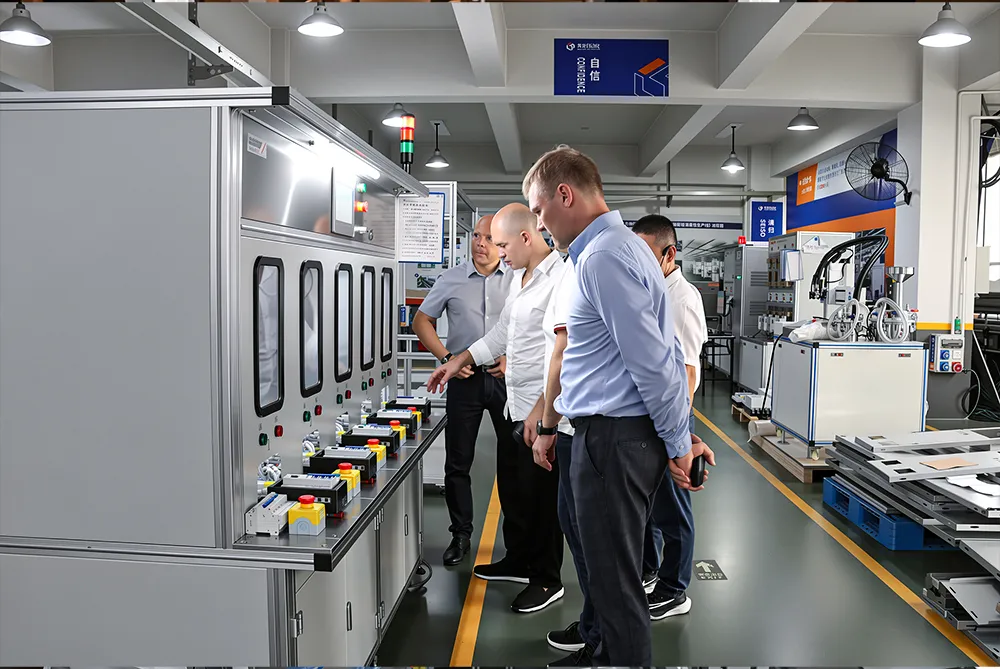
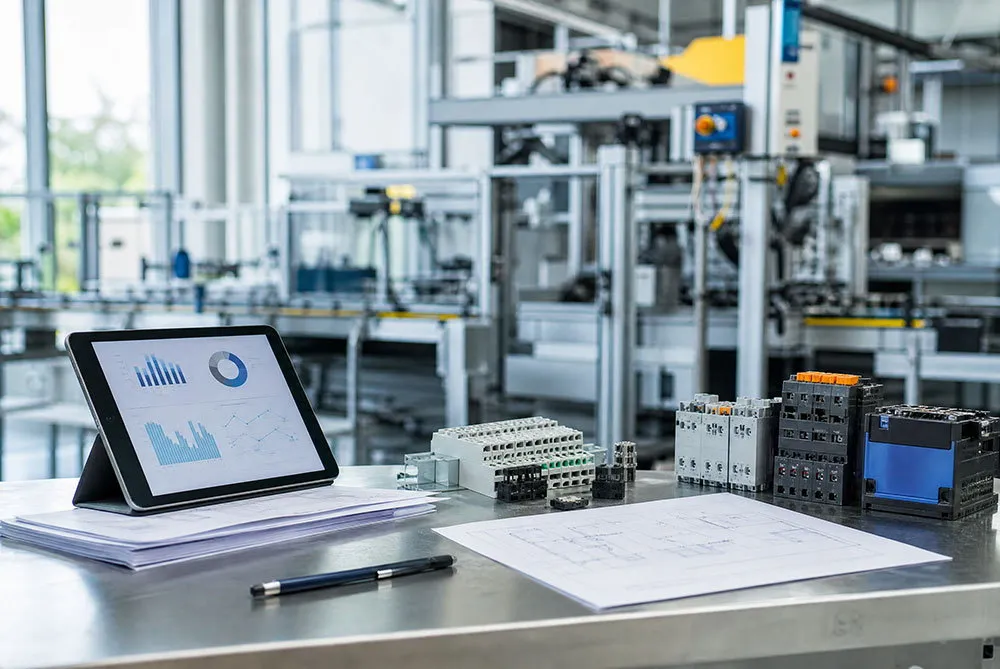

Specialized Packaging and Testing Companies List
The term “specialized packaging and testing” seems to refer to a single industry, but it actually refers to multiple industries. For semiconductor customers, this term refers to the companies in back-end OSAT (outsourced semiconductor assembly and testing), which package bare silicon chips and test them. On the other hand, for customers regarding electrical components, this term refers to laboratories and factories which assemble, encapsulate, and type-test breakers, relays, and transformers according to the IEC and UL standards. As for manufacturers in the field of medicine, automotive industry, or food processing, the term means just something completely different — sterile packaging lines, EMC chambers, or laboratories of contamination testing, respectively. This guide helps identify the companies operating in this reality in different industries, starting with semiconductor industry, and building up to electrical and electronics sphere, where companies like benlongkj are operating, thus allowing their procurement teams to know who does what and where.
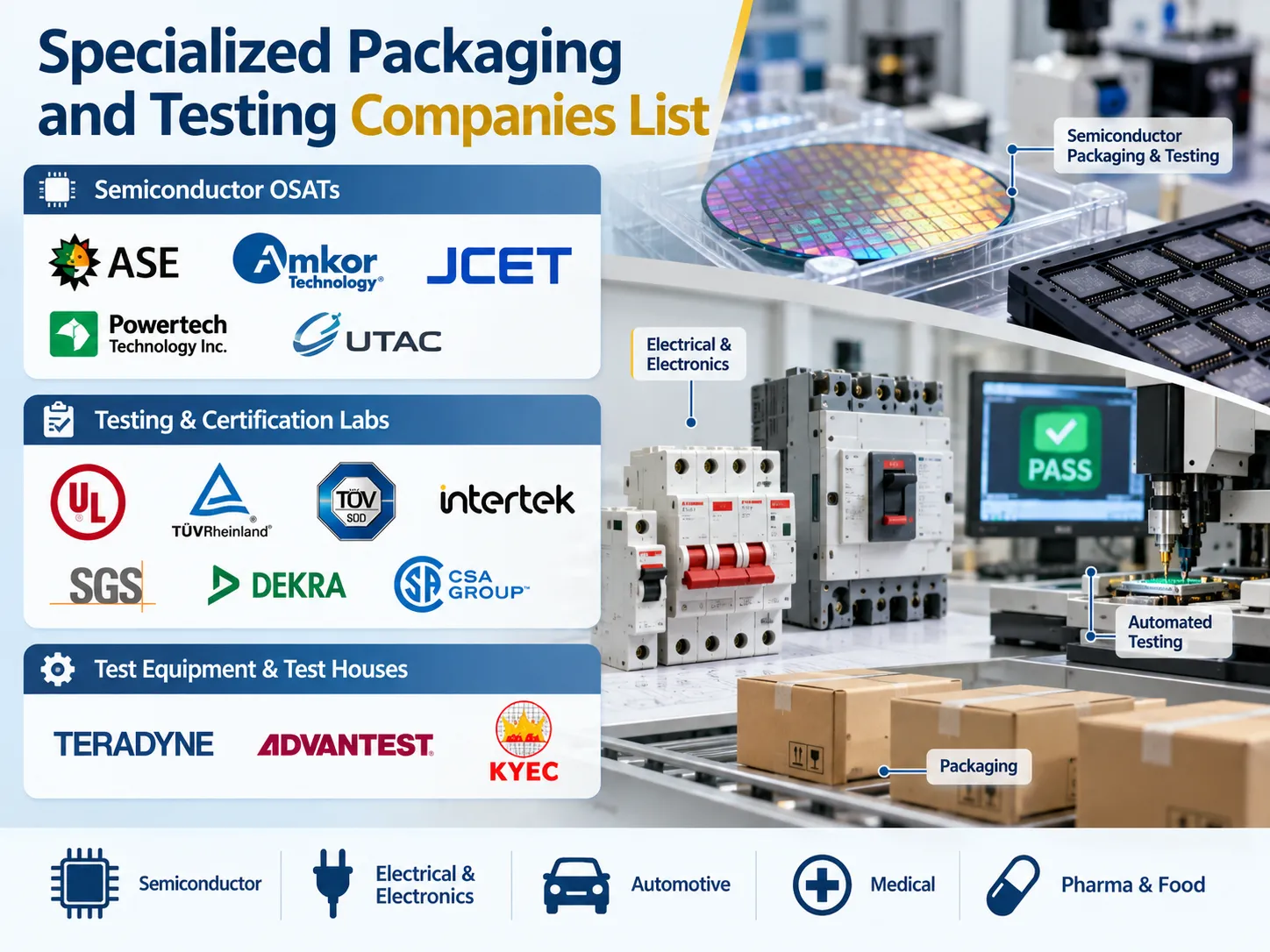
In summary, the biggest specialized businesses regarding packaging and testing are the semiconductor OSATs, namely ASE Technology Holding, Amkor Technology, JCET, Powertech Technology, and UTAC. Additional test companies make up specialized laboratories for test procedures such as King Yuan Electronics. In the electrical and electronics sector, packaging and testing stand for component assembly along with corresponding testing, which is mostly carried out in certified laboratories and in automated assembly-and-testing centers.Electric component factories are implementing automated testing lines (the type constructed by benlongkj) instead of manual testing. Such lines operate in automatic mode and test 100% of the units at the production speed.
Semiconductor packaging and testing: the OSAT leaders
The semiconductor packaging procedure involves taking an already manufactured silicon die, which is nothing more than a tiny square of circuitry, and providing a case with an electrical connector – afterwards, the package undergoes some testing. Since most manufacturers, such as TSMC, Samsung, Intel, and fabless companies delegate this back-end work to others, the OSAT or outsourced semiconductor assembly and testing industry exists.
| Company | HQ / key sites | Core services | Position and strengths |
|---|---|---|---|
| ASE Technology Holding | Kaohsiung, Taiwan; plants in Taiwan, China, Malaysia, Korea, Mexico | Full OSAT: packaging (wire-bond, flip-chip, fan-out, SiP), final test, module assembly | Global #1 (~30% of OSAT revenue); broadest technology portfolio; after absorbing SPIL, unmatched scale in advanced packaging |
| Amkor Technology | Headquartered in Tempe, Arizona, USA; plants in Korea, Taiwan, China, Japan, Portugal, Malaysia, Philippines | Packaging and test for ICs; advanced 2.5D/3D, flip-chip, SiP | Global #2; the leading OSAT with deep US roots — key partner for American fab expansions and automotive-grade packaging |
| JCET Group | Jiangyin, China (incl. STATS ChipPAC, Singapore) | Packaging and testing; wafer bumping, flip-chip, fan-out, SiP; test services | China’s largest OSAT; the STATS ChipPAC acquisition gave it a global footprint in advanced packaging |
| Powertech Technology (PTI) | Hsinchu, Taiwan | Memory packaging and testing (DRAM, NAND, logic), module and substrate-based packaging | World leader in memory packaging; key partner to Micron, SK hynix, and other memory giants |
| UTAC Holdings | Singapore; plants in Thailand, Malaysia, Indonesia, China | Analog, mixed-signal, and power packaging and testing; automotive-grade lines | Top-5 OSAT; strong in automotive and industrial semiconductors |
| Chipbond / ChipMOS / Signetics | Taiwan / Taiwan / Korea | LCD driver, memory, and specialty packaging | Regional specialists with deep niches in display drivers and memory |
The message for procurement teams can be stated in one go: If you look for high-volume advanced IC packaging options, some names to reckon with are ASE, Amkor, and JCET; for memory applications, the leaders are PTI and some firms in Korea and China; while for automotive or industrial power applications, it is Amkor and UTAC that comply with AEC-Q qualifications.
Semiconductor test: the specialists behind “tested” parts
Testing can be divided into two branches: the companies that make test equipment and the companies that conduct testing operations (the OSATs and also specialized testing companies).
- Leaders in automotive testing equipment: Teradyne (Massachusetts, USA) and Advantest (Japan) are leaders in the automated testing equipment market of logic and memory respectively, and Cohu (California) is strong in test handlers and contactors. When a chip is tested during “testing at the specified speed,” it is usually tested in Teradyne and/or Advantest company machines.
- Dedicated test and turnkey services: King Yuan Electronics (KYEC, Taiwan) is the largest pure-play IC testing company, Greatek (Taiwan) and Sigurd Microelectronics (Taiwan) are significant testing companies and many OSATs provide “turnkey” services (i.e., packaging and testing services under one roof) which is what the emerging fabless chip companies are looking for.
- Test development and reliability labs: there exists an additional layer of engineering service providers (some of which are large independent companies, such as Eurofins EAG, formerly EAG Laboratories) performing failure analysis, reliability assessment, and materials analysis which would otherwise not be achieved through production testing alone.
Whether tests are performed in-house or outsourced, the fact remains that the underlying economics are the same and should be noted because the same holds true for electrical manufacturing as well: automated testing is much more efficient than manual inspection since failures are spotted earlier and cheaper, and testing of safety-critical components will soon become an option instead of a demand.The comparison between automated and manual testing — speed, accuracy, cost per unit — is developed in our manual vs automated testing guide.
Electrical and electronics: packaging, assembly, and type testing
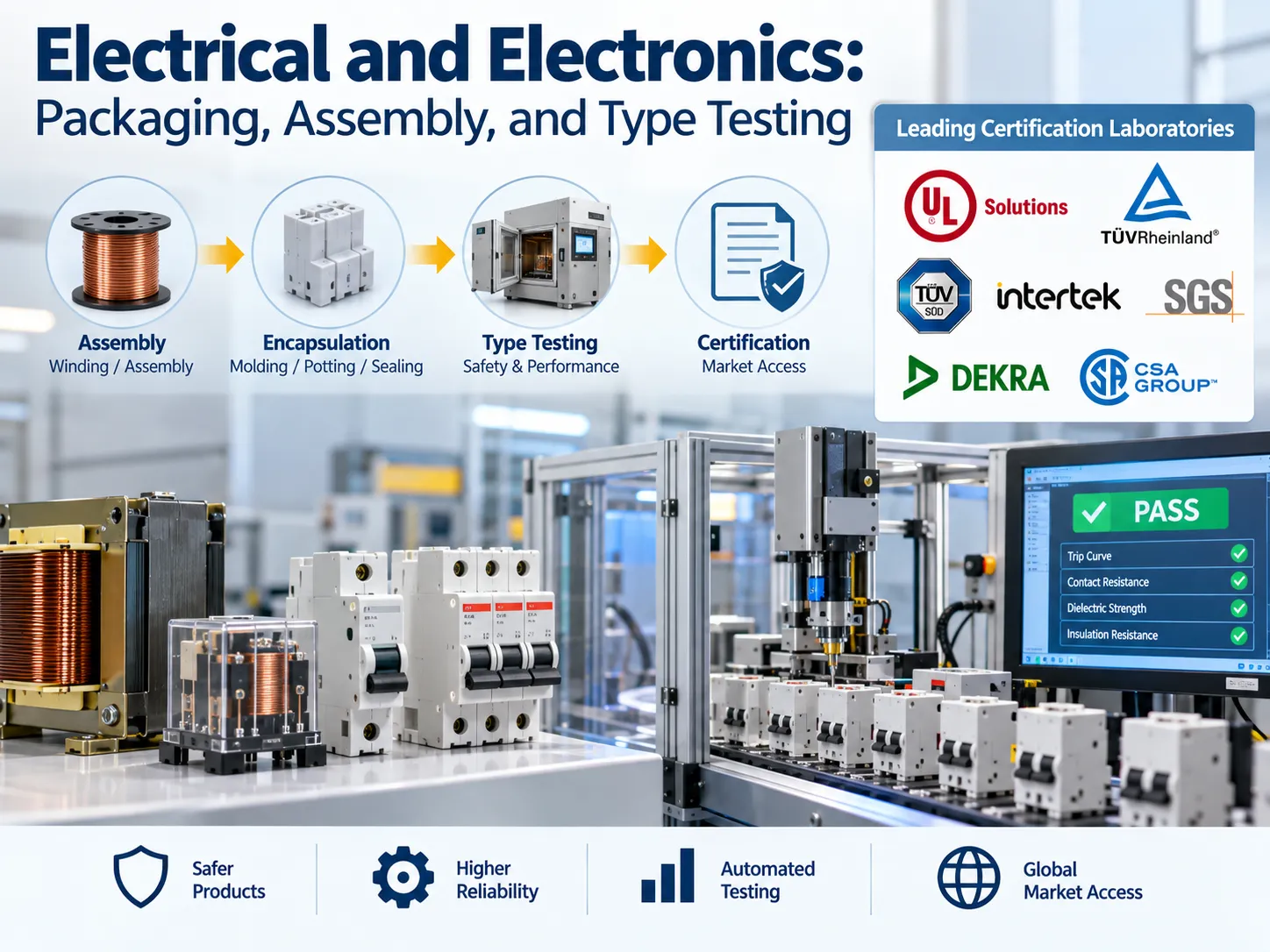
to circuit breakers, relays, transformers, and finally finished electronics, the meaning of “packaging and testing” changes once again. This time it has two meanings: assembling and package the product (winding, molding, potting, sealing) and its type testing and shortening against safety standards.
The certification layer is dominated by the global testing, inspection, and certification industry (TIC) companies whose names procurement teams see on every certificate.
| Laboratory | HQ | What they test for electrical buyers |
|---|---|---|
| UL Solutions | Northbrook, Illinois, USA | UL 489 breakers, UL 98 disconnects, and US market safety certification |
| TUV Rheinland / TUV SUD | Cologne / Munich, Germany | IEC 60898 and IEC 60947 breaker testing, CE marking, international market access |
| Intertek | London, UK | ETL listing (UL-equivalent for North America), IEC testing, performance verification |
| SGS | Geneva, Switzerland | Component testing, factory audits, global market-access programs |
| DEKRA / CSA Group | Stuttgart, Germany / Toronto, Canada | IECEE schemes; CSA certification for Canada and the US |
In the context of electrical component manufacturing, “testing” refers to an area that holds opportunities for automation. In the automatic production system in its entirety, if the breakers are tested at production speed — including all aspects of trips, contact resistance, dielectrical strength — the outcome of the process will be more secure than in case of manual sampling. The payback math of automated versus manual testing of electrical components, and why even mid-size factories are converting, is laid out in our automated vs manual MCB testing payback analysis.
For procurement teams new to the technical side, the specific tests a breaker must pass — and what the test report should contain — are catalogued in our circuit breaker testing guide, which doubles as a checklist when auditing any supplier’s testing claims.
Benlongkj operates in this field; being a manufacturer of automatic assemblies and automatic testing lines, benlongkj produces the equipment used in electric component manufacturing for packaging and testing at an industrial scale. Its lines are used by circuit-breaker and electrical-appliance manufacturers who need certified, traceable, 100%-tested output, and the broader case for what manufacturing automation returns is covered in our manufacturing automation solutions overview.
The same services in other mainstream industries
Given the fact that “specialized packaging and testing” is applicable across various domains, there is a huge vendor list other than just chips and breakers:
- Automotive: here, it means specialized qualification for AEC-Q components, EMC testing in laboratories (the key laboratories include TUV, UL, and DEKRA and the manufacturers’ own documents), and battery cell lab testing.
- Medical equipment: sterile package processing, validation laboratories — testing of biocompatibility (ISO 10993), integrity of the package, and shelf life. The leading operators include the largest TIC companies and specialized medical packaging companies in the US (such as Oliver Healthcare) and in Europe.
- Pharmaceuticals and food: primary packaging (blister, vial, pouch) with testing for contamination and stability. The biggest networks in this field are the laboratories of SGS, Eurofins, and Intertek, with the leading manufacturers of packaging equipment like IMA, Uhlmann, Bosch working on the equipment side.
- Consumer electronics and IoT: the giants of EMS/contract manufacturing (Foxconn, Jabil, Flex, Celestica, Sanmina) perform assembly operations thanks to ICT and flying probe tests, or the “packaging and testing” of the electronics world.
The picture is practically the same across the whole spectrum of industries: regulations are becoming stricter, the consumers want to be provided with proper documents certifying 100% testing, and the companies succeeding in this business tend to automate testing directly during production process rather than at the very end.For factory owners planning that investment — whatever the product — the practical procurement steps, from writing the specification to factory acceptance testing, are in our automated production line buyer’s guide.
How to choose the right packaging and testing partner
To ensure you partner with the right vendor, consider these five rules:
- Check the suitability of the certifications to your industry by asking for verified quotes to match your requirement. A microchip for a phone will be manufactured differently from one for an airbag; the automotive chip will need an AEC-Q certification which a telecom chip doesn’t require. Thus, it is important to know what are the exact qualifications of the supplier.
- Verify the scope of the certificate rather than just its presence. In the case of electronic devices, check the scope being certified in the lab and if the certification covers your brand.
- Understand the method of testing the components: whether the testing is being done in full or portions are taken for examination because this would demonstrate the quality of the supplier. Note that if the answer to your inquiry is that manual sampling will be used for testing then it is better to look for another supplier.
- Carry out an audit of test data. You need to obtain records for every tested unit even if the results were unbelievably great. A supplier that cannot produce such records does not conduct testing as required.
- Take into account the total price, including requalification. The lowest quote that does not manage to pass audit is more expensive than the higher quote that does pass it.
FAQ
What are the top 5 semiconductor packaging companies?
The five leading OSATs are ASE Technology Holding (Taiwan) which tops the lists with around 30% of market share, followed by Amkor Tech (USA), JCET Group (China), Powertech Technology (Taiwan—leader in memory packaging) and UTAC Holdings (Singapore). Together, ASE and Amkor command about half of the OSAT market.
What are the top semiconductor testing companies?
Testing is undertaken not only by the OSATs but also by dedicated testing firms who use the machinery by Teradyne and Advantest, together with Cohu in the ATE market. The major pure players in IC testing services are King Yuan Electronics (KYEC, Taiwan) as well as Greatek and Sigurd. By far the leading name in failure analysis and reliability tests is Eurofins EAG.
Who are the top 20 semiconductor companies?
The biggest names in revenue terms are TSMC, Samsung Electronics, Intel, SK hynix, Qualcomm, Broadcom, Micron, AMD, Nvidia, Infineon, STMicroelectronics, TI (Texas Instruments), MediaTek, Analog Devices, NXP, Microchip, Renesas, onsemi, Kioxia, and GlobalFoundries bringing together foundries, memory companies, IDMs and fabless firms. TSMC is the only firm that is a pure foundry among them, outsourcing work to OSATs in the sector.
What are the top 5 OSAT companies?
The companies leading the OSAT industry include ASE Technology Holding, Amkor Technology, JCET Group (with STATS ChipPAC), Powertech Technology (PTI), and UTAC Holdings, being the same names dominating the semiconductor packaging and testing market.
References
- ASE Technology Holding — Global OSAT Leader
- Amkor Technology — Semiconductor Packaging and Test
- JCET Group — Advanced Packaging and Testing
- UL Solutions — Electrical Certification
- Teradyne — Automated Test Equipment
Conclusion
Specialized packaging and testing is a term that encompasses five industries that share the same concept, which states that no one would transport a product whose safety is vital or that is valuable unless they have proof of proper packaging and complete testing conducted on that product. In the semiconductor industry, the process is mainly carried out by the so-called OSAT (Outsourced Semiconductor Assembly and Test) leaders ASE, Amkor, JCET, PTI, and UTAC, whom the testing houses and the automated testing equipment manufactured by Teradyne and Advantest assist with. In the electronic and electrical industry, the concept of packaging and testing is applied in the fields of automatic assembly with certification labs like UL, TUV, Intertek, SGS, DEKRA, CSA, that have an impact on the pricing and the automated product testing lines constructed by manufacturers like benlongkj, meaning that no product leaves the manufacturing site without being tested. In the automotive, medical, pharma, and food industries, the same fundamental principle is in place but within different frameworks and specifications. The purchasing principle that is common for all industries is the same. Thus, the buyer is supposed to select the right qualification for their market and check the certificates, as well as request 100% automated testing with per-unit records and account for expenses, including certification fees.