benlong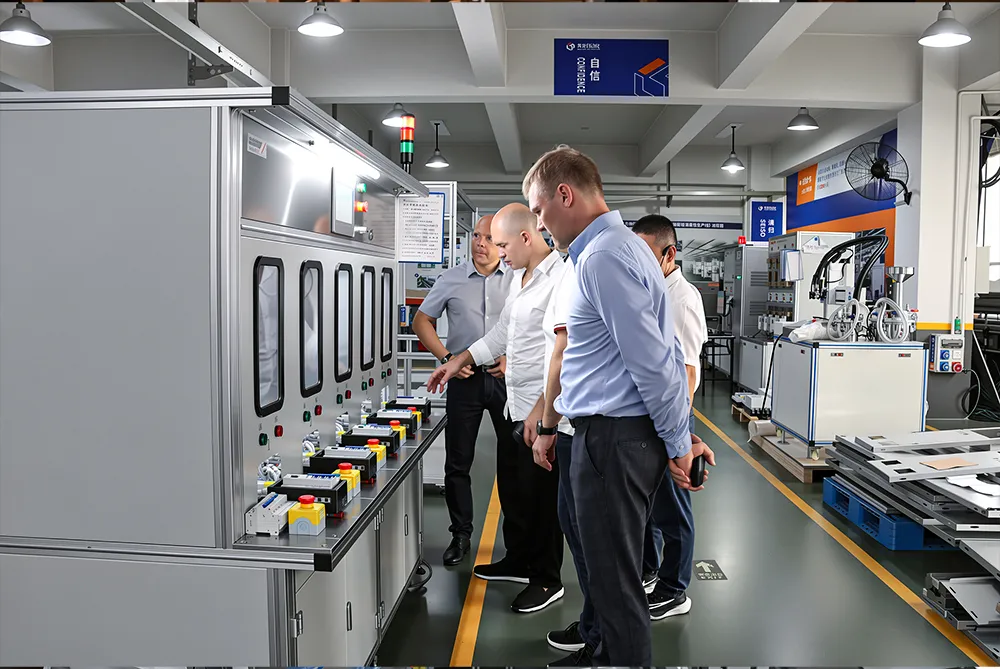
How Do Conveyors and Conveying System Power Modern Electrical Manufacturing?
By Huang Xiaolei | Benlong Automation
At Benlong Automation, our design process for each turnkey line starts with planning the conveying method and only then goes on to the stations. There are no choices regarding the conveyors in the plan. The wrong conveyor family may cost you money and efficiency in comparison with the conveyor that suits perfectly for the product that is being manufactured. Moreover, in this article, we present the four conveyor types we use in manufacturing low voltage electrical devices and describe them in details as well as the role they play in the overall cost of manufacturing.
Why the conveying layer decides your real throughput
People view conveyor simply as a mean of transportation, something that can move items from point A to point B. However, in automated electrical devices production it has much wider role, since good design of a conveyor can set the speed of the line, provide a buffer between the processes so that slow operation does not prevent the fast one from functioning, separate contamination cases from the line etc. In short, well-designed conveyor does not give any chance for the failures in the line to appear; otherwise you could observe numerous dysfunctions, such as robots standing idle waiting for their parts. And in order for the production flow to be organized efficiently, you need to implement the so-called flow with interlock system.
The most important idea is flow with interlock. On a properly built line, units move between stations automatically, and every station is interlocked so that a failure or an out-of-tolerance result diverts the affected unit without stopping the rest of the line. This is exactly how our MCCB automatic assembly and testing line keeps running even when a single molded case fails a mid-line check. The conveying system is what makes that non-stop behaviour possible, because it provides the buffering and the diversion paths that let good units keep flowing while bad ones step aside.
The four types of conveyor systems that are utilized in electrical installations.
There’s no such thing of the best conveyor type. Each type solves a specific task, while the most successful systems employ several types of conveyors. Below are the descriptions of the four types of conveyors we use most frequently, their applications, and their limitations.
Belt conveyor system: low-priced product and smooth operation.
A belt conveyor uses a continuous belt made of PU or PVC placed on a flat platform to transfer different items. This type of conveyor is the simplest and cheapest one and perfectly suitable for transporting loose or light items. Belts are used on electrical lines for feeding small components into the assembly cells, transferring loose products between the bowl feeder and the picking point, taking items past inspection window, and gently moving finished products to the packaging area. Thanks to a smooth surface of a belt, the latter allows the conveyance of such parts as the conveyor stops small and unstable components without hammering them. The limitations of belt conveyors are that they cannot be effectively utilized for accumulating the product, moving heavy tooling pallets, and implementing accurate stop-and-position control.
Roller conveyor line: heavy items and zero-pressure accumulation.
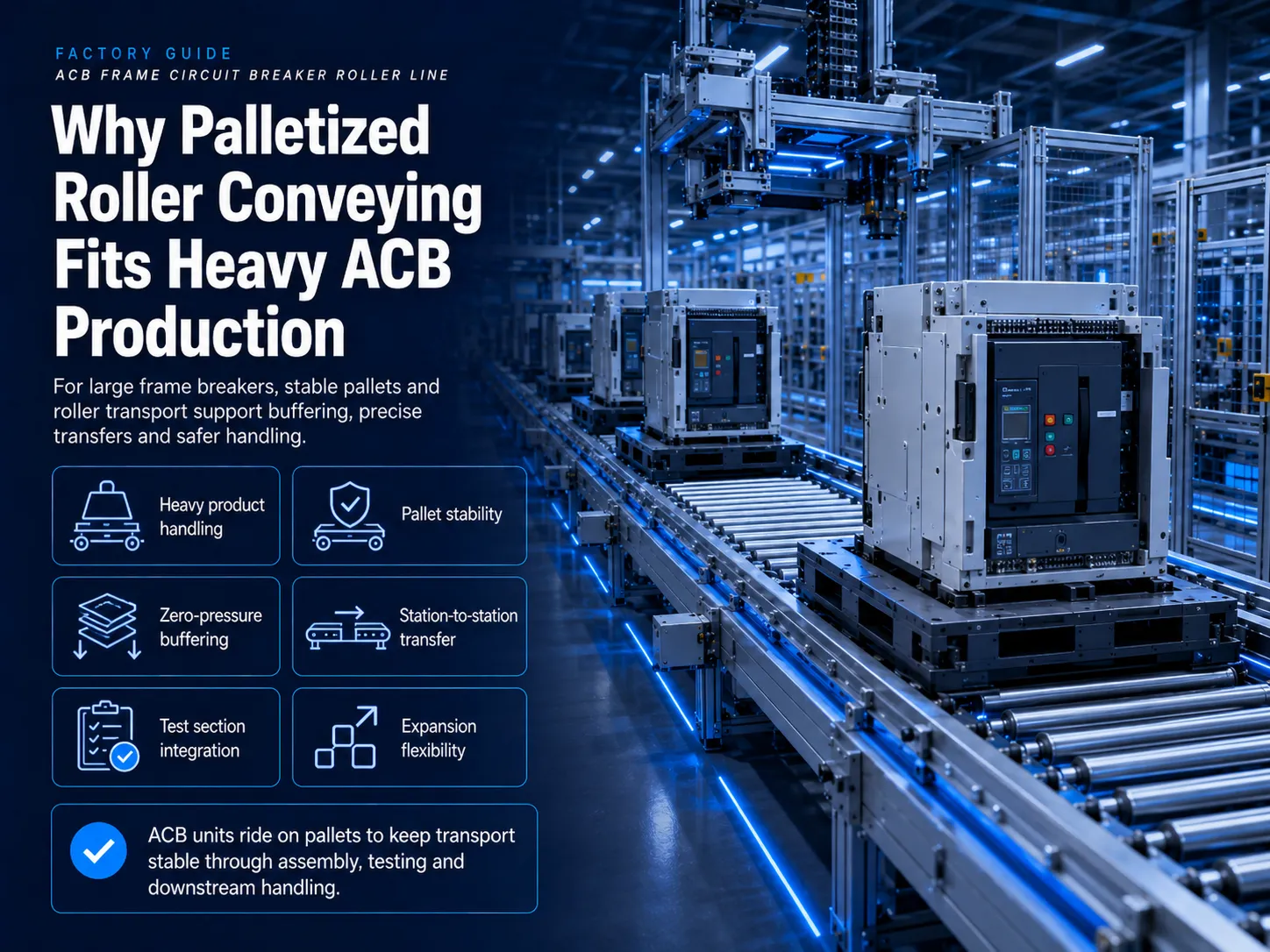
A roller conveyor system with many rolls can be powered by a motor or merely due to gravity. This kind of conveyor is used for the transfer of cargo with a flat and rigid base such as packaging, trays, tooling boards, and even weighty elements. The system of roller conveyor is distinguished by its ability to accumulate products. In a zero-pressure roller accumulation section, the product can collect without any collision between parts. This design makes delicate assemblies get preserved and acts as policy of the product movement in the downstream stations’ operations even when they experience a short stop at the upstream line. MDR zone.
Skeleton frame conveyor line: the precise assembly backbone
The skeleton frame conveyor line, known on Chinese factory floors as a keel line, is a modular flat-top or slat chain running on a rigid aluminium-extrusion frame. The function of the device is to pull the tooling pallets, or fixtures, which keeps the components accurately in place during the manufacturing process. With a rigid frame in combination with a reliable chain, the pallets can be raised, fixed in position, and placed at a station with the possibility for a robot or press to work with an accuracy of a thousandth of an inch. The type of material that was used on the device is resistant to oil, adhesive, and heat that are involved in riveting, gluing, and welding operations. While the belt is used for the purpose of transferring, and a roller – for accumulation, the keel-frame chain is meant for precise positioning.
Double speed chain conveyor: the workhorse of hybrid assembly
The double speed chain conveyor, called a speed-multiplying chain in Chinese, is arguably the most important family for electronics-grade assembly. The pallets move upon rollers powered by a unique chain, and because of the configuration, the pallets go about two to two and a half times faster than contemplated speed of the chain. The beauty of the construction is found in the accumulating aspect: the chain continues its movement without any effect on the product when a pneumatic or servo stopper holds the pallet. Hence, the whole process keeps proceeding freely, making no adverse influence on the product. This constant back-and-forth behaviour is very useful for places with a combination of manual stations and automatic ones, making the cycle times continuously changing or in situations when processes need product ageing and burn-in loops, during which a large quantity of products sits in one batch.
Matching conveyors and conveying systems to your product
The right layout is never one conveyor type from end to end. It is a deliberate blend chosen around the size, weight, cadence, and cleanliness of the product. Here is how the mix changes across the three families of product Benlong equips most often.
Circuit breakers: MCB, MCCB and RCCB lines
Miniature circuit breakers are small, light, and produced at very high cadence, often at a rhythm of around ninety seconds per unit with many short stations and a blend of manual and automatic work. That profile points straight at a double speed chain spine carrying tooling pallets through assembly, with belt feeders bringing in small parts and roller accumulation creating buffers ahead of testing and packing. The inspection and test section deserves special attention, because parallel testing across multiple stations is where a conveyor earns back its cost. Our MCB inspection conveyor does exactly this, and the same conveying philosophy runs through our intelligent MCB automated production line and the dedicated MCB automatic testing line.
The molded case circuit breaker alters the approach to the calculations. The MCCB casing is bigger and heavier, its apparatus may be larger than 200 kilograms, and it involves higher mechanical loads on the stations. The skeleton frame chain will be used here, where roll transfers will be inserted between the segments and any defective device will be diverted from the assembly line. One of the most popular and most costly planning mistakes is making the pallets for heavy breakers both strong and weak, because the choice of the frame for the light MCB pallets will make them unreliable for MCCB devices.
EV charging piles: big, tall, and heavy enclosures
Handling charging piles is an entirely different matter. One unit can weigh up to 200 kg, reach 2 m in height, and cover an area of about 1 sq. m. This means you cannot simply put it onto a conveyor. Because of this, the line of DC charging piles must rely on a highly robust framework, and need to use heavy-duty conveyor systems, high-capacity hoists, rollers to transport the cabinets between the assembly and testing areas, and AGV equipment that helps complete the logistics loop in between the zones. Because the pile goes through the processes of cabinet assembly, mounting of power modules, contractors and relays, laying the wiring harnesses, and at last going through the end line testing, the conveyor system must handle the load with a tall center of mass in a safe and stable manner and deliver products from station to station. Our DC charging pile automated production line combines these conveying elements with robotic handling so that heavy enclosures move through the plant without manual lifting.
Energy meters: small, PCBA-based, and cleanliness-sensitive
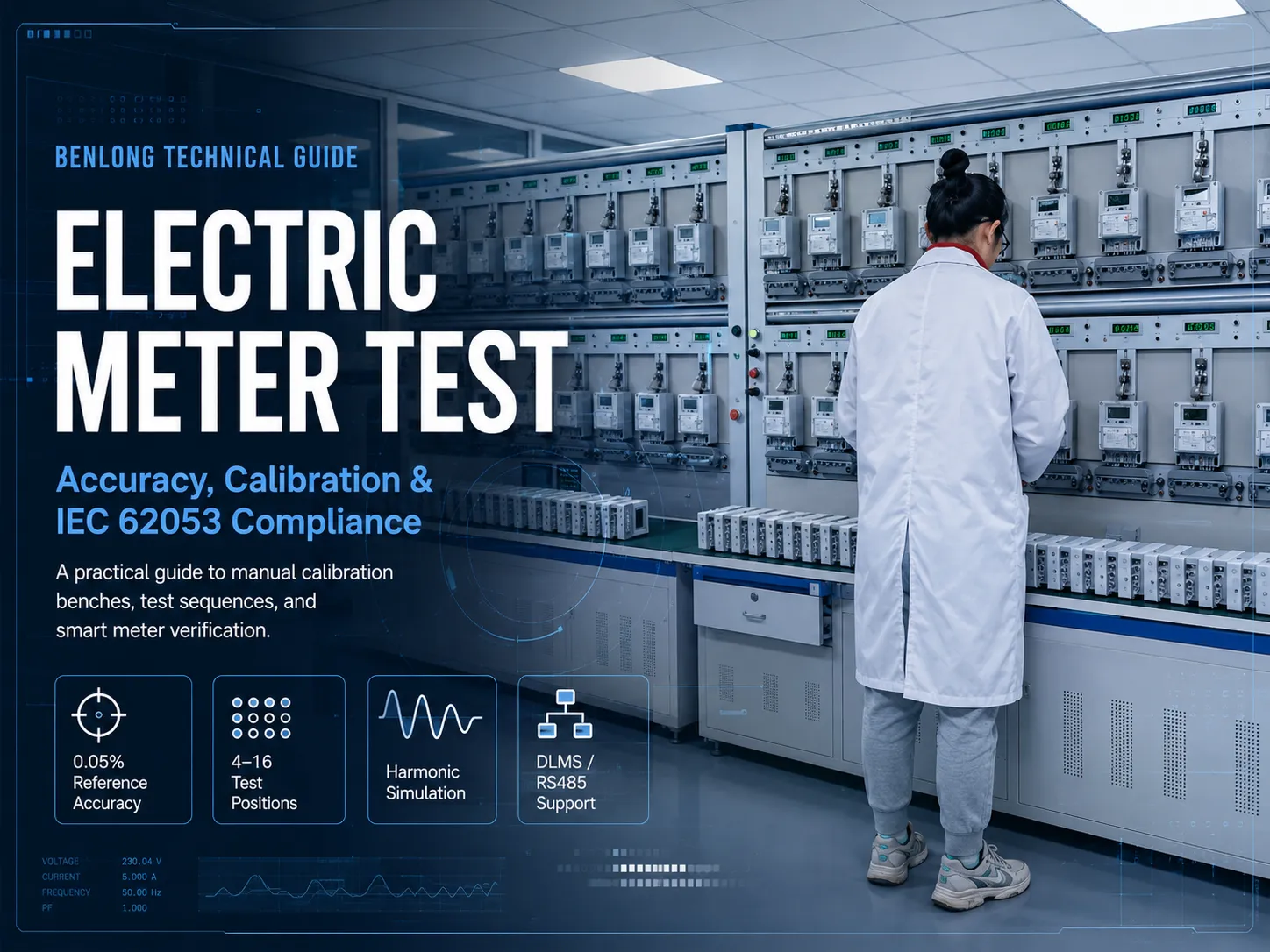
Smart energy meters are completely different from charging stations found in electric vehicles. The gadgets are small in size and are built with complex components involving a considerable amount of static and cleanliness throughout the process of making the product, hi-pot testing, calibration, sealing, and aging being involved. The best solution here is utilizing a combination of anti-static belt sections for gentle handling of exposed boards when assembling, and double speed chain that will help with the assembly and aging process which consists of a lengthy burn-in and reliability tests and will allow accumulating a bulk of devices onto pallets. Our three-phase energy meter automatic production line threads exactly this kind of mixed conveying through PCBA cleaning, high-voltage testing, semi-automatic calibration, and an integrated aging bench.
How Benlong blends several conveying systems into one line
In a real production line, a hybrid system is employed; thus, engineering relies on smoothly transferring goods from one type of conveyor to another. Specifically, the operation of a typical roller conveyor starts with a belt feeder, includes a speed chain system, then progresses through roller conveyor buffers to the testing sections, and finally moves the bigger units to a skeleton conveyor to conduct pressure and capacity tests. The operation finishes with the delivery of empty pallets and packing boxes to the warehouse by an automated guided vehicle (AGV) system. The transition from belt to chain, then to the roller conveyor, and finally to the AGV system creates potential points of failure.
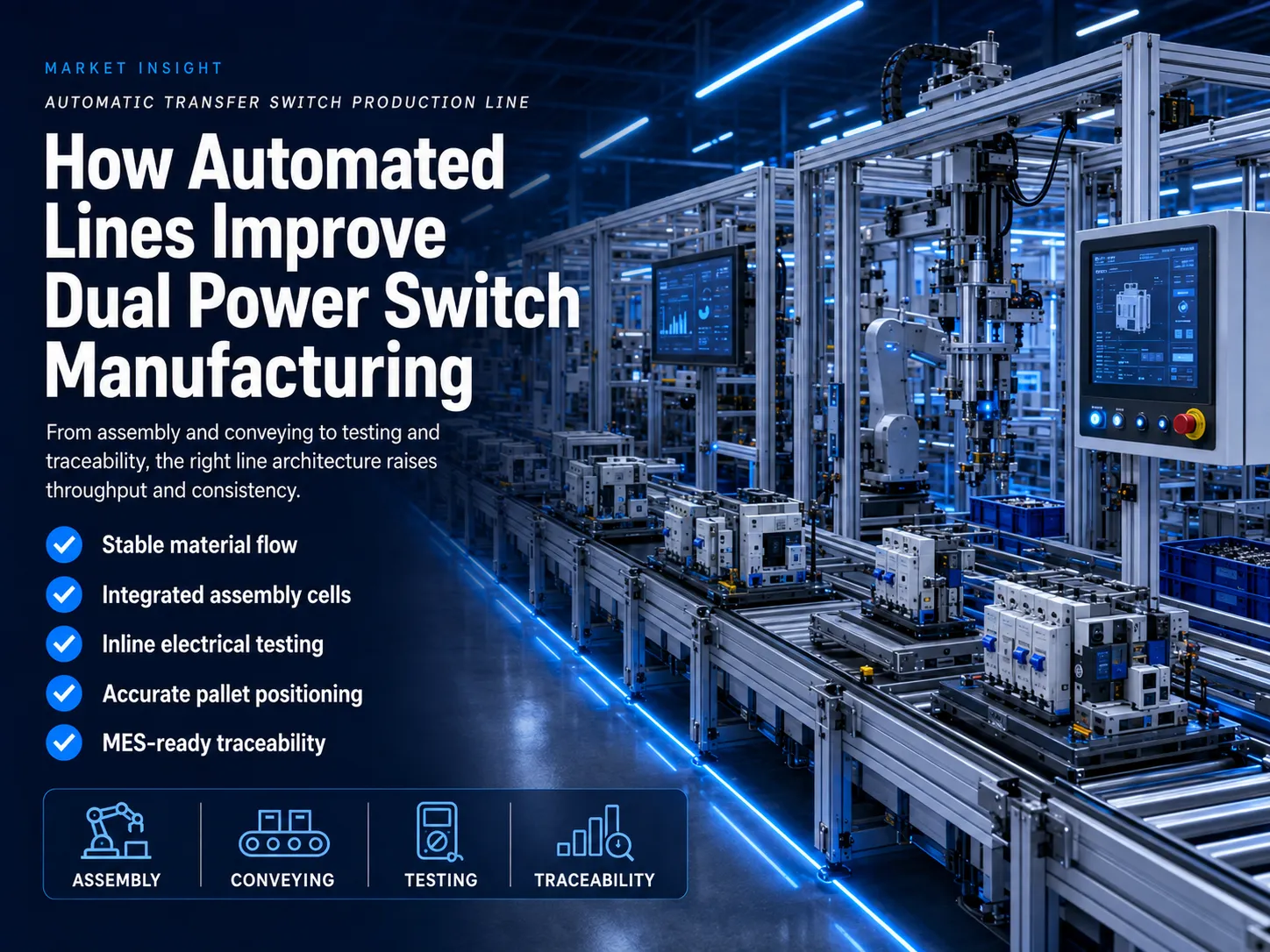
Three things tie the whole conveying layer together. First, a pallet return loop keeps fixtures cycling so the line never runs short of carriers. Second, an automated conveying system is only as good as its control layer, so sensors, a PLC, and servo-driven stoppers coordinate every stop, lift, and diversion in real time. Third, barcode traceability runs the length of the line, linking each unit to its process and test data in the MES from the moment it is loaded. Together these turn a collection of separate conveyors into a single, self-managing flow. This same integration logic drives the robot handling in our robotic system integration work, where the conveyor and the robot have to share a single sense of timing.
Checklist for the selection of a procurement manager
It’s not essential to have a degree in mechanical engineering in order to choose the correct conveyor system for your assembly line. What you have to do instead is answer a few questions that would help your supplier to work out the entire system design. So before making an inquiry about prices make sure that you are capable of providing some information about:
1. Product Characteristics. The requirements for frames and platforms are different for a product weighing one kilogram and the product with the weight of two hundred kilograms.
2. Takt Time and Cycle Time. The volume of production in one shift defines the speed of the conveyor chain and the number of working tests in parallel.
3. Manual vs Automated Ratio. A conveyor operated by people and robots will normally require a chain running twice as fast.
4. Accumulation Requirements. A conveyor has to allow product accumulation.
5. System Footprint. Conveyor turns, descents, elevators, and the application of side conveyors define the choice of the type of conveyor system applicable to certain sections of the system.
6. Environment. Pay attention to the environment where your product will work. Some components are sensitive to static.
7. Traceability. Think about barcoding technology early in advance.
8. Flexibility Potential. It is better to choose a conveyor system that can change the operation mode.
The importance of selecting the right conveying solution
Most conveying issues stem from planning rather than hardware problems. There are several mistakes made in conveyance that are easily avoidable.
The most common mistake is selecting the same conveyor system throughout the system to make operations easier. While this may seem sensible, using the wrong conveyor for an application causes problems in the long run. One case of this is where a conveyor belt is used to place a pallet or a keel frame is used for transporting tools. Secondly, there is the failure to take into consideration accumulation; this means that if one of the stations stops, all the upstream and downstream stations will stop too. The third mistake is undersizing the pallet type and frame for heavy items. This will no doubt lead to problems with location accuracy. The fourth mistake is forgetting about the return loop. When this is done, workers are forced to carry the elements back manually. The fifth and quite a common mistake is treating the conveying system as something secondary to all other equipment. The conveying choice should be made before everything else because everything else depends on the correct conveying choice.
Why are the right choice of conveyance so important for high-volume manufacturers?
Wholesalers operating on rapidly developing markets such as India, Turkey, and Brazil have the time of their lives. It’s because all the orders they get are big and repeating; thus, the productivity of the business is dependent on the type of conveyor. Failure to use the right conveyor will cause frequent stops leading to losses which will not be visible in numbers. Moreover, it is crucial to have some flexibility and to use the specialized conveyor system to be just one line serving several product lines.
Choosing the right conveying partner
Conveyor belts, rollers, skeleton frame and double speed chain are not alternatives but complementary components in a perfectly designed production system. Each element in that production process must be in the right position to optimize productivity. In practice, an experienced integrator must provide an optimal point of component hand-off and use right mechanisms of monitoring in order to achieve the necessary coordination and control of the process. For any manufacturing facility providing production of circuit breakers, electric vehicle charging stations or energy meters finding this perfect blend is one of the most important tasks as it defines the limit of throughput level for the entire operation of the mechanism.
Benlong Automation has created the mixed conveyor systems for low-voltage electrical manufacturers since 2008, beginning with the spines for simplified MCB assembly and ending with complete automated lines for the production of charging stations and controllable energy meters. If you are working on a new production line or optimizing the existing one, our specialists are ready to consider all possible conveyor solutions suitable for your product and capacity requirements.