benlong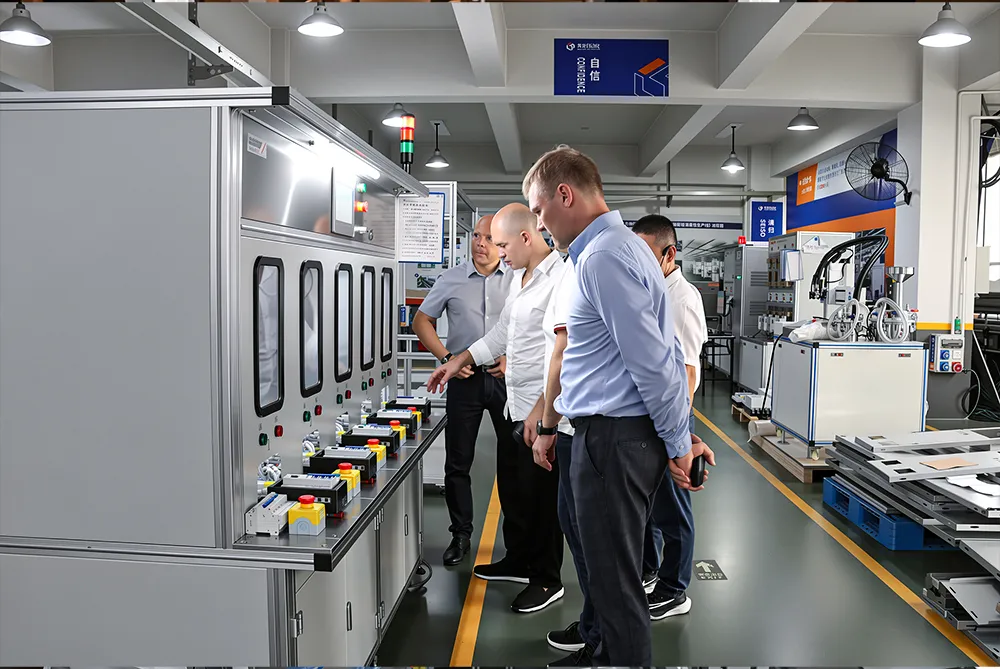
Robot Integration for Circuit Breaker Automation | Benlong
The global shift toward automated manufacturing has turned robotics system integration into one of the most searched-for capabilities among factory owners and procurement managers in the low-voltage electrical industry. What should the manufacturers of residual current circuit breakers, residual current devices, air conditioning circuits, MCBs as well as industrial robotics tackle for the automation of their operations? They have gone beyond the question of whether to automate in order to comprehend how to create an integrated process that employs industrial robots, parts feeders, sensors, and controllers on an automated line.
In this article, we have a close description of robotics systems integration, the reasons why India, Turkey and Brazil take notice of this technology, and the companies which produce the industrial robotics technologies that Benlong Automation uses in its processes. We have also described the application of this technology in the assembly of MCB handles that is an illustrative example of current practices in the industry.
Defining the Concept of Robotics System Integration
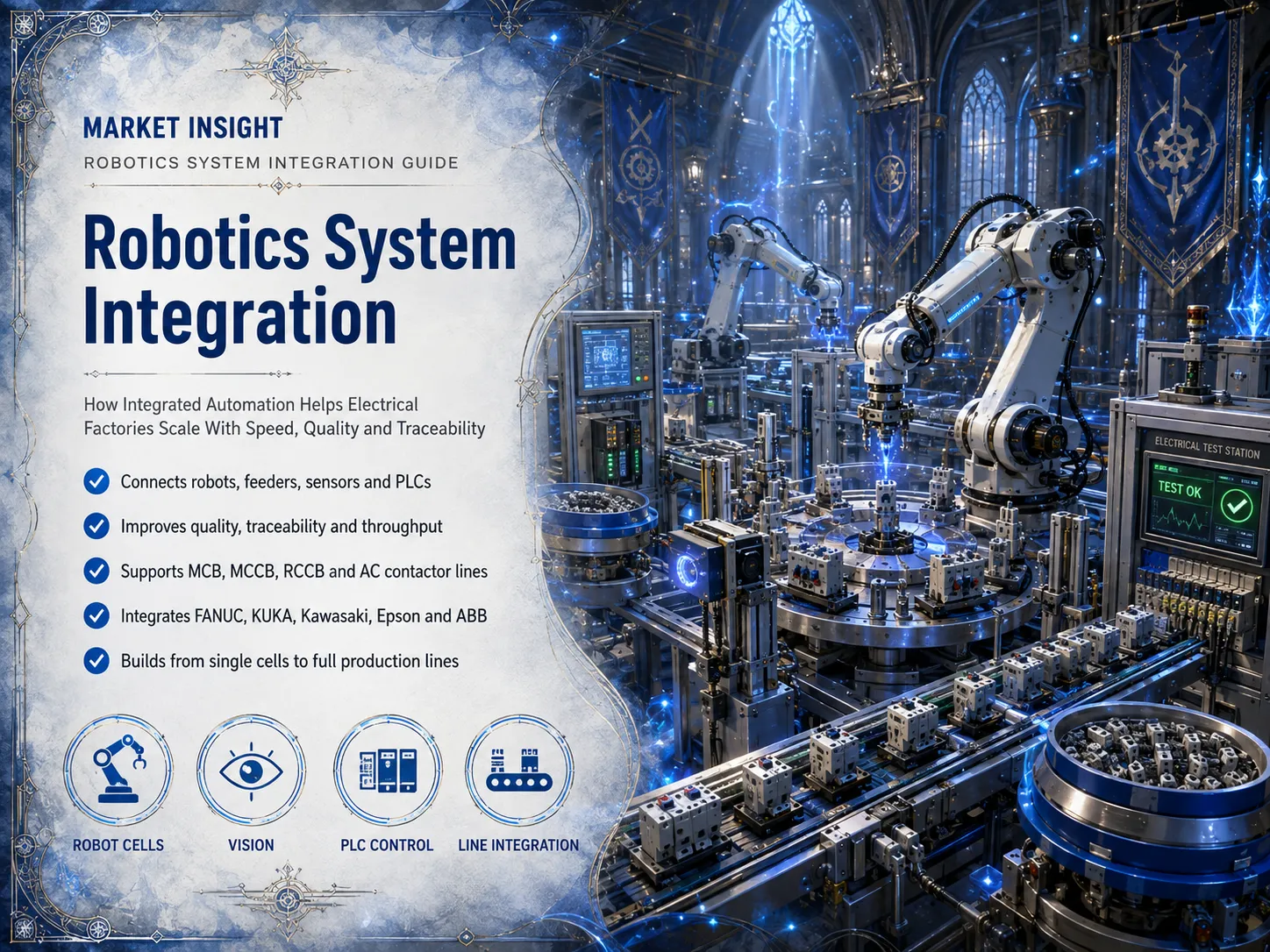
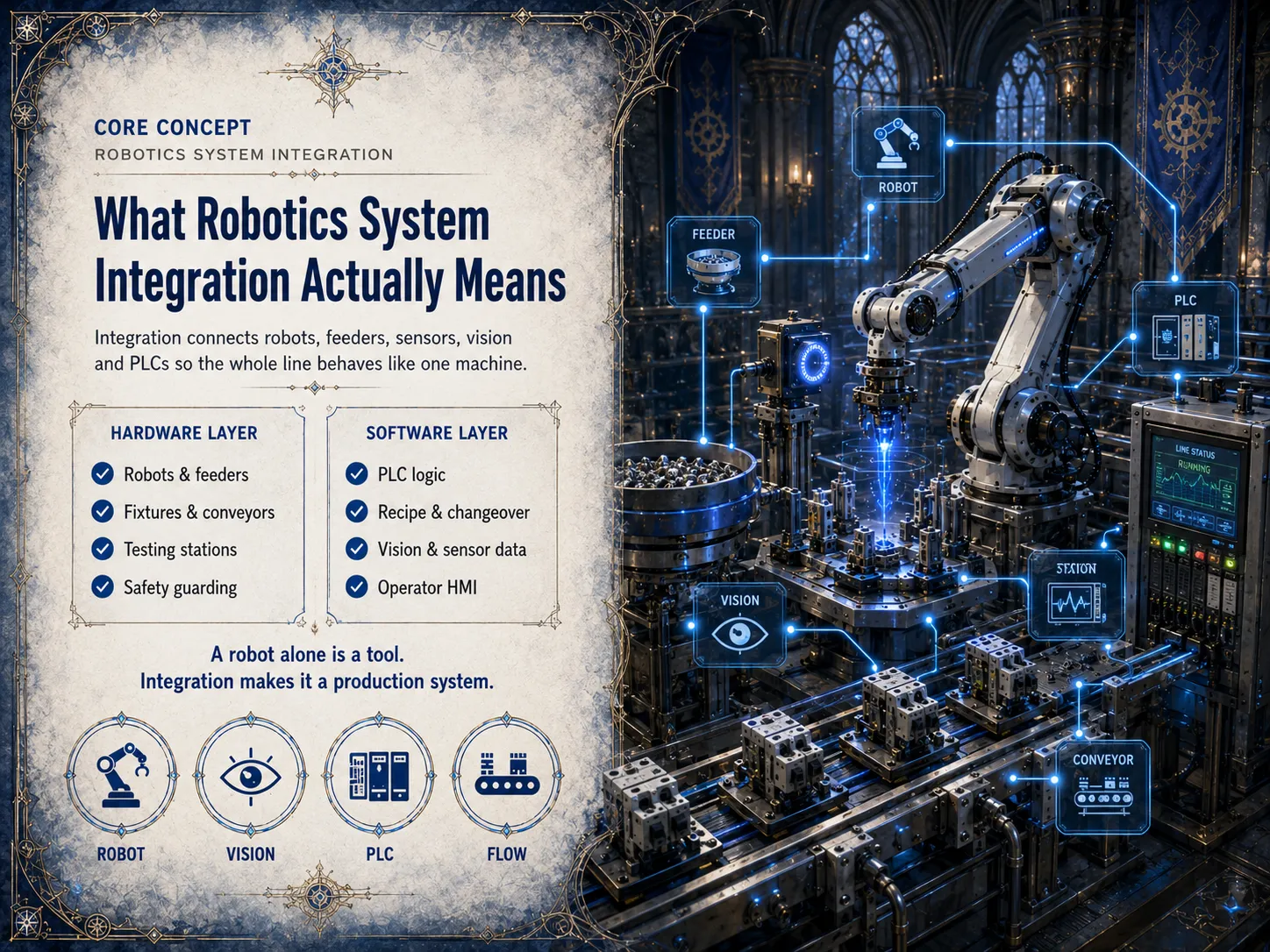
In simple words, robotics system integration refers to the technical process of linking industrial robots to other components of the production process in such a manner that it works as one unit. Often, a robot arm per se is almost useless. Its true value comes out only when it is put in the right place, programmed for a certain function, equipped with proper component-handling devices, directed by sensors or cameras, and managed by a central controller telling each link in the production chain when to start working. The company that designs this coordination, writes the control logic, builds the mechanical framework and commissions the finished line at the customer’s factory is acting as a robotics system integrator.
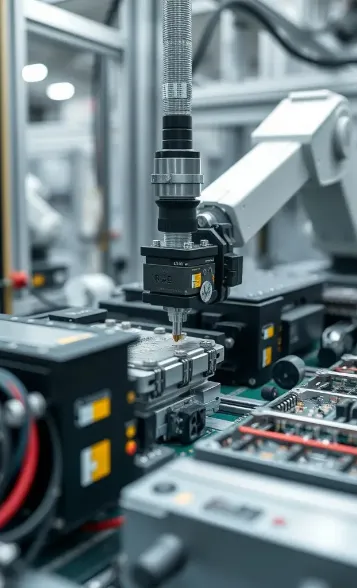
For a low-voltage electrical manufacturer, combining robotic pick-and-place or material handling arms with components like vibratory bowl feeders, precise machinery, riveting or welding stations, testing benches, or marking machines is usually the case. The robot does not work in isolation, but in conjunction with other devices—what makes the difference is how the latter are integrated. This is why buyers should think less about the brand of a single robot and more about the quality of the robot system integration behind it.
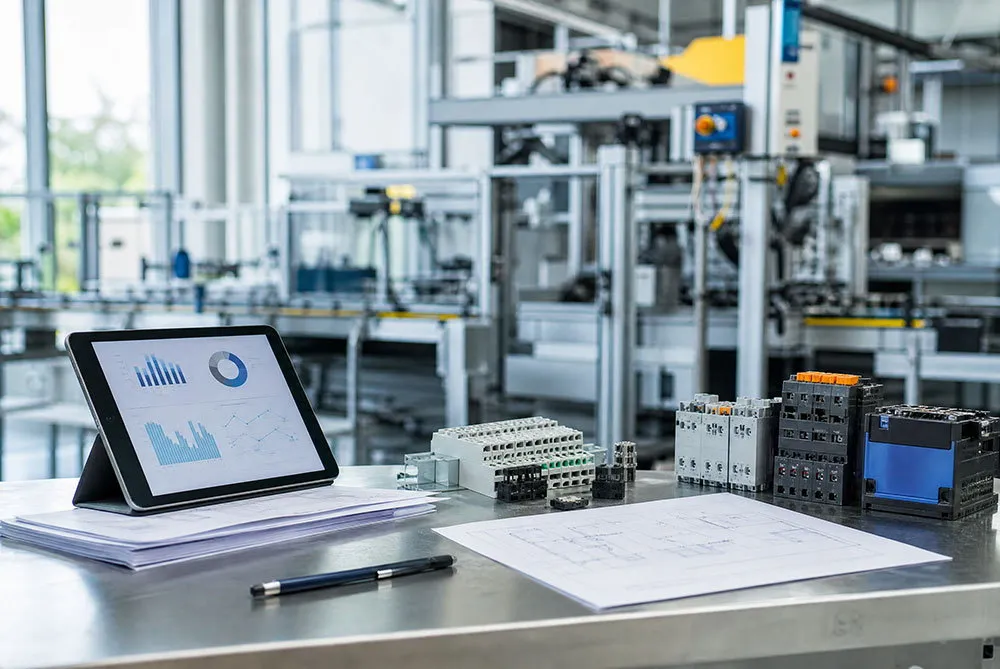
It may be useful to think of integrated line as being made up of two levels. The hardware level is made up of equipment that can be seen – robots, feeders, fixtures, conveyors, testing stations, and safety guards. The software layer is made up of the elements that cannot be seen and that consists of the PLC logic, recipe and changeover management, sensor and vision data, and the interface that allows the operator to control the system from a single screen. A weak hardware level is a source of a machine that is unreliable, while a weak software layer gives rise to a machine that cannot be used at all. Strong integration means doing both things correctly, but this is much more complicated than just sticking a robot to a table.
Why Electrical Factories Are Investing in Robotics Integration
Rising labor costs and the decline of the skilled assembly workforce are the two leading triggers. A manual handle-link or contact-riveting cell can require five to ten workers at every shift while a good robotic cell can achieve similar results with one or two operators managing the process. Labor savings alone will help recover investments for two- or three-shift operations in less than a year, which explains why many circuit breaker plants start moving towards automation with this type of equipment.
Quality and traceability are another important factor. Export markets are ruthless: a lot of circuit breakers failing an audit in Europe or certification check in the Gulf may mean losing the entire contract for the manufacturer. Automated lines register all cycles, reject defective assemblies, and provide a traceable history of data supply that cannot be achieved on manual lines. For factories shipping to India, Turkey, Brazil, and the Middle East this is a necessity and not a luxury.
The third driver is throughput. When order volumes grow faster than a factory can hire and train people, automation system integration is often the only way to scale without a proportional rise in headcount and error rate. A properly integrated robotic line delivers predictable cycle times, uniform quality, and the ability to add capacity by replicating proven cells rather than reinventing the process each time a new order arrives.
The Robot Brands Benlong Automation Integrates
The design choice of the robot in Benlong Automation’s line for a big customer depends on the robot application, load, operating speed, and, quite often, customer requirements. Very many multinational companies already prefer using certain robot brand in their production units around the world and require Benlong to select a robot matching their choice from the point of spare parts availability and improved training of personnel. This is the reason for Benlong to work with all popular robot platforms, instead of relying on specific supplier. The brands that have been most often used by the company are FANUC, KUKA, KAWASAKI, EPSON and ABB.
FANUC
FANUC, the Japanese manufacturer known for its bright yellow robots, has one of the largest installed bases globally and is celebrated for its reliability, longevity and various models capable of serving different purposes, from compact tabletop robot arms to powerful heavy-handed models. FANUC models are reliable for uses such as high-speed picking, which is why the company is popular with customers seeking a robot that would be able to operate continuously with minimal downtime.
KUKA
KUKA, the German company famous for its orange robots, established its reputation in car manufacturing, thereby bringing its experience of manufacturing flexible heavy-duty articulated robots into the manufacturing industry. KUKA robots are widely used in tasks involving long distances to reach, large work areas, or a need to coordinate the movements of several robot arms. KUKA also has a flexible programming and controlling platform that is very popular among customers.
KAWASAKI
Kawasaki Robotics is one of the pioneers of the robotics industry. Its robots are known for their robust construction and versatility, as they are capable of performing various tasks such as the distribution of items, assembly, etc. Manufacturers that seek a reliable robot that is backed by a global service network will choose Kawasaki Robotics.
EPSON
Epson is associated with SCARA and six-axis robots, which work particularly well in the assembly of electric components. Components such as the switches are tiny and need to be placed accurately fast, which is the exact strength of Epson robots.
ABB
ABB is an engineering group based in Sweden. ABB IRB robots are made available for almost every manufacturing industry, and their programming is facilitated by excellent ABB programming simulation software.
The essence of the matter is not that one technology is better than the others. Rather, the idea of system integration is about choosing a robot for each application and ensuring that the entire process of assembly works smoothly.
Common Robotic Tasks on a Circuit Breaker Assembly Line
New buyers of automation usually think of an automaton doing the entire operation. In fact, robots perform only a few specialized functions while specialized stations accomplish the detailed tasks. Knowledge of this separation is essential for procurement departments to define the project properly.
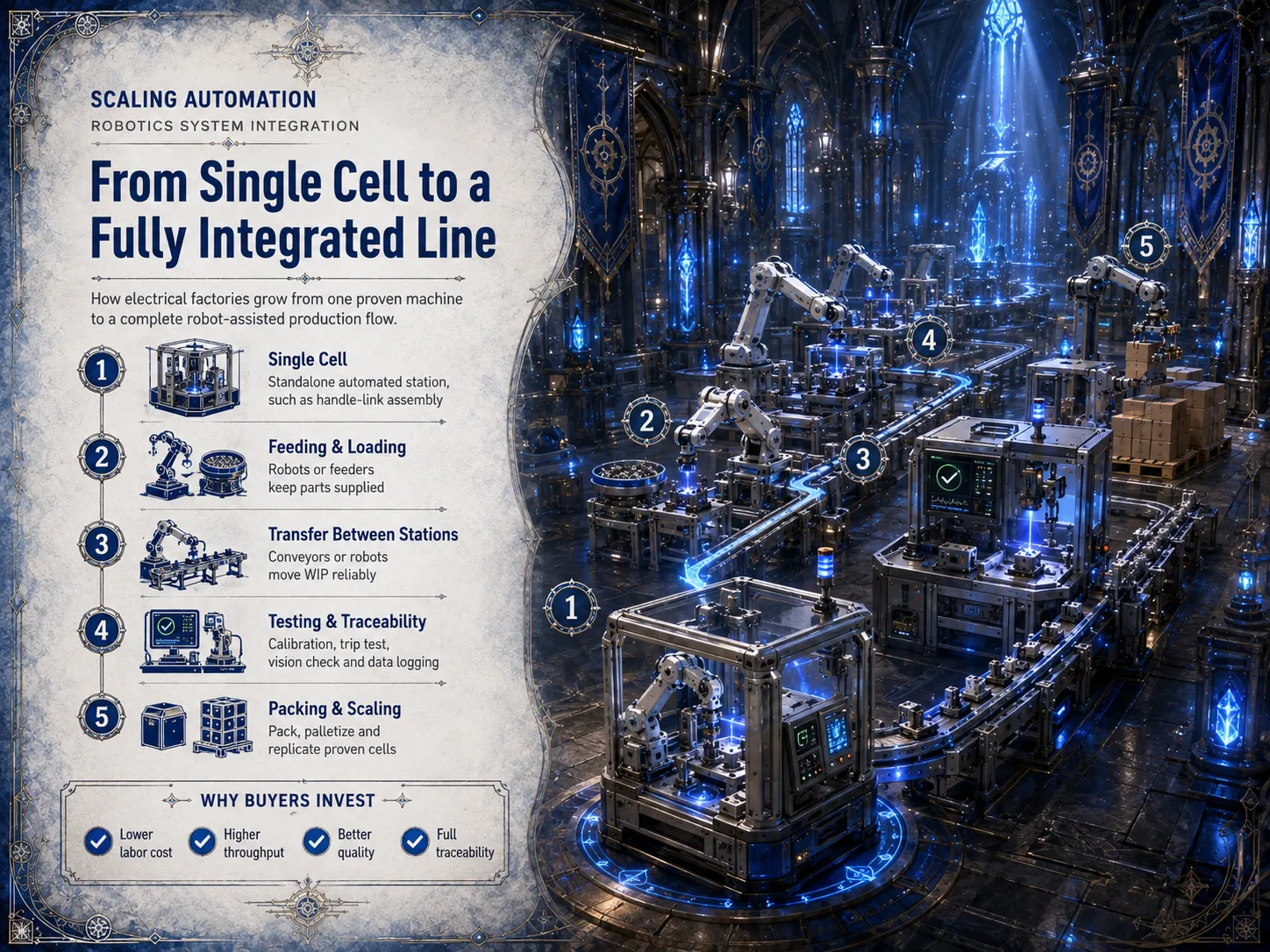
The most frequently performed functions of robots in electrical assembly lines are material feeding and loading in terms of which the robot’s arm is in charge of feeding devices and filling magazines in order to ensure that the line is always supplied with materials; machine tending means either loading or unloading parts from the station of assembly or molding; transfer means that the robotic device will move the items being manufactured from one process to the next instead of a conveyor belt or operator; test handoff involves handing finished products over to a device doing testing and accrediting; and end-of-line palletizing and boxing, which refer to the operations of stacking, boxing, and labeling of approved breakers. Considering that good integrators assign all of these roles to the least expensive and reliable solution, such tendencies will frequently involve a robot being used when simple loader or conveyor will be enough.
The Hidden Value: Data, Software and Machine Vision
The most ignored benefit of embedding robots is data itself. Each robot action, sensor reading, or rejection made is captured and logged with a time stamp, and tracked to a specific device. This essentially transforms the production line into a gold mine of records for a manufacturer of circuit breakers, in that it can now provide information about yields per shift, defects per station, and detailed records of the production history for every circuit breaker that was produced and shipped. So when an overseas customer requests information, complete with documentation of the operation of being exported, it is now available at the touch of a button.
Machine vision has already joined the trend. A camera operated by a robot can check if the handle is positioned properly, a spring in the assembly is present on the correct place or if the marking on the block is easily seen. The need for manual inspection disappears thanks to photo-guided work cell.
Robotics Integration in MCB Handle-Link Assembly
To see how these principles work in practice, consider one of Benlong’s proven stations: the MCB handle-link automatic assembly machine. This machine assembles the operating handle and metal link of a miniature circuit breaker using a precision rotary indexing table, dual vibratory bowl feeders, integrated sensors and an automatic reject mechanism. It runs at 30 to 50 assemblies per minute, replaces three to five manual operators, and rejects defective units before they move downstream — delivering the kind of consistent output that manual assembly cannot achieve.
On its own, this is already a highly automated cell. Within a larger integration project, a robot can be added to load handles and links into the feeders, to transfer completed assemblies to the next station, or to palletize finished breakers — all coordinated by the same PLC. That is the essence of robotics integration: taking a capable standalone machine and weaving it into a continuous, robot-assisted flow that needs almost no manual handling between stations.
From a Single Cell to a Fully Integrated Line
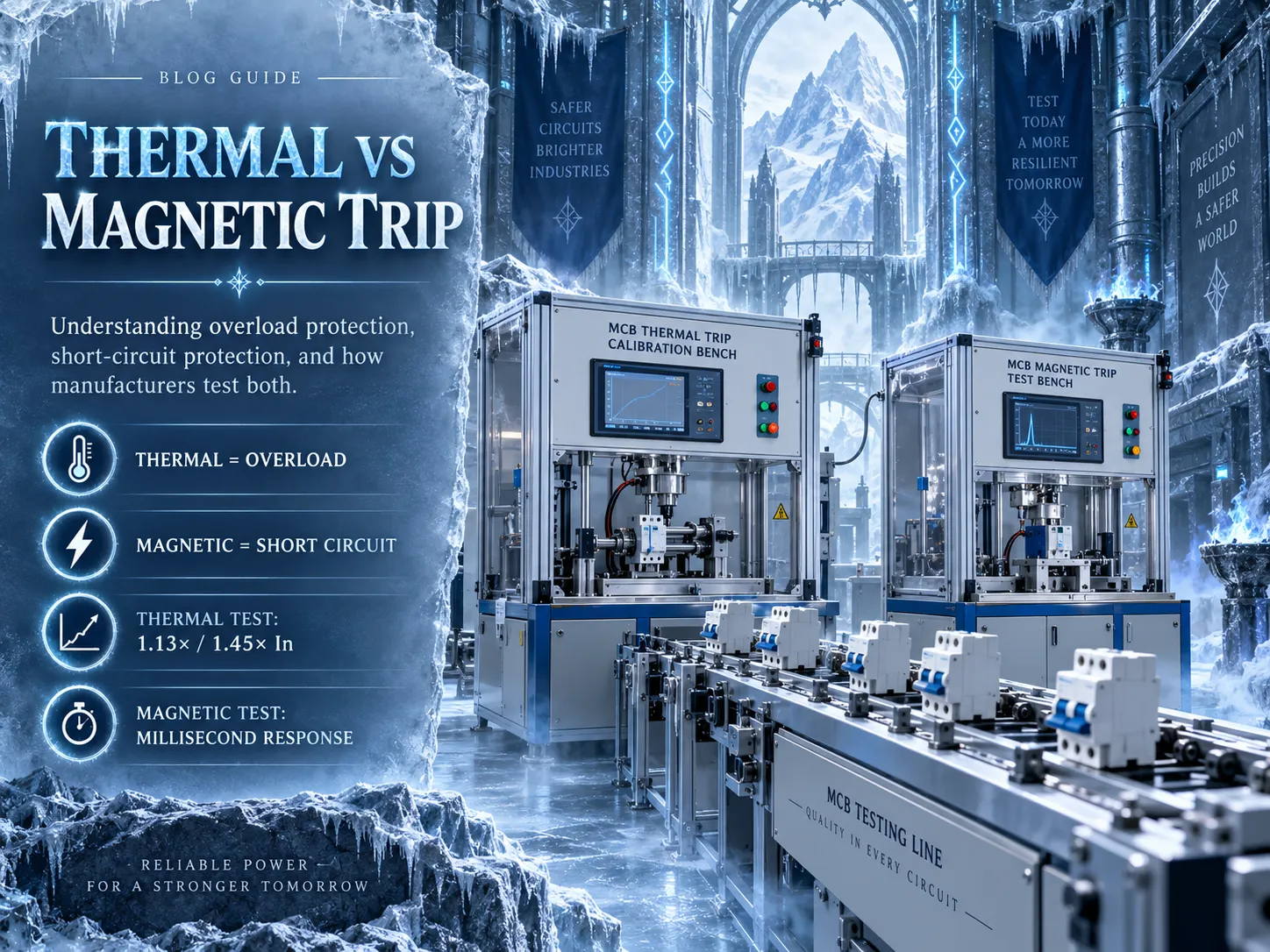
A handle-link station rarely lives in isolation. In a complete circuit breaker plant it sits alongside contact riveting, arc-chute assembly, calibration, magnetic and thermal trip testing, laser marking, and sort-and-pack. Benlong’s MCB automatic assembly line integrates these operations into a single continuous flow, with robots and conveyors moving parts between stations under central control.
Deciding how much of that line to automate is a genuine business question, not a foregone conclusion. Some manufacturers benefit from a fully automated line with two operators per shift; others are better served by a semi-automated configuration that keeps certain manual steps to hold down capital cost. Benlong’s comparison of fully automated versus semi-automated assembly walks through the trade-offs, so buyers can match their level of automation to their volume, budget and product mix before committing to a design.
How to Choose a Robotics System Integrator
The robot is a commodity; the integration is not. Two integrators can use the identical FANUC or ABB arm and deliver very different results, because the real value lies in process knowledge, tooling design and control engineering. When evaluating a partner, buyers in the electrical sector should weigh a few factors carefully.
Domain expertise matters more than sheer size. A generalist integrator that mostly builds automotive lines may not understand the quirks of circuit breaker components, whereas a specialist that has built hundreds of MCB and MCCB lines will anticipate problems before they appear. Benlong’s focus on low-voltage electrical manufacturing since 2008 is the kind of domain depth that shortens projects and reduces risk — a point explored further in its guide to choosing a custom automated assembly machine manufacturer.
-
Flexibility in brand – readiness to consider FANUC, KUKA, Kawasaki, Epson, ABB or the customer’s ordinary standard, rather than insisting on only one brand.
Full scope – any engineering, tools, software, testing and integration all implemented by one company.
Proven output and efficiency on similar products confirmed with acceptance tests.
Global service program – spare parts supply, diagnostics and service for customers who cannot afford long downtimes.To be a qualified partner, one should show working machines, provide realistic cycle times, and do a comparative analysis of ROIs for manual and automated production on client’s product.
Why Overseas Buyers Are Driving Demand
Most of the demand at present comes from manufacturers who export goods. In India, a rapidly growing number of MCB and RCCB manufacturers are in urgent need of boosting output and quality simultaneously in order to carry out projects of national infrastructure and orders abroad. In Turkey and Brazil, manufacturers with long history are modernizing old manual lines to remain competitive in the market of low-cost imports and meet the growing standards for quality of goods. For all of these companies, integrated robotic automation offers the same benefits: increased productivity, smaller number of defects, lower cost of labor and required level of traceability to satisfy the demands of international buyers.
Working with a foreign integrator raises a lot of practical issues, and customers are right to consider them in advance. Remote commissioning, clear acceptance procedures, documentation in English, video operator training and guaranteed terms for spare parts supply become issues of importance when you work with a company located thousands of kilometers away. This is when the experience of the specialized manufacturing company comes in handy.
Conclusion: Integration Is the Real Competitive Edge
Robots integration is an important step for manufacturers of circuit breakers and low-voltage electrical equipment to turn the gathering of effective robots into the production line, producing certified products. The manufacturer of robots — FANUC, KUKA, Kawasaki, Epson or ABB — is much less important than the engineering solutions applied. Benlong Automation was able to design, construct and implement assembly and testing lines using a particular robot platform that fits the task perfectly no matter how complex it could be — from production of single-doorkey switches to the entire automatic assembly of MCB.
If you wish to implement an automation project, the first step is to get in touch with Benlong’s engineering team and share with it your product and expected output. Using this information, the engineers will develop the most optimal solution and will perform the full comparison of returns on investment of manual and automated production.
Huang Xiaolei | Benlong Automation