benlong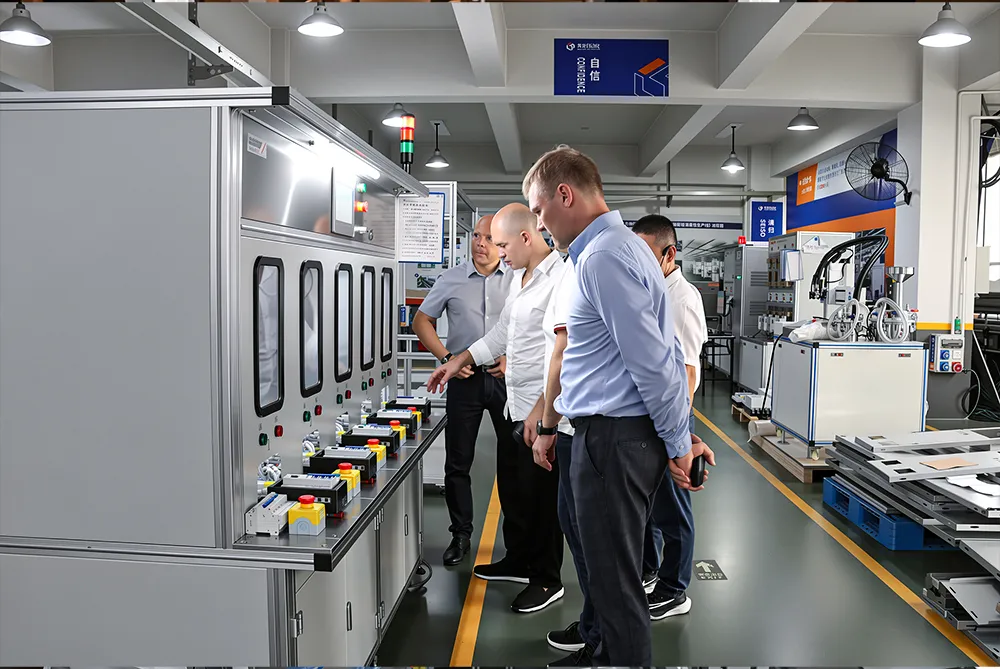
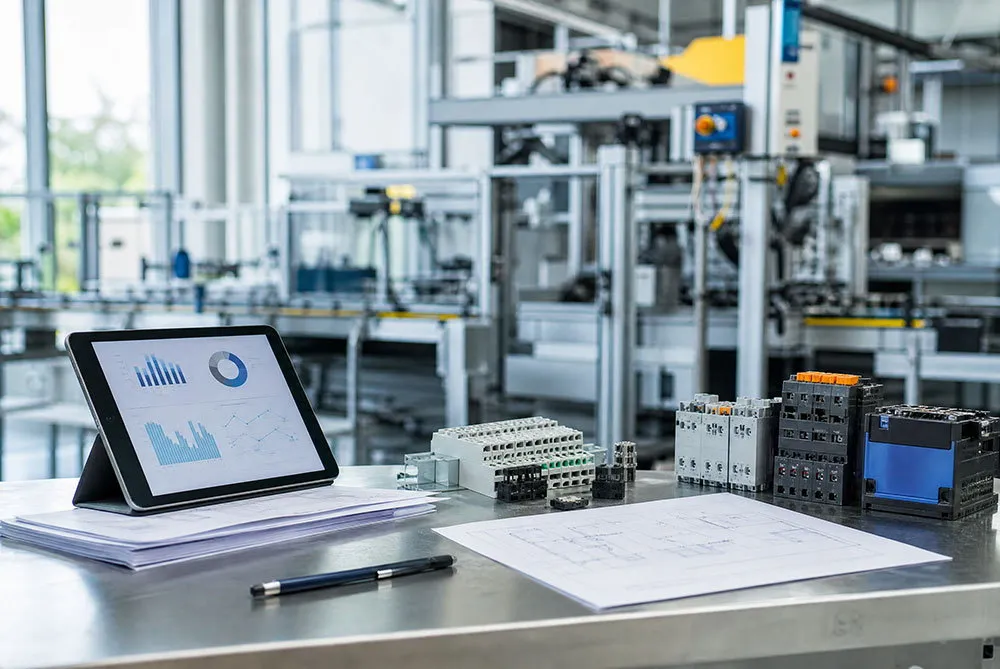

Circuit Breaker Manufacturers: The Automation Guide for New Producers
The market for low-voltage protection devices keeps expanding as electrification, construction, renewable energy and data-center growth all pull in the same direction, and every one of those circuits needs protection. For a company with capital and manufacturing experience, becoming one of the region’s circuit breaker manufacturers is an attractive move: the product is standardized enough to scale, the demand is structural rather than fashionable, and the barriers that once protected incumbents are increasingly about production capability rather than brand. But entering this field is not the same as entering a typical assembly business. A circuit breaker is a safety-critical device certified to strict standards, and the way you build it determines whether you can pass those certifications, win serious customers, and make money at scale. This guide is written for companies preparing to enter circuit breaker manufacturing, and it focuses on the decision that shapes everything else: how you automate production.
Why Circuit Breaker Manufacturing Is Not an Ordinary Assembly Business
It is tempting to think of an MCB or MCCB as a small plastic-and-metal product that a reasonably equipped factory could assemble by hand. Many small workshops do exactly that, and it is precisely why so many of them stay small. A circuit breaker has to trip reliably at the right current, within the right time, thousands of times over a service life measured in decades, and it has to do so after being manufactured in the millions. That combination of safety-critical performance and mass volume is what separates serious circuit breaker manufacturers from workshop-scale assemblers.
Three characteristics make this product category unforgiving. First, every single unit must be tested, not sampled, because a breaker that fails to trip is a fire or an electrocution rather than a cosmetic defect. Second, the performance depends on precise calibration of the thermal and magnetic trip elements, a step that is difficult to do consistently by hand. Third, the product is governed by standards such as IEC 60898 and IEC 60947, and increasingly by customers who demand documented, traceable test data for every unit shipped. A company entering this field is therefore not just buying assembly capacity; it is buying the ability to produce a certifiable, traceable, consistently performing safety device at volume. That ability is what automation delivers, and it is why the automation decision cannot be an afterthought bolted on once the factory is running.
Breaking Into The Industry
A lot of companies have gotten themselves into trouble because they didn’t realize what challenges they would face when entering the PAC world. The understanding of these challenges can provide a significant competitive advantage and help prevent mistakes that end up being expensive.
The first issue that arises for new makers is high production costs right away. The new players are going straight–up against established businesses that operate in the black for a long time and therefore have mastered their production processes. Thus the newcomer who relies on manual assembly will start with a disadvantage. The second issue is the problem of availability of skilled manpower. Manual adjustment and testing require professionals who are expensive and hard to find in a new operation. The third is the issue of quality consistency, where most newcomers fail; manual assembly can provide an acceptable first lot, but then the quality might drop. The fourth issue is certification. The serious customers now expect to have unit test records that are formally impossible to prepare using manual processes. Finally, it is a question of competition and delivery; the customers expect low cost, high quality of products, customization, and a high speed of delivery, and those four needs can only be satisfied by an efficient production line.
It should be noted that a common thing about these challenges is that they are much easier to solve in advance with the right type of production system. This is the major advantage of newcomers over the older established companies since the issues with the production will need to be addressed one way or another.
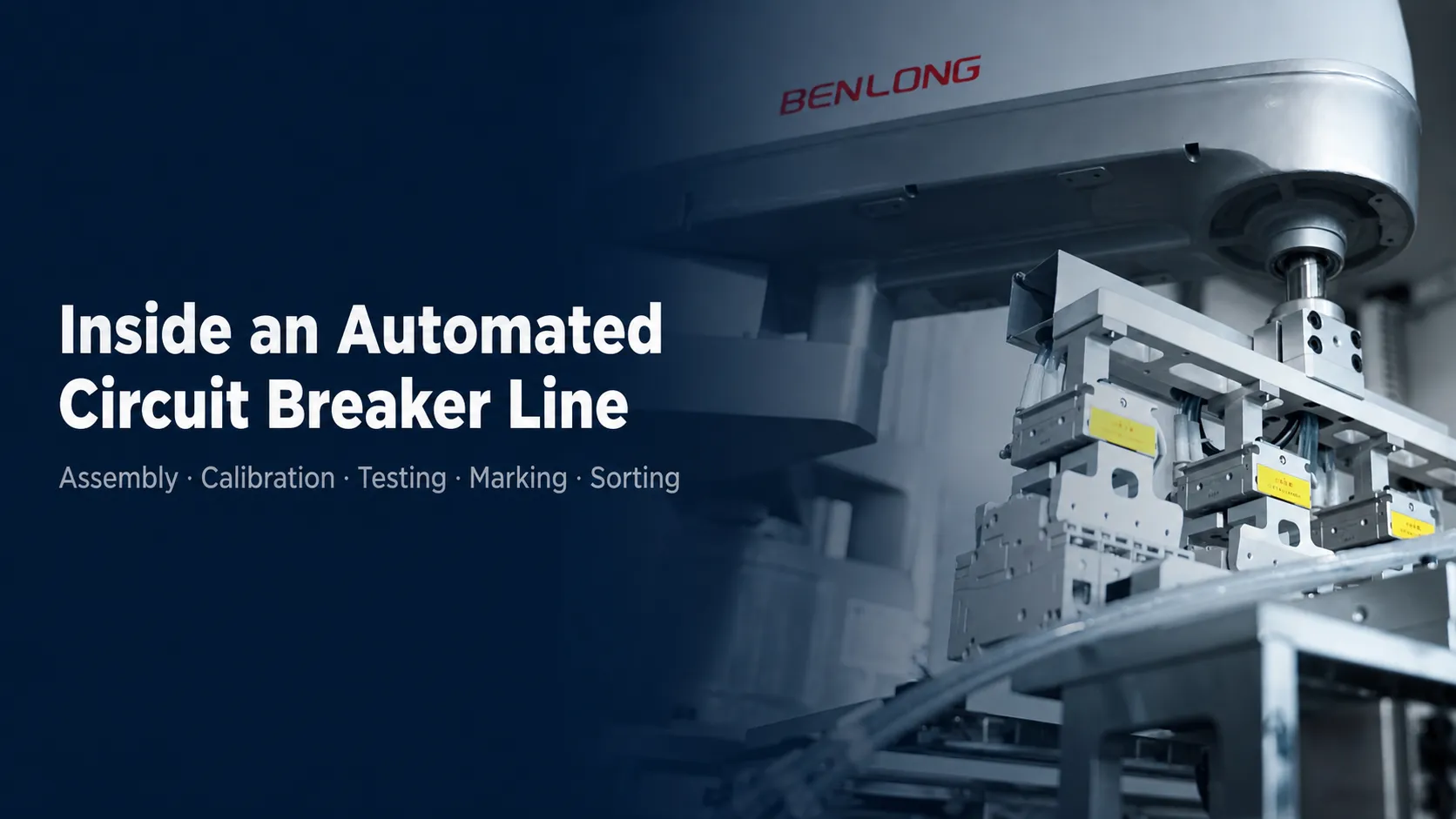
What an Automated Circuit Breaker Production Line Actually Does
To plan an entry sensibly, a decision-maker needs a clear picture of what an automatic circuit breaker production line replaces and how it is structured. A full line for MCBs generally covers a chain of stages, each of which is a source of manual error when done by hand.
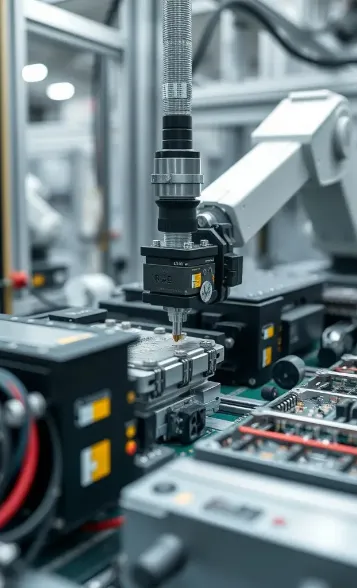
The procedure of parts feeding and assembly is what makes it possible to bring the setup of mechanism, contacts, bimetal strip, arc chute, and housing together with precision repeatability. Riveting and welding connect the units with the required measure of accuracy. It should be noted that the process of calibration is the “heart“ of the whole line because it is through it that the qualities such as thermal and magnetic trip characteristics are set and guaranteed in an automatic mode. This is the only step that ultimately determines the reliability of the circuit breaker manufacture. Testing is the next step to come after calibration, which means testing every circuit breaker for the parameters such as tripping time, instantaneous trip, dielectric strength, etc. Laser marking serves to provide the circuit breakers with permanent identification. When the testing is over, the automated sorting process comes, at which points the circuit breakers are separated into conforming and non–conforming ones and the data is recorded with the corresponding serial number. One very important conclusion that the companies entering the market can learn is that it is not the raw speed of assembling the circuit breakers that counts. The point is that they need to understand the essence of testing and calibrating because the companies should realize that automation can produce maximum advantages especially in these stages of circuit breaker manufacture.
Full Automation or Phased Entry?
A well-funded new entrant faces a genuine strategic choice: build a fully automated line immediately, or phase automation in as volumes grow. Both are defensible, and the right answer depends on your target market and starting volume.
Starting with a semi-automatic circuit breaker assembly line and automated testing benches lets a company enter at a lower initial investment, prove its product in the market, and build volume before committing to a fully integrated line. The critical point is that even a phased entry should automate calibration and testing first, because those stages protect certification and quality from the very first batch. Assembly automation can follow once volume justifies it.
Starting with a fully automated MCB automatic production line makes sense when a new entrant already has committed volume, for example an OEM contract or a captive demand from within a larger group, because the line pays back fastest when its capacity is matched to demand that is already waiting for the output. A company with capital and a clear volume target often finds that the full line’s lower cost per unit and superior data capability justify the larger upfront commitment. Either way, the equipment should be designed to expand station by station, so that a phased entrant is never forced to replace a line, only to extend it.
Choosing an Equipment Partner: General Integrator or Product Specialist
After the automation strategy is established, the newcomer must decide on the builder of the assembly line, which is a more important decision than it seems. A regular automation integrator can build a good assembly line for many products, but circuit breaker assemblies and testing comprise a narrow specialization. The challenges of calibrating thermal magnetic release, testing tripping characteristics against IEC standards, and logging every pole for certification are processes unique to this product and do not come up for normal integrators too often. Therefore, in most situations, newcomers have to hire a general integrator and pay for their education in this field.
A product specialist arrives with that know-how already built into the line. Benlong Automation, based in Wenzhou, China, builds semi-automated and fully automated assembly and testing lines exclusively for MCBs, MCCBs, RCCBs, AC contactors and SPDs, which means the calibration logic, test parameters and data-traceability structure are already developed for exactly this product family. For a company entering circuit breaker manufacturing, that difference translates into faster commissioning, fewer certification surprises, and a shorter path to a saleable, documented product. For the economics behind the decision, see our analysis of when the investment in automated MCB testing pays off, and for the engineering detail, the complete guide to what an MCB automatic testing line is.
A Practical Roadmap for Entering the Field
For a company with capital and manufacturing experience preparing to become one of the region’s circuit breaker manufacturers, a sensible sequence looks like this. Begin by fixing the product platform and target standard, whether IEC 60898 for MCBs or IEC 60947 for MCCBs, before any equipment is specified, because the line is configured around the product. Define a realistic starting volume and a two-to-three-year growth target, since this determines whether a phased or full-line entry fits. Prioritize automated calibration and testing regardless of budget, because these stages protect certification and are the hardest to retrofit. Choose an equipment partner with proven breaker-specific experience rather than the cheapest general quotation, and confirm they deliver commissioning, training and after-sales support, not just hardware. Finally, plan for data from the start, because unit-level traceability is quickly becoming the price of entry for serious customers rather than a premium feature.
Handled in this order, market entry becomes a controlled engineering project rather than a series of expensive corrections, and the capital advantage a new entrant holds is spent on capability rather than on fixing avoidable mistakes.
Frequently Asked Questions
What equipment do circuit breaker manufacturers need?
At minimum, a manufacturer needs assembly capability for the mechanism and housing, riveting and welding stations, calibration equipment for the thermal and magnetic trip elements, comprehensive electrical testing, marking, and sorting. For anything beyond workshop scale, these functions are combined into a semi-automatic or fully automatic production line, because manual calibration and testing cannot deliver the consistency and traceability that certification and serious customers require.
How much automation does a new circuit breaker factory need?
Automated calibration and testing are essential from the first batch, because they protect certification and quality consistency. Assembly automation can be phased in as volume grows. A new entrant with committed volume often benefits from a fully automated line immediately, while one entering more cautiously can start with a semi-automatic assembly line plus automated testing and expand later.
What standards must circuit breakers meet?
Miniature circuit breakers are typically certified to IEC 60898, and moulded-case circuit breakers to IEC 60947, with regional variants and additional national approvals depending on the target market. Meeting these standards depends heavily on consistent calibration and complete testing, which is why the production method directly affects a manufacturer’s ability to pass certification.
Is it better to start with a semi-automatic or fully automatic line?
It depends on committed volume. A fully automatic line offers the lowest cost per unit and the strongest data capability, and suits entrants with an existing contract or captive demand. A semi-automatic line lowers initial investment and lets a company prove its product before scaling. In both cases, calibration and testing should be automated first, and the line should be built to expand station by station.
Conclusion
Entering the field as a serious circuit breaker manufacturer is less about the plastic and metal of the product and more about the production system behind it. The companies that succeed treat automation, and especially automated calibration and testing, as the foundation of market entry rather than an upgrade to add later. For a well-capitalized entrant, that foundation is also the clearest advantage over incumbents burdened with legacy manual lines. Benlong Automation configures semi-automated and fully automated assembly and testing lines specifically for MCBs, MCCBs and related low-voltage products, and works with new entrants to match the line to their product, target standard and volume, so that the path from capital to a certifiable, saleable breaker is as short and predictable as the investment deserves.
Huang Xiaolei | Benlong Automation | August 4, 2026