AC Contactor Automatic Assembly and Testing Production Line Function and Characteristics

Release Time: 2026-06-27

An Italian manufacturer designed and produced both manual and automated systems that assemble and test HVAC contactors, and they found that trying to double production volume with no increase in defects could not be achieved using the manual assembly method. The manual assembly system, which includes a base of 12 operators, bench testers, and paperwork had reached its maximum level of quality. The solution was to create an automated assembly and testing line for AC contactors that is fully integrated to take blank, stamped metal components, plastic, injection molded housings, and coil windings at one end and produce individually tested, serialized contactors at the other end. Within 20 months, the automated assembly and testing system would pay for itself. In addition, the contactors produced by the automated assembly and testing system were of higher quality than the contactors produced by the manual assembly method: every contactor was configured to specifications, every contact resistance measured, and every test result documented with a unique serial number. Understanding what an automated assembly and testing line does and how to evaluate one is the first step for any manufacturer of AC contactors producing Industrial Motors, HVAC Equipment and/or Power Distribution products, to compete globally.

AC Contactor Automatic Assembly and Testing Production Line

What an AC Contactor Automatic Assembly and Testing Line Does

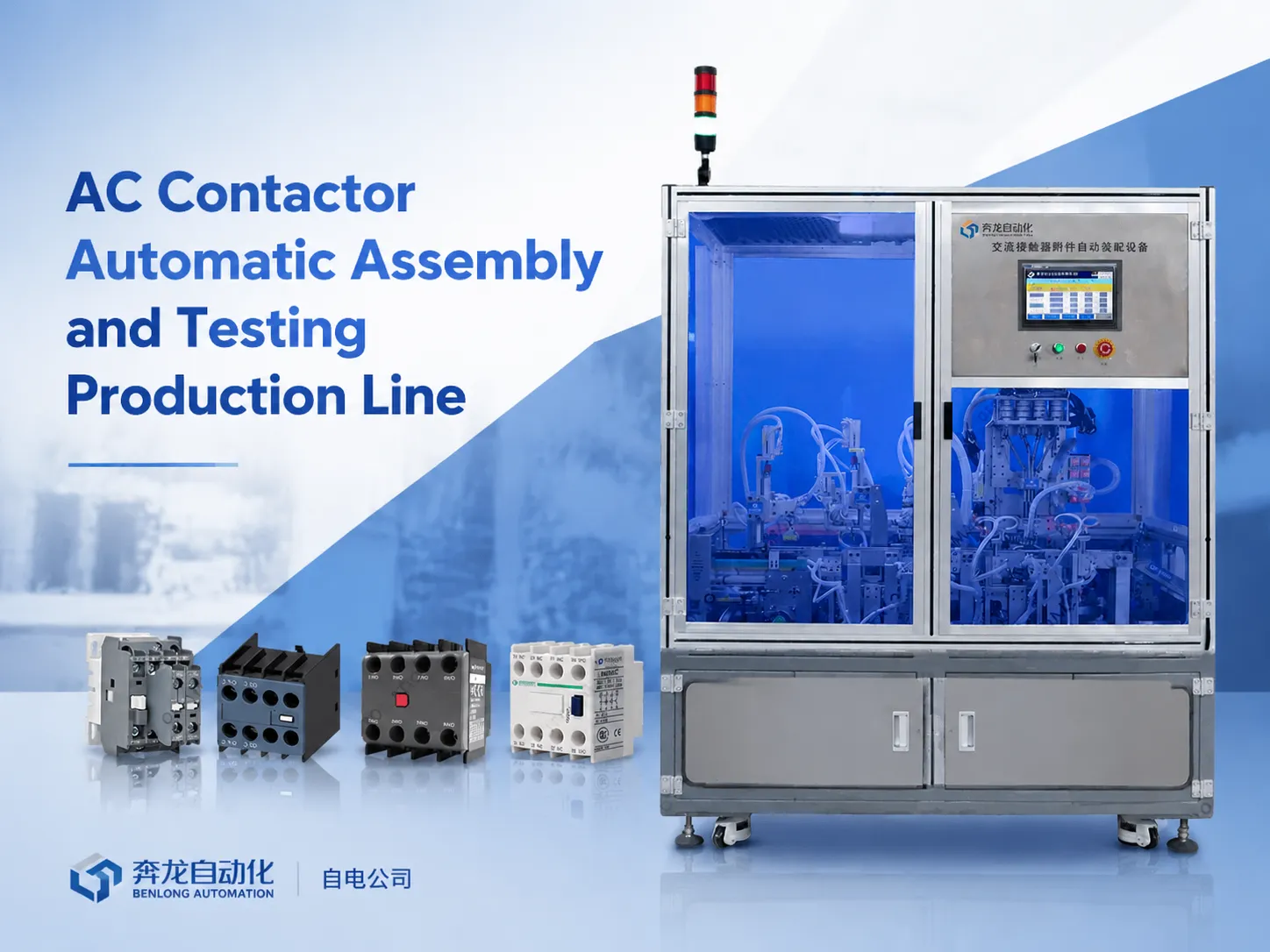
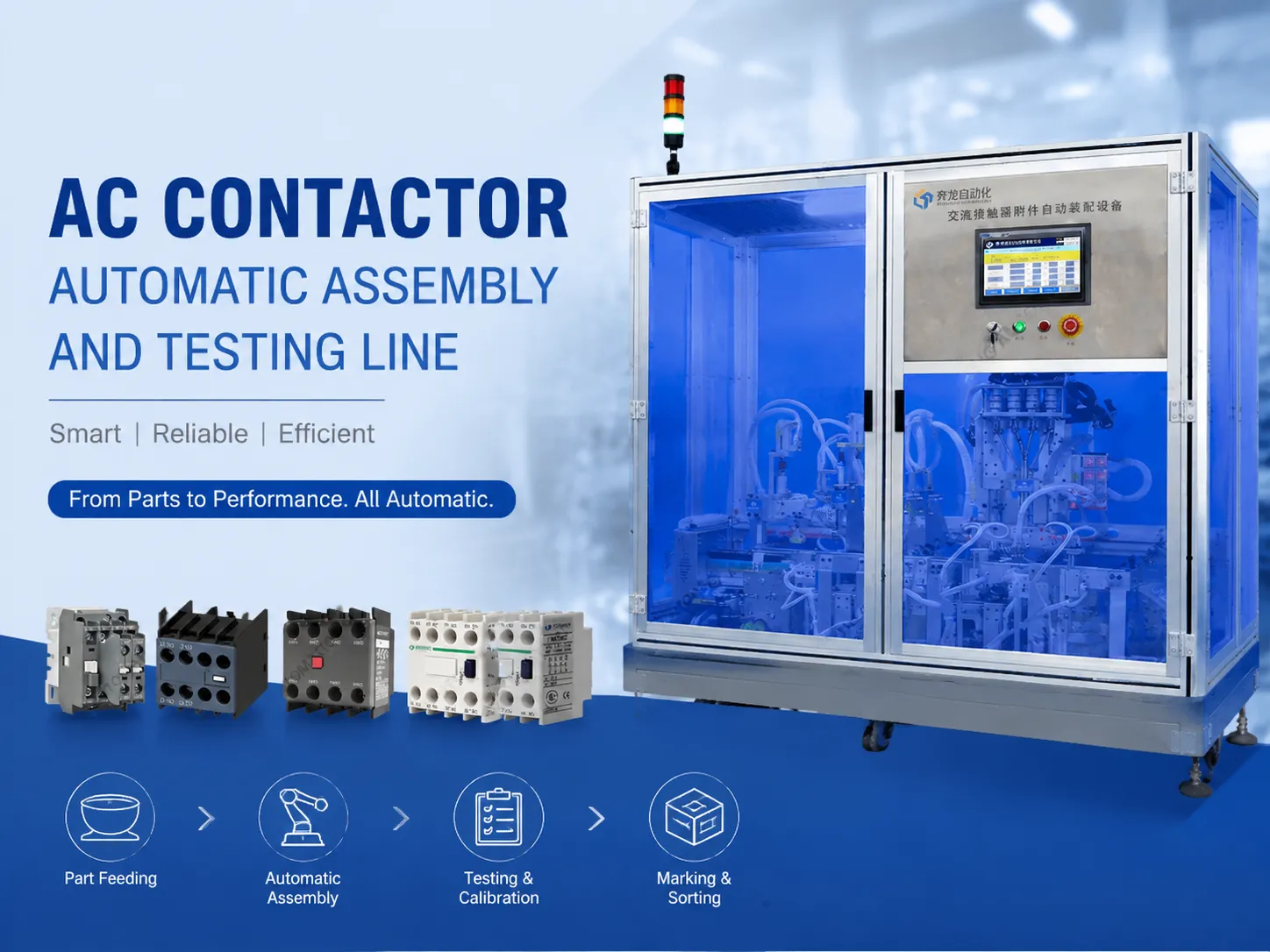
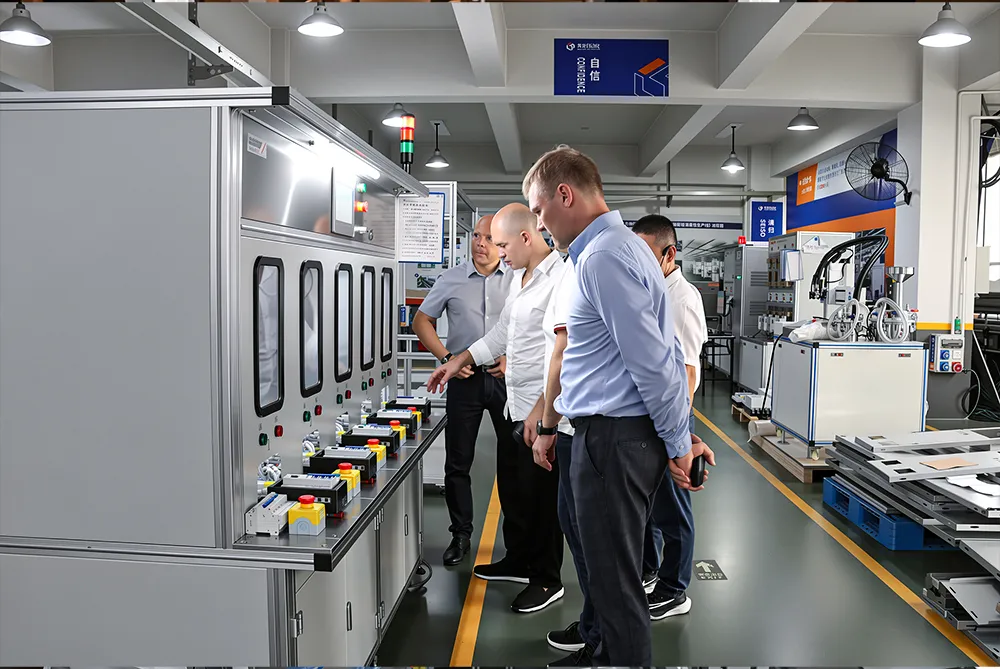
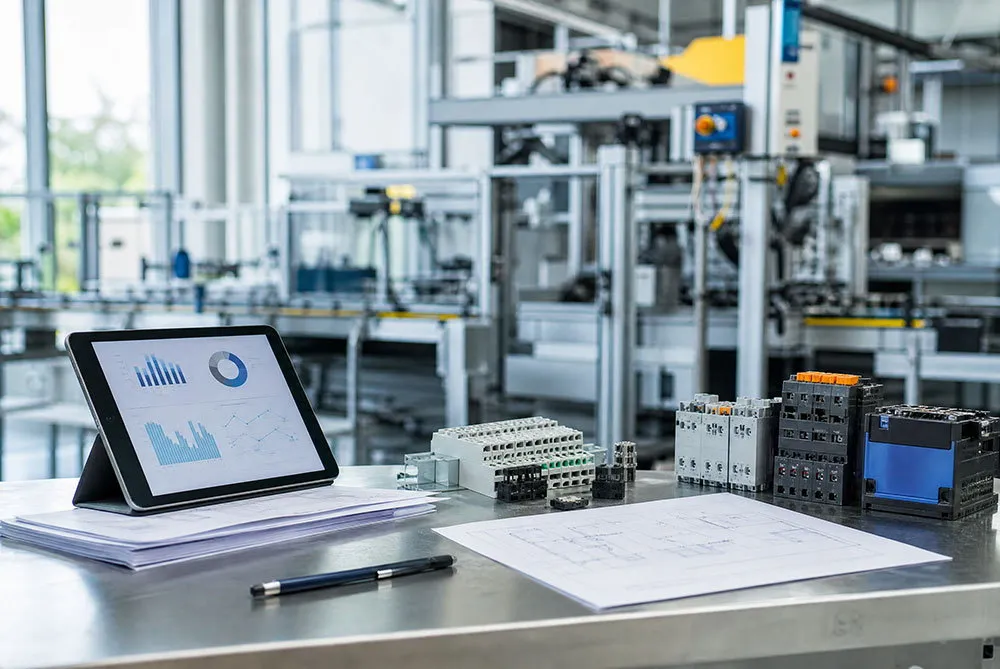
A custom engineered production line for assembling and testing an AC contactor automatic assembly and testing equipment is a sequence that will assemble, check and certify the entire contactor automatically with no manual operation throughout the entire process of completing an AC contactor. This type of line usually starts with a part feed system made up of either a bowl feeder or tray feeder for orienting all of the parts used to assemble a contactor; namely, contacts, springs, armatures, coils and housings; and then each component will be moved from station to station through various automatic steps which are as follows:

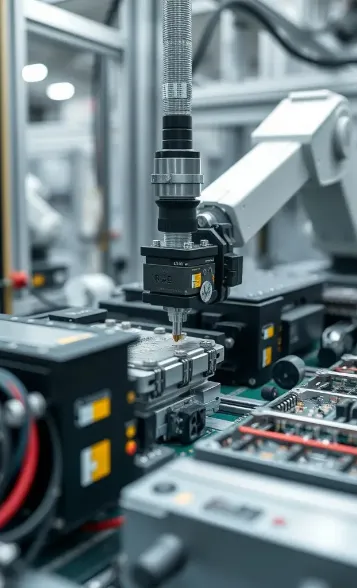
  • Contact assembly: The contact carrier has the main and auxiliary contacts attached by rivets, screws, or welding methods. A vision system checks for position and orientation verification.
  • Coil and magnetic circuit assembly: The coil, armature, and yoke are assembled, with the air gap and stroke set to specification.
  • Housing and final assembly: The assembled module is inserted into a mould housing, and a cover is added. The screws are torqued and verified.
  • Testing and calibration: Each contactor that is assembled is subjected to a series of electrical tests. These consist of tests of coil resistance, test of pickup/dropout voltages, test of contact resistance, test of dielectric withstand, and sometimes endurance testing of a sample of those assembled; all performance information from testing will be recorded against the unique serial number of the contactor.
  • Marking and sorting: An automated sorting system directs sorted and excluded products to two bins using a laser printed or pad printed contactor, indicating each contactor’s rated capacity.

Benlong Automation’s own automatic assembly machine for AC contactor main and auxiliary contacts is one station within this larger sequence. It handles the high‑precision task of positioning and joining the silver‑alloy contacts onto the contact carrier, a process that directly determines the contactor’s electrical life and fault‑current withstand. Integrated into a complete line, it feeds a verified contact assembly to the downstream stations. For a broader understanding of how such a single station fits into a complete production flow, our guide on 什麼是自動化 explains how individual automated cells are connected into a unified, data‑driven line.

What an AC Contactor Automatic Assembly and Testing Line Does

Key Characteristics of a Modern AC Contactor Production Line

An AC Contactor Line in which Automatic Assembly and Testing is Accomplished in a Well-Designed Manner Has Many Distinguishing Characteristics, Which Differentiate It From a Group of Individual Machines that are Interconnected via a Conveyor:

  • Integrated data system: A central manufacturing execution system (MES) is used to keep in contact with each station. Test results are linked to a unique serial number and allow complete traceability back to the batch of silver contacts and the coil winding machine that manufactured the coil for each contactor. This trail of data is what separates product from shipping to quarantined in regulated environments.
  • In‑line quality gates: An individual quality inspector has been established at each of the assembly stations. The contact assembly station uses a vision camera to inspect for misalignment of contacts, and visa versa, prior to fitting the housing. The screw torque verification station will stop production if screws are not within specification. Each of the assembly stations has created a process to prevent defects from being created rather than creating a defective product and relying on catching them at the end of life.
  • Closed‑loop process control: The welding station has the ability to monitor the weld energy and adjust (in real-time) while the coil winding station measures the DC resistance of each coil, compensating for variation of wire thickness. The line adapts to material and environmental drift while continuing to produce a consistent output, regardless of shift, season or operator.
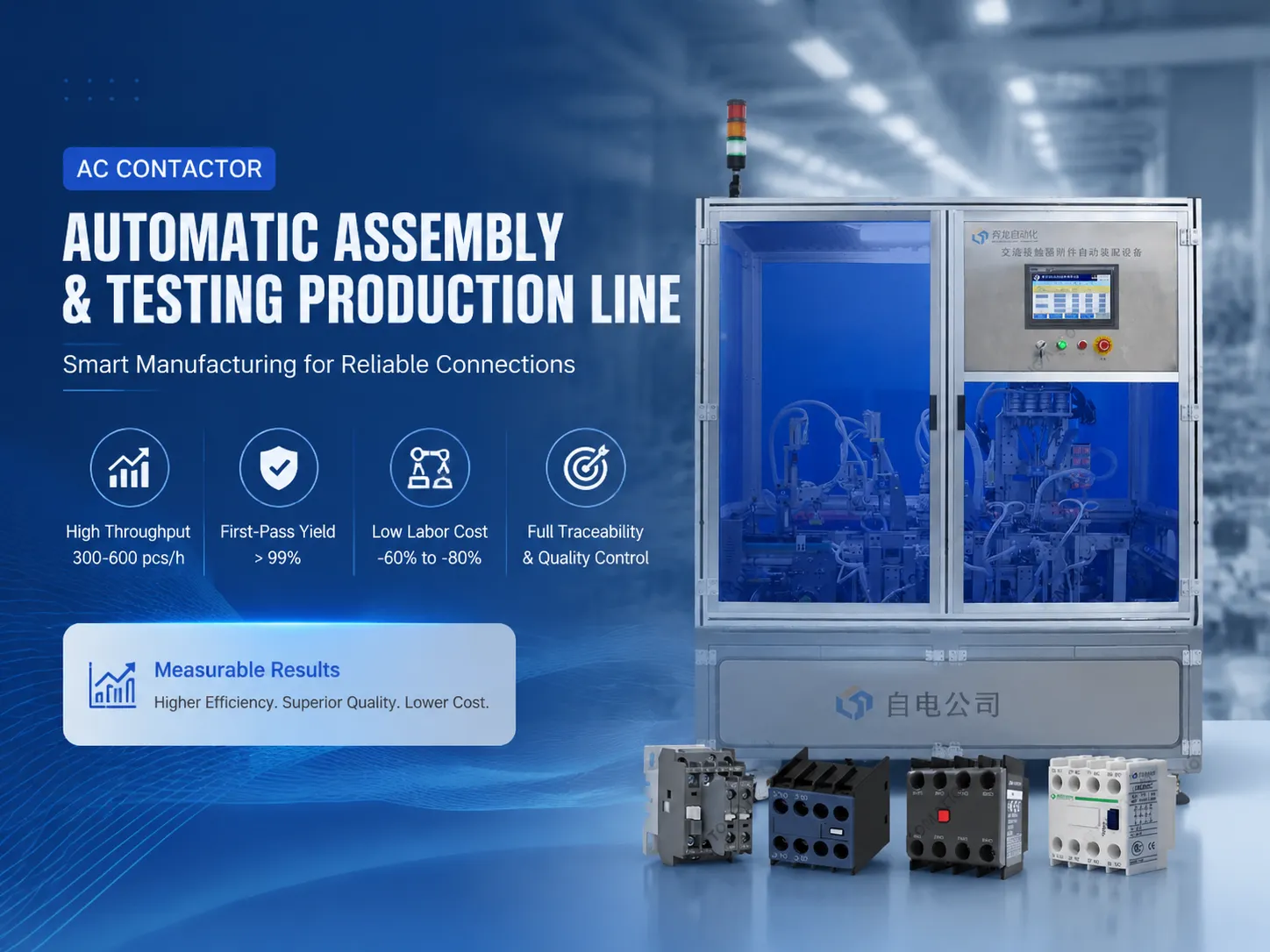
  • High throughput with low manual intervention: An average automated production line can manufacture anywhere from 300 to 600 pieces of contactor …. depending on size and number of pole configuration. About two or three people will monitor the line, replacing parts as needed and occasionally clearing jams, versus the 10 to 15 people needed for a manual assembly line and test line.

The benefits to the factory are measurable: throughput increases by 50–100%, first‑pass yield exceeds 99%, labour cost per unit drops by 60–80%, and warranty returns fall dramatically. Research on automated manufacturing published by 麥肯錫公司 consistently finds that integrated automation delivers the highest return on investment when it addresses the process steps that most affect quality — precisely the calibration, testing, and critical assembly operations that an AC contactor line automates.

Key Characteristics of a Modern AC Contactor Production Line

What Does Such a Line Cost and Who Builds It?

Investments for an AC contactor automatic assembly & testing production lines vary depending on multiple factors, such as AC contactors size, poles count, throughput requirements and desired level of automation. A semi-automated line with manual loading & automated testing costs from $200,000 – $500,000. Fully integrated lines with automatic feeding; assembly; testing; sorting can generally cost $500,000 – $2,000,000. Expected payback periods based on savings from labour; increased throughput; reduced scrap; and avoided warranty costs are normally 18 to 36 months. Custom automation has both large, global integrators and niche specialists in this marketplace.

  • ATS自動化 (加拿大): The world’s top automation integrator specializes in assembling electrical components for both industrial and automotive businesses on a worldwide scale at a premium price.
  • 羅克韋爾自動化 (美國): A leader in industrial automation and control systems, including the PLC and MES platforms that support many automated lines. Frequently collaborates with machine builders.
  • 發那科 (日本): Delivers robotic systems, CNCs, drives, and the entire assembly line component system as a complete package.
  • 本隆自動化(中國): Custom automated assembly and testing lines are developed for low-voltage electrical industry products including AC contactors, MCBs, MCCBs and related protection devices by Benlong, an established provider of these systems.

    Benlong builds their automated assembly and testing lines in accordance with the specific requirements of the assembly sequence, testing requirements and certification demands that the electrical industry requires.
    As an engineering partner for a manufacturer of contactors, Benlong brings relevant experience to your project; we have already resolved your material handling challenges associated with handling silver contacts, configuring precise stroke settings and implementing integrated electrical testing prior to the buyer’s expectation that a general integrator would be able to provide this solution on the buyer’s project timeline.

Is an Automated Line Suitable for Every Contactor Manufacturer?

A fully automated AC contactor production line is a capital investment that makes sense when the product design is stable, the production volume justifies the automation, and the quality and traceability demands of the market cannot be met by a manual line. A startup producing a few hundred contactors a month for a local market may be better served by a semi‑automated calibration and test bench — such as Benlong’s 交流接觸器綜合測試機 — and manual assembly. As volume grows and the product stabilises, the automated stations can be linked and the handling automated. This phased approach reduces risk and matches the investment to the business need.

常見問題解答

What is an AC contactor automatic assembly and testing production line?

The integrated manufacturing system combines all parts of the contactor (contactors – include: contacts; coils; armatures; housings), automatically assembles these components into a complete working unit, electrically tests each assembled unit, and records the test results to a unique serial number. The result is complete elimination of any manual handling of the product and complete traceability.

How long does it take to build and install such a line?

Normally, developing a bespoke AC contactor automatic assembly & testing line will require between 8 and 14 months from the time that the contract is signed until it is completed; however, time necessary depends on several variables, including how complicated the line is, how many stations are in the line, and how much custom tooling is required.

Can the line be reconfigured for a different contactor model?

Yes, to an extent; the line is tailored around a particular contactor frame or product family. In other words, you could change between similar models in the range using a recipe change and a few modifications to the tooling. However, if you want to switch an entirely different contactor frame, that would involve a large amount of re-engineering.

What maintenance does an automated contactor line require?

Daily cleaning of vision camera lenses and sensors, weekly inspection of wear items such as grippers and seals, and annual calibration of test instruments are all examples of preventative maintenance. A properly maintained line can have a life expectancy of 10-15+ years.

參考文獻

一個 AC contactor automatic assembly and testing production line transforms the way a contactor is built. It replaces variable manual processes with controlled, documented, repeatable automation. It produces a contactor that is not only assembled but verified — every coil resistance measured, every contact drop recorded, every dielectric test passed — and it stores that verification in a database that supports certification, warranty claims, and continuous improvement. For the manufacturer, it is an investment in capacity, in quality, and in the data that modern export markets demand. Benlong Automation designs and builds these lines for the electrical industry, because the contactor that protects a motor should itself be built with the precision that only an automated, verified process can deliver.

WhatsApp
+86 150 5837 0007
電子郵件
xsb@benlongkj.cn