benlong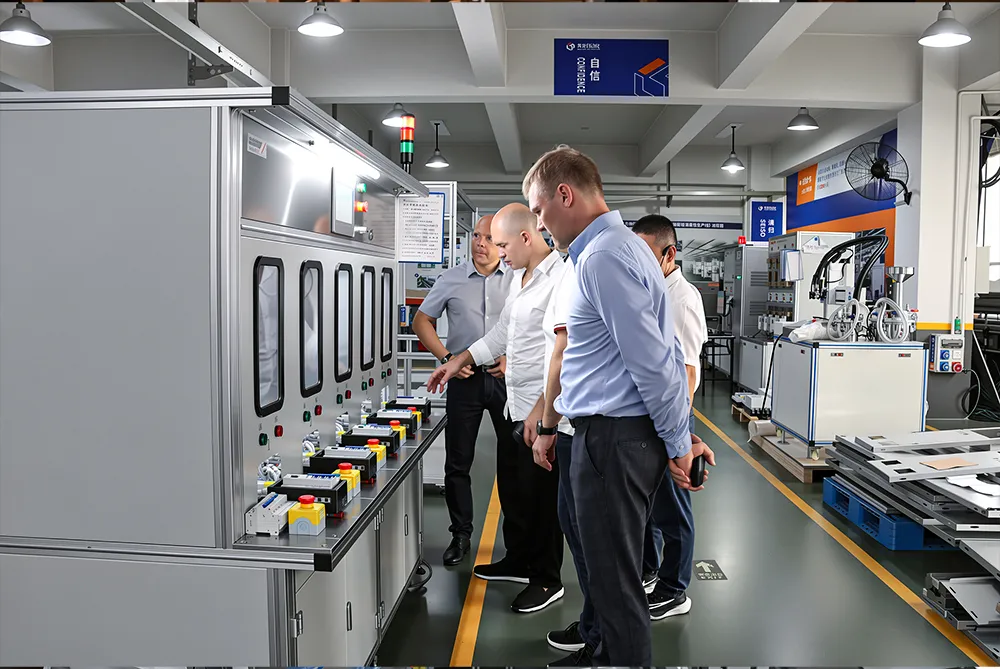


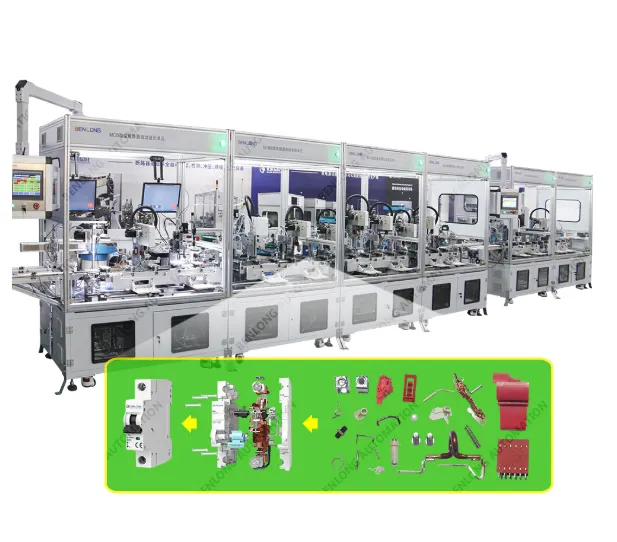
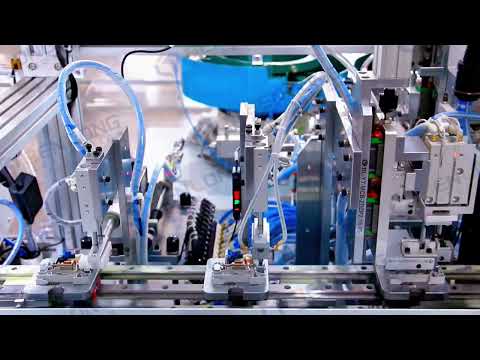
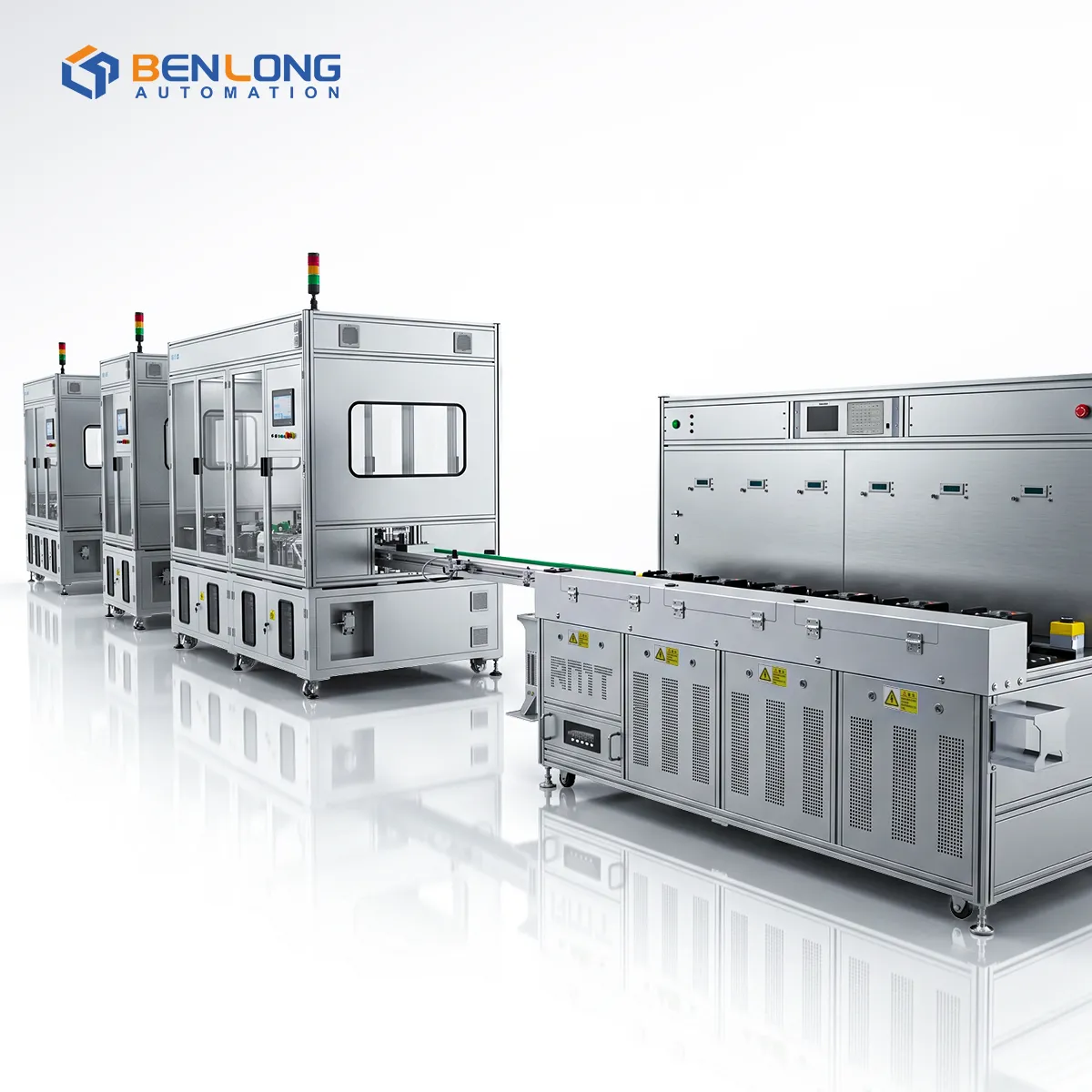
MCB automatic assembly line
High‑speed MCB automatic assembly line with 2‑3.5 sec/pc cycle time. Supports 1P/2P/3P/4P quick changeover, vision inspection at every station, in‑line trip current & operation force testing. Reduces labor by 80%, eliminates mis‑assembly. Ideal for high‑volume MCB production. Omron PLC, Festo/SMC pneumatics, MES ready. Payback under 18 months.
High‑Speed MCB Automatic Assembly Line
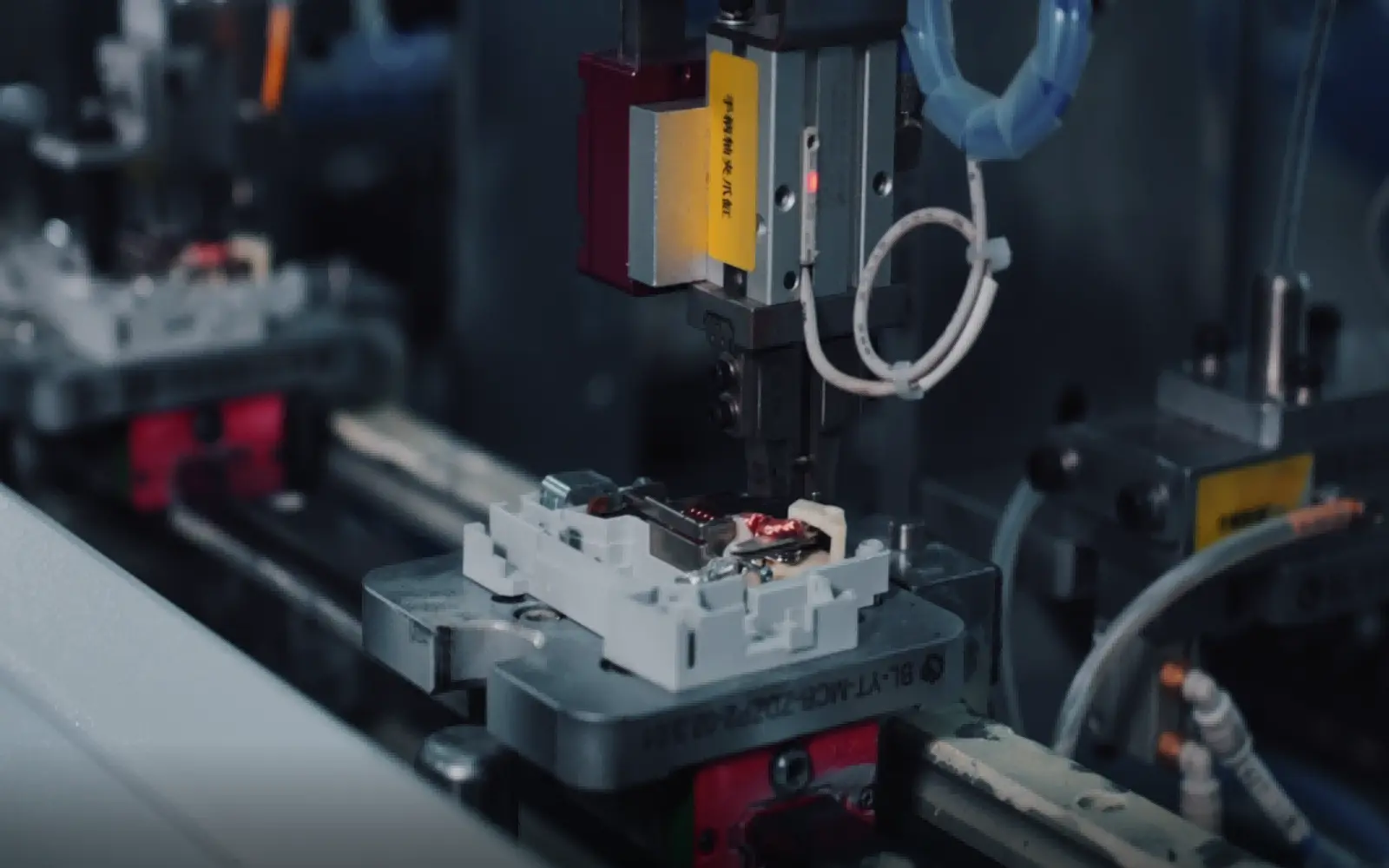
This high-speed MCB automatic assembly line efficiently processes all internal components — including the tripping mechanism, arc chute, and contacts — inserting them precisely into the MCB molded case. This fully automated system ensures high precision, rapid cycle times (2‑3.5 seconds per piece), and consistent quality for mass production of miniature circuit breakers. The line integrates several stations to meticulously handle and combine all required MCB sub‑components, from case feeding to cover fastening, with sophisticated vision systems and precision robotics ensuring zero mis‑assembly.

The process begins with feeding and orientation of the molded case, followed by insertion of the contact mechanism, the thermal and magnetic tripping unit, and the arc‑extinguishing chamber. After cover mounting, in‑line testing verifies performance parameters such as trip current and operation force. Full automation significantly reduces labor costs, minimizes assembly errors, and delivers high throughput required to meet global demand. Supports MCB 1P/2P/3P/4P with quick changeover – typical changeover time under 30 minutes.
Standard delivery: 60-90 days | 2‑3.5 sec/pc | Multi‑model compatible
What Problems Does This Assembly Line Solve?
Manual MCB assembly suffers from slow throughput (15‑20 seconds per unit), inconsistent component placement (e.g., misaligned arc chutes, missing springs), and high labor costs. This fully automated line solves these issues by:
- 2‑3.5 second cycle time – 5‑10× faster than manual assembly, enabling mass production at competitive costs.
- Vision inspection at every station – Eliminates mis‑assembly and missing parts, achieving near‑zero defect rates.
- Quick changeover between 1P‑4P – Recipe‑based parameters and modular tooling reduce changeover to under 30 minutes, allowing mixed model production.
High throughput2‑3.5 second cycle time per piece, designed for mass production demands – up to 1,200‑1,800 units per hour.
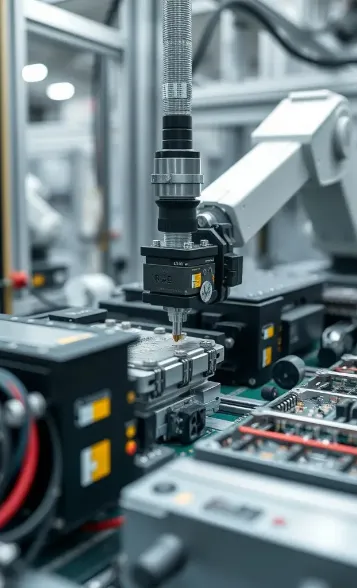
Precision assemblyVision inspection at every station ensures zero mis‑assembly – detects missing components, incorrect orientation, and seating depth.
Multi‑model compatibleSupports MCB 1P, 2P, 3P, 4P with quick changeover – no complex re‑tooling for different pole counts.
In‑line quality checkVerifies trip current, operation force, and visual appearance – rejects defective units before packaging.
Assembly Line Features & Customer Benefits



Technical Specifications
| Cycle time | 2 – 3.5 seconds per piece | ||||||||
|---|---|---|---|---|---|---|---|---|---|
| Voltage | 220 / 380V AC | ||||||||
| Air pressure | 0.6 MPa | ||||||||
| Applicable models | MCB 1P, 2P, 3P, 4P (quick changeover) | ||||||||
| Changeover time | <30 minutes (between different pole counts) | ||||||||
| In‑line quality check | Trip current verification, operation force test, visual inspection (vision) | PLC | Omron (Japan) | HMI touch screen | MCGS (China) | Pneumatic cylinders | Festo (Germany) & SMC (Japan) | OEM availability | Appearance and interface customizable |
Core Customer Benefits – Why Manufacturers Choose This Line
Benefit 1: 5‑10× higher output
Manual assembly: 15‑20 seconds per MCB (180‑240 units/hour). This line: 2‑3.5 seconds per MCB (1,000‑1,800 units/hour). A factory producing 2 million MCBs per year can reduce assembly labor from 20 operators to 3‑4, with payback in 12‑18 months.
Benefit 2: Zero mis‑assembly with vision inspection
Human operators miss 1‑3% of assembly defects (missing springs, inverted arc plates). Vision systems at every critical station inspect component presence, orientation, and seating depth – reducing field failure rates by over 80%.
Benefit 3: Fast changeover for mixed production
Switching between 1P, 2P, 3P, and 4P MCBs takes under 30 minutes – recipe‑based parameters adjust pick‑and‑place positions, test currents, and timing. No mechanical tooling change for most conversions.
Benefit 4: In‑line testing catches defects early
The line includes automatic trip current verification (thermal and magnetic) and operation force measurement. Defective units are rejected before proceeding to final packing, reducing downstream rework and warranty claims.
Trusted by industry leaders
















Customer Success – How a Leading MCB Manufacturer Increased Output by 400%
A global MCB manufacturer was using semi‑manual assembly lines with 15 operators per shift, producing 8,000 units per shift. Defect rate was 1.5%. After installing this fully automatic MCB assembly line, they achieved:
The line paid for itself in 14 months and became the standard for all new MCB production lines.
Applications – Where This Line Adds Most Value
Custom Engineering & Delivery
Request a Custom MCB Assembly Line Quote
Send us your MCB specifications, target output, and pole configurations. Our engineers will design a high‑speed automatic assembly line with vision inspection and quick changeover – including a full ROI analysis.
WhatsApp: +86 150 5837 0007 | Email: xsb@benlongkj.cn | English & Chinese support
Why Choose Benlong for MCB Assembly Lines?
- 15+ years designing MCB automatic assembly lines for global manufacturers
- Proven 2‑3.5 sec/pc cycle time – 5‑10× faster than manual
- Vision inspection at every critical station – zero mis‑assembly
- Quick changeover between 1P‑4P under 30 minutes
- Global service and spare parts support
Standard Line Includes
Case feeder · Contact mechanism insertion station · Thermal/magnetic trip unit assembly · Arc chute assembly · Cover mounting & fastening · Vision inspection system · In‑line test station (trip current, operation force) · Conveyor system · PLC with HMI (Omron) · Safety guarding · Installation & training · 1‑year warranty
Related solutions
Frequently Asked Questions
1P MCB: 2‑2.5 seconds. 2P: 2.5‑3 seconds. 3P/4P: 3‑3.5 seconds. Cycle time includes all assembly operations and in‑line testing.
High‑resolution cameras at key stations (e.g., after arc chute insertion, after cover mounting) capture images and compare to reference templates. The system detects missing parts, inverted components, and incorrect seating. Defective units are automatically rejected before proceeding.
Yes. Different current ratings use the same assembly process but different component geometries (e.g., bimetal thickness, contact size). Changeover requires adjusting the feeder bowl tooling and test parameters – typically 30‑60 minutes for a full rating change.
Yes. The line provides OPC UA or Modbus TCP interfaces. Production counts, reject rates, and test results can be uploaded to MES in real time. We also provide sample code for integration.
For a standard 1P‑4P line with 6‑8 assembly stations, lead time is 60‑90 days from contract signing to factory acceptance. Complex lines with additional automation may take 90‑120 days.
Related Products
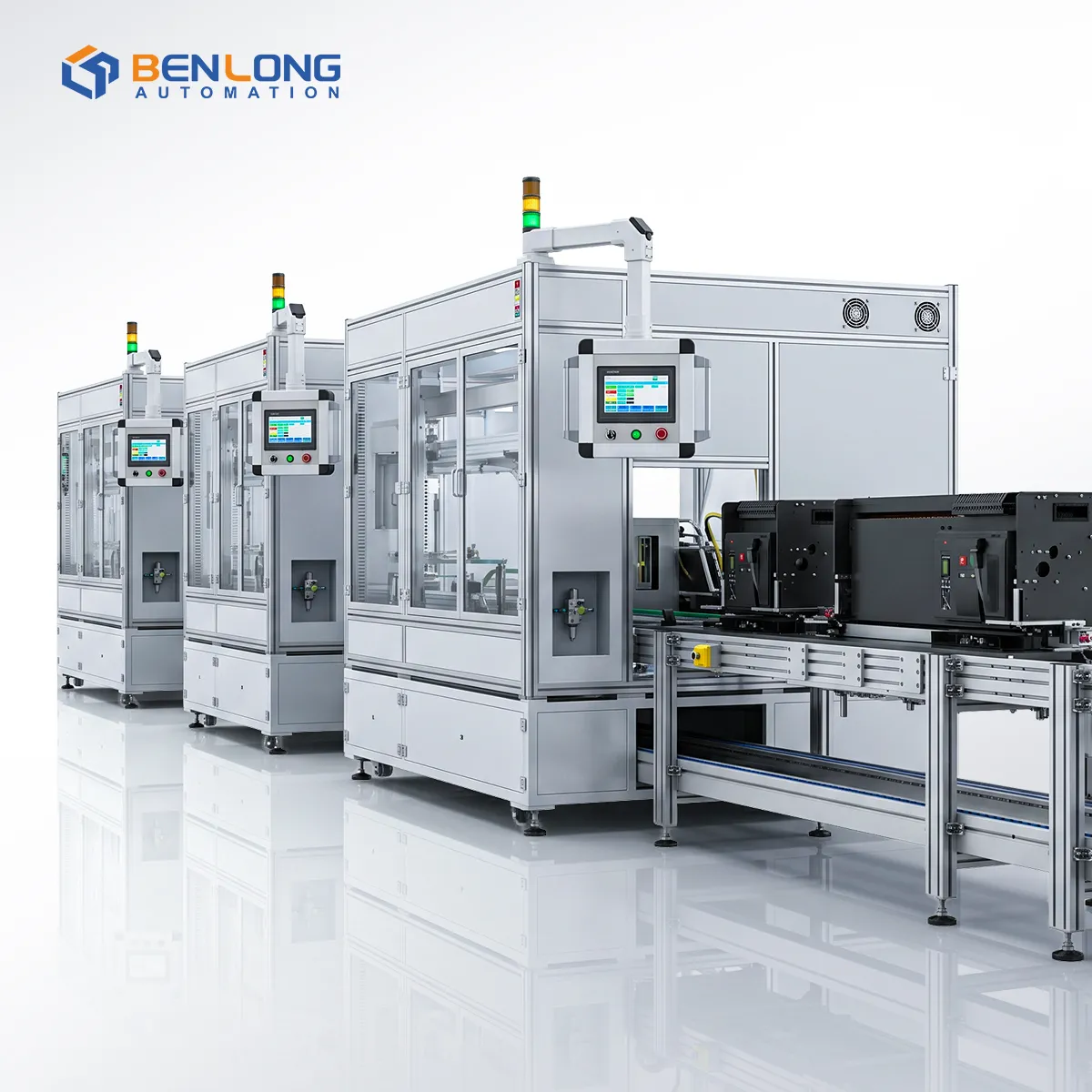
Air-operated Circuit Breaker (ACB) Automatic production line
View Details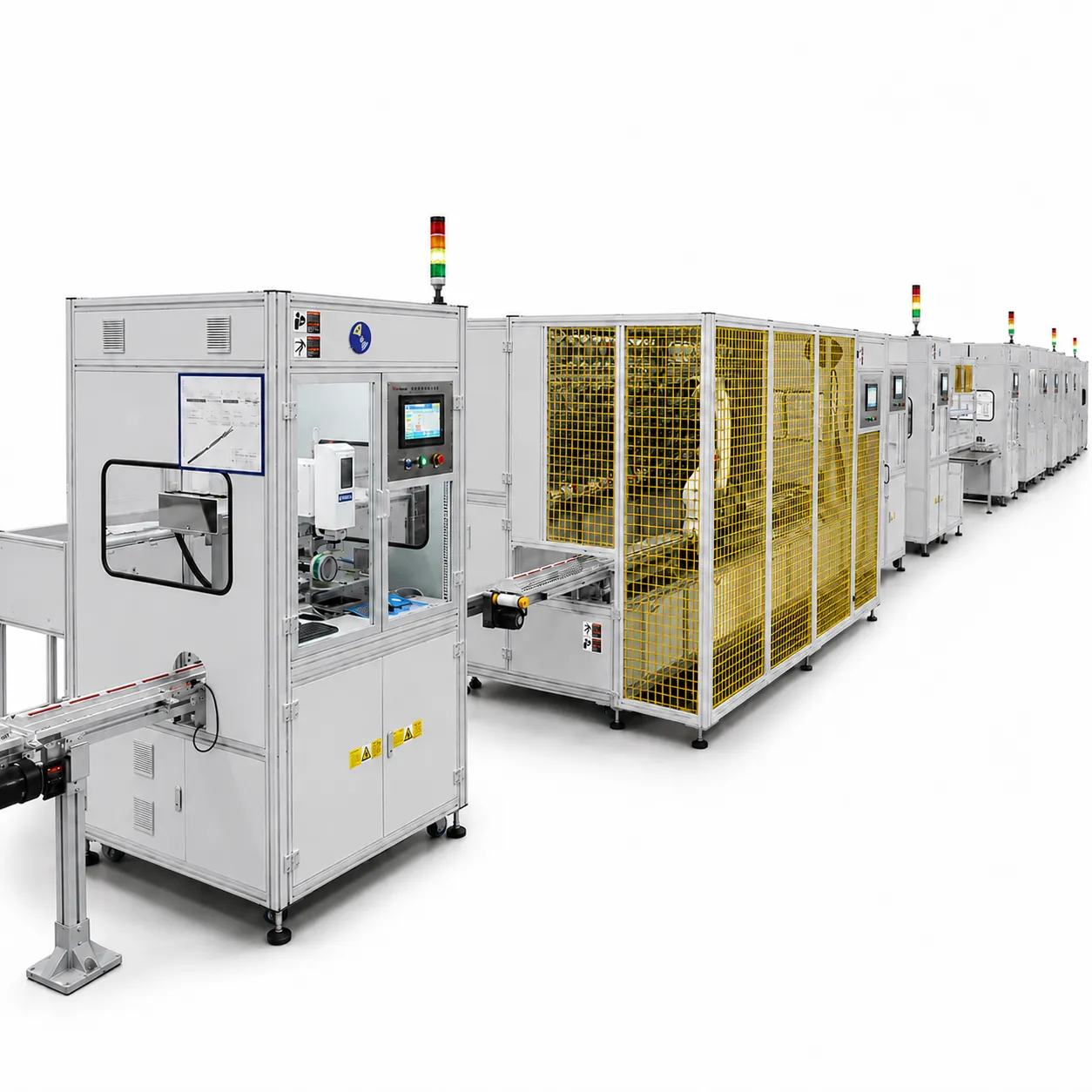
IOT Smart MCB automatic production line
View Details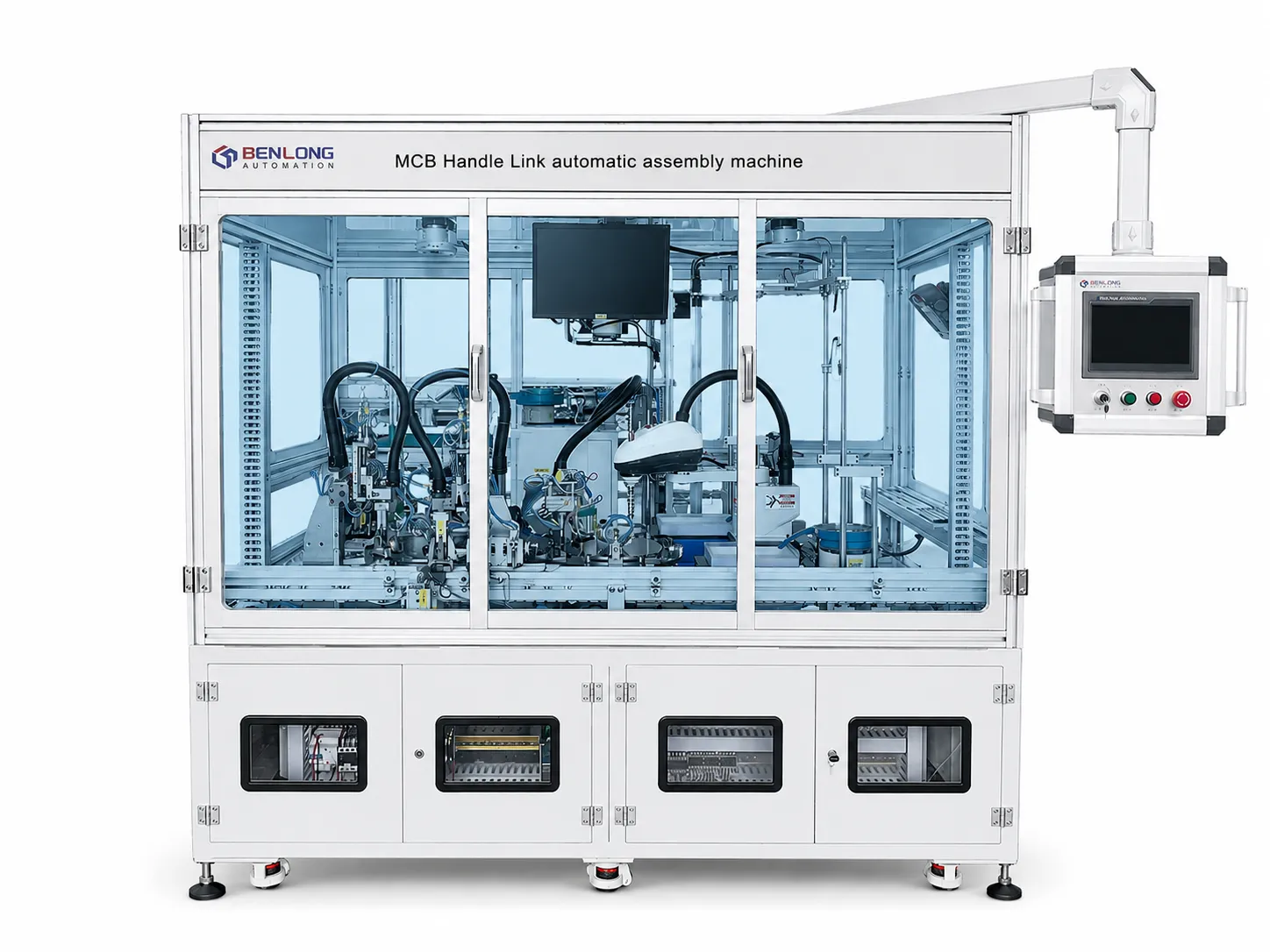
MCB Handle Link automatic assembly machine
View Details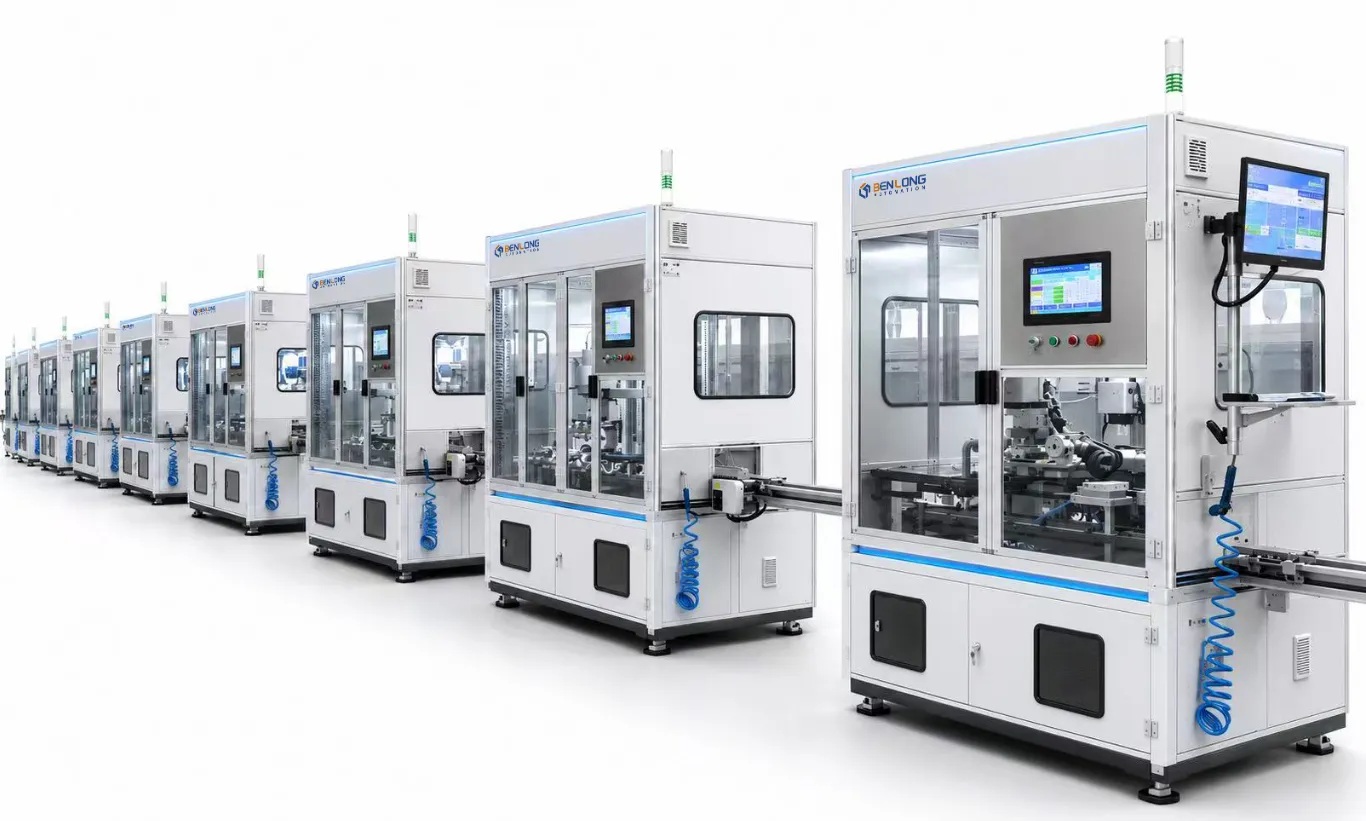
MCB automatic testing line
View Details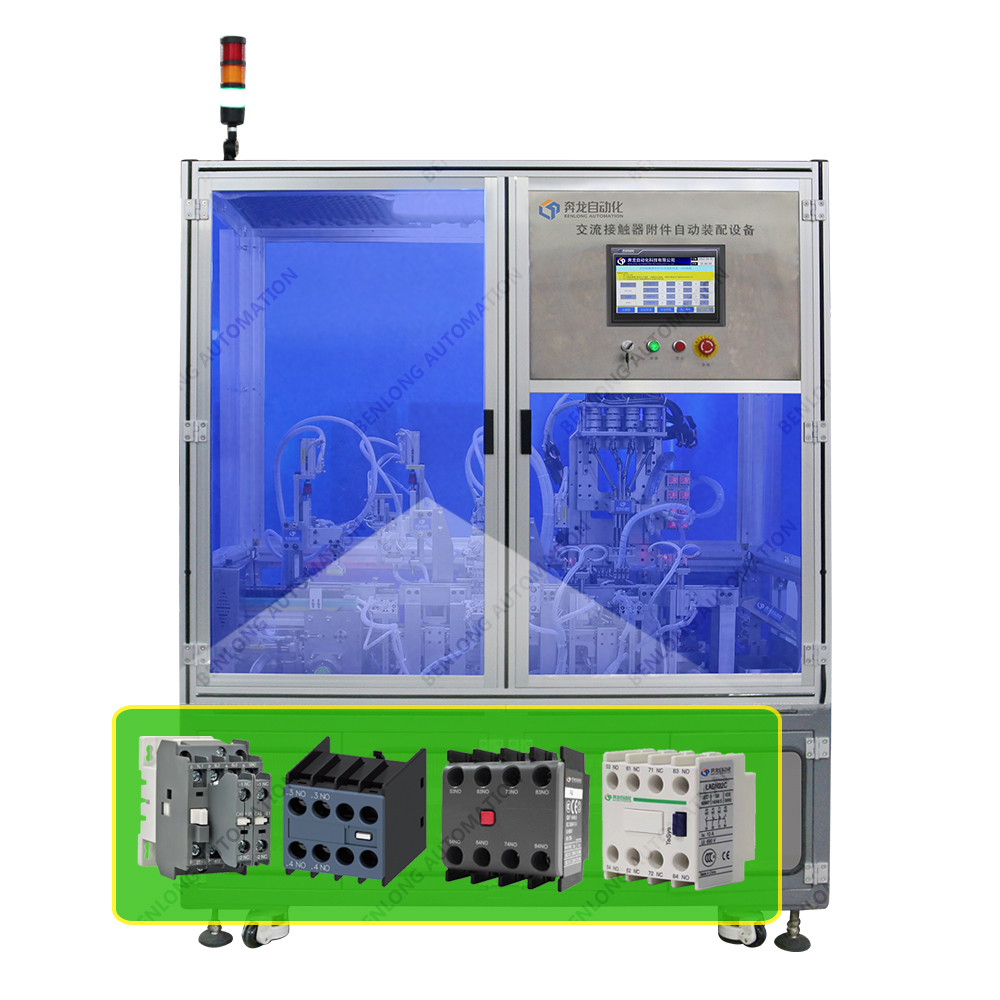
Automatic Assembly Machine for AC Contactor Main & Auxiliary Contacts
View Details