benlong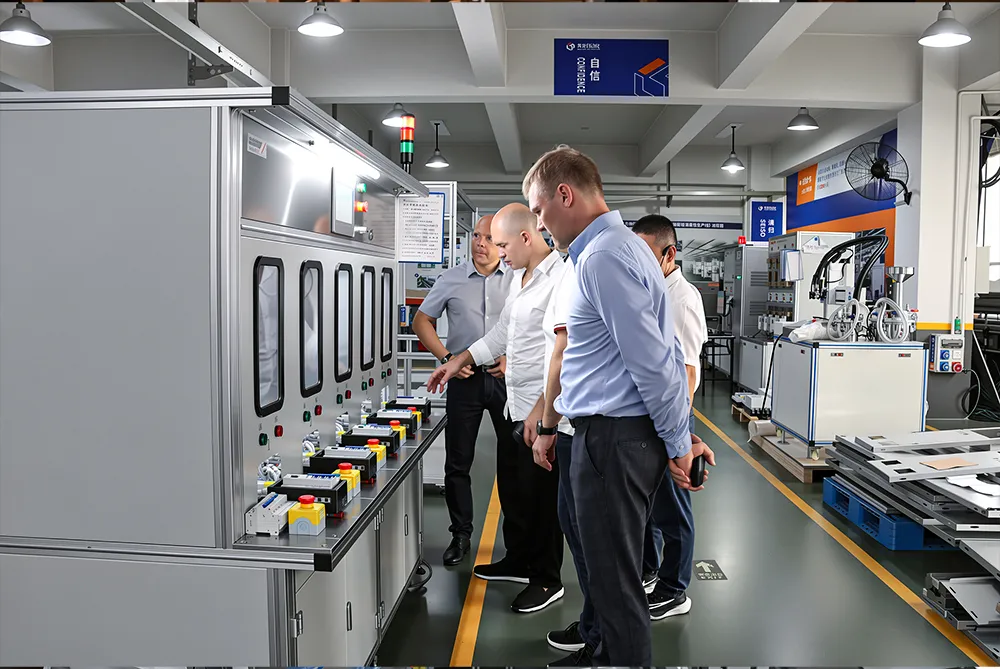
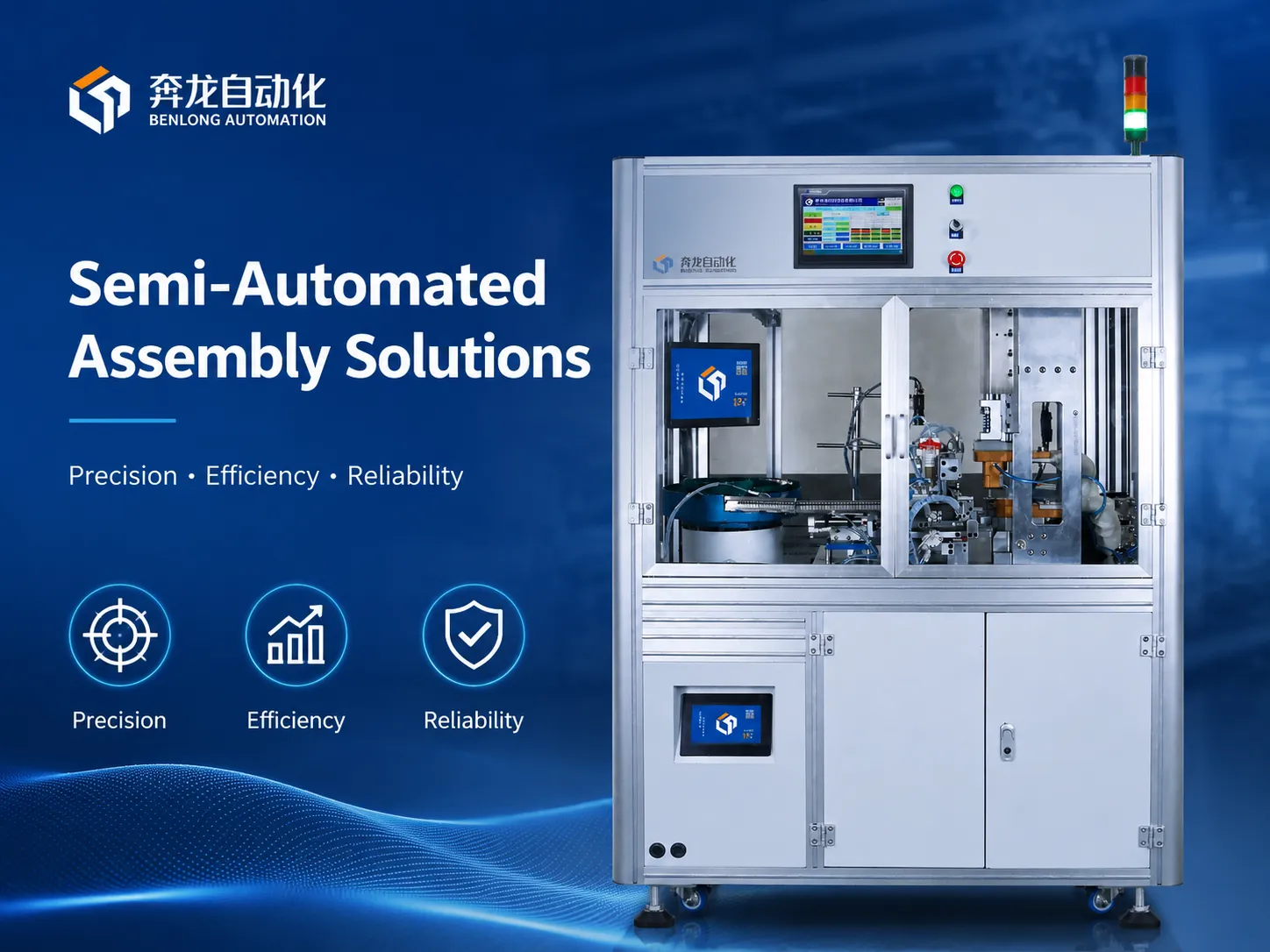
Semi-Automated Assembly Solutions
When a manufacturer of electronic control modules needed to increase production from 5,000 units per month to 20,000 units per month, their engineering team was faced with a dilemma. A fully automated assembly line would have been too costly as well as too inflexible, due to product changes every six months. On the other hand, a completely manual assembly line would not provide the repeatable solder quality nor meet the customer’s requirement of 100% functional testing. The company chose a third alternative: a semi-automated assembly cell. In this cell, the operators load the PCBs into an assembly fixture, which is then utilized by a machine to perform precision solder. After soldering, an automatic optical inspection of the soldered joints is performed. The operator then removes the board from the assembly fixture and places it onto a rack. This semi-automated assembly cell is a fraction of the cost of a fully automated line, meets the required throughput, and can be reprogrammed to produce the next product within one hour. This pragmatic solution, being neither fully manual nor fully automated, is the correct answer for thousands of manufacturers. It automates the manufacturing steps inherently requiring precision and repeatability while leaving flexible, inexpensive manual handling to those steps which are too much a variable to afford to automate.
What Is a Semi‑Automated Assembly Process?
In this production system, some equipment does the majority of the work and is operated by people who load and unload machines or move components from one process to another. A machine performs an operation (e.g., welds), and at the end of a cycle, records the result. The operator loads a part onto the machine and starts the machine cycle using a two-hand anti-tie down control or foot pedal. Unlike a fully automated line, parts are transferred between processes using a human hand in addition to machinery. Unlike a manual process, the machine cycles are repeated without human assistance; therefore, all variations are removed from the execution of the operations and accuracy of process are guaranteed where repeatability is important.
For a deeper understanding of the full spectrum of manufacturing automation, our overview of what automation is provides the broader context into which semi‑automated systems fit.
How Semi‑Automated Solutions Improve Manufacturing Performance
There are many measurable benefits to support the justification of investing in a semi-automated manufacturing facility. Many of the benefits achieved by a semi-automated manufacturing facility can generate enough return on investment within the first 12 to 24 months. In a recent study conducted by McKinsey & Company, it was shown that investing in 20% of the steps, which constitute 80% of the quality variation, results in the majority of the benefits derived from fully automated manufacturing facilities, and will typically require only a fraction (i.e., less than 1/10th) of the expense associated with fully automated manufacturing facilities.
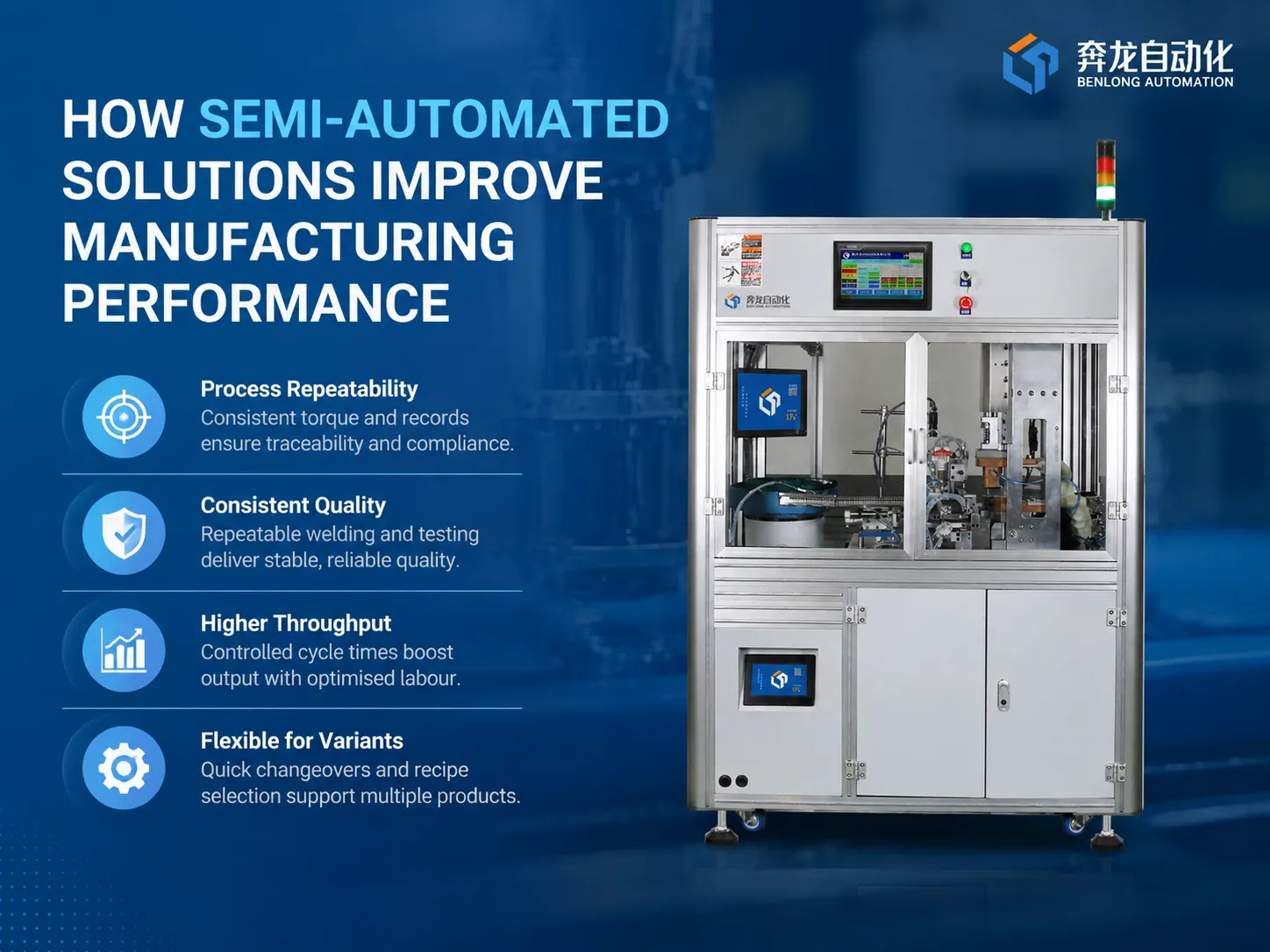
- Process repeatability. A semi-automated screwdriver can fasten each screw to the desired torque as well as document the correct amount of torque. A manual operator uses their muscle memory (the “feel” for how tightly) to fasten, so there will never be a record of that occurrence. In a safety-related assembly (a circuit breaker or an automotive airbag connector), the presence or absence of record means there is a significant difference between being able to ship the product and not being able to certify it.
- Consistent quality. The semi-automated resistance welding head applies a consistent weld profile across all of the contacts. The semi-automated test bench performs a consistent sequence of electrical tests on all of the units that it tests. The machine continues performing the same function for any length of time and does not require rest, is not subject to distractions from outside sources, and does not require the machine operator to retrain immediately upon shift changes.
- Throughput with controlled labour cost. Because the cycle time for a semi automated cell is controlled by the machine instead of by the operator, a semi automated cell will produce a higher number of products per hour than a manual cell. An operator can attend to a second cell while the first is running through its cycle therefore increasing productivity.
- Flexibility for product variants. Due to the fast nature of changing over equipment, semi-automated cells are advantageous to both contract manufacturers and companies that produce various product lines. The flexibility of a semi-automated cell allows for workflow changes through the use of recipe selection and switching out a fixture, typically within just a few minutes. Overall, this provides a cost-effective solution for companies that require an efficient method for manufacturing multiple types of products.
Where Semi‑Automated Assembly Delivers the Greatest Impact
A semi‑automated assembly approach can be beneficial regardless of which organisation uses them because they have different quality and throughput requirements across many industries.
Electrical Protection Devices (MCBs, MCCBs, Contactors)
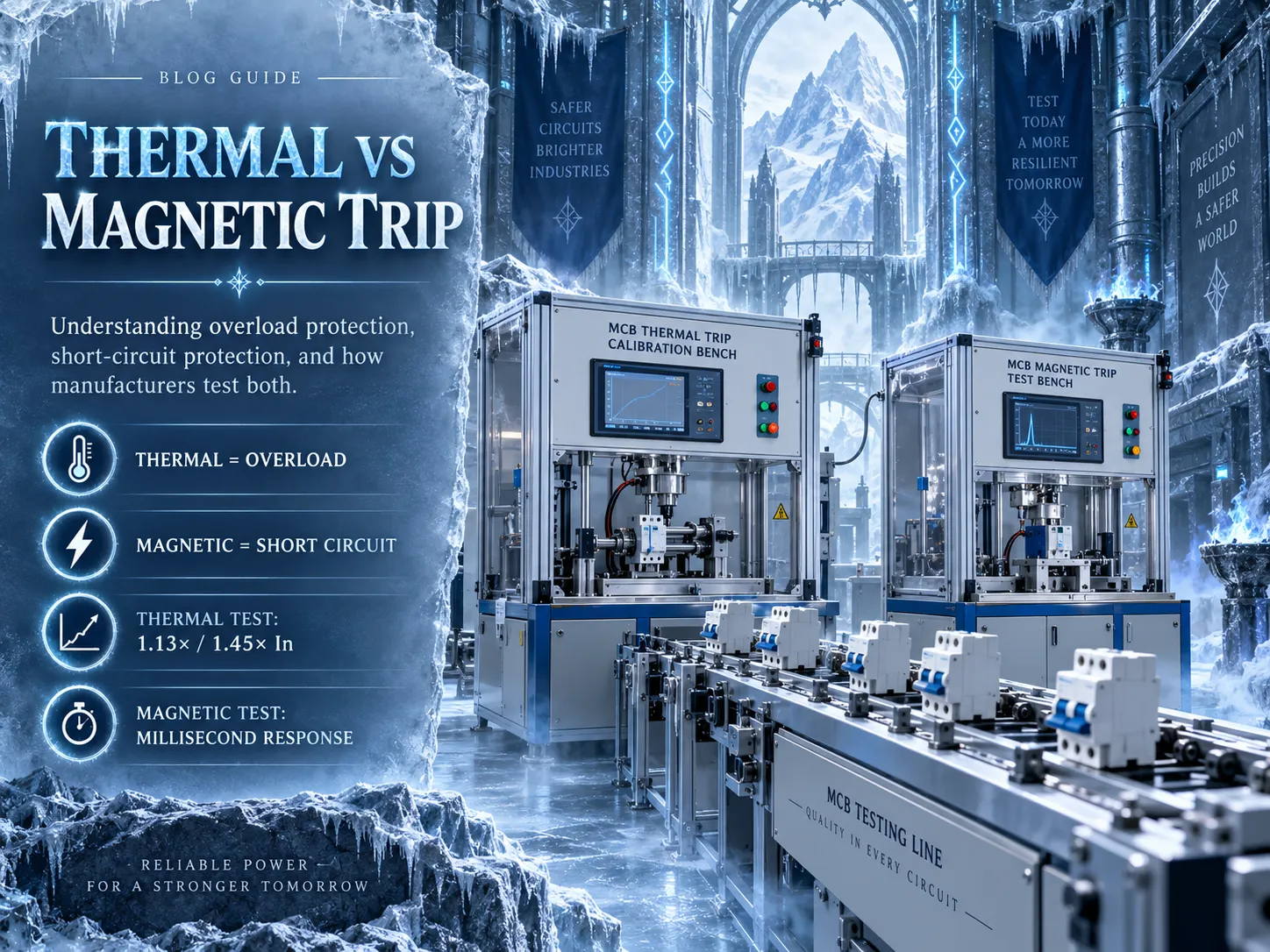
In the manufacture of miniature circuit breakers and molded‑case circuit breakers, the calibration and testing steps are legally and functionally the most critical. A breaker that does not trip within its published time‑current curve is a safety hazard. Semi‑automated calibration and testing benches — like those Benlong Automation builds — allow an operator to load a breaker, after which the machine applies the overload or short‑circuit current, measures the trip time, adjusts the calibration screw, and either passes or rejects the unit. The operator handles the part; the machine handles the measurement. This ensures that every breaker meets its certification standard without requiring a fully automated line. Benlong’s semi‑automatic thermal calibration bench and magnetic trip test bench are examples of this approach. For the assembly of the breaker mechanism itself, a semi‑automatic assembly machine can automate the joining, riveting, or screwdriving of internal components, with the operator loading housings, contacts, and coils into fixtures and the machine completing the precise mechanical work.
Automotive and Electric Vehicle Components
Semi-automated cells are typically utilized for the manufacture of sub-assemblies, such as wiring harness clips, sensor housing, and connector assemblies. A semi-automated ultrasonic welder, or vision-guided dispensing cell will deliver the type of process control required to comply with automotive PPAP (Production Part Approval Process) while still having low enough labour costs associated with manual loading to enable deployment across multiple product lines. FANUC manufactures the robots and cobots that are frequently the automated component of these cells, and perform the tool handling while the operator holds the part.
Medical Devices and Diagnostics
When assembling medical devices, it’s generally true that you will need to validate the process and create records for each device that is produced in that assembly process. A semi-automated syringe bonding station (or a reagent dispensing process) can log all the detail of every process parameter that was run during loading/unloading of components against the serial number of the device. This will provide you with the validation requirements required by regulatory agencies, without the capital investment required for a fully automated aseptic line.
Consumer Electronics
Due to short product lifecycles and high product mix in consumer electronics, fully automating product assembly is difficult. In electronics contract manufacturing, there are many semi-automated processes including screwdriving, adhesive dispensing and functional testing. The operator loads the printed circuit board (PCB) into the fixture, the machine automatically dispenses, fastens and/or tests the PCB, and the operator then unloads the completed PCB from the fixture. When an existing product changes, production equipment for that product can often be changed over to produce the new product within a few weeks.
What a Semi‑Automated Assembly Solution Costs
The investment for a semi‑automated assembly station depends on the process, the required accuracy, and the degree of built‑in testing. The table below provides indicative ranges for turnkey cells, including the machine, the tooling, the controls, and the programming.
| Process Type | Typical Investment Range (USD) |
|---|---|
| Semi‑automated screwdriving or press‑fit cell | $30,000 – $80,000 |
| Semi‑automated dispensing, soldering, or ultrasonic welding cell | $50,000 – $120,000 |
| Semi‑automated calibration and test bench (electrical or mechanical) | $40,000 – $100,000 |
| Semi‑automated multi‑station assembly cell with integrated testing | $80,000 – $200,000+ |
These ranges cover the turnkey machine; tooling for specific product variants, operator training, and shipping are additional. The payback is typically reached through a combination of labour reduction, scrap reduction, and increased throughput. A cell that replaces two operators per shift across two shifts, or that eliminates a costly warranty return pattern, can return its investment in under eighteen months.
Choosing the Right Integrator for a Semi‑Automated Solution
When choosing a partner for designing/built a semi-automated assembly cell, it’s important to evaluate things other then just cost. An integrator needs to be familiar with the manufacturing process being employed, what tolerances are required, and what type of data needs to be collected.
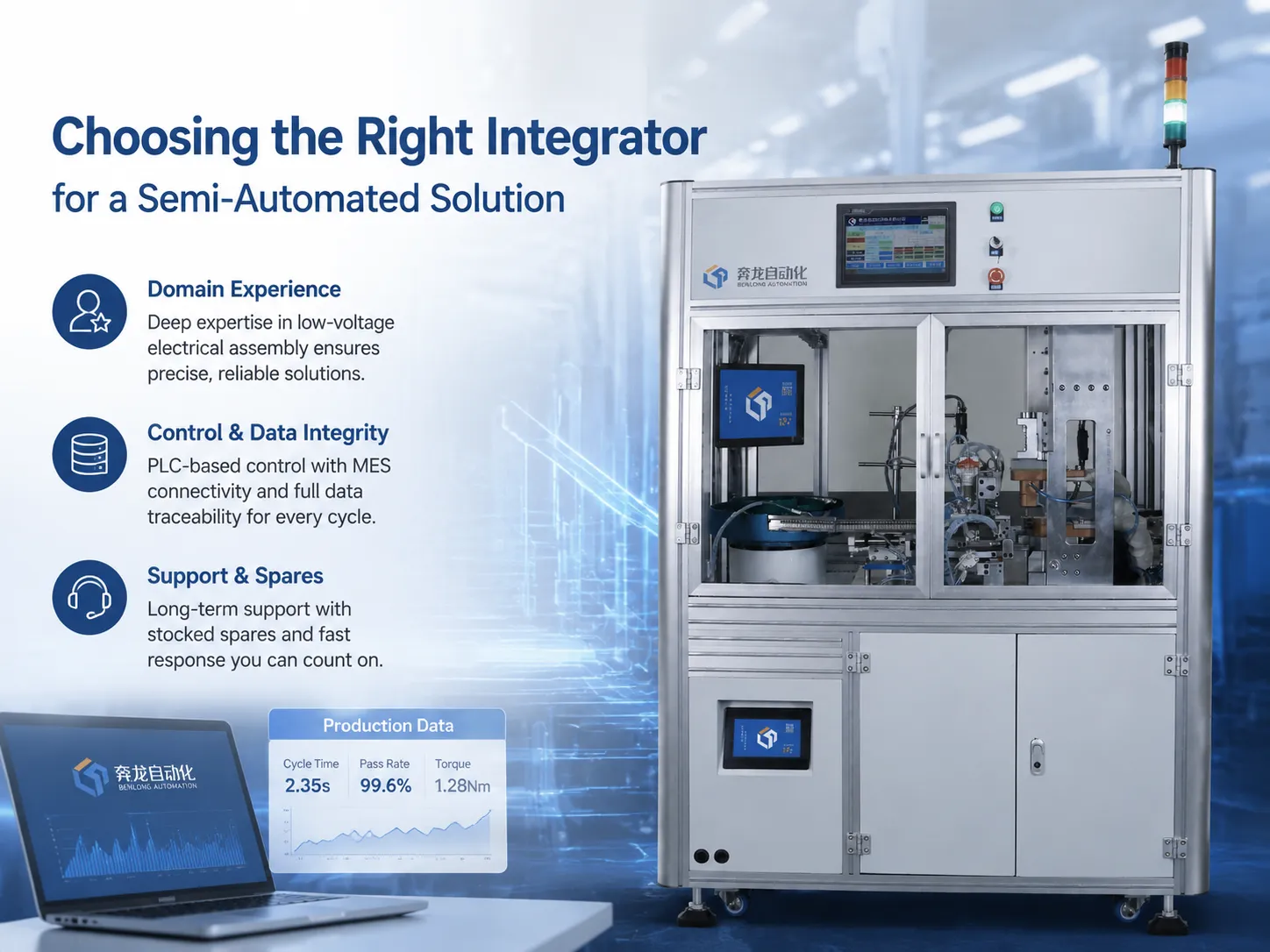
- Domain experience matters. Companies that manufacture general-purpose automation will likely experience difficulties with calibrating a thermal trip unit or welding a silver contact. In contrast, by designing hundreds of stations for the low voltage electrical industry, Benlong Automation has encountered and solved these specific types of issues before.
- Control architecture and data. The device is to be engineered using an industrial programmable logic controller (PLC), for example Rockwell Automations or the Siemens types, that will communicate with a factory’s Manufacturing Execution System (MES). Each cycle’s data will be held in a database and retained regardless of the state of the machine (power off or otherwise).
- Support and spares. A semi-automated cell is considered to be a capital investment that will have a lifespan of 10 or more years. Critical spare parts must be stocked by the integrator and adequate remote/on-site support must be provided within a defined response time.
Frequently Asked Questions
What is a semi-automated process?
Semi-automation is a style of producing items whereby all major operations – such as welding, dispensing, inspecting and fastening – can be performed automatically by an industrial machine, with the exception of loading the part, beginning the process and unloading the finished item. The core processes are therefore automated but the loading/unloading of the parts and parts remains as a manual task which gives more flexibility in the handling of parts.
What is a semi-automated system?
A semi-automated system is an automated (via a PLC, sensors etc.) manufacturing operation that involves using an operator to load/unload parts at each manufacturing cycle. The machine/cell will consist of other automation components and tools which are uniquely matched to the finished component produced at the machine/cell.
What is the difference between automated and semi-automated?
An entirely automated system operates all material moving and processing without any manual intervention, while a partially automated system will only automate the process but requires an operator to prepare and handle the part both before and after each cycle. The difference between the two types of systems lies in the methods of handling materials and not in quality of the process.
What are the different types of automated assembly systems?
There are several types of automated assembly systems from fully integrated lights-out manufacturing lines to semi-automated cells that may be operated by an operator and other work areas or processes where parts must be assembled in an orderly manner. These can also be classified into four major categories: fixed (hard) automation to produce one type of high volume product; programmable automation for multiple batch products; flexible automation to manufacture multiple types of product; and semi-automated cells which automate the process step of assembly but leave manual handling of parts intact.
References
- McKinsey & Company — Digital Manufacturing and Industry 4.0 — Research on productivity and quality impact of targeted automation.
- Rockwell Automation — Industrial Control and Automation Solutions — PLC, HMI, and MES platforms for semi‑automated and automated manufacturing.
- FANUC Corporation — Cobots and Industrial Robots — Robotic solutions that are frequently integrated into semi‑automated assembly cells.
- Automation World — Semi‑Automated Assembly Case Studies — Trade publication covering successful semi‑automation implementations across industries.
A semi‑automated assembly solution is not a compromise between manual and automatic; it is a deliberate strategy that puts the precision and data‑logging of automation where they matter most — on the process steps that determine quality — while keeping the most adaptable, least expensive handling element in place: a trained operator. For manufacturers of circuit breakers, contactors, automotive components, medical devices, and a hundred other products, a semi‑automated cell delivers the certified, repeatable output that modern supply chains demand, at a cost and flexibility that a fully automated line cannot match. Benlong Automation builds those cells for the electrical industry, turning the calibration, testing, and assembly of protective devices from a variable manual operation into a controlled, documented, and repeatable semi‑automated process.