benlong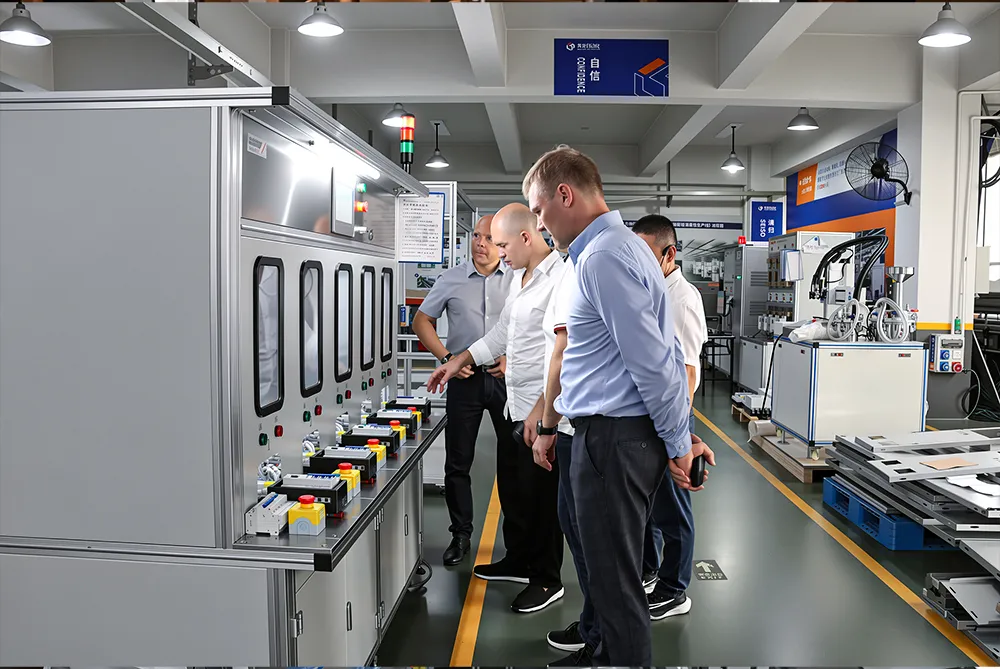

Why an Automatic Screw Machine Decides MCB Terminal Quality
The automatic screw machine has quietly emerged as one of the most critical tools on today’s miniature circuit breaker production line. The terminal screw on an MCB is not just an adornment but is the element that physically connects the incoming wire, conducts current, and determines whether the breaker passes performance tests in the future or fails when tested in a distribution panel. By making this connection with the help of a specially designed automatic screw machine, it is possible to eliminate the major source of variability in manual operations, i.e. the manual labor involved in turning the screw.
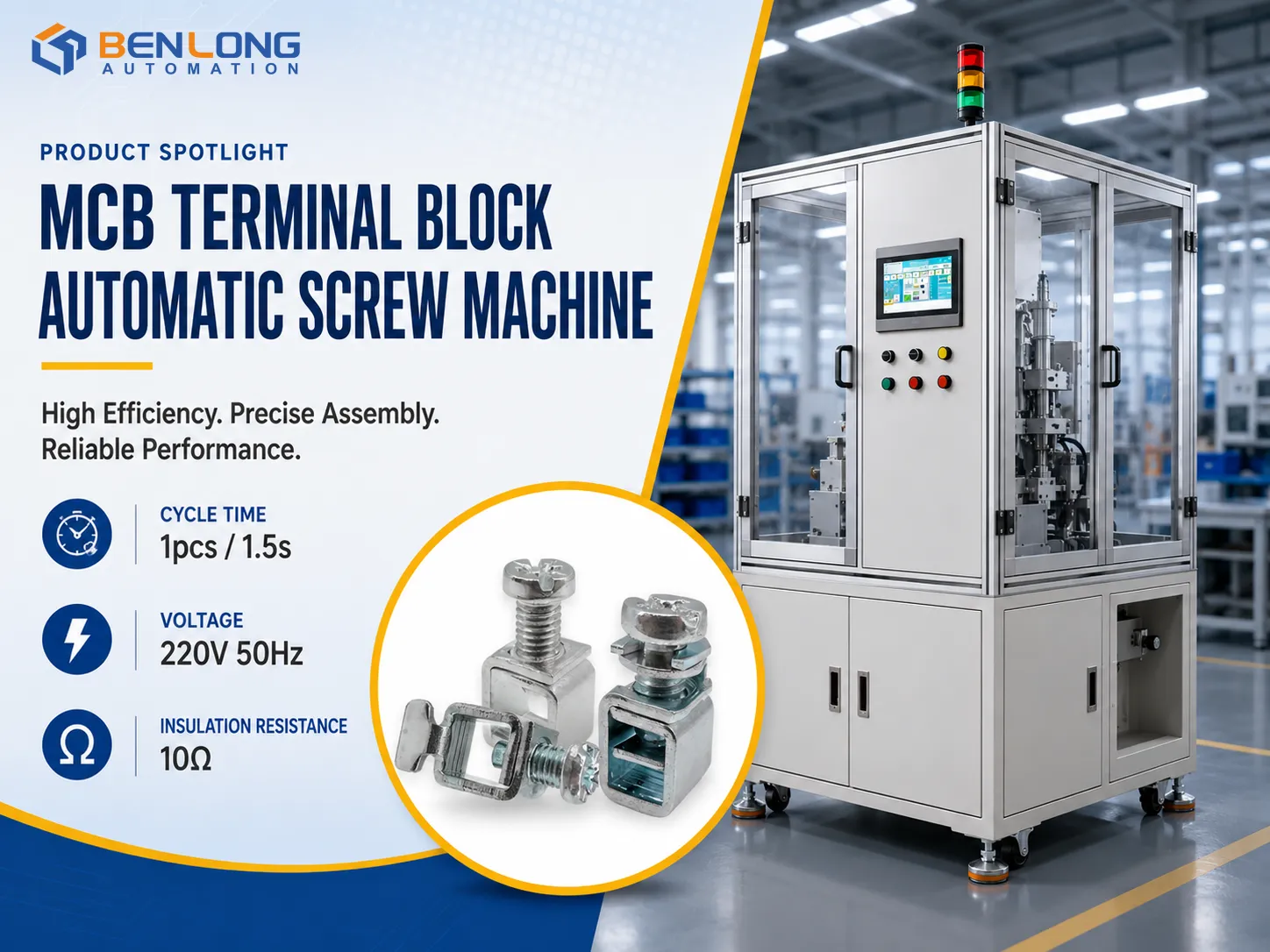
Benlong Automation designed its automatic screw machine for MCB terminals specifically for this purpose. The machine positions, drives, feeds in and conducts a torque check of the terminals with a rating of 1 screw every 1.5 seconds from the mains supply of standard 220V 50Hz. This article shows how important it is for MCB quality, how the machine works step by step as well as the meaning of these parameters for the company that has to choose between manual operations and automating its production process.
Why the terminal screw decides MCB quality
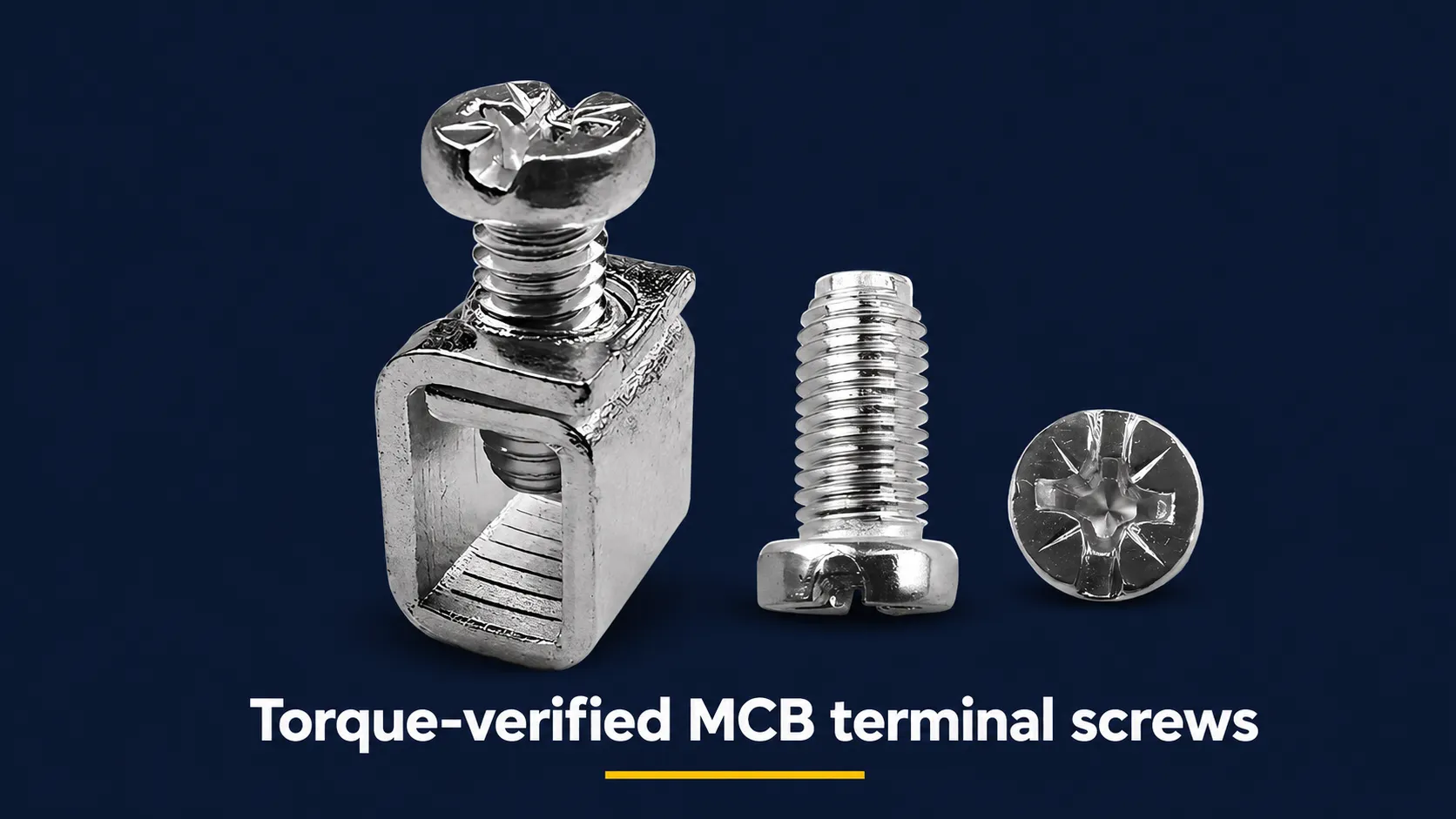
As defined by IEC 60898-1, the international standard for MCBs used in households and, in fact, in similar applications, the reliability of the connection at the terminal is not left to chance. This standard covers the air-break devices that are designed to work with AC current and allows devices up to 440V between the phases at current of up to 125A. A whole clause, called 9.4, has been devoted to the reliability testing issues regarding the screws, the conduction and the connections. The standard describes which torque has to be applied to each screw, and it states that durability tests have to be run at a certain fraction of the defined torque. It means that the connection between the terminal and the wire is no longer an afterthought; instead, it has become a certified and tested feature.
The physical principles involved are rather harsh. An under-torqued screw leads to a bad contact and a bad contact, in turn, produces a high resistance, which leads to heating, which accelerates the oxidation of the joint. Running in the service, this process results in arcing and burns the terminals, and this might cause operation disruption.
This is why the manual screwdriving process becomes such a risk factor when working at large volumes. Although a skilled operator might manage to apply the designated amount of torque, there are a number of errors that he can make. Fatigue in the wrist during the shift hours, worn-out screwdriver or screws that are incorrectly positioned: all of these become possible failures.
What the MCB terminal block automatic screw machine does
An automatic screw machine supplant the inconsistent manual step with a repeated and regulated workflow. Benlong’s unit is totally enclosed, PLC-controlled, with a friend lk:signboard for line status and safety interlocks at the inputs. The workpiece is an MCB terminal block that goes through the machine’s screw feeding and screwing process. The operator can now see the signal tower and get instantaneous feedback through the process. All the operations that were done by the operator’s experience are now executed with servo control and closed-loop monitoring of torque.
The headline figures that matter on a production plan are straightforward:
- Rated cycle time of one piece every 1.5 seconds
- Power supply of 220V, 50Hz single phase, so no special plant wiring is needed
- Enclosed frame with touchscreen HMI, tri-colour status light, and interlocked guarding
- Torque-verified fastening on every cycle, not spot-checked by sampling
How the automatic screw machine works, step by step
If we disregard the confines of the enclosure, it becomes easy to see that the screwing operation itself is a carefully timed series of steps. Since an automatic screw feeding machine is capable of both the screw feeding and the fastening process, it is what makes the point and a real production cell different from an ordinary screwdriver that is placed on some stand.
Screw feeding is the process in which screws are removed from a bulk pile of screws using the help of either a vibrating bowl or a blow feed device. The screws are fed in a correct position one by one from that pile.
Workpiece positioning is achieved through clamping the terminal block so that the screw hole is in line with the spindle. Proper fixture prevents cross threading and misdriving of the screws.
Torque controlled driving of the screws is achieved through the use of either servo or DC driver that is capable of driving screws to the set torque value.
The verification in the course of the process is an important moment since torque and angle are being checked during each cycle of operation and if it turns out that a screw did not get into the predetermined position, the indication is made.
Processing of the terminal block and switching to the next one occurs at a sufficiently high speed.
Because it works as an automatic screw driving machine with closed-loop feedback, the machine does not just fasten faster than a person. It fastens the same way every time and keeps a record of having done so, which is the part that manual assembly can never offer.
Manual assembly versus an automatic screw machine
To illustrate the shifts involved in transitioning from manual assembly to automatic screw machine technology, we must take stock of the work steps that take place during manual screwdriving. Manual screwdriving relies heavily on the human assembler to choose the screw, place it correctly, apply torque based on their judgment, and alert them to any problems that may arise. Each of these activities involves a series of decisions, and each one of those decisions contains ample opportunity to produce defects based on cross factors of fatigue, distraction, and shift duration. The speed of achieving results is a great asset, but it is a slave to the mildest of failures during production, and thus, most defects are discovered only through the downstream inspection process.
Automatic screw feeding and driving machine eliminate all of these decisions. The screw is oriented and fed automatically, the components are held in position, the torque is determined automatically, and errors caught before they can occur instead of afterwards. Thus, the flexibility of a human is indeed traded in for the predictability of the process, and it is precisely what MCB production lines are looking for.
Consistency and torque control: the real payoff
Speed is the first benefit that gets noticed by anyone, but for an MCB manufacturer the greater characteristic of a screw machine is the consistency of its results. Every terminal on each circuit breaker has the same torque, has been seated at the same depth, and has been verified in the same way. This is the characteristic that IEC 60898-1 seeks to ensure when testing screw reliability, and it is the very characteristic that manual assembly cannot ensure when assembling products in large quantities.
Consistency furthermore alters the exchange with customers. Whenever MCBs are supplied to big brands or their OEM partners, the purchaser does not just verify if the MCB operates. The purchaser will check that a supplied machine can prove it will continue working next year. By using a machine, which exerts a specific torque on all joins, a statement “trust us” can turn into something physical and proven to everyone. Consequently, it can help quality departments to reduce the cost of a complaint, minimize the width of recall and shorten the audit.
The throughput and labour math
It is simple to understand the business case from the cycle time. After determining the cycle time as one cycle every 1.5 seconds, one can calculate that the station can process approximately 2400 pieces/hour, since there is no need to consider downtime or breaks. To summarize, these numbers indicate only the theoretical capability of the machine and do not take into account specific characteristics of the particular working place, including uptime, reliability of feeding devices and the load on the machine. However, we can say that even if the output produced by a machine is lower than expected, the machine would still outperform a lot of manual workers.
An automatic screw machine usually pays for itself through these labour calculations. It allows running one shift or even two without fatigue and with lower wages and turnover. Plus, it does not have any quality fluctuations. When the total savings are calculated due to the elimination of scrap and warranty claims, the machine would surely prove to have the return of investments measured in months, not years. So, for any plant willing to expand the production without hiring additional personnel, this will be a great benefit.
Where it fits in the MCB production line
A fully automatic screw machine does not tell the whole story. In MCB production process, it performs one of the functions in a series of processes: cage terminal assembly, screw driving, and joining of sub-assemblies for the resulting breaker to be tested. The situation is much more valuable when separate stations are designed so as to facilitate the process of handing-off.
That is why the screw station pairs naturally with upstream terminal assembly. If you are building or upgrading a line, Benlong’s MCB cage terminal automatic assembly machine handles the terminal cage build that feeds directly into the screw-driving step, so the two operations share a common design language, tooling philosophy, and control approach. Treating them as a matched pair, rather than two isolated purchases, is what turns a collection of machines into an actual line and keeps the whole chain running at the pace of its cycle time instead of the pace of its slowest handoff.
What to look for when choosing an automatic screw machine
All automatic screw machine don’t cater to the needs of MCB terminal. When assessing a machine supplier, focus more on the specifics that impact the uptime and quality of the machine.
These include the closed-loop torque control with the possibility to monitor each cycle instead of simply using the open-loop clutch drives system; a reliable feeding system since generally, the reason for the production line being stopped is not a slow driver, but a clogged feeder; a construction system and the changeover process that corresponds with the product being manufactured which enables the operator to switch from one model to another within a short time; a user-friendly human-machine interface which not only has visual indicators but does offer a way for the operator to recover from failures; a supply partner who is familiar with the process of building MCB.
It is essential to keep in mind that although the cell processes the item in 1.5 seconds, that will only be valuable when it runs constantly. Uptime is more important than peak speed and that’s why it is critical to have a reliable feeder and a simple changeover process and fault clearing due to which the speed of the machine itself is not as important when choosing the optimal machine for the MCB plant.
Built for scaling MCB manufacturers
Small and medium-sized enterprises (SMEs) producing circuit breakers, particularly the ones working with leading brands and their OEM partners, are faced with the same challenge: they must produce big quantities of high-quality products while keeping costs of labor and failure rates in check. This challenge can be successfully resolved with the help of a state-of-the-art automatic screw machine, which offers a solution to both of these problems in the most critical phase of manufacturing MCBs. This high capacity machine operates at thousands of units per hour and at the same time produces terminal connections that are the focus of IEC 60898-1 testing and notoriously difficult to get right consistently. This is the ultimate advantage for companies, as they are able to receive large orders with confidence rather than merely wait and hope for their production line to function as required.
Conclusion
The terminal screw is small, but it sits on the critical path of both MCB safety and MCB certification. Doing it by hand at volume means accepting variation you cannot fully see or prove. A purpose-built automatic screw machine for MCB terminal blocks replaces that variation with a fast, torque-verified, documented process, and pairs with upstream terminal assembly to form a coherent line. If you are planning to scale MCB production, this is one of the highest-leverage places to automate first. To discuss how Benlong’s MCB terminal block automatic screw machine fits your line, reach out to the Benlong Automation team for specifications and a throughput assessment.
Huang Xiaolei | Benlong Automation