benlong


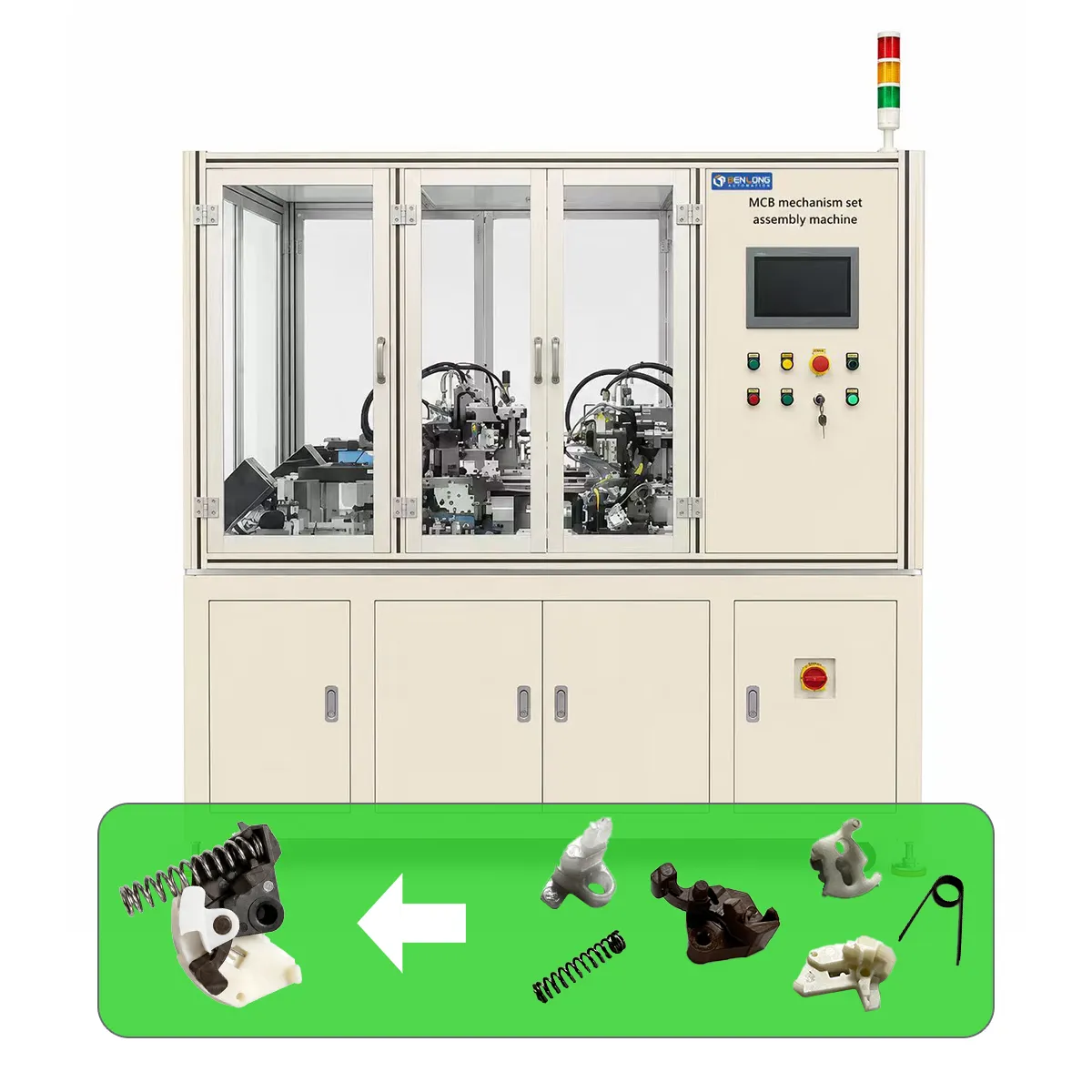
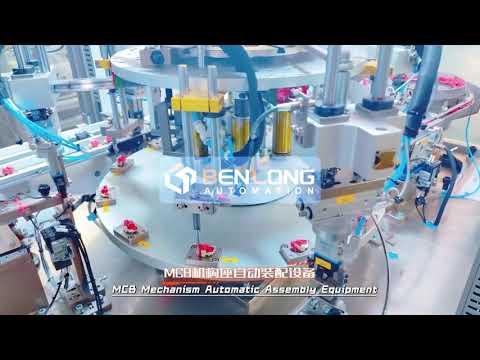
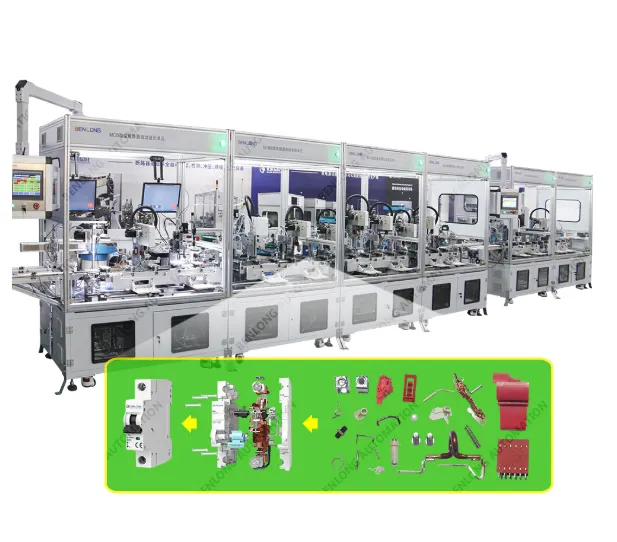
MCB Mechanism Set Automatic Assembly Machine
The MCB mechanism set automatic assembly machine automates the core mechanical assembly of miniature circuit breakers: mechanism actuator, trip pawl, accessory lever, spring, and bimetal lever combined at one set every 2.5–3 seconds — with machine-repeatable spring installation and latch positioning that manual assembly cannot sustain.
MCB Mechanism Set Automatic Assembly Machine
The MCB mechanism set automatic assembly machine is a specialized automation solution developed for assembling the core mechanical structure of miniature circuit breakers. It brings together the five components of the trip mechanism — the mechanism actuator, trip pawl, accessory lever, spring, and bimetal lever — in a fully automated sequence, producing one complete mechanism set every 2.5–3 seconds (approximately 1,200–1,440 sets per hour).
The mechanism system is responsible for the tripping function, switching operation, and mechanical reliability of an MCB, so the precision and consistency of these assemblies directly impact the circuit breaker’s performance and lifespan. Traditional manual assembly of these components is labor-intensive and prone to inconsistency — especially spring installation and latch positioning, which demand a level of precision and repeatability that is difficult to sustain by hand. This machine automates exactly those operations, built on branded core components: Festo and SMC cylinders, an Omron PLC with Omron relays and sensors, and an MCGS HMI. Fixtures and station tooling are customized to your mechanism drawings.
1 pc every 2.5–3 seconds | Precision spring & latch assembly | Festo & SMC cylinders · Omron PLC
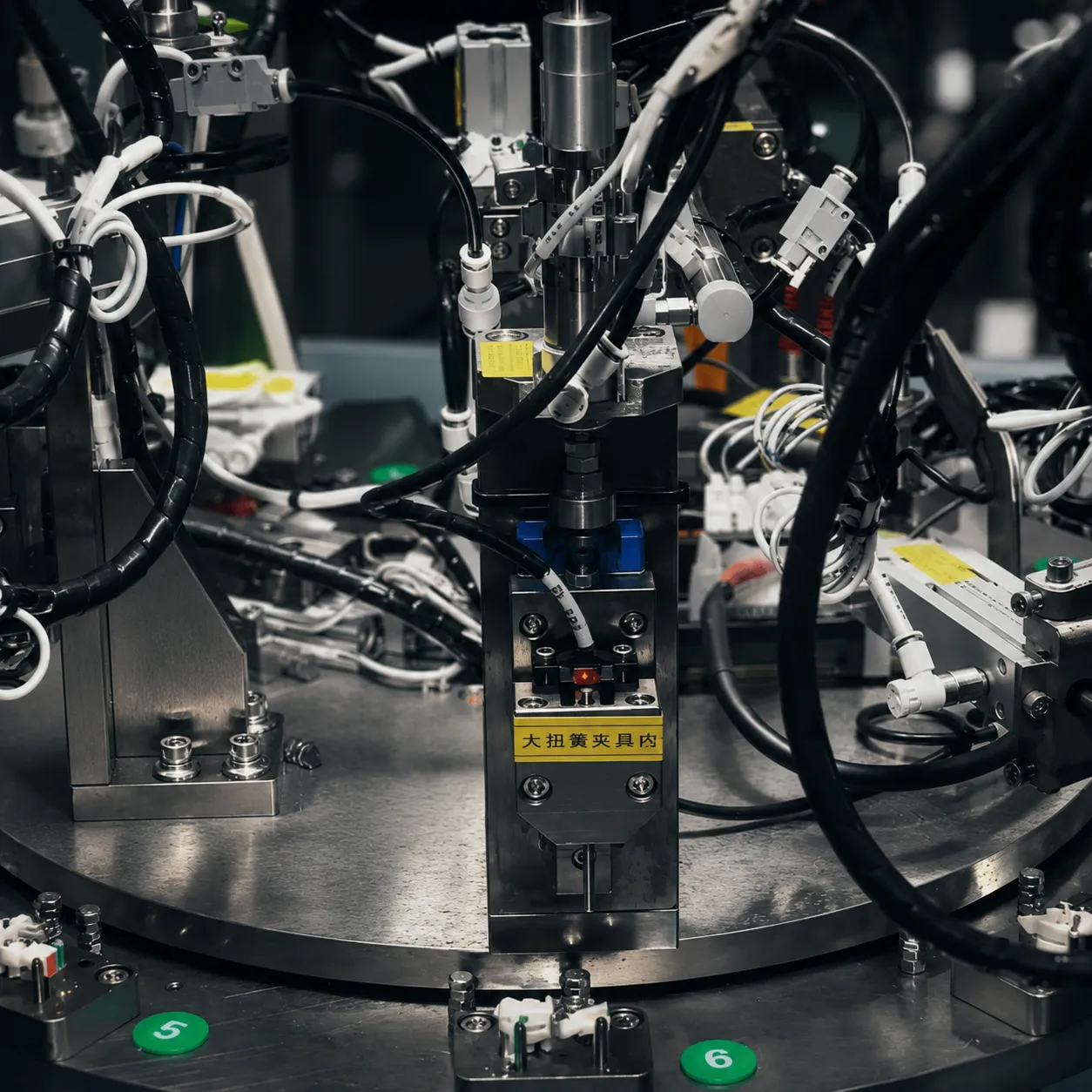
What is an MCB Mechanism Set Assembly Machine?
The mechanism set is the heart of a miniature circuit breaker: it is the assembly that performs the switching operation, holds the contacts closed against spring force in normal service, and releases — trips — when the thermal or magnetic protection commands it. In this design, the set consists of five components: the mechanism actuator that forms the structural core, the trip pawl that latches and releases the mechanism, the accessory lever that transfers motion, the spring that stores the operating energy, and the bimetal lever that links the thermal element to the trip action. Every functional property a buyer cares about in an MCB — trip force, latch engagement, switching feel, and mechanical endurance over thousands of operations — is set at this assembly stage. That is what makes manual assembly such a liability here: installing a small spring under tension and positioning a latch to fractions of a millimeter are operations where human consistency fatigues over a shift, and the resulting variation surfaces later as calibration spread and endurance failures. An MCB mechanism set assembly machine replaces those manual operations with dedicated automated stations: each component is fed and oriented automatically, the actuator is loaded onto the assembly fixture, the spring is installed under controlled conditions, and the pawl and levers are placed and engaged with machine-repeatable positioning before the completed set is discharged for downstream calibration and testing. As a non-standard custom machine, the station sequence, fixtures, and feed tooling are engineered around your specific mechanism design.
Mechanism actuator, trip pawl, accessory lever, spring, and bimetal lever assembled in one automated sequence.
One complete mechanism set every 2.5–3 seconds — approx. 1,200–1,440 sets per hour.
The two hardest manual operations — spring installation and latch positioning — run with machine repeatability.
Festo & SMC cylinders, Omron PLC / relays / sensors, and MCGS HMI.
Assembly Process & Key Stations



Technical Specifications
| Applicable product | MCB mechanism sets (trip mechanism assemblies), customized to part drawings |
|---|---|
| Assembled components | Mechanism actuator · trip pawl · accessory lever · spring · bimetal lever |
| Production capacity | 1 pc per 2.5–3 seconds (approx. 1,200–1,440 sets/hour) |
| Pneumatic components | Festo & SMC cylinders |
| Control system | Omron PLC with MCGS HMI touch screen; Omron relays & sensors |
| Machine dimensions | L1650 × W1500 × H1800 mm |
| Power & air supply | 220V ±10%, 50Hz | Compressed air ≥ 0.6MPa |
Detailed Process Flow
The exact station sequence is engineered around your mechanism design. A typical configuration runs as follows:
- Component feeding & orientation – Each of the five components is fed and oriented automatically by its dedicated feeding station.
- Actuator loading – The mechanism actuator is loaded onto the assembly fixture as the structural base of the set.
- Spring installation – The spring is installed under controlled conditions — the operation most prone to inconsistency in manual assembly.
- Pawl & lever assembly – The trip pawl, accessory lever, and bimetal lever are placed and engaged with machine-repeatable positioning.
- Discharge – The completed mechanism set is discharged, ready for downstream calibration and testing, at a rate of one set every 2.5–3 seconds.
Core Technical Advantages (Custom Non‑Standard Design)
Automates the two hardest manual operations
Spring installation and latch positioning are the operations where manual assembly fails first — they demand precision and repeatability that no operator can sustain across a full shift. The machine executes both with identical results on every cycle.
Assembly consistency becomes trip performance
The mechanism set determines trip force, latch engagement, and mechanical endurance. Consistent automated assembly translates directly into tighter calibration spread and fewer endurance failures downstream.
High throughput from a single machine
One complete five-component mechanism set every 2.5–3 seconds — approximately 1,200–1,440 sets per hour — replacing multiple manual assembly positions with one compact station.
Branded pneumatics and controls
Festo and SMC cylinders, Omron PLC, relays, and sensors, and an MCGS HMI — established component brands with global spare parts availability and proven reliability in continuous production.
Trusted by industry leaders
















Applications and Integration
Custom Engineering & Delivery
Request a Custom Mechanism Assembly Machine Quote
Send us your mechanism component drawings or samples and your production targets. Our engineers will design the feeding, assembly, and discharge stations around your exact mechanism set.
WhatsApp: +86 150 5837 0007 | Email: xsb@benlongkj.cn | English & Chinese support
Why Choose Benlong for Mechanism Assembly?
- 15+ years designing MCB assembly machines for low‑voltage electrical products
- Automated spring installation and latch positioning — the operations manual assembly struggles with most
- One complete five-component mechanism set every 2.5–3 seconds
- Festo & SMC pneumatics, Omron control, MCGS HMI throughout
- Global service and spare parts support
Typical Custom System Includes
Automatic mechanism assembly equipment consisting of: · Dedicated feeding and orientation stations for all five components; Assembly fixtures per customer drawings; Spring installation station; Pawl & lever assembly stations; Festo & SMC cylinders; Omron PLC with MCGS HMI; Omron relays & sensors; Discharge station; Installation commissioning; One-year warranty
Related solutions
Frequently Asked Questions
It is the mechanical heart of the breaker — the assembly responsible for the switching operation, holding the contacts closed in service, and releasing when the thermal or magnetic protection trips. Its assembly quality directly determines trip force, latch engagement, switching behavior, and mechanical endurance.
Five components per set: the mechanism actuator, trip pawl, accessory lever, spring, and bimetal lever. Feeding stations, fixtures, and tooling are customized to your specific component drawings.
These are the two operations where manual assembly is least reliable: installing a small spring under tension and positioning a latch to fractions of a millimeter demand precision that operators cannot sustain across a full shift. Inconsistency here surfaces later as calibration spread and mechanical endurance failures — the machine removes that variation at the source.
One complete mechanism set every 2.5–3 seconds, or approximately 1,200–1,440 sets per hour, from a single machine.
Drawings or physical samples of your five mechanism components, your target capacity, and your factory’s power and air supply conditions. Our engineers will then propose the station configuration for your mechanism design.
Related Products
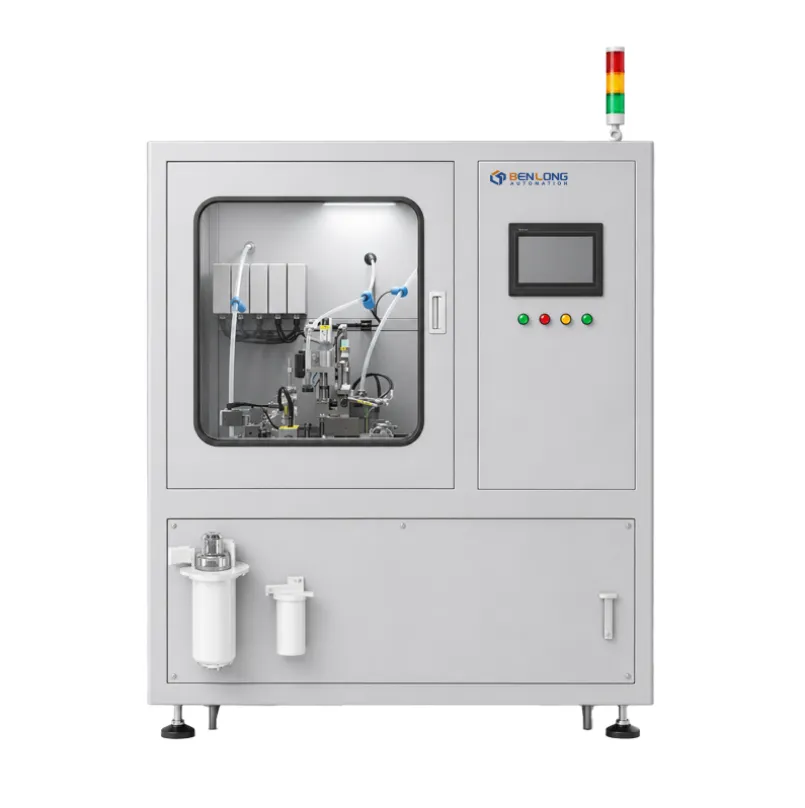
MCB magnetic iron core automatic assembly machine
View Details
Semi automatic welding machine
View Details
MCB Cage Terminal automatic assembly machine
View Details
Automatic Capping Machine
View Details
Wall switch sliver contact automatic riveting machine
View Details