benlong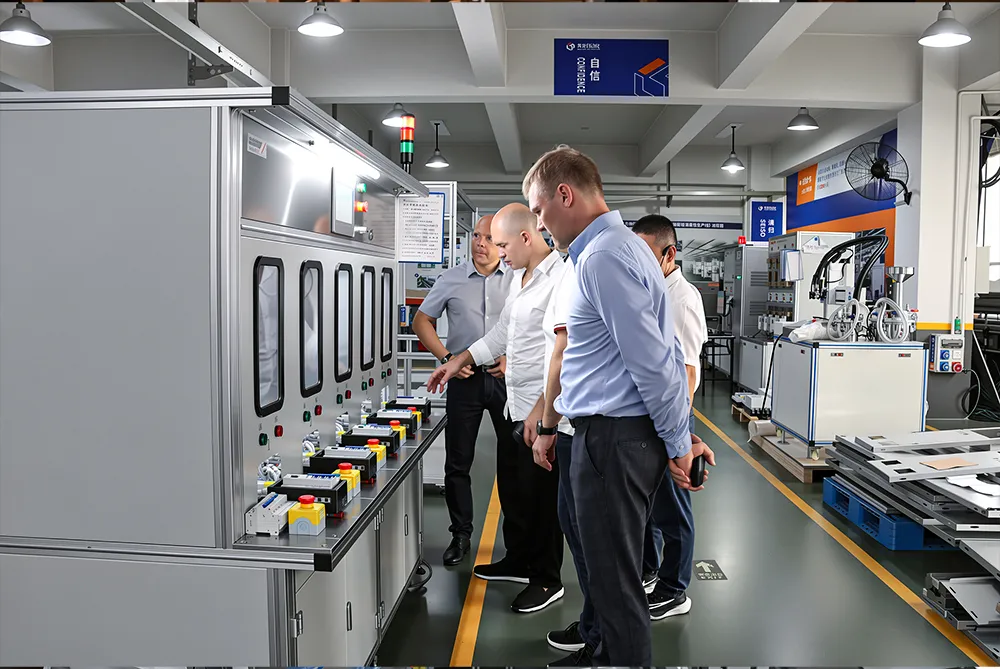


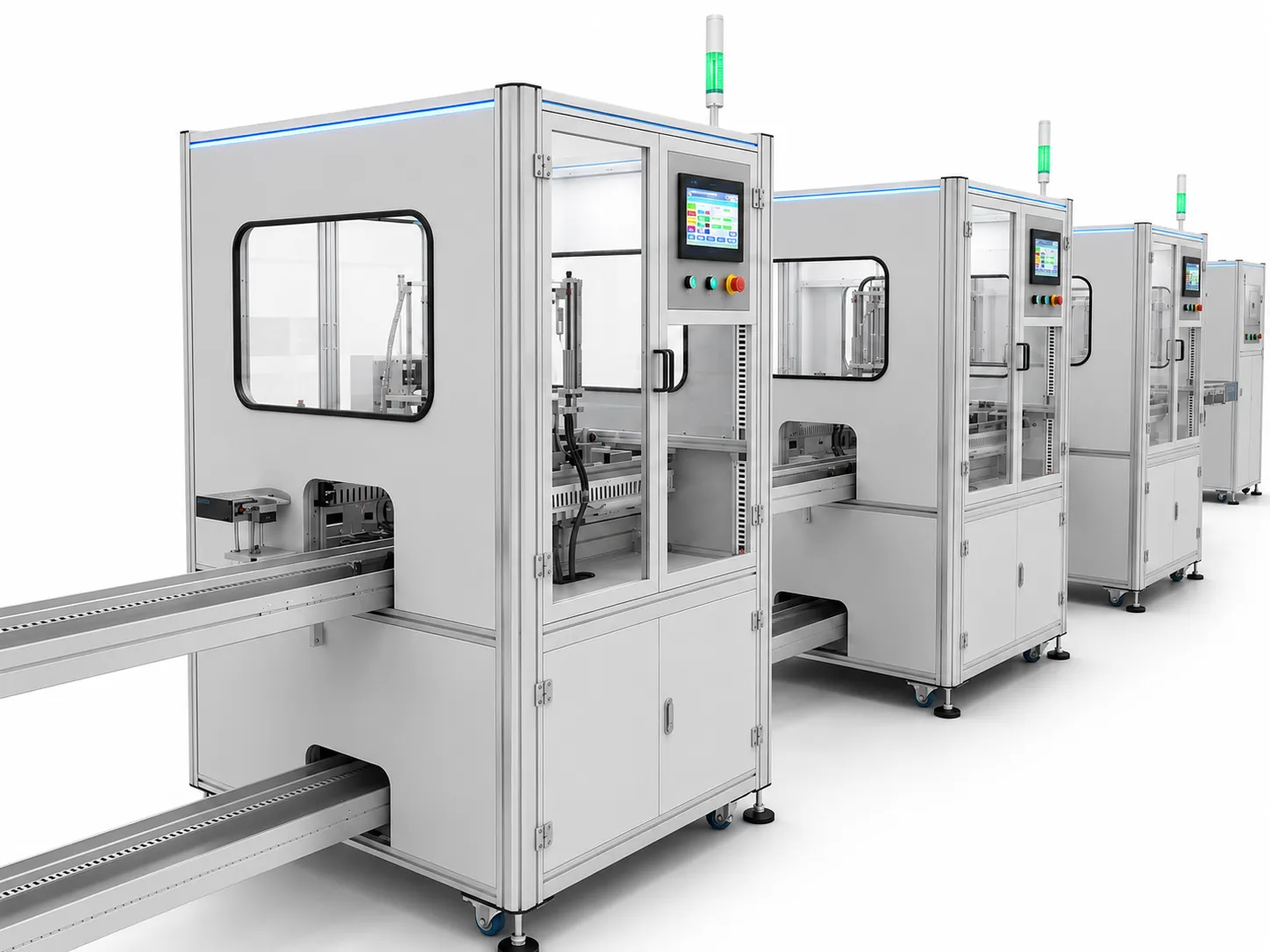
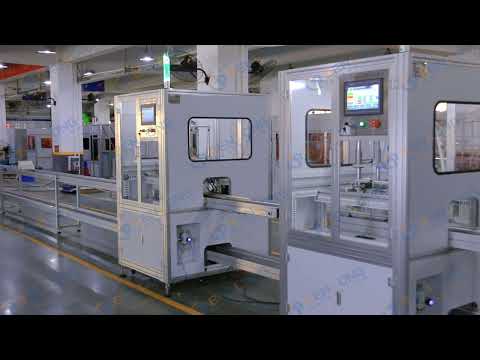
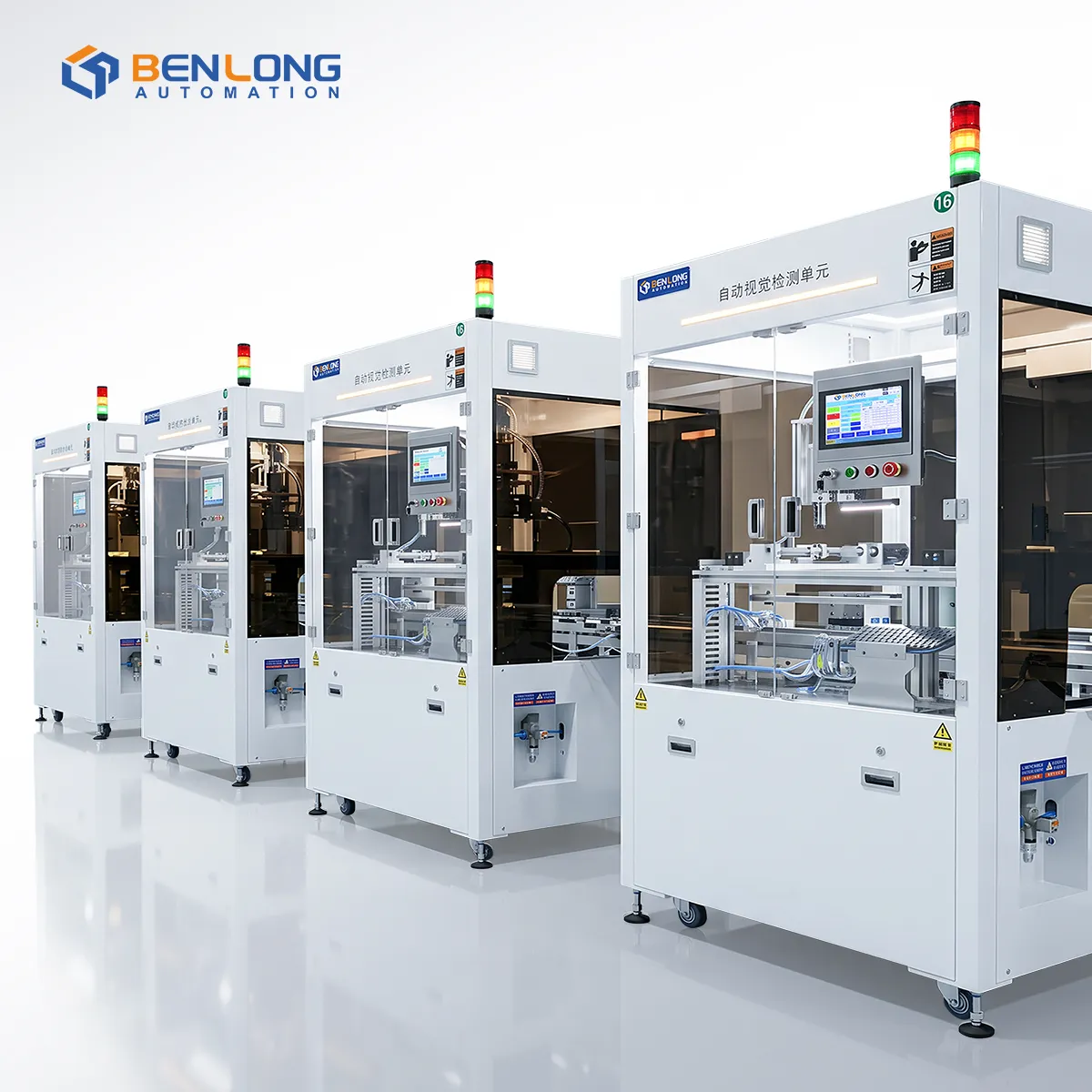
Load isolation switch Automatic Testing line
Automatic load isolation switch testing line per IEC 60947‑3. 10‑station integration: loop resistance (≤50μΩ, 100A DC), hi‑pot (3kV), mechanical life (≥10,000 cycles), torque, temperature rise. ≤28 sec/unit, 99.8% first‑pass yield, MES ready. Ideal for disconnector mass production and export certification.
Fully Automatic Load Isolation Switch Testing Line
An Automatic Testing Line for Load Isolating Switches(Auto Test Line) is a Complete Intelligent Integrated System for Testing Load Break Switches and Disconnectors per GB/T 14048.3 and IEC 60947-3.
The System automates the entire quality validation process from material loading to appearance and dimensional inspection; mechanical motion/stroke and torque verification, contact resistance and/or continuity testing, insulation (hi-pot) and withstand voltage testing, rated current and temperature rise testing, operating life (electromechanical durability) testing, validating all auxiliary functions for ON and OFF indication final check to coding/traceability and packaging inspection of the product.
The system includes tests for integrated loop resistance (up to 50 μΩ), AC hi-pot (single to phase & ground), mechanical operation/life testing (minimum 10,000 cycles), handle torque verification as well as indications for on and off and interlock functionality. The system also features accurate servo motors, safety light curtains, and full MES docking providing a cycle time per unit for a single piece of <28 seconds and 1st-pass yield >99.8% with remote diagnostic capability. The system also meets the requirements for mass production and export certification for a global brand.
Standard delivery: 60-90 days | MES ready | CE & IEC certified
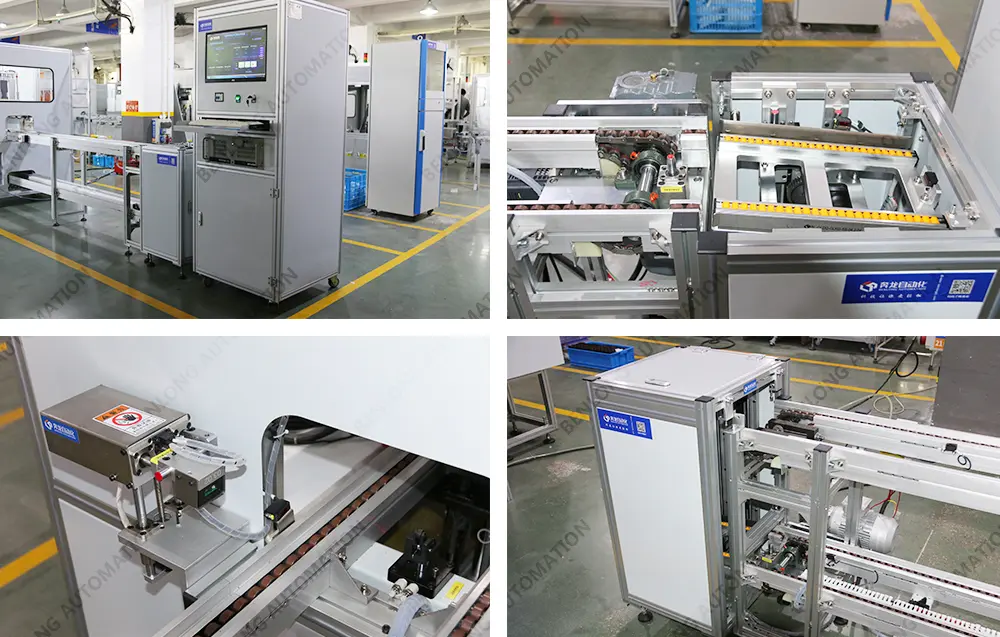
What is a Load Isolation Switch Automatic Testing Line?
An automated load isolation switch testing machine is a special testing machine that will check the electrical and mechanical operation of low voltage load break switches and disconnectors in power distribution. Load break switch and disconnectors must comply with high standards for safety and reliability (IEC 60947-3, GB/T 14048.3). Our automated tests are made up of up to ten sequential test stations: visual inspection; dimensional verification; mechanical stroke and operating torque measurement; contact resistance (micro-ohm) testing; dielectric withstanding (Hi-Pot) testing; temperature rise at rated current; electro-mechanical endurance (operating life); auxiliary contact/interlock verification; final ON/OFF verification; coding/traceability. The testing machine uses servo actuators with high precision, programmable current sources; data is collected in real time. The recorded data is sent to MES for total traceability and SPC analysis. As a custom solution, the load isolation switch machine may be engineered specifically for your switch design, current rating (e.g., 16A-630A), pole configurations, and test specifications.
Comprehensive validation from loading to packaging, fully automated.
100A DC four‑wire measurement, accuracy ±2%.
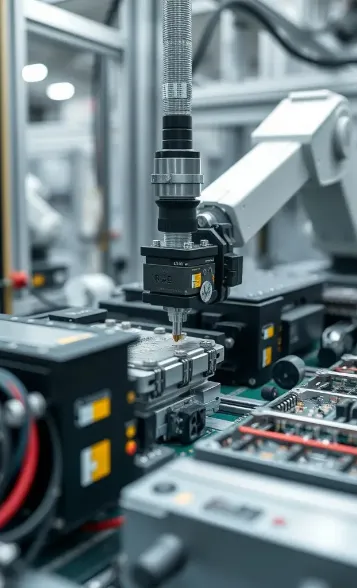

Servo‑controlled operation test with torque and stroke monitoring.
Barcode traceability, real‑time data upload, SPC analysis, electronic reports.
Testing Process & Key Stations



Technical Specifications
| Applicable standards | GB/T 14048.3, IEC 60947‑3 |
|---|---|
| Loop resistance test | ≤50μΩ, 100A DC, four‑wire measurement, accuracy ±2% |
| Hi‑pot (withstand voltage) test | Up to 3,000V AC (phase‑to‑phase / phase‑to‑ground), adjustable duration |
| Mechanical operation & life test | ≥10,000 cycles, programmable speed and stroke, torque monitoring |
| Handle torque verification | 0.5‑5 N·m, automatic measurement, pass/fail judgment |
| Rated current / temperature rise test | Programmable current up to rated load, thermocouple monitoring |
| Single‑piece cycle time | ≤28 seconds (including all tests) |
| First‑pass yield | ≥99.8% (typical, depends on product quality)– |
| MES integration | Barcode scanning, real‑time data upload, SPC analysis, electronic test report– |
| Safety features | Safety light curtains, emergency stop, enclosed test chambers– |
Detailed 10‑Step Test Process
The automated test line executes the following sequence:
- Material loading – Automatic conveyor or robot loading of switches into test fixtures.
- Appearance & dimensional inspection – Vision system checks for missing parts, deformation, and critical dimensions.
- Mechanical motion / stroke & torque inspection – Measures operating force, stroke angle, and ON/OFF torque.
- Contact resistance / continuity test – Loop resistance measurement (≤50μΩ) using 100A DC.
- Insulation / withstand voltage (hi‑pot) test – Applies AC high voltage between phases and phase‑to‑ground; detects leakage.
- Rated current / temperature rise test – Passes rated current for a defined period, monitors temperature increase.
- Operating life / electromechanical durability test – Performs up to 10,000 mechanical cycles with real‑time monitoring.
- Auxiliary / additional function test – Verifies auxiliary contacts, locking/interlocking mechanisms.
- Final function confirmation – Checks ON/OFF indication and proper switching.
- Coding / traceability + packaging inspection – Laser marking of serial number, barcode scanning, and final visual check before packaging.
Core Technical Advantages
High‑speed parallel & sequential testing
The line is designed with multiple independent test stations that operate concurrently where possible (e.g., contact resistance, hi‑pot, mechanical life). This minimizes idle time and achieves a total cycle time of ≤28 seconds per unit.
Precision loop resistance measurement
The loop resistance station uses a 100A DC test current (IEC 60947‑3 requirement) with a four‑wire Kelvin connection, achieving ±2% accuracy. This ensures reliable detection of loose connections or undersized conductors.
Automated mechanical endurance with torque recording
A servo actuator performs up to 10,000 ON‑OFF cycles at programmable speed and stroke. An integrated torque sensor records the operating force curve, identifying wear or binding before failure.
Full MES traceability for export certification
Each test result (including raw curves for torque, temperature, and contact resistance) is linked to the unit’s barcode. The system generates electronic test reports compliant with export certification requirements (e.g., CE, UL, IEC). SPC dashboards provide real‑time quality visibility.
















Customer Success Story – Switchgear Manufacturer
.Load Break Switch manufacturers needed to Increase Test Capacity by 800 to 2500 units/day. At the same time, they needed to remain compliant to IEC 60947-3 certification. Benlong was able to help by supplying a fully automated Load Isolation Switch Test Line consisting of 10 integrated stations. Results after 4 months were as follows:
The Line Covered Its Expense In Ten Months & Provided Full Traceability For A Major Utility Approval Audit.
Applications and Integration
Custom Engineering & Delivery
Request a Custom Load Isolation Switch Test Line Quote
Please provide us with the specs of your switch, the testing standards (IEC 60947-3/GB/T 14048-3), and your expected throughput so that we can begin designing a custom test line to meet your specific requirements. The test line will include both loop resistance and hi-pot testing, as well as mechanical life, torque, and manufacturing execution system (MES) integration, along with a complete return-on-investment (ROI) analysis.
WhatsApp: +86 150 5837 0007 | Email: xsb@benlongkj.cn | English & Chinese support
Why Choose Benlong for Switch Testing Automation?
- 15+ years designing automatic test lines for low‑voltage switches and disconnectors
- Proven 10‑station integrated testing – ≤28 sec/unit, 99.8% first‑pass yield
- Precision loop resistance (≤50μΩ, 100A DC) and hi‑pot (up to 3kV)
- Mechanical life test (≥10,000 cycles) with torque and stroke monitoring
- Full MES traceability – barcode, SPC, electronic reports, remote diagnostics
Typical Custom Line Includes
Conveyer Devices Bar Codes Reader · Vision Verification Station · Mechanical Testing for Torque and Stroke · Resistance Testing up to 100A DC · High Voltage (3kV AC) Tester · Temperature Rise Testing Station · Endurance Testing on Mechanical Actuator · Auxiliary Contact Testing on Circuit Breaker · Laser Marking Device · Programmable Logic Controller (Siemens) & Human Machine Interface (HMI) · Manufacturing Execution System (MES) Communications Protocol (OPC UA) · Light Curtain Safety Protection · Installation & Training Provided · One (1) Year Warranty Provided.
Frequently Asked Questions
A load breaking switch (also referred to as a load interrupting switch) allows the operating personnel of an electric utility to open or close a circuit while it is in an energized (loaded) condition. A disconnector or isolating switch is only designed to make a circuit connection or disconnection when it is not energized (unloaded); however, some modern disconnectors have also been designed with limited load/circuit interrupting capabilities. Our test line can accommodate the testing of both types of switches, subject to the respective testing parameters.
Using a four-wire (Kelvin) connection, the loop resistance test applies 100 A DC test current through the closed switch contacts. Measurements of voltage across the closed switch contacts are taken, and resistance is calculated. Per IEC 60947-3, the acceptable limit for newly installed units is relative or total resistance ≤50 μΩ.
IEC 60947-3 defines a mechanical lifespan for circuit breakers, ranging from 1000-10000 cycles, depending on their use. Our test line can complete up to 20000 cycles if needed; it has adjustable (i.e., programmatic) speed and stroke capabilities.
The module can be synchronized to other upstream assembly conveyors by using I/O or Ethernet communication (Modbus TCP and Profinet). It is also possible to provide custom transfer interfaces.
The system will transmit the following information about every unit tested: the barcode number, the date and time of the test, the results from the test station (including loop resistance, high-pot leakage, torque, stroke, temperature rise, cycle count, and pass/fail status), as well as a PDF version of the test report. You can view a real-time yield report and trend charts on the SPC dashboard.
Related Products
lithium battery PACK module automatic production line
View Details
Vacuum circuit breaker (VCB) automaticproduction line
View Details
Three phase electric meter automatic production line
View Details
DC Isolating Switch Automatic production line
View Details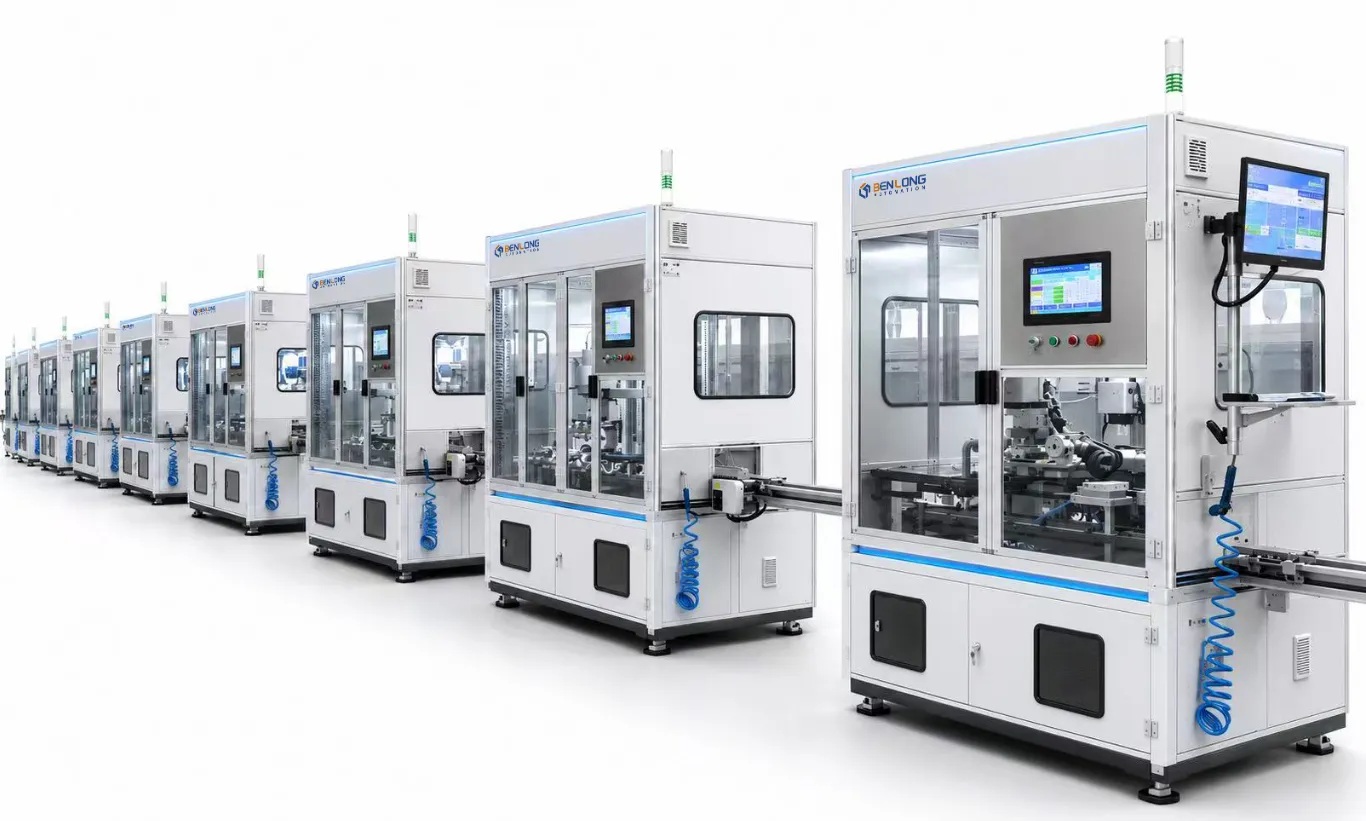
MCB automatic testing line
View Details