超音波溶接機
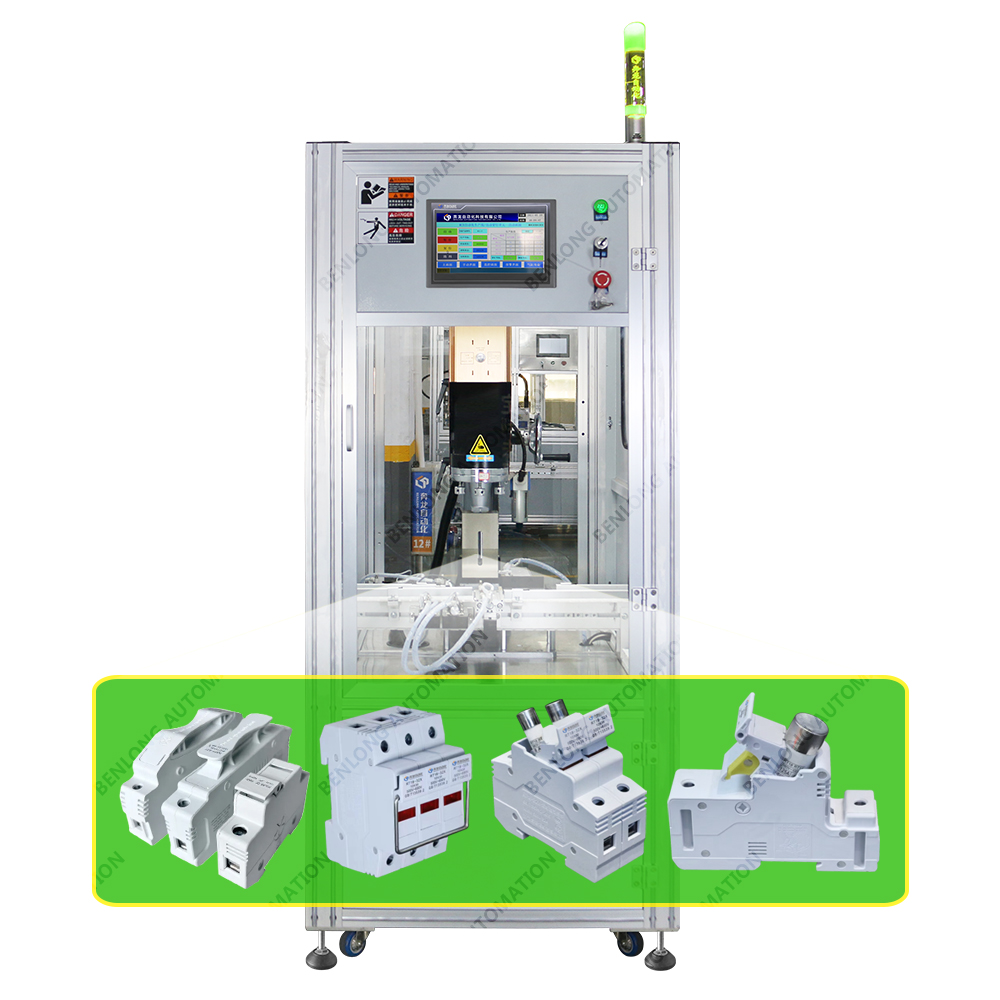
Custom ultrasonic welding machine for thermoplastics and films. 15‑40 kHz, digital energy control, 0.1‑2.0 sec cycles, no consumables. Suitable for ABS, PC, PP, PA, non‑wovens. Custom sonotrode and fixture design. Ideal for automotive, medical, electronics, and packaging industries.
High‑Performance Ultrasonic Welding Machine for Thermoplastics & Films
This device allows you to weld plastics together using ultrasonic frequencies – specifically, this ultrasonic welder converts your electrical main supply (50/60 Hz) to an ultrasonic frequency of either 15, 20, 30 or 40 kHz. It achieves this conversion using a transducer, which creates mechanical vibration from the high-frequency electrical energy. This is then amplified in amplitude through a booster and transferred to the welding head (or sonotrode). The mechanical vibration produces heat due to friction between the two parts being welded together (work piece interface), which results in melting of the plastic and producing a strong, clean bond (i.e. welded area) without the use of adhesives/solvents. This process makes the ultrasonic welding system an excellent method for welding together many different types of materials including hard thermoplastics, fabrics, films and non-woven materials.
Key components are ultrasonic generator, transducer/booster/sonotrode stack, custom tool (fixture), and durable press frame. The machine allows precise control of the weld time, pressure, and energy – providing repeatable results for high-volume production. Applications are diverse and include automotive components (dashboard assemblies and light lenses), medical devices (filter housings and IV components), consumer electronics (batteries and USB connectors), and packaging (blister packs and tube seals). Typical weld cycles are 0.1 to 2.0 seconds; this is considerably less than hot plate or solvent bonding.
Standard delivery: 30-45 days | 15‑40 kHz options | Custom tooling available
What is an Ultrasonic Welding Machine?
An ultrasonic welding machine is a fast, clean, non-contact assembly system for thermoplastic materials using mechanical vibration (15-40 kHz) to produce frictional heat at the interface of two thermoplastic materials. Friction / heat melts the thermoplastic materials together while pressure forms a molecular bond. Unlike traditional adhesive bonding or hot plate methods, ultrasonic welding completely eliminates the need for consumables as well. The ultrasonic system has five major system components: (1) generator (converts line power to a high-frequency electrical signal), (2) transducer (piezoelectric crystals convert electrical energy to linear vibration), (3) booster (a mechanical amplifier used for adjustment of amplitude), (4) sonotrode (welding horn that actually contacts the parts to be welded), and (5) fixture (holds parts in alignment). Ultrasonic welding machines are very common for joining rigid thermoplastics (i.e. ABS, Polycarbonate, Polystyrene, PP, PE, and Nylon), as well as for joining fabrics and films in multiple industries such as automotive, medical, electronic, and packaging. Our ultrasonic welding machine does not have a standard configuration; rather it is configured to meet your specific part configuration and material using a modified sonotrode, fixture and frequency.
15, 20, 30, or 40 kHz – select based on part size and material.
Time, energy, or peak power modes for repeatable weld quality.
0.1‑2.0 seconds per weld – ideal for high‑volume automation.
No adhesives, solvents, or fasteners – clean and cost‑effective.
Machine Components & Welding Process
技術仕様
| Frequency options | 15 kHz, 20 kHz, 30 kHz, 40 kHz (selectable) |
|---|---|
| Generator power | 800W, 1200W, 2000W, 3000W (model dependent) |
| Welding modes | Time mode, Energy mode, Peak power mode, Ground detection |
| Weld force range | 50‑1000 N (pneumatic, programmable)– |
| Stroke (press travel) | 50‑100 mm (adjustable)– |
| Cycle time | 0.1 – 2.0 seconds per weld (typical)– |
| Compatible materials | ABS, PC, PS, PP, PE, PA, acrylic, films, non‑wovens– |

| 制御システム | Digital generator with LCD/HMI, weld data logging, recipe storage– |
| 電源 | 220V ±10% 50Hz | Compressed air 0.6MPa– |
| Safety features | Safety door (optional), emergency stop, overload protection– |
主要な技術的利点
Sub‑second welding cycles
Ultrasonic welding typically takes 0.1‑2.0 seconds per joint, making it one of the fastest plastic assembly methods. This allows integration into high‑speed rotary or inline automated systems.
No consumables & clean process
No adhesives, solvents, or mechanical fasteners are required. The weld is formed by molecular fusion, creating a hermetic seal without contamination – ideal for medical and food contact applications.
Precise energy control for consistent results
The digital generator monitors real‑time power output and can stop the weld when a preset energy value (joules) or peak power is reached – compensating for part variations and ensuring consistent strength.
Wide frequency range for various part sizes
Lower frequencies (15‑20 kHz) are suited for large parts or long weld distances; higher frequencies (30‑40 kHz) provide delicate, flash‑free welds for small or thin‑walled components.
Customer Success Story – Automotive Electronics Assembler
Having to weld ABS sensor housings for a Tier 1 automotive supplier with a hermetic seal was challenging due to prior issues with hot plate welding: Flash and extended cycle times (12 seconds). Benlong met this challenge by supplying a 20 kHz ultrasonic welder complete with a custom sonotrode and fixture. The outcome was successful.
The machine paid for itself in 7 months and enabled fully automated inline assembly.
アプリケーションと統合
カスタムエンジニアリングと納品
Request a Custom Ultrasonic Welding Machine Quote
Please provide us with your sample part, material, and target cycle time. Our qualified engineers will recommend an ideal frequency and design a custom fixture and sonotrode, and prepare a complete ROI analysis.
WhatsApp: +86 150 5837 0007 | メール: xsb@benlongkj.cn | 英語と中国語でのサポート
Why Choose Benlong for Ultrasonic Welding?
- 15年以上のデザイン経験 ultrasonic welding systems for plastics and non‑wovens
- Proven 15‑40 kHz generator technology with digital energy control
- In‑house sonotrode and fixture design (aluminum, titanium, steel)
- Quick‑change tooling for multiple part families
- グローバルなサービスおよびスペアパーツサポート
標準マシンに含まれるもの
Ultrasonic Generator ( Digital ) / Transducer / Booster / Sonotrode Stack / Pneumatic Press with Stroke Control /
Customised Welding Fixtures / HMI Controller / Safety Interlock / Operation Manual / 1 Year Warranty.
よくある質問
Among these materials are some examples of rigid thermoplastics, like ABS, PC, PS, PP, PE, PA, and acrylics, as well as other engineering blends that can also be used in films, non-wovens and certain fabric types (they should be able to transmit energy). Rigid thermoplastics are typically made with similar melting temperatures.
For large surface areas and long weld distances, the use of low frequency (15 to 20 kHz) will provide a greater amplitude. Conversely, when welding delicate or smaller parts, we recommend using a higher frequency of 30 to 40 kHz. The appropriate frequency can usually be determined by conducting a trial on the weld.
Ultrasonic welds that have been designed well may have a joint strength of between 80% and 100% of the parent material strength. In some cases, for specific applications, the joint strength can exceed that of the surrounding thermoplastic.
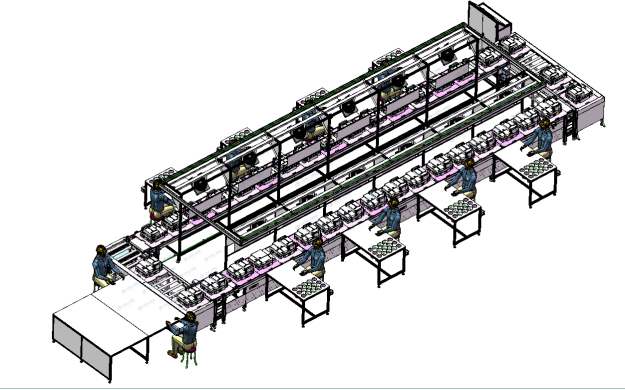
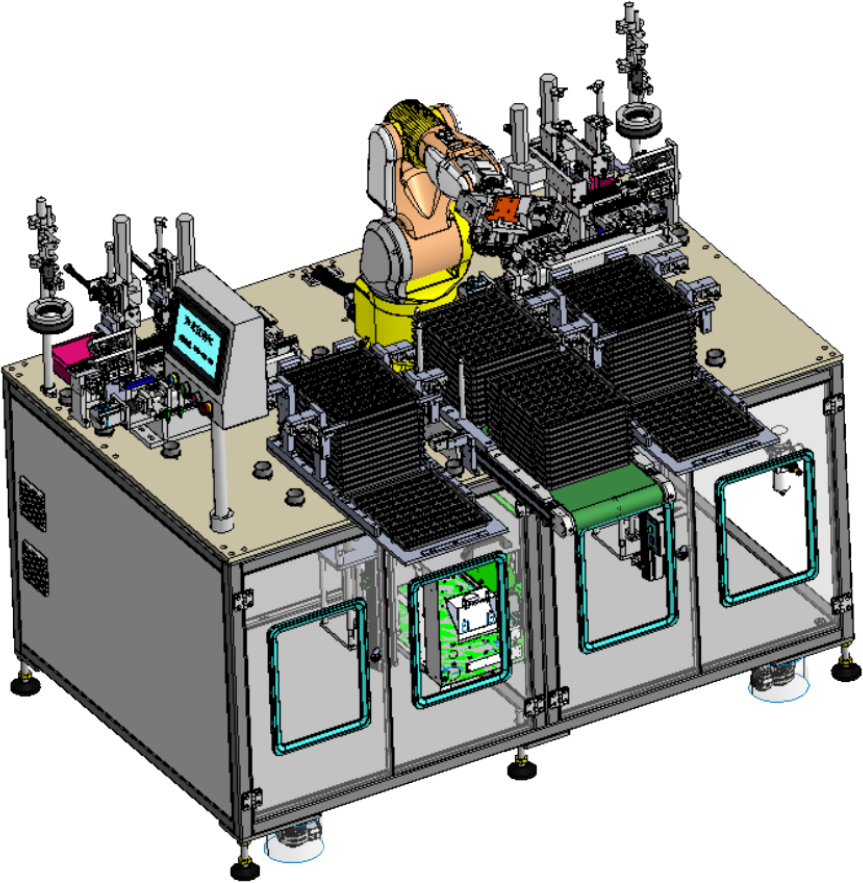
Definitely. The welding system may be installed on a rotary indexing work table, an inline conveyor, or in a robotic cell. We offer I/O signals and optional PLC integration for complete automation of your process.
With appropriate upkeep, titanium sonotrodes can be utilized for around 500,000 to 1 million cycles, while steel fixtures can be utilized indefinitely under routine conditions of use. Additionally, we do carry new sonotrodes and replacement sonotrodes at (competitive/average) prices.
ベンロング