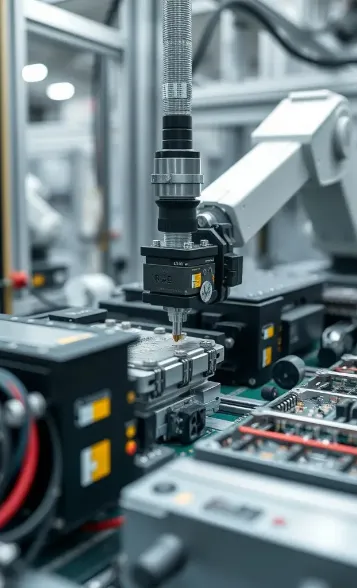


Solid state relay · No moving parts

Ligne de production de relais statiques
Up to 2,400 units/shift | 10A‑120A

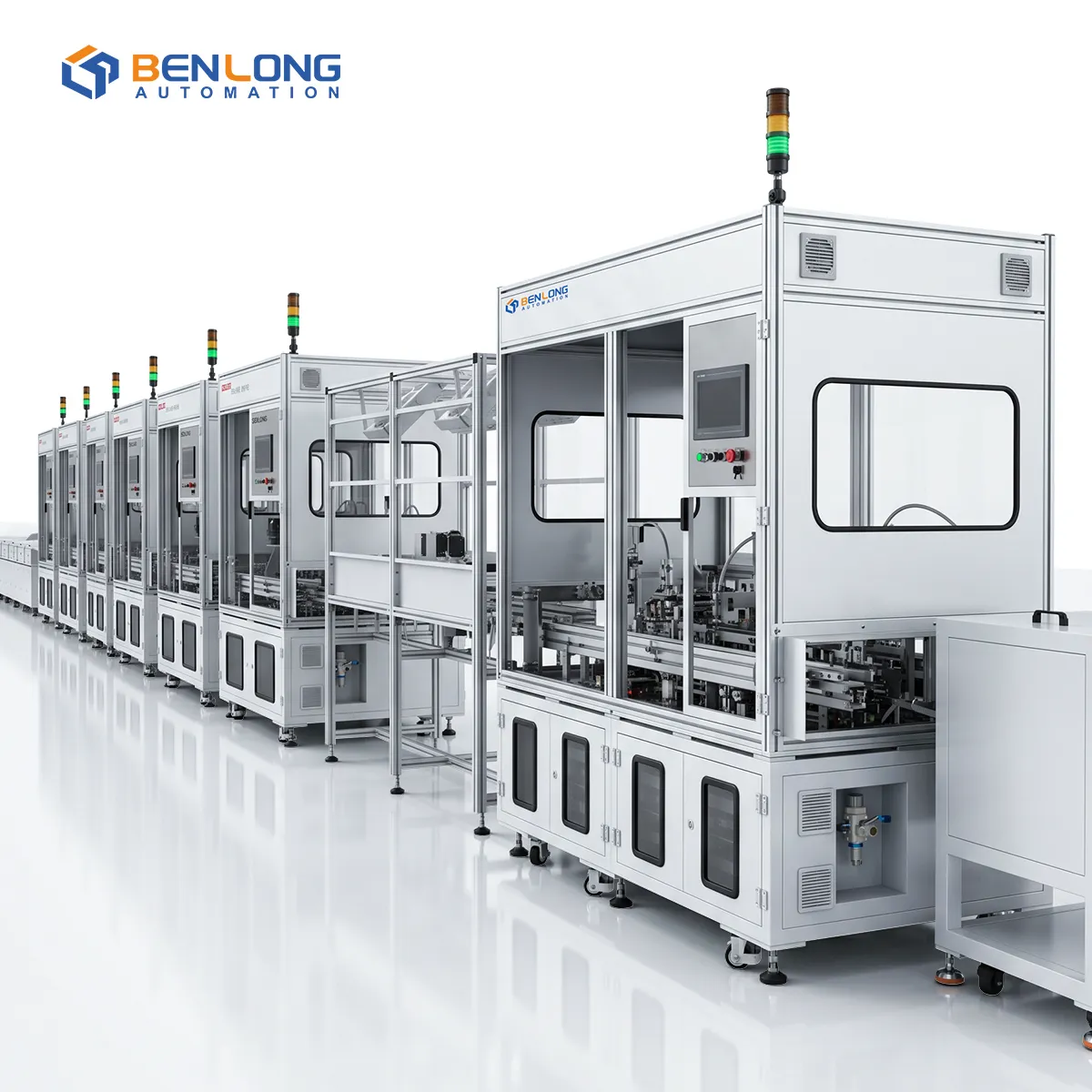
The automated assembly and testing lines for solid-state relays (SSR) include a fully automated process that places PCBs, performs SMT soldering, attaches thermal pads, assembles housing, and tests electrical characteristics such as zero-cross, leakage current, and load testing. These lines are specifically engineered to address the high reliability requirements of industrial and HVAC applications.

2,400+
Units/shift
10‑120A
Current rating
±0.1mA
Leakage accuracy
0.02ms
Switching time
Core advantages

Why an automated SSR production line?

Complete assembly of solid-state relays (SSR) requires accurate PCB assembly, thermal management, and electrical verification. Our automated production line provides consistent results, minimizes the risk of electrostatic discharge (ESD) damage, and includes 100% in-line testing of all products.

Precision PCB & SMT assembly
Automated solder paste printing, component placement, and reflow soldering for power semiconductor (SCR/triac) and optocoupler circuits.
Thermal pad & heatsink bonding
Robotic application of thermal interface material and automatic heatsink screw driving – critical for SSR heat dissipation.
Comprehensive electrical test
Zero‑cross detection, leakage current (μA range), load current test, blocking voltage, and surge current verification.
MES traceability & vision QC
Each SSR’s test results (ON‑state voltage drop, leakage) linked to serial number. Vision inspection for solder joints and housing alignment.
Integrated line modules

Our solid state relay production line components

An entire assembly and testing line for industrial and HVAC solid-state relays, covering everything from loading PCBs through to the completion of the electrical performance testing.

Full line integration available – from SMT to zero‑cross test. Customizable for 10A‑120A ratings.
Field results

Real impact from automatic SSR lines

Industrial automation brand – China
Deployed full SSR line for 25A‑75A panel mount series. Output increased from 800 to 2,200 units/shift. Field return rate due to thermal issues reduced by 85%.
HVAC OEM – Europe
Integrated zero‑cross detection test and leakage current verification. Achieved 100% compliance with IEC 62314. Payback period 12 months.
Power equipment supplier – India
Custom line for 3‑phase SSRs with heatsink assembly. Reduced assembly labor by 70%, eliminated ESD damage.
Medical device manufacturer – USA
Added vision inspection for solder joints. Achieved 99.5% first‑pass yield, ISO 13485 audit pass.
Technical specs

Manual assembly vs. our fully automatic SSR line

To know how the solid state relay manufacture differ when comparing throughput, test coverage, and reliability.

Paramètre Manuelle / semi-automatique Benlong fully automatic line
Output per shift (units)600‑1,0002,200‑2,800
SMT placement accuracy±0.1mm (manual)±0.02mm (vision guided)
Thermal paste applicationHand syringe, inconsistentRobotic, ±0.01g controlled
Zero‑cross test coverageSample‑based (5%)100% in‑line, ±0.1mA leakage
Load current test (10‑120A)Manual, offline fixtureAutomated, 8‑station parallel
ESD protection levelOperator dependent (risk)Grounded workstations, ionizers, monitoring
Traceability levelPaper log, partialSerialized barcode, MES upload (OPC UA)
Typical investment$100k – $300k$500k – $1.8M+

For a volume exceeding 500,000 units, a fully automated SSR line will have a payback period ranging from twelve to sixteen months. Find out your return on investment (ROI) →

Design guide

How to specify a solid state relay production line – 5 steps

Plan your SSR assembly and test line for maximum reliability and electrical performance.

Step 1: Define current rating & package type
Specify your SSR current range (10A, 25A, 50A, 75A, 120A) and form factor (PCB mount, panel mount, DIN rail). This determines load test current and fixture design.
Step 2: Select input control method
DC control (3‑32V), AC control (90‑280V), or low‑voltage logic. Our line tests both input trigger sensitivity and zero‑cross/random turn‑on types.
Step 3: Define output protection features
Overcurrent, overvoltage, short‑circuit protection, or snubber circuits. Automated verification of built‑in protection thresholds.
Step 4: Plan thermal interface assembly
Automatic thermal pad or grease application, heatsink torque control, and thermal resistance measurement.
Step 5: Specify MES & data logging
Each unit’s ON‑state voltage drop (V_DS), leakage current, zero‑cross accuracy, and load test results linked to serial number. Real‑time SPC for trending.

Do you require a complete SSR production system? Please inform us of your specifications and projected yearly output; we can provide you with a fully engineered production system. Get in touch with our production line integration engineers now.

PROFIL DE L'ENTREPRISE

L'intégration des systèmes d'automatisation au cœur du système

Benlong Automation Technology Co., Ltd., a National High-Tech Enterprise, has been a leader in the development of digital intelligent manufacturing equipment since its inception in 2008, when it was based out of Wenzhou, China. The company creates custom production lines, assembly equipment, and testing solutions for manufacturers of solid state relays, as well as those who manufacture HVAC products, all around the world.

We have designed our fully automatic SSR assembly lines for durable use through the integration of SMT placement, thermal management, electrical parameter testing (zero-cross, leakage, load current), and connectivity to the manufacturing execution systems (MES). We work with manufacturers producing power electronics who are making the shift to Industry 4.0.

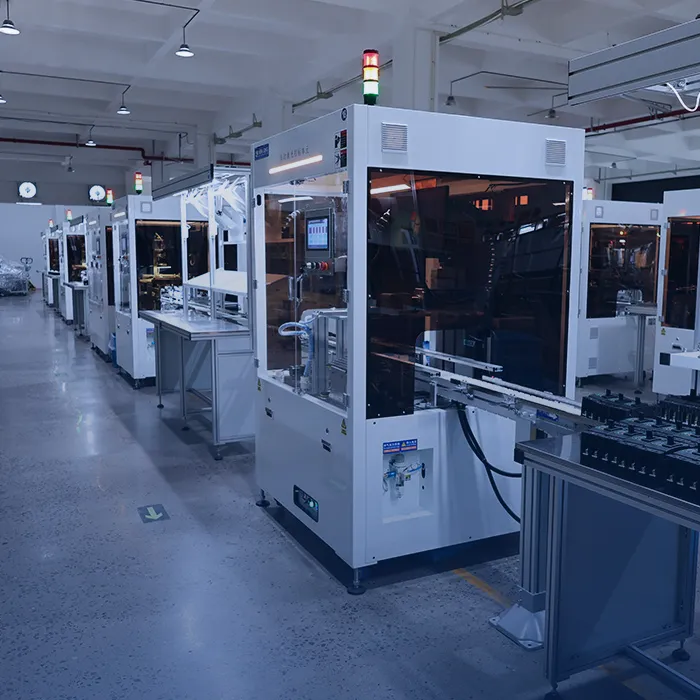
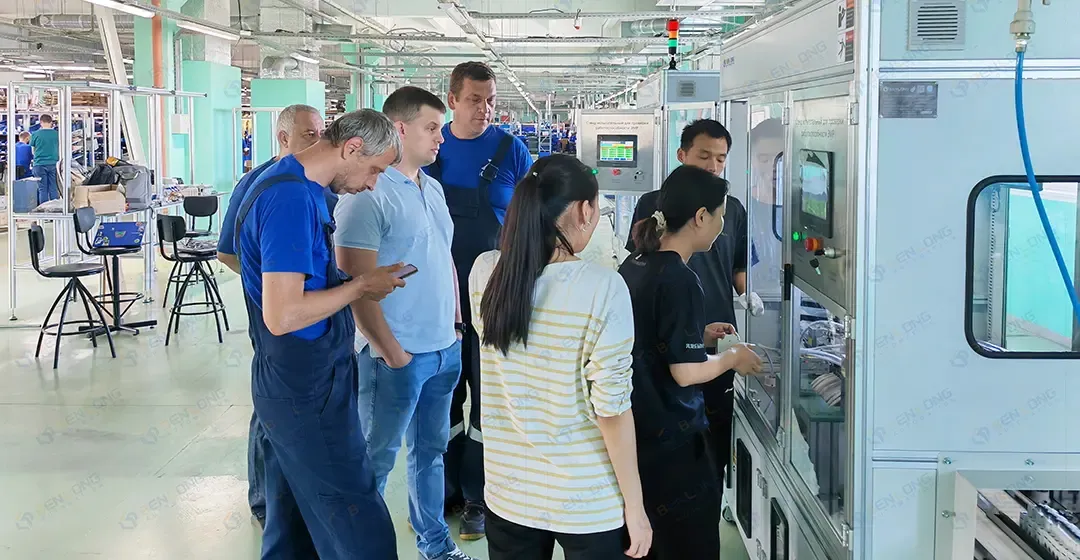
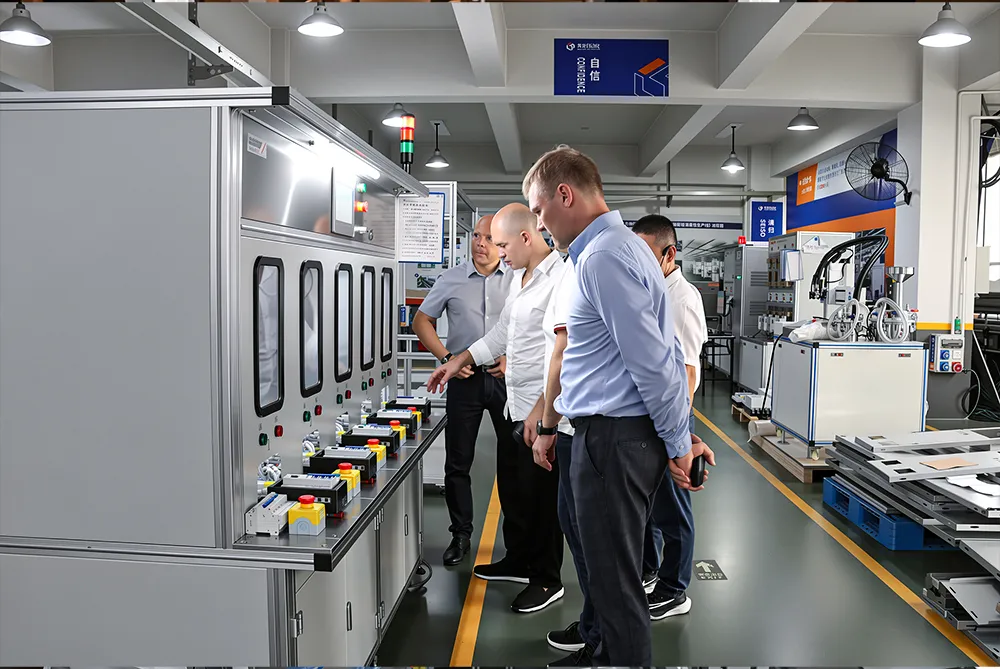
SSR production line workshop
Entreprise nationale de haute technologieSSR Assembly & Test
2008Fondé
50,88 MCapital social en RMB
160+Brevets nationaux
26Droits d'auteur des logiciels
300+Dossiers de qualification
1200+Clients servis
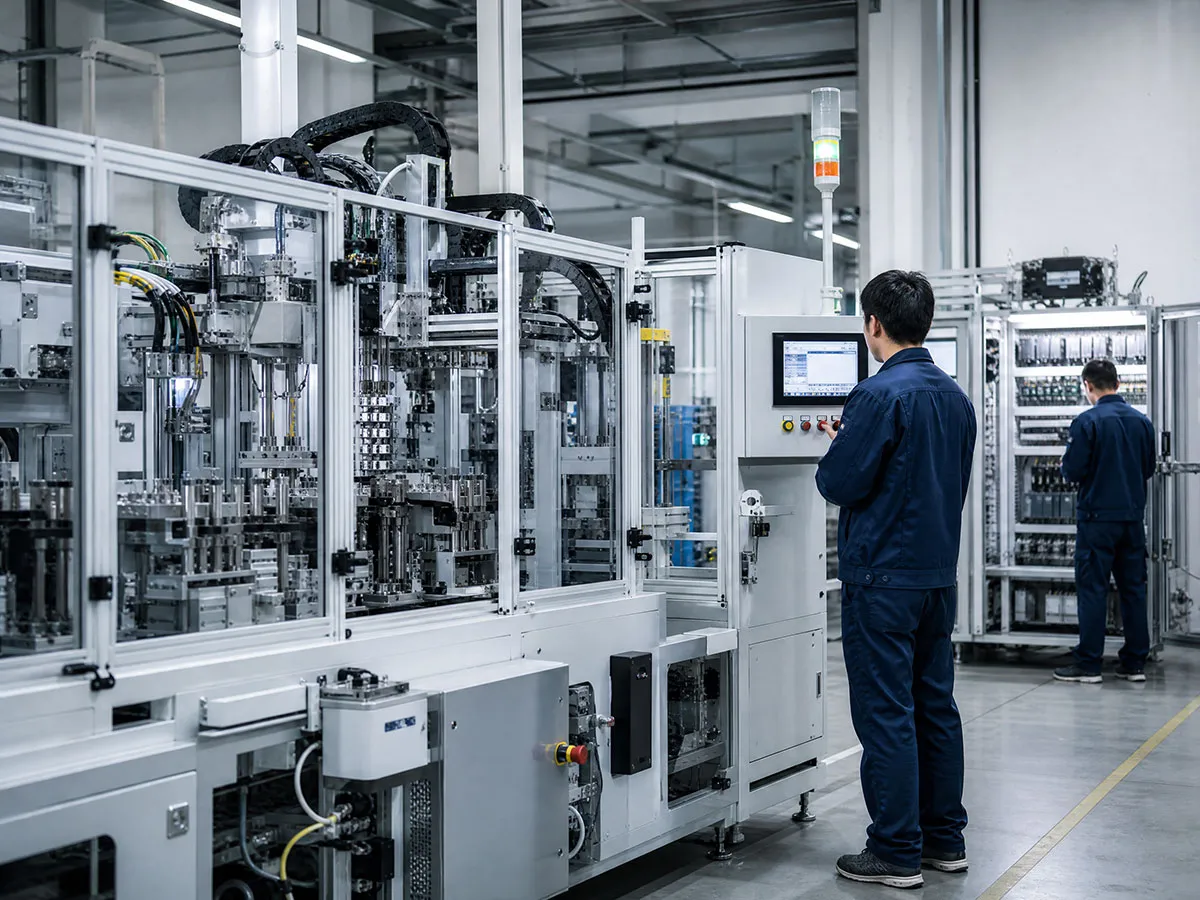
SSR production line engineering
ENGINEERING & INTEGRATION

From PCB to finished SSR – full automation

Benlong develops and assembles complete solid-state relay production systems, combining all key production processes together: 1) SMT placement; 2) Reflow soldering; 3) Thermal pad attachment; 4) Heatsink assembly; 5) Zero-cross detection; 6) Leakage current testing; 7) Load current verification; 8) Laser marking. Benlong provides complete installation, programming of PLC’s, and M.E.S. handshake.

Solid state relay automated production line – 2,400 units/shift, 10‑120A
Precision SMT placement & reflow – ±0.02mm, vision‑guided
Automatic thermal pad bonding – controlled application, torque monitoring
100% electrical parameter test – zero‑cross, leakage, load, surge
Request a custom SSR line quote
ENVIRONNEMENT DE L'USINE

Built for reliable SSR production

We assemble, wire, and pre‑commission every automatic SSR line in our ESD‑safe facility before shipment. Full FAT with your product samples.

GLOBAL INSTALLATIONS

Trusted by SSR manufacturers worldwide

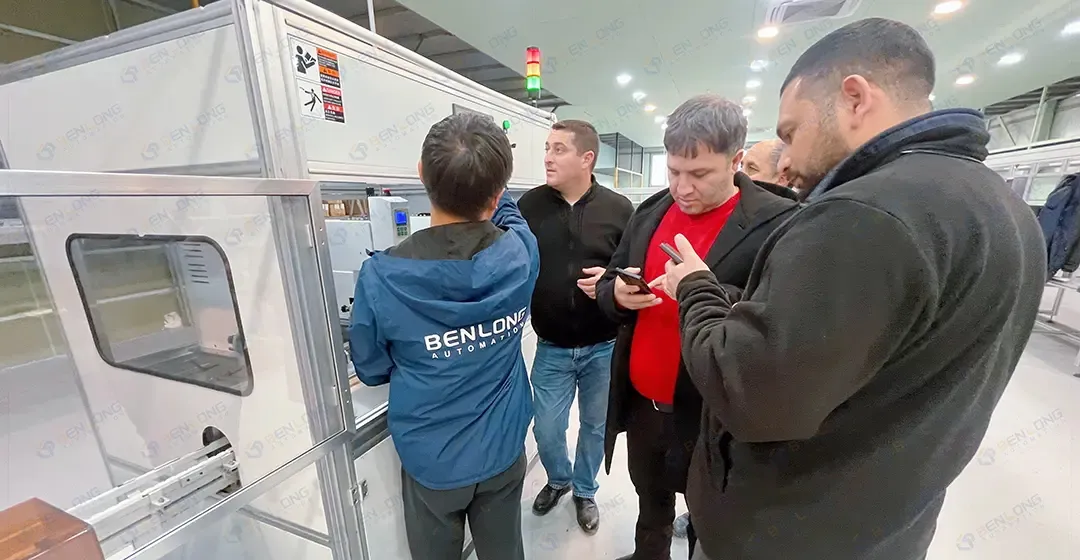
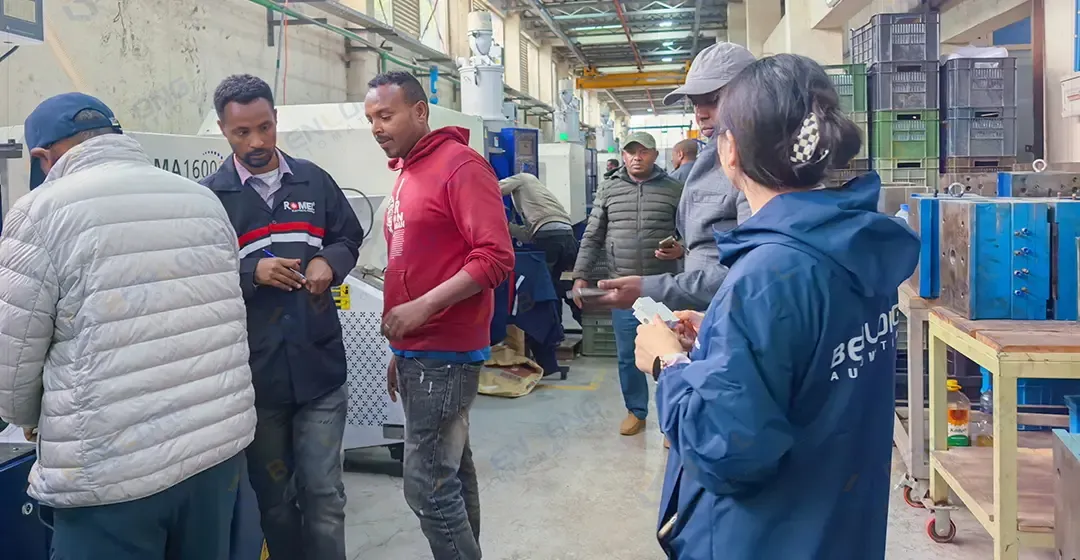
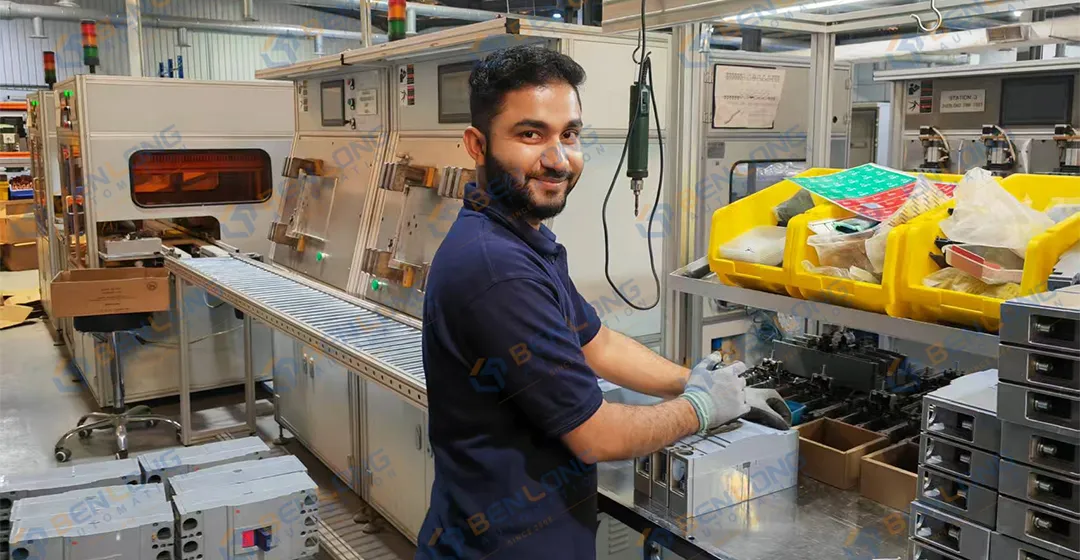
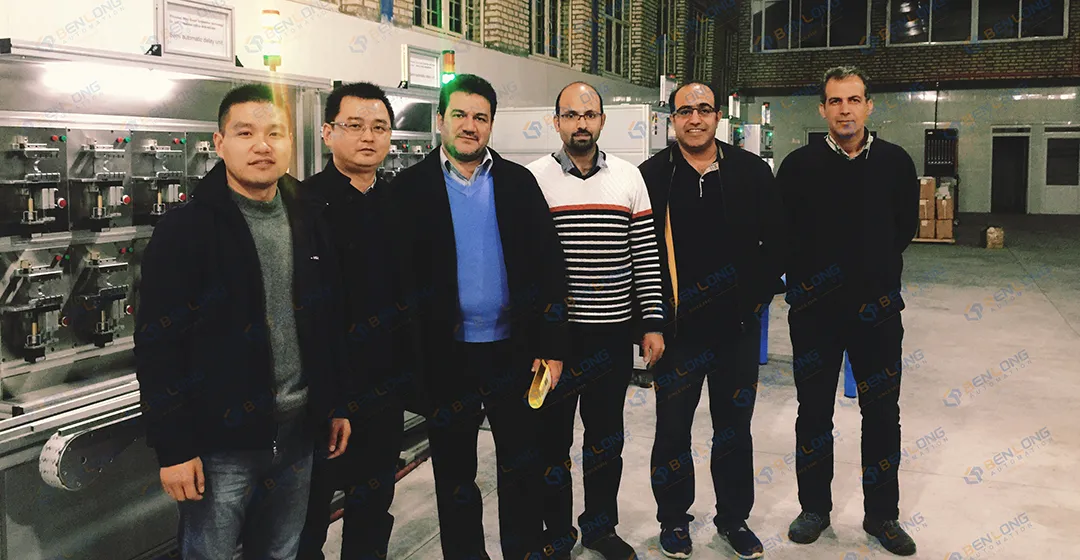
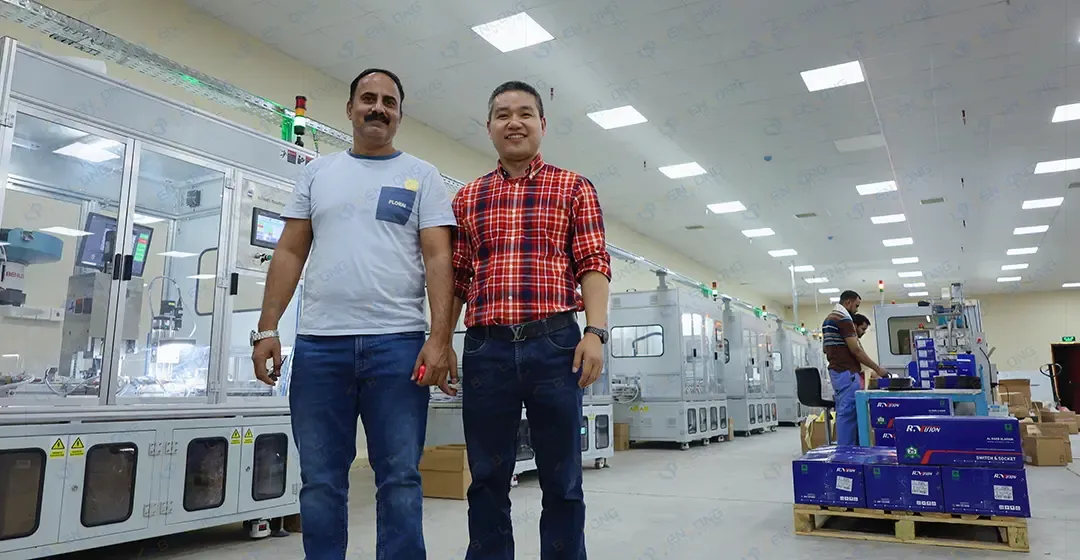
From China to Europe and North America, our automatic production lines are improving reliability for solid state relays.

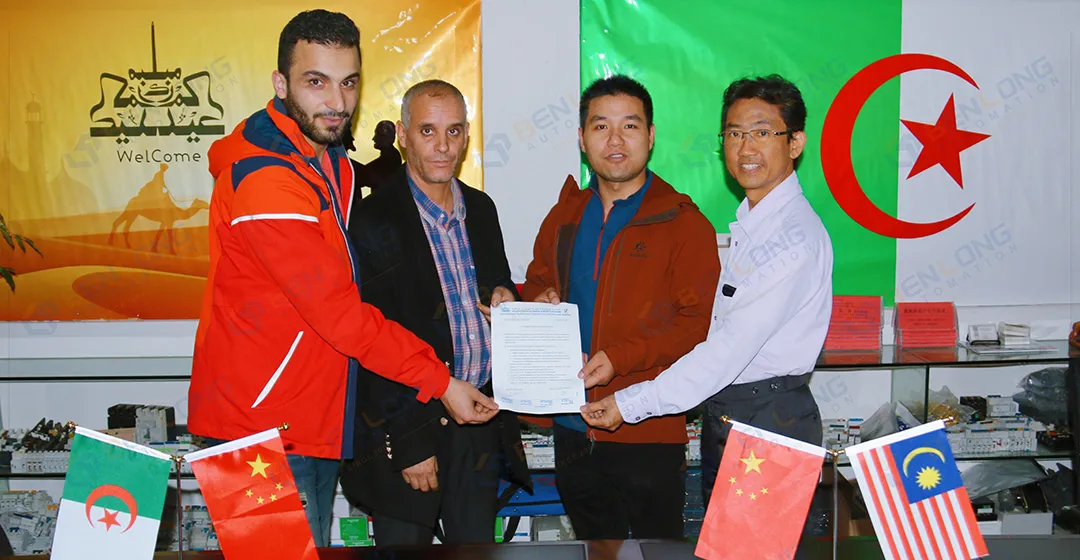
Algeria SSR line

Algeria plant

Azerbaijan customer

Azerbaijan facility

Ethiopia workshop

Ethiopia plant

India customer

India facility

Iran customer

Iran factory

Russia customer

Russia site

Saudi Arabia

Saudi Arabia line

CERTIFICATS ET DISTINCTIONS

Technologie, brevets et reconnaissance de la qualité

Benlong a obtenu la certification nationale d'entreprise de haute technologie, de nombreux brevets, des droits d'auteur sur des logiciels et des distinctions industrielles, témoignant d'un investissement continu dans le développement technologique et l'innovation en matière de fabrication intelligente.
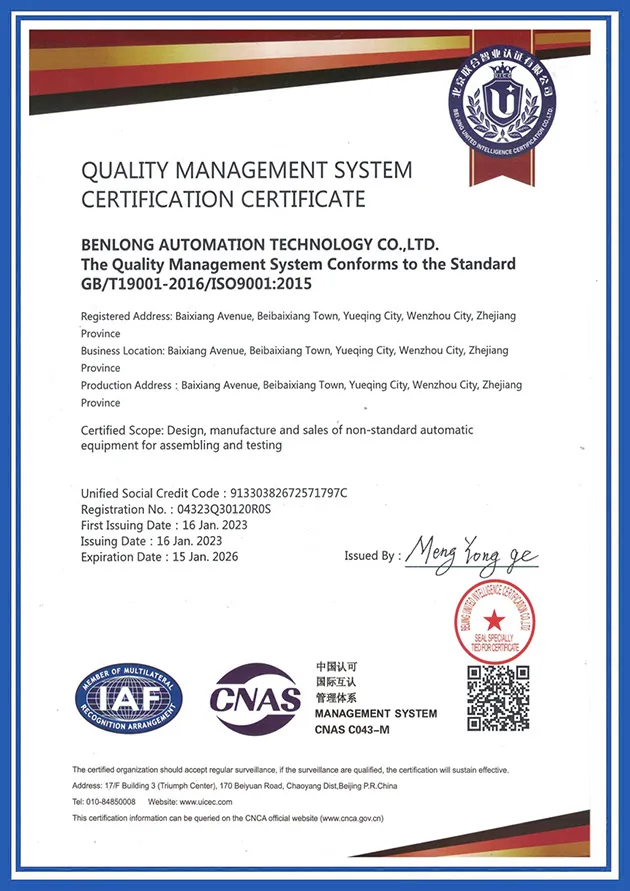
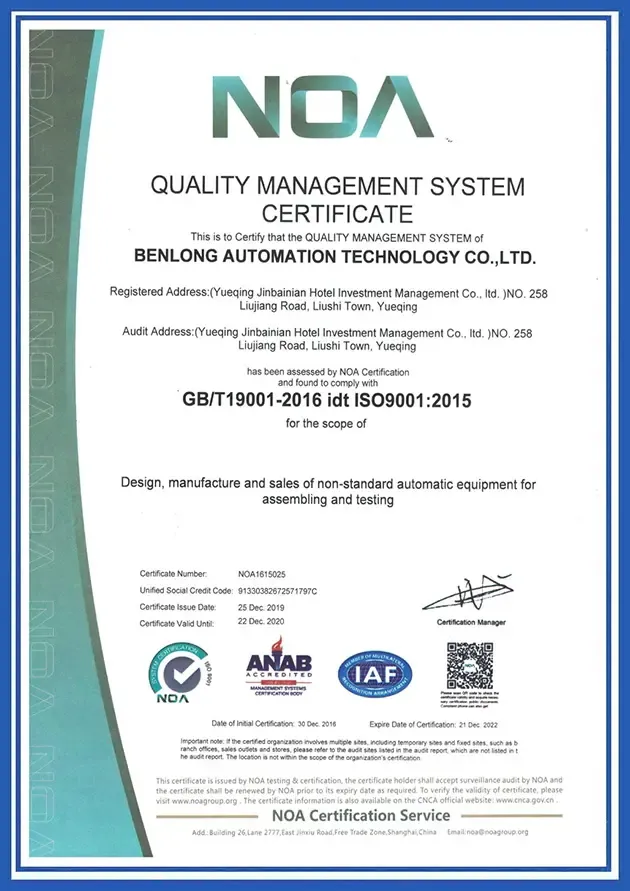
ISO9001 Certificate

Certificat ISO9001

ISO14001 Certificate

Certificat ISO 14001

ISO14001 Certificate

Certificat ISO 14001

ISO9001 Certificate

Certificat ISO9001

ISO 45001 Certificate

Certificat ISO 45001

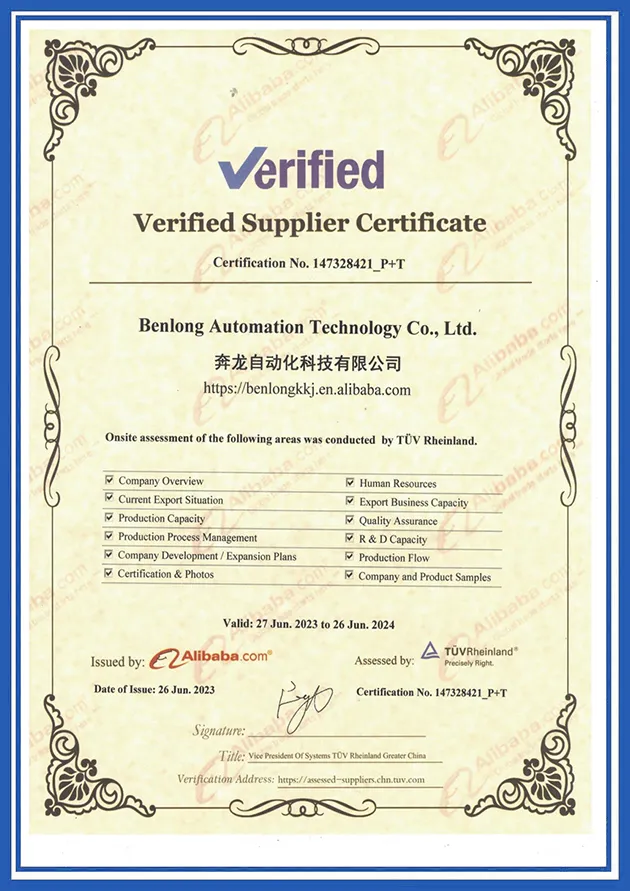
TUV Certificate

Certificat TÜV

Questions?

Solid State Relay Production Line FAQs

What are Solid State Relay Problems?

Common issues for SSRs include: inability to dissipate heat (proper heatsinking), leakage current while not being energized (μA range, critical to some loads), voltage drop while energized (Usually 1-1.5V, loss of power), susceptible to overvoltage (snubber circuits required), failure to short-circuit mode (unlike EMRs, which fail to open circuit). We employ thermal pad bonding, leakage testing, and surge testing in our production line to alleviate all of these problems.

What are the three types of Solid State Relays?

There are three primary types of SSRs: 1) SSRs that switch at zero crossing (turns on when the AC load voltage crosses zero, reducing EMI); 2) SSRs that are switched randomly (instantaneously) (turn ON at any point in the AC cycle for phase control); and 3) DC to DC SSRs (use MOSFET for switching loads). Our production line can assemble and test all three types, including specialized test stations for zero-cross detection or phase-angle verification.

What is the difference between SSR and EMR?

The major difference between an SSR (Solid State Relay) and an EMR (Electromechanical Relay) lies in their operational mechanisms. SSRs use semiconductors for switching and offer advantages such as faster switching (<0.02ms), no contact bounce, silent operation, longer life, and resistance to vibration/shock. However, SSRs also have disadvantages including higher on-state voltage drop (heat), leakage current, and sensitivity to overvoltage.

On the other hand, EMRs use an electromagnet to move contacts and provide advantages such as very low on-resistance (μΩ), no leakage, and failing open. However, they are slower, subject to mechanical wear, and exhibit contact bounce and audible noise. Our SSR production line addresses SSR thermal and leakage limitations through precise assembly and testing.

What is the difference between SSR and MOSFET?

A MOSFET is a single power semiconductor device (transistor) used in DC switching applications. In contrast, an SSR is a complete module comprising MOSFETs (for DC output) or SCRs/triacs (for AC output), along with an optocoupler, snubber circuit, and heat transfer substrate. Essentially, an SSR packages a MOSFET (or triac) along with control and protection circuitry into a ready-to-use module.

Our production line specializes in the assembly of complete SSR modules instead of individual components, ensuring quality and reliability in operation.

What electrical tests does your SSR line perform?

We perform 100% in-line testing including trigger input voltage/current (3-32V DC or 90-280V AC), zero-cross detection accuracy (for zero-cross switching types), output leakage current (μA range), on-state voltage drop (V_DS for MOSFET, V_T for triac), load current capacity (up to 120A), off-state blocking voltage, and surge current capability (optional). Each test procedure is serialized for traceability.

Can you produce SSRs with overcurrent protection?

Yes, we can produce SSRs with integrated overcurrent protection. As part of the production process, we can include an automated station to calibrate and verify overcurrent protection thresholds (e.g., 2× rated current for 10ms). Additionally, the production line will test and record the trip characteristics of each unit for quality assurance.
Démarrez votre projet

Need a Turnkey Solid State Relay Production Line?

Tell us your current rating (10A‑120A), input control type (DC/AC), and annual volume. Our engineers will design a custom assembly line with SMT, thermal management, and 100% electrical testing.

Démonstration du formulaire de contact
WhatsApp
+86 150 5837 0007
Email
xsb@benlongkj.cn