benlong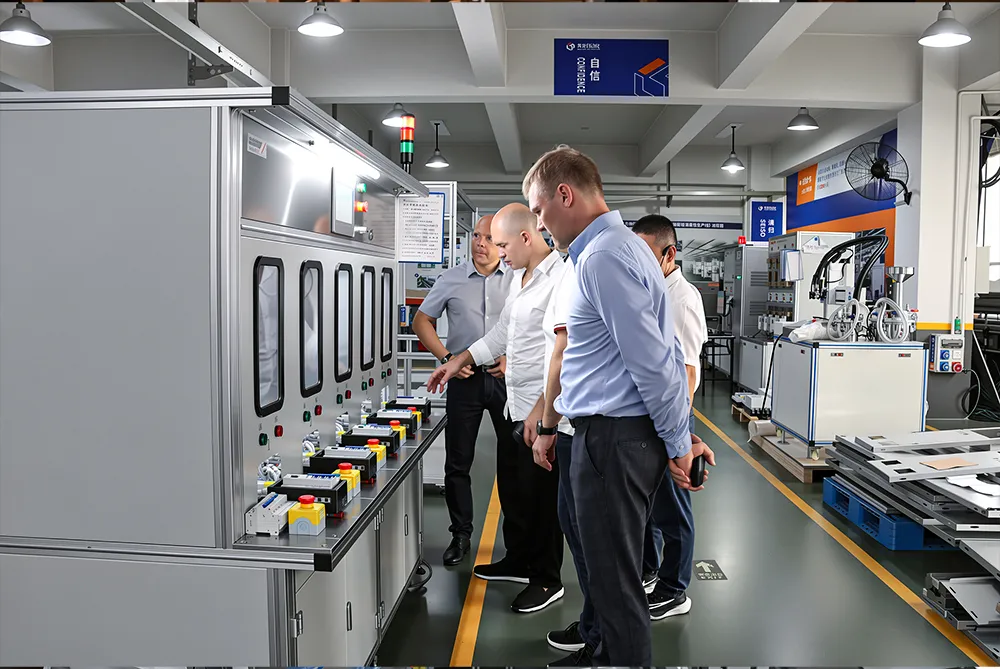
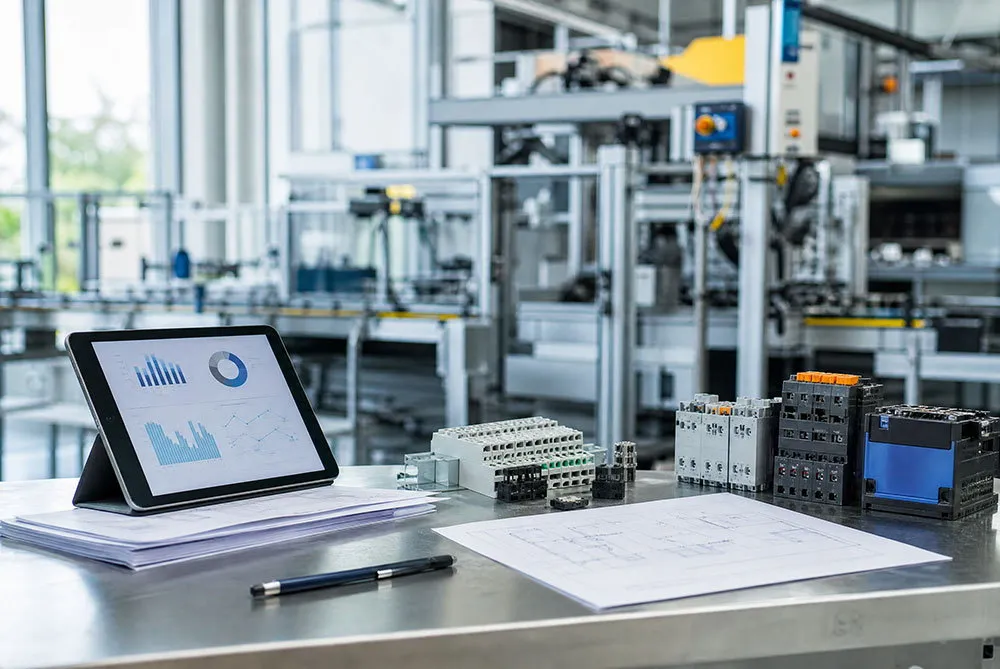

How to choose an Automatic Capping Machine
Selecting the right sealing equipment is a critical decision for filling or packaging plants during the production process. An automatic capping machine sits at the very end of the filling line, and if caps are applied unevenly the entire batch can leak, fail in transit, or be rejected by the customer. That is why experienced buyers study the machine, the technology behind it, and the company that builds it just as carefully as they study the price.
This guide explains what an automatic capping machine does, the main types available today, the factors that drive price and performance, and how to choose the right machine and supplier for your line. Whether you package food, pharmaceuticals, cosmetics, agrochemicals, or daily chemical products, the same principles apply, and the cost of choosing badly is always higher than the cost of choosing carefully.
What Is an Automatic Capping Machine?
An automatic capping machine is a machine that automatically places and tightens caps onto bottles or containers as they move along a production line. It replaces slow, inconsistent manual capping with a controlled, repeatable process that applies the same closing force to every unit. Because the machine works inline with fillers and labelers, it allows a plant to run continuously with far fewer operators and far fewer quality problems.
The machine’s task appears simple: pick up a cap, place it on the bottle opening, and tighten it to a precise torque. In practice, however, the process involves repeating this action hundreds or even thousands of times per hour while handling various bottle shapes and cap styles—all without errors such as cross-threading, overtightening, or loose caps. High-performance machines can handle a wide range of cap types—including screw caps, tamper-evident caps, child-resistant caps, press-on or snap-on caps, and Roll-On Pilfer-Proof (ROPP) caps—and are compatible with both glass and plastic bottles.
Maintaining consistent torque is crucial. If a cap is too loose, leakage or accidental detachment may occur during transport; if it is too tight, the cap might crack, the threads could strip, or the end user might be unable to open the product. High-quality machines address this by using constant-torque capping heads; premium models feature servo or stepper control systems that allow for precise adjustment of both rotational torque and angle. Production efficiency is typically measured in “bottles per minute”; for typical mid-range equipment, operating speeds generally range from 40 to 120 bottles per minute, depending on the cap type and bottle size.
How an Automatic Capping Machine Works
Despite variations in design, all automatic capping machine follow the same operational workflow. Understanding this process facilitates a more intuitive comparison of quotes from different suppliers, as it allows you to clearly see where each vendor invests in quality assurance.
—
Bottle Infeed and Positioning: Bottles arrive via conveyor from the filling machine, are separated, and guided to the designated position.
Cap Feeding: Caps are separated individually and oriented correctly using a cap sorter, vibratory bowl, or elevator.
Cap Placement: Caps are transported and placed onto the bottle openings using a pick-and-place robotic arm or a chute.
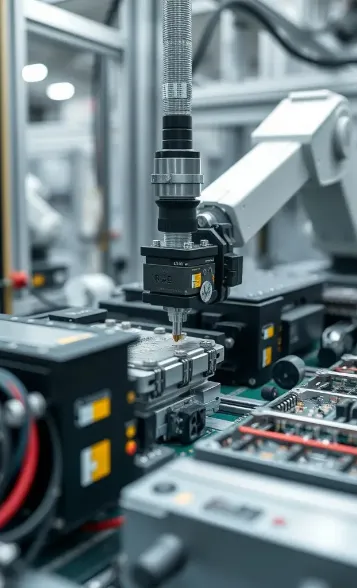
Tightening: The capping head performs the tightening action—using a constant-torque spindle, chuck, or set of gripping wheels—until the preset torque is reached.
Inspection and Rejection: Sensors or vision systems verify that the cap is present and correctly installed, rejecting any non-conforming products.
Discharge: Capped bottles are conveyed to the next stage for labeling, coding, or packaging.
Two key features distinguish high-quality equipment from standard models. First is the use of imported variable-frequency drives (VFDs) for stepless speed regulation, enabling precise synchronization of capping speed with the upstream filling line. Second is the inclusion of constant-torque capping heads (typically paired with high-power electromagnetic torque units); this ensures consistent tightening across all caps, even in the presence of minor dimensional variations in the caps or bottles.
Common Types of Automatic Capping Machines
There is no single “best” piece of equipment; there is only the machine type that best suits your needs. A reputable supplier should recommend a model based on your product characteristics rather than simply pushing existing inventory. Here are the most common equipment configurations you will encounter:
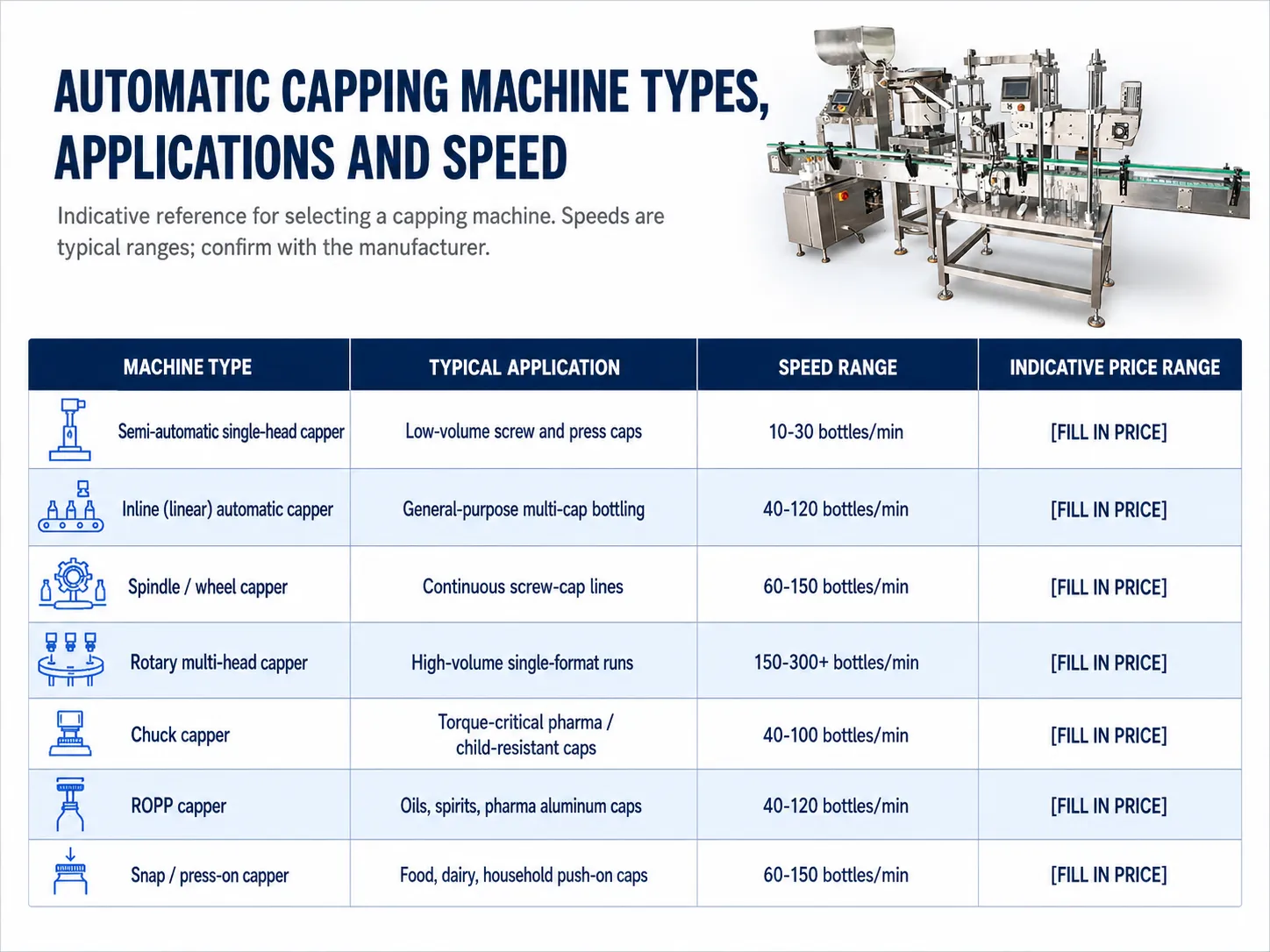
- Inline (linear) capping machine: bottles move in a straight line while capping heads work overhead. Inline systems are flexible, integrate easily into existing lines, and handle a wide range of cap and bottle sizes, which makes them a popular general-purpose choice.
- Rotary capping machine: bottles travel around a rotating turret with multiple capping stations. Rotary machines reach the highest speeds and suit very high-volume production, but they cost more and are less flexible for frequent changeovers.
- Spindle (wheel) capping machine: pairs of spinning wheels tighten screw caps continuously as bottles pass beneath. Spindle cappers are fast, simple, and well suited to continuous-motion lines with consistent screw caps.
- Chuck capping machine: a chuck grips and tightens each cap individually with tightly controlled torque. Chuck cappers are ideal where torque accuracy is critical, such as pharmaceutical or child-resistant closures.
- ROPP capping machine: forms roll-on pilfer-proof aluminum caps directly onto the bottle thread, common in spirits, pharmaceuticals, and edible oils.
- Snap or press-on capping machine: presses push-on closures into place, used for many food, dairy, and household products.
Many buyers ultimately favor an inline automatic capping machine because it balances speed, flexibility, and cost, and because it can be reconfigured as a product range grows. If your SKUs change frequently, flexibility usually matters more than peak speed.
Semi-Automatic vs Fully Automatic Capping Machines
Before comparing different machines, it is essential to determine the actual level of automation required. Semi-automatic capping machines still require operators to perform tasks such as loading bottles or placing caps; they are suitable for startups with lower production volumes, frequent product changeovers, or new production lines in the testing phase. In contrast, fully automatic capping machines handle processes—including cap feeding, positioning, tightening, inspection, and the rejection of defective units—without manual intervention, offering significant benefits in terms of labor savings and operational consistency.
The investment’s break-even point depends on your production volume. If you only need to process a few hundred bottles daily, investing in semi-automatic equipment may be the wiser choice; however, when single-shift output reaches several thousand bottles, the savings in labor costs and the reduction in losses from defective products provided by a fully automatic line often allow for a rapid return on the higher initial investment. Many buyers start with semi-automatic equipment and decide whether to upgrade based on actual sales performance. Therefore, when purchasing, it is important to confirm with the manufacturer that the equipment offers scalability, allowing for a future upgrade to full automation as the business grows and avoiding the need to replace the entire system later.
What Drives the Price and Performance of an Automatic Capping Machine
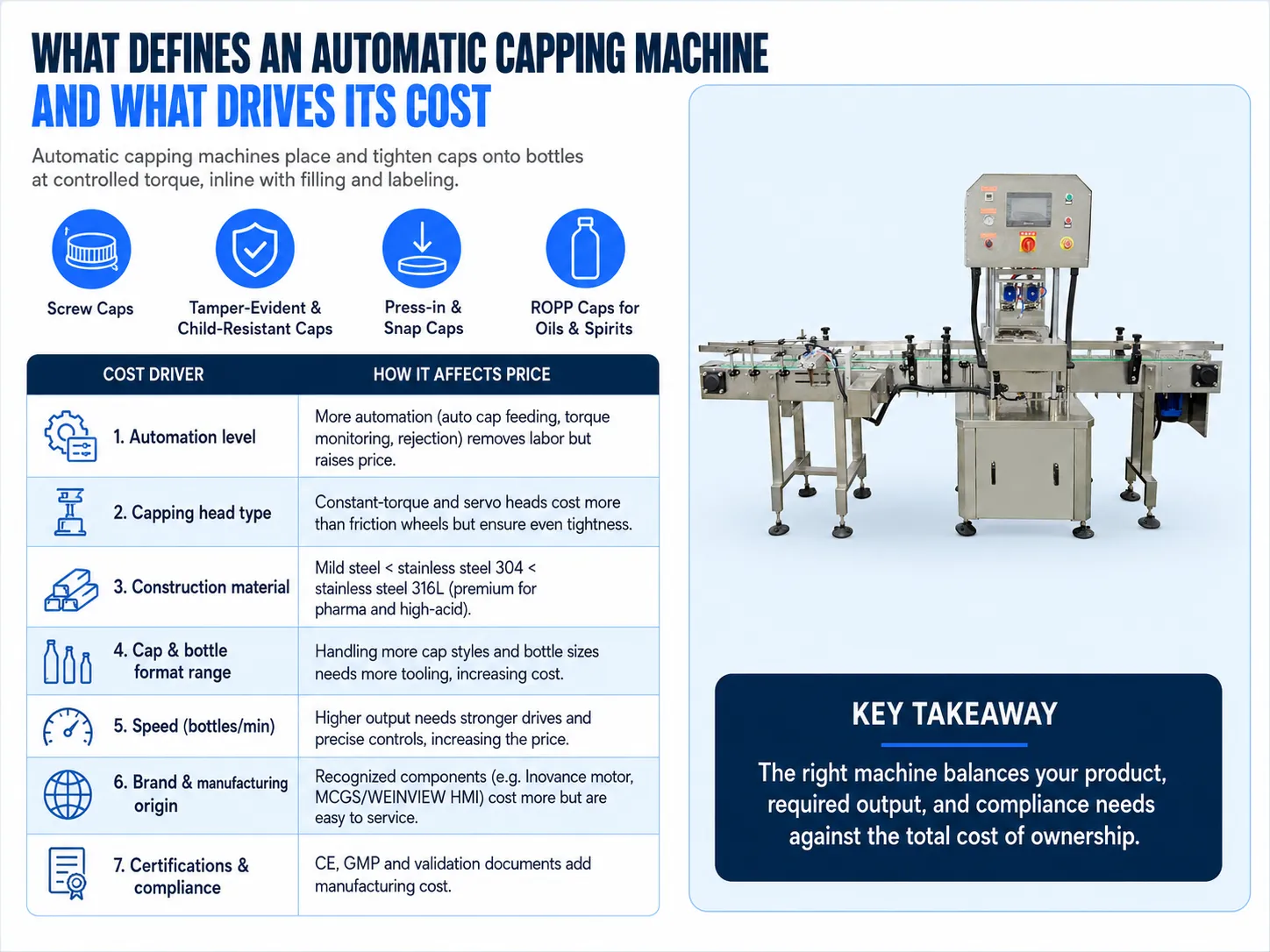
Prices for an automatic capping machine vary enormously, and the number on a quotation only makes sense once you understand what sits behind it. The same factors that raise the price usually raise the reliability and the resale value, so the goal is not to find the cheapest machine but to match the specification to your real production needs.
- Automation level: a fully automatic line with automatic cap feeding, torque monitoring, and rejection costs more than a semi-automatic unit, but it removes labor and eliminates most human error.
- Capping head type and count: constant-torque and servo-controlled heads cost more than basic friction wheels, and adding more heads increases both speed and price.
- Construction material: mild steel is cheapest, stainless steel 304 is the standard for most food and cosmetic work, and stainless steel 316L is the premium choice for pharmaceutical and high-acid products.
- Cap and bottle format range: a machine that must handle many cap styles and bottle sizes needs more tooling and adjustment, which adds cost.
- Speed: higher output requires stronger drives, better controls, and more robust mechanics, all of which increase the price.
- Component brands: machines built with well-known drives, motors, and controls — for example an Inovance motor and an MCGS or WEINVIEW HMI — cost more but are far easier to service and source spare parts for worldwide.
- Manufacturing origin and certifications: build location, together with CE, GMP, or other documentation, affects both price and the ease of importing and validating the machine.
The practical takeaway is that the right machine balances your product, your required output, and your compliance needs against the total cost of ownership — not just the sticker price. A slightly more expensive machine with better torque control and serviceable components almost always costs less over its full life.
How to Choose the Right Automatic Capping Machine
Once you understand the machine, the harder question is who should build it and which configuration to order. A good supplier does far more than assemble parts — it engineers a solution around your bottles, your caps, and your line layout, and it stands behind that solution for years. Use the following checklist when you compare an automatic capping machine from different sources.
- Engineering and build quality: ask to see the frame construction, the guarding, and the cabling. A tidy, well-documented machine is a sign of a disciplined builder.
- Torque control technology: confirm how the machine guarantees even tightness. A constant-torque head with an electromagnetic torque unit is a strong indicator of serious engineering.
- Component brands: a reputable supplier is transparent about the brands inside the machine, because recognizable components mean easy service and available spares.
- Speed and capacity match: the quoted speed should reflect your actual cap and bottle, not a best-case marketing figure.
- Changeover and flexibility: ask how long it takes to switch between formats and whether the change is tool-free or requires mechanical work.
- Testing before shipment: insist on a factory acceptance test with your own bottles and caps, and a written report of the results.
- After-sales and spare parts: check the warranty, the availability of spare parts, and whether remote support is offered.
- Export and installation experience: a supplier with a track record in demanding export markets understands documentation, voltage, and on-site commissioning.
- Customization and OEM: if you need a specific interface, appearance, or integration, confirm the supplier can deliver it rather than forcing a standard machine onto your line.
Buyers in high-growth markets such as India, Turkey, and Southeast Asia should pay particular attention to installation support and spare-part logistics, because a machine that cannot be serviced quickly is a liability no matter how good it looked at the quotation stage.
Total Cost of Ownership: Looking Beyond the Quotation
The purchase price is only the first number in the equation. When you compare one automatic capping machine against another, weigh the full cost of owning the machine over its working life. Energy use, the price and availability of spare parts, the cost of downtime when a part fails, and the labor needed to run and change over the machine all add up over the years.
This is where component brands and serviceability matter most. A machine built with widely available drives and controls can be repaired almost anywhere in a day, while a machine built with obscure parts can sit idle for weeks waiting for a component to ship. A constant-torque head that prevents defective caps also lowers the hidden cost of rework, returns, and warranty claims. When these factors are added together, the cheapest machine on paper is frequently the most expensive machine to own.
Key Specifications to Compare
When you narrow your shortlist, put the technical numbers side by side. A clear specification comparison prevents the common mistake of buying on price alone. The specifications below reflect a typical mid-range inline model and give you a realistic reference point when reviewing quotes.
- Capping speed: for a mid-range inline unit, expect roughly 40 to 120 bottles per minute, adjusted steplessly to match your line.
- Bottle mouth diameter: a common working range is 45 to 85 mm.
- Bottle height: a common working range is 65 to 190 mm.
- Compatible cap types: screw, tamper-evident, child-resistant, and press-in caps, on glass or plastic bottles.
- Torque control: a constant-torque head with an electromagnetic left-hand torque unit for even, repeatable tightness.
- Component brands: for example an Inovance motor with an MCGS or WEINVIEW HMI.
- Footprint and weight: a representative machine measures around 2800 x 950 x 1800 mm and weighs 600 to 850 kg.
- Motor power: a typical drive rating is around 0.37 kW.
You can see how these figures come together on Benlong’s product page for its inline automatic capping machine, which lists the full specification and the components used. Using a real, documented machine as a benchmark makes it far easier to spot vague or inflated claims elsewhere.
Applications Across Industries
One reason the automatic capping machine is such a widely purchased piece of equipment is that almost every bottled product needs a reliable closure. The same base machine, configured with the right head and tooling, serves very different sectors.
- Food: sauces, condiments, beverages, edible oils, and other bottled products where a secure seal protects freshness and prevents leaks.
- Pharmaceutical: syrups, oral liquids, and reagent bottles where repeatable torque and, often, child-resistant or tamper-evident caps are mandatory.
- Cosmetics and daily chemical: lotions, creams, toners, serums, and household cleaners, where appearance and consistent finish matter to the brand.
- Agrochemical and pesticide: bottles that require tamper-evident and child-resistant caps for safety and regulatory compliance.
Because the requirements differ so much between sectors, a good supplier will ask detailed questions about your product, your caps, and your regulatory environment before recommending a configuration. A supplier who quotes without asking these questions is guessing.
Why Choose Benlong’s Automatic Capping Machine
Benlong Automation builds assembly, testing, and packaging automation for producers around the world, with a strong base in the low-voltage electrical and bottling sectors. Its inline automatic capping machine is engineered for stable, high-volume production: an imported frequency converter provides stepless speed control from 40 to 120 bottles per minute, while a high-power electromagnetic left-hand torque unit and a constant-torque capping head keep every cap tightened evenly.
The machine handles screw, tamper-evident, child-resistant, and press-in caps on glass or plastic bottles from 45 to 85 mm in mouth diameter and 65 to 190 mm in height, and it integrates directly into existing filling and labeling lines. Control is built around serviceable, globally available components, including an Inovance motor and an MCGS or WEINVIEW HMI, so spare parts and support are never a problem. You can review the complete specification on the automatic capping machine product page.
With experience serving international B2B customers — including major export markets such as India and Turkey — Benlong supports its equipment with engineering consultation, factory testing, installation guidance, and ongoing spare-parts supply. The result is a machine that is easy to run, easy to service, and built to hold its performance shot after shot.
Frequently Asked Questions
What is the difference between a rotary and an inline automatic capping machine?
A rotary machine moves bottles around a turret with several capping stations and reaches very high speeds, which suits large, stable production runs. An inline machine works in a straight line, costs less, and offers more flexibility for changing cap and bottle formats, which makes it the more common general-purpose choice.
How fast can an automatic capping machine run?
Speed depends on the cap type, bottle size, and machine design. A typical mid-range inline unit runs from 40 to 120 bottles per minute, while dedicated high-speed rotary systems can run considerably faster.
How do I make sure caps are tightened evenly?
Look for a constant-torque capping head, ideally driven by an electromagnetic torque unit or servo control. These systems apply the same closing force to every cap, preventing both loose caps that leak and over-tightened caps that crack or strip.
Can one machine handle different cap and bottle sizes?
Yes. A flexible inline machine can cover a range of bottle mouths and heights and several cap styles, with changeover handled through adjustment and tooling. Confirm the working range and the changeover time with the supplier before you buy.
What should I check before buying an automatic capping machine?
Confirm the torque-control technology, the component brands, the guaranteed speed with your own caps and bottles, the changeover time, the warranty, the spare-parts availability, and the supplier’s export and installation experience. A factory acceptance test with your own materials is strongly recommended.
Does an automatic capping machine integrate with an existing filling line?
An inline automatic capping machine is designed to integrate directly with fillers and labelers, and its stepless speed control lets it match the rest of the line. Share your line layout with the supplier so the infeed and discharge are configured correctly.
Is a semi-automatic or fully automatic capping machine better for a small business?
For low volumes or frequent product changes, a semi-automatic machine keeps the initial investment low. As output grows into thousands of units per shift, a fully automatic machine pays back through lower labor and fewer defects. Choose a supplier whose platform lets you upgrade rather than replace.
What certifications should an automatic capping machine have?
The certifications you need depend on your market and product. CE marking is common for export, while pharmaceutical and food producers often require GMP-compliant construction and validation documentation. Confirm which certificates the supplier can provide before you order.
Conclusion
An automatic capping machine is a small part of a bottling line by footprint, but it has an outsized effect on product quality, throughput, and customer satisfaction. The machine you buy is only as good as the company that builds it, so take the time to understand the machine types, weigh the cost drivers honestly, and hold every supplier to the same checklist. Do that, and you will end up with a capping solution that quietly does its job, bottle after bottle, for years.