benlong


Electrical Test Bench: A Buyer’s Guide to Types, Costs and Specification
All manufacturers of protective devices face the same problem. To begin with, manual means of testing systems such as voltmeters and time measuring devices are working fine for low volume production, when the production rate is 100 units or below. However, once the production rises above that figure, testing becomes complicated and non-effective.
Test benches provide a solution to this problem, and there are many types of machinery, starting from a simple desktop testing machine to a fully automated line hundreds of meters in length. That results in a wide variety of prices. In this article, we will talk about the various types of test benches and their parts and prices.
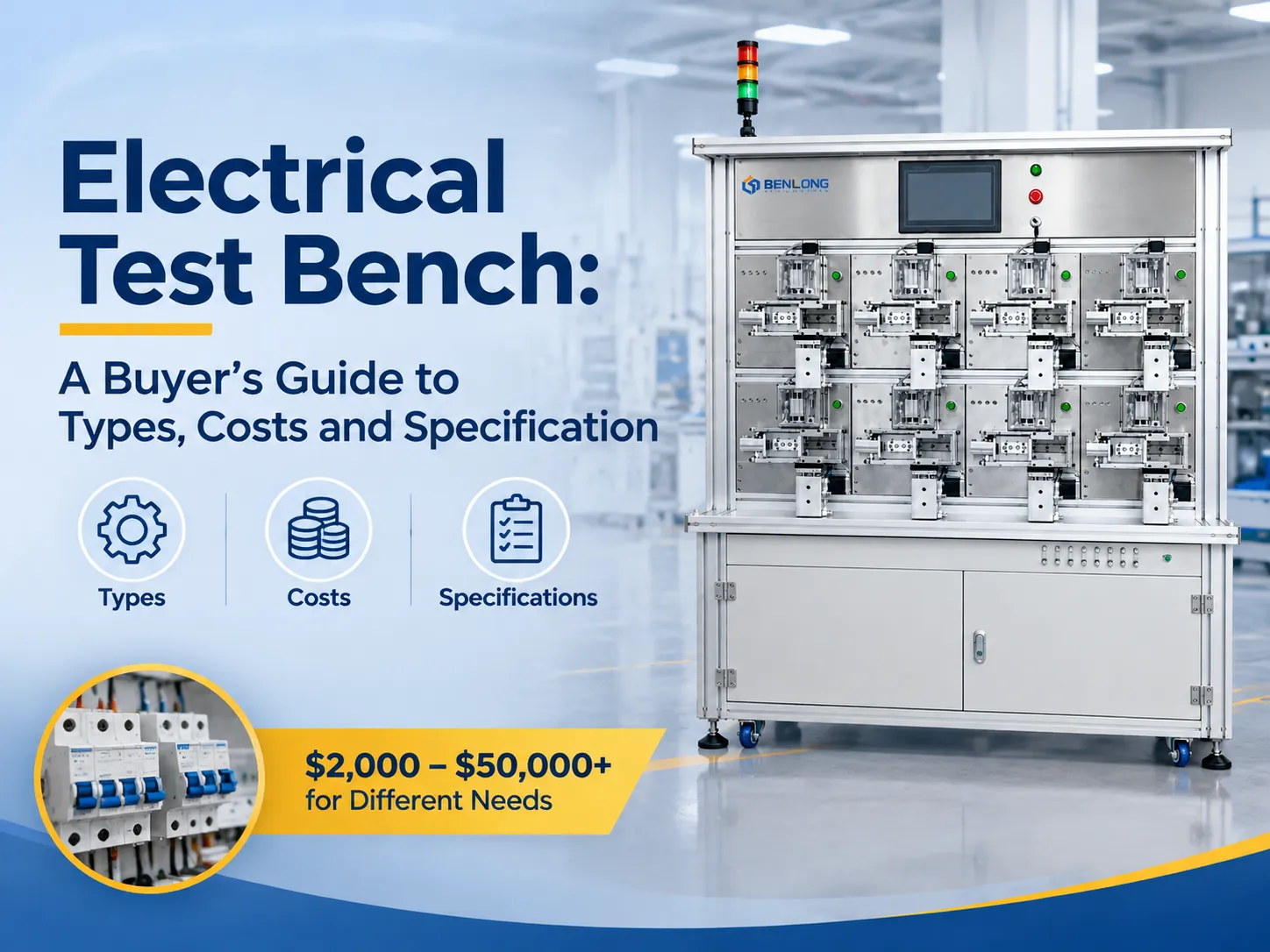
In conclusion, the definition of an electrical test bench can be described as equipment that is capable of either stationary or semi-stationary operation and serves the purpose of testing a circuit breaker, contactor, or other devices and obtaining measurements that are compared with the accepted reference values. Costs of electrical test benches may also differ from $2,000 for a unit performing only one particular function to $50,000 and more if an automated line is purchased. For different models of basic portable test benches one should expect to pay $8,000-$30,000. Engineering downtimes are responsible for the efficiency of the test bench rather than the accuracy of the machine.
What an Electrical Test Bench Actually Does
If you take away the cabinets, a bench can perform four basic tasks. It produces the desired current or voltage in the object being tested. It also measures the response of the tested object i.e. it measures trip time, trip current or some contact resistance or insulation resistance. Then it compares the measured results with the standard limit in accordance with customer needs. The last function of the bench is recording the results.
Contrary to what buyers may think, the last function is very important. An equipment that tests and does not record leaves you with a stack of documents and nothing that can be traced. The equipment that records gives you a set of data that may serve for warranty purposes.
The Bench Types and What Each One Proves
Out of six categories, the majority of the market is covered. All six types are not alternatives to one another.
- Trip characteristic bench. It applies multiple of current rating and measures trip time on different points. For a small circuit breaker, this trip bench is used for thermal band tests made at 1.13 and 1.45 of the rated current and for magnetic bands tested at 2.55 times and later at 5 or 10 times for curves B, C and D. This is the main bench for any MCB and RCBO design.
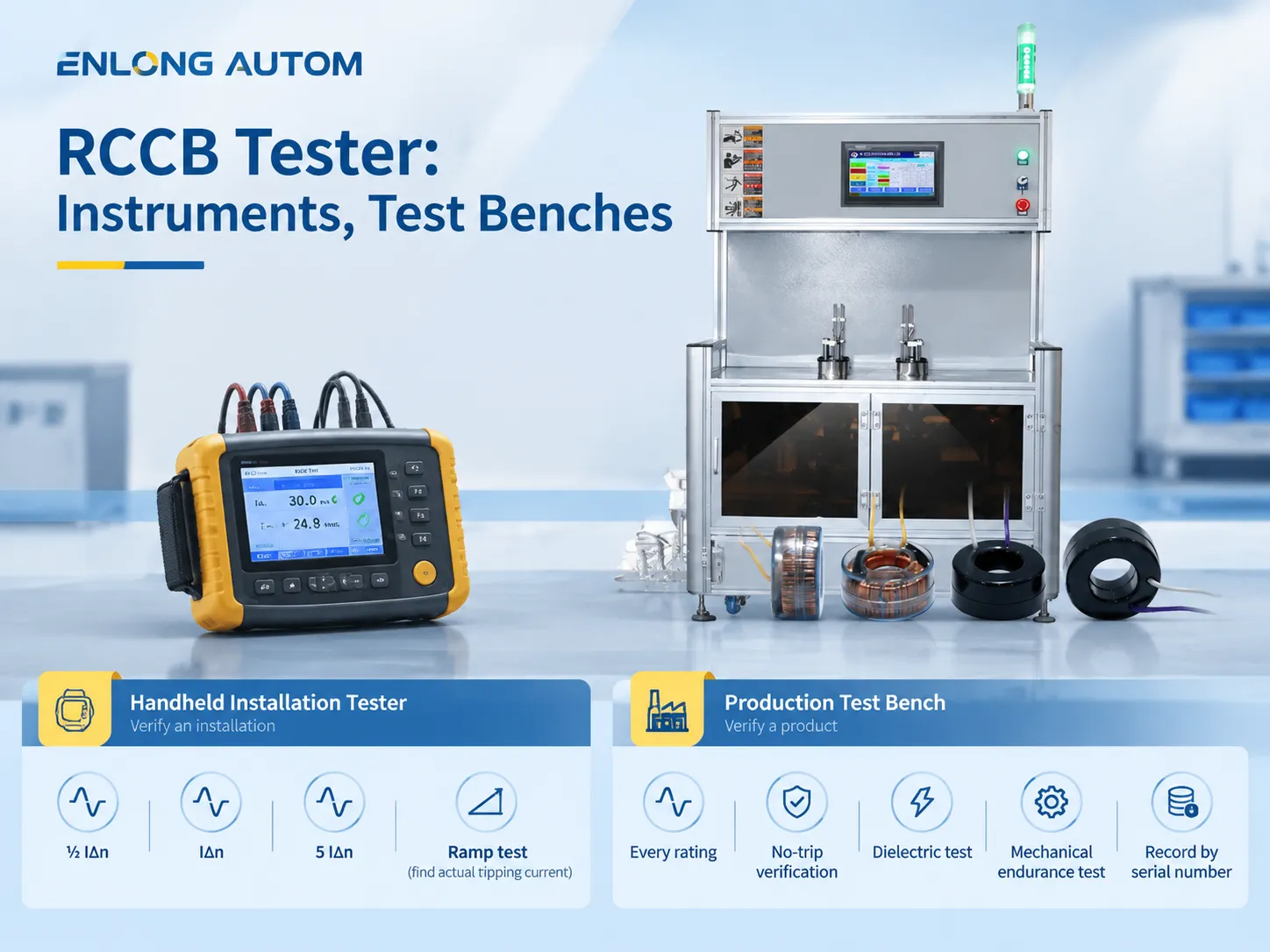
- Residual current bench. It carries out RCCB and RCBO tests at 0.5 of rated residual current for no-trip, at rated current for trip time and at 5 times for fast trip requirement. Type A, F and B devices require DC or mixed frequency test source that is a different generator, rather than a software option. The bench not able to provide stable DC current cannot test type B devices and it is going to be stated in the certificate.
- Instantaneous and life test bench. It runs many thousands of making-breaking operations at rated and over loading current, checking the ability of the mechanism and contacts to endure. Standard endurance rates for home made MCB are about 4000 of electrical and 10000 of mechanical, and life test bench is how you can show it.
- Comprehensive breaker bench. This bench is a combination of trip testing, insulation resistance testing, contact resistance testing, mechanical timing tests, usually used for molded case and air circuit breakers where only one bench is enough to make full testing. It tests all trip units, closing coils, and auxiliary contacts.
- Contactor and starter bench. It performs measuring of the pickup and drop voltage, coil current, resistance across all poles, counting mechanical operations. The test logic is different from a breaker because the acceptance criteria are different, and a comprehensive contactor test machine covers the coil, the main contacts and the auxiliary block in one cycle.
- Aging and endurance bench. It runs the devices for an extensive period of time at high temperature or at rated current with the help of special appliances to create drift. It serves as a way of reliability test and not of outgoing check of devices.
What Sits Inside the Bench
The bill of materials clearly lists the prices and explains why the two quotes have a threefold difference.
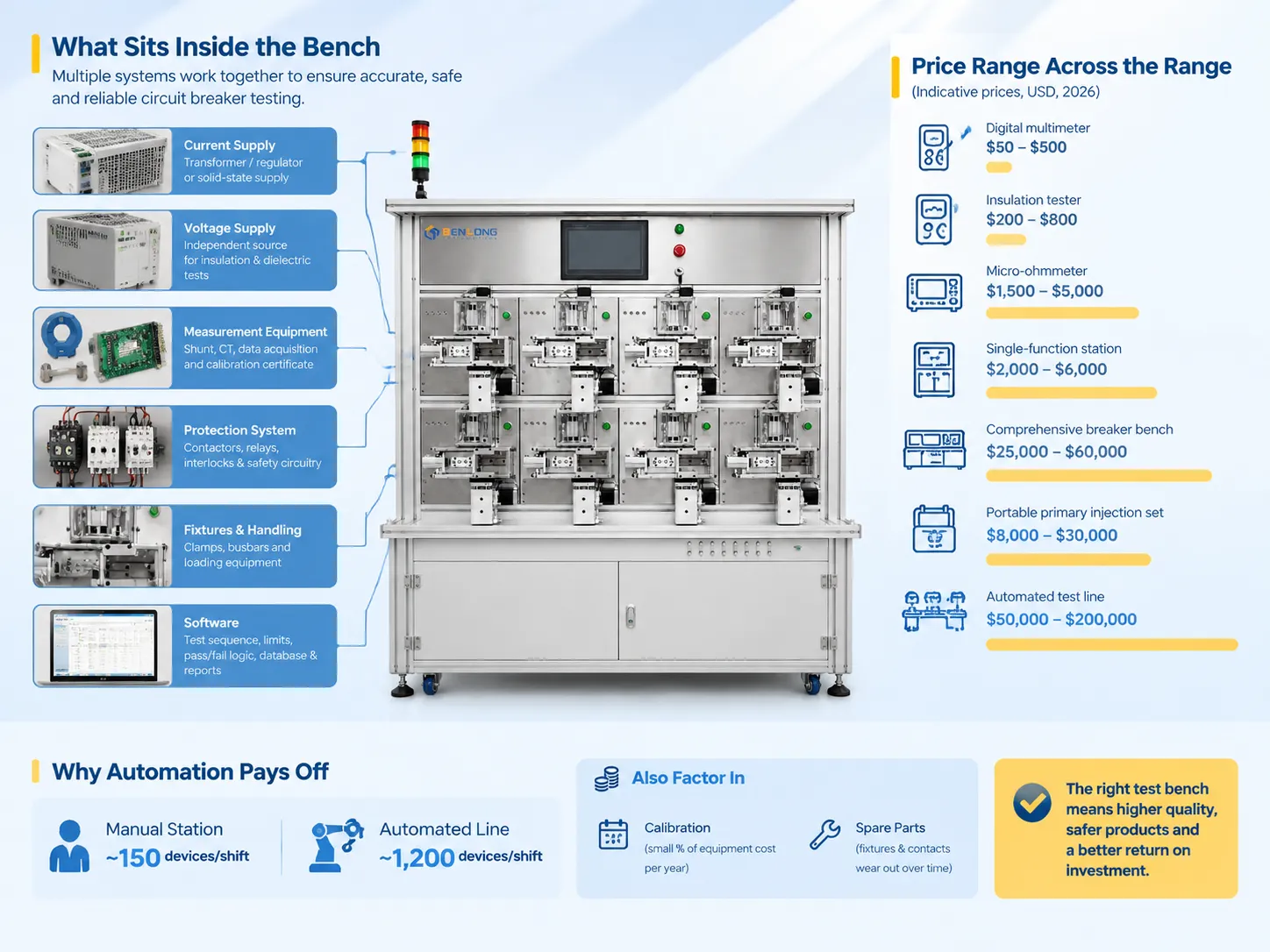
- Current Supply. A transformer and a regulator, or a solid-state supply capable of producing the maximum test current. This will be the costliest component, yet the one that is most commonly under-specified.
- Voltage Supply. Generally, in most configurations, the voltage source is independent from current supply and is necessary for insulation and dielectric tests.
- Measurement Equipment. This includes the shunt, current transformer, data acquisition card, and calibration certificate. The bench becomes only as good as its calibration, which is an additional yearly expense. On a moulded-case or air circuit breaker the chain also has to read the trip unit, which is why a bench built around ACB test routines carries a communication interface that an MCB station does not.
- Protection System. This is the setup of contactors, relays, and interlocks important for the correct routing of the test current and protection of the operator. The safety circuitry is the one area where cost-cutting usually occurs.
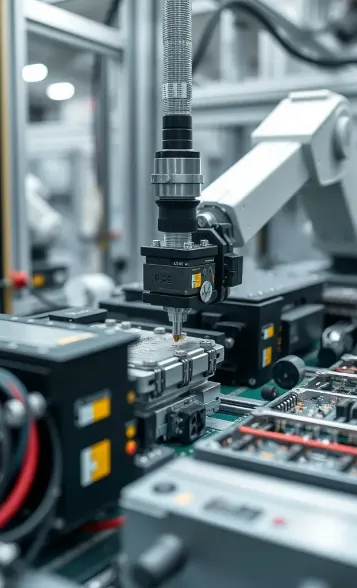
- Fixtures and Handling Equipment. This is the system of clamps holding the device, the arrangement of buses connecting the device, and the apparatus for loading the devices. For high-output lines, the effectiveness of the fixture design is even more important than that of electronics.
- Software. This includes the testing sequence, limit tables, pass/fail logic, database, and reporting template.
It should be noted that mechanical handling is often overlooked by the buyers only to realize how important it is later. A bench that takes on average two minutes of clamping for each device will have a low output rate despite being fast in testing.
What It Costs, Across the Range
The prices mentioned below correspond to the indicative figures of 2026. Stations built in China are the cheapest, while devices made in Europe and Japan are the most expensive.
| Item | Indicative price (USD) | Notes |
|---|---|---|
| Digital multimeter | 50 to 500 | Not a bench, but the baseline instrument |
| Insulation tester | 200 to 800 | 500 V and 1,000 V ranges required |
| Micro-ohmmeter | 1,500 to 5,000 | 10 A DC minimum for contact resistance |
| Single-function test station | 2,000 to 6,000 | Trip, RCD or life test, manual loading |
| Comprehensive breaker bench | 25,000 to 60,000 | Multi-function, MCCB and ACB class |
| Portable primary injection set | 8,000 to 30,000 | Field use, 200 to 10,000 A |
| Automated test line | 50,000 to 200,000 | Conveyor, auto-handling, database integration |
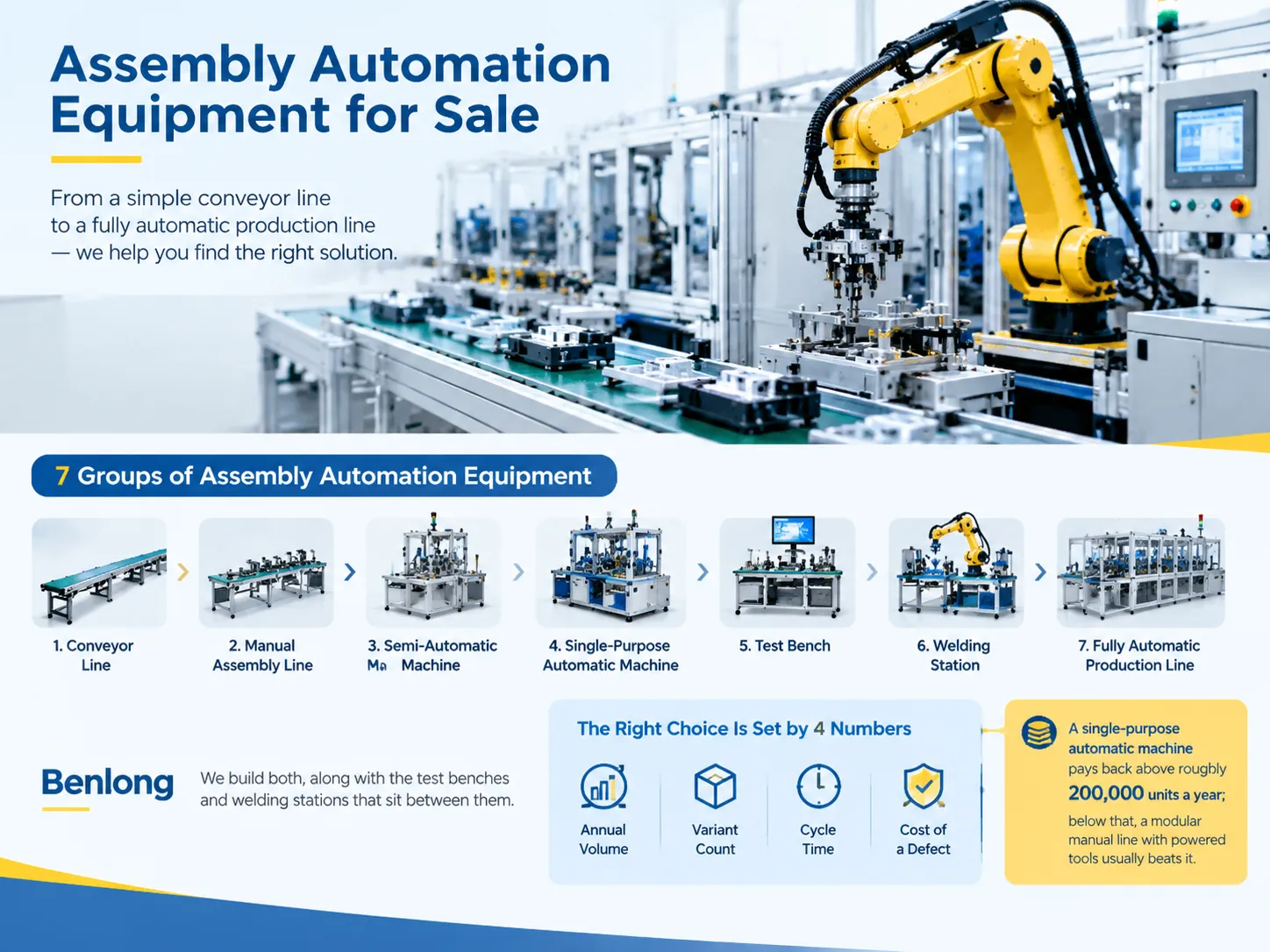
The transition from a manual station to a fully-automated line is considered the best expenditure and the best place for payback calculation to be performed. A manual setup may have one operator working and processing around 150 devices during one shift. An automated line enabled by using roughly the same electronics and adopting better techniques of handling devices may be able to process around 1,200 devices.Whether that difference pays back depends on volume, labour cost and defect escape cost, and this analysis of the payback on automated versus manual MCB testing works through the arithmetic with realistic assumptions, not optimistic ones.
Besides the buying price, there are two costs that should be included in the budget right away: calibration which comes as a small percentage of the cost of the machinery every year, and spare parts for fixtures and contacts which wear out sooner than anticipated.
How a Test Sequence Runs
The sequence is important since it affects cycle time and since poor organization of the sequence can ruin good output.
The process begins with identification. The act of reading the barcode links the serial number of the product with the information regarding the test, so that it will not be possible to make an erroneous identification due to the connection of electric current.
Next comes the test for lack of power: it consists of visual inspection and the impedance measurement at the contacts that are closed. Poor connections will not meet the technical requirements of the thermal test when carrying it out.
Insulation resistance test follows. The device is tested at a voltage equal to 500 В for the voltage rating of 250 V or below and at a voltage equal to 1000 V for the voltage rating of more than 250 V. Usually, specifications state that a good device will have the resistance of more than 100 МΩ, and anything less than 1 МΩ will be considered a failure.
After that, trip tests follow. The tests including trips at different currents are being carried out in sequence. The managed process of trips (considering the pauses between them) helps avoid false passing due to the use of heating bimetals.
With regards to residual devices, in this case, the half rated current is applied for the absence of the trip, rated current is applied for timing, and five times rated current is applied for speed.
Finally, with the device marked and fault isolated, the record is created. The routing decisions is a mechanical engineering issue, and a bench-based decision is only ignored by personnel working under pressure.
Endurance work runs the same sequence thousands of times without an operator, which is a different engineering problem. An ATS aging bench is built for that mode: unattended cycling, drift logging, and a fault record that survives a power interruption.
Who Builds These Benches
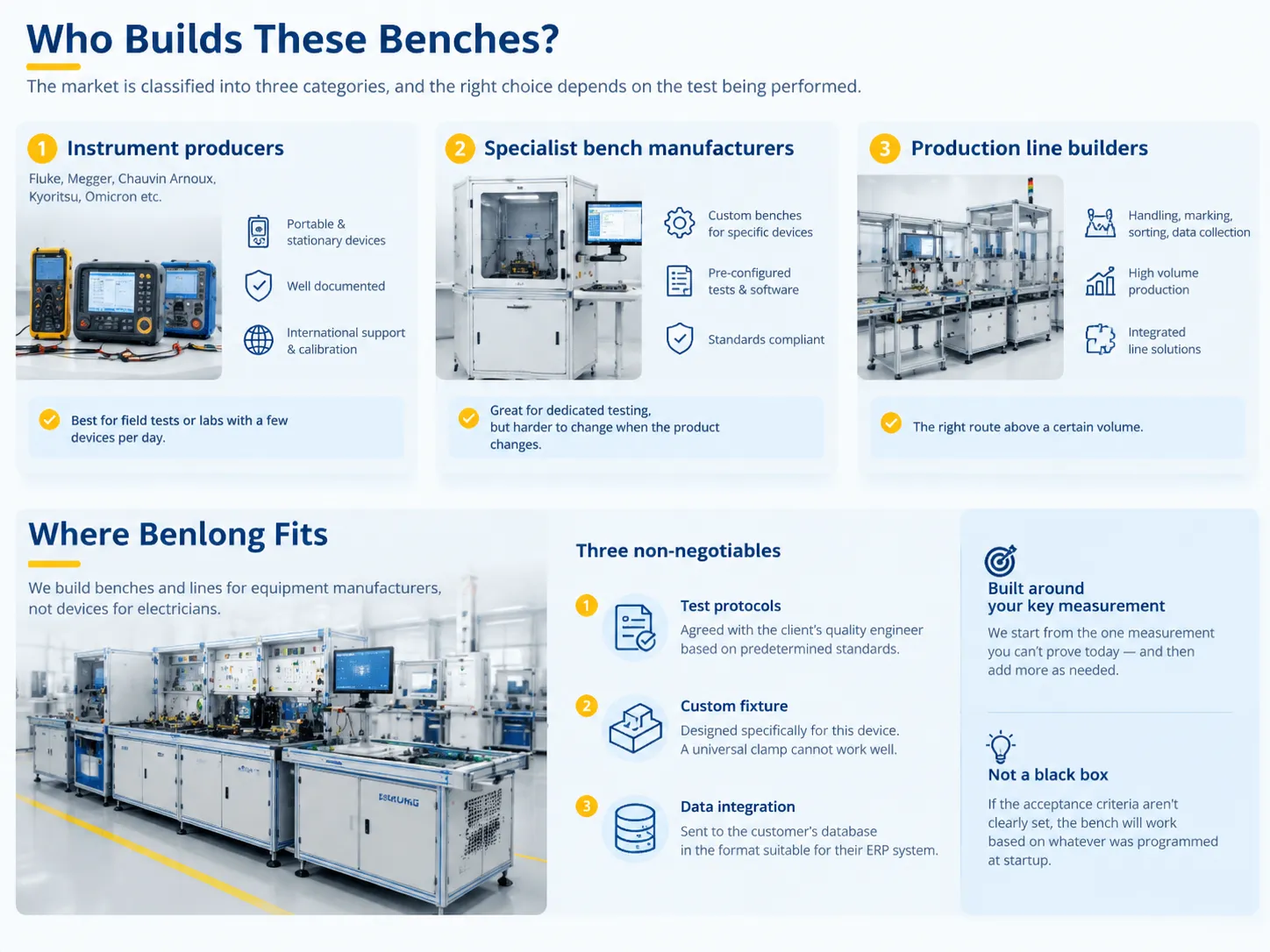
The market is classified into three categories and the right choice depends on the test being performed.
- Instrument producers. Fluke, Megger, Chauvin Arnoux, Kyoritsu, Omicron etc. Their products include portable and stationary devices, which are well documented and have international support and calibration through their distributor partners. These instrument producers are the best choice when performing tests in field conditions or laboratories performing tests on a few devices per day.
- Specialist bench manufacturers. These companies produce benches according to the requirement of the specific devices and are usually equipped with product handling and required software for that specific type of product. The advantage of these testing benches is that the tests are already performed according to the appropriate standards. The drawback is the inability to change the tests when the product changes.
- Production line builders. These companies create benches that are part of production lines, including handling, marking, sorting, data collection etc.This is the right route above a certain volume, and the comparison of MCCB test bench builders sets out what to look for in each type of supplier, including the question most buyers forget to ask about spare parts availability five years out.
Where Benlong Fits
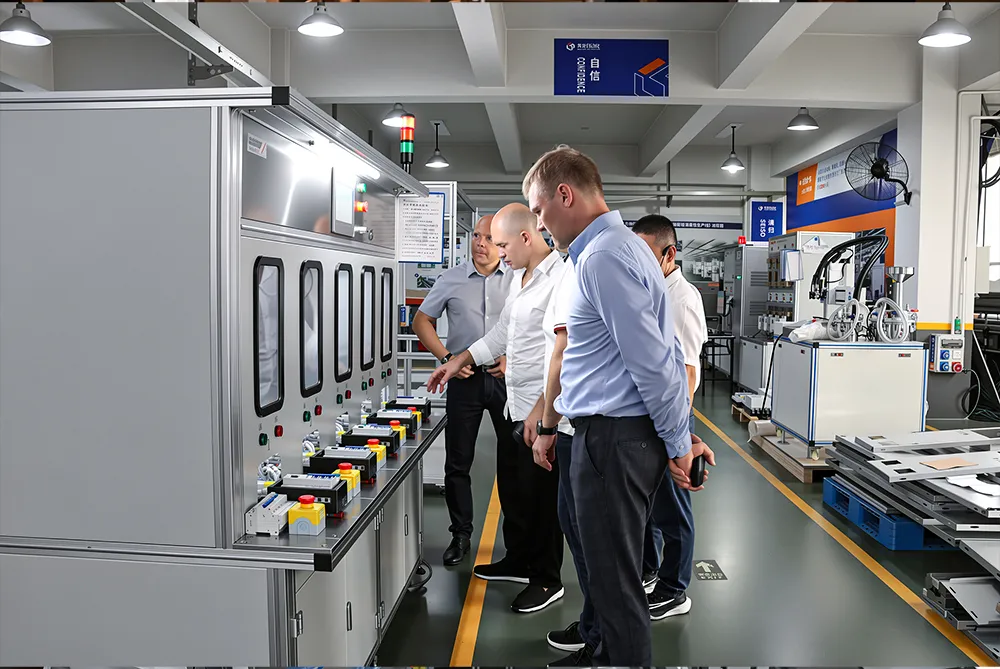
We create benches and lines for equipment manufacturers, not devices for electricians, and that affects all our designs. Our clients undertake the tests on their own devices but have to respect production pace and the standards that will be evaluated by their customers.
This means that there are three non-negotiables in our designs. First of all, the test protocols are agreed upon with the client’s quality engineer based on predetermined standards as opposed to being selected from the inventory. Secondly, the fixture is designed specifically for this device because a universal clamp that fixes everything cannot work well. Lastly, the data is sent to the database owned by the customer in the format suitable for their ERP system.
The typical project starts from the one measurement that our clients cannot prove at the moment. It may be the magnetic trip point of the C-curve device, contact resistance after 2,000 cycles, or total testing time per one unit. The bench is built around that measurement and only then does it gain other measurements. Therefore, we create a machine that is applied to the problem rather than a from the catalogue.
What we do not do is sell the bench as a black box. If the acceptance criteria are not clearly set, the bench will work based on whatever was programmed when it was put into operation.
Specification Checklist Before You Sign
Should a supplier fail to answer any of the eight questions above, that implies that he has not prepared for the order.
- What current can a tester obtain and for how long?
- Does the power supply deliver stable regulation throughout the test?
- What standards are covered in the test?
- How much time does the changeover process take?
- What is the calibrating frequency and who is responsible for calibrations?
- What happens to the testing results if the computer goes out of power?
- What spare parts are consumables, how long do they last, and whether they are available in five years?
- What is the SAT at the factory and who is involved in it?
The changeover process of the bench will determine whether it will be operational in three years. In fact, equipment which has a changeover period of forty minutes will be used on one rating only, and the quality audit will reveal a big gap in the quality record.
FAQ
What is an electrical test bench used for?
Current and voltage signals should be supplied to a protective device or system for measuring its response compared to the reference response, and noting the results under a specific identification of the object. The device serves a quality control and process management purpose in a factory and is used for testing and development in laboratory.
How much does one cost?
A single-function machine can be purchased for $2,000-$6,000 while a whole testing bench costs about $60,000. The most expensive project is an automated line costing $50,000-$200,000. In this category there is also the portable phase-testing equipment costing $8,000-$30,000 which is often chosen because it can be beneficial for field commissioning jobs as well.
Can one bench test both AC and DC breakers?
Provided it is built the right way, using direct current supply. Due to the differences in the characteristics of direct current interruptions, it is necessary to note that test current in DC equipment is set for specific value of time constant, usually about several milliseconds. Furthermore, one must remember that a workbench with alternating current supply applied to the rectifier will produce certain value but not necessarily one that complies with requirements.
How often does a test bench need calibration?
The frequency of calibration is considered as annual. The specific calibration process is completed for the relevant source unit, the measuring chain, and the time base separately. When a test bench is put into service, its calibration certificate becomes a part of the quality documentation and therefore the frequency is required to be as per the compliance.
Do I need an automated line or is a manual bench enough?
For anything below the cap of 500 machines a day, a mobile device bench that is professionally organized and equipped with effective appliances is usually a better option since the rate of change for the application is much faster and the amount of money invested is safer. As for any higher product volume, the process consumes a longer time and the payback period of automation is measured by man-hours and by reduced number of mistakes during the testing.
References
- NETA — InterNational Electrical Testing Association
- Fluke — Electrical Test and Measurement Instruments
- Chauvin Arnoux — Portable Test and Measurement
- OMICRON — Protection and Primary Injection Testing
- UL Solutions — Breaker and Protective Device Standards
Conclusion
Evaluating the travel times is simple. If a constructor has been in this business for quite some time, he will be capable of achieving the desirable accuracy of instrumentation of one millisecond. A minimum of ten years of operation of the factory can be achieved with the help of the equipment capable of minimizing the time of changeovers to several minutes and obtaining the necessary results in every operational cycle meeting all of the quality requirements.
In conclusion, one would have to create changeover time, use smooth recording operations, implement necessary requirements and only then consider the electronics. Once we understand the equipment, throughput, and compliance point good design of the bench can be done.