benlong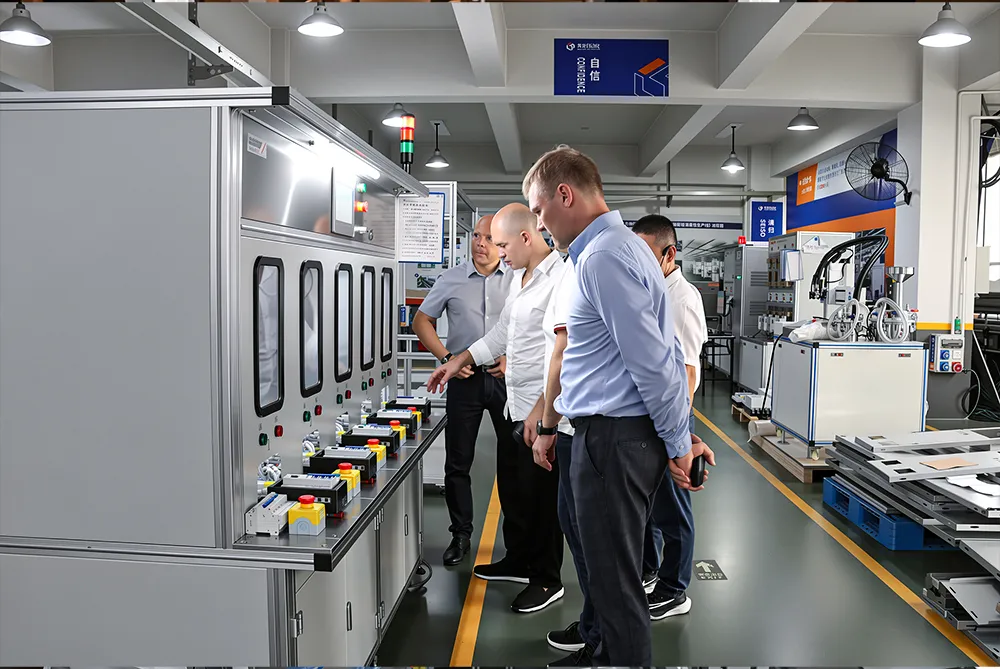
Automatic Assembly Machine Manufacturers in India
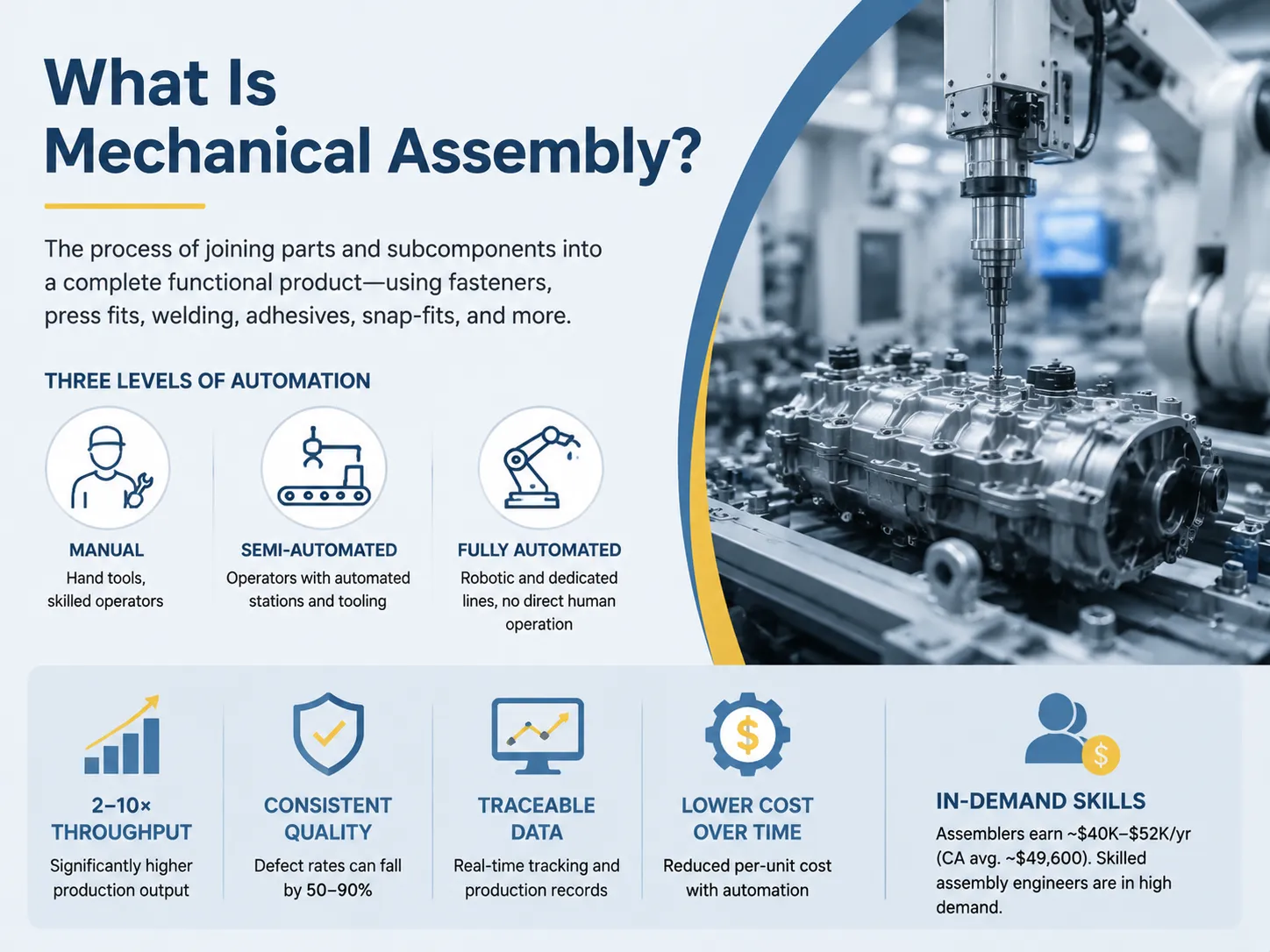
India’s recent developments in industrial production, such as the initiatives under the Production-Linked Incentive (PLI) scheme, gains in the electronics sector, and steps towards the electrification of the auto sector, have made automated assembly machinery an absolute necessity for Indian industries. Manufacturers of assembly systems and machines have established themselves in the local market as suppliers of machinery, including assembly machinery for automobile manufacturing and equipment for the automation of the production of electronics and consumer goods. The guide is intended to provide information about the biggest producers of automated assembly equipment doing business in India, their specialization prices and ways of buying machines in India, including the information about the foreign companies like Benlongkj.
The leading producers of automated assembly systems and system integrators that are working in India are companies with worldwide operations and a strong presence in India such as Honeywell, ABB, Bosch (B&R), and Festo along with Indian companies such as DiFACTO (Pune, robotic assembly and automation cells), Fori Automation India(company specialized in automotive assembly lines), iPAC Automation (manufactures conveyors and assembly systems), Dhanandip, CEMA, Master Linque, and Maas Automation.Chinese companies such as benlongkj are selling automated assembly lines as well as injection-molding tooling and MCB production lines that are 30-50% cheaper than local prices for production of such equipment. The only disadvantage seen when buying equipment abroad is that buyers need to work out all the technical specifications prior to signing the contract as well as before commissioning the equipment after the purchase.
The Indian Assembly Machine Market
The Indian automated assembly machinery industry is witnessing explosive growth along with the development of the manufacturing industry. The following three forces catalyze the demand: automotive industry and electric vehicles (largest customer – engines, transmissions, and batteries), electrical and electronic industry (benefiting from Production Linked Initiatives – PLI in short – for all electrical and electronic devices, from circuit breakers to mobile devices), and consumer and FMCG industries (mass volume packaging and product assembly). The supplier market corresponds to the global one – large machine builders with their engineering divisions in India, domestic manufacturers with integrated capacity markets located in Pune, Chennai, Bangalore, and NCR, and foreign manufacturers providing their equipment more directly to India OEMs.
The reality of purchasing for Indian manufacturers is the following: local builders provide proximity and service and less logistics costs while international machinery manufacturers provide technology and lower costs for standardized equipment. Balancing is usually the right answer – understanding who builds what is the first step to reaching success in the competitive machinery market in India.The broader logic of choosing between local and offshore automation supply is covered in the automated production line buyer’s guide.
The Top 10 Manufacturers Profiled
1. DiFACTO (Pune)
One of the most famous automation and robotics firms in India, DiFACTO makes robotic assembling cells, automated assembly lines and factory automation for customers from automotive, appliance and industrial sectors. DiFACTO is the most trusted Indian integrator of robotic assembly as it possesses in-house engineering, vision integration and experience of implementing many turnkey lines throughout India.
2. Fori Automation India (Chennai/Pune footprint)
Fori India belongs to the worldwide group Fori Automation and is focused on projects in the automotive assembly, namely engine assembly lines, conveyors, robotic stations designed for OEMs and tier suppliers. Since Fori belongs to a global company, the technology brought to India has already been successfully implemented in many countries.
3. Honeywell (Indian operations)
In addition to its machinery business, Honeywell is known for its automation and assembly engineering in India as both its own production programs and projects of its clients require automation services — thus, buyers seeking an internationally recognized automation brand and at the same time a strong Indian engineering partner will find what they are looking for.
4. ABB Robotics & Machines (Indian operations)
ABB incorporates global technology concerning assembly machines and robots with its strong local presence in India — the company produces robots and machines for assembly along with service and engineering network that enhance ABB’s production.
5. Bosch / B&R Industrial Automation (Indian operations)
Bosch and B&R technologies jointly allow Indian buyers to access the best modular assembly technologies in the world coupled with the control system behind them — the latter adds to its popularity among those buyers who seek high-precision assembly systems.
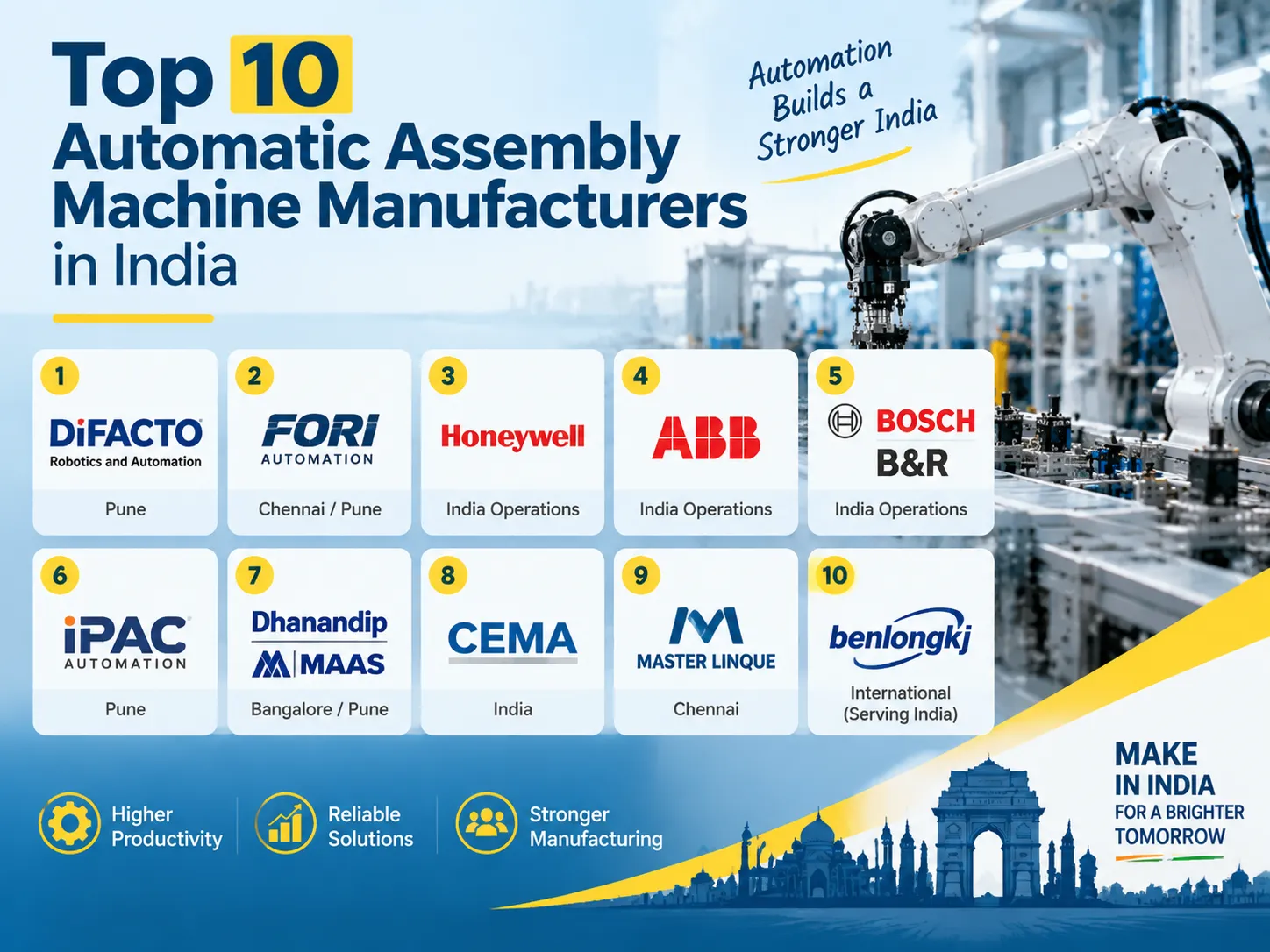
6. iPAC Automation
is a Pune integrator that specializes in conveyors, assembly lines, and special-purpose machines and provides useful, economical automation solutions for businesses in the automotive, electronics, and general manufacturing sectors.
7. Dhanandip & Maas Automation (Bangalore/Pune)
India’s cities of Bangalore and Pune have a variety of well-established names in the industry — Dhanandip and Maas, among others, are manufacturers of assembly and testing machinery used in electronics research, medical, and industrial products, functioning with the flexibility and competitiveness that the mid-tier Indian OEM sector demands.
8. CEMA (industrial automation)
CEMA, along with other companies that manufacture special-purpose machines in India, serves companies in the fields of FMCG, pharmaceutical, and packaging — producing assembly and filling machines that are practical, home-designed equipment with local service.
9. Master Linque (Chennai)
The automation industry in Chennai includes Master Linque and similar integrators that supply the automotive industry in the region with assembly and robotic solution systems.
10. benlongkj (international, serving India)
In simple terms, benlongkj is a Chinese producer of automatic assembly lines and equipment for equipment operation that offers Indian OEMs and partners automated testing designed to serve clients in the Indian market for 30–50% lower cost than local firms.The specification discipline that makes offshore procurement work is covered in the custom automated assembly machine guide.
Comparison Table
| Manufacturer | Base | Specialty | Price Tier | Best For |
|---|---|---|---|---|
| DiFACTO | Pune | Robotic assembly cells and lines | Mid-High | Automotive, appliances, industrial |
| Fori Automation India | India (global group) | Automotive assembly systems | High | Engine/drivetrain assembly |
| Honeywell | Global, India ops | Controls + assembly engineering | High | Large programs, electronics |
| ABB | Global, India ops | Robots and assembly cells | High | Robotic assembly at scale |
| Bosch / B&R | Global, India ops | Precision modular assembly | High | High-precision, lifecycle support |
| iPAC / CEMA / Dhanandip / Maas / Master Linque | India | SPMs, conveyors, assembly lines | Mid | Mid-size OEMs, local service |
| benlongkj | China (exports to India) | Assembly lines, MCB lines, molding tooling | Value | Capital lines with clear specs |
International Suppliers (Including benlongkj)
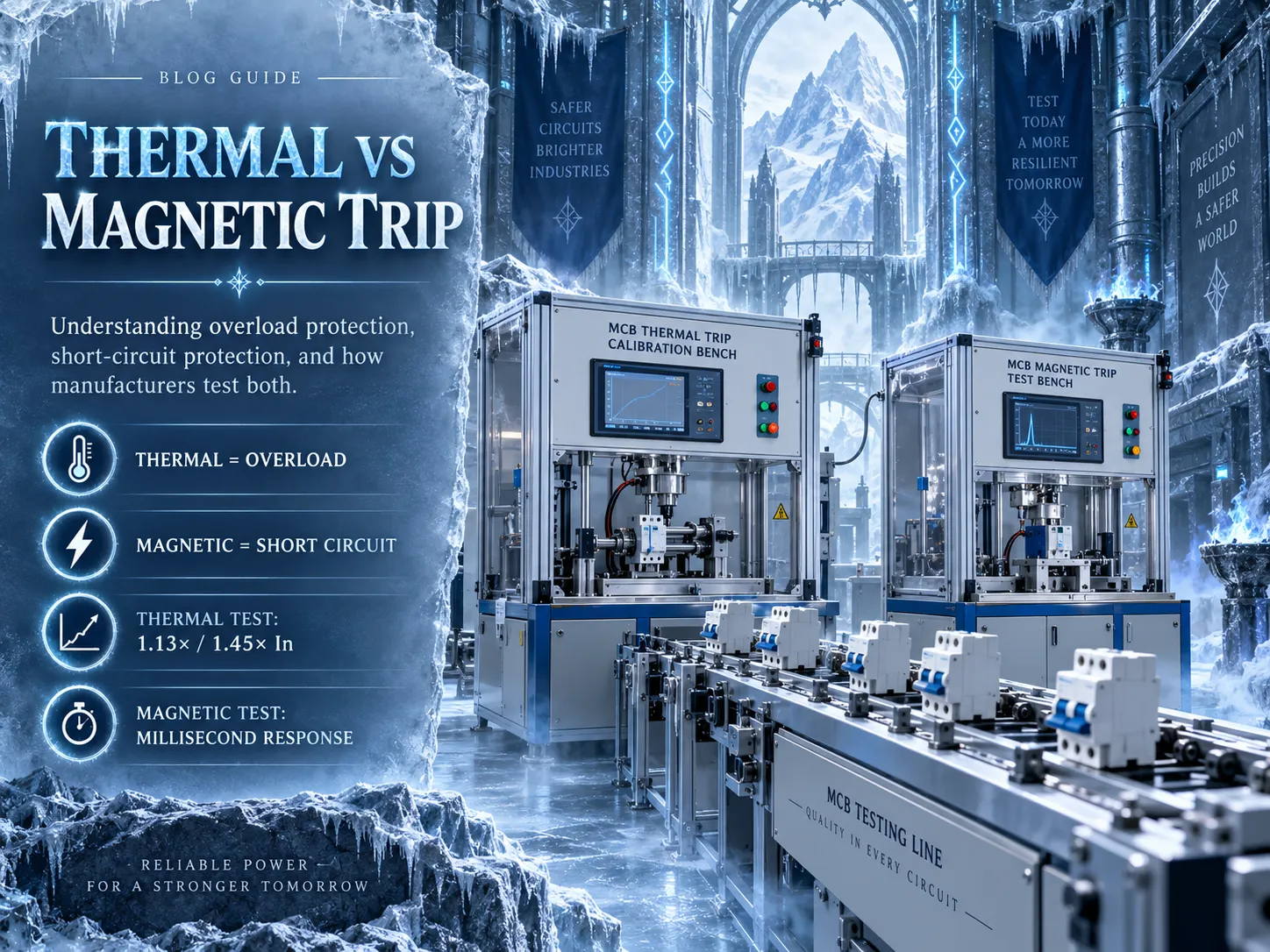
As time passes, Indian customers are beginning to use two avenues: local vendors for on-site production and service, and overseas manufacturers for capital equipment with precise specifications that makes the transportation feasible. benlongkj prefers the latter route – it’s involved in constructing assembly lines and injection molding plants, including automatic MCB manufacturing lines with automatic testing and set-up, that are purchased by the Indian producers of electrical components and appliances. The company has strengths in duration and cost, while it incurs some trade-offs with distance and planning. For buyers deciding between the tracks, the automated MCB production article shows where full automation pays for itself in a real product family — and where a semi-automated line is the smarter first step for an Indian factory scaling up.
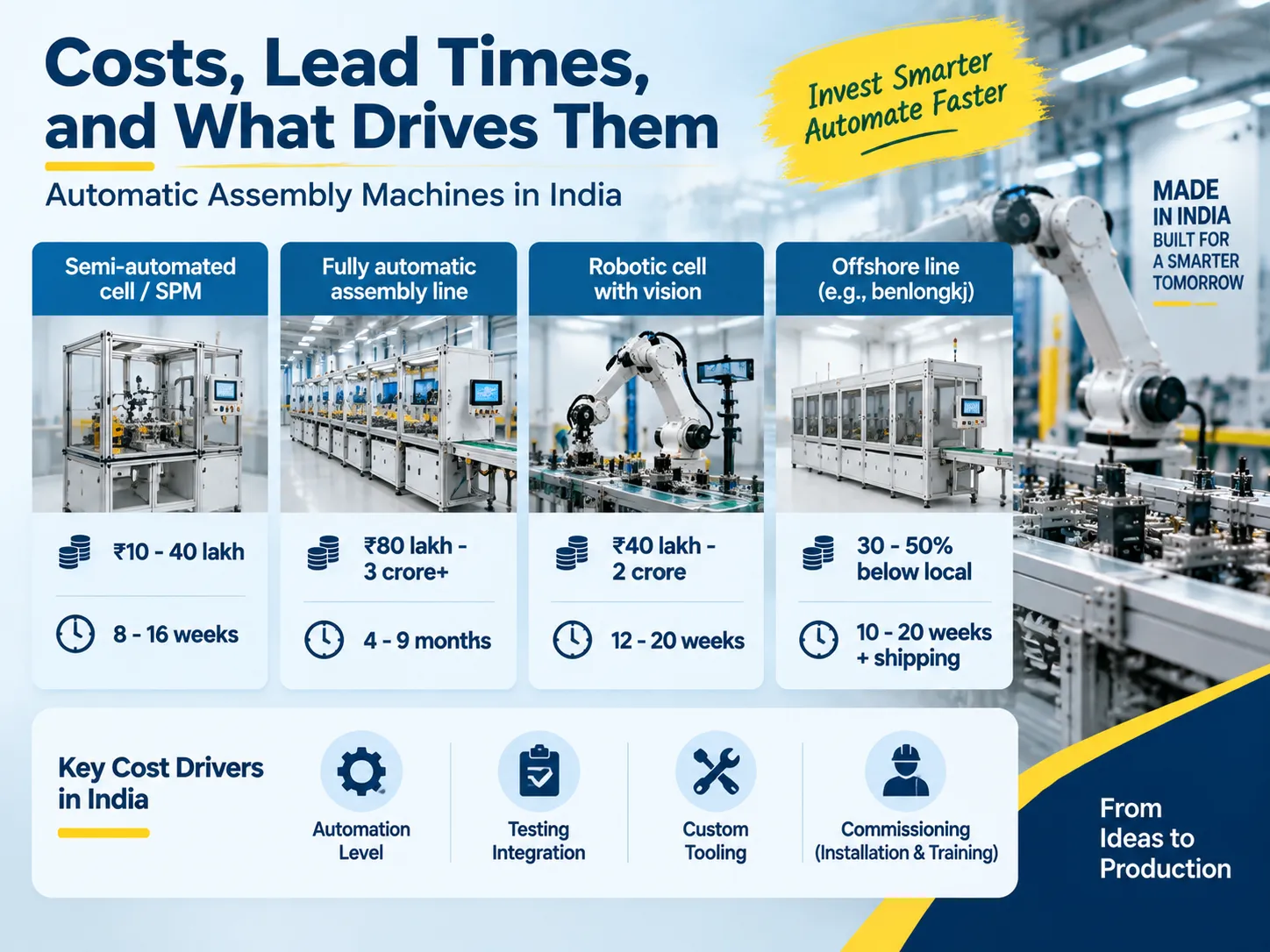
Costs, Lead Times, and What Drives Them
| Machine Type | Typical Cost (India) | Lead Time |
|---|---|---|
| Semi-automated cell / SPM | ₹10-40 lakh | 8-16 weeks |
| Fully automatic assembly line | ₹80 lakh – 3 crore+ | 4-9 months |
| Robotic cell with vision | ₹40 lakh – 2 crore | 12-20 weeks |
| Offshore line (e.g., benlongkj) | 30-50% below local equivalent | 10-20 weeks + shipping/commissioning |
In India, the four cost drivers that are of great importance include the level of automation (each automated station adds to the capital), testing integration (the use of a test in line increases costs by 15-30% but also decreases the number of failures downstream), custom tooling (also known as tool based manufacturing, this involves creating fixtures and grippers according to the specific products), and commissioning (installation and training, usually 10-15% of machine price). The payback math — automated testing versus manual inspection, and full automation versus semi — is where buyers should start, and the fully automated vs semi-automated comparison is the framework to run the numbers before issuing an RFQ.
How to Choose a Manufacturer
India buyers need the right selection framework to ensure the success of their purchase.
- Make sure that you can match the experience with the product. A builder who has automated your sector should already know how your business is likely to fail, so a good building company should be able to show similar reference lines both in size and type.
- Make sure that all engineering is done inhouse. This is the key factor – to ensure that mechanical, electrical and software engineering are all done under one roof.
- Check running reference lines. Indeed, having pictures is nice and all, but nothing speaks louder than the reference line in the factory. If the builder is not able to show you a running line in India, this is bad news.
- Standardize your controls platform. By using one system of PLCs and HMIs across the manufacturing process, you will be able to save costs on the training as well as on spare parts needed for the whole lifecycle of this machine.
- Run local and offshore in parallel. For capital lines, put an Indian integrator and a documented offshore manufacturer on the same RFQ and compare on specification, not just price — the manufacturing automation solutions guide frames the comparison.
Procurement and Inspection Checklist
Before you sign, go through the checklist:
- Technical parameters confirmed – cycle time, changeover time, and uptime and acceptance criteria should be included in the contract.
- Payments done in stages – normally in India, advance payment of 30-40%, milestone payments during production, and 10-20% retention payment against acceptance test at the buyer’s premises.
- Factory acceptance test (if buying from an offshore supplier)- make sure to include factory acceptance test (FAT) at the factory of the supplier with your people present.
- Site acceptance test (SAT) and training – make sure the contract covers commissioning at the buyer’s premises, operation, and maintenance training along with documentation.
- This would also include spare parts and warranties – make sure to agree upon the warranty period, the spare parts list, and the response time for the Indian supplier/service.
- Import issues while buying from abroad – customs duty, GST, and insurance will increase the total landed cost of the machine; hence, budgeting should not be done on an ex-works basis.
The above is one of the major reasons for a lot of international purchases going wrong, as companies focus on the machine price only without considering the logistics element of it. If the buyer ensures they are comparing total landed costs, then everything else will fall into place as per the discipline of the buying guide created.
FAQ
What are the top 10 automation companies in India?
Various top automated companies in India are included in the list of major automation entity brands by size and status, including companies such as Honeywell, ABB, Siemens, Bosch (B&R), Rockwell Automation, Feston, Schneider Electric, and others, and companies such as DiFACTO, Fori Automation India, and iPAC Automation serve the most prominent companies that are engaged in robotics and assembly integration in India and possess the largest experience and reputation. The choice of the company you are going to deal with depends on whether you are looking for large global brands and their services in India.
Who are the major manufacturers of robotic machines in India?
The major robotic machine and assembly-cell players in the Indian robotics market include companies such as DiFACTO (Pune), ABB Robotics, Yaskawa (Motoman) vendors, KUKA, and Fanuc partners, which are working with companies, such as Fori Automation India, Master Linque, and Maas Automation which offer complete robotic assembly systems in the automotive and industrial market.
What are the top 10 machinery manufacturing companies in India?
Among the companies included in the list of the biggest machine-engineering companies in India, the names of such companies are heard as Larsen & Toubro, Bharat Heavy Electricals (BHEL), Siemens India, ABB India, and Thermax that stand out for being leaders in the production of equipment and large industrial products. However, in the given segment of machinery manufacturing, the names of the producers mentioned in the report on automation have been mentioned, including DiFACTO, Fori Automation India, iPAC, and others.
What are the top warehouse automation companies in India?
Among the biggest players in the market of warehouse automation in India are such companies, as addverb (one of the most influential and comprehensive robotics companies of India), GreyOrange (founded in India and now being global), and many others, including Falcon Autotech, and worldwide known companies, such as Dematic, Honeywell, and Daifuku.
References
- DiFACTO — Robotic Assembly and Automation (India)
- Fori Automation — Automotive Assembly Systems
- International Federation of Robotics — India Robot Market Data
- Make in India — Manufacturing and PLI Programmes
- Addverb — Indian Warehouse and Factory Automation
Conclusion
The industry of automatic assembly machinery in India has completed its development cycle. There are international companies with considerable Indian engineering expertise (like Honeywell, ABB, Bosch/B&R) that have made their investments in tried-and-true local systems integrators in Pune, Bangalore, and Chennai (DiFACTO, Fori, iPAC, etc.), companies that can meet certain capital requirements in the international market (like benlongkj) by importing assembly lines and injection molding machines into India at prices lower by 30-50 per cent than local prices. The procurement process is very straightforward: find a supplier that meets the experience requirements, check the relevant engineering and production capabilities, inspect their production facilities, conduct testing, and calculate the total costs and milestones of payments. The manufacturing boom created up by PLI is generating demand while the supply side has enough capabilities to fulfill the needs of advanced buyers, which means that the advent of automatic assembly lines, which provide an opportunity for increasing the effectiveness of factories, is just a matter of time.