benlong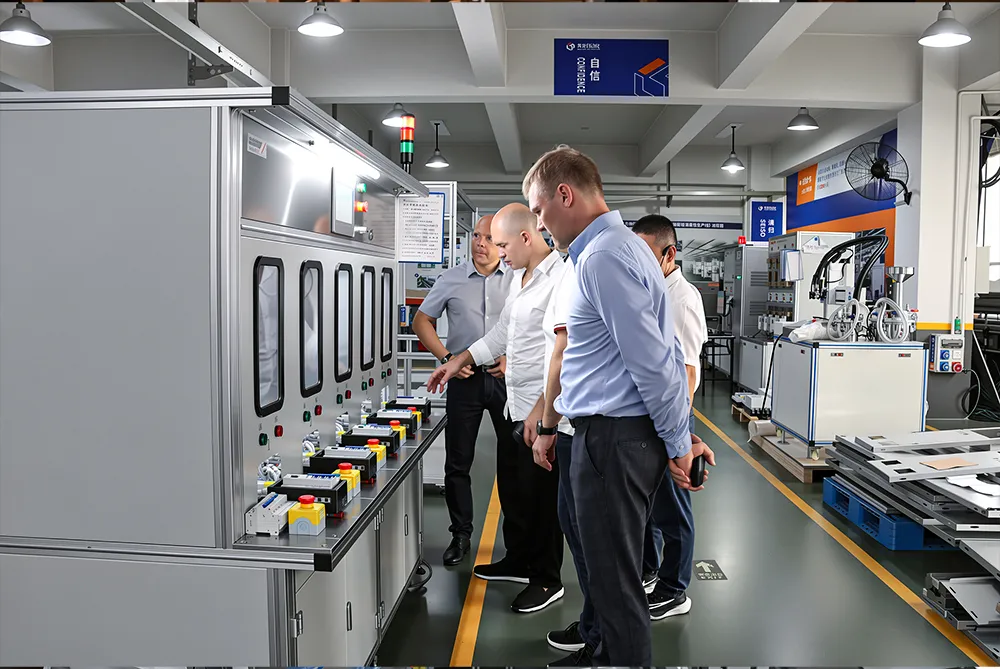

Top Rapid Prototyping Companies in Georgia
When a medical device engineer located in Atlanta required a working prototype of a new type of device for surgery, the project faced a rigid timeline. The investor presentation would occur in three weeks, while the new part needed to have complex internal structures that couldn’t be machined in any way, and the surface finish needed to resemble an injection-moulded part of a production feature. The engineer began searching for quick prototyping companies in Georgia capable of producing a professional prototype in days rather than weeks. She found several such service providers. The part was printed, finished, and handed over to her within four days, resulting in a successful presentation. This article lists the top rapid prototyping companies providing a description of technologies and materials used in their work along with criteria for their selection each engineer, product designer, or purchasing manager should stick to.
Summary: Georgia’s fast prototyping industry is represented by a variety of national service agencies with primary locations in Atlanta suburbs, local companies specializing in particular fields or technologies, and university-based centers offering advanced prototyping and engineering capabilities. The most widely used technologies are: stereolithography (SLA), used for high-resolution prototypes with smooth surfaces; selective laser sintering (SLS) for durable functional nylon components; fused deposition modelling (FDM) for fast and cheap concept samples; multi-jet fusion (MJF) for production nylon parts; direct metal laser sintering (DMLS) for metal prototypes; and polyjet for multi-material prototypes and overmoulded parts.
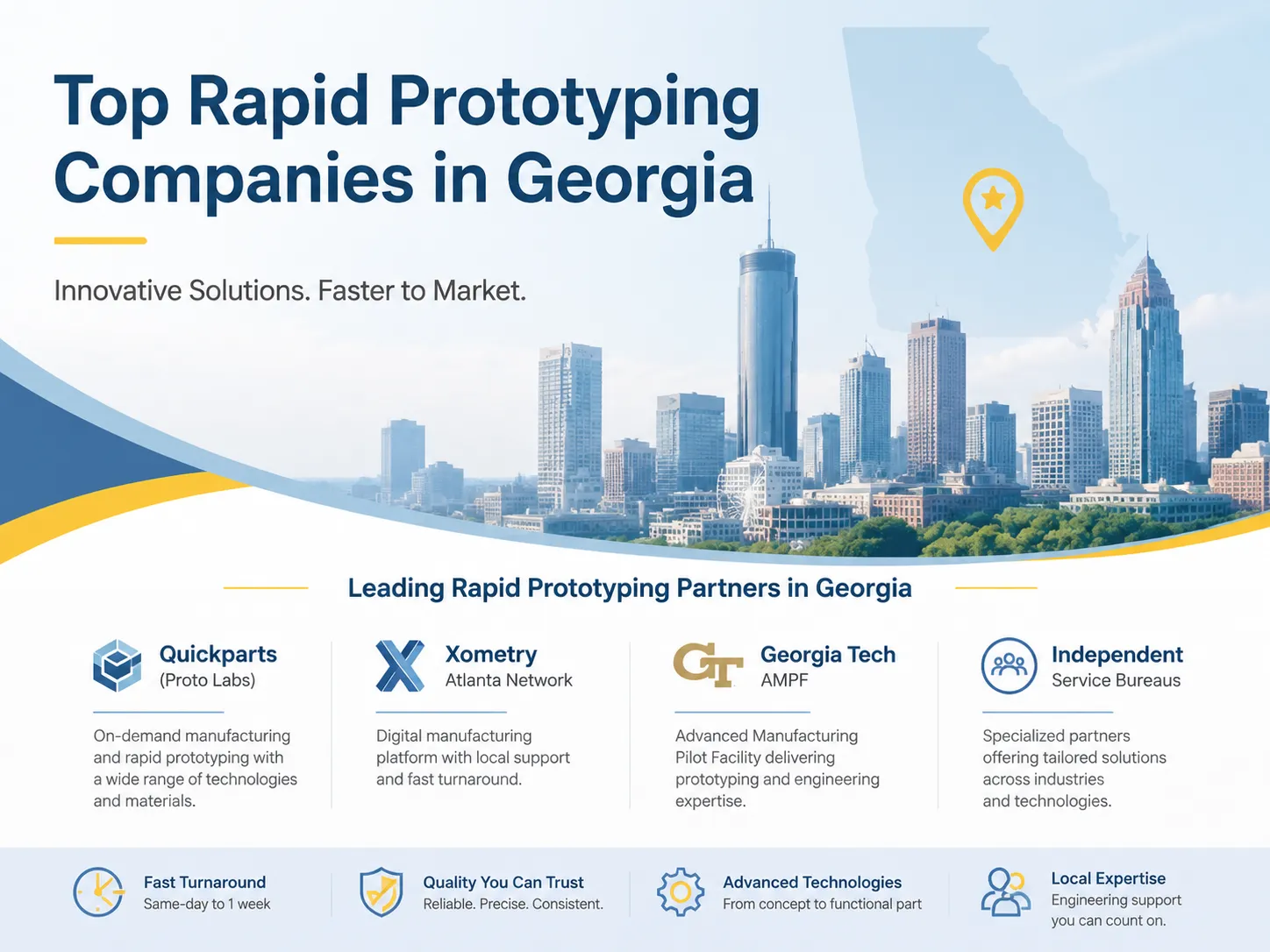
The Rapid Prototyping Landscape in Georgia
Georgia’s fast prototyping industry enjoys various structural benefits that have made it attractive to both national service providers and local specialist companies. The Georgia Institute of Technology, based in Atlanta, with its advanced manufacturing research programs and industry partnerships, has developed a steady pool of engineering talent and a culture of innovation in manufacturing. Georgia’s strategic location as a logistics hub—the pillar of which is the Hartsfield-Jackson Atlanta International Airport, the busiest passenger airport in the world, as well as the extensive interstate highway system—ensures that rapid prototyping companies can send their products overnight around the Southeastern United States. Due to the diverse industrial base represented in fields like aerospace, automobile manufacture, medical devices, consumer goods, and heavy equipment, the demand for prototyping services is constant, covering very wide ranges of materials, sizes, and performance requirements.
Various firms can serve the market – from international digital manufacturing platforms aggregating capacities of their countrywide partners, through logistic service enterprises that offer their own capacity with in-house additive manufacturing technologies, to small firms owned by single entrepreneurs focusing on one technology and providing the kind of personalized engineering services that the larger platforms cannot.For a deeper look at how rapid prototyping fits into the broader automation and manufacturing landscape, and how Benlong Automation serves the electrical equipment sector with automated production solutions, our guide on what automation is provides the foundational context.
Notable Rapid Prototyping Companies in Georgia
1. Quickparts (Proto Labs) — Atlanta Facility
Core capabilities: Quickparts, recently acquired by Proto Labs, is one of the largest offerings of rapid prototyping and just-in-time manufacturing in the Atlanta market. The services portfolio is extensive, including all kinds of different technologies used in additive manufacturing (i.e. SLA, SLS, FDM, MJF, DMLS, PolyJet) and processes such as CNC machining and injection molding which can also be utilized to manufacture products in low volume. In fact, the unique advantage of Quickparts is that using the same supplier one could get an FDM concept model, an SLS prototype from nylon and a DMLS functional metal part in no time. With the help of its own software, the company is able to analyze the uploaded CAD file and calculate the price of the services automatically within seconds while also including some recommendations for the design.
Type of customer: People engaged in product development, design engineering and procurement work who are looking for a variety of technologies and suppliers in one place and would like to receive a quote online.
Price level: Medium to high price level which comes from the fact that the company is using a unique technology for quoting and offering various services at the same time.
2. Xometry — Atlanta Manufacturing Network
Unique asset: Xometry is an online marketplace for manufacturing that links buyers to a large group of manufacturers that can produce parts in the US, especially in Atlanta, which has a lot of 3D printing and CNC processing. Xometry’s main advantage is its ability to use the network created by its marketplace, which combines the fabrication abilities of many suppliers and allows it to offer good prices, short lead times, and certain specific technologies that an in-house manufacturer may not possess. The buyer simply uploads a CAD file to the platform, chooses what type of manufacturing technology he prefers, as well as the materials and the finish he wants, and the platform finds a suitable supplier for the order. The company also offers additional services such as anodizing, plating, heat treatment, and painting through its partners.
Normal client: Engineers and purchasing managers, who require good price offers, a great variety of technologies, and many options to choose from a single platform, will be the typical customer.
Price strategy: Xometry offers competitive prices due to its marketplace approach, and the level of engineering support might vary for different clients.
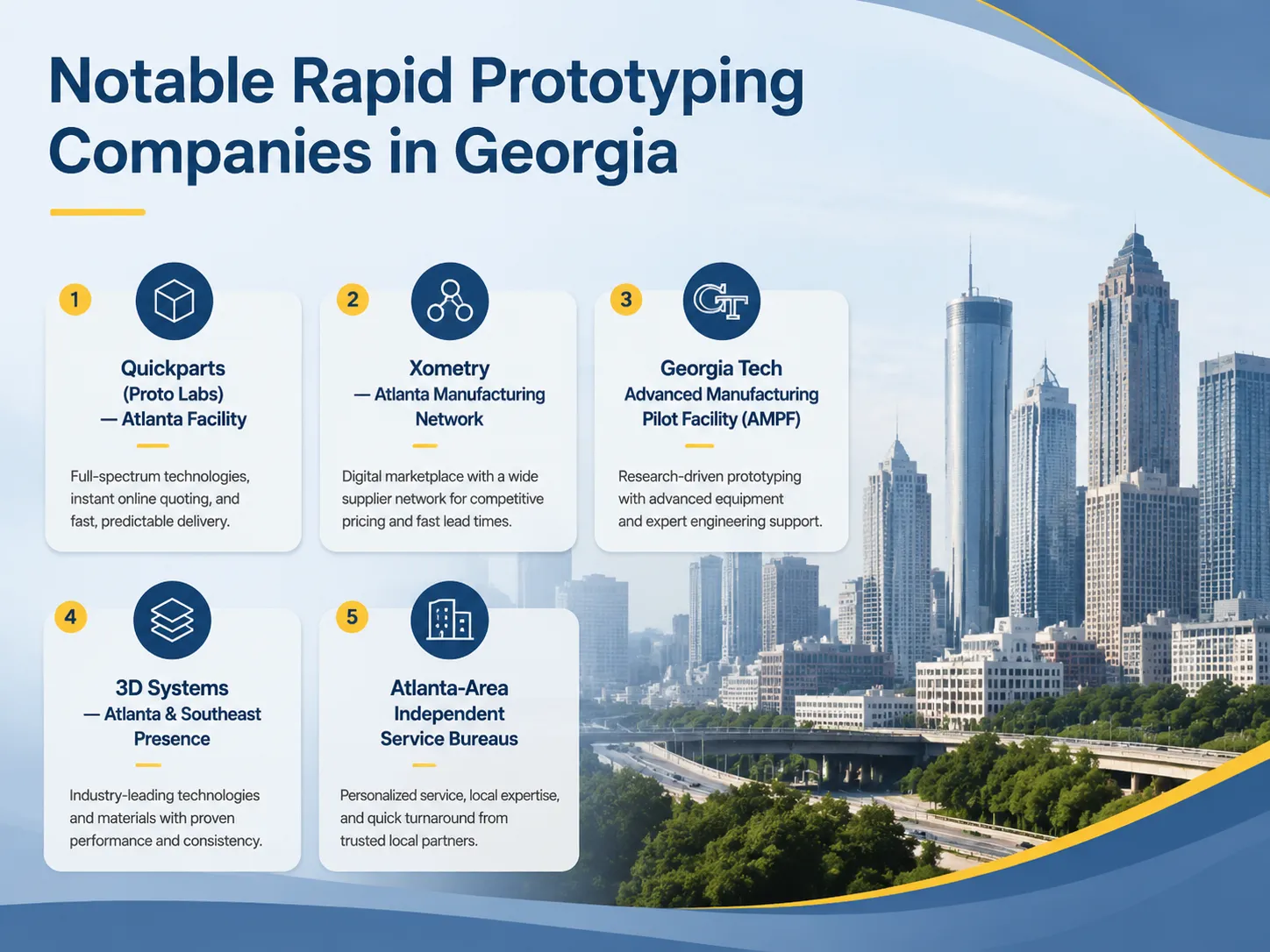
3. Georgia Tech Advanced Manufacturing Pilot Facility (AMPF)
Strength: The Georgia Institute of Technology’s Advanced Manufacturing Pilot Facility is not a commercial service bureau, but rather one of the top rapid prototyping and manufacturing research centres located in the Southeast. It is equipped with an extensive array of additive manufacturing devices—including DMLS, SLS, SLA, and industrial-grade FD; CNC machines; and metrology cells. The facility manages research and development projects alongside industry partners and also supplies prototyping and manufacturing services to startups, large companies, and government organizations. Thanks to the engineering expertise of Georgia Tech’s professors and researchers, the facility can fine-tune its solutions for more sophisticated prototyping challenges that a regular company would not be able to tackle.
Target buyer: Companies with difficult prototyping requests; startup companies partnering with Georgia Tech’s incubators and accelerators; government organizations with advanced manufacturing tasks in their portfolio.
Pricing policy: Variable, in that price depends on what project the company works on and the complexity of engineering work involved, not just on machine time and materials used. For startups and other companies, the AMPF can be the facility that helps them gain access to advanced virtual prototyping technologies.
4. 3D Systems — Atlanta and Southeast Presence
Company values: 3D Systems is one of the world’s first companies to master the stereolithography technology, while today it is a serious player in additive manufacturing field. The company operates in the Southeastern U.S. and offers a solid presence in Georgia—sales, services, and on-demand manufacturing capabilities. On-demand manufacturing services give access to the entire range of 3D Systems technologies (SLA, SLS, DMLS, Figure 4, MultiJet Printing) from the plants all over the U.S., and shipping to Georgia is executed in a timely manner. Knowing that the capabilities of 3D Systems are mostly based on technology and materials science, the company works on developing its own resins and powders as well as printers, which, consequently, allow obtaining the desirable properties of the products made of those materials.
Target customers: Engineers and product developers requiring the highest precision prototypes and information on product performance given by a technology leader in the field.
Pricing strategy: Higher prices than those of local competitors; the quality and consistency of the products manufactured by 3D Systems set a standard for other companies in various industries.
5. Atlanta‑Area Independent Service Bureaus
Core competency: Apart from the national agencies and university-affiliated centers, Atlanta metropolitan area is home to some independent rapid prototyping and 3D printing companies. Typically, these businesses are small and medium-sized and are often owner-operated enterprises, having a limited number of only additive manufacturing machines and a focus on customer service as well as rapid delivery and personalized engineering. While the local service bureau may not have the immediate online quotation offered by Proto Labs or the national network of Xometry, it provides something that the larger companies cannot offer: the direct communication with the person that is going to manufacture the part. The engineer would be able to contact the local bureau to talk about the part’s shape, get a consultation on how to orientate the part for the printing process, and take the part in person the same day. Taking into account that the startup works on improving its model rapidly, or that the manufacturer needs a prototype in a short time and wants to speak to a human, the local service bureau may be the best solution. There is Georgia Manufacturing Extension Partnership (GaMEP) which has its headquarters at Georgia Tech and which connects the manufacturer to the local rapid prototyping services and the national network of manufacturing support services.
Typical client: Local engineers and designers along with manufacturers and companies that want to be able to communicate directly with people producing the prototype or that appreciate the fast service from local bureau.
Pricing strategy: At the level considered reasonable if compared with other independent organizations owing to its lower costs associated with smaller size of the business and absence of the national sales network.
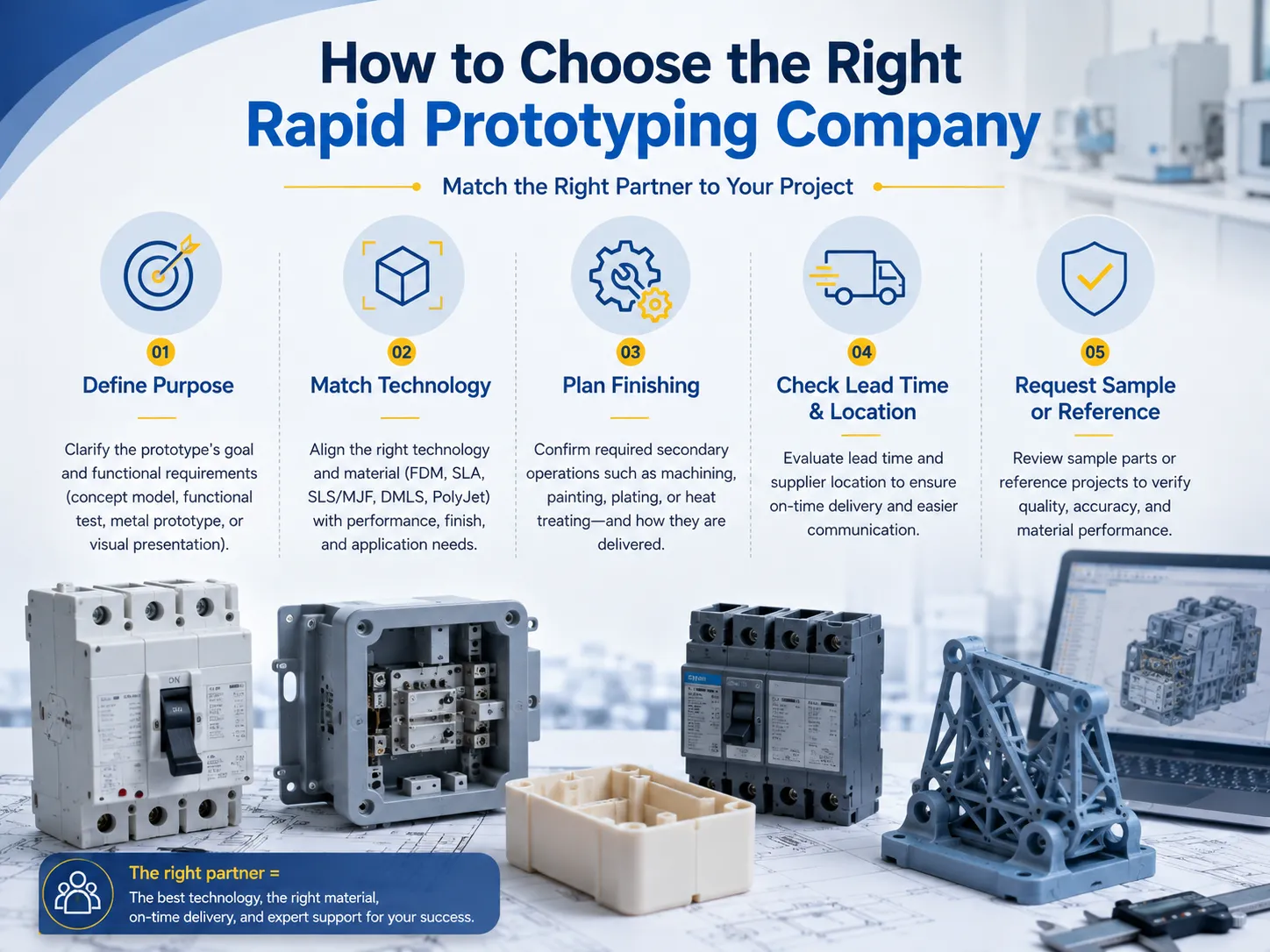
How to Choose the Right Rapid Prototyping Company for Your Project
Choosing the right rapid prototyping service provider for a project involves making sure the technology, materials, time frame, funding requirements, and the anticipated amount of engineering support are in line with the functional needs of the parts that need to be produced and the stage of the product development process. A concept prototype for a one-time design review will have a different set of requirements compared to a functional prototype which must undergo mechanical testing, which, in turn, will differ from a metal prototype meant for use in an engine bay. One can refer to the decision-making framework below to achieve the intended objective.
Establish the purpose of the prototype. Will it be used as a concept prototype for design reviews, functional prototype used for mechanical testing, metal prototype used for thermal/structural testing, or a visual prototype that should look and feel like a product part at the time of customer presentation? Establishing the purpose is paramount as the suitable technology and materials depend on it.
Ensure that the technology meets the requirements. For a smooth functional visual prototype, SLA and PolyJet are industry standards. For a tough, functional nylon prototype, SLS and MJF are the channels of choice. For producing a metal prototype, DMLS needs to be used, while the choice of the alloy used—be it stainless steel, aluminum, titanium, or Inconel—has to be the one suitable for a given purpose of the prototype. For a fast, inexpensive mock-up, one has to opt for FDM. It is crucial that the prototyping company gives a rationale as to why a certain technology is used for a specific component and a trustworthy company will avoid projects that its equipment cannot handle.
Consider the post-processing operations that the component is likely to need. More often than not prototypes require more than printing. Some components will call for machining to ensure the necessary tolerances, painting or plating to give a definite look or heat treatment to obtain the ideal mechanical characteristics. Prototyping companies that have the option of using in-house operations and have reliable and integrated partners for all the secondary operations will make the logistics easier and improve the processing speed. Inquire what additional services the supplier is capable of providing, their costs and terms of execution, as well as whether they run their operations personally or farm them out to other outside firms that perform these operations.
Examine both the lead time and the location of the supplier. A local Georgia-based supplier that is able to manufacture the component and ship it overnight or deliver it to a will-call counter saves more than a day of travel time compared to a West Coast supplier. In case the deadlines are tight, a local supplier will often make the difference between meeting the deadline or not. National suppliers like Proto Labs, Xometry, and 3D Systems could also deliver components quickly, and they are good sources for the cases when local suppliers are busy.
Get a sample or a reference component before embarking on the big project. An excellent company will provide a sample that will demonstrate the quality of its work moving forward. A small printed sample shows the buyer what he should expect in terms of finish and material. When dealing with a significant project a small printing operation with a specific geometry or a certain material is not a bad idea.Companies such as Proto Labs and Xometry offer sample parts through their websites, and a local service bureau will typically provide a sample on request.
Rapid Prototyping and the Broader Automation Landscape
When a manufacturer creates a new product, rapid prototyping represents a portion of a lengthy process that usually results in automated production. The prototype proves the design to be correct. The pilot run performs tests on the manufacturing process. The assembly line consisting of automated operations, which is represented by the MCB production line and contactor assembly systems created by Benlong Automation, is responsible for obtaining the final product delivered in necessary quantities, maintaining the demanded quality, traceability, and certification. The above engineering approach of choosing a rapid prototyping partner—selecting the correct technology according to the requirements, checking the supplier’s capabilities, and arranging subsequent operations—works also for choosing an automation partner for a manufacturer of electrical equipment in Georgia or the Southeast developing a new circuit breaker, contactor, or switch.Benlong’s MCB automatic assembly lines and AC contactor production lines are the downstream destination for the products that are prototyped, tested, and validated in Georgia’s rapid prototyping facilities, and the integration between the prototyping phase and the production phase is what turns a successful prototype into a successful product.
Frequently Asked Questions
How much does rapid prototyping cost in Georgia?
The price of rapid prototyping depends on what technology is utilized, what kind of material is used, how large the item is, and how complicated the produced item is. A simple FDM concept model may cost less than $50. A visual prototype made with SLA at high resolution is between $100 and $500. A working SLS prototype made of nylon is sold at $150–$1,000. The price of a DMLS prototype made of metal may range from $500 to $5,000 and even more depending on its size and material. Most prototyping companies are able to provide an instant quote or one on the very same day.
What is the fastest rapid prototyping technology?
FDM (Fused Deposition Modelling) is generally deemed the quickest method for producing simple, low-resolution prototypes, with many parts produced in less than one hour. For functional prototyping, MJF (Multi Jet Fusion) and SLS (Selective Laser Sintering) enable the creation of nylon parts with expedited turnaround times, often within the same day. With respect to metal parts, DMLS (Direct Metal Laser Sintering) is considered the benchmark technology, with a typical turnaround time of 3–7 days anticipated for small-medium sized prototypes. The quickest technology for a particular part is dependent on its geometry, material and surface requirements, with guidance available for optimal choice.
Can rapid prototyping produce production‑quality parts?
It should be noted that some 3D printing technologies do render parts that have the functionality of injection-molded or machined pieces, especially MJF and SLS technologies for nylon components and DMLS processes for metal parts. However, low-volume manufacturing where injection-molding tooling costs do not pay off, additive manufacturing is becoming increasingly popular for producing parts that are needed for their actual use with particular regards to their application in the medical sector, aerospace industry, and production of industrial equipment components.
References
- Proto Labs (Quickparts) — Rapid Prototyping and On‑Demand Manufacturing. Global digital manufacturer with a major facility in the Atlanta area, offering the full spectrum of additive and subtractive prototyping technologies.
- Xometry — Digital Manufacturing Marketplace. Nationwide network of manufacturing partners, including a significant concentration of additive manufacturing capacity in the Atlanta metropolitan area.
- 3D Systems — Additive Manufacturing Technology and On‑Demand Services. Pioneer of stereolithography with a significant presence in the Southeastern United States, providing prototyping and production services to Georgia customers.
- Georgia Manufacturing Extension Partnership (GaMEP) — Manufacturing Support and Resources. Based at Georgia Tech, the GaMEP connects manufacturers with local prototyping, automation, and process improvement resources across the state.
- Georgia Tech Advanced Manufacturing Pilot Facility (AMPF). University‑affiliated advanced manufacturing research centre providing prototyping, research, and engineering support to industry partners.
The rapid prototyping companies in Georgia provide a range and depth of capabilities able to cover the entire spectrum of product development—from the first concept FDM prototype through to the final DMLS metal prototype under the pressure of actual loads. National platforms offer instant quotations, a wide range of technologies, and velocity that can be anticipated. Local bureaus offer local support for more personal contact and quicker delivery. Universities are able to provide cutting-edge technologies and the research expertise of world-class institutions in engineering. For product developers, designers, and buyers, the ideal partner is the one that provides the necessary technology, materials, and engineering support for the part and the project time line and is located no further than a day of shipping or driving from the product being developed.