benlong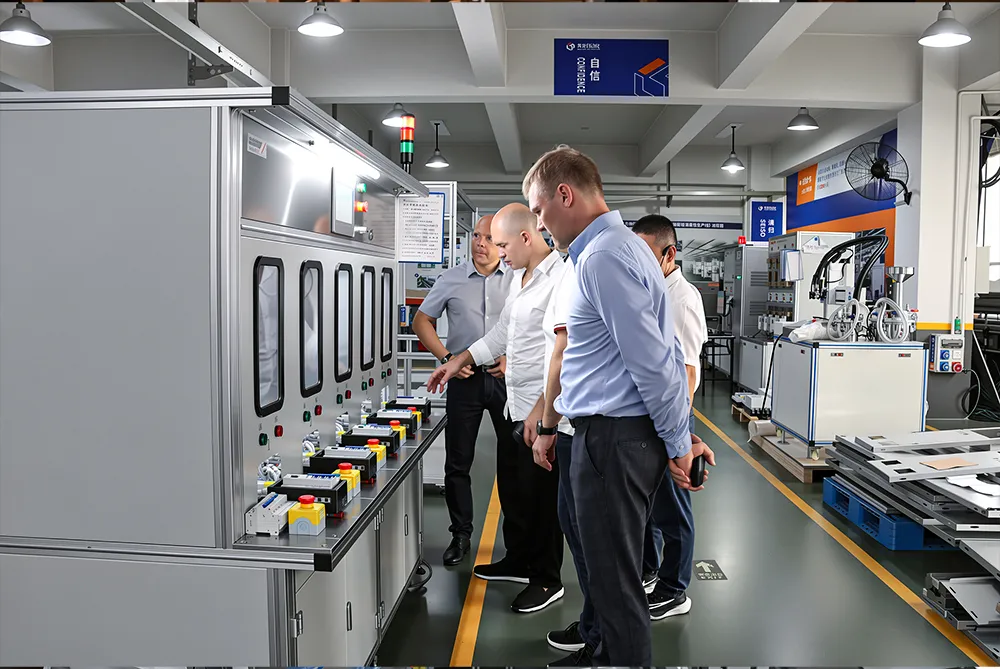

High-Speed Automation Solutions
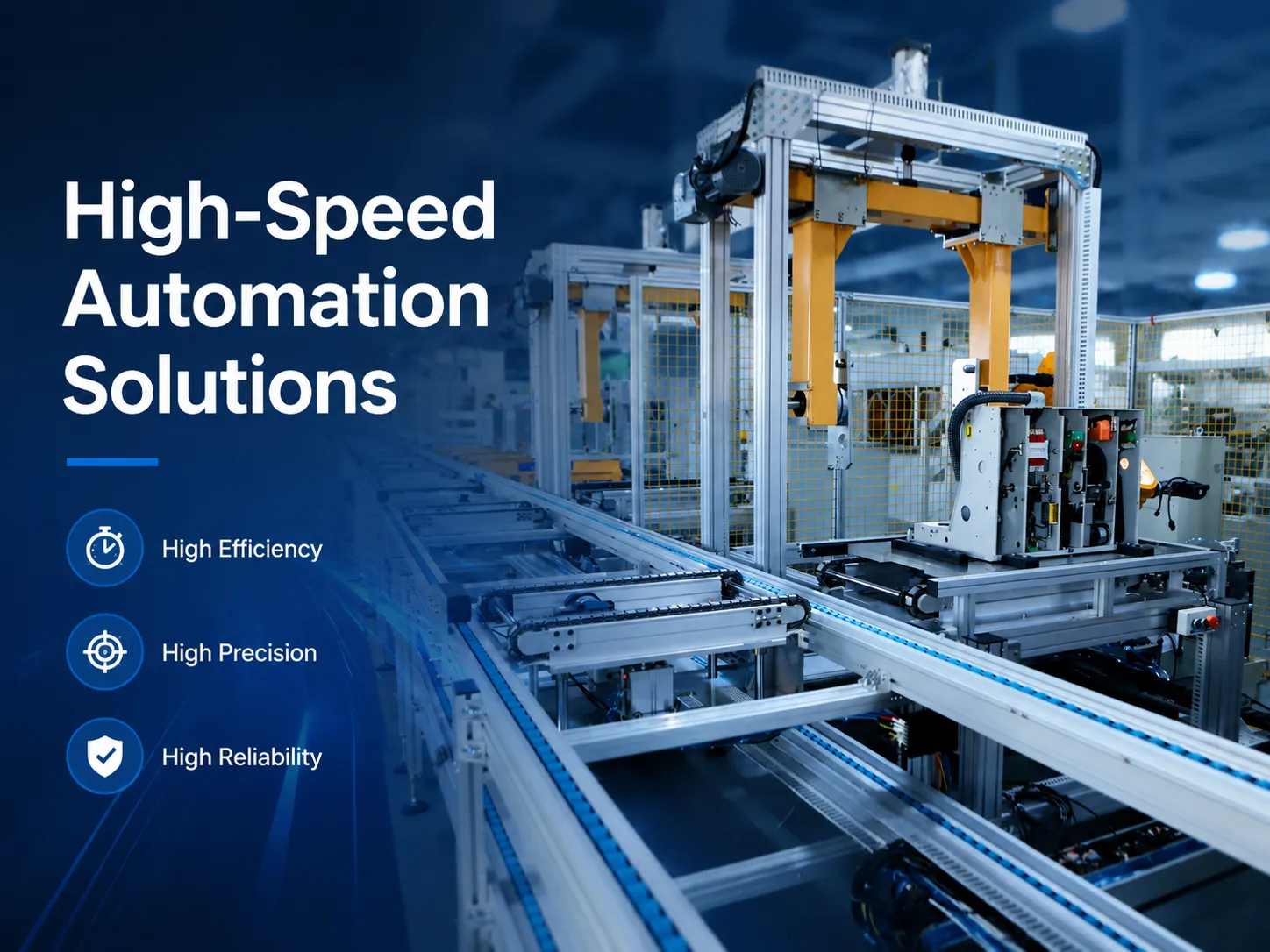
A German manufacturer of contactors faced the challenge of increasing its production from 600 to 2,000 units per hour without additional floor space and found the solution in investing in the high-speed automation line. This production line includes assembly, calibration, testing, and marking in a continuous synchronized process with cycle times measured in seconds. It consists of a rotary indexing table, vision-guided pick-and-place machines, automated screw stations, as well as 100 percent electric test stations under central control of a PLC and MES programmer. The payback period was 20 months already, with defects below 0.1 percent. High-speed automation here means faster production, but on top of that, it is also about accuracy, repeatability, and documentation of production processes that cannot be achieved with labor-intensive processes. All manufacturers should gain insights into what high-speed automation technologies they can access, the existing producers and the price for setting up such technologies.
What Defines High-Speed Automation
High-speed automation is not just a speedier version of conventional automation. It is a design idea where each part of the production system — the machinery handling, the carrying out of the process, the gathering of information, and the inspection of quality — is developed with the aim of minimizing cycle time of the slowest station in mind. In high-speed automation, takt times are normally less than five seconds, and in some industries, such a pharmaceutical filling and electronic device assembling, they are less than a second. Hitting such speeds is not only about fast actuators, but requires full integration of mechanics, electronics, and control; getting rid of the possibility of manual involvement and decision taking at any stage of production; using high-speed vision systems and data processing to examine every item without making any bottlenecks.
In making this level of investment, any manufacturer needs to take into account various factors, including the required throughput, the product’s physical characteristics (such as weight, size, fragility), required accuracy and repeatability, legal strictures, and product life cycle. If a production line is supposed to produce a stable product for a number of years, it would be appropriate to opt for a fixed automation design. If the production line is supposed to be changed often, it is important to use a type of automation that permits rapid change of the product recipes, namely, programmable or flexible automation. Our overview of what automation is provides the foundational framework for understanding these different levels.
High-Speed Automation Across Key Industries
Electrical Protection Devices (MCBs, MCCBs, Contactors)
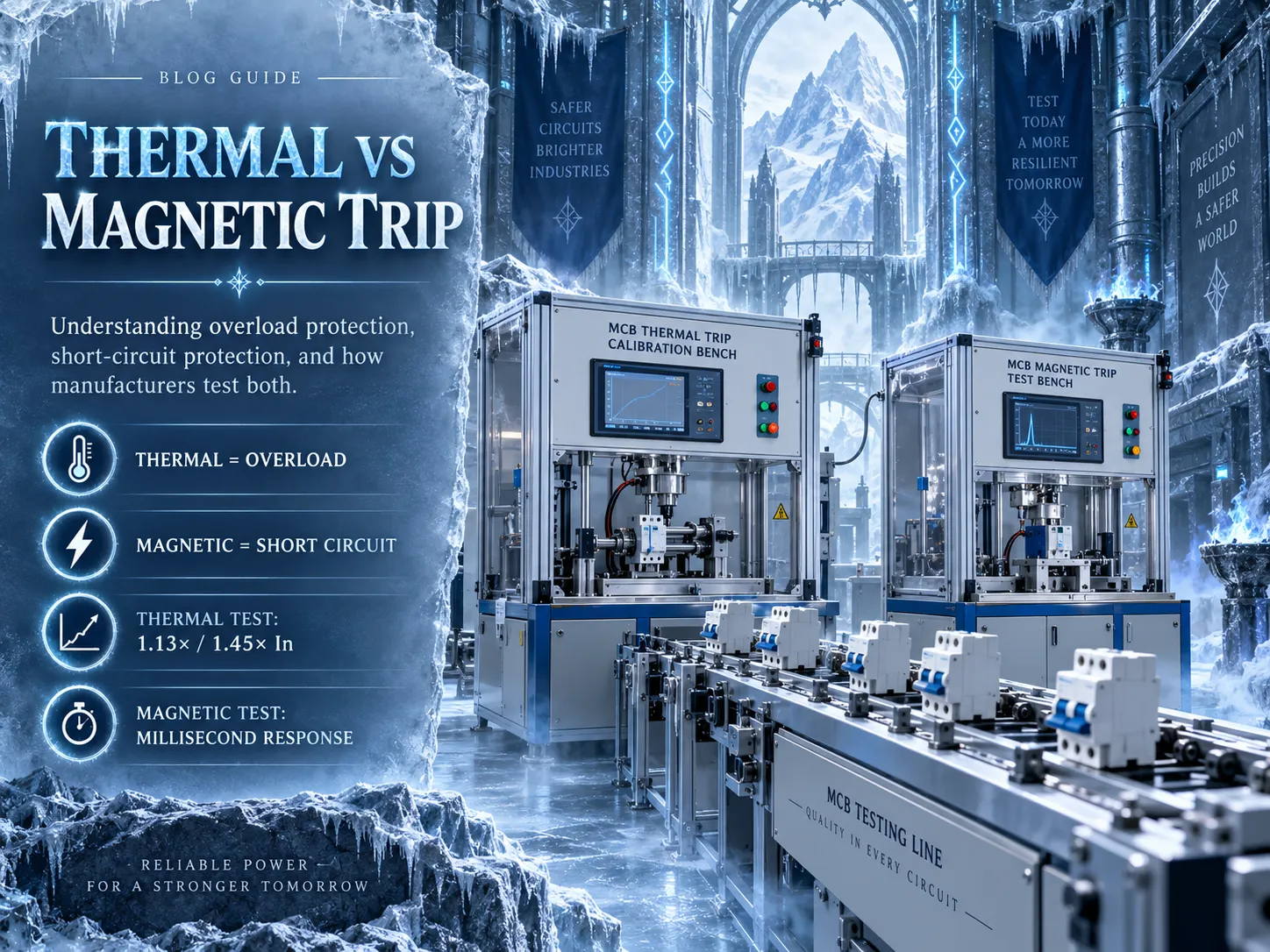
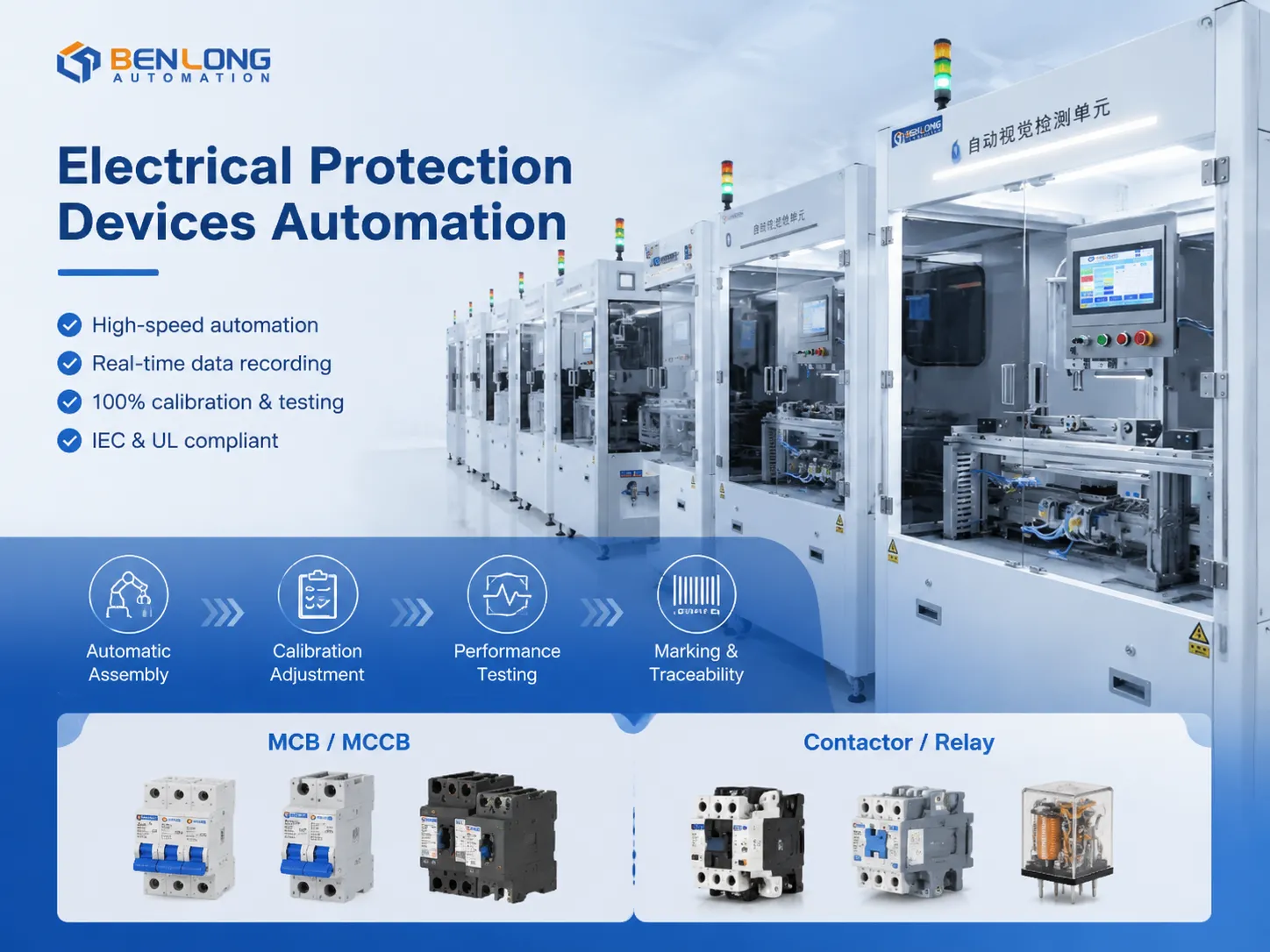
The electrical manufacturing industry is much advanced due to utilization of high-speed automation which makes the production line fabricating small circuit breaker and electromechanical relay each two-four seconds. And the most crucial aspect is that the data collected for such production process is recorded digitally. Although calibration and testing being mandatory for each and every protection device becomes the bottleneck of the manual process if not automatized. High-speed current injection, real-time trip-time measurement as well as motorized calibration adjustment eliminate the bottleneck of the chain and allow making sure that every device released complies with the specified time-current curve. An MCB automatic assembly line integrates feeding, assembly, calibration, testing, and marking into a single high‑speed sequence, producing a fully certified breaker in seconds. For contactor manufacturers, the AC contactor automatic assembly and testing production line handles the complete process from contact welding through final electrical test. These systems deliver the throughput that makes IEC and UL certification economically viable at global volumes.
Automotive and Electric Vehicles
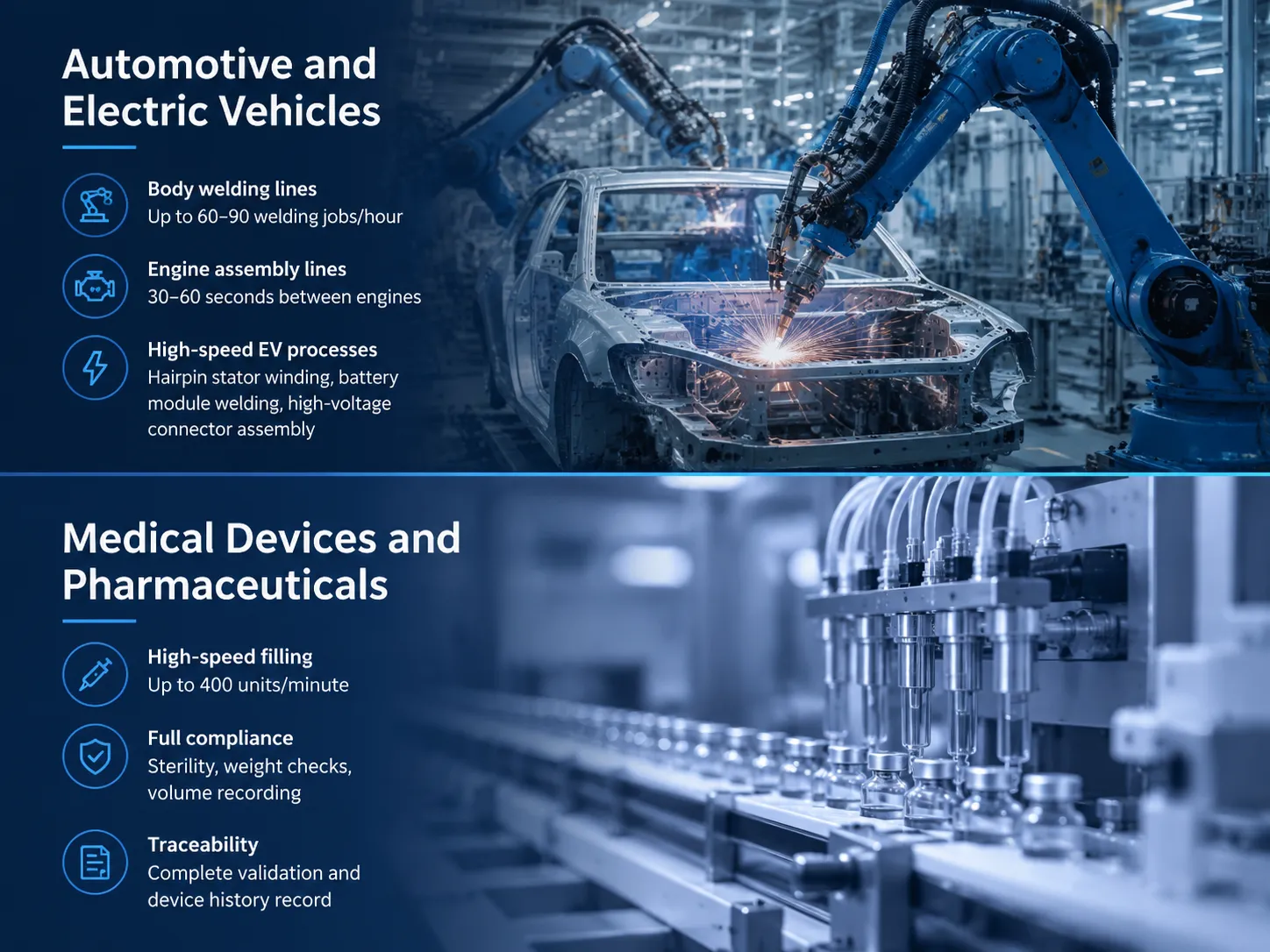
The automotive sector has long been regarded as a leader in the realm of high-speed manufacturing. For instance, current body welding lines are able to complete up to 60 to 90 welding jobs in an hour, while engine assembly lines have reached speeds of 30 to 60 seconds between engines. In recent years, advancements in technology have introduced several high-speed processes when talking about electric cars, such as the hairpin process of winding the stator in electric engines, welding battery modules, and assembling of the high-voltage connectors in electric engines. FANUC and KUKA are some of the leaders in the manufacturing of robots for high-speed manufacturing.
Medical Devices and Pharmaceuticals
In the medical sector, regulation plays a key role in defining high-speed automation along with speed itself. A system that fills syringes automatically at a speed of 400 units a minute must take into account the need for sterility, weight checks in all cases, and recording of the volume in the device history record. High speed and full validation and traceability go hand in hand in the process of assembly of inhalers, packaging of diagnostic kits, and producing surgical threads. Integrators such as ATS Automation specialise in this demanding intersection of speed and compliance.
Food and Beverage Processing
In the food and drink business industry, high-speed bottling, capping, and labeling lines work at hundreds or thousands of bottles every minute, where vision systems ensure the proper fill levels, bottle caps, and labels. There are also requirements for clean-in-place (CIP) cleaning and fast product SKU changeover. The main challenges of automation include mechanical handling, cleanliness, and high speed of operation of packaging equipment supplied by companies like Krones and Tetra Pak.
Consumer Electronics
The process of manufacturing smartphones, wearable devices, and small electronics follows a complex process that involves putting hundreds of components together. The components will include bolts, connectors, and flex circuits, and the assembly process will rely on the employment of robots that will place components accurately at a micrometer level, laser welding technology, and optical inspection. The assembly takes only seconds, and the assembly lines can rapidly adapt to changing product models.
Automated vs. Manual: The Speed and Quality Divide
When comparing a conventional lines of production with a highly mechanized equivalent, a critical thing to remember is that high productivity is not just about the capacity in terms of units produced in an hour. What really distinguishes the two types of production processes is the level of consistency in work, the quality of documentation, as well as the compliance with requirements of quality standards set forth by appropriate export markets. The table provides a summary of the comparison according to the criteria important for any production manager or for purchasing specialist.
| Metric | Manual Assembly | High-Speed Automated Line |
|---|---|---|
| Throughput (typical MCB line) | 150–300 units per hour (10–15 operators) | 600–1,800 units per hour (2–3 operators monitoring) |
| First‑pass yield | 95–98% (operator‑dependent) | 99.5%+ (process‑controlled, with in‑line inspection) |
| Unit‑level traceability | Rare; paper records or batch‑level only | Standard; every unit’s test data stored against a serial number |
| Changeover time | Short (retrain operators) | Minutes to hours (recipe change or tooling swap, depending on flexibility) |
| Labour cost per unit | $0.40–$1.50 (region‑dependent) | $0.05–$0.20 |
What Does a High-Speed Automation System Cost?
The capital investment for high-speed automation ranges widely depending on the complexity of the product, the required throughput, and the level of integration. The table below provides indicative budget ranges for turnkey automated lines, excluding the building infrastructure and the cost of the product‑specific tooling.
| System Type | Typical Throughput | Indicative Price Range (USD, Turnkey) |
|---|---|---|
| Single high‑speed automated cell (pick‑and‑place, welding, or testing) | 10–60 parts per minute | $80,000 – $250,000 |
| Semi‑automated high‑speed line with manual loading | 20–80 parts per minute | $250,000 – $600,000 |
| Fully integrated high‑speed line (auto‑feed, assembly, test, mark, sort) | 30–120 parts per minute | $500,000 – $2,000,000+ |
Return on investment on a thoroughly defined high-speed production line usually falls between 12 and 24 months, taking into account labor savings, increased cargo volume, and reduced waste and expenses for warranties. If the producer shows that the automatic line produces goods with lower expenditure for production and higher rates of quality than human workers, then this project can easily be financed and its ROI can be easily calculated. Different research organizations, such as McKinsey & Company and Deloitte, have proved that high-speed automation, implemented in the right processes, is one of the most profitable and effective investment opportunities for producers.
Selecting the Right High-Speed Automation Partner
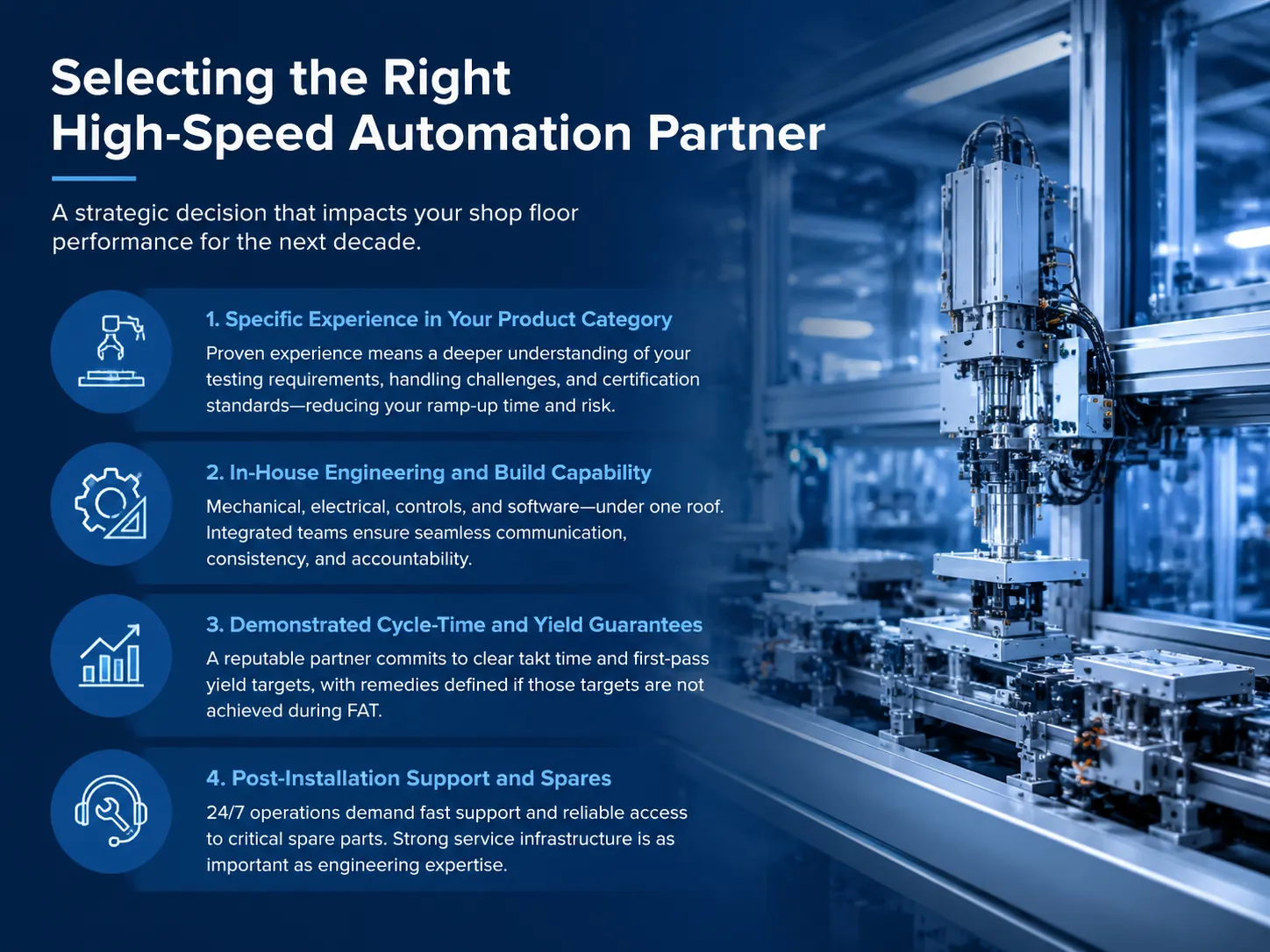
Picking out a vendor of high-speed automation solutions is a strategic move that your shop floor will stick with for at least a decade. You can use the following criteria to find a trustworthy partner:
- Specific experience in your product category. A firm that has installed rapid calibration and testing lines for circuit breakers has knowledge regarding the requirements for electrical testing, the problems related to the handling of contacts, and the criteria for certification. If a company lacks this knowledge, it will take time and resource for the company to learn it.
- In‑house engineering and build capability. The partner needs to oversee the mechanical construction, electrical engineering, and controls engineering, and software creation under one roof. Dividing vital fields gives rise to the risk of incompatibility among different areas.
- Demonstrated cycle‑time and yield guarantees. A well-respected integrator is expected to establish a takt time and a first-pass yield in the acceptance requirements, complete with remedies in case they are not realized during factory acceptance testing (FAT).
- Post‑installation support and spares. An operation operating 24 hours a day and 7 days a week requires technical assistance within a few hours and also requires vital spare parts. The service infrastructure is nearly as crucial as the competency of the partner in engineering.
Frequently Asked Questions
What are the 4 types of automation systems?
There are four kinds of automation: one is fixed or hard automation which is designed for producing a single type item on a large scale, the second type is programmable automation which is used in batch production, the third type is flexible or soft automation which is applied to mixed production lines and finally there is integrated automation which involves production being carried out by computers and data is used in entire processes. High speed automation can be used in both systems mentioned above.
Who is the biggest automation company in the world?
Siemens is the biggest firm in the industrial automation industry in terms of revenue and global influence, taking the first position ahead of ABB, Rockwell Automation, and Schneider Electric. The aforementioned firms manufacture the PLCs, drives, and control systems that compose most of the automated factories now in existence.
What are the top 10 automation tools?
The common automation tools that are widely utilized in contemporary manufacturing consist of PLCs, industrial robots, machine vision, collaborative robots (also known as cobots), autonomous mobile robots (abbreviated as AMRs), MES software, digital twin simulation platforms, predictive maintenance solutions driven by AI, IIoT sensor networks, and rapid data acquisition systems.
What is the top automation company in the US?
Rockwell Automation Headquartered in Milwaukee, Wisconsin, Rockwell Automation is the largest pure-play industrial automation company in the United States. Its Allen-Bradley PLC family and FactoryTalk offering are deployed in plants in North America and the rest of the world.
References
- McKinsey & Company — The Future of Manufacturing and Automation. Research on the productivity and ROI of high‑speed automation across industries.
- Deloitte — Digital Manufacturing and Industry 4.0. Insights into the payback and competitive advantage of automated production.
- FANUC Corporation — High‑Speed Robotics and Factory Automation. Leading global manufacturer of industrial robots and CNC systems.
- ATS Automation — High‑Speed Assembly and Test Systems. Global integrator of automated manufacturing systems for life sciences, pharmaceuticals, and consumer goods.
High-speed automation solutions turn a process that depends on human speed, attention, and consistency into one that depends on a machine’s precision, repeatability, and data record. For the electrical manufacturer, the automotive supplier, and the medical device producer, investing in a line that cycles in seconds rather than minutes is the difference between competing on price in a local market and competing on quality and volume in a global one. Benlong Automation builds high‑speed assembly and testing lines for the electrical manufacturing sector, because a circuit breaker that must trip reliably a thousand times must itself be built with the speed and precision that only an automated, verified process can deliver.