benlong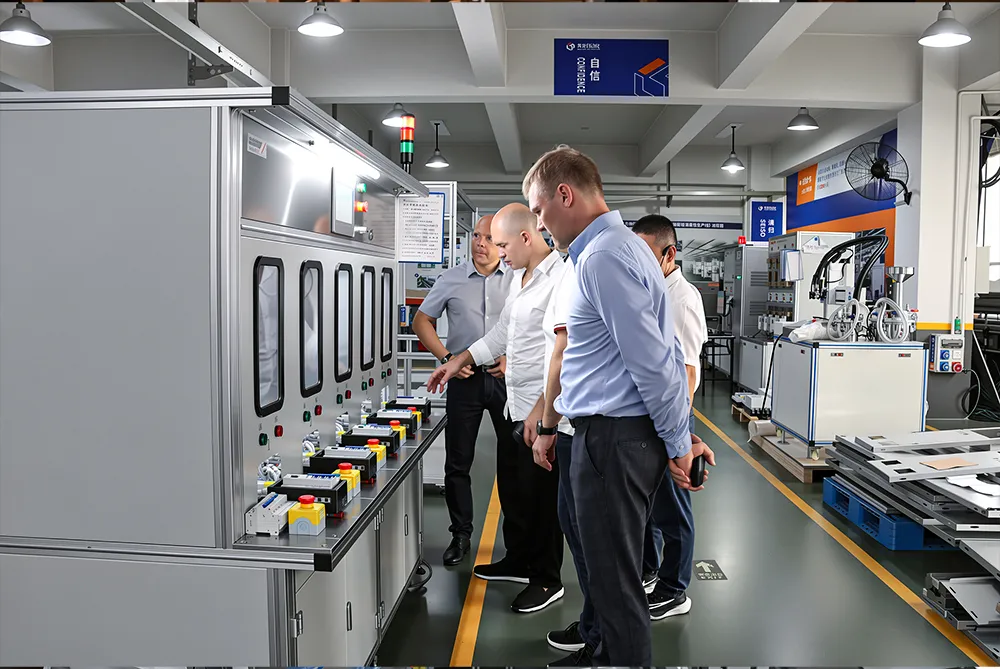
Manufacturing Automation Solutions
After a Thailand-based manufacturer of residential circuit breakers received a request for 2 million units of product — which represented a production effort nearly double that of their normal yearly output — their manual assembly operation (which they had used for the past ten years) suddenly became constraining. The manual assembly line had twelve operators each completing one repetitive job and could not meet the new order’s increased demand without severe overtime costs and corresponding defects. The company purchased an integrated manufacturing automation solution which included an assembly line that automatically fed components to create the assembled breaker mechanism, calibrated the thermal trip mechanism, thoroughly tested all breakers, and laser marked each unit with the applicable rating. The result was that company’s output tripled, while their defective units dropped by 80%. They delivered the products requested by their customer on-time and fully recouped their investment in manufacturing automation within 14 months. This is what correctly applied, automation does; aligns the capacity of production with the requirements of the marketplace; and, does so with a level of consistency that cannot be accomplished with manual methods.
What Is Manufacturing Automation?
Manufacturing automation Utilizing technology (PLCs, industrial robots, conveyor systems, machine vision, and computer software) for production processes with minimal human intervention is referred to as automation. Automation can occur on various scales, from an individual automated testing area to an integrated data-driven facility where an entire production facility communicates with one central Manufacturing Execution System (MES). The purpose of automation is not to replace humans but to delegate repetitive, accurate, and hazardous tasks to machines, which frees humans to monitor, optimize, and maintain the process. The International Society of Automation (ISA) defines automation as encompassing everything from simple on‑off control to advanced process optimization, and its standards underpin the industrial control systems that run modern factories.
Types of Automation Solutions and Where They Fit
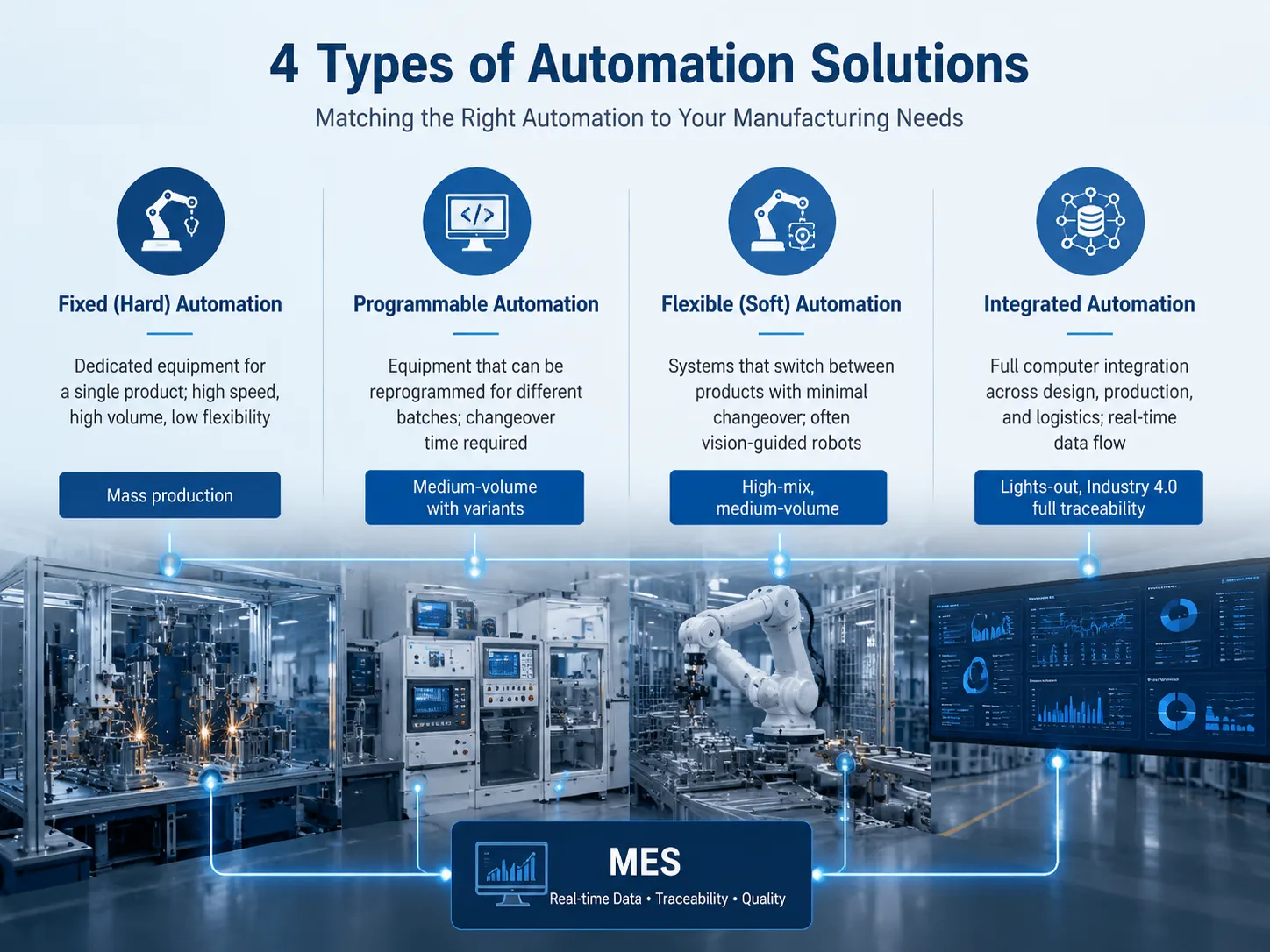
Not every factory needs the same level of manufacturing automation. The right solution depends on production volume, product variety, and the specific quality and traceability demands of the industry. The classic four‑type classification provides a framework for understanding the options.
| Automation Type | Characteristics | Best For |
|---|---|---|
| Fixed (Hard) Automation | Dedicated equipment for a single product; high speed, high volume, low flexibility | Mass production of a stable product — automotive components, standard circuit breakers, beverage cans |
| Programmable Automation | Equipment that can be reprogrammed for different batches; changeover time required | Medium‑volume production with product variants — different breaker ratings on the same line, job‑shop machining |
| Flexible (Soft) Automation | Systems that switch between products with minimal changeover; often vision‑guided robots | High‑mix, medium‑volume production — contract manufacturing, custom electrical panels |
| Integrated Automation | Full computer integration across design, production, and logistics; real‑time data flow | Lights‑out manufacturing, Industry 4.0 factories, regulated industries requiring full traceability |
A factory will frequently combine these three categories of automation in real applications. For example, a company that produces molded-case circuit breakers uses fixed automation at their high-volume, contact welding station; programmable automation for calibrating and testing different amp ratings; and flexible robotic handling for transferring parts between cells. These processes are connected to an integrated MES, which stores all test results with a corresponding serial number.
Automation Solutions Across Industries
The basic technologies used to create a manufacturing automation solution such as robotics, vision, conveyors, and data are all appropriate tools for different items produced and environments in which those items are produced.
Electrical Equipment and Circuit Protection
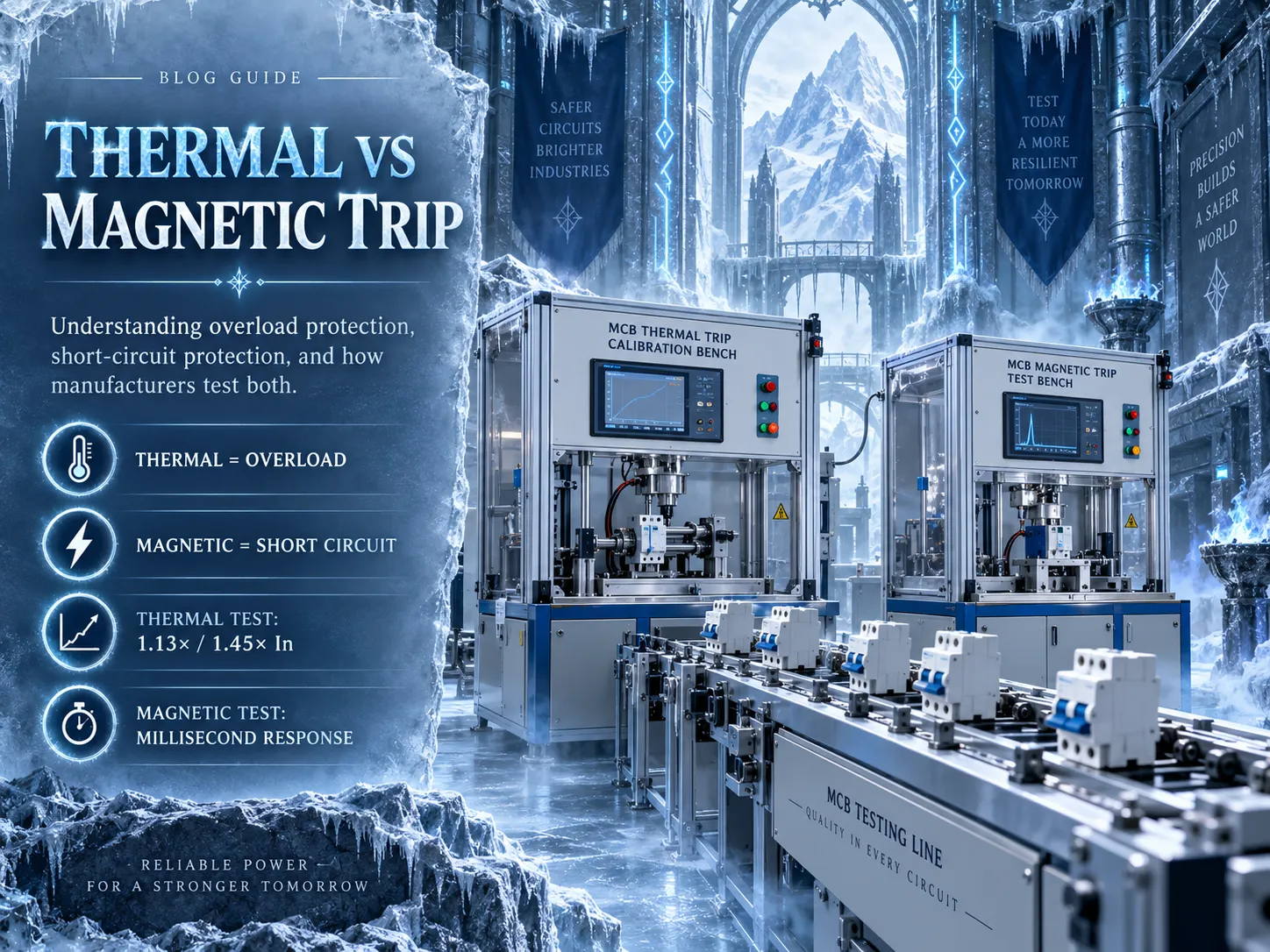
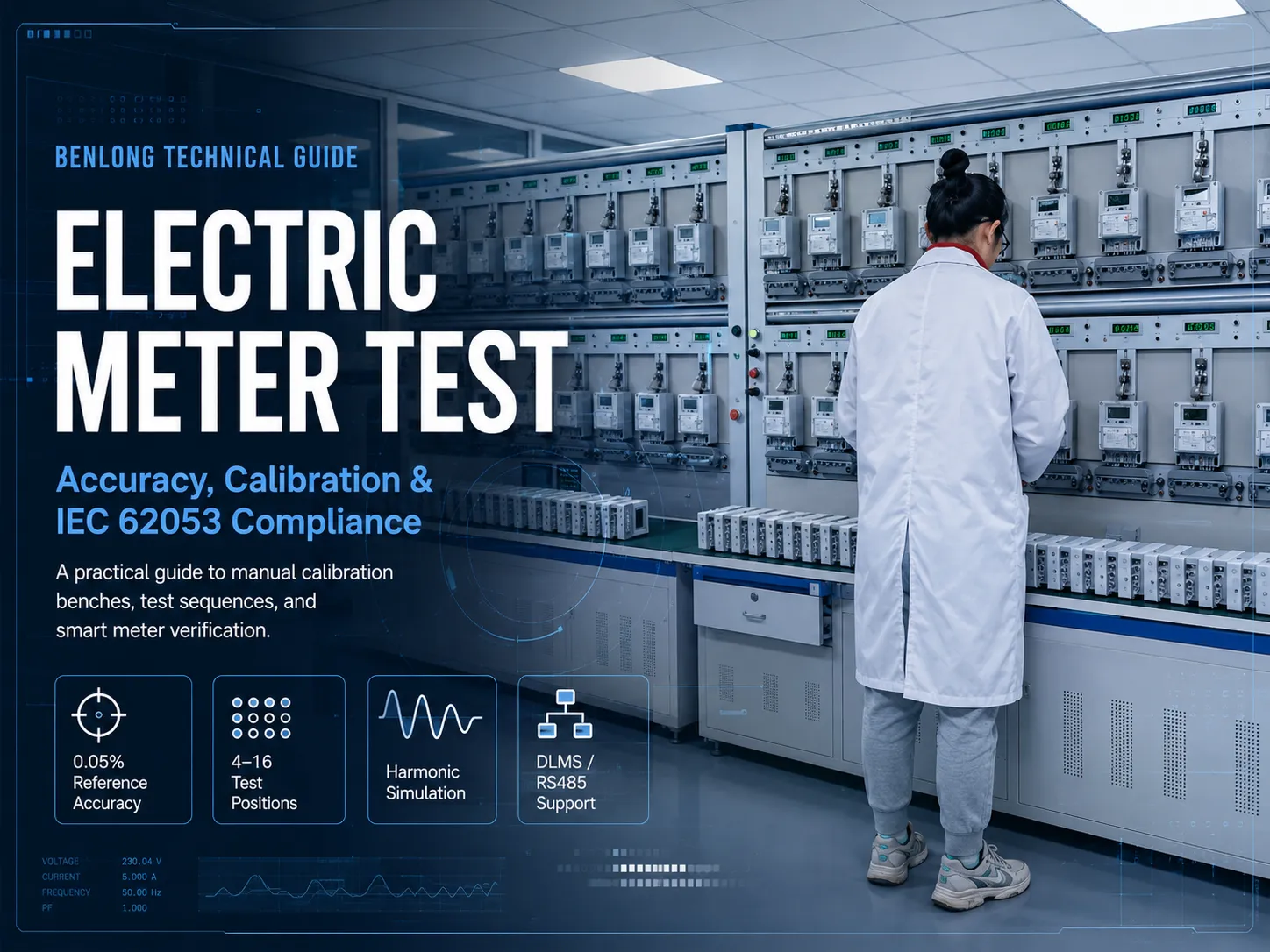
Miniature circuit breakers (MCBs), molded case circuit breakers (MCCBs), contactors and residual current devices (RCDs) all have one thing in common – they all need to be individually calibrated and tested to international safety standards. The process of manual calibration is slow, depends on the capabilities of the operator, and will drift over time. Automated calibration and testing lines, such as those built and designed by Benlong Automation, apply a known overload or short circuit current to each breaker, measure the trip time of the breaker, adjust the calibration mechanism and either pass or reject the device without an operator touching the part. This approach ensures that every circuit breaker that leaves the factory is compliant with its published time/current curve, which is not financially viable using a traditional manual calibration process due to the associated costs of producing at a high volume.
Benlong has a range of fully automated assembly and testing lines for MCBs, MCCBs and AC contactors. An MCB automatic assembly line integrates parts feeding, assembly, calibration, testing, marking, and sorting into one continuous flow, delivering a tested and certified breaker every few seconds. For manufacturers of surge protective devices (SPDs), an SPD automatic production line combines assembly, high‑voltage testing, and traceability in a single station.
Automotive and Electric Vehicles
The automotive industry has implemented automation in many forms for many years; these applications utilize robots to perform complex tasks, such as robot welding, painting, and assembly of automobile bodies. Over the last several years, the shift towards electric vehicles has created new challenges for automotive manufacturers when implementing change in their production processes. Some of these challenges include the assembly of battery modules, the winding of hairpin stators for e-motors, and the fabrication of high-voltage cable harnesses; each process requires precise measurement and traceability throughout the entire manufacturing process. FANUC and KUKA manufacture the robots that serve as the foundation of these new automotive automation operations.
Medical Devices and Pharmaceuticals
Manufacturing in the field of medical devices requires a number of critical components, including validated processes, compatibility with clean rooms, and traceable records of all aspects of the manufacturing process. Automated syringe assembly production lines, inhaler fill and crimp lines, and diagnostic kit packaging equipment have been developed to combine precise mechanical operations with full visual inspection capability to accurately document how every parameter was processed for every step in a patient’s history via a unique serial number. The automation becomes proof of validation.
Food and Beverage Processing
Lines for automated filling, capping, labelling and palletising operate at high speeds with limited human exposure – which minimizes contamination risk. Robots and conveyors can be washed down, allowing for CIP cleaning of the lines; vision systems monitor fill levels, label placement, and seal integrity at production speeds.
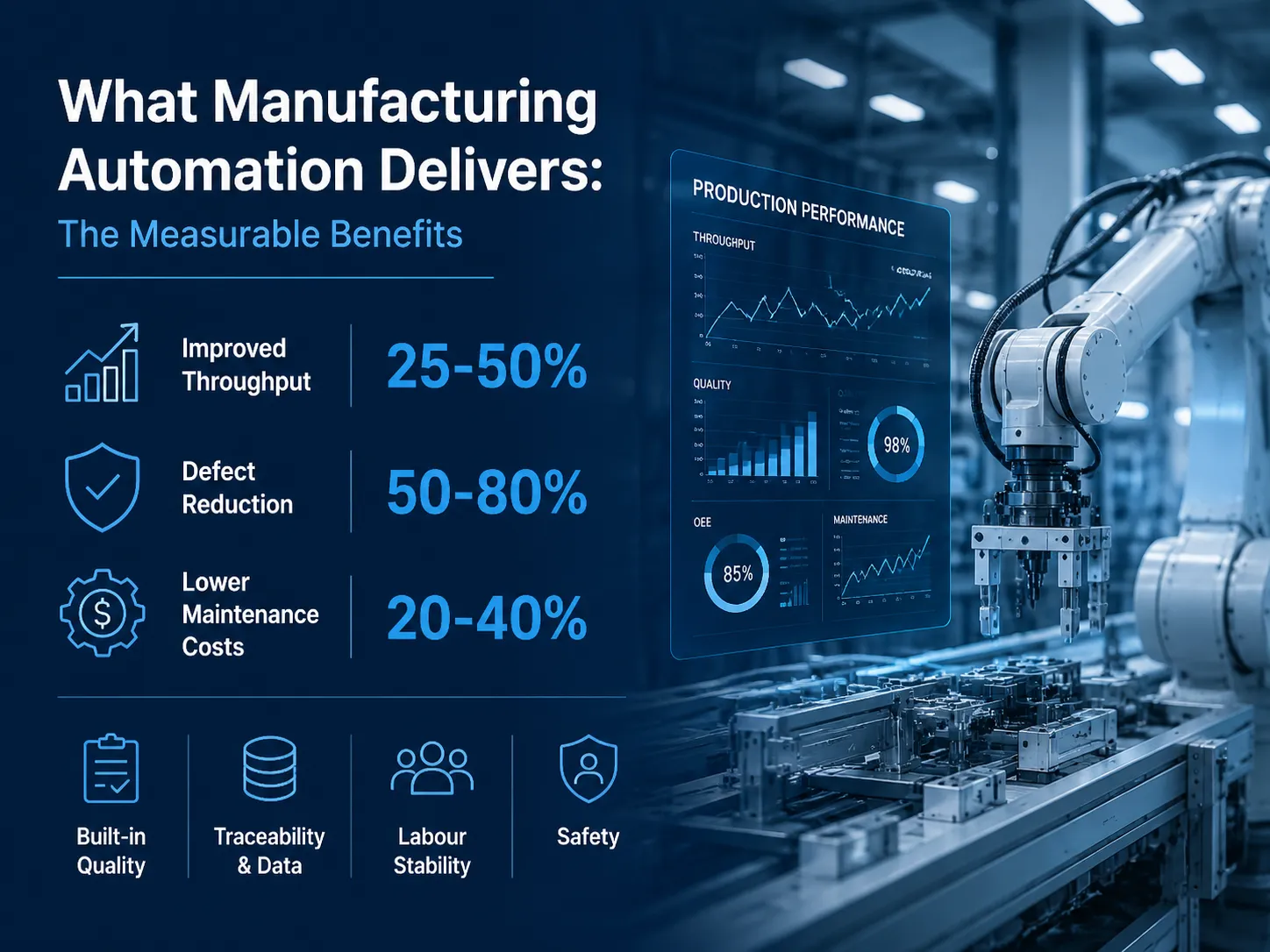
What Manufacturing Automation Delivers: The Measurable Benefits
An automation solution in the manufacturing space can be justified based on analysis results. The digital manufacturing analysis by McKinsey and Company shows that automation and integration produce improved throughput by 25-50%, defect reduction of between 50-80%, and lower maintenance costs (20-40%). These numbers are also supported by the manufacturers’ experience, across industries:
- Consistent throughput. Automated lines are designed for a cycle time and run the same way regardless of whether it is 4 a.m. or after lunch.
- Built‑in quality. All automated stations serve as inspection stations. When a torque measurement falls outside the acceptable range, the line will stop; likewise, if a component is missing, it will be rejected. In short, quality does not get checked in; rather, it gets built in.
- Traceability and data. Every operation performed by an automatic system generates an electronic record. In the power sector, this includes all calabrated curves for breakers that may be retrieved and used for warranty claims.
- Labour stability. Automation allows manufacturers to decrease their reliance on a large skilled assembly workers in locations where the labor force is either expensive or in shortage. The operators retained are skilled at monitoring the line and maintaining it.
- Safety. Automated systems for transporting materials include conveyors, autonomous mobile robots (AMRs), and robotic palletisers, which eliminate the need to repeatedly lift and carry materials that contribute to a high incidence of WMS (workplace musculoskeletal disorder) injuries.
Future Trends Shaping Manufacturing Automation
Multiple advances within technology have begun to affect how manufacturing automation solutions are created and facilitated.
- Artificial intelligence and machine learning. Predictive maintenance algorithms using vibration sensors and motor current can detect a failure in the bearing several days before it will affect production by analyzing data generated from the vision system to identify defects that are undetectable by rule-based algorithms.
- Digital twins. A digital copy of the manufacturing or production line allows the manufacturer to test out new product introductions, create the best possible layout, and train operators prior to having completed assembly of the first physical machine. The digital copy is also connected to the real or physical line during normal production so as to provide a real-time dashboard on production performance.
- Collaborative robots (cobots). Cobots can operate alongside operators and do tasks that require repetitive picking and placing of items. Operators of cobots will be doing assembly tasks that require additional skill. Cobots work well with semi-automated cells.
- Sustainability and energy monitoring. Automated lines use more sensors to measure energy used per unit produced, making it easier for both companies to reduce costs and report their sustainability performance to shareholders.
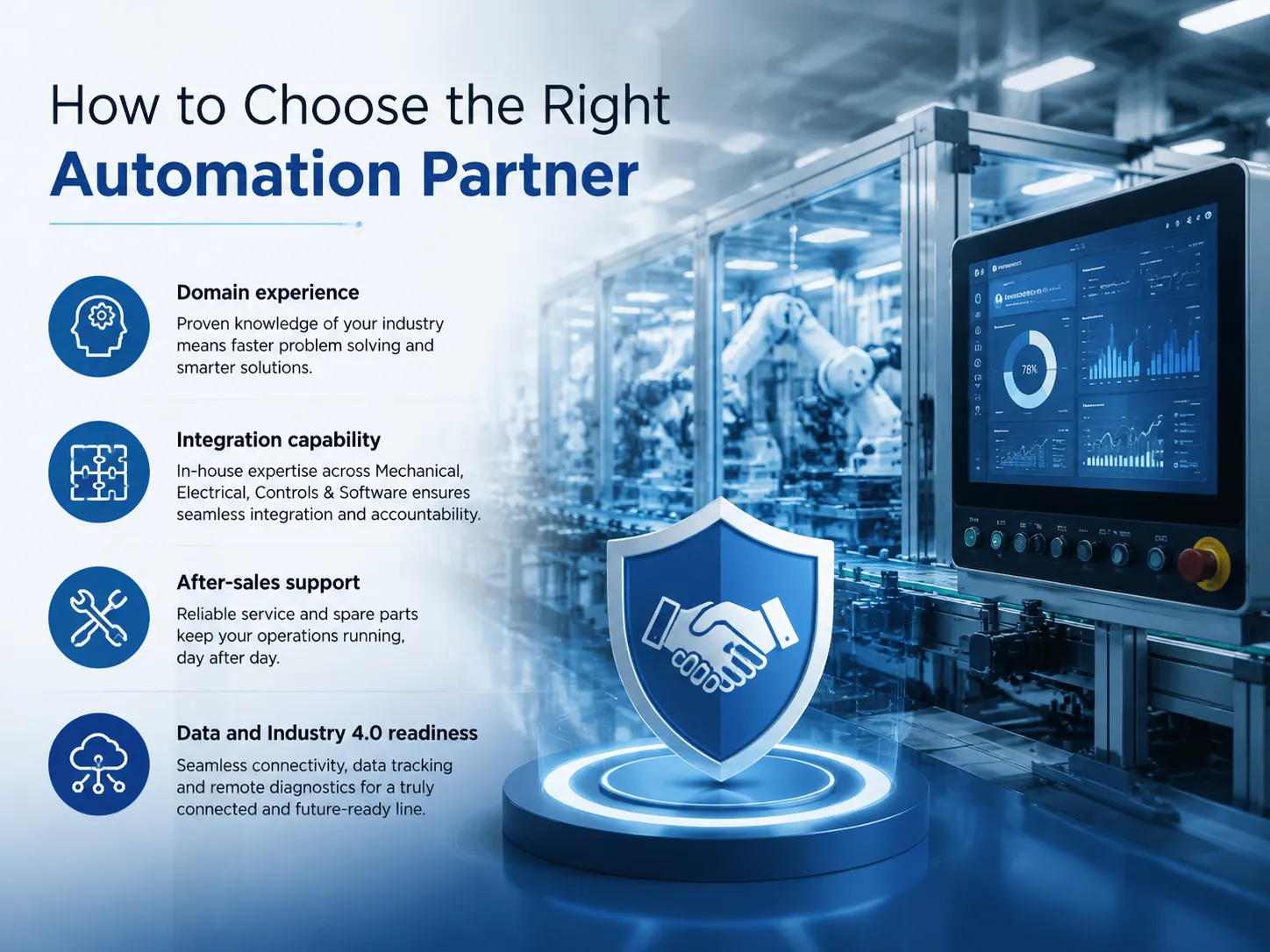
How to Choose the Right Automation Partner
Choosing a supplier for manufacturing automation solutions can be a strategic decision. The following factors can help differentiate between an appropriate long-term partner versus a machine builder that only performs contractual work:
- Domain experience. An integrator may not have designed lines for your product or industry; if an integrator has previously addressed the difficulties of calibrating a thermal magnetic trip unit or welding a silver contact while not using your money to get to that point, they will have been on their path to learning the subject.
- Integration capability. Can this partner provide total solution (MECHANICAL, ELECTRICAL, CONTROLS & SOFTWARE) or do they sub the major disciplines? When they are IN-HOUSE for all engineering disciplines, the partner does not point fingers when there are problems.
- After‑sales support. Machines that operate all day every day need backup parts and service in a timely manner. You should make sure that before you place your order you ask to see your partner’s reparación and spare part capabilities.
- Data and Industry 4.0 readiness. An automated line should be able to communicate with your MES system through standardised protocols and store all its process data in a database. It should also be capable of being diagnosed remotely via its connection to the Internet or intranet. If these things are not possible from your integration partner, you will have an isolated Automated Line between Connected and Legacy/Inferred Systems.
Frequently Asked Questions
What is manufacturing automation?
Manufacturing automation “Automation” means using technological tools instead of humans to run a production process. Examples of tools used for automation include PLCs, Industial Robots, Conveyors, Vision systems, and Software that are all used together to build, test, inspect, and package products.
What are the 4 types of automation?
There are four common automation methods: fixed (hard) automation, programmable automation, flexible (soft) automation and integrated automation. Fixed (hard) automation is for high-volume production of a single product. Programmable automation is for a batch (i.e., only making batches as orders are received), while flexible (soft) and integrated automation support mixed products throughout an entire factory (i.e., various facilities producing multiple product lines).
What are the top 5 automation tools?
Programmable logic controllers (PLCs), industrial robots, machine vision systems, automated guided vehicles (AGVs) and autonomous mobile robots (AMRs), as well as manufacturing execution systems (MES), which connect all of these pieces with data, are the most common automation tools utilized in manufacturing.
What is an example of automation in manufacturing?
A completely automated system is an example: component feeding, breaker assembly, calibration, thermal trip testing, magnetic trip testing, printing of rating labels and sorting by “pass” or “fail” of the breaker are done without operator intervention at any point in the process. This ensures that there is consistency among products manufactured on this assembly/testing line, all products have a history of manufacture that can be documented (traceability) and that all products manufactured are compliant with International Safety Standards.
References
- International Society of Automation (ISA) — Standards, training, and resources for industrial automation and control systems.
- McKinsey & Company — Digital Manufacturing and Industry 4.0 — Research on the productivity and quality impact of automation in manufacturing.
- FANUC Corporation — Industrial Robots and Factory Automation — Leading global manufacturer of robots, CNC systems, and automation solutions.
- KUKA Robotics — Automated Manufacturing Solutions — German manufacturer of industrial robots and automated production cells.
- Material Handling Institute (MHI) — Annual Industry Report — Data and trends on automation adoption in material handling and logistics.
Manufacturing automation solutions are not about replacing people with machines. They are about assigning to machines the tasks that machines do best — repeating, measuring, recording — so that people can do what people do best: solving problems, improving processes, and building the next product. Whether it is an automated calibration line for miniature circuit breakers, a robotic welding cell for car bodies, or a vision‑guided picking station in a pharmaceutical cleanroom, the goal is the same: consistent quality, predictable output, and the data to prove it. Benlong Automation builds integrated automation solutions for the electrical manufacturing sector, because a protective device that must never fail should itself be built with the precision that only an automated, verified process can deliver.