benlong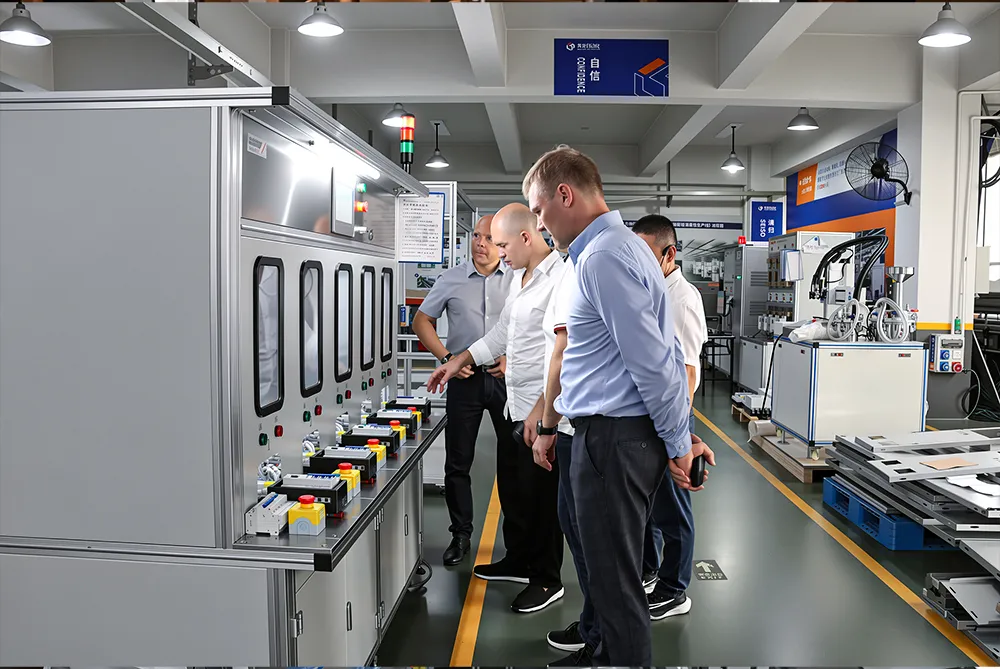

Что такое тампопечатная машина?
Логотип на клавише компьютерной клавиатуры, маркировка на медицинском шприце и обозначения на приборной панели автомобиля почти наверняка будут нанесены с помощью тампонной печати — этот замечательный промышленный метод позволяет наносить чёткую и долговечную графику на изогнутые, углублённые, текстурированные или неправильной формы поверхности, которые невозможно напечатать традиционными методами офсетной или трафаретной печати (например, МКБ в электротехнической промышленности, автомобилестроении, медицине, промо-продуктах и электронике). Это невидимый производственный процесс, который ежегодно производит миллиарды напечатанных деталей!
Как работает тампонная печатная машина: базовый принцип
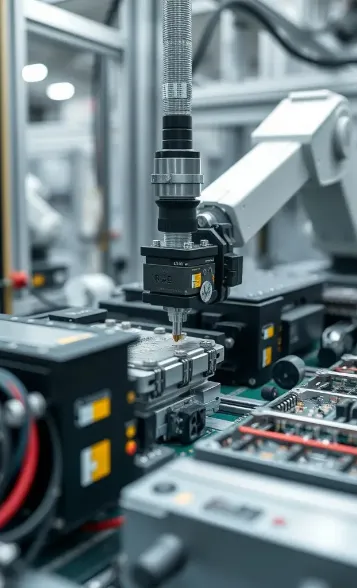
Тампонная печатная машина использует мягкий, гибкий силиконовый тампон для переноса двумерного изображения с гравированной печатной пластины (известной как клише) на трёхмерную подложку. Тампонная печать также классифицируется как технология косвенной офсетной печати. Перед печатью на клише наносится краска и срезается ракельной лезвием так, чтобы краска оставалась только в гравированных углублениях клише. Затем тампон контактирует с клише и поднимает краску. После этого тампон перемещается над подложкой и контактирует с ней, передавая изображение с высокой адгезией благодаря способности тампона принимать форму подложки. Этот процесс занимает менее секунды и каждый раз обеспечивает идеально зарегистрированную печать.
Силиконовый тампон обеспечивает уникальную возможность тампонной печати. Он достаточно гибок, чтобы принимать форму трёхмерных поверхностей без искажения изображения, что может происходить с жёсткими материалами, такими как металл или трафареты. Поэтому тампонная печать является предпочтительной технологией для нанесения изображений на изогнутые поверхности, такие как мячи для гольфа, флаконы косметики, корпуса электрических компонентов и автомобильные переключатели. Для обзора того, как этот единичный процесс вписывается в более крупную автоматизированную производственную последовательность, наш гид по Что такое автоматизация? объясняет, как отдельные производственные станции интегрируются в полные автономные производственные линии.
Типы тампонных печатных машин
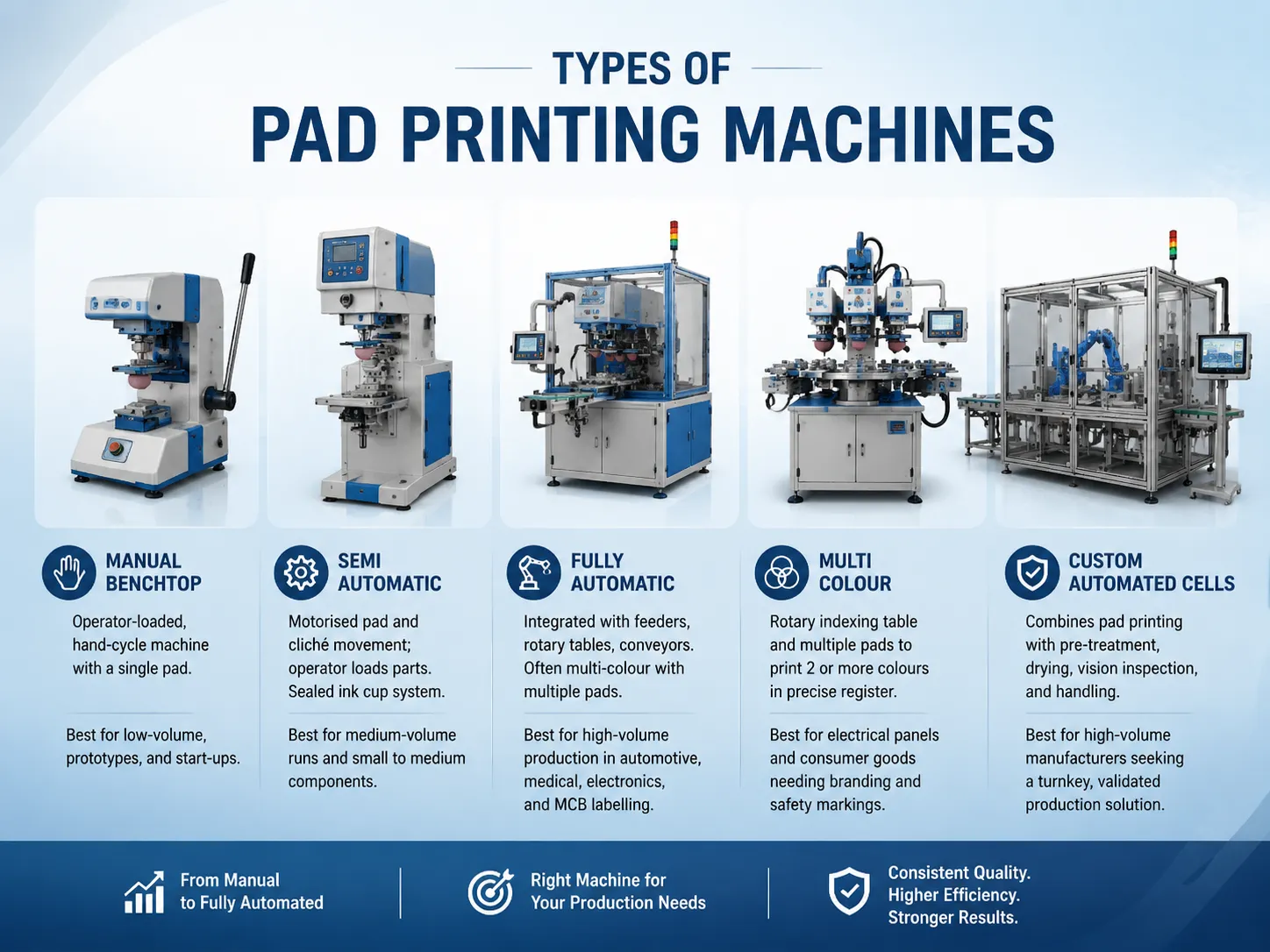
Тампонные печатные машины выпускаются в нескольких конфигурациях — от ручных настольных устройств до полностью автоматизированных многокрасочных линий. Выбор зависит от объёма производства, сложности деталей и требуемого качества печати.
| Тип машины | Описание | Лучше всего подходит для |
|---|---|---|
| Ручная настольная | Машины с ручной загрузкой оператором, ручным циклом, одним тампоном и открытым лотком для краски. | Низкообъёмное, прототипное или стартовое производство; бюджеты до $5,000. |
| Полуавтоматическая | Моторизованное движение тампона и клише; оператор загружает детали. Система закрытого чернильного стакана для стабильной вязкости краски. | Среднеобъёмные серии; мелкие и средние электрические компоненты, промо-продукция. |
| Полностью автоматическая | Интегрирована с подающими устройствами, поворотными столами, конвейерами; часто многокрасочная с несколькими тампонами. Работа без оператора. | Высокообъёмное производство; автомобилестроение, медицина, электроника, маркировка МКБ и переключателей. |
| Многокрасочная | Использует поворотный индексирующий стол и несколько тампонов для печати двух и более цветов с точной регистрацией. | Электрические панели, потребительские товары, требующие брендинга и маркировки безопасности в нескольких цветах. |
| Индивидуальные автоматизированные ячейки | Полностью разработанные системы, сочетающие тампопечать с предварительной обработкой (пламя, плазма), сушкой, визуальным контролем и обработкой. | Производители с большим объемом выпуска, ищущие комплексное, проверенное производственное решение. |
Где используются тампопечатные машины
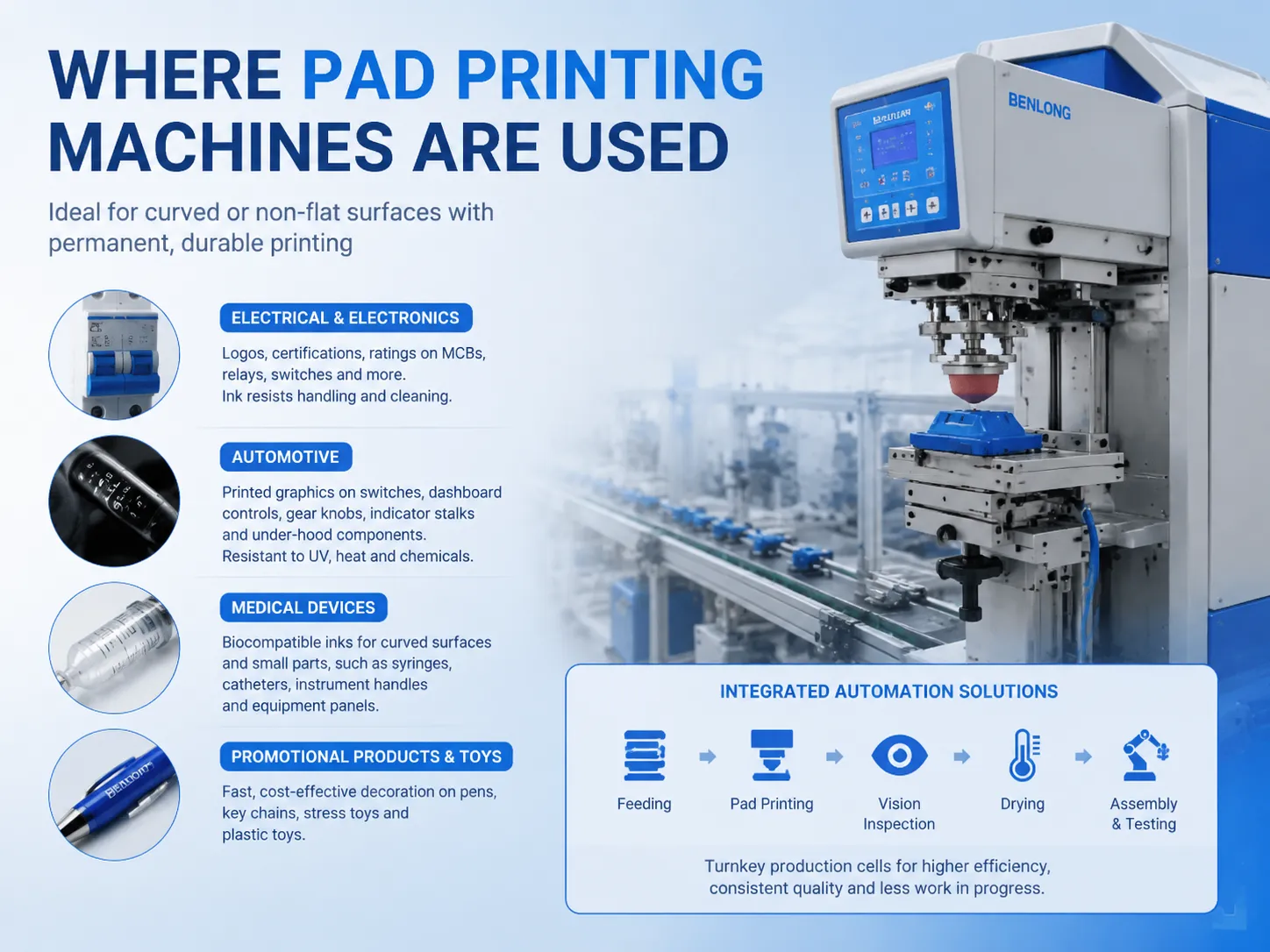
Тампопечать может применяться к различным типам изделий; однако в основном она используется в отраслях, где требуется печать на изогнутых или неплоских поверхностях. Напечатанный рисунок должен быть постоянным и выдерживать повреждения, вызванные химикатами, износом и высокими температурами.
- Электротехника и электроника: Печать номинального тока, кривой срабатывания, логотипов бренда и сертификатов на корпусах автоматических выключателей, контакторах, реле, корпусах переключателей и лицевых панелях настенных выключателей. Краска должна выдерживать многолетнее использование и очистку.
- Автомобильная промышленность: Элементы управления в салоне автомобиля (переключатели), органы управления на приборной панели, ручки переключения передач, рычаги указателей поворота и компоненты под капотом — все они имеют тампопечать с графикой, устойчивой к ультрафиолету, теплу и моющим средствам.
- Медицинские устройства: Для печати на изогнутых поверхностях и цилиндрах малого диаметра требуются биосовместимые чернила; типы изделий включают корпуса шприцев, катетеры, ручки хирургических инструментов и панели диагностического оборудования.
- Рекламная продукция и игрушки: Тампопечать позволяет быстро и недорого наносить декор на такие изделия, как ручки, брелоки, антистрессовые игрушки и пластиковые игрушки.
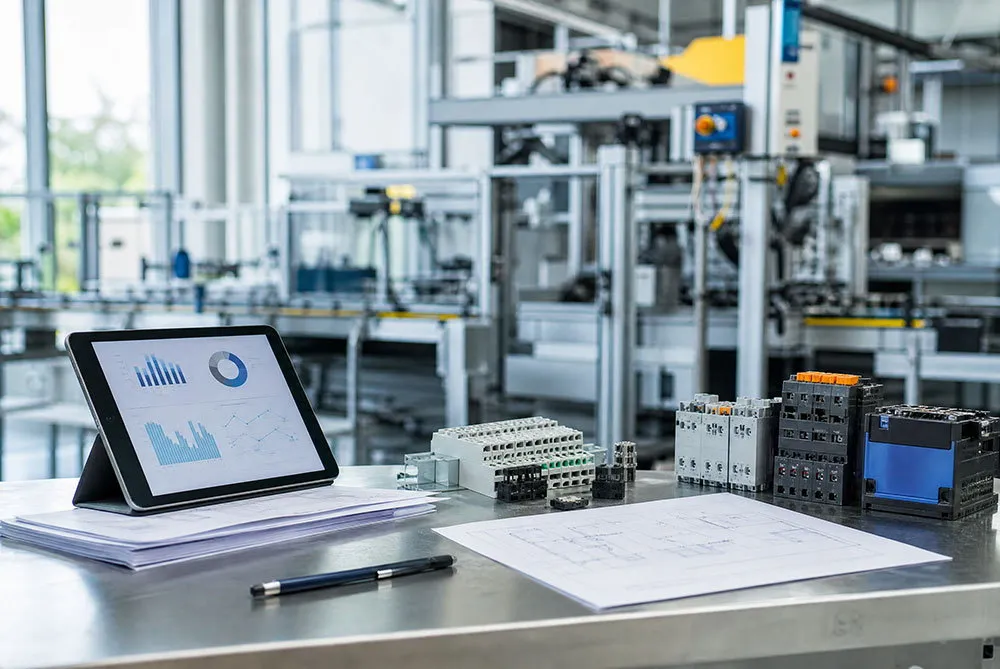
Многие автоматизированные сборочные линии состоят из нескольких станций, и тампопечатная машина на одной из них может подавать детали непосредственно в систему визуального контроля, сушить деталь в сушильной камере, а затем передавать её на автоматический станок для сборки с другими компонентами. Benlong проектирует и производит интегрированные автоматизированные системы для электротехнических производителей по всему миру, объединяя тампопечатную машину и вспомогательное оборудование (питатели, тестеры и оборудование для обработки) в единую комплексную производственную ячейку. Производство, сборка, калибровка и тестирование напечатанного синего корпуса автоматического выключателя как единого интегрированного узла позволит сократить количество незавершенного производства и устранить несоответствия качества, присущие множеству отдельных ячеек. Для ознакомления с тем, как такая автоматизированная проверка интегрируется на последующих этапах, наш гид по лучшим производителям автоматизации SPD описывает полный производственный подход для защитных устройств.
Сколько стоит тампопечатная машина?
Цена машина для тампонной печати зависит от уровня автоматизации, размера области печати, количества цветов и наличия вспомогательного оборудования. Следующие диапазоны являются ориентировочными для промышленных машин.
| Конфигурация машины | Приблизительный ценовой диапазон (USD) |
|---|---|
| Ручная настольная, одноцветная | 1,500 – 5,000 |
| Полуавтоматическая, с закрытой чашей, одноцветная | 8,000 – 25,000 |
| Полностью автоматическая, одноцветная с обработкой деталей | $30,000 – $80,000 |
| Многоцветная автоматическая карусельная система | 60,000 – 150,000+ |
| Индивидуальная автоматизированная ячейка (печать + предварительная обработка + инспекция + обработка) | $100,000 – $250,000+ |
Стоимость клише, подушек и краски является дополнительной и повторяющейся. Закалённое стальное клише может стоить $200–$500, но служит миллионы циклов. Подушки изнашиваются при использовании и должны регулярно заменяться, что является эксплуатационными расходами, которые следует учитывать в общей стоимости владения.
Ведущие производители тампопечатных машин
Несколько компаний доминируют на мировом рынке тампопечатного оборудования. Ниже приведены одни из самых известных имен, каждое из которых обладает определённой сильной стороной.
- Tampoprint AG (Германия): Один из старейших и самых уважаемых производителей тампопечатных машин в мире. Tampoprint предлагает всё — от настольных машин до полностью настраиваемых автоматизированных линий, и особенно силён в автомобильных и медицинских приложениях. Премиальный ценовой сегмент.
- Kent Pad Printer (США): Ведущий североамериканский производитель, известный своими надёжными промышленными машинами и оперативным сервисом. Машины Kent широко используются в производстве электротехники и электроники. Средне-премиальный ценовой сегмент.
- Pad Print Machinery of Vermont (США): Производит полный ассортимент тампопечатных машин — от ручных до полностью автоматических, с сильным акцентом на североамериканский рынок. Средний ценовой сегмент.
- Inkcups Now (США): Глобальный поставщик оборудования для тампопечати и цифровой печати, с широким ассортиментом машин и красок, особенно силён в сегментах промопродукции и спортивного оборудования. Средний ценовой сегмент.
- Comec Italia (Италия): Известный европейский производитель тампопечатных и трафаретных машин, предлагающий компактные, высокоточные модели, популярные в косметической и медицинской промышленности. Средне-премиальный ценовой сегмент.
Хотя эти компании производят только оборудование, необходимое для изготовления печатных компонентов, полное решение производственной линии для изготовления электрического компонента обычно требует интеграции печатного устройства с автоматизацией как на входе, так и на выходе. Партнёр R. Benlon может предоставить ценность в создании систем обработки, подачи и тестирования, окружающих печатное устройство, чтобы превратить отдельную машину в полностью продуктивную и валидированную производственную ячейку.
Часто задаваемые вопросы
Для чего используется тампопечатная машина?
Тампопечатные машины переносят двумерное изображение (например, логотип, этикетку, цифры и т.д.) на поверхность трёхмерного объекта, которая может быть изогнутой, вогнутой или иметь необычную форму. В промышленности тампопечать используется для печати на электрических компонентах (например, автоматических выключателях и автомобильных ключах), на автомобильных деталях, медицинских устройствах и промопродукции.
Как долго служит тампопечатная подушка?
Срок службы силиконовой подушки определяется несколькими факторами, включая частоту печатных циклов, печать на твёрдой или мягкой поверхности и тип используемой краски. При нормальном промышленном использовании силиконовая подушка обычно служит от 30 000 до 100 000 отпечатков, прежде чем начнёт изнашиваться или перестанет хорошо переносить краску.
Может ли тампопечать печатать в нескольких цветах?
Автоматические индексирующие машины с несколькими подушками и клише позволяют производить многоцветную тампопечать. Деталь последовательно поворачивается через каждую печатную станцию, создавая изображение поэтапно с точной регистрацией.
Какая краска используется в тампопечати?
Краски, предназначенные для тампопечати, представляют собой двухкомпонентные растворимые краски, которые химически реагируют и испаряются при отверждении. Подушки специально разработаны для определённых поверхностей, будь то пластик, металл или стекло, с целью сопротивления износу, воздействию химикатов и ультрафиолетовым лучам. Краски, используемые на электрических компонентах и идентификационных этикетках, должны быть постоянно читаемыми и соответствовать различным нормативам.
Ссылки
- Тампопринт А.Г. — Немецкий производитель тампонных печатных машин и интегрированных автоматизированных ячеек.
- Принтер Kent Pad — Американский производитель промышленного оборудования для тампопечати для электротехнической, автомобильной и медицинской отраслей.
- Оборудование для тампопечати из Вермонта — Производитель полного ассортимента машин для тампопечати, обслуживающий рынок Северной Америки.
- Inkcups Сейчас — Глобальный поставщик оборудования и расходных материалов для тампопечати и цифровой печати.
- Comec Italia — Итальянский производитель машин для тампопечати и трафаретной печати для прецизионных применений.
A машина для тампонной печати решает фундаментальную задачу маркировки: как нанести долговечное, точное изображение на поверхность, которая не является плоской. Для производителей электрических компонентов это технология, которая наносит номинальный ток, торговую марку и знак сертификации на каждый корпус автоматического выключателя, переключателя и реле. При интеграции в хорошо спроектированную автоматизированную производственную линию эта печатная станция становится частью непрерывного, обеспеченного качеством потока от сырьевого компонента до протестированного готового изделия. Benlong Automation специализируется на создании таких комплексных производственных систем, объединяя печать, сборку, калибровку и тестирование в единое эффективное целое.