benlong




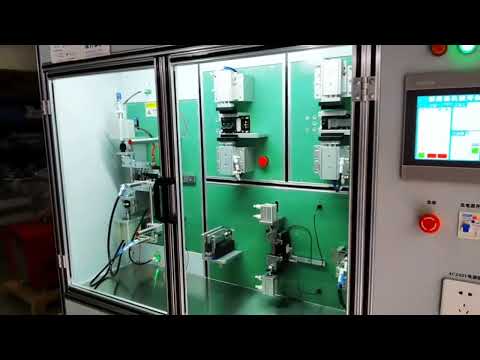
MCB mechanism life test bench
Benlong MCB mechanism life test bench performs automated ON/OFF endurance cycling per IEC 60898-1. Adjustable speed, stroke, and cycle count. Supports 1P/2P/3P/4P MCBs. Reliable solution for mechanical life verification in QC labs and production lines.
MCB Mechanism Life Test Bench
This MCB mechanism life test bench is an IEC‑compliant automated system designed to perform repeated ON/OFF operation cycles on miniature circuit breakers without electrical load. It verifies the mechanical durability of the switching mechanism, ensuring that each MCB can withstand the required number of mechanical operations as specified by IEC 60898‑1. The bench is essential for type testing, routine quality control, and certification labs.
The system features a robust mechanical drive, precision stroke control, and adjustable cycling parameters (speed, dwell time, total cycles). It supports 1P, 2P, 3P, and 4P MCBs and can be configured for different frame sizes. Real‑time cycle counting, automatic stop upon completion, and integrated safety interlocks ensure reliable, unattended long‑duration testing. This solution eliminates operator inconsistency and provides auditable proof of mechanical life performance.
Standard delivery: 30-45 days | Test cycles up to 20,000 | Compliant with IEC 60898‑1

What is an MCB Mechanism Life Test Bench?
An MCB mechanism life test bench is a specialized automated test system that evaluates the mechanical endurance of miniature circuit breakers by performing repetitive opening and closing operations under no‑load conditions. It simulates years of field switching in a compressed time frame, verifying that the breaker’s internal mechanism (toggle, springs, contacts, and linkages) remains functional after the required number of operations – typically 10,000 cycles for residential MCBs and up to 20,000 for industrial grades.
Fully follows mechanical life test requirements defined in the standard.
Cycle speed, stroke length, dwell time, and total cycles are programmable.
Tests 1P, 2P, 3P, and 4P MCBs simultaneously or sequentially.
Automatic cycle counting, stop at preset limit, and data logging.
Machine Features & Testing Process




Technical Specifications
| Test standard | IEC 60898‑1 (mechanical life test) |
|---|---|
| Compatible MCB types | 1P, 2P, 3P, 4P; rated current 6A‑125A; all trip curves (B/C/D) |
| Max. test cycles | Programmable up to 20,000 cycles (standard 10,000 cycles) |
| Operating speed range | 6 – 30 operations per minute (adjustable) |
| Stroke adjustment | Mechanical or servo‑controlled stroke, ±0.5mm accuracy — |
| Dwell time (ON/OFF hold) | 0 – 5 seconds programmable– |
| Failure detection | Automatic stop if mechanism jams or fails to reset; alarm output– |
| Control system | PLC (Siemens/Mitsubishi) with HMI, cycle counter, recipe storage– |
| Data output | CSV / MES / ERP via OPC UA | Test report with cycle count, date, result– |
| Power supply | 220V ±10% 50Hz | Air supply optional for pneumatic actuators– |
Key Advantages of the Automated Endurance Test Bench
No operator fatigue
Automated 24/7 testing without breaks – eliminates human inconsistency and allows overnight testing.
Precise stroke & speed
Servo‑controlled actuator ensures identical mechanical stress on every cycle, meeting IEC repeatability requirements.
Real‑time failure detection
Sensors detect incomplete reset or stuck mechanism; test stops automatically and records failure cycle number.
Multi‑station capability
Optional 4‑ or 8‑station configuration for simultaneous testing of multiple MCB poles or samples.












Customer Success Story
A Chinese MCB manufacturer needed to certify a new 1P/2P series to IEC 60898‑1. Using our MCB mechanism life test bench, they completed 10,000 mechanical cycles on 30 samples in just 8 days (24h operation). The automated test identified a weak spring design in early prototypes, allowing correction before mass production. Final certification passed with zero mechanism failures.
The use of a test bench cut down on manual tests by 95%, and provided full traceability where certification audits were required.
Applications and Production Integration
Standard Delivery and Commissioning
Request a Custom MCB Mechanism Life Test Bench Quote
Tell us your MCB types, required test cycles (e.g., 10,000 or 20,000), and pole configurations. We will propose a tailored solution with full IEC compliance.
WhatsApp: +86 150 5837 0007 | Email: xsb@benlongkj.cn | English & Chinese support
Why Choose Benlong for MCB Endurance Testing?
- 15+ years designing MCB test benches for mechanical and electrical life
- IEC 60898‑1 certified test methodology
- Servo‑controlled actuators for precise stroke and speed
- Modular design – expandable from 1 to 8 test stations
- Global installations in certification labs and factories
Standard Machine Includes
Servo‑driven actuation mechanism · PLC with HMI (Siemens) · Cycle counter & preset · Safety enclosure with interlock · 1P/2P/3P/4P universal fixture · Data logging software · One set of spare actuators
Frequently Asked Questions
Mechanical life testing is performed without electrical load – it only verifies the mechanical durability of the operating mechanism (springs, linkages, toggle). Electrical life testing applies rated current during cycling and checks contact erosion. Our MCB mechanism life test bench focuses on mechanical endurance per IEC 60898‑1.
The standard configuration supports 1 pole at a time (sequential testing of multi‑pole MCBs). Optional 4‑station or 8‑station versions are available for simultaneous testing of multiple samples or multi‑pole breakers.
IEC 60898‑1 recommends 6 operations per minute (10 seconds per full cycle: ON+OFF). Our bench is adjustable from 6 to 30 operations per minute to accelerate routine testing.
Yes. The system monitors actuator force and position. If the MCB fails to close or open correctly, or if the mechanism jams, the test stops immediately, records the failure cycle number, and triggers an alarm.
Absolutely. The test bench is designed for unattended operation with safety interlocks and automatic stop on failure. Many customers run 10,000‑cycle tests continuously over 2‑3 days without operator intervention.
Related Products
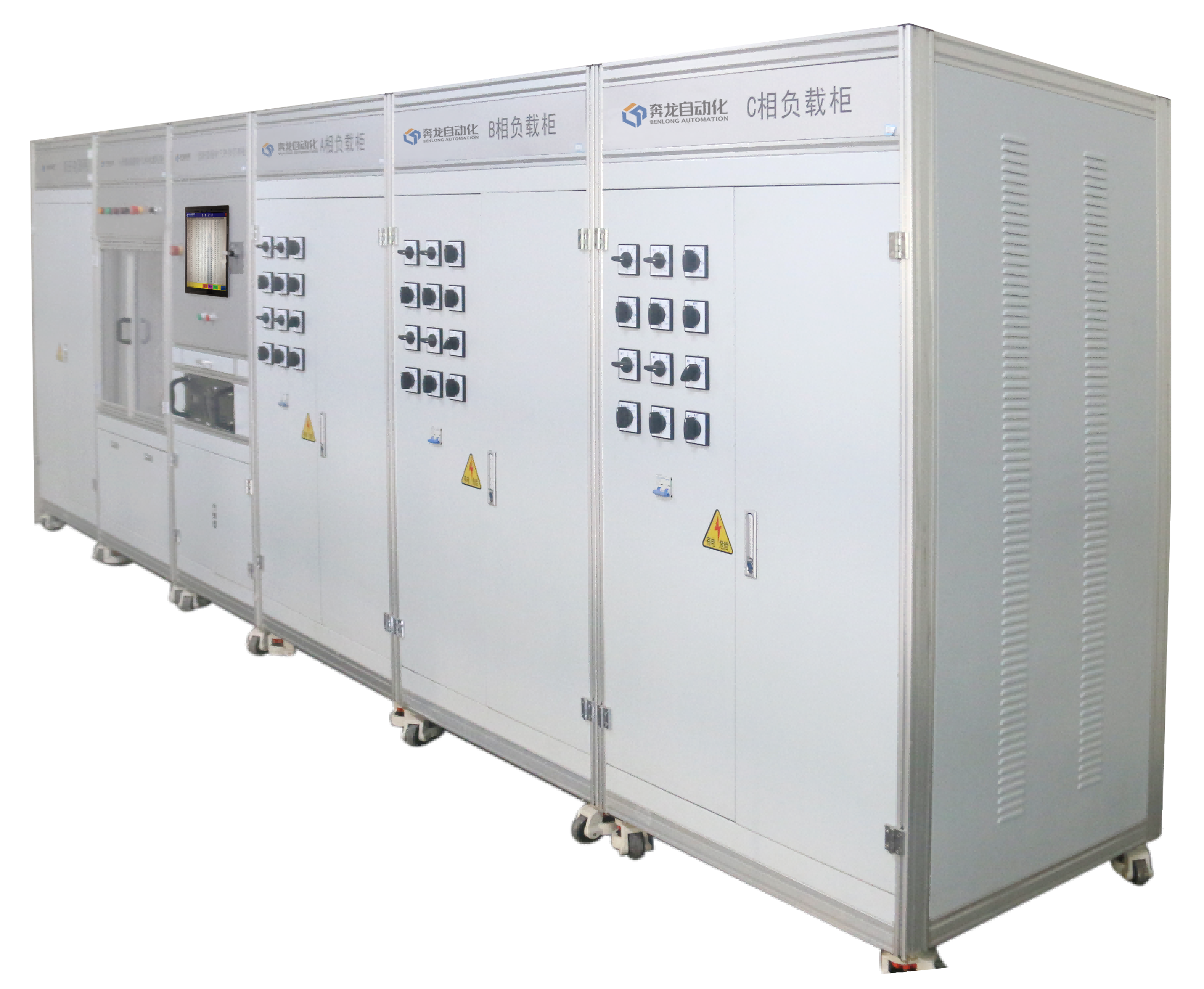
MCB Electrical Endurance Test Bench
View Details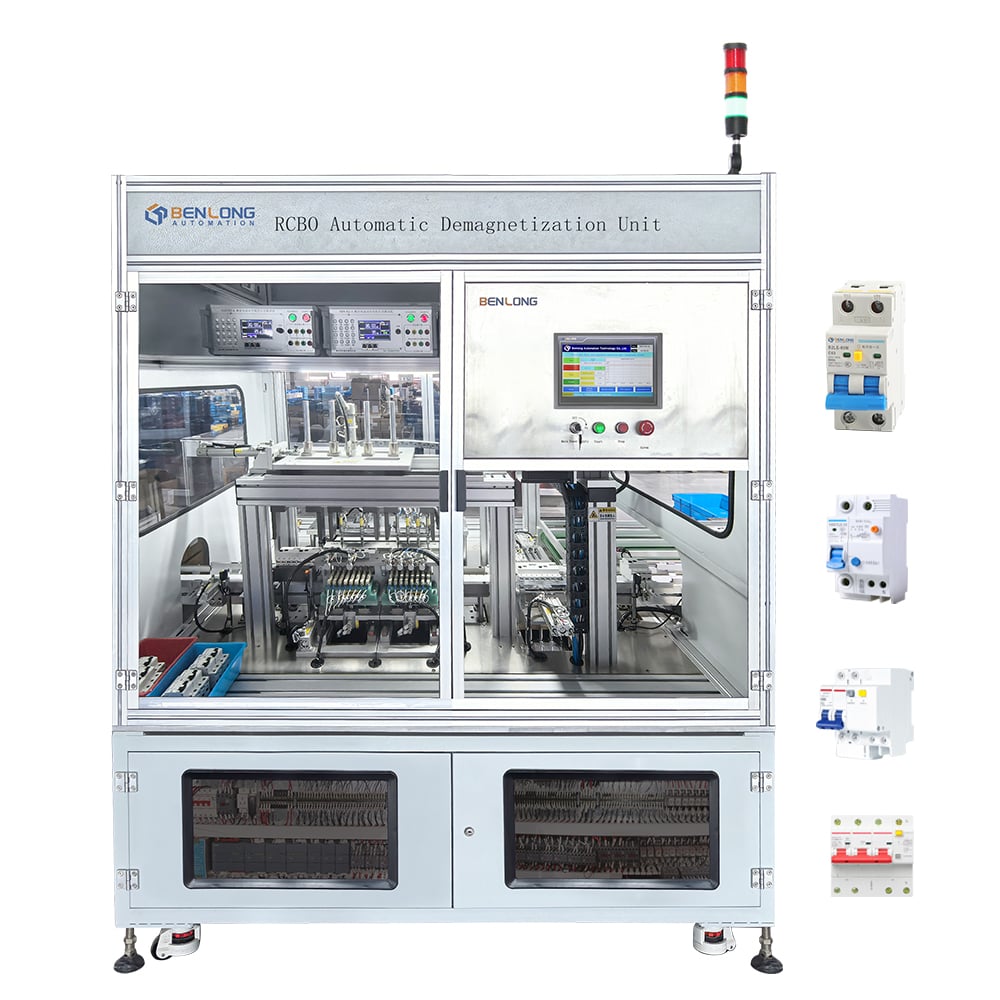
RCBO Automatic Magnetic Reset + Testing machine
View Details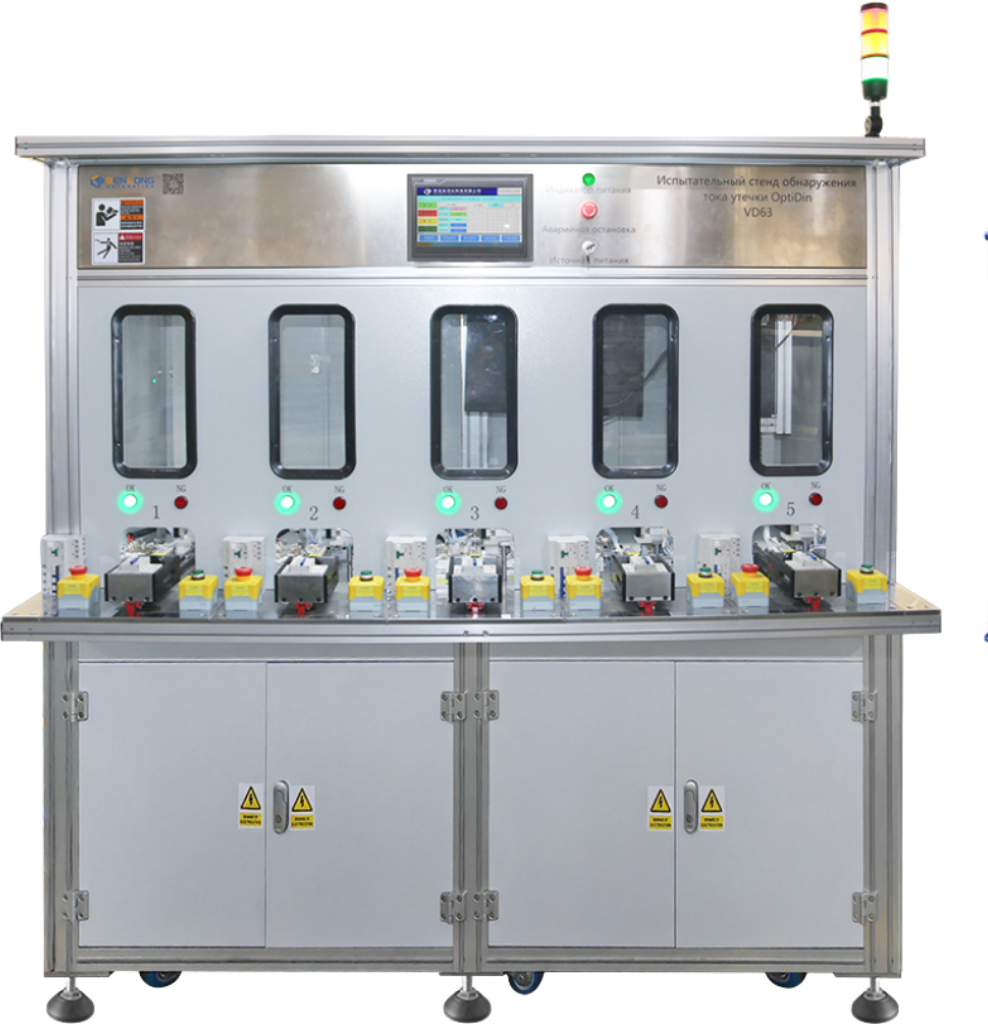
RCBO semi automatic comprehensive test bench
View Details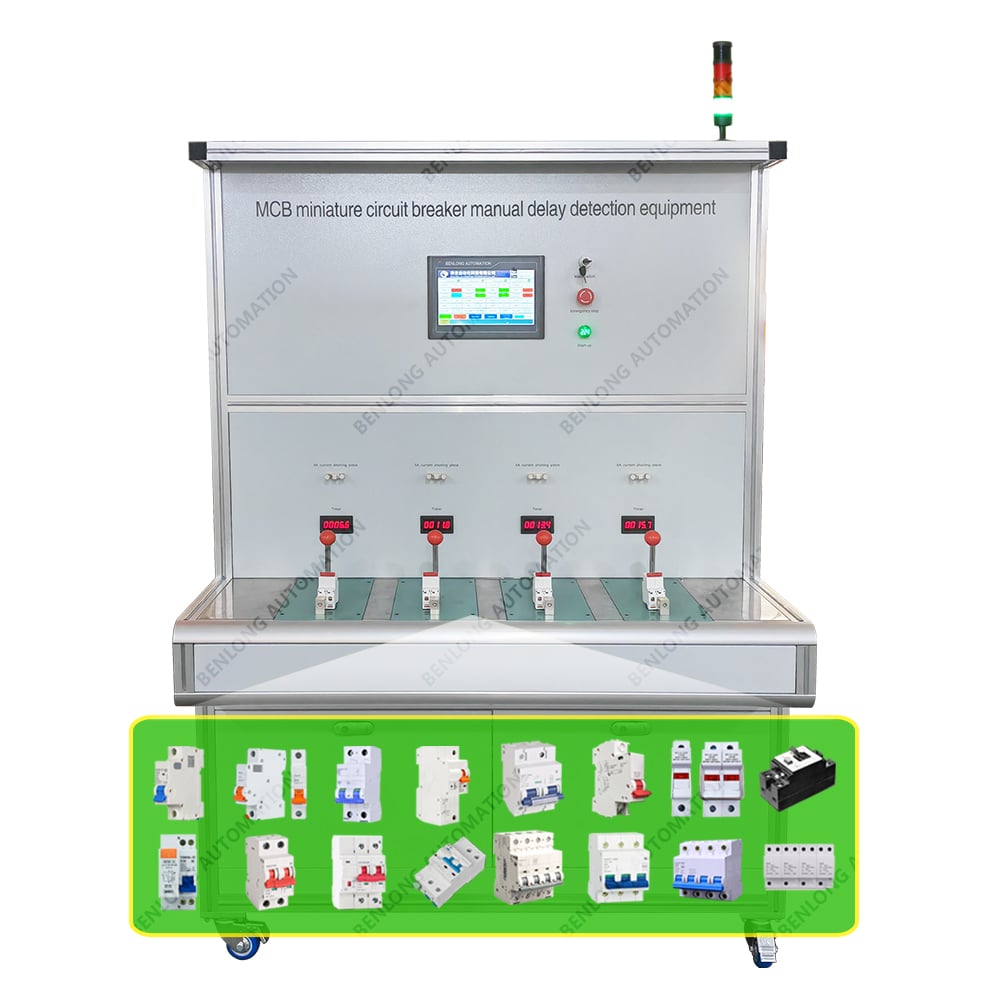
MCB manual thermal trip calibration bench
View Details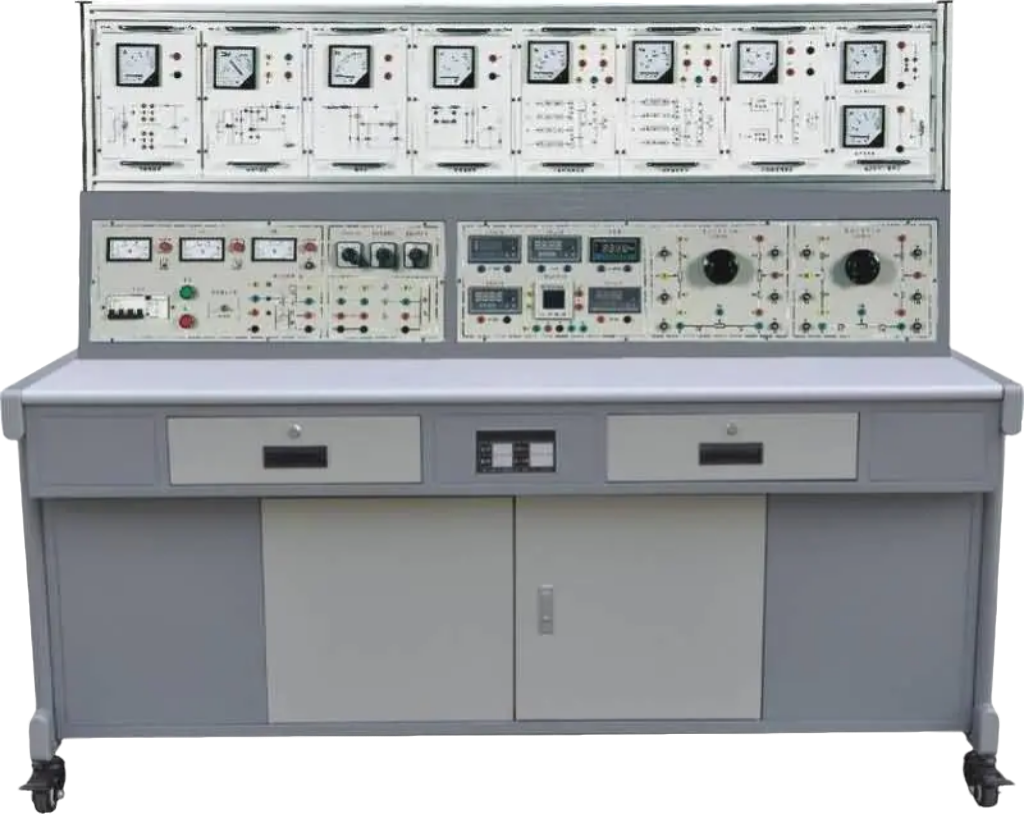
Electric meter aging test bench
View Details