Benlong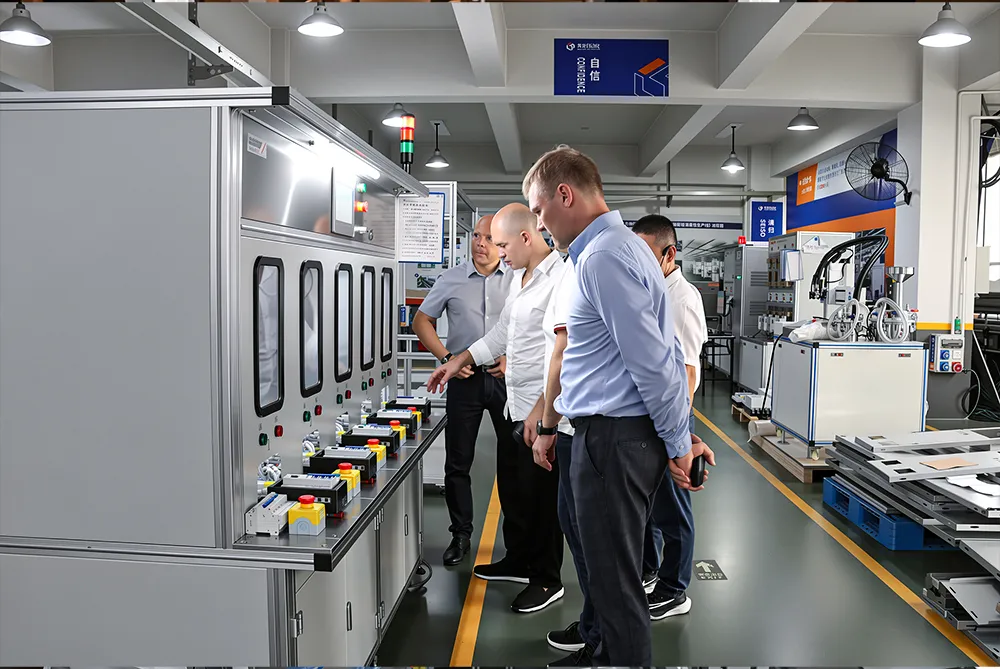
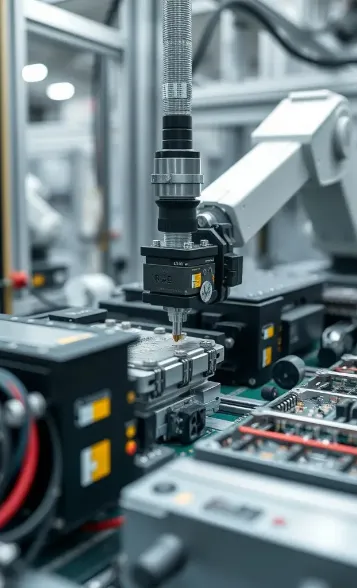
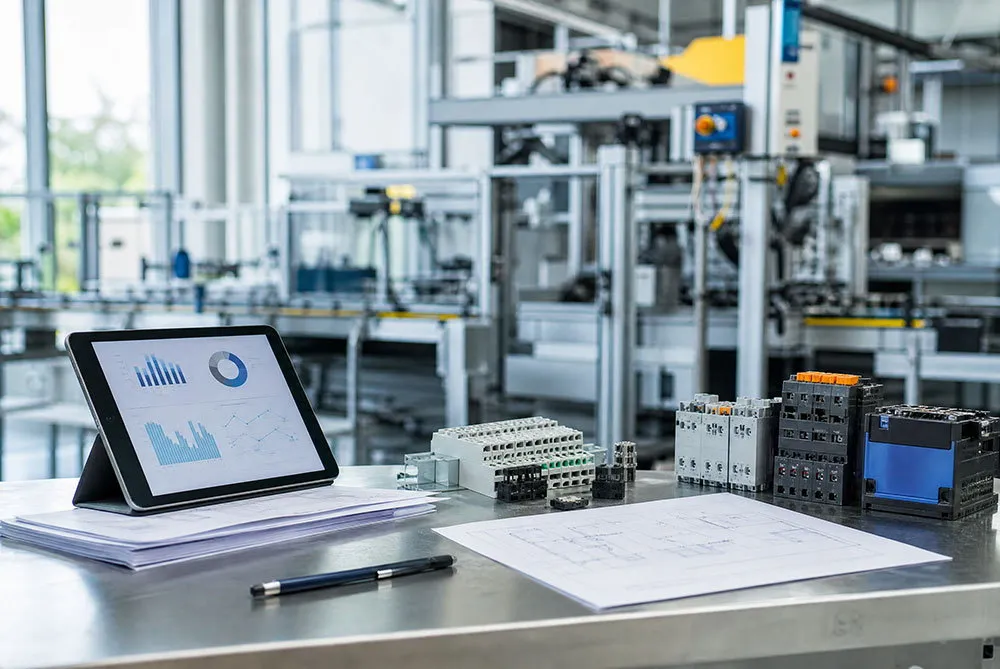
Produsen Mesin Perakitan Otomatis Kustom
Untuk melipatgandakan produksi unit kemudi listrik mereka, pemasok otomotif Jerman tidak membeli lebih banyak robot. Sebaliknya, mereka mencari solusi otomatisasi khusus untuk perakitan penuh yang diperlukan dari bagian logam cetak pertama hingga unit terakhir yang diuji dan diserialkan. Mereka menghabiskan 18 bulan mengembangkan dari konsep hingga commissioning, akhirnya memproduksi satu unit kemudi setiap 12 detik dengan kurang dari 10 operator di lantai pabrik. Meskipun itu adalah investasi yang besar, hasilnya sangat baik. Untuk produsen mana pun yang menghadapi tantangan serupa seperti: (produk baru, (kekurangan tenaga kerja), (masalah kualitas dengan perakitan manual), pembangun otomatisasi khusus harus diajak bekerja sama secara strategis. Mengidentifikasi mitra yang tepat untuk kebutuhan Anda melalui ratusan integrator/pembuat mesin di seluruh dunia adalah langkah pertama dan mungkin yang paling penting dalam upaya Anda.
Apa Itu Mesin Perakitan Otomatisasi Khusus?
Mesin perakitan otomatisasi khusus adalah jenis mesin produksi khusus yang melakukan serangkaian proses (misalnya memberi makan, memposisikan, menggabungkan, mengamankan, mengelas, memeriksa, memberi label, dan mengemas) tanpa keterlibatan fisik manusia. Berbeda dengan workcell robotik standar yang dapat digunakan ulang untuk berbagai produk, mesin perakitan khusus dirancang secara spesifik untuk satu produk atau keluarga produk. Ini mirip dengan jas khusus; setiap stasiun, fixture, dan sensor dalam mesin dimasukkan secara khusus karena diperlukan untuk produk yang diproduksi. Mesin perakitan khusus dibangun oleh perusahaan teknik spesialis yang menyediakan solusi yang mengintegrasikan teknik mekanik, sistem kontrol, sistem pneumatik, peralatan robotik, sistem optik, dan perangkat lunak menjadi satu solusi yang berfungsi dan tervalidasi. Oleh karena itu produk akhir yang dihasilkan bukanlah barang “katalog” melainkan solusi manufaktur turnkey yang akan memproduksi; memenuhi waktu yang ditentukan (Takt), memenuhi kualitas dan/atau kriteria biaya yang ditentukan. Untuk melihat lebih mendalam teknologi yang mendasari sistem ini, panduan kami tentang apa itu otomatisasi memberikan gambaran dasar.
Produsen Mesin Perakitan Otomatisasi Khusus Terkenal
Lanskap global mencakup campuran integrator otomatisasi multinasional besar dan pembuat mesin independen yang fokus. Tabel di bawah merangkum beberapa nama yang diakui, bersama dengan pembuat kelas menengah yang representatif.
| Pabrikan | Kantor Pusat | Kekuatan Utama | Lingkup Proyek Tipikal | Posisi Harga |
|---|---|---|---|---|
| ATS Otomasi | Kanada | Ilmu hayat, farmasi, barang konsumen; sistem turnkey skala besar | $5M–$100M+ lini | Premium |
| Otomasi Eclipse | Kanada | Perangkat medis, nuklir, transportasi; sektor yang sangat diatur | $2M–$50M | Premium |
| Arthur G. Russell | AS | Perakitan kecepatan tinggi, produk medis sekali pakai, produk konsumen | $1M–$20M | Menengah ke premium |
| RōBEX | AS | Integrasi robotik, pengemasan, penanganan material | $500K–$10M | Kelas menengah |
| FANUC Amerika | Jepang/AS | Robot industri, CNC, dan sel perakitan robotik terintegrasi | $100K–$5M per sel | Menengah ke premium |
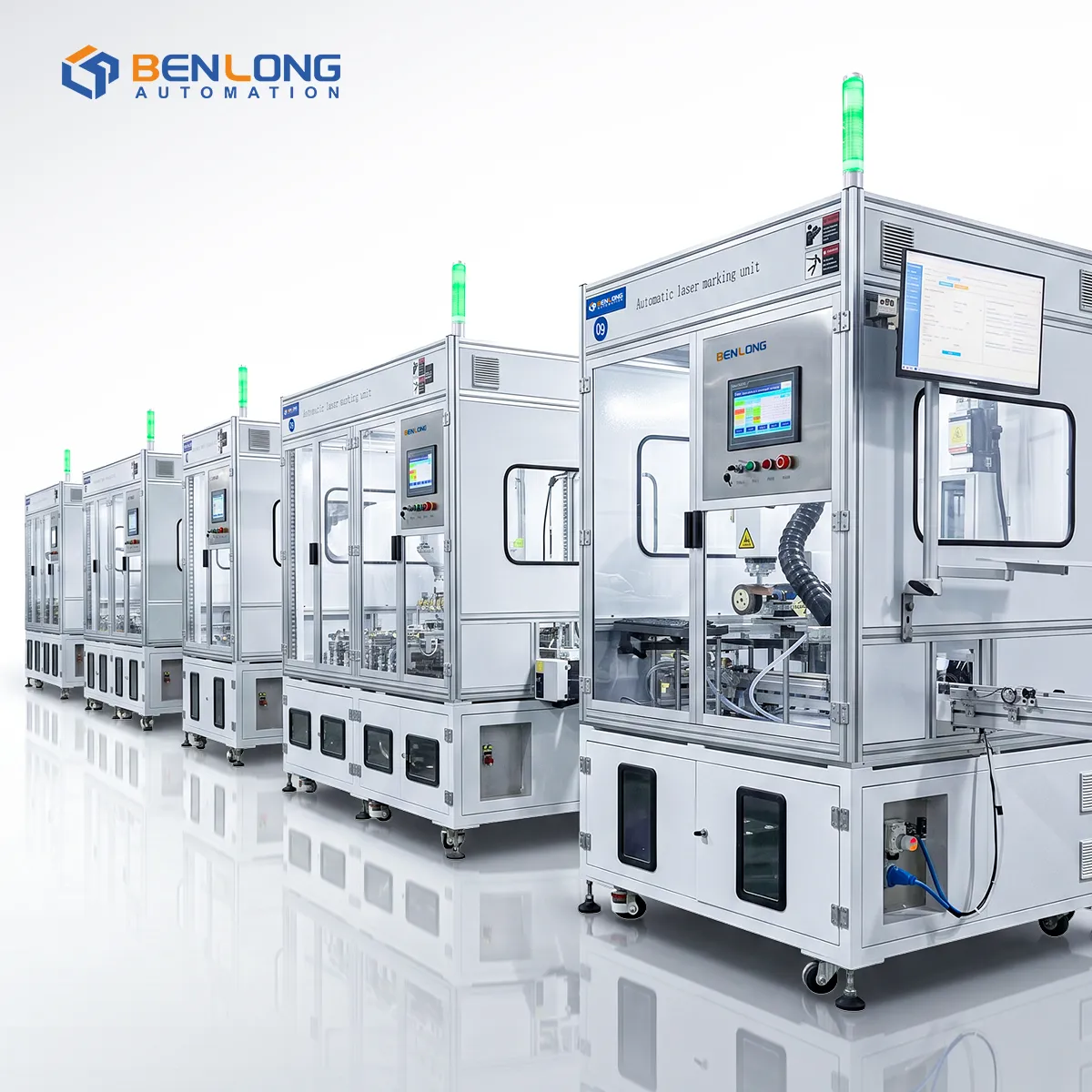
| Otomasi Benlong | Cina | Produk listrik tegangan rendah, lini perakitan & pengujian MCB/MCCB/ACB, otomasi khusus untuk manufaktur listrik | $50K–$5M tergantung pada ruang lingkup | Kompetitif kelas menengah |
Untuk produsen di sektor perangkat proteksi listrik, mitra fokus seperti Benlong Automation Technology Co., Ltd. membawa rekayasa khusus domain yang tidak dapat ditandingi oleh integrator umum. Berbasis di Wenzhou, China — pusat manufaktur listrik tegangan rendah dunia — Benlong telah merancang dan membangun lini perakitan dan pengujian khusus untuk pemutus sirkuit mini, pemutus sirkuit berkas cetak, pemutus sirkuit udara, kontaktor, SPD, dan perangkat terkait sejak 2008. Portofolio perusahaan mencakup lini produksi otomatis penuh untuk MCB, seperti Jalur perakitan otomatis MCB, yang mengintegrasikan beberapa stasiun menjadi satu aliran kontinu. Untuk melihat lebih luas jenis solusi otomatisasi yang tersedia untuk manufaktur listrik, tinjauan kami tentang produk otomatisasi MCB teratas mencakup berbagai peralatan yang dapat disediakan oleh pembangun khusus.
Mengapa Produsen Berinvestasi dalam Otomasi Perakitan Khusus
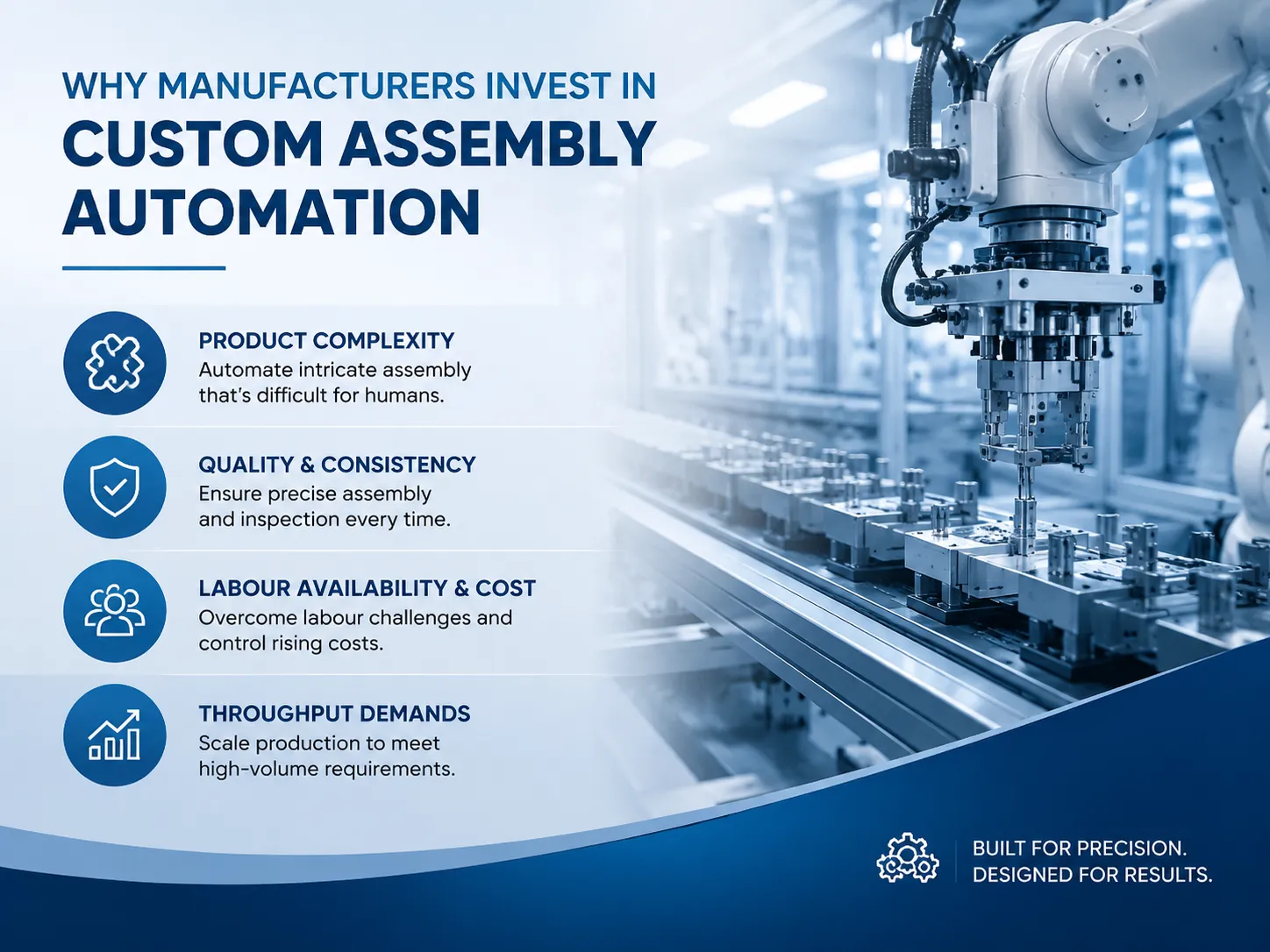
Keputusan pengoperasian lini perakitan khusus jarang berfokus pada penggantian satu operator. Sebaliknya, biasanya didorong oleh kebutuhan untuk menyelesaikan berbagai masalah gabungan, banyak di antaranya tidak dapat diselesaikan dengan peralatan ‘off-the-shelf’ yang ada. Alasan paling umum untuk mengoperasikan peralatan baru adalah sebagai berikut:
- Kompleksitas produk yang mengalahkan perakitan manual. Karena perangkat medis memiliki banyak bagian kecil yang harus diposisikan, diarahkan, dan disatukan dalam ruang bersih, perangkat ini adalah kandidat ideal untuk mengotomasi proses perakitan.
- Persyaratan kualitas yang melebihi konsistensi manusia. Kehilangan O-ring atau torsi yang lalai pada baut dapat menyebabkan situasi yang mengancam jiwa di sekitar peralatan keselamatan otomotif. Proses inspeksi produk otomatis dapat menerapkan jumlah gaya yang sama setiap kali, memverifikasi setiap operasi perakitan, dan menolak setiap perakitan yang cacat.
- Ketersediaan dan biaya tenaga kerja. Otomasi dapat memungkinkan hambatan manufaktur menjadi keuntungan — dalam situasi di mana harga tinggi dan/atau kekurangan tenaga kerja perakitan terampil.
- Permintaan throughput. Untuk memenuhi kontrak baru, rata-rata 100 unit setiap shift perlu meningkat menjadi 500 unit per shift. Lini produksi otomatis yang dirancang sepenuhnya dan mampu memproduksi jumlah unit yang tepat akan mencapai hal ini.
Kriteria Utama untuk Mengevaluasi Pembuat Mesin Perakitan Khusus
Kemampuan untuk membuat mesin perakitan otomatis yang disesuaikan tidak tersedia di semua bengkel mesin. Ada perbedaan signifikan antara apa yang dapat dilakukan oleh pembuat umum dibandingkan dengan integrator otomatisasi sejati. Akibatnya, pilihan mitra integrasi otomatisasi dapat menghasilkan mesin yang gagal mencapai tingkat produksi yang ditentukan, gagal memenuhi spesifikasi kualitas, atau mesin otomatis yang tidak beroperasi sesuai yang diinginkan. Kriteria berikut digunakan untuk membantu menetapkan pemilihan vendor yang sukses dibandingkan dengan pemilihan yang tidak tepat:
- Pengalaman di bidang terkait. Apakah pembuat telah mengirimkan mesin untuk bisnis Anda? Industri otomotif, perangkat medis, elektronik, dan barang konsumen memiliki regulasi, kebersihan, dan persyaratan validasi yang berbeda. Pembuat yang telah melakukannya sebelumnya belajar bagaimana mengirimkan dari pengalaman, sehingga akan ada kurva pembelajaran yang sudah ditetapkan (dalam anggaran Anda).
- Kedalaman rekayasa internal. Kompetensi inti perusahaan harus berupa Desain Mekanik, Desain Elektrikal, Pemrograman PLC, Integrasi Vision, dan Robotika. Outsourcing rekayasa kontrol akan menempatkan pembuat pada posisi kurang menguntungkan saat mencoba memecahkan masalah urutan yang kompleks; mereka juga akan menyalahkan pihak lain atas masalah yang terjadi selama proses debugging.
- Ketelitian manajemen proyek. Setiap lini kustom adalah proyek independen yang memiliki ruang lingkup, biaya, dan jadwal yang ditentukan. Pelanggan akan mendapatkan jaminan bahwa pabrikan dapat membangun peralatan sesuai spesifikasi melalui proses linier yang mencakup rencana manajemen proyek yang komprehensif, proses tinjauan desain formal, uji penerimaan pabrik (FAT) di fasilitas pabrikan, dan uji penerimaan lokasi (SAT) di fasilitas pengguna akhir. Jika kontrak proyek tidak mendefinisikan tonggak ini untuk pabrikan, setiap keterlambatan dalam proyek akan menjadi kesalahan pabrikan, sehingga menempatkan risiko lebih besar pada pelanggan.
- Dukungan purna jual dan suku cadang. Pasokan tambahan sensor pengganti, aktuator, dan bagian aus akan diperlukan untuk mesin yang beroperasi 24 jam sehari dan 7 hari seminggu. Dengan pembuat yang menjaga inventaris suku cadang penting di dekat mesin atau dapat mengirimkan bagian tersebut dalam waktu dua puluh empat (24) jam, adalah mungkin untuk mencegah penghentian total lini produksi Anda ketika hanya satu (1) bagian yang gagal.
Apa yang Menentukan Biaya Mesin Perakitan Kustom?
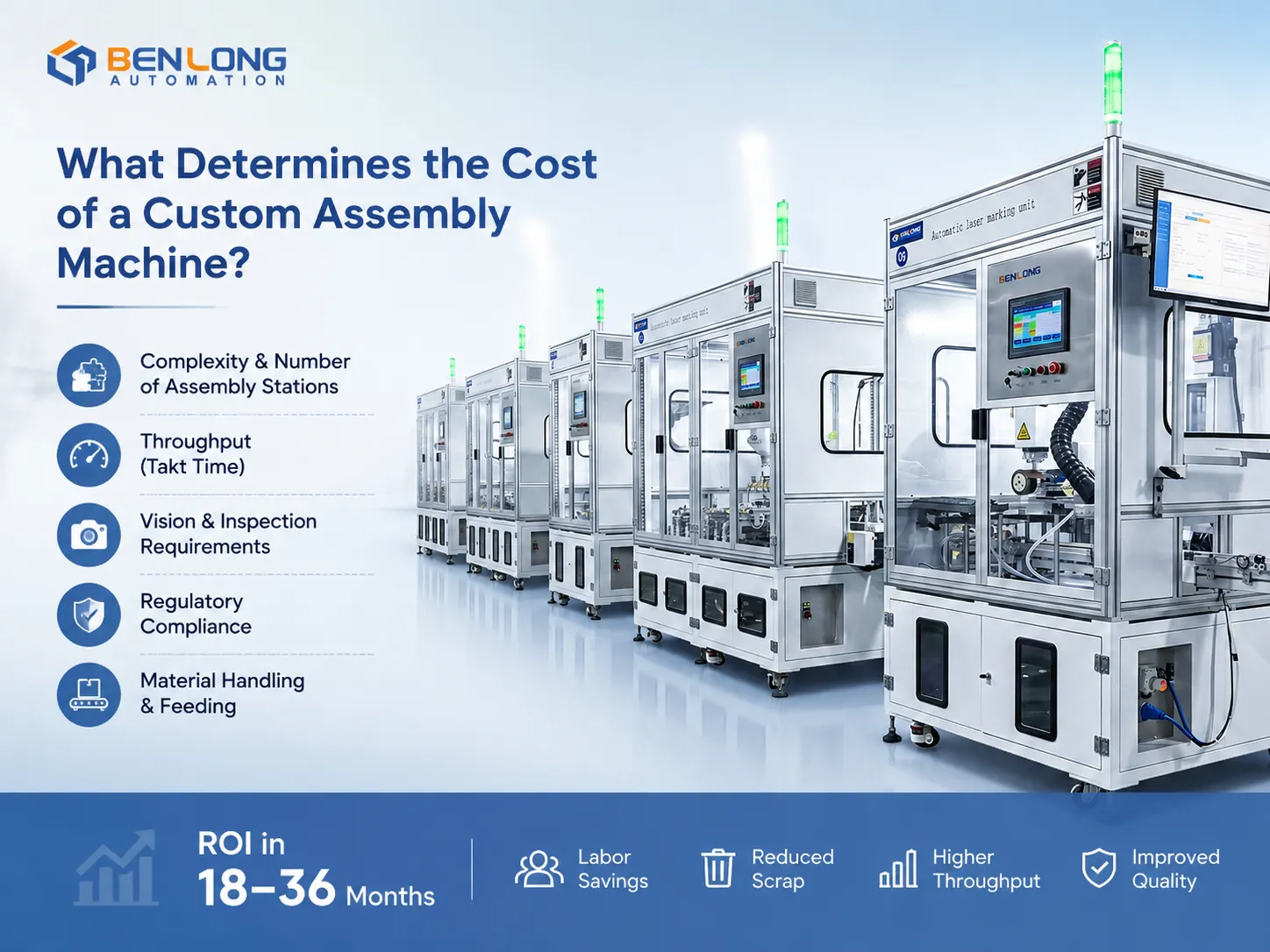
Biaya untuk mesin perakitan otomatis kustom dapat sangat bervariasi sehingga tidak mungkin memberikan angka yang sebenarnya. Misalnya, sel pick-and-place meja sederhana biasanya berharga sekitar $50.000 sementara lini perakitan perangkat medis yang sepenuhnya otomatis, tervalidasi, lengkap dengan inspeksi vision di setiap stasiun kerja, tertutup dalam ruang bersih, dan perangkat lunak pelacakan komprehensif dapat mencapai lebih dari $5 juta. Daftar berikut mencakup beberapa komponen utama yang berkontribusi pada biaya keseluruhan:
- Jumlah stasiun perakitan dan kompleksitas setiap operasi. Setiap stasiun menambahkan struktur mekanis, aktuator, sensor, dan kontrol.
- Throughput yang dibutuhkan (waktu takt). Jalur perakitan yang menghasilkan komponen setiap tiga detik memerlukan aktuator yang lebih cepat, sistem kontrol yang lebih ketat, dan desain yang lebih kuat dibandingkan dengan jalur perakitan yang menghasilkan komponen setiap tiga puluh detik.
- Persyaratan penglihatan dan inspeksi. Jalur manual tidak dapat menyediakan kemampuan verifikasi yang dapat dicapai dengan resolusi kamera yang lebih tinggi, pencahayaan, dan perangkat keras pemrosesan.
- Kepatuhan regulasi. Dokumen teknik dan biaya pengujian bertambah sebagai hasil dari semua validasi oleh FDA, CE Mark, Sertifikasi ATEX, dan persyaratan wajib lainnya oleh suatu organisasi.
- Penanganan dan pemberian material. Pengumpan mangkuk, pengumpan baki, dan sistem konveyor harus disesuaikan dengan komponen spesifik.
Jika dikelola dengan efisien, investasi akan memberikan pengembalian investasi (ROI) yang baik setelah sekitar 18 – 36 bulan karena penghematan tenaga kerja, pengurangan limbah, peningkatan throughput, dan peningkatan kualitas. Hal yang paling penting adalah bermitra dengan kontraktor umum yang dapat memberikan perkiraan biaya yang akurat berdasarkan spesifikasi yang jelas; ini jauh lebih membantu daripada bekerja dari ide yang sangat umum tentang apa hasilnya.
Cara Memilih Produsen yang Tepat untuk Proyek Anda
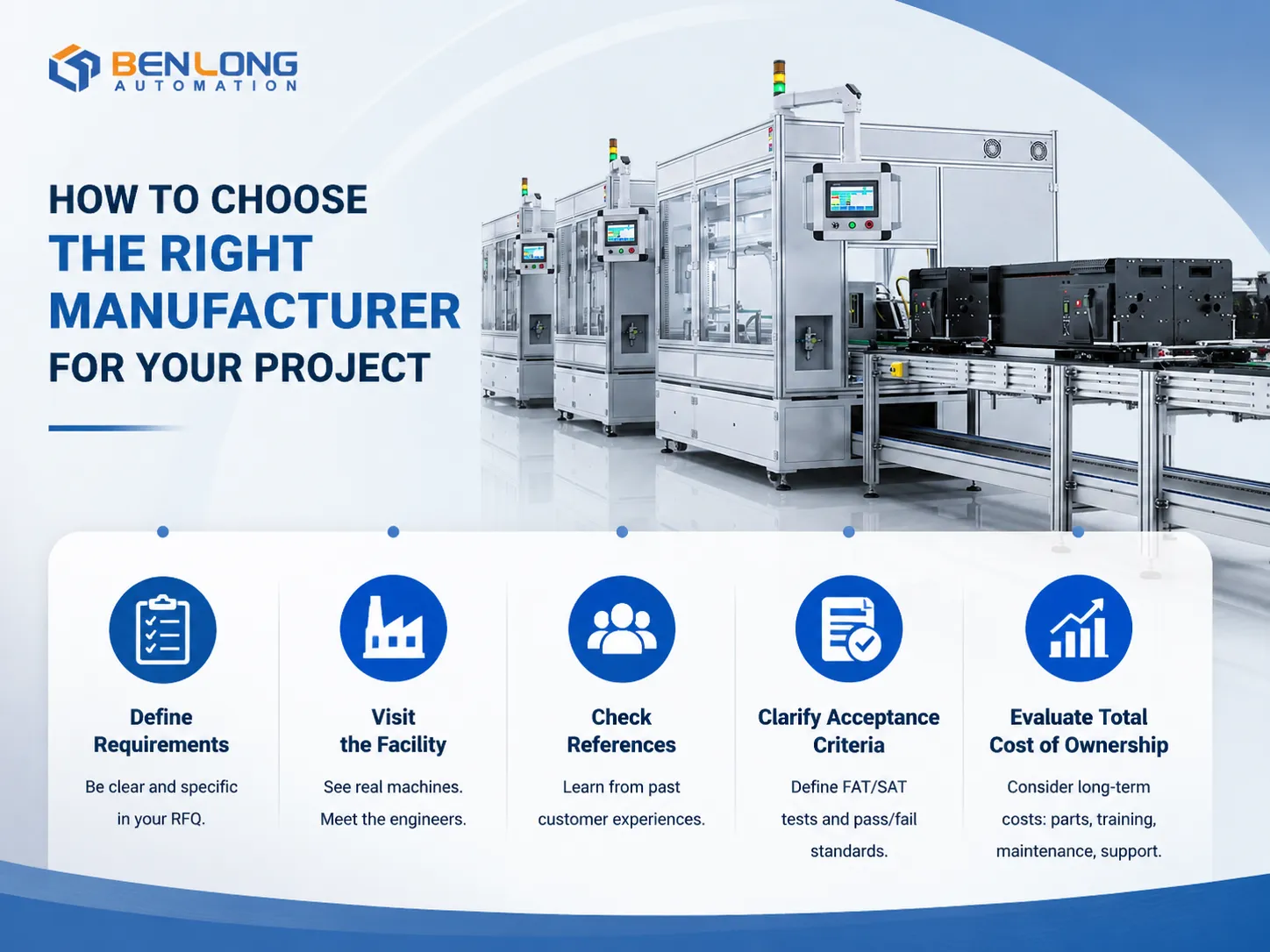
Memilih produsen mesin perakitan otomatis khusus adalah pembelian yang mendapat manfaat dari perhatian cermat terhadap detail saat melakukan proses pengadaan. Menggunakan pendekatan sistematis:
- Definisikan kebutuhan Anda secara tepat. Apa spesifikasi produk dan persyaratan kinerja terkait? Kapan produksi harus dimulai? Berapa biaya produksi? Jenis kontrol kualitas apa yang akan dilakukan? Berapa anggaran operasionalnya? Jika RFQ secara jelas menentukan apa yang dibutuhkan, kemungkinan besar pemasok akan mengajukan proposal yang serius.
- Kunjungi fasilitas pembuat. Lebih dari apa yang Anda temukan di brosur, tur pabrik dapat menunjukkan mesin yang sedang dirakit dan memungkinkan Anda berbicara langsung dengan insinyur, bukan hanya dengan tim penjualan. Juga, pastikan Anda melihat salah satu mesin yang bekerja yang mirip dengan milik Anda.
- Periksa referensi. Bicaralah dengan pelanggan sebelumnya untuk melihat bagaimana mesin berperforma; berapa waktu siklus dibandingkan dengan tanggal pengiriman aktual dan apakah mesin menerima layanan tindak lanjut juga penting.
- Klarifikasi kriteria penerimaan. Kontrak harus menguraikan tonggak FAT dan SAT. Ini termasuk jenis pengujian yang dilakukan, kriteria untuk lulus pengujian tersebut, dan tindakan yang akan diambil jika mesin gagal.
- Evaluasi total biaya kepemilikan. Harga pembelian awal hanyalah salah satu biaya yang terkait dengan kepemilikan mesin selama 10-15 tahun. Biaya lain termasuk suku cadang, pelatihan pemeliharaan, dan dukungan berkelanjutan dari produsen.
Pertanyaan yang Sering Diajukan
Apa perbedaan antara mesin perakitan standar dan mesin khusus?
Mesin perakitan standar adalah platform yang telah dirancang sebelumnya yang memungkinkan pengguna untuk beradaptasi dengan berbagai produk, biasanya dengan batasan tertentu. Contohnya adalah meja indeksasi yang memiliki fitur alat yang dapat dipertukarkan sehingga pengguna memiliki fleksibilitas untuk merakit produk secara efisien dan akurat. Mesin perakitan khusus dirancang dengan satu aplikasi spesifik dalam pikiran. Setiap mekanisme perakitan (stasiun) dan perlengkapan perakitan (alat yang dipasang pada produk) dirancang sesuai dengan bentuk, bahan, dan metode perakitan produk tertentu.
Berapa lama waktu yang dibutuhkan untuk membangun lini perakitan otomatis khusus?
Waktu pengerjaan berbeda-beda tergantung pada tingkat kesulitan proyek. Perangkat dengan satu stasiun mungkin memerlukan waktu 4-6 bulan dari permintaan hingga pengiriman, sementara sistem otomatis multi-stasiun dengan pengujian/validasi yang ekstensif dapat memakan waktu 12-18 bulan (atau lebih) tergantung pada kebutuhan spesifik pelanggan. Garis waktu harus mencakup komponen berikut: Tinjauan Desain; Pengadaan; Pembangunan; Pengujian Penerimaan Pabrik; Pengiriman; Instalasi; dan Pengujian Penerimaan Situs.
Apakah mesin perakitan khusus dapat dimodifikasi untuk produk baru di kemudian hari?
Sampai batas tertentu, Ya. Mesin yang dibangun dengan baik memiliki beberapa fleksibilitas dalam cara pengaturan perlengkapan dan program. Namun, mesin ini dibuat khusus. Oleh karena itu, jika Anda memiliki perubahan besar pada produk — seperti dimensi produk atau jenis komponen baru — Anda perlu merancang ulang mesin untuk mengakomodasi perubahan tersebut. Anda harus berkonsultasi dengan pembuat mesin Anda tentang menambahkan tingkat fleksibilitas pada tahap desain karena akan lebih murah menambahkan fitur ini selama konstruksi awal daripada membuatnya kemudian sebagai proses retrofit.
Industri apa saja yang menggunakan mesin perakitan otomatis khusus?
Otomasi khusus mendominasi hampir semua industri yang memproduksi barang fisik secara massal. Contoh utama termasuk manufaktur komponen otomotif dan penggerak listrik, perangkat medis dan sekali pakai, elektronik konsumen, perangkat proteksi listrik (MCB & MCCB), pengemasan farmasi, dan sub-rakitan yang digunakan dalam proses manufaktur dirgantara. Dengan kata lain, hampir semua produk yang memiliki urutan perakitan berulang dan/atau memerlukan tingkat konsistensi dalam kualitas/ketahanan dapat diotomatisasi.
Referensi
- ATS Automation Tooling Systems Inc. — Pemimpin global dalam otomasi khusus dan integrasi untuk ilmu hayat, farmasi, dan barang konsumen.
- Otomasi Eclipse — Solusi otomatisasi khusus untuk industri medis, nuklir, dan transportasi.
- Arthur G. Russell Co. — Sistem perakitan dan pengujian otomatis berkecepatan tinggi untuk produk medis sekali pakai dan produk konsumen.
- FANUC Corporation — Robotika industri, sistem CNC, dan solusi otomasi pabrik.
- RōBEX — Integrasi robotika dan otomasi untuk pengemasan, perakitan, dan penanganan material.
Pengujian dan commissioning a mesin perakitan otomatis kustom adalah keputusan modal yang berdampak pada bisnis manufaktur selama satu dekade atau lebih. Mesin yang tepat, dibangun oleh mitra yang tepat, menjadi parit kompetitif: menurunkan biaya, meningkatkan kualitas, dan memungkinkan tingkat produksi yang tidak mudah ditandingi oleh pesaing. Mesin yang salah menjadi ruang lantai menganggur yang mahal. Perbedaannya terletak pada ketelitian proses seleksi — kejelasan spesifikasi, kedalaman pengalaman relevan pembuat, dan struktur tonggak proyek yang mengatur pembangunan. Benlong Automation adalah salah satu perusahaan yang menyediakan ketelitian ini untuk sektor manufaktur listrik, menerjemahkan puluhan tahun pengetahuan domain menjadi lini perakitan yang menghasilkan perangkat yang diuji, bersertifikat dengan kecepatan yang dibutuhkan pasar global.