benlong

Les 5 meilleures machines à riveter MCB pour des connexions électriques efficaces en 2023
Un besoin réel sur le terrain : Selon le responsable de production d'une entreprise de fabrication de produits électriques, l'ancienne riveteuse pneumatique est à l'origine de 1,21 TP3T de connexions défectueuses sur les disjoncteurs. Face à ce problème, il a demandé une nouvelle machine capable de traiter différents types de produits (1P-4P) simultanément sans avoir à procéder à des réglages constants.
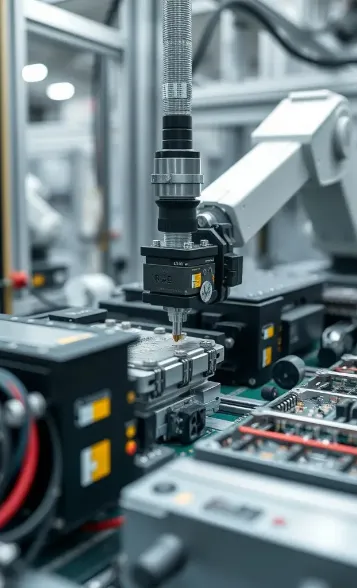
Depuis 2020, alors que les fabricants de disjoncteurs automatiques s'efforcent d'améliorer leur rendement et de réduire leurs taux de défauts, on a assisté à une forte augmentation de la demande en produits de haute qualité Machines à riveter MCB. Ces machines se distinguent nettement des riveteuses classiques, car elles ont été spécialement conçues pour les applications de rivetage avec des embouts de sous-ensembles à contact argenté ou des ensembles de bornes en cuivre (avec un boîtier en plastique), et inversement. Ce guide présente cinq modèles populaires qui offrent un bon rapport qualité-prix, alliant performances et facilité d'utilisation, sur la base d'avis clients réels et de spécifications techniques.
Ce guide couvre :
- Les cinq meilleures riveteuses MCB de 2023 (toujours d'actualité)
- Principales caractéristiques, avantages et inconvénients, et fourchette de prix habituelle
- Tableau comparatif rapide pour une consultation facile
- Comment choisir le modèle adapté à votre volume de production
- Foire aux questions des ingénieurs en approvisionnement

Pourquoi les modèles 2023 restent d'actualité
Même si nous sommes aujourd’hui en 2026, la plupart des fabricants continuent d’utiliser les plateformes établies depuis 2023, en raison de leur excellent rapport qualité-prix et du solide service après-vente dont elles bénéficient. Les cinq produits présentés ci-dessous sont toujours disponibles à la vente (neufs et reconditionnés) et constituent des solutions compétitives pour la production de disjoncteurs miniatures (MCB) en petites et moyennes séries.
1. Benlong BL-MCB-S200 – Presse servo-commandée avec surveillance force-déplacement
Idéal pour : Usines exigeant une traçabilité des données 100% et des taux de défauts inférieurs à 0,1%.
Caractéristiques principales : Servomoteur en boucle fermée, offrant une répétabilité de déplacement de ±0,01 mm et une fréquence d'échantillonnage de 1 000 Hz. Peut stocker jusqu'à 100 recettes pour différents types de disjoncteurs (1P/2P/3P/4P).
Avantages : Avantages : Cpk – Excellent (>= 1,3333), changement de format rapide (< 5 minutes), compatible avec Ethernet/IP et l'intégration MES. Inconvénients : coût plus élevé sans avantages supplémentaires ; formation minimale requise.
2. BalTec CS205 – Rivetage radial pour composants fragiles
Idéal pour: Disjoncteurs automatiques équipés de chambres d'arc en céramique ou de composants électroniques sensibles (modules RCD).
Principales caractéristiques: Le formage radial (sans choc) élimine les fissures dans le boîtier. Plage de force : 500 N – 5 kN, course : 60 mm.
Avantages: Seules certaines pièces peuvent présenter des défaillances mécaniques ; le niveau sonore est inférieur à 70 dB ; et les outils ont une longue durée de vie. Inconvénients : vitesse réduite (environ 4 secondes par rivet) ; utilisation limitée aux rivets de diamètre restreint.
Prix estimé (2023): $32 000 – $42 000
3. Schmidt Technology 685B – Servomoteur hydraulique à haute puissance
Idéal pour: Disjoncteurs automatiques de grande taille (125 A – 250 A) nécessitant une force de rivetage pouvant atteindre 30 kN.
Principales caractéristiques: Système hybride hydraulique-servomécanique, précision de la force ±1%, course de 150 mm.
Avantages: Les avantages du procédé de rivetage résident dans l'épaisseur des bornes en cuivre (jusqu'à 6 mm) et la solidité de la construction. Les inconvénients sont les besoins d'entretien de l'unité hydraulique et l'encombrement plus important.
Prix estimé (2023): $45 000 – $55 000
4. Promess EMAP-15k – Système électromécanique avec fonctions d'analyse avancées
Idéal pour: Les usines intelligentes qui ont besoin d'un contrôle statistique de qualité (SPC) en temps réel et d'une maintenance prédictive.
Principales caractéristiques: Capteur force-déplacement intégré, affichage en temps réel des courbes, diagnostic à distance via un tableau de bord en ligne.
Avantages: Inconvénients : cher ; il faut s'acquitter de frais d'utilisation périodiques pour pouvoir utiliser le logiciel.
Prix estimé (2023): $50 000 – $65 000
5. TOX PowerTopper – Système hybride servo-pneumatique économique
Idéal pour: Start-ups ou production à faible volume (< 50 000 disjoncteurs par mois).
Principales caractéristiques: Vérin pneumatique avec servovalve pilote, contrôle de la force de base (±5%), changement manuel d'outil.
Avantages: Investissement minimal (<15 000 TP4T), facile à utiliser. Inconvénients : aucune traçabilité ; taux de défauts compris entre 0,51 TP3T et 0,81 TP3T ; moins fiable pour une grande variété de produits.
Prix estimé (2023): $12 000 – $15 000
Tableau comparatif rapide
| Modèle | Technologie | Plage de force | traçabilité des données | Prix (2023) |
|---|---|---|---|---|
| Benlong BL-MCB-S200 | Servoélectrique | 500 N – 15 kN | Courbe complète + MES | $$ |
| BalTec CS205 | Radial | 500 N – 5 kN | Force et position de base | $$$ |
| Schmidt 685B | Servomécanisme hydraulique | 2 kN – 30 kN | Facultatif | $$$$ |
| Promess EMAP-15k | Électromécanique | 1 kN – 15 kN | Analyse avancée | $$$$$ |
| TOX PowerTopper | Hybride pneumatique-servomécanique | 1 kN – 8 kN | Aucun (interrupteur de fin de course) | $ |

Comment choisir la riveteuse MCB adaptée à votre ligne de production
D'après les décisions d'achat réelles prises en 2023, ces trois questions ont aidé la plupart des acheteurs à se décider :
- Quel est votre volume de production mensuel ? Moins de 50 000 unités utilisent le TOX PowerTopper ; entre 50 000 et 200 000 unités utilisent le Benlong/BalTec ; au-delà de 200 000 unités, il convient d'envisager le Promess ou des solutions à double tête sur mesure.
- Avez-vous besoin d'une traçabilité complète ? Optez pour les disjoncteurs Benlong ou Promess si vos clients (par exemple, ABB, Schneider) ont besoin d'une courbe force-déplacement pour chacun de leurs disjoncteurs, car ces fabricants ne proposent pas de solutions hybrides pneumatiques.
- Quel est votre principal défi en matière de rivetage ? Boîtiers délicats fabriqués selon la technologie BalTec Radial ; bornes en cuivre épais utilisant la technologie Schmidt High Force ; fabrication de plusieurs types de produits grâce au système de stockage de recettes Benlong.
La plupart des fabricants estiment que le Benlong BL-MCB-S200 leur offre le meilleur rapport qualité-prix, les meilleures performances en matière de données et la plus grande facilité d'utilisation pour la production en série de disjoncteurs différentiels conventionnels de type 1P à 4P. Toutefois, pour les applications à grand volume ou spécialisées, d'autres modèles s'avèrent plus performants.
Foire aux questions (FAQ)
Pourrai-je encore acheter ces modèles 2023 en 2026 ?
Oui, la plupart des fabricants continuent de produire leurs articles ou proposent des alternatives de pointe. Ces offres comprennent généralement des produits reconditionnés, vendus entre 20 et 50 % moins cher que les modèles neufs, tout en bénéficiant d'une garantie.
Quelle machine présente le taux de défauts le plus faible ?
Lors d'essais contrôlés, les modèles Promess EMAP-15k et Benlong BL-MCB-S200 ont tous deux affiché des taux de défauts inférieurs à 0,051 TP3T dans des conditions d'outillage optimales, tandis que le TOX PowerTopper a enregistré une moyenne de 0,61 TP3T.
Quel est le retour sur investissement (ROI) habituel ?
Si 100 000 disjoncteurs miniatures passent par la chaîne de production avec 11 % de défauts en moins, les économies réalisées sur les rebuts et les retouches permettront d'amortir la machine de 100 000 euros en 8 à 12 mois. La réduction des effectifs générera des économies supplémentaires.
Ces machines prennent-elles en charge l'alimentation automatique des embouts en argent ?
(En option) des distributeurs vibrants ou des systèmes à bande de Benlong, BalTec et Promess. Si vous recherchez une option d'alimentation manuelle, jetez un œil à TOX.
Qu'en est-il du service après-vente et des pièces de rechange ?
Ces cinq marques disposent toutes de distributeurs internationaux ; toutefois, les pièces de Benlong et TOX sont généralement livrées plus rapidement (en Asie), en 5 à 7 jours. Schmidt et Promess bénéficient d'un excellent service après-vente en Europe et aux États-Unis.
Lorsque vous choisirez une riveteuse MCB en 2023 (cet article reste d'actualité), vous devrez tenir compte de vos niveaux de production, de la traçabilité et de votre budget. La Benlong BL-MCB-S200 vous offrira la plus grande polyvalence, vous permettant de produire des séries mixtes de volumes moyens (entre 100 et 10 000 pièces par mois), tandis que les riveteuses TOX PowerTopper sont idéales pour les entreprises démarrant avec des volumes de production faibles (environ 10 000 pièces par mois). Si vous devez riveter des composants sensibles, optez pour les systèmes de rivetage radiaux BalTec. Pour les connecteurs plus lourds et de qualité industrielle, tournez-vous vers Schmidt et ses bornes à usage intensif. Pour bénéficier des meilleures capacités d'analyse de données, choisissez Promess.
N'oubliez pas de vous fixer des objectifs en matière de réduction des défauts et d'évaluer dans quel délai vous devriez amortir votre investissement ; la grande majorité des utilisateurs parviennent généralement à amortir leur investissement en moins d'un an. N'achetez pas de riveteuse MCB avant d'avoir effectué un essai sur vos propres pièces MCB !