benlong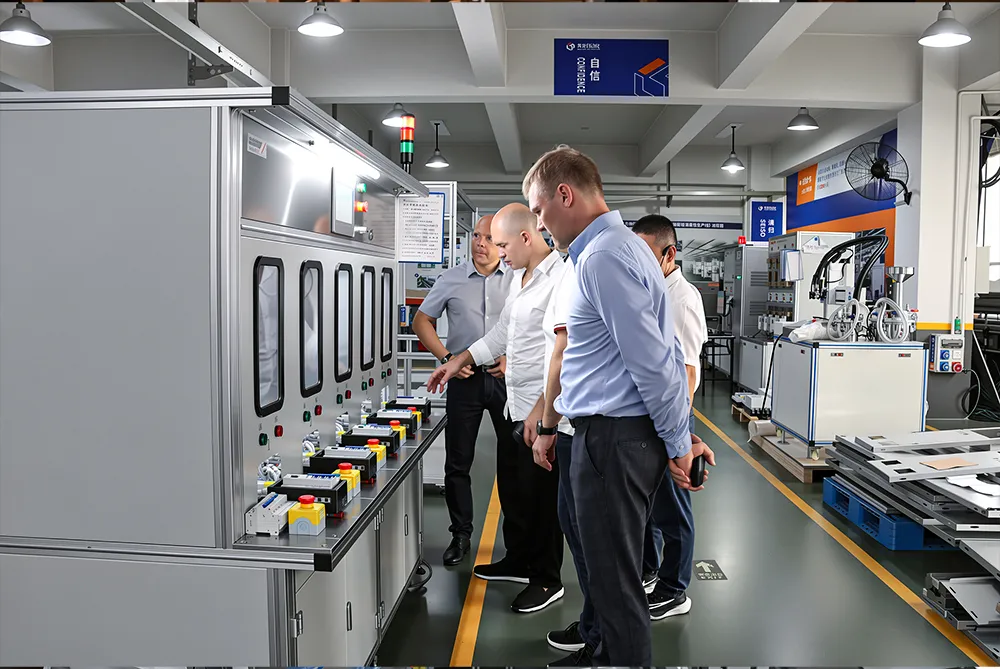

MCB Manufacturing Machine: Totally Integrated Automation
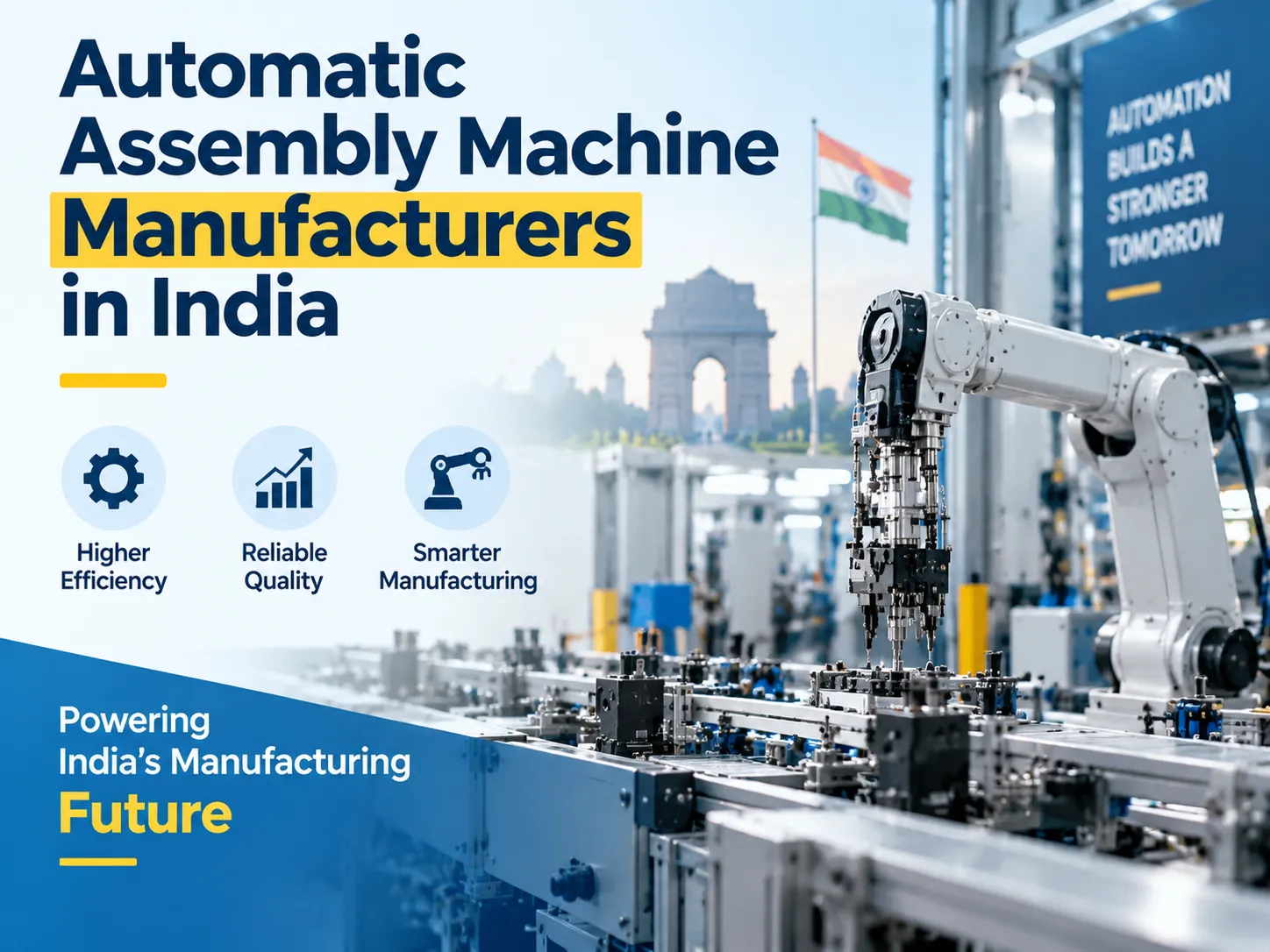
Due to many reasons, mostly driven by the construction industry, urbanization, and industrial growth, similar trends can be traced in India as well, as there is a rising interest in gaining access to mini circuit breakers. The already established production companies which sell millions of units every year can simply increase the efficiency of their production lines, while smaller companies do not find it that easy.
Two choices typically become available for smaller enterprises. The first one is to invest in automatic assembly lines. These types of assembly lines are much more reliable, but they are quite costly, equally to more than 500,000 dollars, up to thirty meters long, and are only reasonable when annual production goes beyond the million units per year. The other option is to use the time-consuming manual assembly process of devices which is not as demanding in terms of finances but raises challenges for the companies connected with certifications and compliance.
The goal of this article is to highlight the primary features of the compact mini circuit breaker manufacturing machine in an easy-to-understand way for the readers, while also assisting them in terms of comparing it with other existing options.
The crisis that all small MCB manufacturers encounter
This is not an issue of time or will but rather structural one. Mass production principles dictate that the MCB production line is designed for the high-volume production instead, it is very costly and occupies a lot of production space. Also, the commissioning of such line takes a lot of time, from 90 to 120 days. The workshop cannot bear such expense, and sometimes does not have enough space for such production. At the same time, it should still implement some automation in order to reduce labor costs, attain a stable production level and cope with orders requiring certain quality.
In addition, manual assembly does not help in solving the issue at hand either. The production process has a low pace and the defect percentage is increasing. The amount of orders increases and service requires more hands, not more sources of capacity for the workshop. One does not simply find a skilled worker easily and still one needs to deal with the quality which heavily relies on the operator.
The small manufacturers make part of a big and neglected area of the market – these are the manufacturers that have outgrown manual production, but still, the need for production line has not arisen. The compact MCB production line is exactly what this group is looking for.
What does “totally integrated automation” mean for MCB production?
In general, the concept of totally integrated automation encompasses the idea of building a system in such a way that all of the process’s stages form an entire unit. In this case, there would be fewer transfers, less failure points, quicker startup times, and more accurate information on what is happening throughout the whole process.
Hence, an integrated compact machine operates on the same principle, but in this case, it employs it in regard to one machine, as opposed to the entire plant. Stated otherwise, while in a traditional assembly line every process step, such as riveting, quality control, and testing, is conducted by different machines, all processes in this case are conducted within one unit (closed loop) that does not require any additional machines. Consequently, the integrated machine operates as a black box.
If you manufacture a product, you will not have to worry about the placement of machines required for the functioning of the in question system and thus enjoy all the advantages of integrated systems without their disadvantages. Instead of managing a range of machines from several manufacturers, you will deal with one type of machine made by one vendor instead.
Inside the machine: the integrated MCB assembly process
What is intriguing about this type of device is that it incorporates so many processes into one unit. The innovative MCB manufacturing equipment consists of the full assembly line equipment, which is linked together and function under one PLC. The standard production scheme is as follows:
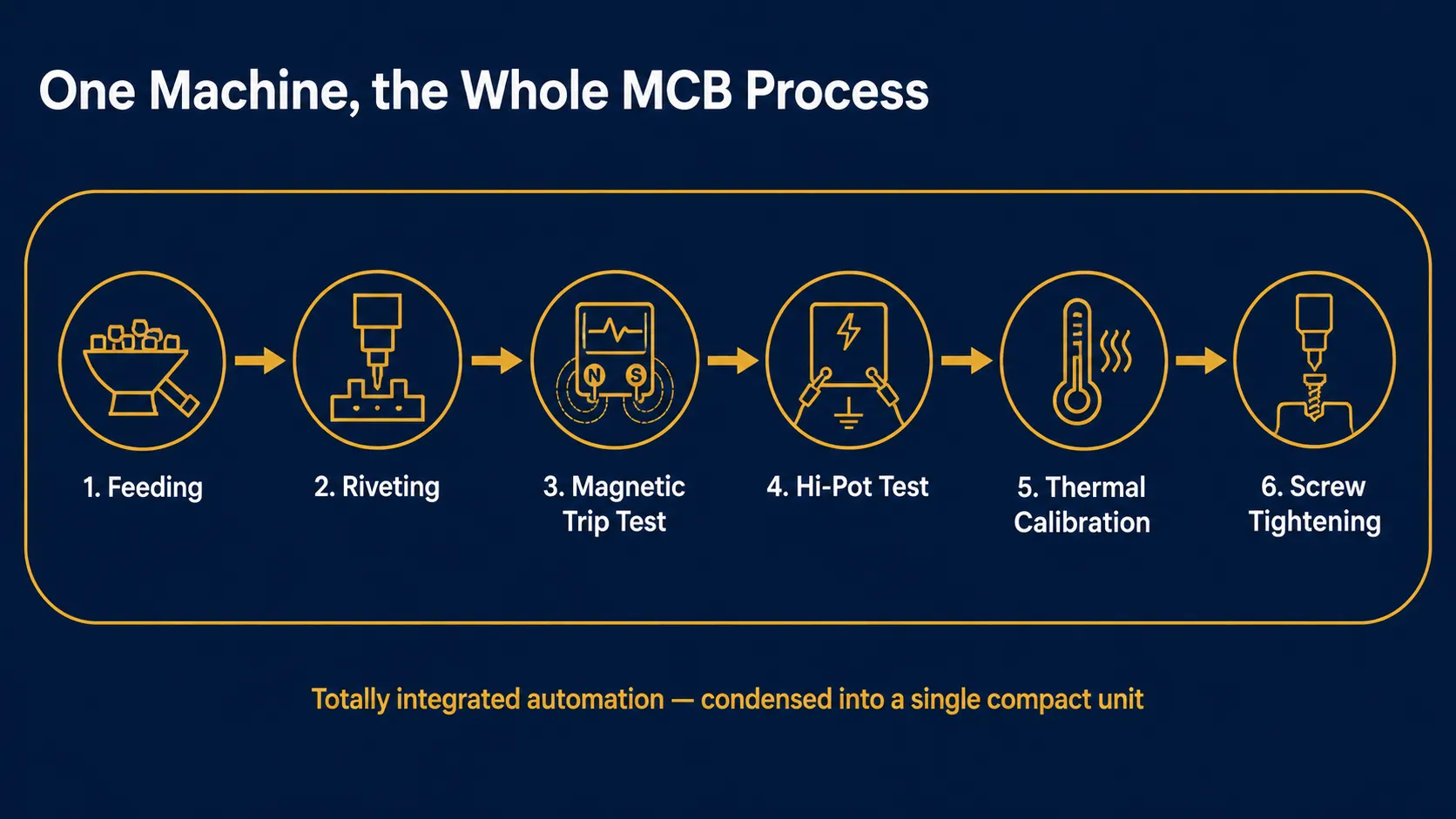
Vibratory feeding
Automatic feeding and orienting of cases, rivets, and terminals take place, whereby the downstream stations are kept supplied with no manual feeding of parts into the work process. Regular feeding is the silent foundation of regular output: when it fails, the whole production line stops.
Rivet insertion and riveting
The apparatus is responsible for inserting and establishing rivets with precision, producing the joints which keep the breaker intact. This automated process mitigates some of the major variables present in the manual assembly process where the quality of riveting is determined by the operator’s expertise.
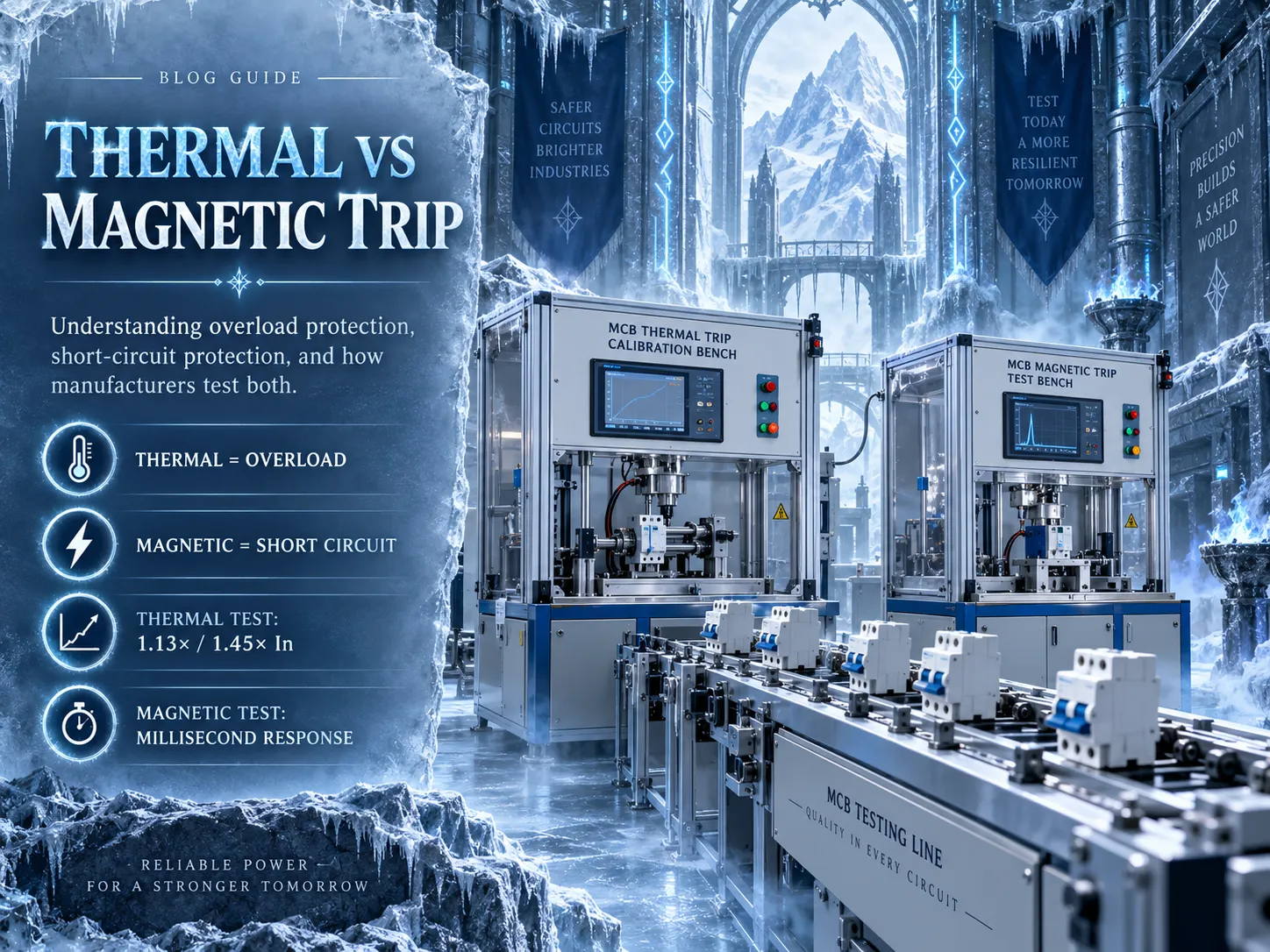
Magnetic trip testing
Every breaker goes through inspection to ensure that the magnetic trip mechanism meets specifications-the function that prevents short-circuit current. Ensuring the safety feature is critical, and inline testing ensures complete verification instead of relying on the sampling method.
High-voltage (hi-pot) testing
In order to verify the insulation capability of a particular breaker, this dielectrics strength test will be carried out by which any insulation defect that might be not able to function in any real application of work during actual state will be found. Having it integrated into the same machine provides conditions by which there is no need to pay extra attention to getting the result as it will be automatically obtained during the normal production process.
Thermal calibration
The thermal trip component, which is used for responding to prolonged overload currents, has been adjusted so that the breaker trips at the appropriate current and time. The precise thermal calibration is very important to ensure that the final execution of MCB reaches the necessary rated level, meaning that the use of the inline technique has a strong advantage compared to the utilization of the offline manual method.
Automatic terminal-screw tightening and loosening
The terminal screws are torqued in a controlled manner, thus providing the unit with a standardized, rather than a manually tightened, finish. In combination with the vision and sensor checks, which complement a closed-loop quality control system, every work station is able to check its work before the subsequent one can commence.
Once put into operation, the machine can produce between 5,000 and 7,200 units during one shift of 8 hours depending on the load requirements, while being capable of delivering the annual output of between 200,000 and 800,000 units in one shift with enough resources to increase the volume produced even further to meet the growing demand.
Built for high-mix, low-volume production
It is rare for small and medium manufacturers to produce just one product in large numbers. Typically, they manufacture a combination of products in low quantities with different pole counts and characteristics. In such conditions, the use of a rigid high-output manufacturing line is impractical because every time a changeover is made, a significant amount of time and money is wasted.
The compact integrated machine supports the opposite paradigm. It can work with 1P, 2P, 3P, and 4P breakers and changeover between the different pole types takes less than thirty minutes, thanks to using the recipe-based settings programmed in the HMI and quick-change tooling. This means that the factory can switch from one product to another within a single shift, process various orders profitably, and use flexibility as one of the main advantages.
Flexibility also is what makes this machine perfect for pilot production. The owner of the new design of an MCB can test it on this line, validate tooling and technology being used, and do this before investing money in a building of a full-fledged production line.
The relevance of the timing of circuit breaker automation
India has made steady advancements in producing circuit breakers and electrical devices in the country. The policies aimed at reducing imports, the increasing domestic demand for devices such as MCBs and RCCBs, as well as the need of many local manufacturers have made the automation of processes related to circuit breakers production a true necessity in the current conditions. However, the problem for many manufacturers is that the cost of entering the automation process is more complicated than intentions.
In this situation, the compact integrated machine comes at the right moment offering the right solution for manufacturers. This machine meets their needs perfectly enabling them to eliminate the manual process and have a constant production process with the production being immediately tested instead of waiting until a manufacturer is able to buy the whole production line. Thus, this investment will be the first reasonable step towards implementing automation in production for those manufacturers willing to work with a national distributor, to get certification, or simply to close the gap between manual and automated production.
Another driver for automation is the aspect of documentation quality. Large buyers and certification systems are increasingly requiring proofs that each piece of equipment manufactured is tested and not just the sample. A machine that allows conducting hi-pot, thermal, and magnetic trip testing in line and registering the results makes quality proofs possible. For a producer, it is a great advantage since it will help it boost its standing among other competitors.
The economics: low entry, fast payback
The commercial idea for a smaller company is quite straightforward. The first thing to understand is capital expenditure, as compact integrated machines cost approximately 20% to 30% less than a full-fledged production line whose price can be anywhere from $500,000 to over a million. With this savings, the not-yet-automated company can switch to automation this year rather than continue thinking about it indefinitely.
The savings don’t stop after the purchase price today. This machine does not take much space, as its length equals about 5.9 meters, unlike the 30-meter production line that would need some construction work, such as building a new bay and redoing the entire workshop. The delivery of the machine will take only 45-60 days at most. After that, the machine would need another 5-7 days to be installed and trained operators for its operation. In contrast, the full production line usually takes 90-120 days.
After paying the capital expenditure and other costs related to buying the machine, one can still benefit from its use right after the first product is produced. Using this machine for assembling and testing en masse allows the company to cut down its labor expenses by up to 70% in comparison to a workforce used for a manual production line, however, applying machinery ensures a much lower defect rate. The combination of fewer number of workers, less reworking, and higher production capability makes the economics of the machine work. All of this means that the payback period is under 12 months, which is short enough for the machine to return the owner’s investments before it gets fully depreciated.
Compact machine vs. full line vs. manual assembly
There’s no one-size-fits-all solution for every factory. The honest answer is to select one based on actual annual production volume, production area, and investment capacity. The table below sums up various advantages and disadvantages at one glance.
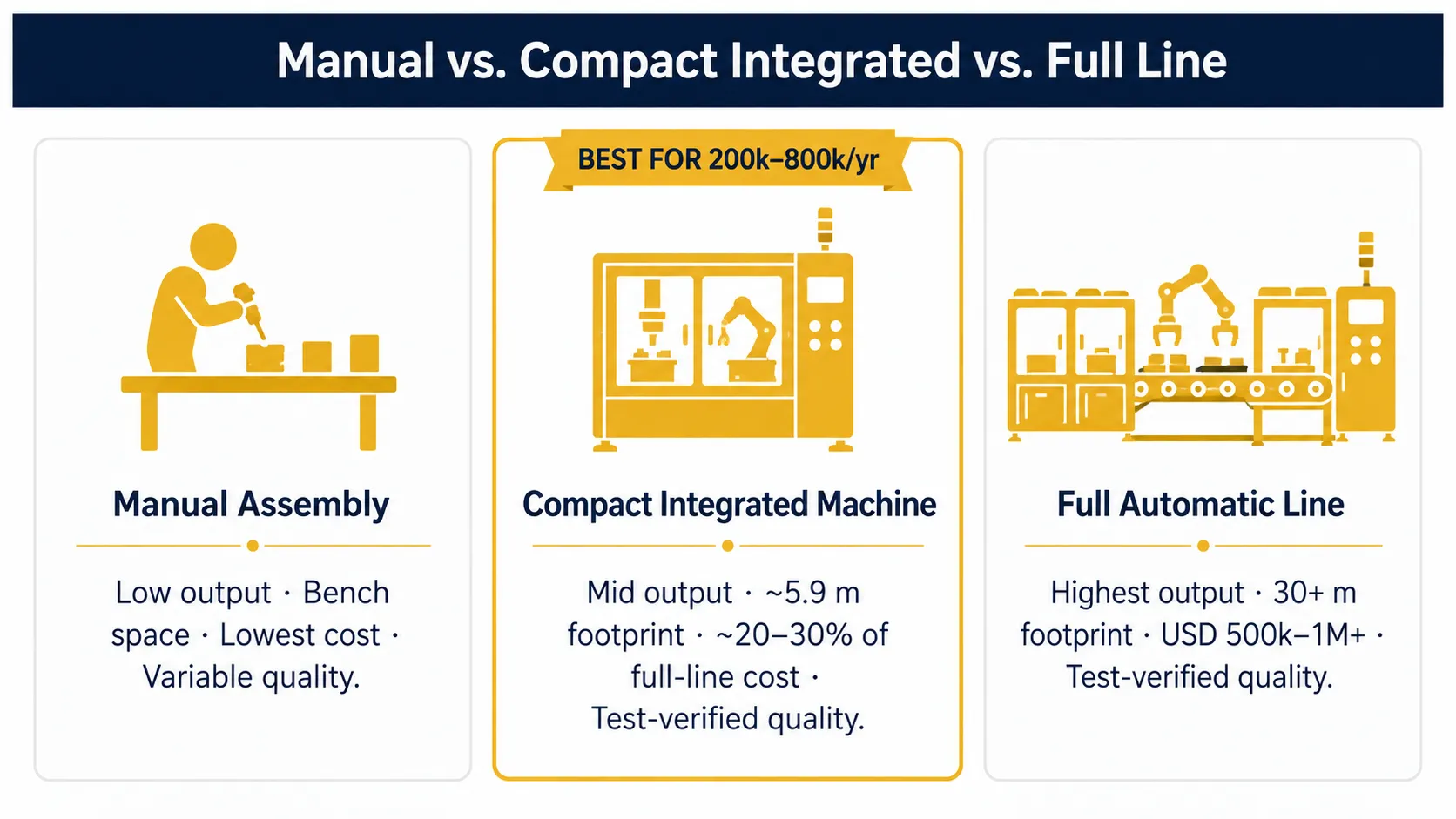
| Factor | Manual assembly | Compact integrated machine | Full automatic line |
|---|---|---|---|
| Output per shift | Low, operator-dependent | Up to 5,000 units (7,200 at full load) | 8,000–10,000 units |
| Footprint | Bench space | ~5.9 m single unit | 30+ meters |
| Capital cost | Lowest | ~20–30% of a full line | USD 500k–1M+ |
| Deployment time | Immediate | 45–60 days + 5–7 days install | 90–120 days |
| Quality consistency | Variable | Test-verified, closed-loop | Test-verified, closed-loop |
| Best-fit annual volume | Very low | 200k–800k units | 1M+ units |
When you think like this, the solution is typically obvious. A full machine set up will benefit you if you are producing more than a million items each year. If your output is only a few items per day, then manual assembly is probably still the way to go for you at this point. But the middle-sized companies producing several hundred thousand units per year are the ones for which the compact machine is the best fit.
Quality and traceability buyers can trust
Quality is crucial because it is often the most important reason for the automation of the production process. Manual work can lead to great circuit breakers, but is unable to give a proof. The output depends on the employee’s qualifications, fatigue, and luck with the product. What is important is that bigger buyers and certification organizations need to avoid such discrepancies.
With the help of an integrated machine every product undergoes a quality check right away. The process of quality verification includes magnets testing, high-voltage testing, and temperature assessment. The advantage of the machine is that the results can be immediately logged into HMI for quality databases. Automated production gives the opportunity to check the quality of each product instead of sampling and hoping that a certain one will be tested before selling. Thus, this information is compulsory for companies seeking to provide certification, to become recognized by nation-wide distributors, or to defend their names from customers’ complaints and issues.
A procurement checklist before you buy
In case you are contemplating the purchase of machine for small-sized MCB manufacturing factory, asking a few questions would help you differentiate a reliable supplier from a mere optimistic supplier. Before finalizing the deal, check:
- Tooling is designed based on your own MCB samples and pole designs, not based on generic design product. You can ask the supplier to show how it has designed tooling according to your exact layout and terminal designs.
- Integrated testing really includes magnetic trip, high-pot, and thermal calibration that is shown in the HMI and not performed off-line.
- Change over time is shown for the particular type of MCBs you manufacture and the actual throughput is given according to your actual product range, not according to the most advantageous situation.
- There is a special acceptance test at the supplier’s site and a special acceptance test at your site that will be specified in the contract. There should be acceptance criteria as well as acceptance report.
- There is a clear specification regarding the operation and orientation and available spare parts, and the brand of the control system, i.e. PLC and HMI, like Siemens or Mitsubishi.
- There are written terms regarding the lead time and installation windows.
If you find a supplier who gives you the answers with proper examples of your parts and not from the brochure, be sure that they are worth considering all its qualities along with the specifications of its machinery.
What to expect from delivery to full production
Understanding the delivery step eliminates much of the uncertainty associated with an automation purchase. It is important that the project goes according to a set plan so that finances, team, and obligations to customers can be calculated based on factual dates.
The process begins with sample analysis. In this step, the manufacturer examines existing MCB samples and determines output and pole configuration that is needed for designing feeders and riveting, as well as the solutions in quality testing. This is followed by a layout and tooling design, before manufacturing and assembly of the machine. One of the last stages of the process is that the manufacturer will perform functional testing at their facility.
Once the machine arrives on site, the installation process begins and usually takes 5 to 7 days, followed by the training of operators who will be able to run the production line independently of the manufacturer. Acceptance testing takes place, which is a written confirmation of the machine’s effectiveness.
Is the compact route right for you?
Compact integrated machines may be suitable in cases of producing between 200,000 and 800,000 units a year, having limited space, building on existing line with extra flexibility, or wanting to confirm the suitable design of the MCB before mass production. It is a solution for companies that require genuine automation and verifiable quality but do not yet have the volume to justify a complete line – which describes numerous emerging manufacturers in India and similar territories.
If your volumes have already pushed past a million units a year, a full MCB automatic assembly line will give you the throughput you need. If your bottleneck is a single stage rather than the whole process, a focused unit such as a semi-automatic arc-chute assembly machine or a dedicated MCB automatic testing line may be the smarter, more targeted investment. Choosing well means being honest about where your factory actually is today.
For most small and growing circuit breaker manufacturers, though, the integrated route remains the lowest-risk way to begin. You can review full specifications for the compact MCB mini production line integrated machine, or send your MCB samples, target output, and available floor space and let Benlong’s engineers return a proposed layout with a full ROI comparison across manual, mini, and full-line options. To start that conversation, get in touch with the Benlong team and describe what you build today and where you want it to go next.