benlong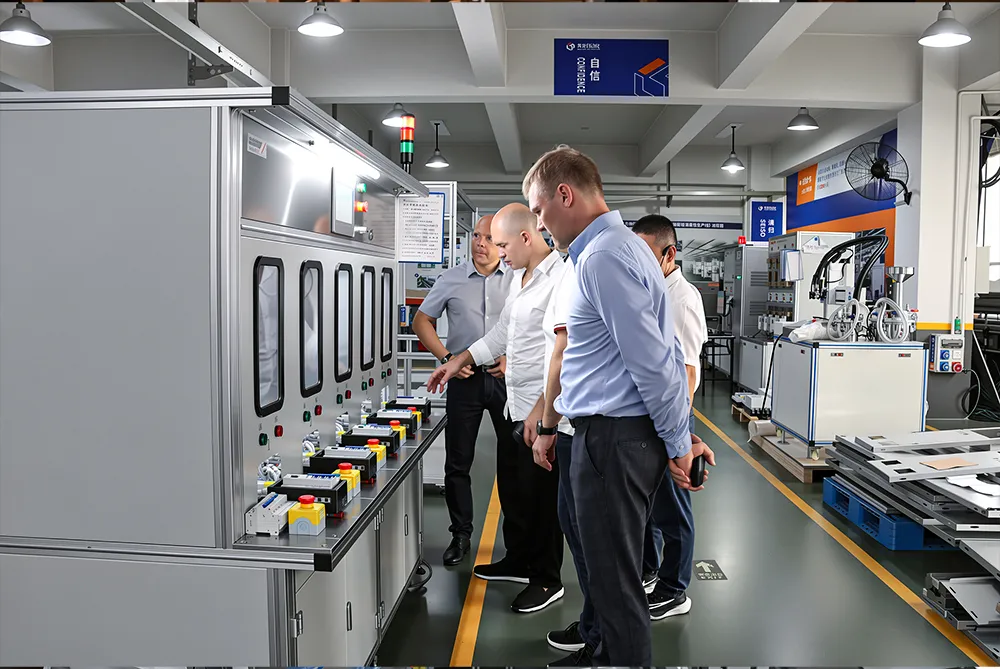


نصائح شراء ماكينات لحام قواطع الدائرة المصغرة (MCCB) للمستوردين العالميين
أداء قواطع الدائرة ذات الغلاف المصبوب عند إزالة ظروف الدائرة القصيرة يعتمد على عدة مليمترات مربعة من المعدن، وتحديدًا أطراف التلامس المصنوعة من النحاس وسبائك الفضة التي تُلحم لإنشاء اتصال كهربائي. إذا كانت اللحامات معيبة ولم تُصنع بشكل صحيح، سواء بسبب برودة زائدة، مشاكل في درجة الحرارة العالية، محاذاة غير صحيحة، أو نقص في المسامية، فإن التلامسات قد تنفصل عند حدوث عطل وبالتالي لا تحمي القاطع. بصفتك مستوردًا عالميًا يشتري آلات لحام تلامس MCCB, ، فإن تحديد الفرق بين نظام مجهز عالي الجودة وجاهز للإنتاج مقابل آلة لحام نقطي منخفضة التكلفة يمثل الفرق بين خط تجميع ينتج قواطع معتمدة مقابل خط تجميع ينتج مطالبات ضمان. سيرشدك هذا الدليل خطوة بخطوة عبر العوامل الرئيسية التي سترغب في مراعاتها عند اختيار معدات اللحام لتجميع التلامسات لـ MCCB؛ ويذكر قادة السوق في تصنيع آلات تجميع تلامس MCCB؛ ويستعرض النقاط العملية ذات الصلة للنظر فيما إذا كانت الآلة ستلبي وقت الدورة المستهدف، الجودة المستهدفة، وعمر الخدمة.

ما هي آلة لحام تلامس MCCB ولماذا هي مهمة
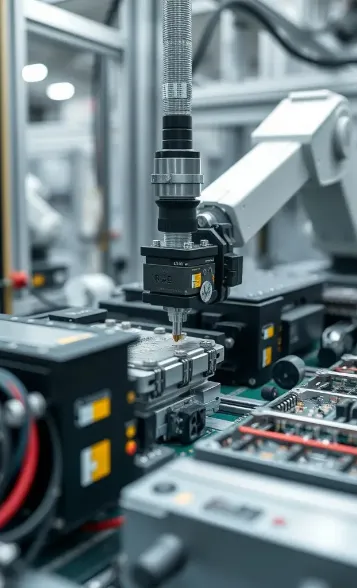
آلة لحام تلامس MCCB هي آلة لحام مقاومة مصممة خصيصًا للحام طرف التلامس المصنوع من سبائك الفضة إلى ذراع الموصل النحاسي لقاطع الدائرة ذو الغلاف المصبوب. يمر تيار كهربائي مسيطر عليه عبر الوصلة أثناء عملية اللحام لتوليد حرارة عند واجهة الوصلة حيث يحدث الانصهار، مما يشكل رابطة معدنية. يجب على الآلة التحكم بدقة عالية في تيار اللحام، قوة اللحام، وقت اللحام، وإزاحة اللحام لإنشاء وصلة قابلة للتكرار تحمل التيار المستمر المصنف لقاطع الدائرة دون ارتفاع درجة الحرارة وتحمل القوى الكهرومغناطيسية المرتبطة بانقطاع الدائرة القصيرة.
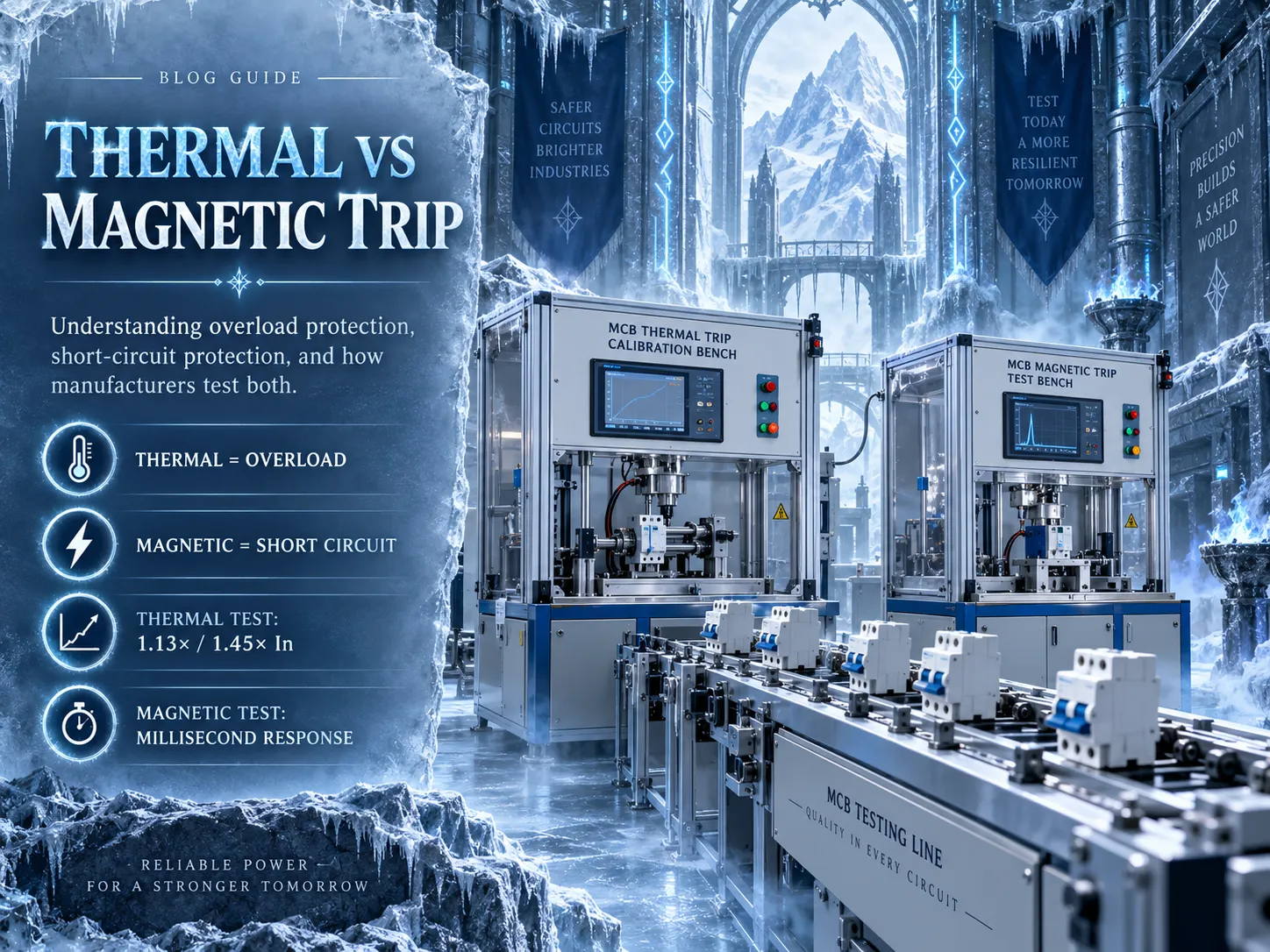
عادةً ما تكون محطة لحام التلامس واحدة من عدة عمليات مؤتمتة في خط إنتاج MCCB. قد ينتقل الموصل الملحوم مباشرة إلى محطة المعايرة، ثم إلى آلة التجميع التي تربطه بآلية القاطع، وأخيرًا إلى منصة اختبار تتحقق من خصائص الرحلة الحرارية والمغناطيسية للقاطع المكتمل. للسياق حول كيفية دمج محطة اللحام هذه مع الاختبارات اللاحقة، يشرح دليلنا حول نصائح آلة معايرة MCCB للأداء الأمثل الخطوة التالية في تسلسل الإنتاج.
معايير الشراء الرئيسية للمستوردين
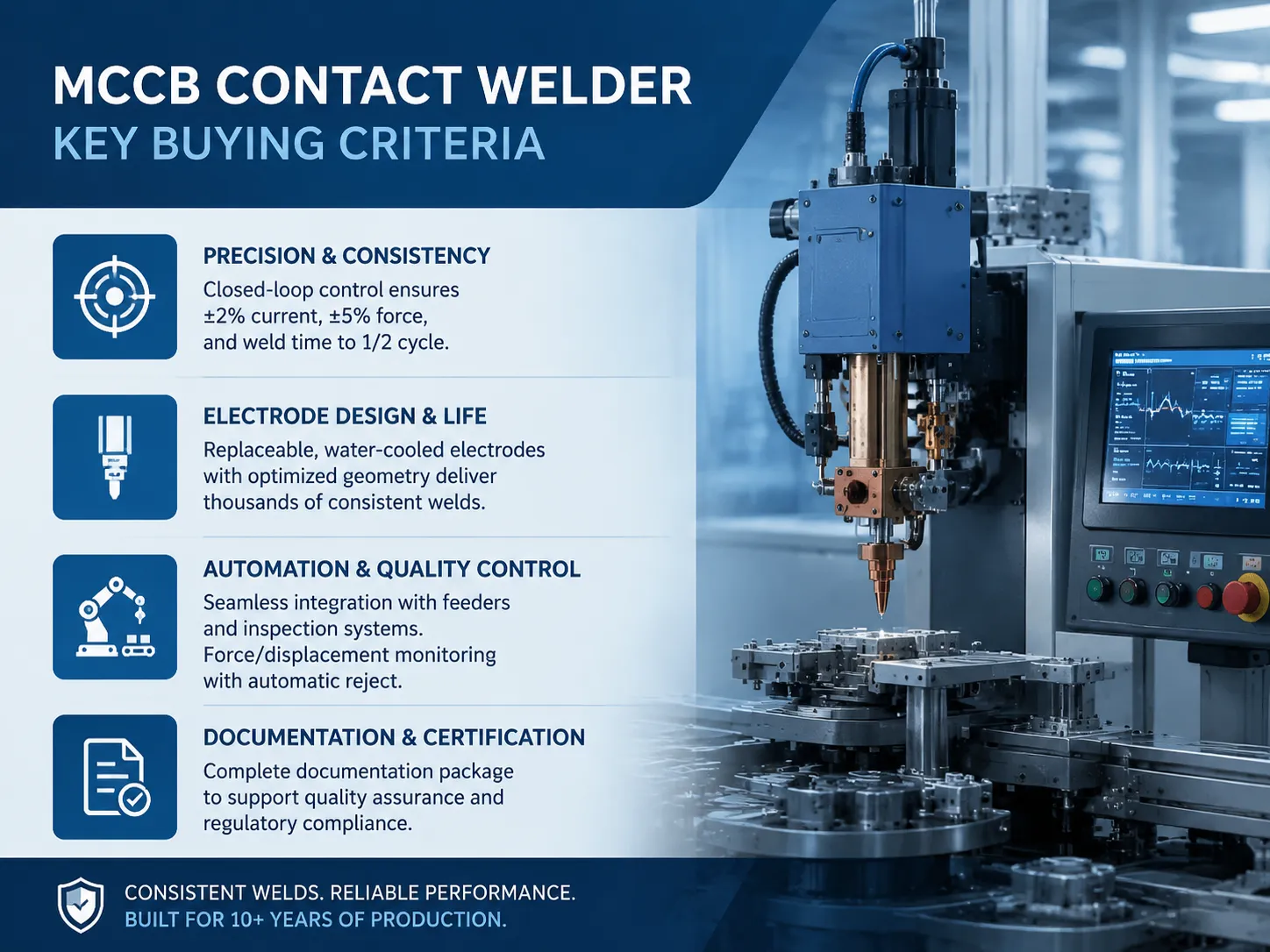
يُعتبر قرار شراء آلة لحام تلامس MCCB استثمارًا في المعدات الرأسمالية. ستعمل هذه الآلة لمدة لا تقل عن 10 سنوات لإنشاء الوصلة الأكثر أهمية في القاطع: ستفرق المعايير التالية بين آلة قادرة على إنشاء جودة متسقة وأخرى تنتج خردة وتوقفات.
- دقة التحكم في معلمات اللحام. تحتاج الآلة إلى الحفاظ على دقة زائد أو ناقص اثنين بالمائة في التحكم في تيار اللحام، زائد أو ناقص خمسة بالمائة في التحكم في قوة القطب، والتحكم في وقت اللحام إلى نصف دورة واحدة (8.3 مللي ثانية @ 60 هرتز). سيكون معيار الجودة هو حلقة تغذية راجعة مغلقة، والتي لا تراقب فقط طاقة اللحام الفعلية ولكنها تضبط في الوقت الحقيقي لأي تقلب في جهد الخط أو تآكل القطب. لا يمكن لآلة تستخدم فقط إعدادات محول بسيطة بدون تغذية راجعة في الوقت الحقيقي أن تنتج نتائج متسقة طوال فترة وردية الإنتاج.
- تصميم القطب وعمره. يجب أن تكون جهات اتصال الأقطاب المبردة بالماء ضد الموصل قابلة للاستبدال بسهولة، ويجب أن يكون هناك تصميم يناسب هندسة نقاط اتصال القطب. سيعتمد عدد اللحامات المتاحة قبل أن يصل القطب إلى نهاية صلاحيته على مادة الاتصال وجدول اللحام، ومع ذلك، يجب أن تكون الأداة قادرة على توفير آلاف اللحامات قبل الحاجة إلى إعادة تشكيل الأقطاب.
- الأتمتة والتعامل مع الأجزاء. يمكنك استخدام محمل يدوي لحجم منخفض جدًا (أو للنمذجة الأولية) أو ربما في بيئة إنتاج. في حالة بيئة الإنتاج بحجم مئات أو آلاف قواطع الدائرة في اليوم، يجب أن يكون محطة اللحام الخاصة بك متصلة بجهاز تغذية الأجزاء، أو طاولة تدوير فهرسة، أو نظام نقل خطي، بالإضافة إلى فحص ما بعد اللحام.
كما تريد أن توفر المعدات قدرات قياس القوة/الإزاحة لرفض تلقائي لأي لحام لا يفي بالمعايير المحددة قبل انتقال الجزء إلى العملية التالية. - التوثيق والشهادات. يجب أن تتضمن جميع الآلات: (1) المخطط الكهربائي؛ (2) مخطط الهواء المضغوط؛ (3) قائمة المواد؛ و (4) إجراء المعايرة. إذا كانت الآلة مصممة لتلبية متطلبات صناعة منظمة، فقد تحتوي وثائقها على معلومات للإدراج في ملف شهادة القاطع الإلكتروني.
لفهم أوسع لكيفية دمج محطات اللحام والتجميع لتشكيل خط إنتاج كامل، نظرتنا العامة إلى ما هو خط التجميع والاختبار الأوتوماتيكي لقواطع MCCB تغطي التسلسل الكامل من لف الملف إلى الاختبار النهائي.
الشركات الرائدة في تصنيع معدات اللحام بالمقاومة للاتصالات الكهربائية
تُستخدم آلات لحام اتصالات MCCB من قبل كل من مصنعي معدات اللحام بالمقاومة للأغراض العامة وكذلك مصنعي المعدات المتخصصين المستخدمة حصريًا في صناعة التصنيع الكهربائي. هناك العديد من الموردين/المصنعين المعروفين الذين ينتجون مصادر طاقة وأنظمة لتطبيقات اللحام المستخدمة في لحام الاتصالات.
- لينكولن إلكتريك (الولايات المتحدة الأمريكية): واحدة من أبرز مزودي حلول اللحام للصناعة في العالم هي قسم اللحام بالمقاومة في شركة لينكولن إلكتريك، مع شبكة موزعين راسخة في كل من أمريكا الشمالية وعلى الصعيد العالمي. تشمل معدات اللحام بالمقاومة عالية الجودة الخاصة بهم وحدات مصدر الطاقة وحلول أنظمة اللحام الآلية بالكامل التي تُستخدم في مجموعة واسعة من الصناعات حول العالم، بما في ذلك صناعة التصنيع الكهربائي.
- أَمَدا ويلد تك (اليابان/الولايات المتحدة الأمريكية): تقدم أَمَدا مجموعة من المنتجات المتخصصة في اللحام بالمقاومة الدقيق، واللحام بالليزر، واللحام الدقيق جداً. يمكن استخدام منتجاتهم في العديد من أنواع التطبيقات بما في ذلك الإلكترونيات، والأجهزة الطبية، والاتصالات الكهربائية. تتميز جميع آلات أَمَدا بأنظمة تحكم ذات تغذية راجعة مغلقة تسمح بإنتاج لحامات عالية الدقة بشكل مستمر.
- ت. ج. سنو (الولايات المتحدة الأمريكية): على مدى عدة عقود، كانت ت. ج. سنو خبيرًا راسخًا في تصنيع معدات اللحام بالمقاومة المتخصصة وكذلك مشاريع الأتمتة المخصصة للاستخدام في الصناعة الكهربائية. يمكن استخدام معداتنا في تطبيقات اللحام بالاتصال مثل قواطع الدائرة MCCBs، وMCBs، والكونتاكتورات.
- صن ستون إنجينيرينغ (الولايات المتحدة الأمريكية): تصنع آلات اللحام الدقيق جداً لتطبيقات البطاريات، والإلكترونيات، والاتصالات الكهربائية. تُعرف آلاتهم بقدرات التحكم الدقيقة، مع التركيز على التطبيقات ذات الشكل الصغير (مثل لحام الاتصالات).
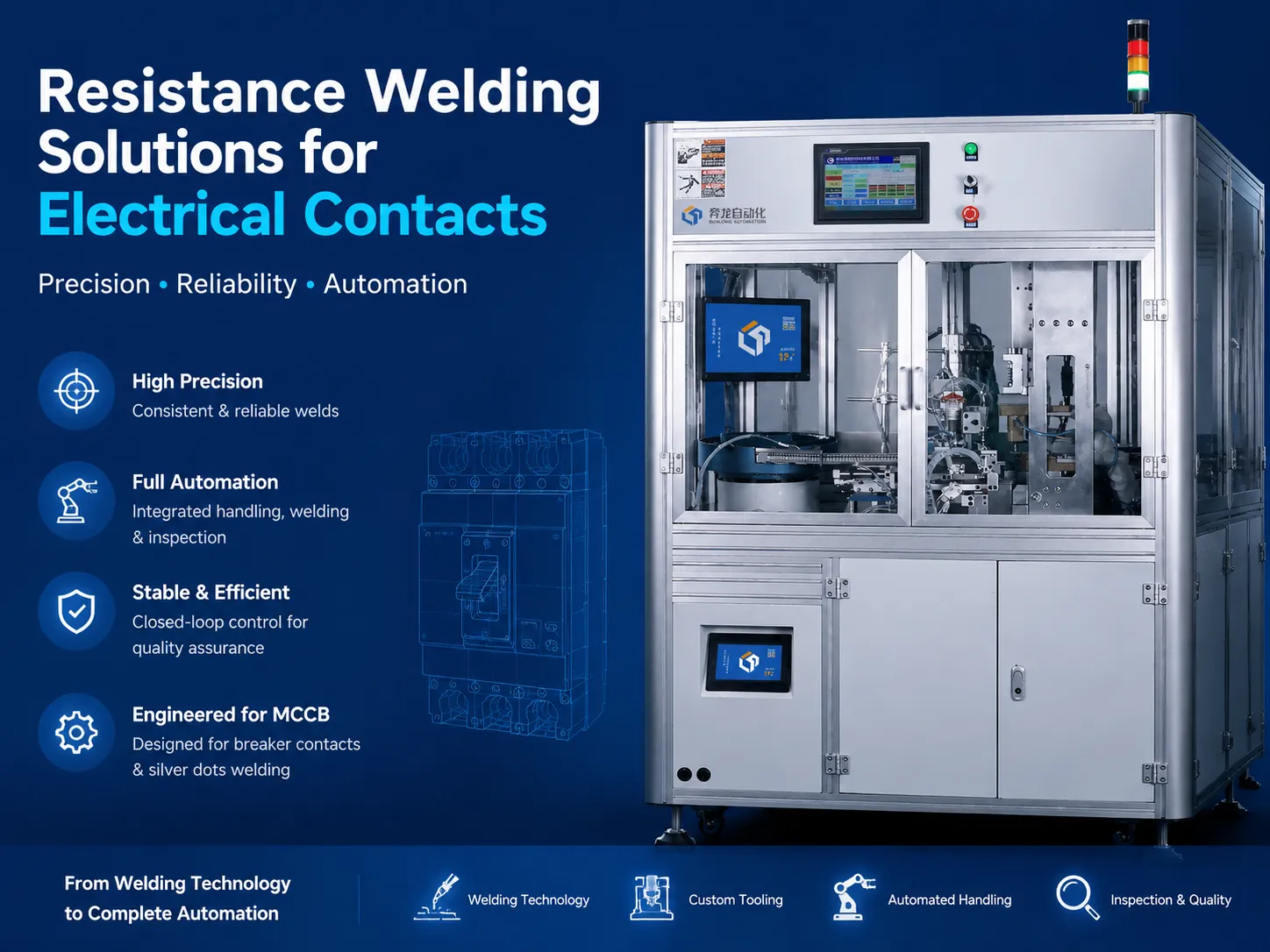
عادةً ما يتم بناء آلة لحام اتصالات MCCB كاملة تم تصميمها لإطار قاطع معين وتكوين الاتصال بواسطة مدمج أتمتة يأخذ رأس اللحام من أحد هؤلاء المصنعين ويبني خطًا كاملاً من أنظمة المناولة، والتثبيت، والتفتيش حوله. هذه هي طريقة عمل شركة بنلونج أوتوميشن: حيث يصممون ويصنعون خلايا إنتاج كاملة لدمج تقنيات اللحام المعتمدة، مع الأدوات المناسبة، وتغذية الأجزاء، والتفتيش الآلي المطلوب من قبل مصنع القواطع. يمكن أن يتضمن خط إنتاج آلي مخصص من مدمج متخصص خطوط التجميع الآلية لقواطع الدائرة المصغرة ومحطات لحام MCCB مصممة خصيصًا لعائلة القواطع، وحجم الإنتاج، والوثائق المطلوبة للجودة.
نطاقات الأسعار: ما يجب تخصيصه لميزانية محطة لحام جاهزة للإنتاج
| تكوين الآلة | نطاق السعر النموذجي (بالدولار الأمريكي، خارج المصنع) |
|---|---|
| آلة لحام مقاومة يدوية على الطاولة، بدون أتمتة | 15,000 – 35,000 دولار أمريكي |
| محطة شبه آلية مع تحكم PLC وتثبيت الأجزاء | 50,000 – 90,000 دولار أمريكي |
| خلية لحام آلية بالكامل مع تغذية الأجزاء، تحكم سيرفو، ومراقبة القوة/الإزاحة | 100,000 – 250,000 دولار أمريكي |
| خط لحام وتفتيش آلي مخصص مدمج مع التجميع والاختبار في المراحل اللاحقة | 250,000 – 500,000+ دولار أمريكي |
تختلف الأسعار حسب مستوى الأتمتة، وتعقيد التعامل مع الأجزاء، ودرجة مراقبة العملية المطلوبة. يجب على المستورد العالمي أن يخصص ميزانية ليس فقط للآلة نفسها ولكن أيضًا للشحن، والرسوم الجمركية، والتركيب، وتدريب المشغل، ومخزون من قطع الغيار الحرجة — الأقطاب الكهربائية، وخراطيم التبريد، وصمامات لوحة التحكم.
التركيب، والتشغيل، والصيانة المستمرة
تحتاج آلة لحام تلامس MCCB إلى أكثر من مجرد توصيلها بالكهرباء. يجب على فني مؤهل أن يقوم بتسوية ومحاذاة رأس اللحام، ومعايرة مستشعر القوة والإزاحة، وضبط جدول اللحام الأولي، وإجراء دراسة قدرة العملية التي تظهر أن الآلة يمكنها إنتاج لحامات ذات جودة متكررة على عينة إحصائية ذات دلالة من اللحامات. يجب على المستوردين التأكد من أن الباني يقدم خدمات التشغيل في الموقع أو إعداد بمساعدة الفيديو عن بُعد مع تعليمات واضحة مقدمة في الوثائق.
تتضمن الصيانة الدورية أداء مهام كهربائية وميكانيكية على المعدات المستخدمة لإنتاج اللحامات. قد تشمل هذه الإجراءات استبدال أو تعديل القطب الكهربائي عند ملاحظة مقاومة أعلى في توقيع اللحام، وتنظيف وفحص دائرة تبريد المياه من تراكم القشور، والتحقق من معايرة مراقب التيار مرة واحدة على الأقل في السنة، والحفاظ على سجل لجميع معلمات اللحام لكل دفعة منتجة. ستؤدي آلة مُصانة، باستخدام الطرق المذكورة أعلاه طوال عمر عائلة القواطع التي صممت لبنائها، إلى إنتاج لحامات متسقة.
الأسئلة الشائعة
ما هو استخدام MCCB؟
قاطع الدائرة ذو الغلاف المصبوب (MCCB) هو جهاز كهربائي يُستخدم لتوفير الحماية من التيار الزائد و/أو القصر الكهربائي داخل نظام توزيع كهربائي صناعي أو تجاري. يوفر MCCB الحماية للمغذيات الرئيسية، ودارات المحركات الكبيرة، والمعدات، حيث يتجاوز مقدار تيار الأعطال قدرة قاطع الدائرة المصغر (MCB) على الفصل.
ما هو MCCB في النظام الكهربائي؟
MCCB هو جهاز حماية قابل لإعادة الضبط يستخدم آلية حرارية (زيادة الحمل) ومغناطيسية (قصر الدائرة) لفتح الدائرة تلقائيًا عند حدوث زيادة حمل أو قصر. يقع MCCB في لوحات التوزيع، أو لوحات المفاتيح، أو مراكز التحكم بالمحركات.
ما نوع MCB المناسب للّحام؟
لدى جهاز اللحام تيار بدء كبير. للسماح بحدوث هذا التيار الكبير دون انقطاع MCB بشكل خاطئ، يتم تكوين MCB بمنحنى D (فصل مغناطيسي عند 10-20 ضعف التيار المصنف) للاستخدام. سيكون تصنيف الأمبير المحدد لـ MCB بناءً على مدخل طاقة جهاز اللحام ودورة العمل الخاصة به.
ما هي أنواع آلات اللحام السبعة؟
يتم تصنيف أنواع اللحام السبعة التالية على النحو التالي: 1) MIG (GMAW)، 2) TIG (GTAW)، 3) Stick (SMAW)، 4) Flux-Cored (FCAW)، 5) اللحام بالمقاومة، 6) اللحام بالليزر، 7) اللحام بالبلازما. مثال على لحام التلامس هو قضيب التوصيل متعدد التلامس مع لحام مقاومة لإنشاء التلامس. في هذه الحالة، يمر التيار عبر منطقة اللحام لتوليد الحرارة اللازمة لصهر ودمج المعدنين معًا تحت كل من الحرارة والضغط.
كيف أعرف إذا كان لحام التلامس جيدًا؟
يوفر لحام التلامس عالي الجودة سطحًا متسقًا وناعمًا للربط، خاليًا من المسامية أو التشققات أو الطرد الزائد للمعدن المصهور. للتحقق من ذلك في الإنتاج، يتم مراقبة طاقة اللحام والقوة وتوقيعات الإزاحة في الوقت الحقيقي. أثناء الإعداد وفحوصات تدقيق الجودة الدورية، يتم إجراء اختبار سحب أو أخذ مقطع عرضي ميتالوجرافي.
هل يمكنني دمج محطة اللحام في خط تجميع يدوي موجود؟
يمكن بناء محطة لحام شبه أوتوماتيكية بالتزامن مع محطة تجميع يدوية. يقوم المشغل بتحميل الموصل والتلامسات على الحامل، يتم تنفيذ عملية اللحام، ويمكن للمشغل تفريغ الجزء الملحوم. يُرى هذا النوع من الإعداد عادة في مستويات الإنتاج الصغيرة إلى المتوسطة.
مراجع
- Amada Weld Tech — أنظمة اللحام بالمقاومة الدقيقة — مصنع لمصادر طاقة اللحام ذات التغذية الراجعة المغلقة لتطبيقات التلامس الكهربائي واللحام الدقيق.
- Lincoln Electric — معدات اللحام بالمقاومة — مورد عالمي لتقنيات اللحام بما في ذلك مصادر طاقة اللحام بالمقاومة.
- T. J. Snow Company — ماكينات اللحام بالمقاومة المخصصة — متخصص في أنظمة اللحام بالمقاومة الآلية للتطبيقات الكهربائية والصناعية.
- Sunstone Engineering — أنظمة اللحام الدقيقة — معدات لحام دقيقة للإلكترونيات وتجميع التلامس الكهربائي.
- The Silver Institute — الفضة في التلامسات الكهربائية — بيانات حول استخدام سبائك الفضة في التلامسات الكهربائية ودور مواد التلامس في أداء القواطع.
- McMaster‑Carr — أقطاب ومستلزمات اللحام بالمقاومة — مورد صناعي لأقطاب بديلة ومكونات التبريد وملحقات اللحام.
اختيار ماكينة لحام التلامس MCCB هو قرار يشكل جودة كل قاطع يغادر مصنعك. اللحام بين التلامس الفضي والموصل النحاسي هو النقطة التي إما أن تحافظ على وظيفة الحماية الكاملة للقاطع أو تفشل فيها. آلة تتحكم بدقة في التيار والقوة والوقت — ويمكنها توثيق هذا التحكم لكل لحام — ليست تكلفة يجب تقليلها. إنها الأساس الذي يرتكز عليه كل شهادة، وكل عميل راضٍ، وكل انقطاع عطل بدون حوادث. تبني Benlong Automation خلايا لحام جاهزة للإنتاج تدمج تقنية اللحام المثبتة مع الأدوات المخصصة والتغذية والتفتيش التي يتطلبها خط تصنيع MCCB الحديث.